
Welcome to the definitive guide for scuba diving on the Big Island of Hawaii, a place where the island’s fiery volcanic heart has sculpted a truly spectacular underwater world. This isn't your average Caribbean reef dive; we're talking about exploring submerged lava tubes, ancient archways, and vibrant coral gardens teeming with life you won't find anywhere else on the planet.
Exploring The Underwater World Of Hawaii’s Big Island
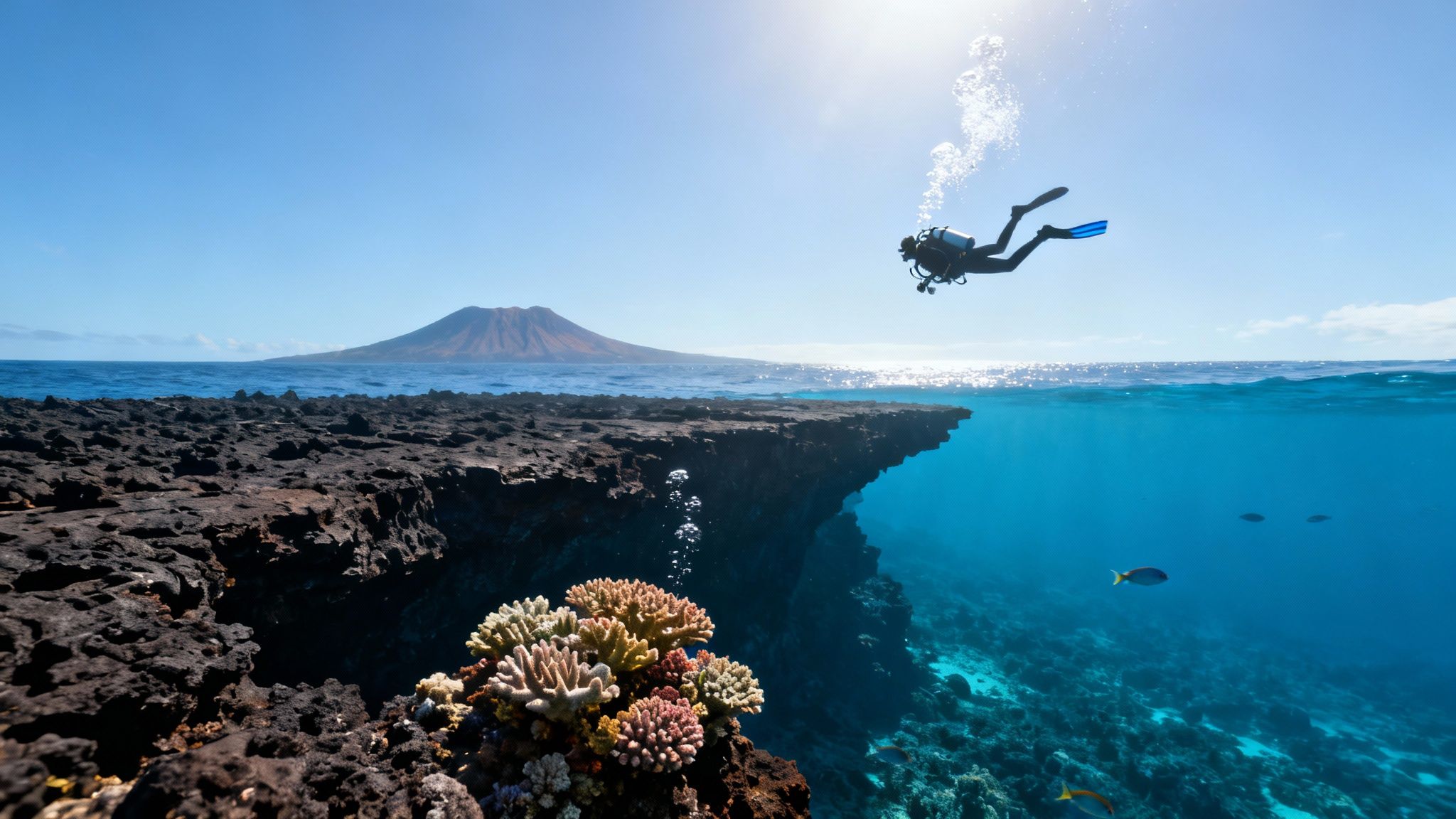
The very same volcanic activity that forged the island’s dramatic cliffs and black sand beaches created an underwater playground for divers. Imagine gliding through ancient lava arches and intricate tunnels, then emerging over vast fields of pristine coral that have taken root on the submerged slopes of volcanoes. It’s a landscape unlike any other.
This unique geology provides the perfect habitat for an incredible diversity of marine life. The Kona coast, in particular, offers calm, crystal-clear waters that have become a sanctuary for countless species. It's truly a diver's paradise, welcoming everyone from first-timers to seasoned pros with a wide range of diving tours.
Why Kona Is A Premier Dive Destination
Divers in the know flock to the Kona side of the Big Island for a few very good reasons. The island’s massive volcanoes shield the western coastline from the gusty trade winds, which translates to remarkably calm seas and minimal currents. These are the kind of perfect conditions you dream about.
That protection also leads to phenomenal water clarity. It's no surprise that scuba diving on the Big Island has become a world-renowned adventure, with Kealakekua Bay alone attracting over 20,000 divers a year. Visibility here often stretches beyond 100 feet, making it a magnet for underwater photographers and anyone who just wants to soak in the incredible views.
To get a deeper look at what makes this area so special, check out our breakdown of the best Big Island scuba diving experiences.
Top Scuba Diving Experiences On The Big Island
To help you choose your adventure, here’s a quick look at some of the most popular dives the Big Island has to offer. Each one provides a different window into the island's marine ecosystem.
| Diving Experience | Best For | Key Marine Life | Typical Depth |
|---|---|---|---|
| Manta Ray Night Dive | All levels (even snorkelers) | Manta Rays, Eels, Jacks | 30-40 feet |
| Lava Tube & Cavern Dives | Intermediate to Advanced | Nudibranchs, Shrimp, Reef Fish | 40-80 feet |
| Black Water Night Dive | Advanced (strong buoyancy needed) | Bioluminescent Creatures, Pelagic Larvae | Open water (tethered) |
| Kealakekua Bay (Captain Cook) | Beginner to Intermediate | Spinner Dolphins, Turtles, Coral Gardens | 20-70 feet |
Whether you're looking for a once-in-a-lifetime encounter with giant mantas or a peaceful drift over coral gardens, Kona delivers.
This combination of stunning underwater landscapes and ideal conditions sets the stage for dives you’ll be talking about for years. From the world-famous Manta Ray Night Dive to finding "turtle cleaning stations," every plunge tells a story. For more insight into the local marine life, other guides on underwater exploration around Captain Cook in Kona are an excellent resource.
The Unforgettable Manta Ray Night Dive
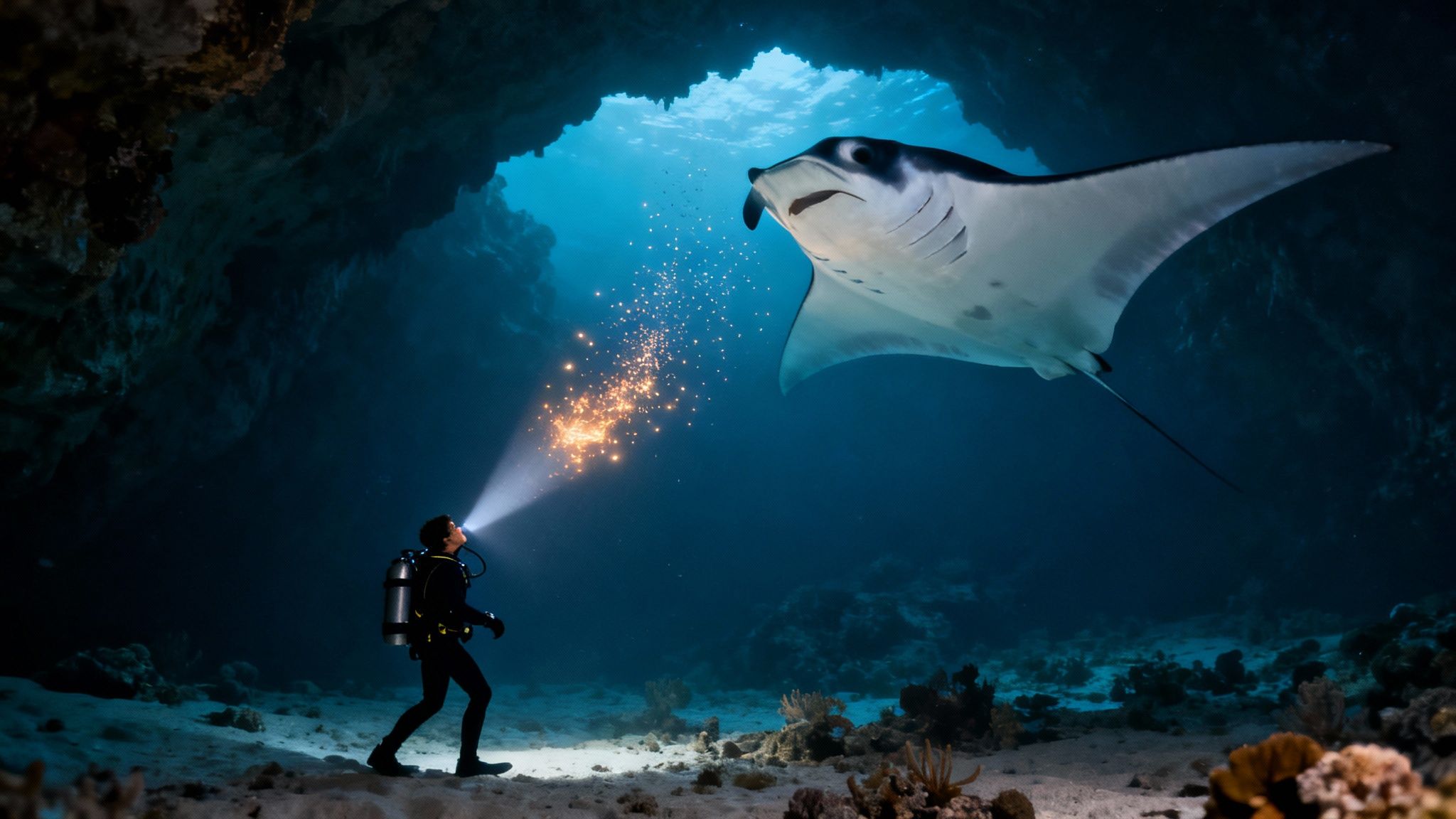
Picture this: you’re kneeling on the ocean floor in the dark, your dive light pointing up toward the surface. Suddenly, giant, graceful shadows start to materialize above you. A massive manta ray, with a wingspan wider than you are tall, glides just inches over your head, performing a silent, hypnotic ballet. This isn't a scene from a nature documentary—it's the Manta Ray Night Dive, the absolute can't-miss experience for anyone scuba diving on the Big Island.
The concept behind this world-famous encounter is actually quite simple. Over the years, dive operators set up powerful, stationary lights on the seafloor at specific sites. These lights act like magnets for clouds of plankton, the manta rays’ favorite meal, creating a reliable buffet that’s open every single night.
The mantas, being incredibly smart creatures, have learned where to find an easy dinner. They show up to swoop, glide, and barrel-roll through the beams of light, filtering the plankton from the water. For the divers below, it's a breathtaking, front-row seat to one of nature’s most incredible spectacles. You can learn more about these incredible manta ray dive tours here.
Why Garden Eel Cove Is The Premier Location
While you might hear about a few different manta dive spots, Garden Eel Cove (often called Manta Heaven) is hands-down the superior choice for this experience. Because it’s tucked into a protected cove, the water is usually much calmer and clearer than at other locations, which makes for a more comfortable and predictable dive.
Even better is the way the dive itself is set up. The viewing area is better designed for divers to settle on the sandy bottom in a "campfire" circle, all pointing their lights up. This creates a well-lit central stage where the mantas perform their acrobatic feeding, often gliding right over the group for mind-blowingly close views. Plus, the better reefs surrounding the site are healthy and vibrant, making the entire dive that much more beautiful.
The Manta Ray Night Dive off the Kona coast is one of the most reliable wildlife encounters in the world. Operators report an incredible 85-90% success rate for manta sightings. One log showed that out of 100 night dives, mantas made an appearance on 87 of them. Discover more insights about the remarkable consistency of Big Island manta sightings.
What To Expect On Your Dive
Your adventure kicks off around dusk when you board the dive boat. The crew will give you a thorough briefing on everything from manta ray behavior to safety protocols. They’ll also cover the most important rule of the dive: never touch a manta. Touching them can strip away their protective mucous coating, which leaves them vulnerable to nasty infections.
After a quick boat ride, you'll do your first dive while there's still some light in the sky, giving you a chance to get familiar with the site. Once the sun goes down, you'll head back in for the main event. You'll spend about 45 minutes watching the mesmerizing feeding frenzy before heading back to the boat under a sky full of stars.
Going with a responsible operator who prioritizes the well-being of the mantas makes all the difference. Their commitment to small group sizes and safe practices ensures you get an intimate, sustainable experience without feeling like you're in a crowd. If you’re not a certified diver, you can still experience the magic with an equally thrilling night snorkel with manta rays. You can also check out our guide to the manta ray night snorkel to see how the two experiences compare.
Discovering the Best Kona Coast Dive Sites
While the Manta Ray Night Dive grabs all the headlines, the Kona coast holds its own magic during the day. This place is an absolute treasure trove for divers, with over 50 unique dive sites dotting the shoreline. Each spot has its own vibe and its own secrets to share.
This incredible underwater playground was sculpted by ancient lava flows that cooled to form a dramatic world of arches, caverns, and twisting canyons. When you drop beneath the surface here, you're literally diving into the island’s fiery geological history.
Whether you’re a new diver looking for a calm, sun-drenched reef or an old pro eager to navigate intricate lava tubes, Kona has something for you. Honestly, the hardest part is often just choosing where to drop in.
With so many options, the real secret to an amazing dive is local knowledge. A great guide doesn't just point you to a GPS coordinate; they know which coral head the resident frogfish hangs out on, or the best time of day to catch the turtles at their "cleaning station."
Crescent Beach: Where Turtles Gather
One of my all-time favorite Kona sites has to be Crescent Beach. It's famous for two things: dramatic lava arches and a whole lot of Hawaiian green sea turtles, or honu. The topography alone is a photographer’s dream, with natural swim-throughs and small caverns that frame your shots perfectly.
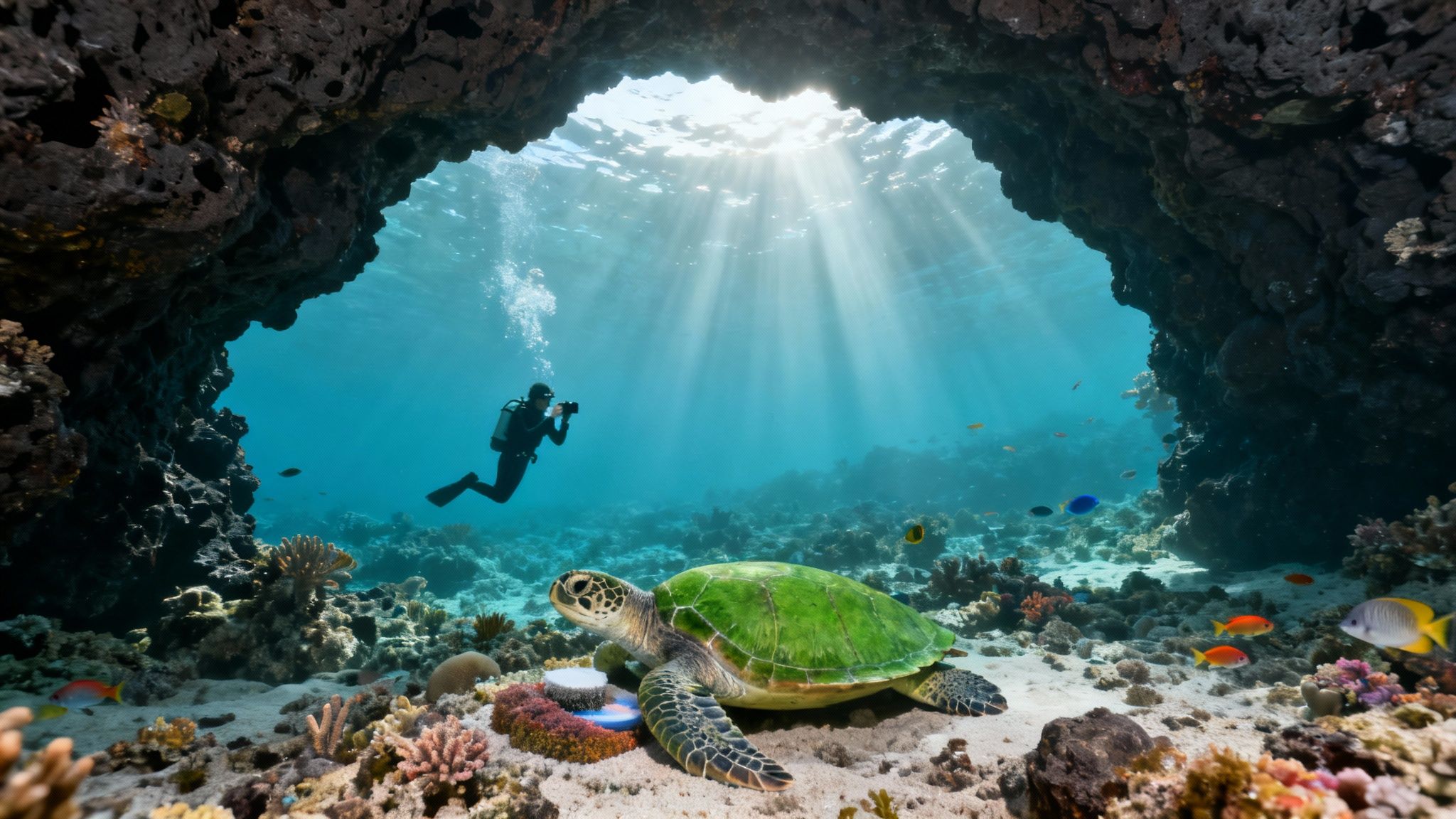
The real showstopper, though, is the turtle cleaning station. This is a specific spot where turtles line up to let smaller reef fish nibble parasites and algae off their shells. It's an incredible natural behavior to witness up close, and at Crescent Beach, it's pretty much a daily appointment.
- Topography: You'll find impressive lava arches, cool little caverns, and a really healthy, vibrant coral reef system.
- Marine Life: Expect to see tons of green sea turtles, white-tip reef sharks snoozing in the sand, and huge schools of colorful reef fish.
- Skill Level: It’s great for everyone, from beginners to advanced divers. The depths usually stay between a comfortable 30 to 60 feet.
Golden Arches: A Maze of Lava Tubes
If you get a kick out of exploring unique underwater structures, you have to dive Golden Arches. This site is a mind-bending labyrinth of interconnected lava tubes and archways. When the sun hits just right, beams of light filter through the openings in the rock, creating a breathtaking, cathedral-like effect.
Swimming through these formations feels like you're exploring another world. It’s the kind of place where you want to slow down and peek into every crevice—you’ll be rewarded with finds like colorful nudibranchs, cleaner shrimp, and maybe even a perfectly camouflaged octopus. The "golden" part of its name? That comes from the thick schools of golden-hued reef fish that swarm the archways.
Turtle Pinnacle: A Sanctuary for Honu
No prizes for guessing the main attraction here. Turtle Pinnacle is another must-do for anyone hoping to see green sea turtles. The site is a huge, submerged rock pinnacle that juts up from the seafloor, acting as a natural gathering point for all sorts of marine life.
The top of the pinnacle is fairly shallow, which makes for a fantastic multi-level dive profile. You'll often find turtles just chilling out on the reef or gliding gracefully around the pinnacle. It’s a perfect snapshot of the healthy ecosystem that makes scuba diving Big Island Hawaii so unforgettable.
An experienced local guide is your key to unlocking the best of these sites. Their trained eyes can spot a tiny frogfish camouflaged on a sponge or an octopus hiding in plain sight—creatures you might otherwise swim right past.
Choosing a dive boat with seasoned guides and a comfortable setup can take a good dive and make it a great one. Operators like Kona Honu Divers are known for their small-group tours, which means you get a more personal and safe experience exploring Kona's underwater paradise.
Ready to see these incredible sites for yourself? Explore the best Kona diving tours available.
Advanced Dives for Thrill-Seeking Divers
So, you've logged plenty of hours exploring reefs and you're comfortable in the water. You're looking for the next level. If you're ready to push your limits and see something truly extraordinary, the Big Island’s advanced specialty dives are calling your name.
These aren't your typical laid-back reef tours. We're talking about expeditions into the deeper, wilder side of the Pacific, where the real adventures happen. Of course, dives like these demand a higher level of skill, solid buoyancy, and the right certifications. But the payoff? Encounters and underwater landscapes that most people will only ever see in documentaries. This is where scuba diving Big Island Hawaii becomes an adrenaline-fueled exploration.
The Kona Blackwater Dive: An Otherworldly Experience
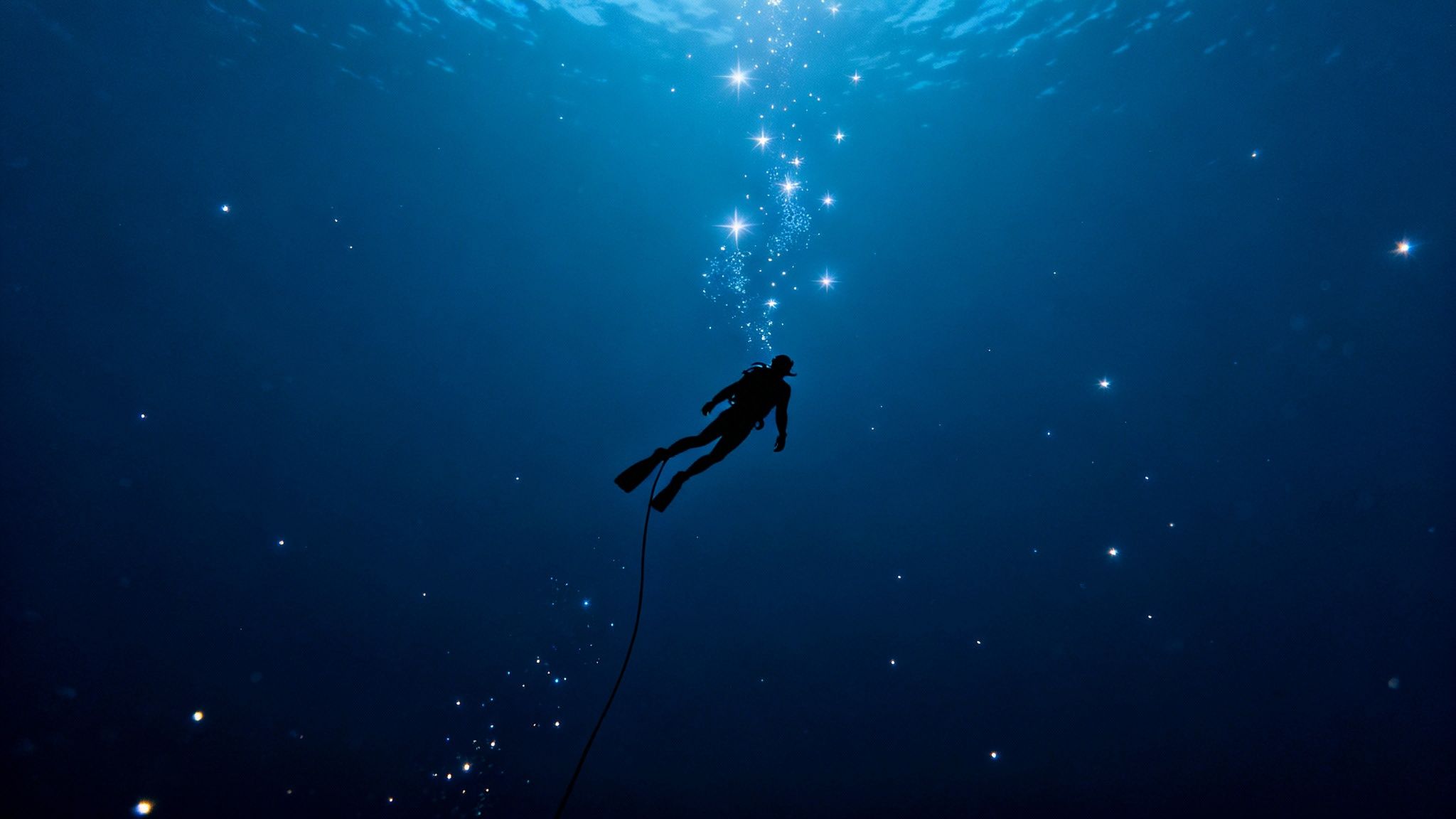
At the very top of any advanced diver’s bucket list should be the legendary Kona Blackwater Dive. Honestly, it feels less like scuba diving and more like a spacewalk through the deep ocean. The concept is as simple as it is profound: you drift tethered to a boat in thousands of feet of water, miles from shore, completely surrounded by the black of night.
Floating at a depth of about 50 feet, you become a silent observer of the largest migration on Earth. Every single night, countless bizarre and beautiful creatures rise from the abyss to feed near the surface. You’ll come face-to-face with gelatinous, glowing organisms and alien-like larval creatures that seem dreamed up for a sci-fi movie.
The Blackwater Dive is a truly unique experience that attracts seasoned divers and underwater photographers from across the globe. It's an opportunity to see a part of the ocean's ecosystem that remains largely mysterious and unseen by human eyes.
Because you’re in the open ocean at night, this dive requires unshakable buoyancy control and a very calm demeanor. It’s an absolute must for any diver seeking an adventure that will leave their friends speechless.
Deeper Reefs and Pelagic Encounters
Beyond the surreal blackwater experience, the Big Island has plenty of advanced dives that take you to deeper reefs and more challenging environments. These sites are often exposed to currents, which act like underwater highways for bigger, more impressive marine life.
Advanced charters specifically seek out these spots, known for their potential to attract pelagic species. Dives like these often include:
- Deep Ledges and Drop-Offs: Exploring the very edge of the volcanic shelf where the reef plummets into the deep blue. This is prime territory for schools of jacks and the occasional shark.
- Current-Swept Pinnacles: Navigating submerged volcanic peaks where currents bring in nutrient-rich water, attracting eagle rays and sometimes larger sharks.
- Complex Lava Formations: Venturing into intricate cavern systems and lava tubes that demand advanced training and pinpoint buoyancy.
These dives aren't just about going deeper; they're about handling dynamic conditions and being ready for anything. The right certification, like Advanced Open Water or an equivalent, is a must, along with recent dive experience. The reward is a chance to see the Kona coast in its raw, untamed form.
For those with the right credentials, these premium advanced dive trips are your ticket to exploring remote sites far off the beaten path for a truly exclusive and thrilling day of diving.
How to Choose the Right Dive Operator in Kona
Picking the right dive operator is probably the most important decision you'll make for your entire trip. This single choice dictates everything about your underwater experience—from safety and comfort to the quality of the dives themselves. The right shop isn't just a place that rents gear; they're your guide to the hidden world of scuba diving Big Island Hawaii.
With plenty of boats lining the Kona coast, it's easy to get overwhelmed. But I always tell people to look past the price tag. The best operators stand out with their flawless safety records, comfortable boats, and a crew that genuinely loves what they do.
Safety and Professionalism First
Let’s be clear: your safety underwater is everything. A top-tier dive operation will have a perfect safety record, period. Their crew will be made up of seasoned, professional divemasters and instructors who you can trust implicitly.
Don't ever feel shy about asking questions before you book. Ask about their safety procedures, what they do in an emergency, and how experienced their guides are. A great shop will be proud to tell you. It’s the bedrock of a good operation and gives you the peace of mind to actually enjoy your dive.
The Small Group Advantage
Here’s a pro tip: one of the biggest differences between a "meh" dive and an incredible one is the number of people in your group. Operators who limit their group sizes, like Kona Honu Divers, just offer a better, more personal experience. Fewer divers per guide means more attention for you.
It's simple, really. Smaller groups are safer because a guide can easily keep an eye on everyone. It also makes for a much more relaxed dive, where you can explore at your own pace without a crowd of fins kicking in your face.
This approach gives you the space to actually soak in the sights, from the intricate lava formations to the incredible marine life. You’ll also feel more comfortable asking questions and tapping into your guide’s local knowledge. To go deeper on this, check out our complete guide on how to choose a Kona dive shop.
Boat Comfort and Amenities
Never underestimate the importance of the boat! You'll be spending a lot of time on it between dives, so comfort is key. A well-kept, spacious boat with basics like a marine head (restroom), a freshwater shower for rinsing off, and plenty of shade can make a world of difference.
The best companies invest in custom-built boats designed specifically for divers. Look for little things that show they care, like easy-to-use ladders, separate rinse tanks for cameras, and free snacks and drinks. These details are what turn a good day of diving into a great one.
Environmental Stewardship
Those beautiful reefs you’re coming to see are delicate. Choosing an operator that cares about the ocean helps protect these underwater treasures for years to come. The most responsible companies actively practice and preach reef-safe diving.
This means they should be:
- Enforcing a strict "no-touch" policy for all marine life, especially coral.
- Providing reef-safe sunscreen for all their guests to use.
- Getting involved in local conservation, like reef cleanup days.
When you spend your money with operators who act as stewards of the ocean, you’re making a real difference.
Comparing Top-Rated Kona Dive Shops
Don't just take my word for it—see what other divers have to say. Below are real-time reviews for some of Kona’s most respected dive operators.
Kona Honu Divers
Jack's Diving Locker
Big Island Divers
Ready to book your Kona adventure with a top-rated crew?
Your Big Island Scuba Questions, Answered
Planning a dive trip to the Big Island can spark a lot of questions. To help you get ready for an incredible underwater adventure, we've pulled together answers to the things we get asked most often. Getting these details ironed out beforehand means you can relax and focus on what really matters—soaking in the magic of Hawaii's underwater world.
From the best season to visit to what to toss in your suitcase, here's the practical info you need to know.
What’s the Best Time of Year to Scuba Dive on the Big Island?
One of the absolute best things about diving here is that there's truly no "off-season." The Kona coast is a diver's dream year-round. This is all thanks to the island's massive volcanoes, which act as a natural shield against the trade winds, keeping the waters consistently calm and clear.
Water temperatures are always comfortable, hovering between a pleasant 75°F (24°C) in the winter and a bath-like 82°F (28°C) in late summer. And the visibility? It's often off the charts, frequently stretching beyond 100 feet. That kind of clarity is a gift for spotting marine life and for any underwater photographers out there.
While any time is a great time to jump in, a couple of seasons have their own special perks:
- Summer (May to October): This is when you'll find the flattest, calmest surface conditions. It makes for exceptionally smooth boat rides and super easy entries and exits from the water.
- Winter (November to April): Welcome to humpback whale season. While you're not guaranteed to see them on a dive, you can often hear their hauntingly beautiful songs echoing through the water. It’s a truly magical experience you'll never forget.
Do I Need to Be Certified to Scuba Dive in Hawaii?
Nope! You don't need a certification to get your first taste of Hawaii's underwater world. Reputable dive shops, including us here at Kona Honu Divers, offer an introductory program called "Discover Scuba Diving."
It’s designed from the ground up for complete beginners. A seasoned instructor will walk you through the basic skills and safety rules in a calm, shallow environment. Once you feel comfortable, they'll guide you on a real dive over a beautiful, shallow reef. It’s the perfect, low-commitment way to see if scuba diving is for you.
That said, for the vast majority of our dive tours—especially signature experiences like the Manta Ray Night Dive or any deeper sites—you will need to have at least an Open Water Diver certification.
What Marine Life Can I Expect to See in Kona?
The sheer biodiversity along the Kona coast is staggering. The unique underwater landscape, formed by ancient lava flows, has created the perfect home for an incredible variety of marine creatures.
On a typical daytime dive, you’re almost guaranteed to see Hawaiian green sea turtles (honu)—they are everywhere! You can also expect to be greeted by huge schools of colorful reef fish, from butterflyfish and parrotfish to angelfish and tangs. Keep your eyes peeled for moray eels poking their heads out of crevices, octopuses camouflaged against the rocks, and maybe even a hard-to-spot frogfish.
One of the biggest thrills for our guests is the spinner dolphins. We often see them putting on an acrobatic show in the boat's wake on our way to the dive site. If you're really lucky, a pod might even swim by and check you out underwater.
Of course, our specialty dives are all about unique encounters. The Manta Ray Night Dive gets you up close with these gentle giants, while the Kona Blackwater Dive reveals a bizarre and fascinating world of bioluminescent creatures that migrate from the deep. You can explore all the amazing Kona diving tours we offer to find your perfect adventure.
What Should I Pack for a Big Island Dive Trip?
While we provide all the essential scuba gear—BCD, regulator, tanks, and weights—many divers find they're more comfortable bringing a few of their own personal items. A good fit can make a world of difference.
Here’s a quick checklist of things to consider packing:
- Personal Gear: Your own mask, snorkel, and fins are always a great idea. A mask that fits your face perfectly and doesn't leak is worth its weight in gold.
- Wetsuit: A 3mm wetsuit is usually the sweet spot for Kona's water temps. If you know you get chilly easily, you might want to bring a 5mm, especially for winter dives or night dives.
- Reef-Safe Sunscreen: This is non-negotiable. Standard sunscreens contain chemicals that are devastating to our coral reefs. Please help us protect this fragile ecosystem by only using reef-safe formulas.
- Boat Essentials: Don't forget a towel, a dry bag to keep your phone and keys safe, and a reusable water bottle. And absolutely pack your underwater camera—you’re going to be making memories you'll want to look back on forever!
Your underwater adventure is just a click away. At Kona Honu Divers, we are dedicated to providing a safe, fun, and unforgettable experience exploring the best that scuba diving Big Island Hawaii has to offer.