
Welcome to the ultimate guide for scuba diving Big Island Hawaii, where ancient volcanic fury meets one of the most vibrant marine ecosystems on the planet. The Kona coast, in particular, is a world-class destination. It offers uniquely calm, crystal-clear waters that are perfect for divers of every skill level, from your first breath underwater to your hundredth dive.
Think of this as your personal roadmap to an unforgettable underwater adventure.
Exploring the Underwater World of the Big Island
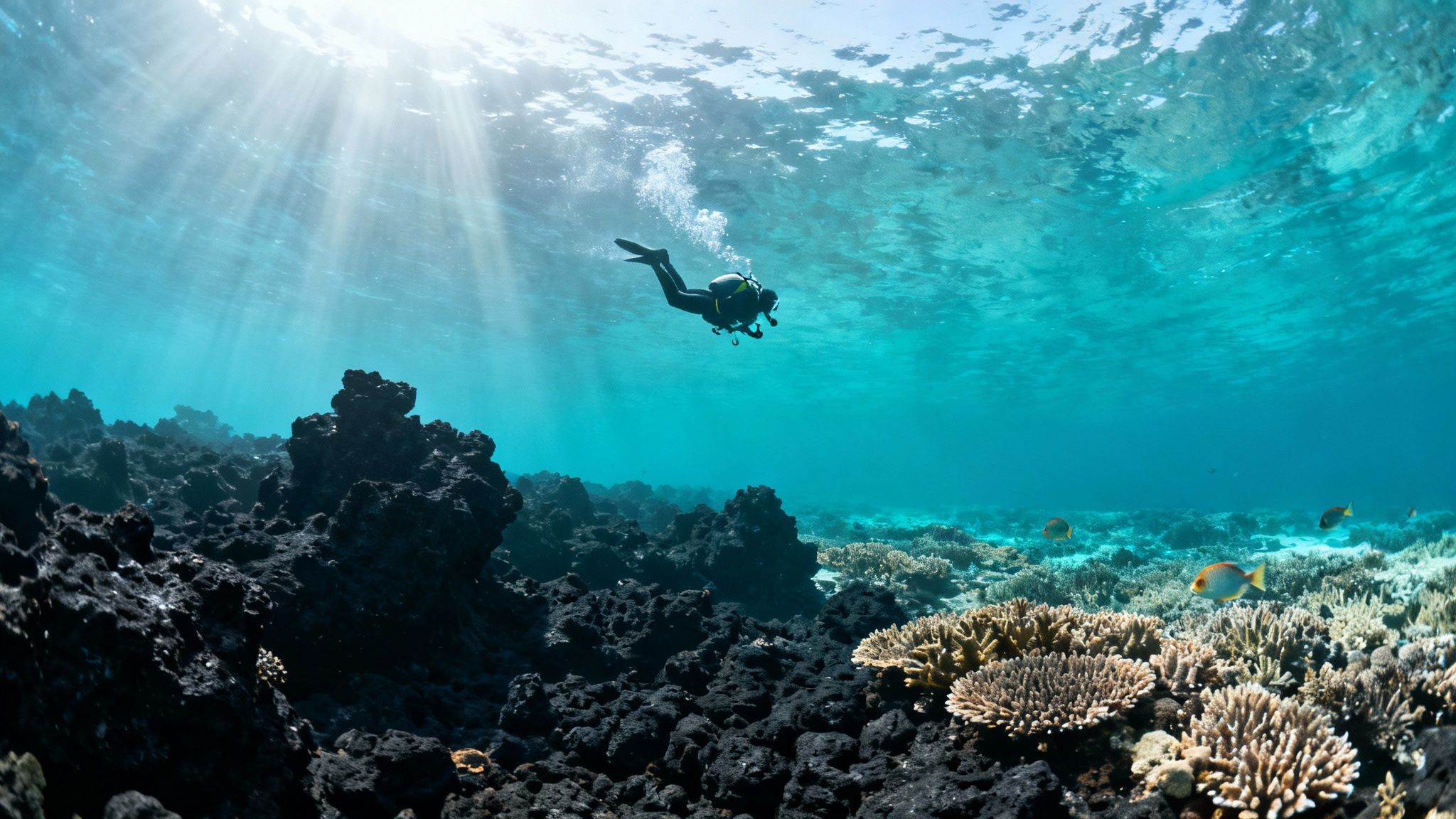
The Big Island isn't just another pretty spot in the Pacific; it’s an underwater world sculpted by fire and sea. The island’s volcanic heart has created a dramatic, breathtaking topography below the waves. Picture yourself descending along ancient lava tubes, navigating through majestic archways, and exploring swim-throughs carved by molten rock centuries ago. It's this raw geology that provides a stunning stage for the abundant marine life that calls this place home.
One of Kona's best-kept secrets is its incredible water conditions. Unlike other Hawaiian islands that get battered by open-ocean swells, the Kona coast is tucked away in the protective shadow of the massive volcanoes Mauna Loa and Hualalai. This natural barrier blesses us with exceptionally calm and clear water year-round. It’s not uncommon for visibility to exceed 100 feet, revealing every intricate detail of the reef and its colorful residents.
Big Island Diving At A Glance
For those who want the highlights right away, here's a quick look at what makes diving here so special.
| Feature | Description | Best For |
|---|---|---|
| Volcanic Topography | Lava tubes, arches, and dramatic drop-offs formed by ancient lava flows. | Explorers, photographers, and divers who love unique underwater landscapes. |
| Calm, Clear Waters | Protected by massive volcanoes, the Kona coast offers incredible visibility (100+ feet) and gentle conditions. | All divers, from brand-new beginners to seasoned professionals. |
| Endemic Species | Over 20% of the marine life here is found nowhere else on Earth, including many unique reef fish. | Wildlife enthusiasts and anyone wanting to see truly rare creatures. |
| Manta Ray Night Dive | A world-famous, bucket-list experience diving with gentle giant manta rays at night. | Thrill-seekers and divers looking for a once-in-a-lifetime encounter. |
| Pelagic Blackwater Dive | A unique dive into the deep, open ocean at night to see bizarre and bioluminescent creatures. | Advanced divers and the truly adventurous. |
This table just scratches the surface, but it gives you a taste of the incredible variety and quality of diving waiting for you on the Big Island.
What Makes Kona Diving Truly Special
Diving in Kona is about more than just checking fish off a list; it’s about immersing yourself in a healthy, thriving ecosystem. It's a place where you can find species that exist nowhere else on the planet—over 20% of the fish here are endemic to Hawaii.
This guide is built to walk you through everything that makes scuba diving Big Island Hawaii so exceptional. We’ll cover the can’t-miss experiences and the practical details you need to plan your trip.
Here's what's in store:
- Iconic Encounters: We'll kick things off with the world-famous Manta Ray Night Dive, an ethereal underwater ballet that has rightfully put Kona on the global diving map.
- Pristine Reefs: From there, we'll explore protected marine sanctuaries and vibrant coral gardens teeming with green sea turtles, curious reef fish, and elusive octopuses.
- Thrilling Adventures: For those with more experience under their weight belt, we'll dive into unique challenges like the Pelagic Blackwater Dive, a journey into the deep to witness the strange and beautiful creatures of the open ocean.
Consider this your complete playbook for planning the ultimate dive trip. With Kona Honu Divers as your guide, you’ll be ready for an extraordinary adventure. To see all the guided experiences we offer, feel free to check out our diving tours page.
Experiencing the Famous Manta Ray Night Dive
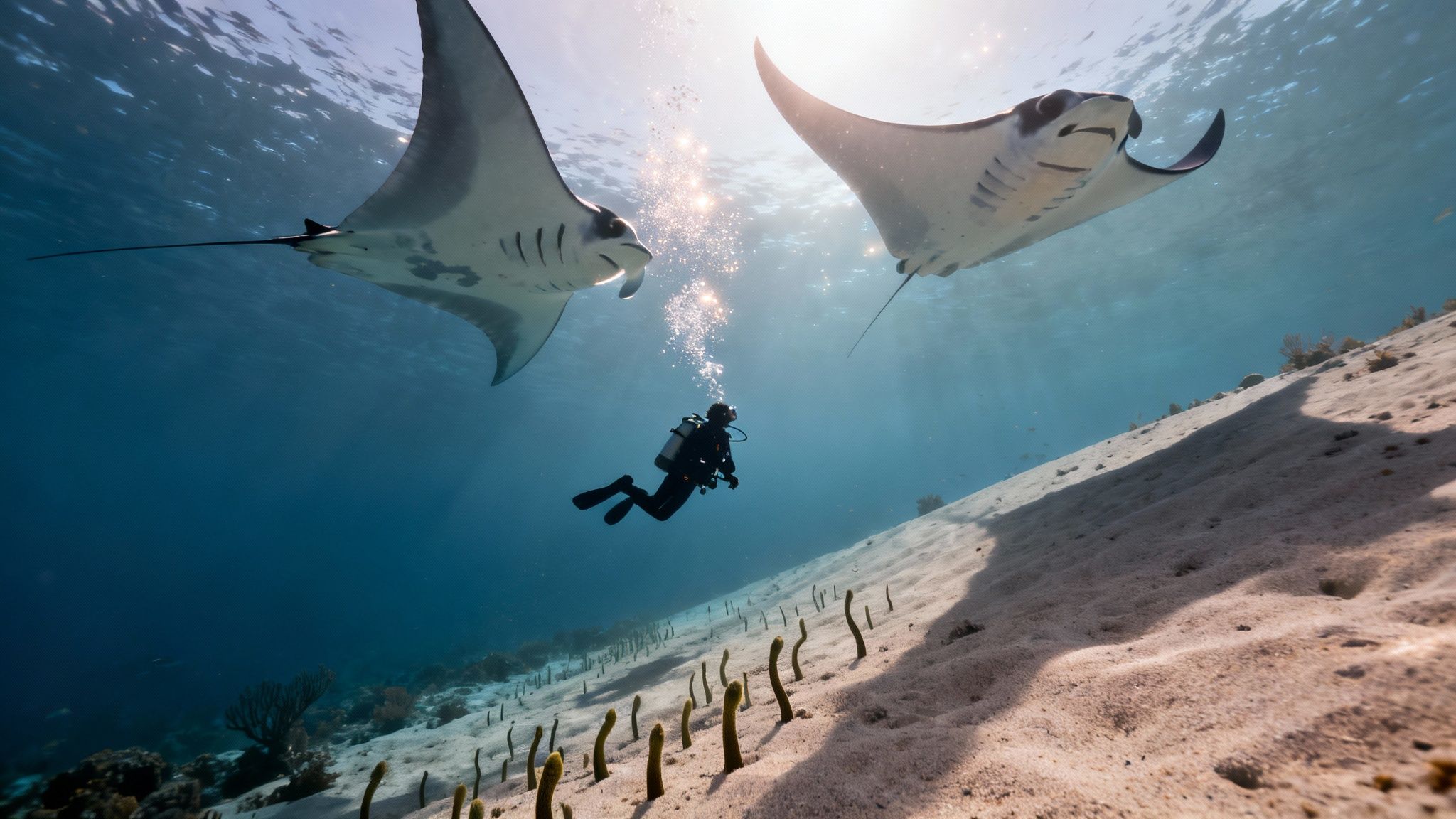
The Manta Ray Night Dive isn't just another dive to tick off a list; it’s a true bucket-list spectacle that makes scuba diving Big Island Hawaii legendary. Imagine an underwater ballet where gentle giants perform acrobatics just inches from your face. It's no wonder this dive is consistently ranked among the best in the world.
The whole encounter is built on a pretty clever—and completely natural—idea. We set up powerful, eco-friendly lights on the seafloor. These lights act like a magnet for plankton, the microscopic organisms that manta rays love to eat. Before you know it, the local reef mantas, who live here year-round, show up for an easy meal, swooping and barrel-rolling through the light beams.
It's a carefully managed and highly responsible experience. Manta rays are protected, and their well-being is our absolute top priority. We have all divers settle on the seafloor, creating a safe viewing arena that leaves the water column open for the mantas to move freely and feed without being disturbed.
Why Garden Eel Cove Is The Premier Manta Dive Site
While you might hear about a few different manta dive locations, they aren't all created equal. We exclusively run our manta ray dive tours at Garden Eel Cove (lovingly nicknamed Manta Heaven), and for very good reason. This spot is the superior choice because it consistently delivers a better, safer, and more magical experience.
For starters, Garden Eel Cove is tucked into a naturally protected bay. This shields it from the open ocean swells that can make other sites choppy and uncomfortable, especially at night. Calmer conditions and less surge mean you can relax on the bottom and just enjoy the show.
The underwater landscape here is perfect, too. It has a natural, amphitheater-like sandy patch that creates a better viewing area where everyone can gather. This layout gives everyone a front-row seat without crowding each other or harming the surrounding reef. Speaking of the reef, it’s one of the better reefs in the area—vibrant and healthy, providing a stunning backdrop while you wait for the main event to begin.
The Manta Ray Night Dive in Kona is an experience of a lifetime. The sight of these massive, graceful creatures gliding effortlessly through the darkness is something that truly has to be seen to be believed. It’s a powerful reminder of the beauty and wonder of the underwater world.
The Big Island has rightfully earned its place as one of the world's best scuba destinations, and this dive is a huge part of that. We see an 85-90% success rate for manta sightings, which is simply incredible. That kind of consistency is almost unheard of for wild animal encounters and has made Kona's manta dive famous around the globe. You can learn more about what makes Big Island diving so unique here.
What to Expect on Your Manta Adventure
Your adventure begins as the sun starts to dip below the horizon. We'll give you a thorough briefing on the dive plan and, most importantly, how to interact responsibly with the mantas. As twilight fades to black, you'll gear up, hop in, and descend to our designated viewing spot on the ocean floor.
Once everyone is settled, the "campfire" of lights is turned on, and the magic begins. You'll hear the muffled sounds of awe from your fellow divers as the first ghostly shape glides into the light.
Here's a quick rundown of what you'll see:
- The Approach: Mantas are curious. They will often glide right up to the group, sometimes passing just inches away as they scoop up plankton.
- The Ballet: Get ready to watch them perform amazing underwater acrobatics. They swoop, they turn, and they do these incredible barrel rolls with their giant mouths wide open.
- Safety First: Mantas are gentle giants. They're filter feeders with no teeth, stingers, or barbs, making them completely harmless. The most important rule is simple: look, but don't touch. Touching a manta ray can remove the protective slime coat on its skin, leaving it vulnerable to infection.
Going with a reputable, conservation-minded operator like Kona Honu Divers ensures your experience is not only breathtaking but also respectful of these magnificent animals.
Discovering Top Dive Sites Along the Kona Coast
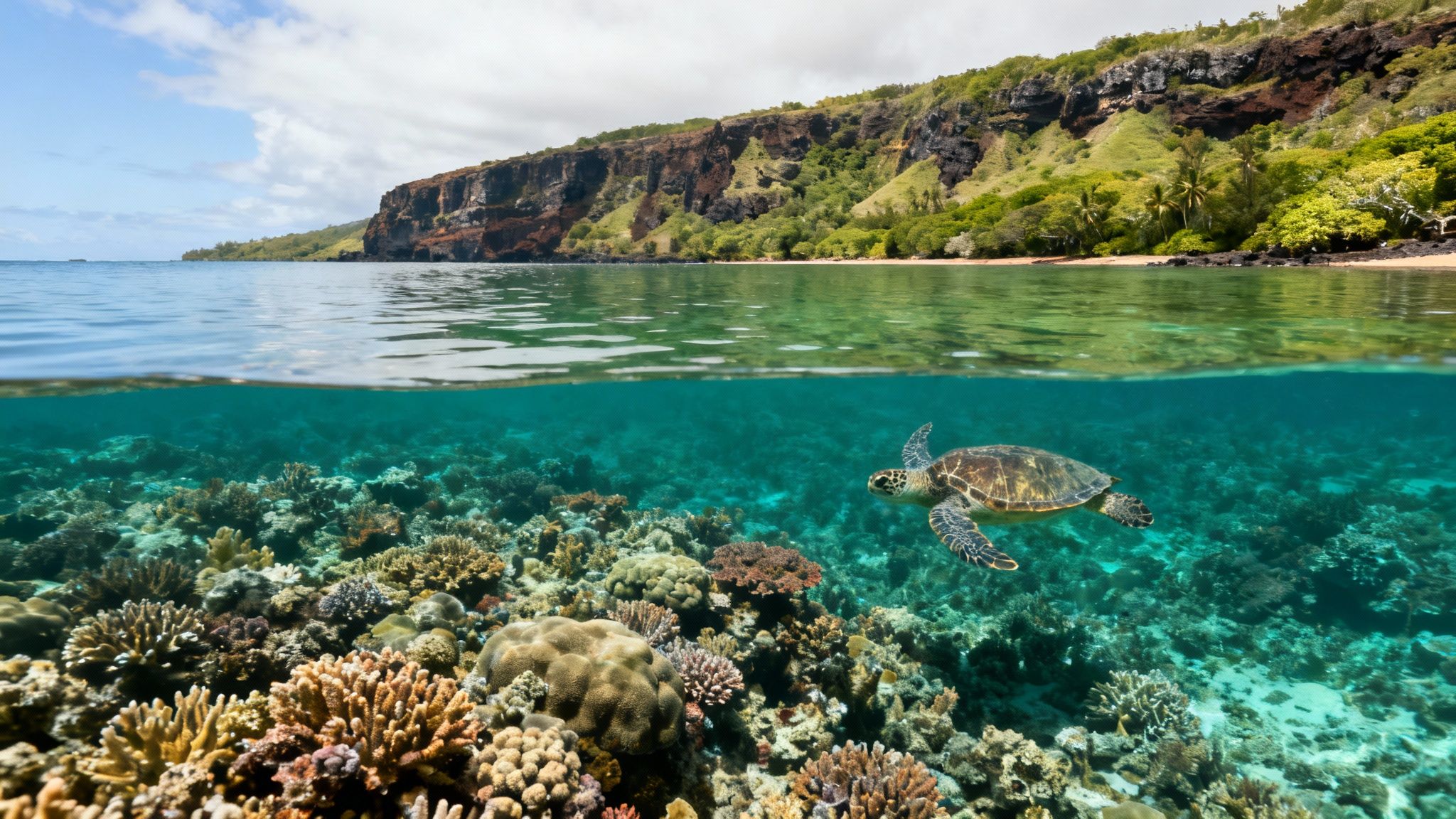
While the Manta Ray Night Dive is an absolute must-do, it’s just the beginning of what the Kona coast has to offer. The Big Island's volcanic past has left behind an incredible underwater legacy—a playground of dramatic arches, ancient lava tubes, and sprawling coral gardens.
This unique geology creates a massive variety of habitats, which in turn attracts an amazing diversity of marine life. It means that no two dives are ever the same. Many of these world-class spots are just a short boat ride from shore, making them easily accessible for a day of exploration.
Kealakekua Bay: A Pristine Marine Sanctuary
If there's one place that perfectly captures the magic of Kona diving, it's Kealakekua Bay. This isn't just another pretty spot; it's a federally protected Marine Life Conservation District. That special status means you're diving in an ecosystem that shows what a truly healthy Hawaiian reef is supposed to look like.
The bay’s natural geography shields it from the open ocean, creating calm, crystal-clear conditions that are perfect for divers of every skill level. We're talking about visibility that often pushes past 100 feet. Since all fishing is prohibited, the marine life has absolutely flourished, with populations thriving at densities you just don't see anywhere else.
Diving here honestly feels like you’ve been dropped into the world's best-kept aquarium. You can expect to see:
- Vibrant Coral Gardens: The reef is just buzzing with life, with intricate hard and soft corals providing a home for countless fish.
- Abundant Marine Life: It’s a daily show starring huge schools of colorful reef fish, gentle Hawaiian green sea turtles (honu), and pods of playful spinner dolphins.
- Historical Significance: You're also exploring a piece of history, with the Captain Cook Monument standing watch over the bay.
Exploring Lava Tubes and Unique Topography
The volcanic forces that built the Big Island didn't just stop at the water's edge. Below the surface, divers get to explore a world sculpted by ancient lava flows. These formations make for some of the most exciting and memorable scuba diving Big Island Hawaii has to offer.
Dive sites like Golden Arches or Turtle Pinnacle are a photographer’s dream, full of dramatic structures you won't find anywhere else. Imagine gliding through a massive underwater archway or navigating a towering pinnacle encrusted with coral. These sites aren't just stunning to look at; they're vital habitats for all kinds of marine creatures.
Encounters with Unique Marine Creatures
Beyond the turtles and schools of tropical fish, Kona’s reefs are home to some of the ocean's most fascinating and bizarre residents. The secret to finding them is knowing exactly where—and how—to look. This is where a great local guide makes all the difference. Our guides have logged thousands of hours on these reefs and have a sixth sense for spotting even the sneakiest, most camouflaged critters.
Some of the special encounters you might have include:
- Frogfish: These guys are the undisputed masters of camouflage. They're ambush predators that can blend in so perfectly with the surrounding sponges that you could swim right past them.
- Eels: You'll find a whole cast of characters peeking out from reef crevices, from the common yellowmargin moray to the much rarer and more ornate dragon moray.
- Octopus (He'e): Spotting one of these intelligent creatures is a real thrill. They are experts at changing their color and skin texture to vanish into their surroundings.
The Kona coast has dozens of incredible dive sites, each with its own personality and secrets to share. To help you figure out where you want to go, we’ve put together a detailed overview of our favorite spots. You can learn more about the dive sites Kona Honu Divers will take you to and start planning your next adventure.
Exploring Advanced and Unique Dive Experiences
For certified divers with a real taste for adventure, the Big Island offers experiences that go way beyond the beautiful reefs and into the realm of the truly unforgettable. These advanced dives are designed to push your skills and reward you with encounters that few people ever get to witness.
Of course, the vibrant coral gardens are incredible. But for those with the right training, there are deeper, more challenging sites just waiting to be explored. Our advanced diving opportunities can take you through intricate lava tubes at greater depths, or to sites with stronger currents where you’re more likely to meet sharks and rays. You get to see the pristine deep reefs that most divers miss entirely.
If you’re a certified diver ready for that next step, you can see what’s involved on our advanced dive tour page.
The Pelagic Blackwater Dive: An Otherworldly Adventure
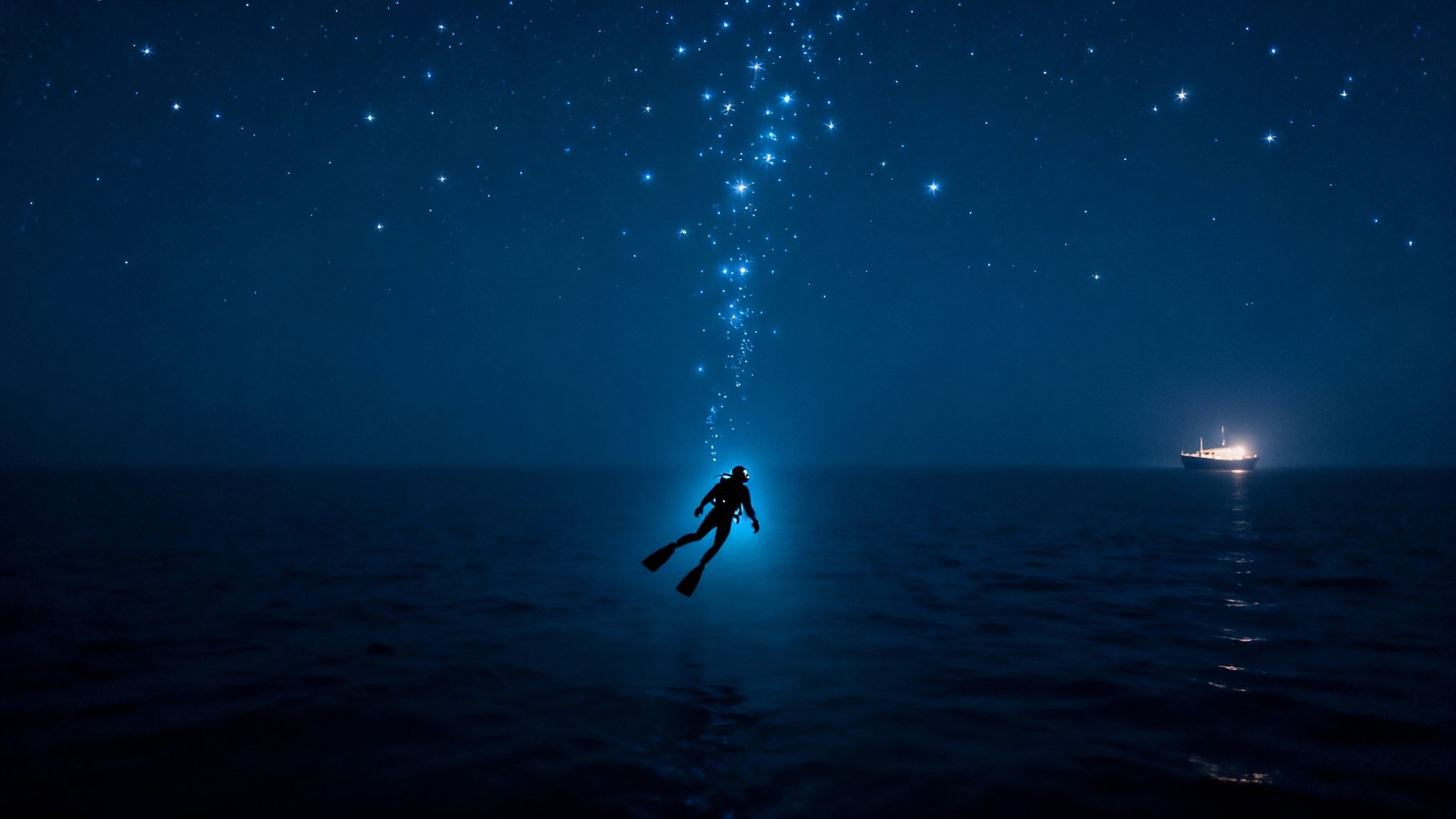
Among the most unique offerings in scuba diving Big Island Hawaii is the Pelagic Blackwater Dive. Forget the reef—this is a blue-water, open-ocean experience that feels more like floating through outer space than swimming in the sea. The dive takes place miles offshore, over thousands of feet of water, where you drift at night while safely tethered to the boat.
As you float in the deep, inky blackness, you witness one of the planet's largest migrations. Every single night, countless strange and wonderful creatures rise from the abyss toward the surface to feed. Many of these animals are bioluminescent, creating their own light in the dark. It’s a mesmerizing light show put on by nature’s most bizarre and beautiful creations.
The Blackwater Dive is a humbling and surreal experience. You are suspended in the vastness of the deep ocean, surrounded by alien-like creatures that glow in the dark. It’s an adventure that completely redefines what a night dive can be.
This dive is a true journey into the unknown. The creatures you’ll see are often in their larval stages, looking completely different from their adult forms. You might encounter:
- Bioluminescent jellies pulsating with internal light.
- Translucent squid with intricate patterns and huge, curious eyes.
- Larval fish and eels that look like they came straight out of a science fiction movie.
Because this dive takes place in the deep, open ocean at night, it demands excellent buoyancy control and a calm, confident demeanor. For those who are ready, the Kona Blackwater Dive is an unforgettable expedition into a hidden world.
Exploring these advanced and unique sites reveals just how much variety the Kona coast holds. Each experience, from the deep lava tubes to the pelagic zone, offers a different perspective on this incredible marine environment. To get a better handle on the geology and ecology behind it all, you can learn more about what is unique about diving in Kona. The Big Island truly has something for every diver, from the curious beginner to the seasoned explorer seeking the next great adventure.
How to Choose the Right Kona Dive Operator
Picking the right dive boat for your Big Island scuba diving trip is probably the single most important decision you'll make. It’s not just about getting from the dock to the dive site—the crew, the boat, and the overall vibe can make or break your entire underwater experience.
A great dive shop doesn't just rent you gear and point you toward the water. They become part of the adventure. They’re the ones who keep you safe, show you the cool stuff, and make sure you’re having a blast from start to finish.
What Sets a Great Dive Shop Apart
So, what should you actually look for? Beyond the flashy website, a few things really matter. First and foremost: safety. Is their gear well-maintained? Do they have clear emergency plans? Are the guides certified professionals who look like they know what they’re doing?
Then, think about comfort. You'll be spending a fair bit of time on their boat, so things like space, shade, and decent rental gear make a huge difference. But the real secret sauce? A crew that genuinely loves Kona's waters and can’t wait to show you why.
Here's what separates the good from the truly exceptional:
- Small Group Sizes: Big cattle-car boats are no fun. Smaller groups mean your guide can give you more attention, you won't be bumping into other divers underwater, and the whole experience just feels more relaxed and personal.
- A Passionate Crew: You can always tell when someone is just doing a job versus when they're living their dream. The best guides are infectiously enthusiastic about the ocean and get just as excited as you do when they spot an octopus or a rare fish.
- Stellar Reputation: Word travels fast in the dive community. Check recent reviews. A long history of happy divers and amazing experiences is the best sign you’ve found a solid operator.
Why Kona Honu Divers Is a Top Choice
Here at Kona Honu Divers, we’ve built our entire operation around these ideas. We've always kept our groups small because we believe that’s the best way to dive. It allows our crew, who are all die-hard ocean lovers, to connect with every diver and share the little things that make Kona's reefs so special.
Our commitment to a top-notch experience shows in the feedback we get. We're genuinely proud of creating fun, safe, and unforgettable underwater adventures for everyone who steps aboard our diving tours.
Choosing a dive operator is like choosing a travel partner. You want someone reliable, knowledgeable, and genuinely excited to share the journey with you. A great operator ensures your focus is on the incredible underwater world, not on worrying about logistics or safety.
We believe that by showing you what to look for in a great dive operation, we empower you to make an informed choice. This ensures your Big Island scuba adventure is in the best possible hands, whether you dive with us or another reputable company.
Ready for an unforgettable dive with a top-rated crew?
Becoming a Certified Diver and Why Safety is Everything
When you’re exploring the underwater world, solid training isn't just a box to check—it’s the key that unlocks every safe and unforgettable dive. Think of it as your foundation. To truly appreciate Hawaii’s volcanic ledges and vibrant reefs, you need the skills to navigate them responsibly. Professional training gives you the confidence to handle whatever the ocean throws your way, so you can focus on the adventure.
Let's be real: Hawaii's waters demand respect. The state has some serious water safety challenges, and unfortunately, drowning rates are a real concern for many ocean activities. Scuba diving has an excellent safety record thanks to rigorous training standards, but these broader statistics are a sobering reminder of why we take it so seriously. Getting certified at a PADI 5-Star IDC dive center isn't just about learning to breathe underwater; it's about joining a culture of safety.
Your Path to Becoming a Certified Diver
Getting certified is your ticket to a lifetime of exploration. It's so much more than a plastic card in your wallet. It's about developing the competence and confidence to become a true ocean explorer. As a PADI 5-Star Instructor Development Center, we're held to the highest possible standards for training, safety, and professionalism. We live and breathe this stuff.
We have a straightforward path for anyone ready to take the plunge:
- PADI Discover Scuba Diving: Not sure if diving is for you? This is your test run. You'll learn the absolute basics in shallow water with an instructor right by your side before heading out for a genuine ocean dive. It’s all the thrill with none of the commitment.
- PADI Open Water Diver Certification: This is the big one—the most recognized scuba certification on the planet. Once you complete this course, you're certified to dive with a buddy anywhere in the world down to 60 feet (18 meters).
If you're not yet certified, there's no better place to learn than right here in Kona. Our instructors are experts at turning a simple vacation activity into a lifelong passion.
"Becoming a certified diver is one of the most rewarding things you can do. It's not just a skill; it's a passport to a hidden world that covers more than 70% of our planet. The confidence you gain from proper training is priceless."
Ready to start your own journey? We've put together a full guide on what to expect, whether you're looking for a one-day experience or a full certification course. Check out our options for beginner scuba diving on the Big Island and find the perfect fit for your adventure.
Your Big Island Diving Questions, Answered
Planning a dive trip can bring up a lot of questions. We get it. To make sure you feel totally prepared for your underwater adventure, we’ve put together answers to some of the most common things people ask about scuba diving on the Big Island.
What Is the Best Time of Year to Scuba Dive on the Big Island?
Here’s the fantastic news: there's really no bad time to dive here. The Big Island offers incredible diving year-round. Water temperatures are always comfortable, hovering around 75°F (24°C) in the winter and warming up to a beautiful 80°F (27°C) in the summer. Visibility is almost always great.
You might have heard about big winter swells in Hawaii, but the Kona coast is a special case. It's tucked away in the shadow of massive volcanoes, which shield us from the rough surf you'd find elsewhere from December to March. This means we get calm, dive-friendly conditions nearly every day. The best part? Winter is humpback whale season, and hearing their songs echo through the water while you’re diving is an experience you’ll never forget.
Do I Need to Be Certified to Go Scuba Diving?
Nope, not at all! If you’ve never dived before or aren't certified, our PADI Discover Scuba Diving experience is designed just for you. It's the perfect way to get a taste of the underwater world in a safe, fun, and supervised environment.
A professional instructor will walk you through the basics and some essential skills in shallow water. Once you're comfortable, you'll head out for a genuine ocean dive. It’s a fantastic introduction to scuba without the commitment of a full certification course.
What Marine Life Can I Expect to See?
The waters off the Big Island are just bursting with life. On any given daytime diving tour, you’re almost guaranteed to see Hawaiian green sea turtles (we call them honu), countless species of colorful tropical fish, moray eels peeking out from their dens, and maybe even an octopus.
Every dive site has its own personality, so you might also be lucky enough to spot dolphins, eagle rays, or graceful reef sharks. Of course, the star of the show for many is our world-famous Manta Ray Night Dive—an absolutely mind-blowing encounter with giant, gentle manta rays.
What Should I Bring on a Dive Trip?
We’ve got the heavy lifting covered. All your essential scuba gear—tanks, weights, BCD, regulators, and a wetsuit—is included. We also provide snacks and drinks to keep you fueled up on the boat.
All you really need to think about are your personal items. We suggest bringing:
- A towel to dry off
- Reef-safe sunscreen (this is important for our corals!)
- Sunglasses and a hat for sun protection
- A reusable water bottle to stay hydrated
If you have your own gear you love, feel free to bring it along. The most important thing to bring, though, is your sense of adventure!