
Picture this: you descend into warm, turquoise water, so clear it feels like you're floating in air. Ancient lava tubes, now home to a kaleidoscope of fish, form intricate mazes around you. A graceful sea turtle, a wise old honu, glides past without a care. This isn't a dream—it's what scuba diving on the Big Island of Hawaii is all about. It's a world-class adventure that truly belongs on every diver's bucket list.
Why the Big Island Is a Diver’s Underwater Paradise
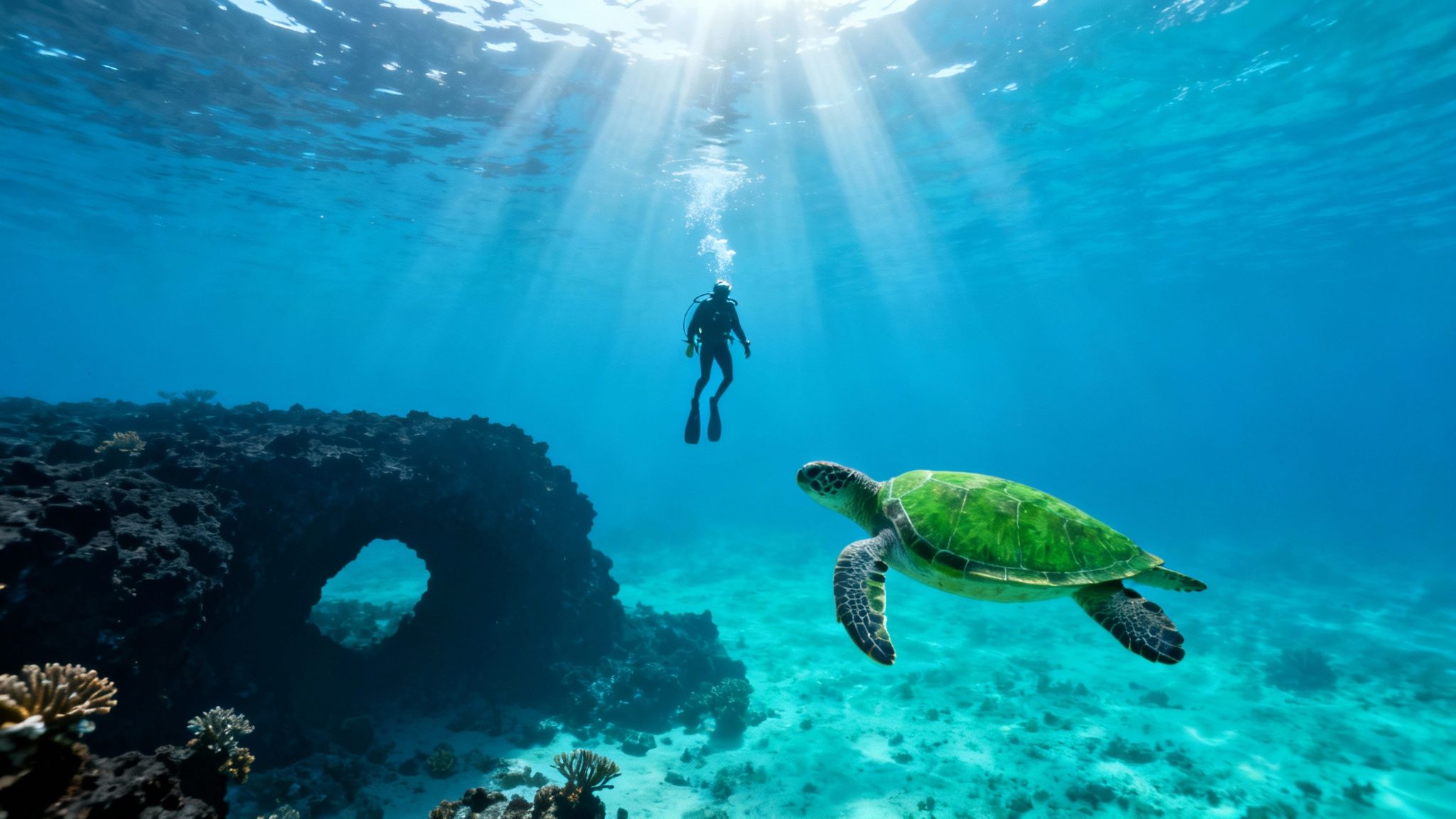
What sets the Big Island apart from other tropical spots is its raw, volcanic heart. This island is geologically young and still growing, and that fiery creation has forged an underwater landscape unlike any other. Instead of just rolling reefs, you get dramatic arches, massive caverns, and swim-throughs formed by ancient lava flows. It's this complex structure that creates the perfect home for an incredible diversity of marine life.
The real magic happens on the Kona coast. Tucked away on the island's western side, it’s shielded from the gusty trade winds by the colossal volcanoes of Mauna Loa and Hualālai. The result? The water here is almost always calm and stunningly clear, with visibility often stretching to 100 feet or more.
It’s this perfect storm of calm seas and dramatic volcanic terrain that makes every dive unforgettable. The reefs are thriving, packed with everything from tiny, colorful reef fish to curious eels and even larger open-ocean visitors.
What Makes Kona Diving So Special?
Diving in Kona is more than just getting in the water; it's an immersion into a unique ecosystem. You could spend your morning exploring lava formations that are thousands of years old, and your night witnessing one of the planet's most breathtaking natural ballets.
- Volcanic Landscapes: Get ready to navigate through submerged lava arches and explore vast underwater caverns. The underwater topography here is a direct result of volcanic activity, creating cliffs and canyons that drop off into the deep blue.
- Abundant Marine Life: Over 20% of the marine species here are endemic, meaning you can't find them anywhere else on Earth. You'll have constant run-ins with Hawaiian green sea turtles (honu), playful spinner dolphins, and if you're lucky, maybe even a majestic whale shark.
- World-Famous Night Dives: The Big Island is legendary for one dive in particular: the Manta Ray Night Dive. It’s a genuine bucket-list experience, and the odds are fantastic—tours report an 85-90% chance of seeing mantas up close. It’s no wonder divers come from all over the globe just for this. Discover more insights about what makes Big Island diving unique.
It doesn't matter if you're a freshly certified diver or have thousands of dives under your belt. The Big Island has something for everyone. From sun-drenched shallow reefs perfect for getting your fins wet to challenging deep dives that will thrill the most seasoned pros, the Kona coast is a true paradise just waiting to be explored.
Experience the Legendary Kona Manta Ray Night Dive
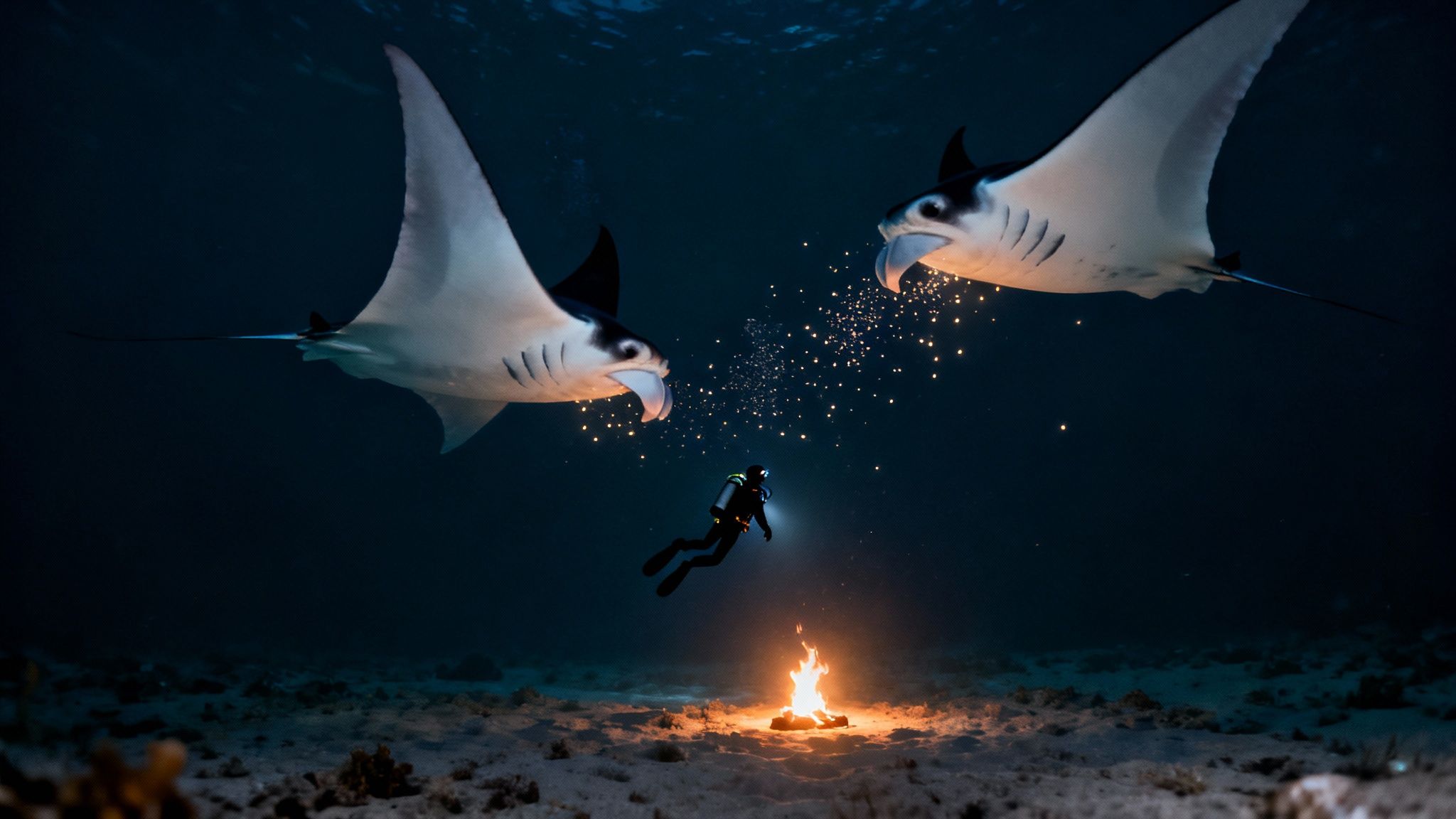
This isn't just another dive. It's an otherworldly underwater ballet that has rightfully earned its spot as one of the best night dives on the planet. The Kona Manta Ray Night Dive is something you have to see to believe—a primal, magical encounter you'll carry with you long after you surface. The Big Island is one of the very few places where you can reliably see this natural spectacle unfold.
The magic all starts with a beautifully simple idea. As the sun dips below the horizon, dive operators set up a powerful "campfire" of lights on the ocean floor. This intense glow acts like a massive bug zapper for the ocean, attracting clouds of plankton, which just so happens to be a manta ray's favorite meal. It doesn't take long for the main attraction to arrive.
What happens next is pure performance art. These majestic creatures, some with wingspans stretching up to 16 feet, glide, swoop, and perform effortless barrel rolls just inches over your head. You'll watch them filter the plankton-rich water, their huge mouths wide open, moving with a grace that seems impossible for their size. It’s a humbling, almost interactive experience as these gentle giants welcome you into their nightly ritual.
Why Garden Eel Cove Is The Superior Choice
While there are a couple of spots for this dive, Garden Eel Cove (often called Manta Heaven) is hands-down the superior choice for the dive tour. It’s located just offshore from the Kona International Airport in a bay that offers better protection from the open ocean, which usually translates to calmer, more comfortable conditions for divers.
The real secret to Garden Eel Cove's success is its underwater landscape. The viewing area is perfectly set up, allowing divers to settle on a sandy patch and look up at the show without kicking up sand or disturbing the fragile reef.
This protected location not only gives you a front-row seat to a better viewing area but is also surrounded by healthier, more vibrant reefs. That means your descent and ascent are part of the experience, giving you more to see and appreciate.
The Two-Dive Manta Experience
Most manta ray dive tours are structured as a two-tank trip. The first dive is a late-afternoon exploration of the reef, giving you a chance to see the site in daylight and get your bearings. You'll check out the beautiful coral gardens and see the local marine life before it turns in for the night, building the anticipation for what’s to come.
After a surface interval—where you'll likely be treated to a classic Kona sunset from the boat—you gear up for the main event as darkness sets in. This is when the lights switch on and the real show begins. For anyone interested in scuba diving Big Island Hawaii, this entire experience is an absolute must-do.
Manta Ray Night Dive Site Comparison
To help you decide, here's a quick look at how the two main manta ray dive sites stack up against each other. While both can offer incredible experiences, one generally provides a more consistent and comfortable environment.
| Feature | Garden Eel Cove (Superior Choice) | Manta Village (Alternative) |
|---|---|---|
| Location | North of Kona, near the airport | South of Kona, near the Sheraton Kona Resort |
| Conditions | More protected, generally calmer water | Can be exposed to swell, leading to rougher conditions |
| Manta Sightings | Very reliable, often more mantas | Good reliability, but can be less consistent |
| Crowds | Can be busy, but sites are well-managed by operators | Also popular, can feel crowded in a smaller area |
| Bottom Topography | Sandy "campfire" area with a better viewing area | Rockier bottom, can be more challenging to find a spot |
| Overall Experience | The premier, most consistent, and comfortable manta experience. | A solid backup option if conditions aren't good at Garden Eel Cove. |
Ultimately, Garden Eel Cove is our top recommendation for its reliability and superior setup. It's specifically chosen by top operators to give you the best possible show.
Want to learn more about these amazing animals? Check out our in-depth guide on the behavior of Kona's manta rays. This dive is so much more than just an activity; it's a genuine connection with one of the ocean's most majestic inhabitants.
Exploring the Top Dive Sites Along the Kona Coast

While the Manta Ray Night Dive gets a lot of the spotlight—and for good reason—it’s really just the opening act for what scuba diving Big Island Hawaii has to offer. The Kona coast is stacked with world-class dive sites, and each one has its own distinct personality. Think pristine coral gardens, dramatic volcanic formations, and everything in between.
Divers who stick around to explore beyond the mantas are in for a real treat. You’re rewarded with a staggering variety of marine life and underwater landscapes that are simply unforgettable. One day you could be drifting through a calm, protected bay, the next you're navigating a maze of ancient lava tubes. This diversity means every dive is a fresh adventure, perfect for building a truly memorable dive trip.
Kealakekua Bay: A Protected Marine Sanctuary
Kealakekua Bay isn't just another dive site; it's a living, breathing aquarium. As a protected marine life conservation district, it gives you a glimpse into what a truly thriving Hawaiian reef is supposed to look like. Because fishing and other activities are prohibited here, the corals and marine life have been allowed to flourish into a vibrant, densely packed ecosystem.
The first thing you’ll notice is the water clarity. It’s unreal. Visibility often pushes past 100 feet, creating this incredible sensation of flying over a massive underwater city. The water is usually calm and sheltered, making for a super relaxed dive where you can just soak in the sights: schools of bright reef fish, curious sea turtles, and intricate coral structures everywhere you look.
This historic bay, which is also home to the Captain Cook Monument, features dramatic drop-offs alongside sprawling coral gardens. It’s a photographer’s dream and an amazing spot for divers of all skill levels to see a healthy, untouched reef system up close.
Two Step: An Easy Entry to an Underwater Playground
Just a quick hop from the Puʻuhonua o Hōnaunau National Historical Park, you'll find a local favorite affectionately called "Two Step." The name comes from the two natural lava rock steps that create one of the easiest shore entries on the entire island. It’s no wonder it’s so popular with both divers and snorkelers.
The moment you slip into the water, you're greeted by a stunning shallow reef bursting with activity. Two Step is especially famous for frequent encounters with pods of playful spinner dolphins, which often come into the bay to rest during the day. While you can't plan an interaction—it’s always on their terms—seeing them in their natural habitat is pure magic.
The site itself is a healthy mix of hard corals, tons of fish, and interesting underwater terrain. Be sure to keep an eye out for:
- Hawaiian green sea turtles (honu) snoozing on the reef.
- Giant schools of yellow tang and butterflyfish.
- Moray eels peeking out from their rocky hideouts.
Lava Tubes and Arches: Exploring Volcanic Architecture
The Big Island’s volcanic heart is on full display below the surface. Some of the most thrilling scuba diving Big Island Hawaii experiences involve exploring the dramatic underwater structures carved out by ancient lava flows. These dives are a whole different ballgame, focusing on precise buoyancy control, navigation, and the pure excitement of discovery.
Sites like Golden Arches, Turtle Pinnacle, and Kaiwi Point are riddled with caverns, swim-throughs, and spectacular arches. These formations act as natural shelters for an incredible variety of marine creatures, including many endemic species you won’t see anywhere else on the planet. As you glide through a submerged lava tube, you might spot sleeping whitetip reef sharks, a shy octopus, or colorful nudibranchs clinging to the walls.
Diving these volcanic sites is like exploring a submerged sculpture garden built by nature itself. The way the sunlight filters through cracks and openings in the rock creates breathtaking scenes and some of the best photo ops on the island. To see the full range of locations, including these unique volcanic spots, check out the various Big Island diving options available.
Advanced Diving Adventures for Thrill Seekers
If you're an experienced diver, you already know the calm reefs and lava tubes are incredible. But they're just the starting point for scuba diving Big Island Hawaii. Once you’re ready to really push your limits and see things few people ever will, Kona delivers some truly mind-bending advanced dives.
These aren't just about depth; they're about stepping into entirely new worlds. These dives will test your skills, but the reward is an experience that feels like it’s straight out of a sci-fi film. This is for the diver who has nailed their buoyancy control, is completely comfortable in the water, and is hungry for something beyond the ordinary.
The Kona Blackwater Dive: An Otherworldly Experience
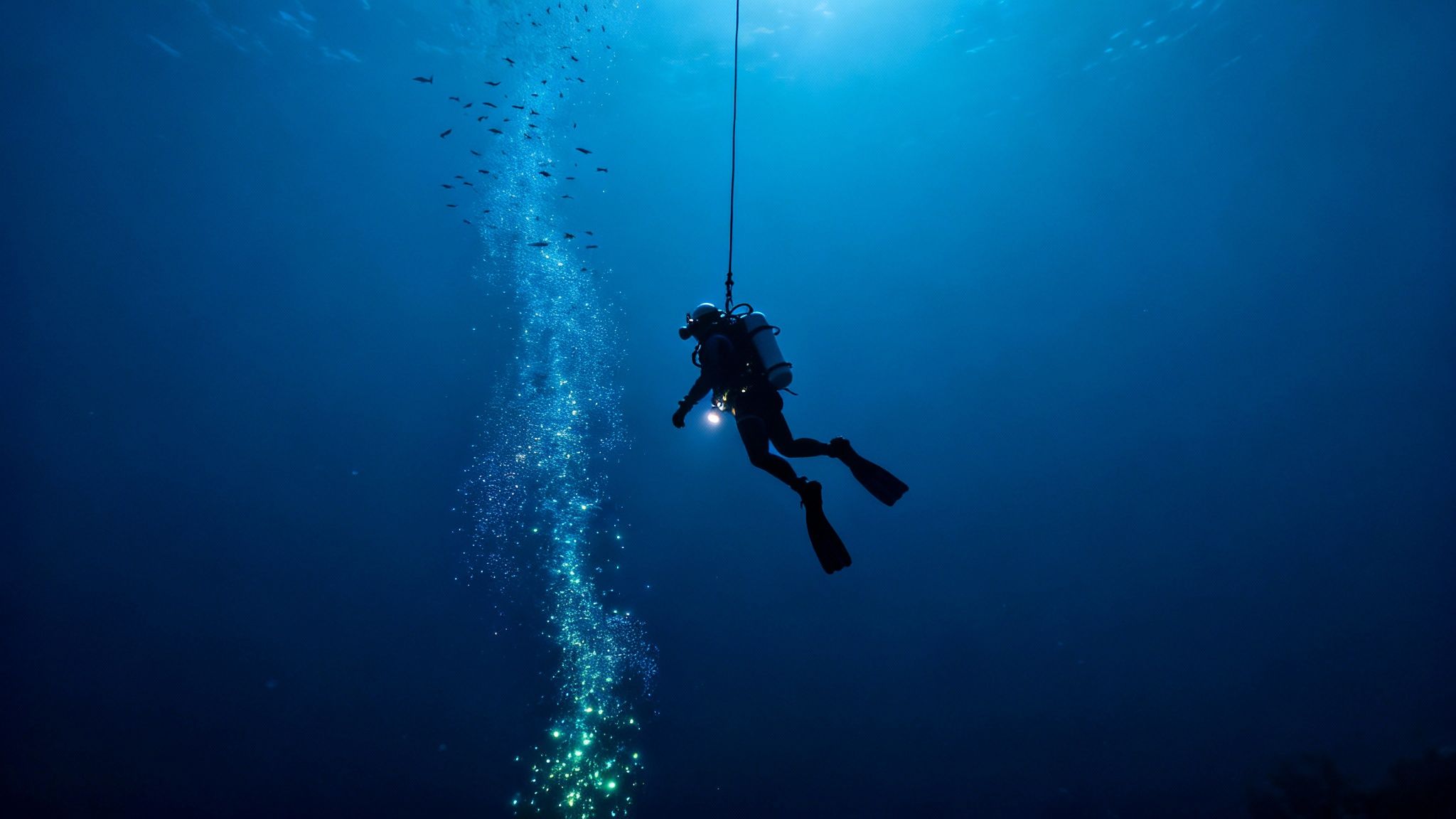
Picture this: you're floating in the absolute blackness of the open ocean, miles from shore, with 7,000 feet of water beneath you. The only thing connecting you to our world is a tether and the beam of your dive light. This is the Kona Blackwater Dive, and it’s less like scuba diving and more like space walking.
What you're doing is intercepting the largest vertical migration of life on Earth. Every single night, a parade of bizarre and beautiful deep-sea creatures travels up from the abyss to feed near the surface. You simply drift along, safely tethered, and watch as this alien procession materializes from the dark.
What makes the Blackwater Dive so surreal is that you’re not looking at anything, like a reef. You're just in the vast, empty water column. It forces your senses to focus on the tiny, glowing details emerging from an immense black canvas.
You'll see creatures that look like they were designed for a movie set—larval fish, see-through squid, psychedelic jellyfish, and shimmering comb jellies. It’s a completely different brand of night dive, one that’s all about pure exploration and discovery. For any diver looking for a legitimate, one-of-a-kind thrill, the Kona Blackwater Night Dive is an adventure you’ll never forget.
Premium Advanced Dive Charters
Beyond the blackwater experience, specialized charters are available to take seasoned divers to Kona's more remote and demanding sites. These trips are all about getting away from the crowds and exploring the wilder side of the Big Island.
These advanced charters usually take out smaller groups of certified divers, which allows for a more personalized and flexible day on the water. The whole point is to reach spots that bigger, mixed-level boats can't, rewarding skilled divers with pristine conditions and unique encounters.
Here’s what you can generally expect from these charters:
- Exploring Remote Locations: You'll head to dive sites much further up or down the coast that see way less boat traffic.
- Navigating Complex Terrain: Get ready to confidently tackle more intricate lava tubes, dramatic caverns, and deep, sweeping arches.
- Deeper Profiles: These trips often involve venturing to depths of 100 feet or more to see specific marine life and geological features.
These dives are perfect for anyone with an Advanced Open Water certification (or higher) who is comfortable with deep dive procedures and has their buoyancy dialed in. It’s your ticket to seeing a side of Kona that most divers miss out on. To really push your limits, check out these premium advanced dive trips and experience the absolute best the Big Island has to offer.
How to Choose the Right Kona Dive Operator
Let’s be honest: the dive operator you choose can absolutely make or break your trip. It's the one decision that separates a truly incredible day on the water from a frustrating, or even unsafe, experience. Picking a safe, reputable, and eco-conscious dive shop is the single most important call you'll make when planning your scuba diving Big Island Hawaii adventure.
A great operator is about so much more than just a fast boat. It's about a deep, unwavering commitment to safety, keeping groups small, and genuinely protecting the fragile marine world you’ve traveled so far to see. A passionate and knowledgeable crew transforms a good dive into an unforgettable one, pointing out creatures you’d never spot on your own and sharing stories about the local ecosystem.
Key Factors for Selecting a Dive Shop
When you start Googling Kona dive shops, the number of options can feel a bit overwhelming. The best way to cut through the noise is to focus on a few non-negotiable factors that are the hallmarks of a top-tier company. A little bit of homework now will pay off in a huge way later.
Here’s what you should be looking for:
- Safety Record and Certifications: This is everything. Only consider operators with a spotless safety record and affiliations with well-known agencies like PADI or SSI. Their divemasters and instructors should be seasoned pros, not fresh out of training.
- Small Group Sizes: Avoid the "cattle boats" that pack divers in like sardines. Smaller groups mean more personal attention from your guide, a less crowded dive site, and a much more relaxed and safe experience for everyone on board.
- Quality of Boats and Gear: A well-maintained boat with all the proper safety equipment is an absolute must. If you plan on renting gear, check that it's modern and in excellent condition. Little things, like offering complimentary Nitrox, show a real commitment to diver safety and a better overall experience.
- Commitment to Conservation: The best operators are true stewards of the ocean. They are passionate about protecting the reefs, follow responsible diving practices, and take the time to educate their guests on how to be better ocean ambassadors.
Choosing a dive operator isn't just a transaction. You're looking for a company whose values match your own. You're a guest in a delicate underwater world, and your operator's respect for it should be obvious.
Top-Rated Dive Operators in Kona
To get a real sense of a company, you have to see what other divers are saying. Real-world reviews give you the unvarnished truth about a company's professionalism, the attitude of the crew, and the quality of the experience. The Big Island's dive industry has become a huge part of the local economy, and for good reason. Certified dive operators like Big Island Divers, who have reported certifying hundreds of new divers each year, are a testament to the growing global interest in Kona's unique waters.
To help you get started, here are a few of the most respected and well-loved operators on the Kona coast.
Kona Honu Divers
These guys are legendary for their customer service, incredibly experienced crew, and custom-built boats designed for pure diver comfort. They are consistently a top pick for both the Manta Ray Night Dive and more advanced charters.
Big Island Divers
As a long-standing Kona operator, they have a rock-solid reputation. They offer a huge range of dive trips and certification courses that cater to everyone from first-timers to seasoned technical divers.
Jack's Diving Locker
Another cornerstone of the Kona diving community, Jack's is known for its excellent training programs and a welcoming, family-friendly vibe. They run great trips for both divers and snorkelers. For a deeper dive, check out our guide on how to choose a Kona dive shop.
By comparing these key factors and, most importantly, reading recent reviews, you can confidently book an operator that will make sure your Kona diving adventure is everything you've dreamed of.
Answering Your Big Island Scuba Diving Questions
It's totally normal to have a ton of questions when you're planning the dive trip of a lifetime. This last section is all about clearing those up, giving you straightforward answers to the most common things people ask about scuba diving Big Island Hawaii. Think of this as the final piece of the puzzle, so you can lock in your plans and just get excited.
We’ll get into the nitty-gritty of the best seasons, what the water is really like, and everything in between. By the time you're done here, you'll have everything you need to make your underwater adventure smooth, safe, and unforgettable.
When Is the Best Time to Go Scuba Diving on the Big Island?
Here’s one of the best things about Kona: you can dive here all year long. The island's massive volcanoes act as a natural shield, protecting the Kona coast from the gusty trade winds. This means the water is almost always calm enough for a great day of diving.
Still, there are a few seasonal quirks you'll want to know about:
- Summer (May to October): This is what most people consider prime time. The water is warmer—often in the low 80s°F (around 27-28°C)—and the ocean is usually glassy calm. It’s perfect for long, relaxing dives where you barely need a wetsuit.
- Winter (November to April): The water does cool down a bit, dipping into the mid-70s°F (around 24-25°C). While you might get a little surface chop now and then, the real magic of winter is the humpback whales. Hearing their haunting songs echo through the water while you're on a dive is an experience that will stick with you forever.
No matter when you come, the visibility is consistently amazing, often stretching past 100 feet. You really can't lose.
What Are the Water Temperatures and Visibility Like?
Kona’s underwater world is famous for being incredibly clear and comfortable. The water temperature is always inviting, ranging from a brisk 75°F (24°C) in the winter to a balmy 82°F (28°C) in the summer. Most divers find a 3mm or 5mm wetsuit is perfect, it just depends on how easily you get chilly.
But the visibility? That’s where Kona really stands out. The coastline is made of volcanic rock, which acts like a natural filter, and there are no major rivers dumping sediment into the sea. The result is crystal-clear water. It's not uncommon to have 80 to 100 feet of visibility, and on some days, it feels like you're floating in an endless blue aquarium.
Do I Need to Be Certified to Scuba Dive in Hawaii?
Yes, if you want to join a standard dive tour, you’ll need to be certified. Dive operators will ask to see your Open Water Diver card from a recognized agency like PADI or SSI before you can get on the boat.
But don't worry if you're not certified! You can still get in the water with a Discover Scuba Diving (DSD) program. It's a fantastic, fully supervised introduction where an instructor teaches you the basics in shallow water and then takes you on a real dive.
A DSD is the perfect "test drive" to see if diving is your thing without committing to the full course. It’s a safe and exhilarating way for anyone to get their first taste of scuba diving Big Island Hawaii.
What Should I Pack for My Dive Trip?
Most dive shops, including us here at Kona Honu Divers, provide all the main gear you’ll need—like your BCD, regulators, tanks, and weights. That said, many divers prefer to bring a few of their own items for the best comfort and fit.
Here’s a quick checklist of what to throw in your bag:
- The Must-Haves: Your C-card, logbook, and dive computer are essential. A well-fitting mask and fins can also make a huge difference in your enjoyment.
- Good to Bring: If you own your own BCD and regulator set and love it, bring it along!
- For the Boat Ride: Don't forget reef-safe sunscreen, a hat, sunglasses, a towel, and a reusable water bottle. A light jacket or rash guard is also a great idea for staying warm between dives.
If you don't own any gear, don't sweat it. The rental equipment at reputable shops is modern and kept in great shape.
What Is the Average Cost of a Dive Tour?
The price for a dive tour on the Big Island can shift a bit based on the operator and the type of dive. For a standard two-tank boat dive in the morning or afternoon, you can expect to pay somewhere between $175 and $225 per person. This typically covers your tanks, weights, and a professional guide to show you the good stuff.
More specialized dives have their own price tags:
- The world-famous Manta Ray Night Dive usually costs between $190 and $250.
- The unique Kona Blackwater Dive is more technical and can run $250 or more.
If you plan on doing a lot of diving, ask about multi-day packages. Most operators offer discounts that can bring the cost-per-dive down significantly.
Finally, while it's the last thing you want to think about, being prepared for anything is smart. For an adventurous trip like this, especially to more remote sites, looking into things like emergency air evacuation insurance can provide incredible peace of mind. It’s a small step that every traveling diver should consider.
At Kona Honu Divers, we're all about providing the safest and most memorable scuba diving on the Big Island. Our passionate crew, custom-built dive boats, and deep love for the ocean are what make our trips special. Ready to see for yourself? Explore our full range of diving tours and find your perfect underwater adventure.