
Picture this: you descend into impossibly clear, blue water, with sunbeams piercing the surface and lighting up a dramatic underwater world carved by ancient volcanoes. That's the reality of scuba diving on Hawaii's Big Island. The Kona coast, in particular, offers one of the most incredible and sheltered diving environments you'll find anywhere.
It's a special place where calm seas meet vibrant reefs, making it a dream destination for divers of every skill level.
Why Kona Is a World-Class Diving Destination

So, what’s the secret behind the Big Island's amazing diving conditions? It all comes down to geology. The island’s colossal volcanoes, Mauna Loa and Hualalai, create a massive natural barrier that blocks the strong trade winds common throughout the rest of Hawaii.
This protective shield gives the Kona (leeward) side of the island exceptionally calm, clear water pretty much year-round. It's not uncommon for visibility to stretch beyond 100 feet. The underwater landscape is a direct result of this volcanic past, featuring intricate structures formed by ancient lava flows instead of typical sandy seabeds.
A Volcanic Underwater Playground
The underwater topography here is truly spectacular and unlike anything else on Earth. On any given dive, you can explore:
- Lava Tubes: Imagine swimming through massive, hollowed-out caverns that were once rivers of molten rock.
- Archways and Pinnacles: You'll navigate through stunning arches and towering underwater spires, creating dramatic swim-throughs that are magnets for marine life.
- Pristine Coral Reefs: The solid volcanic rock provides a perfect foundation for healthy coral gardens to thrive, forming a bustling ecosystem.
To give you a quick snapshot, here's a summary of what to expect when diving on the Big Island.
Big Island Scuba Diving at a Glance
| Feature | Details |
|---|---|
| Water Temperature | 75-80°F (24-27°C) year-round |
| Average Visibility | 80-100+ feet on the Kona Coast |
| Key Dive Type | Boat diving along the volcanic coastline |
| Topography | Lava tubes, arches, caverns, coral reefs |
| Iconic Marine Life | Manta rays, green sea turtles (honu), endemic fish |
| Best Time to Dive | Year-round, with peak conditions in summer |
These unique conditions set the stage for some truly unforgettable underwater adventures.
An Abundance of Marine Life
The Big Island's remote location in the vast Pacific has fostered an incredible diversity of endemic species—fish you simply can't find anywhere else. The reefs are buzzing with Hawaiian cleaner wrasse, milletseed butterflyfish, and countless other colorful characters. You're almost guaranteed to spot a graceful green sea turtle, or honu, resting peacefully among the coral.
Of course, no discussion of Kona diving is complete without mentioning its most famous encounter: the Manta Ray Night Dive. This world-renowned experience offers an 85-90% chance of watching these gentle giants glide effortlessly through the water as they feed on plankton. It's a breathtaking spectacle that truly showcases the area's rich biodiversity. You can learn more about what makes the area so special by reading about the uniqueness of diving in Kona.
While Kona is a premier global destination, it can be interesting to see how it compares to general scuba diving information in other regions. Ultimately, the combination of protected waters, volcanic seascapes, and one-of-a-kind marine life cements Kona’s reputation as a bucket-list spot for any serious diver.
Experiencing the Famous Kona Manta Ray Night Dive
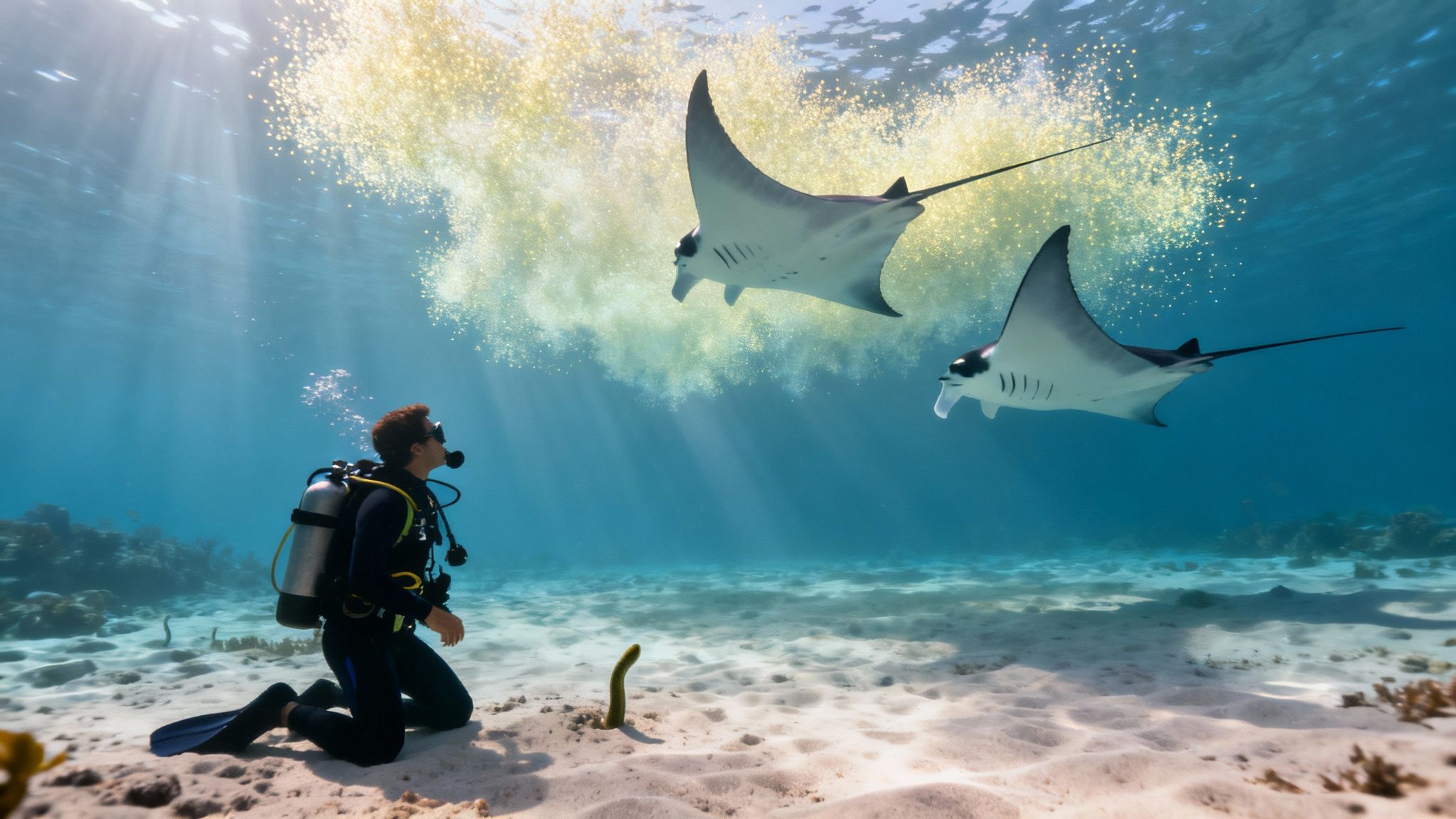
If you talk to anyone who's dived the Big Island, there's one experience they'll bring up without fail: the Kona Manta Ray Night Dive. It’s more than just a dive; it’s an underwater ballet that has earned its reputation as one of the best night dives on the entire planet.
The setup is surprisingly simple. After the sun goes down, powerful lights are set up on the ocean floor, shining straight up. These beams act like a giant bug zapper, but for the ocean, attracting a massive cloud of plankton—the favorite meal of manta rays.
Before you know it, the stars of the show make their grand entrance. These gentle giants, with wingspans stretching up to 16 feet, glide into the light to feed. They swoop and perform effortless barrel rolls, sometimes passing just inches from your mask. It’s a spectacle you won't forget.
Why Garden Eel Cove Is the Premier Location
While there are a couple of locations for this dive, Garden Eel Cove (also known as Manta Heaven) is the superior choice. Its offshore location near the airport is naturally shielded from open ocean swells, resulting in consistently calmer and clearer conditions—a significant advantage for a night dive.
This protection not only enhances safety but also creates a more enjoyable experience. The viewing area at Garden Eel Cove is better structured, allowing divers to settle into a designated sandy "campfire" area. This setup provides an excellent, unobstructed view of the mantas as they feed in the light beams, all while minimizing disturbance to the surrounding pristine coral reefs. It's a more organized and intimate encounter compared to other sites.
The whole experience feels more organized and intimate. The mantas seem to know the drill, gliding right overhead in the concentrated light and giving everyone an incredibly close, personal look.
What to Expect on Your Dive
Your adventure starts with a boat trip as the sun paints the sky over the Pacific. On the way out, your divemaster will give you the full rundown, emphasizing the most important rule: observe only, do not touch. Touching a manta ray can strip off its protective slime coat, which is like its immune system, leaving it open to nasty infections.
Once you hit the sandy bottom, you'll settle in with your group, point your dive light up, and wait. The wait is never long. First, you’ll see one majestic silhouette, then another, and then another. Kneeling on the ocean floor while these massive, graceful creatures soar just above your head is a core memory in the making. If you want to learn more about this incredible animal, check out this guide to the Kona manta ray.
This is a must-do for any diver visiting the Big Island. The combination of the dark ocean, the focused beams of light, and the gentle giants creates a magical, almost surreal feeling that sticks with you. It’s a powerful connection with one of the ocean’s most magnificent inhabitants. To experience this for yourself, check out the manta ray dive tour.
Exploring Kona’s Must-See Underwater Sites
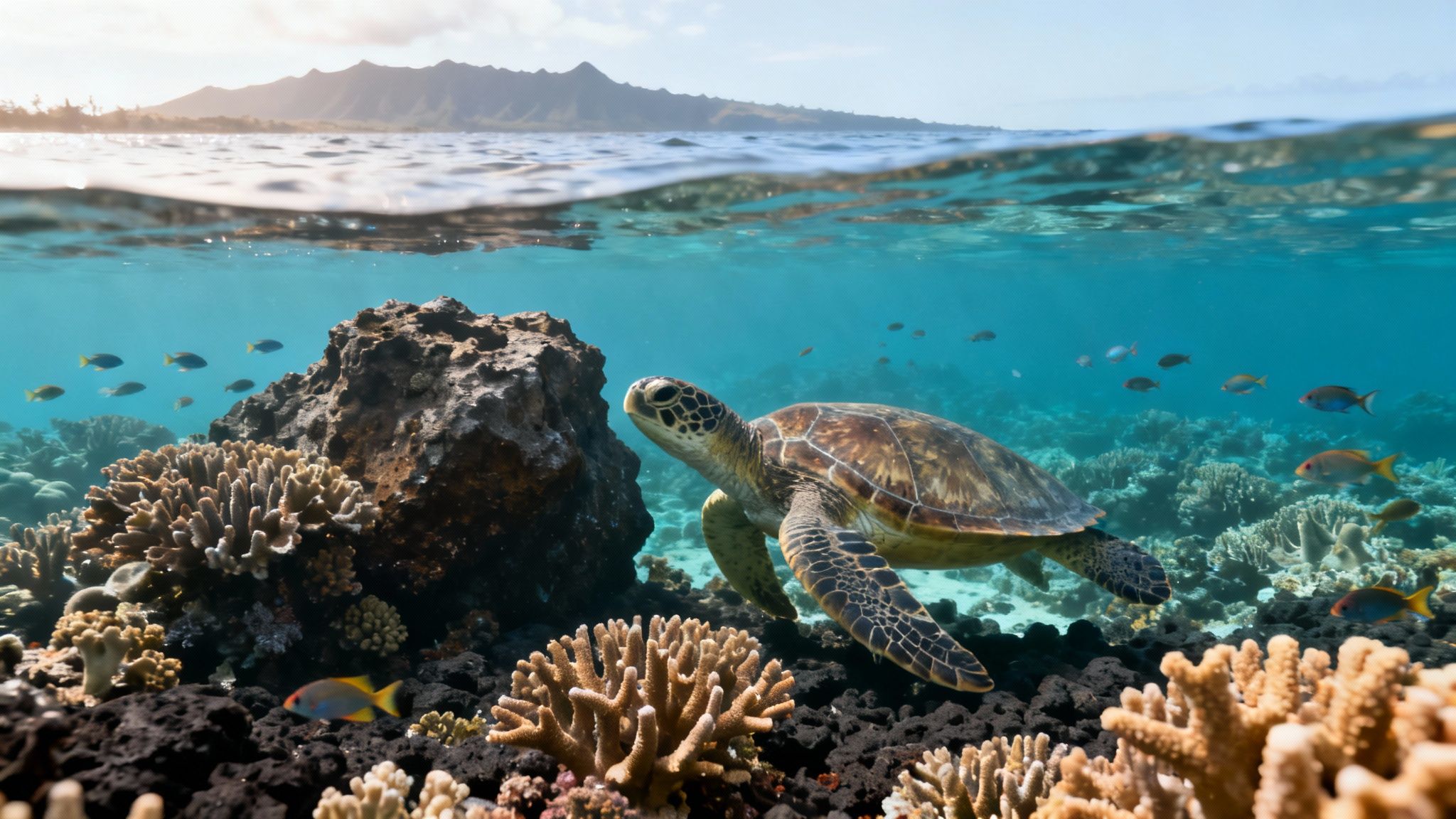
Everyone talks about the manta ray night dive, and for good reason—it’s a true spectacle. But the Kona coast has so much more to offer once the sun comes up. Don’t let the mantas steal all the thunder! Beneath the waves lies an incredible world of vibrant reefs, ancient lava tubes, and a staggering amount of marine life.
These sites are what truly round out the scuba diving Big Island Hawaii experience. Each spot has its own personality, from protected coves bursting with fish to underwater playgrounds formed by volcanic rock. Think of your dive plan as a treasure map, where every X marks a completely different kind of adventure. Let’s take a look at a few local favorites that should be on every diver’s radar.
Kealakekua Bay: A Protected Paradise
Kealakekua Bay isn't just another pretty dive spot; it's a living piece of Hawaiian history and a shining example of what conservation can achieve. This entire area is a protected marine life district, which means fishing is completely off-limits. The payoff? An underwater ecosystem that has been allowed to flourish, giving you a glimpse of what Hawaiian reefs looked like generations ago.
As a marine sanctuary, the bay boasts some of the clearest water on the Kona coast, with visibility often pushing past 100 feet. The lack of fishing pressure has allowed fish populations to explode, turning the bay into a model for sustainable dive tourism. You can learn more about this underwater haven and its conservation success to really appreciate what makes it so special.
What hits you first is the sheer density of life down there. The schools of yellow tang, parrotfish, and butterflyfish are so thick they can feel like a curtain of color, momentarily blocking out the sun as they swim by.
Pu'uhonua O Honaunau (Two Step): Haven for Turtles
Locally known as "Two Step," Pu'uhonua O Honaunau gets its name from the incredibly easy shore entry. Two natural lava rock steps lead you right into the calm, crystal-clear water—no long surface swims or tricky entries required. Historically, this place was a sanctuary for ancient Hawaiians, and today, it’s a sanctuary for our beloved green sea turtles, the honu.
It’s not uncommon to be greeted by dozens of turtles here, and they seem totally comfortable around divers. You’ll find them everywhere: cruising over the reef, munching on algae, or just chilling out on the sandy bottom. With its gentle slope of finger reefs and sand channels, it’s a perfect, relaxing dive for any skill level and an unbeatable spot to spend an afternoon with Hawaii’s most iconic marine animal.
Turtle Pinnacle: A Unique Cleaning Station
If you want an even closer look at turtle behavior, Turtle Pinnacle is the place to be. This unique site is basically a giant coral head, or "bommie," that rises from the seafloor. What makes it so special is that it serves as a natural day spa for the local turtle population.
Turtles gather here to get parasites and algae scrubbed from their shells by all sorts of eager reef fish, especially the Hawaiian cleaner wrasse. It's a fascinating display of symbiosis. You'll literally see turtles queuing up, waiting for their turn to get cleaned. For divers interested in witnessing unique animal behaviors on more advanced sites, looking into premium advanced dive tours can lead to some truly unforgettable moments.
From the historic waters of Kealakekua Bay to the turtle-filled reefs of Two Step and Turtle Pinnacle, the Kona coast delivers one incredible dive after another. No matter your experience level, you can find the perfect trip by exploring the different Kona diving tours available.
A Guide to the Big Island’s Marine Life

So, what can you actually expect to see down there? The waters off the Kona coast are basically a bustling underwater city, packed with an incredible diversity of marine life. While the manta rays and turtles get a lot of the attention, they’re just the headliners for a massive cast of characters.
Every single dive is a completely new show. This amazing biodiversity is really what makes scuba diving Big Island Hawaii so special. You're not just hoping to spot one or two famous animals; you’re dropping into a living, breathing world every time you hit the water.
The Year-Round Residents
Thanks to warm, stable water temperatures, a ton of incredible species call Kona home all year long. You’d be hard-pressed not to run into a few of these local celebrities on any given dive.
- Hawaiian Green Sea Turtles (Honu): You'll see these gentle giants everywhere. They're often found cruising gracefully over the reef, napping under lava rock ledges, or visiting "cleaning stations" where small fish pick algae off their shells.
- Spinner Dolphins: Famous for their acrobatic aerial displays, these guys often travel in huge pods. You’ll usually spot them from the boat between dives, but hearing their clicks and whistles underwater is a truly magical experience.
- Eels: Keep a close eye on the reef's cracks and crevices. You’ll find all sorts of eels, from the tough-looking (but actually quite shy) moray eels peeking out of their dens to slender garden eels swaying together in sandy patches.
- Reef Sharks: It's common to spot whitetip reef sharks resting peacefully on the sand during daytime dives. They are very docile and offer a fantastic, and perfectly safe, photo opportunity.
One of the coolest things about diving here is the sheer number of endemic fish. About 25% of the fish species in Hawaiian waters are found nowhere else on the planet. They add splashes of unique color to the dark volcanic rock that you just won't see anywhere else.
The Seasonal Visitors: Humpback Whales
While the diving is fantastic year-round, the winter months bring something truly special. From around December through March, thousands of humpback whales make the long trip from Alaska to Hawaii's warm waters to breed and have their calves.
You probably won't see them on a dive, but you will absolutely hear them. Their haunting songs become the soundtrack to your underwater adventure, with the powerful calls vibrating right through you. It's an unforgettable experience that adds a whole new layer to the dive. The Big Island's stable conditions are what allow for this incredible ecosystem to thrive, which you can read more about in this guide to Hawaii’s biodiversity from BigIslandDivers.com.
From the tiniest, most colorful nudibranch to the planet's largest mammals, the marine life off the Big Island ensures that no two dives are ever the same. You never know what might be waiting for you just below the surface.
Finding the Right Dive Operator in Kona
Let’s be honest, who you dive with can make or break your entire trip. A fantastic crew will elevate a great dive into an unforgettable memory, but a mediocre one can sour the whole experience. When it comes to **scuba diving Big Island Hawaii**, your choice of operator is about way more than just getting in the water—it’s about your safety, your enjoyment, and the well-being of the very reefs you came to see.
It's tempting to just look for the cheapest trip, but the best dive days rarely come from the bargain bin. The truly great companies are the ones that focus on what actually matters: stellar safety records, comfortable boats that aren't falling apart, and, most importantly, a serious commitment to small groups.
Why Small Groups Are a Game-Changer
Diving in a small group isn't a luxury; it’s a necessity for a quality experience. It means you get real attention from your guide, which is huge for both feeling safe and getting the most out of your dive.
You’ll have space to breathe (literally) and explore without a dozen other divers kicking up sand in your face. It also means less stress on the fragile coral, which is something we all need to think about.
A dive shop that insists on small groups is telling you they care more about the quality of your dive than the quantity of divers they can cram on the boat. You're treated like a welcome guest, not just another tank on the manifest.
What to Look for in a Kona Dive Company
So, how do you sort the great from the good-enough? Keep an eye out for these key things when you're doing your research:
- Safety First, Always: Is their commitment to safety obvious? Look for well-maintained gear, detailed dive briefings, and emergency oxygen clearly visible on the boat. No shortcuts here.
- A Solid Boat: You spend a lot of time on the boat between dives. Is it clean? Spacious? Is there shade? A good boat designed with divers in mind makes all the difference.
- A Passionate Crew: The best guides aren't just certified; they're genuinely stoked about marine life. They’re the ones who will eagerly point out a rare nudibranch and teach you something new.
- PADI Certification: A PADI 5-Star rating is a solid sign. It means the dive center is recognized for its excellence in training, equipment, and providing top-notch dive experiences.
A great example of a shop that gets all of this right is Kona Honu Divers. They really nail the focus on education, conservation, and making sure every diver has an amazing time. To get a better feel for what separates the best from the rest, check out their guide on how to choose a Kona dive shop.
Of course, nothing beats hearing directly from other divers. Reading recent reviews is the best way to get a real, unfiltered look at a company's day-to-day operations. You’ll quickly see what people are saying about the crew, the boat, and the overall vibe.
Your Big Island Scuba Diving Questions, Answered
It's one thing to get excited about the incredible dive sites and marine life, but it's another to actually plan the trip. You've probably got a few practical questions bubbling up, and that's perfectly normal. Getting the details sorted out ahead of time is the key to a relaxed, stress-free dive vacation.
Think of this section as a chat with a local divemaster. We'll tackle the most common questions we hear from divers planning a trip to scuba dive on the Big Island. Let's get you the answers you need to feel confident, book your trip, and start the countdown.
What Is the Best Time of Year to Scuba Dive on the Big Island?
Honestly, there's no bad time to dive in Kona. That's the beauty of this place. The massive volcanoes on the island act as a natural shield, keeping the Kona coast calm and protected year-round. Water temperatures are always comfortable, typically hovering between 75-80°F (24-27°C).
That said, different seasons do have their own unique perks.
- Summer (May-October): If you're looking for glass-calm seas and the warmest water temperatures, this is your season. The conditions are incredibly smooth and easy, making it an absolute dream for diving.
- Winter (December-March): Welcome to humpback whale season! While you're not likely to see one of these giants underwater, you will almost certainly hear their hauntingly beautiful songs reverberating through the water on your dives. It's a profound experience you'll never forget. The surface can get a little choppier, but it’s nothing the local boats can't handle.
And what about the world-famous manta rays? They show up for their nightly ballet all year long, so you have an excellent chance to witness that magic no matter when you visit.
Do I Need to Be Certified to Scuba Dive in Hawaii?
For the classic boat dives that take you out to Kona’s incredible reefs and lava tube formations, yes, you'll need an Open Water scuba certification. Dive operators will ask to see your c-card before you can hop on the boat.
But if you're not certified yet, don't let that stop you! You can still get a taste of the underwater world. Nearly every dive shop in Kona offers a Discover Scuba Diving (DSD) program. It's a fantastic, single-day experience where an instructor teaches you the absolute basics and then guides you on a real, shallow dive in a controlled spot. It's the perfect way to try out scuba without committing to the full certification course.
What Should I Pack for a Diving Trip to the Big Island?
A little smart packing goes a long way toward a comfortable dive trip. While you can rent absolutely everything here, bringing a few of your own well-fitting items can make a huge difference.
Pro Tip: Pack your certification card and logbook first! It sounds obvious, but in the rush to pack fins and masks, it's the one thing people often forget—and you can't dive without it.
Here's a quick checklist to get you started:
- Wetsuit: For most of the year, a 3mm wetsuit is all you need. If you tend to get cold, you might appreciate a 5mm during the slightly cooler winter months.
- Personal Gear: Nothing beats the comfort of your own mask that fits your face perfectly. If you have them, bring your own mask, fins, and dive computer.
- Reef-Safe Sunscreen: This is non-negotiable. Standard sunscreens contain chemicals that literally poison coral reefs. Please help us protect the very ecosystem you've come all this way to see.
- Reusable Water Bottle: The Hawaiian sun is no joke, and long days on a dive boat mean you need to stay hydrated. A reusable bottle is a must.
Is Scuba Diving on the Big Island Safe?
Absolutely. The Big Island is a very safe place to scuba dive, as long as you stick with professional, reputable dive operators and always dive within your training and comfort level. The Kona coast is famous for its calm, protected waters, which naturally eliminates many of the risks you might find in other dive destinations.
Every professional dive company here follows strict safety protocols. They'll give you a thorough pre-dive briefing, have emergency oxygen and first aid on board, and are staffed by highly trained divemasters and instructors who know these sites like the back of their hand. Your job is simple: listen to their guidance, follow the dive plan, and never, ever dive alone.
At Kona Honu Divers, our entire focus is on giving you a safe, fun, and truly unforgettable underwater adventure. With our expert crew, comfortable boats, and a commitment to small group sizes, we make sure you get the most out of every moment. Ready to take the plunge? Check out our full range of diving tours and book your adventure today.