
If you've ever dreamt of diving in a place where raw volcanic power meets a thriving underwater world, the Big Island of Hawaii should be at the very top of your list. It’s not just another dot on the map for divers; it’s a destination that offers something truly special.
From the legendary manta ray night dive to waters so clear they feel like you're flying, the Big Island delivers unforgettable experiences for divers of every stripe. The Kona coast, in particular, is a protected underwater playground brimming with lava tubes, dramatic archways, and reefs that are bursting with life. Ready to explore the best diving tours the Big Island has to offer?
Why The Big Island Is A Diver’s Paradise
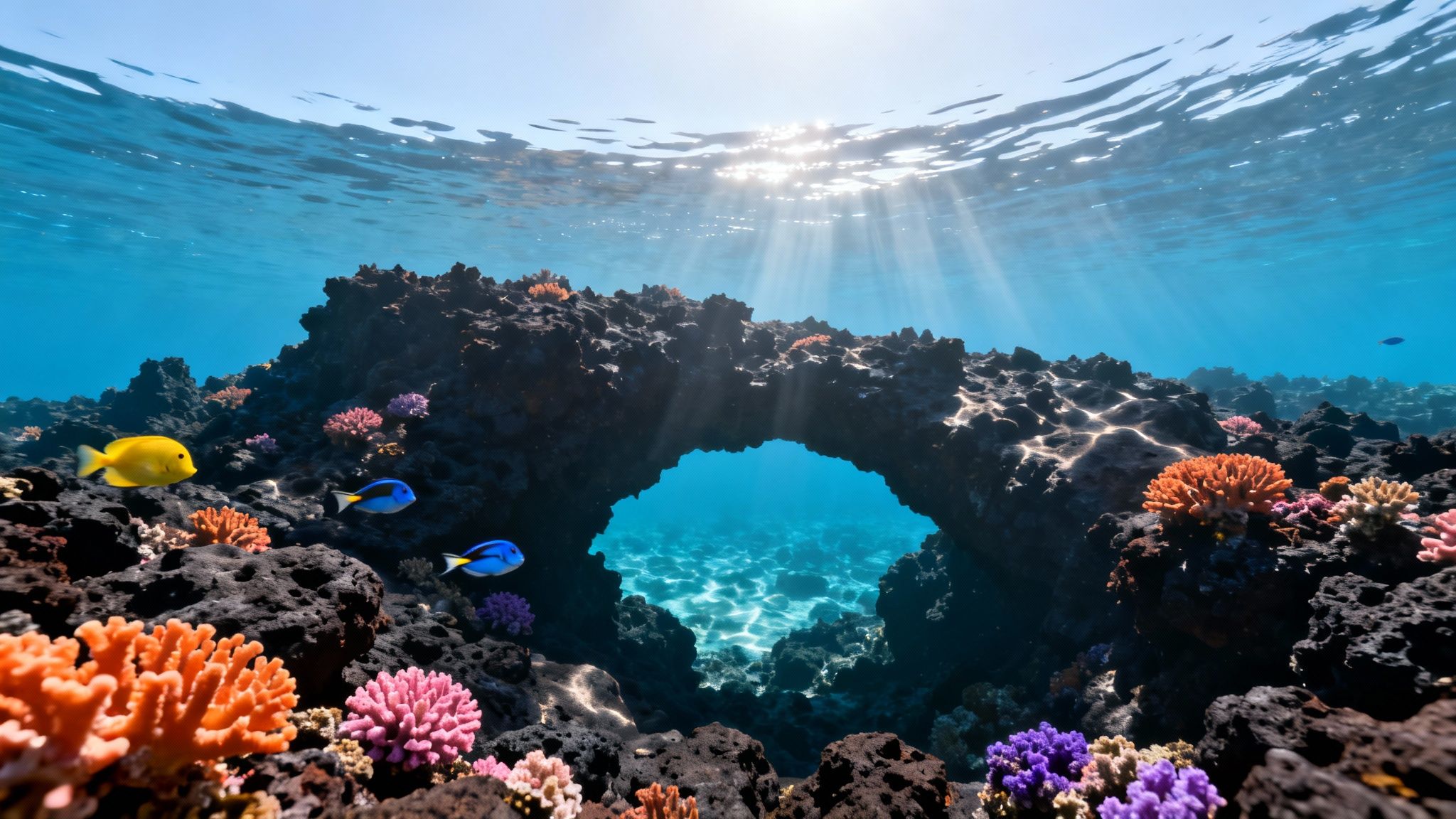
So, what sets the Big Island apart from other tropical dive spots? It all comes down to the volcanoes. The island's colossal mountains, Mauna Loa and Mauna Kea, act as a natural shield for the Kona coast, blocking the gusty trade winds that can churn up the water elsewhere. The result? Consistently calm, predictable, and incredibly clear conditions that are an absolute dream for divers.
This unique geology has sculpted an underwater landscape that’s nothing short of spectacular. As you descend, you're not just exploring a reef; you're swimming through history. You'll find yourself navigating through ancient lava tubes, gliding under majestic arches, and peering into craters formed by volcanic forces. Over time, these stark formations have become vibrant canvases for coral gardens and home to a dazzling array of marine life, including many species you won't find anywhere else on the planet.
Big Island Diving At A Glance
Here's a quick snapshot of what makes diving here so incredible.
| Feature | Details |
|---|---|
| Water Temperature | A comfortable 24–27°C (75–80°F) all year. A 3mm or 5mm wetsuit is usually all you need. |
| Visibility | Often exceeds 30 meters (100 feet) along the Kona coast, providing crystal-clear views. |
| Marine Life | Manta rays, dolphins, sea turtles, sharks, eels, and a huge variety of endemic reef fish. |
| Underwater Terrain | Volcanic landscapes, including lava tubes, arches, craters, and pinnacles. |
| Top Dive Experiences | Manta Ray Night Dive, Blackwater Dives, vibrant reef explorations. |
| Best Season | Year-round, though the calmest conditions are typically found in the summer months. |
| Skill Level | Suitable for everyone, from first-timers getting certified to experienced technical divers. |
These conditions combine to make every single dive, whether it’s a shallow jaunt through a coral garden or a deep technical exploration, a truly memorable adventure. You can read more about what makes the Big Island a world-class dive destination on our blog.
World-Famous Underwater Encounters
Beyond the incredible conditions and topography, the Big Island is famous for a couple of bucket-list dives that draw people from all over the world. These aren't just dives; they're life-changing experiences.
- The Manta Ray Night Dive: Picture this: you're kneeling on the ocean floor in the dark as graceful, giant manta rays with wingspans wider than you are tall swoop and glide just inches above your head. They're feeding on plankton attracted to the lights, creating a silent, mesmerizing underwater ballet. It’s pure magic.
- The Kona Blackwater Dive: This one is for the truly adventurous. You drift in the deep, open ocean at night, miles from shore, witnessing a whole different world of bizarre and beautiful bioluminescent creatures as they migrate up from the abyss. It’s like a journey to another planet.
Whether you're hoping to witness the manta ballet or explore sun-drenched reefs, the Big Island delivers. To see the full range of adventures we offer, check out our complete list of diving tours.
Experience The World-Famous Manta Ray Night Dive
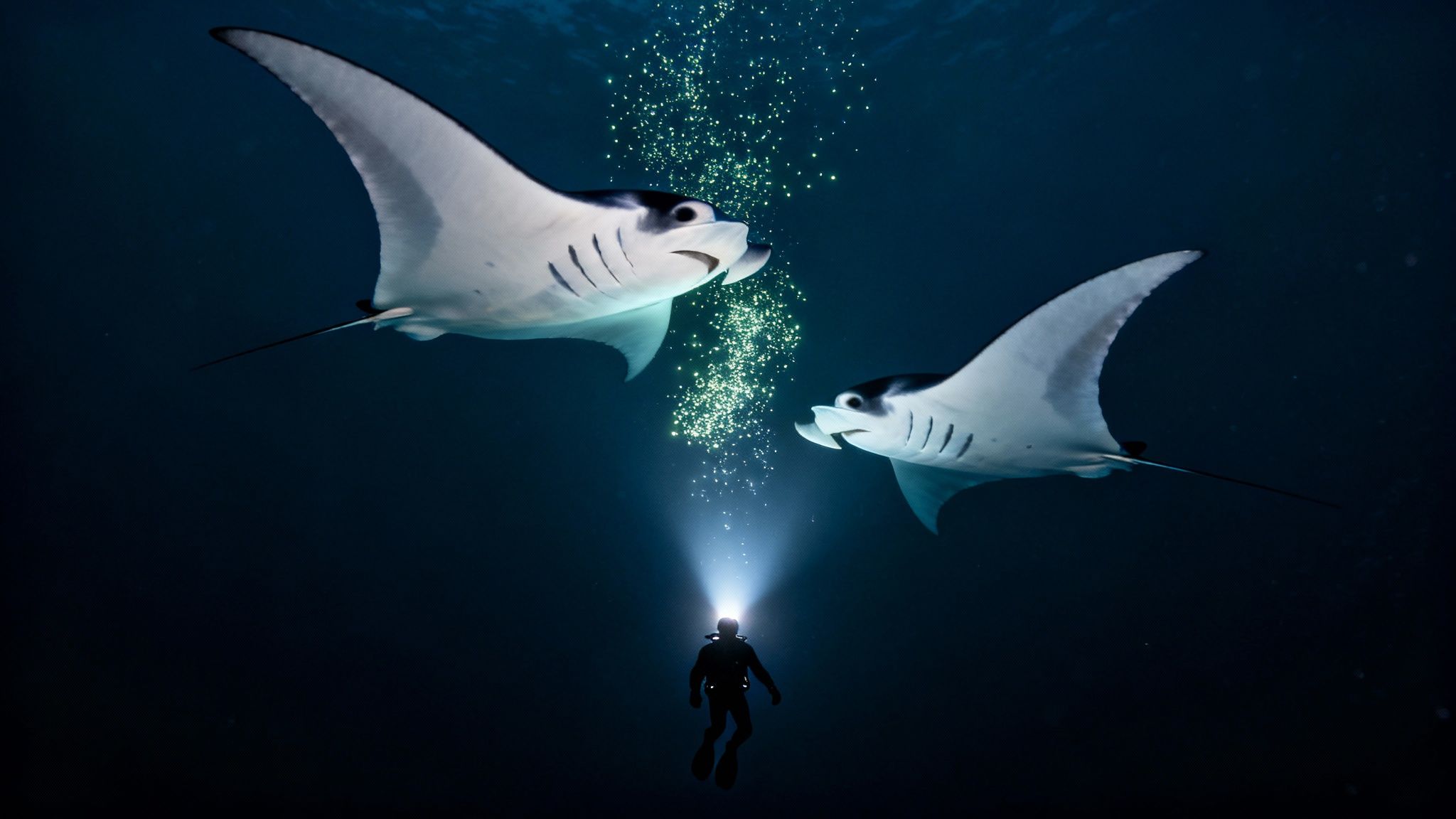
If there's one dive that puts the Big Island on every scuba diver's bucket list, this is it. The manta ray night dive isn't just another dive—it's an otherworldly underwater ballet that has rightfully earned Kona its reputation as the best place on the planet for a reliable encounter with these gentle giants.
Picture this: you descend into the warm, dark ocean just after sunset. Your group settles on a sandy patch, about 30-40 feet down, and points powerful dive lights straight up. This column of light is like a giant dinner bell, attracting clouds of microscopic plankton.
Then, the magic starts. Out of the darkness, enormous manta rays appear, some with wingspans stretching over 12 feet. They glide, swoop, and perform effortless barrel rolls just inches over your head, filtering the plankton-rich water with their huge mouths. It’s silent, mesmerizing, and an experience you’ll be talking about for years.
Why Garden Eel Cove Is The Premier Manta Location
While a couple of sites host this dive, one spot consistently delivers the goods: Garden Eel Cove, which we lovingly call "Manta Heaven." It is simply the superior choice for a manta ray dive tour because it offers a better, more reliable show.
For starters, its location is naturally protected from the open ocean swells, which means calmer, more comfortable conditions for divers. The underwater viewing area is also perfectly set up like a natural amphitheater, giving everyone a front-row seat without crowding the action.
Better yet, the reefs surrounding Garden Eel Cove are healthier and more vibrant. A thriving reef means more plankton, and more plankton means more mantas showing up night after night. For a deeper dive into the experience, check out this complete guide to night snorkeling with manta rays.
What To Expect On Your Manta Ray Dive Tour
Your adventure kicks off in the late afternoon. After boarding the boat, the crew will walk you through everything—safety procedures, how to interact with the mantas (the golden rule is no touching!), and the dive plan. You'll usually start with a gorgeous twilight reef dive, giving you a chance to get your bearings and see the reef critters wake up for the night.
After a surface interval watching a classic Kona sunset, it's time for the main event. Once your group is settled on the seafloor, your only job is to relax, breathe, and take it all in. The entire operation is managed by pros who prioritize the safety of both the divers and the amazing animals.
The Kona coast is world-famous for a reason. Dive operators consistently report manta sightings on roughly 80–90% of their night charters. That makes this one of the most dependable big-animal encounters you can find anywhere.
This incredible reliability is why the dive runs year-round and draws people from all over the globe. If you want to dig into the details and find out more, you can learn all about seeing manta rays while diving on the Big Island in our detailed article.
This is a true must-do. Ready to see the show for yourself?
Explore Top Dive Sites Beyond The Mantas

Look, the manta ray night dive is absolutely a bucket-list experience, and for good reason. But thinking that's all there is to scuba diving Big Island Hawaii is like visiting a world-class art museum and only seeing one painting. The Kona coast is packed with incredible dive sites that tell the story of the island's fiery volcanic heart and the unique life it supports.
What makes Kona so special is the underwater landscape itself. Ancient lava flows have sculpted a dramatic world of arches, craters, and sprawling lava tubes. These aren't just rocks; they're bustling marine metropolises, providing homes for an incredible array of sea creatures.
Best of all, many of these world-class sites are just a quick boat trip from Honokohau Harbor, so you can easily jump between completely different underwater worlds. Let's get into a few of the must-see spots that show what Kona diving is really all about.
The Thrill of the Kona Blackwater Dive
If you're an experienced diver looking for something truly out of this world, the Kona Blackwater Dive is it. This isn't your typical reef dive. We motor miles offshore, shut off the engines, and drop you into the deep, inky black of the open ocean. Tethered to the boat, you'll hang suspended in the water column and watch one of the planet's largest migrations happen right before your eyes.
As darkness falls, countless deep-sea creatures rise from the abyss to feed near the surface. You’ll see things that look like they're straight out of a sci-fi movie—bioluminescent jellies pulsing with light, strange larval fish, and translucent squids that drift past like ghosts. It’s a surreal, humbling experience.
This one is strictly for advanced divers. You need to be completely comfortable in the dark and have rock-solid buoyancy control to safely enjoy the open-ocean conditions. It’s a dive that will stick with you forever. Curious about a trip to the deep? Find out more about this one-of-a-kind Kona Blackwater Dive tour.
Exploring Volcanic Landscapes and Lava Tubes
The island's volcanic past is front and center on almost every dive. The underwater terrain here is a playground of incredible geological formations that make for some unforgettable swim-throughs and photo ops.
- Golden Arches: Just like the name implies, this site is known for its massive, stunning lava rock arches. Gliding through them with sunbeams cutting through the water feels like exploring a submerged cathedral.
- Turtle Pinnacle: This site is built around a huge underwater hill, or "pinnacle," that serves as a cleaning station for our beloved Hawaiian Green Sea Turtles (Honu). You can often hover and watch as turtles line up for their turn to get scrubbed down by reef fish.
- Lava Tubes and Caverns: At spots like "The Dome" or "Suck 'em Up," you get to explore ancient lava tubes. There's a special kind of thrill that comes from navigating a dark, hollowed-out passage and then emerging back into the brilliant blue of the open ocean.
These sites are more than just pretty scenery—they’re teeming with life. Keep an eye out for octopuses tucked into crevices and schools of reef fish that use the structures for protection.
Encounters with Endemic Hawaiian Marine Life
Hawaii's remote location in the middle of the Pacific means it has a ton of marine life you can't find anywhere else on Earth. In fact, over 25% of the reef fish here are endemic. This turns every dive into a genuine treasure hunt for unique creatures.
Keep your eyes peeled for the little things. While grand volcanic structures are impressive, the true magic of Kona's reefs often lies in spotting the rare and unusual inhabitants that call them home.
Train your eye to spot the masters of disguise, like the weird and wonderful frogfish that blends perfectly into the sponges it rests on. You might also see the brightly colored Potter's Angelfish, the striking Milletseed Butterflyfish, or the Hawaiian Dascyllus—all unique to these waters.
For certified divers with more experience under their belt, we offer trips to deeper, more challenging reefs where these rare species are often found. You can check out our advanced dive tour opportunities if you're ready to see a side of Kona's underwater world that most people miss.
How To Choose The Right Kona Dive Operator
Picking the right dive operator is probably the most critical decision you'll make for your entire trip. It's the one thing that can elevate a good dive into an unforgettable, once-in-a-lifetime experience. After all, you’re not just renting gear; you’re trusting a team with your safety and your adventure.
Think of your dive operator as your underwater guide, your safety net, and your concierge all rolled into one. The best ones prioritize small groups, hire genuinely passionate and experienced crew, and run boats that are comfortable and built for diving. Get this choice right, and you're set for an amazing time.
Why Small Groups Matter
Picture this: you're on a boat crammed with 30 other divers. It's chaotic, noisy, and feels more like a cattle call than a personal adventure. That’s exactly why we believe smaller is better.
At Kona Honu Divers, we’re all about the small-group experience. Keeping our numbers low on the boat completely changes the dynamic of the day.
- You get real attention. Our guides have the time to actually talk with you, check in on how you're doing, and point out that elusive octopus hiding in plain sight.
- The dive site is all yours. You'll have the freedom to explore without constantly bumping into other people’s fins. It’s a much more peaceful and natural way to see the reef.
- Safety is second nature. With fewer divers to look after, our crew can be much more attentive, making sure everyone is comfortable and safe from the moment you leave the harbor to the moment you get back.
This isn't just a business model; it’s our philosophy. We want you to feel like you’re out for a day of diving with old friends who just happen to be experts.
Kona Honu Divers: A Cut Above The Rest
We've worked hard to become one of Hawaii's top-rated dive shops, and we're incredibly proud of the reputation we've built. That reputation comes from a simple formula: an unwavering commitment to safety, genuinely caring about our divers' experience, and a deep respect for the ocean. It shows in everything from our custom-built boats to our hand-picked, veteran crew.
But you don't have to take our word for it—our divers' reviews say it all.
We run a wide range of trips for every kind of diver. Whether you're dreaming of a peaceful afternoon exploring the reefs, feeling the adrenaline of the Manta Ray Night Dive, or taking on a more advanced adventure, we’ve got you covered. You can see everything we offer over on our diving tours page.
Other Reputable Kona Dive Shops
The Kona coast has a bunch of fantastic dive operators, and it's always a smart idea to shop around to find the one that feels right for you. Different shops have different vibes—some focus on larger boats, some specialize in certain types of dives, and others might be closer to where you're staying.
To help you get started, here are a couple of other highly-regarded shops in the area. Finding the perfect fit is the first step to an incredible dive vacation. If you want to dig deeper, we've put together a whole guide on how to choose a Kona dive shop with more tips and things to look for.
Jack's Diving Locker
Big Island Divers
Planning Your Big Island Dive Adventure
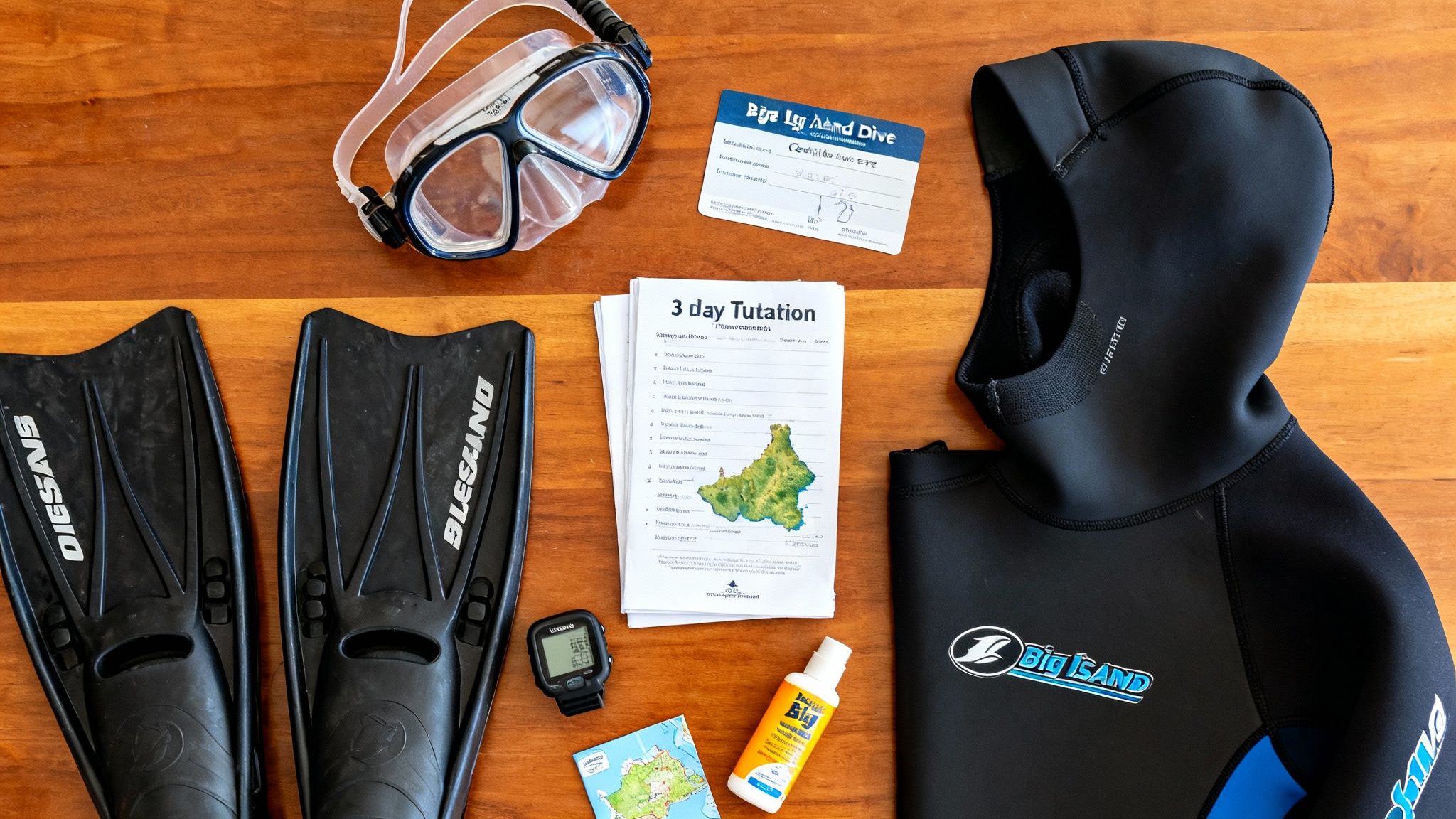
Now that you know what incredible underwater sights are waiting, let's talk logistics. A little planning is what separates a good dive vacation from an unforgettable one. These details—from the best time of year to visit to what you should pack—will ensure your scuba diving Big Island Hawaii trip goes off without a hitch.
The Kona coast is fantastic for diving all year, but timing your visit can fine-tune your experience. If you love calm seas and warm water, the summer months from May to September are hard to beat. The water can hit a balmy 80°F (27°C), and the visibility is usually at its peak.
Winter brings slightly cooler temps and bigger swells, but it's also humpback whale season. There's nothing quite like hearing their haunting songs echo through the water during your dive.
Getting Certified Before You Arrive
Here’s a pro tip: get your scuba certification done before you leave home. You can absolutely get certified here on the island, but doing it in advance frees up your precious vacation time. Instead of spending days in a classroom or pool, you’ll arrive ready to jump straight into the ocean.
If a full certification course doesn't fit your schedule, no problem. You can still experience the magic. Most Kona dive shops offer introductory Discover Scuba Diving programs. These are perfect for beginners, letting you try scuba diving with an instructor in a safe, controlled environment. It’s the best way to see if diving is for you.
Understanding The Costs
Budgeting is a must for any trip. Dive costs in Kona can vary, but here's a general idea of what to expect so you can plan accordingly:
- Dive Tours: A standard two-tank morning boat dive usually costs between $180 and $220.
- Specialty Dives: Bucket-list experiences like the Manta Ray Night Dive or the Blackwater Dive are premium trips and typically cost a little more.
- Gear Rental: If you’re traveling light, a full set of rental gear (BCD, regulator, wetsuit, etc.) will run about $50 to $75 per day.
- Nitrox: Many shops, including us at Kona Honu Divers, offer free Nitrox for certified divers. It’s a great perk that can give you longer bottom times.
Want to dive deeper into the numbers? We break down all the expenses in our guide on how expensive scuba diving in Hawaii can be.
Sample Big Island Dive Itineraries
To give you a better feel for what a week of diving in Kona looks like, here are a couple of sample itineraries.
The 3-Day Dive Express:
- Day 1: Kick things off with a 2-tank morning charter to explore Kona’s vibrant reefs and lava tubes.
- Day 2: An afternoon reef dive followed by the world-famous Manta Ray Night Dive.
- Day 3: One last 2-tank morning dive to hit a new site or revisit a favorite from day one.
The 5-Day Dive Immersion:
- Day 1: Ease in with two morning reef dives to get your bearings and see the local critters.
- Day 2: An afternoon reef dive to warm up for the evening's main event: the Manta Ray Night Dive.
- Day 3: Take a rest day. It’s important to off-gas, and it’s the perfect chance to check out Volcanoes National Park.
- Day 4: Head out for a 2-tank advanced charter to explore deeper sites, then gear up for the thrilling Blackwater Dive at night.
- Day 5: Wind down with a relaxed 2-tank morning dive at a classic spot like Turtle Pinnacle.
Essential Packing Checklist
There’s nothing worse than realizing you left a critical piece of gear at home. Run through this checklist to make sure you’ve got everything you need.
- Dive Gear:
- Mask, snorkel, and fins
- Regulator and BCD (if you own them)
- Dive computer
- Wetsuit (3mm is great for summer; a 5mm is cozier in winter)
- Documentation:
- Certification cards (bring the physical card, but a digital backup is smart)
- Logbook
- Dive insurance info
- Personal Items:
- Reef-safe sunscreen (this is a must in Hawaii)
- Swimsuits and a towel (a quick-dry one saves space)
- Sunglasses and a hat for the boat
- Reusable water bottle to stay hydrated
- Seasickness medication, just in case
- A dry bag for your phone and keys
- Underwater camera and extra batteries
Your Big Island Diving Questions, Answered
Planning a dive trip always brings up a few questions. From what cert card to bring to what you might see in the water, a little preparation goes a long way. We've put together some straightforward answers to the questions we hear most often about scuba diving Big Island Hawaii.
Getting these details sorted out beforehand means you can relax and focus on the main event: having an incredible time exploring Kona's underwater world.
What Certification Level Do I Need for Kona Dives?
Good news! The vast majority of the stunning reef sites along the Kona coast are perfect for Open Water certified divers. These sites are relatively shallow, letting you explore incredible lava tubes, colorful coral gardens, and schools of tropical fish well within your training limits.
Now, for some of our more specialized adventures, you'll need a bit more training. The famous Kona Blackwater Dive and some of the deeper offshore sites require an Advanced Open Water certification. It’s always a good idea to double-check the prerequisites for any specific diving tours you're excited about when you book.
Is the Manta Ray Night Dive Really Safe?
Absolutely. The manta ray night dive is one of the most magical and well-managed underwater experiences you can have. Safety isn't just a priority; it's built into every part of the dive.
This isn't a haphazard free-for-all. Every operator follows strict guidelines to create a predictable, controlled environment for both the divers and the mantas. You'll get a thorough briefing before you hit the water, explaining exactly what to do and how to interact with these gentle giants. With experienced divemasters guiding you the whole time, you're in great hands. And remember, mantas have no teeth, barbs, or stingers—they're just there for the plankton.
Will I See Sharks While Diving on the Big Island?
It’s definitely possible, and for many divers, it’s a huge thrill! The shark you're most likely to spot is the Whitetip Reef Shark. They are typically calm, a bit shy, and are often found resting under ledges or tucked into small caves during the day.
Seeing larger sharks like Tiger or Galapagos sharks is extremely rare on the Kona coast. Our local guides know these sites like the back of their hand. They understand the local marine life and their behavior, and they're trained to keep every dive safe and fun. You'll get to appreciate these amazing animals from a comfortable and respectful distance.
At the end of the day, your safety and enjoyment are what matter most. Just listen to your guide, respect the wildlife, and you're all set for an unforgettable dive in Hawaii's incredible waters.