
Picture this: you're descending into impossibly clear, blue water. Sunlight streams down from above, lighting up a wild landscape of ancient lava tubes, massive underwater arches, and coral reefs buzzing with life. This isn't some CGI fantasy—it's just another day of scuba diving on the Big Island of Hawaii.
The Kona coast, in particular, offers some of the most memorable and downright stunning underwater adventures you'll find anywhere on the planet.
Discovering Hawaii’s Ultimate Underwater Paradise
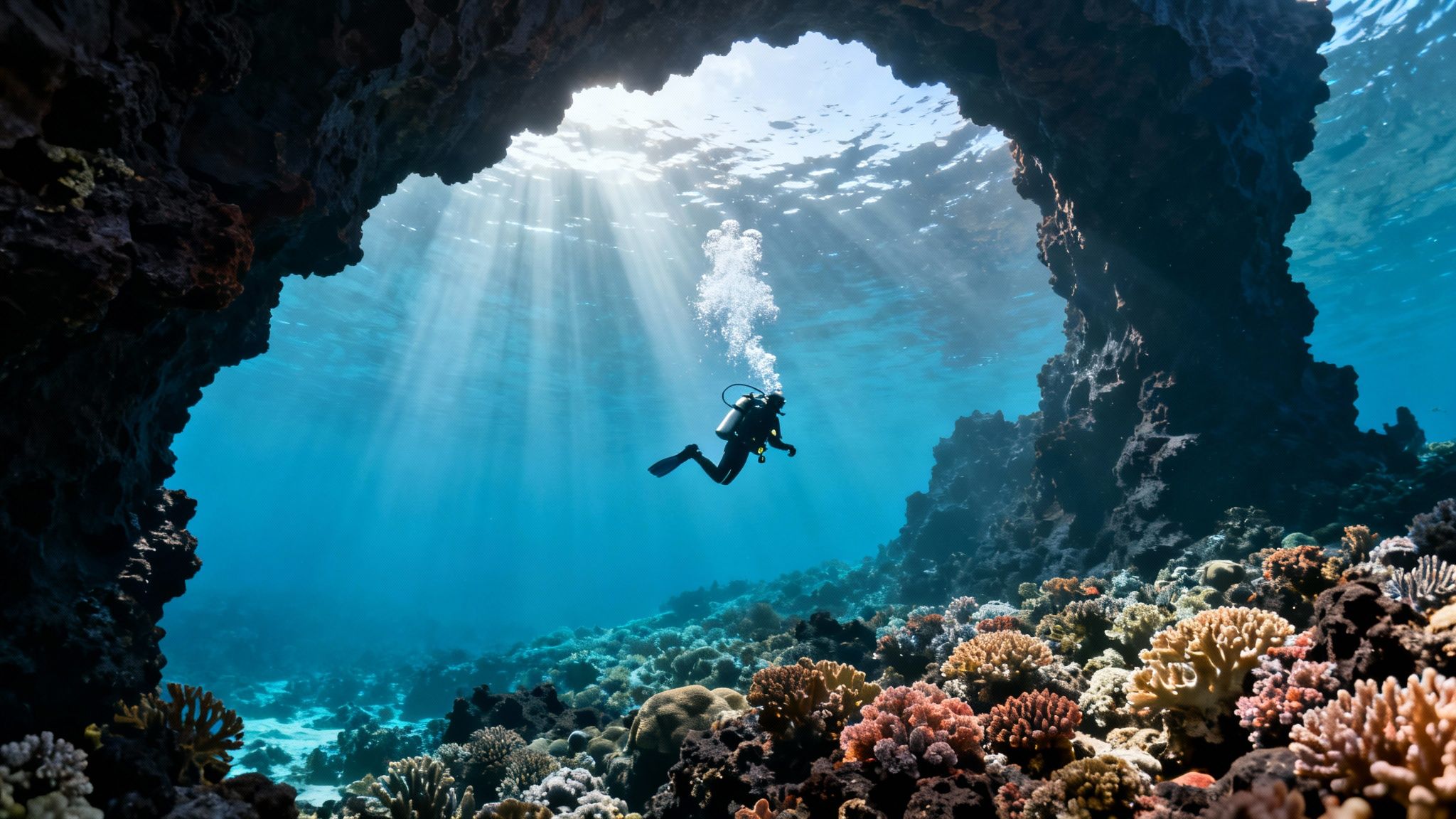
As the youngest island in the Hawaiian chain, the Big Island’s volcanic heart has shaped an underwater world that is truly one-of-a-kind. Its western coast sits in the "shadow" of the colossal Mauna Kea and Mauna Loa volcanoes, which block the trade winds and create uniquely calm, clear water pretty much all year long. Those predictable, glass-like conditions are a diver's dream.
This guide is your deep dive into what makes Kona a bucket-list destination. We'll explore the volcanic topography responsible for the incredible underwater structures and calm seas that make it all so accessible. From the world-famous Manta Ray Night Dive to the surreal Blackwater dives miles offshore, you’ll get an insider’s look at the adventures that await.
A Thriving Underwater Haven
What started as a small community of dive pioneers in the 60s and 70s has exploded. Today, scuba diving on the Big Island is a cornerstone of its tourism, hosting around 100,000 certified scuba dives every single year and drawing over 150,000 dive tourists to its shores.
It’s easy to see why. The allure is fueled by those unique volcanic seascapes and water visibility that often tops 100 feet. You can learn more about the history and unique appeal of Big Island diving, but the marine life is just as much of a draw as the geology. You'll swim alongside everything from tiny, endemic Hawaiian Gregory fish to majestic green sea turtles, or honu, as they're known here. The reefs are absolutely teeming with life.
For a quick look at what makes this place so special, here's a snapshot.
| Feature | Description | Best For |
|---|---|---|
| Volcanic Topography | Underwater lava tubes, caves, and arches created by ancient lava flows. | Divers who love exploring unique geological structures and swim-throughs. |
| Water Clarity | Visibility often exceeds 100 feet, thanks to deep offshore waters. | Underwater photographers and anyone who loves panoramic ocean views. |
| Calm Conditions | The Kona coast is shielded from trade winds, resulting in calm, predictable seas. | All skill levels, from beginners on their first ocean dive to seasoned pros. |
| Marine Life | Manta rays, dolphins, turtles, and a huge variety of endemic reef fish. | Wildlife enthusiasts and divers seeking incredible animal encounters. |
This combination of factors creates a diving environment that is both thrilling for experts and welcoming for newcomers.
Your Adventure Starts Here
To really get the most out of Kona's underwater world, you need a guide who knows these waters inside and out. A top-tier operator like Kona Honu Divers can make all the difference, leading you to the best sites with a serious focus on safety, small group sizes, and protecting the very environment you've come to see.
At Kona Honu Divers, the mission is simple: provide both new and experienced divers with a safe, fun, and unforgettable underwater adventure in pristine Hawaiian waters. Their passionate crew and stellar reputation speak for themselves.
Ready to jump in? Start planning your trip by checking out their incredible range of diving tours and discover for yourself what makes the Big Island a true diver's paradise.
Experiencing the World-Famous Manta Ray Night Dive
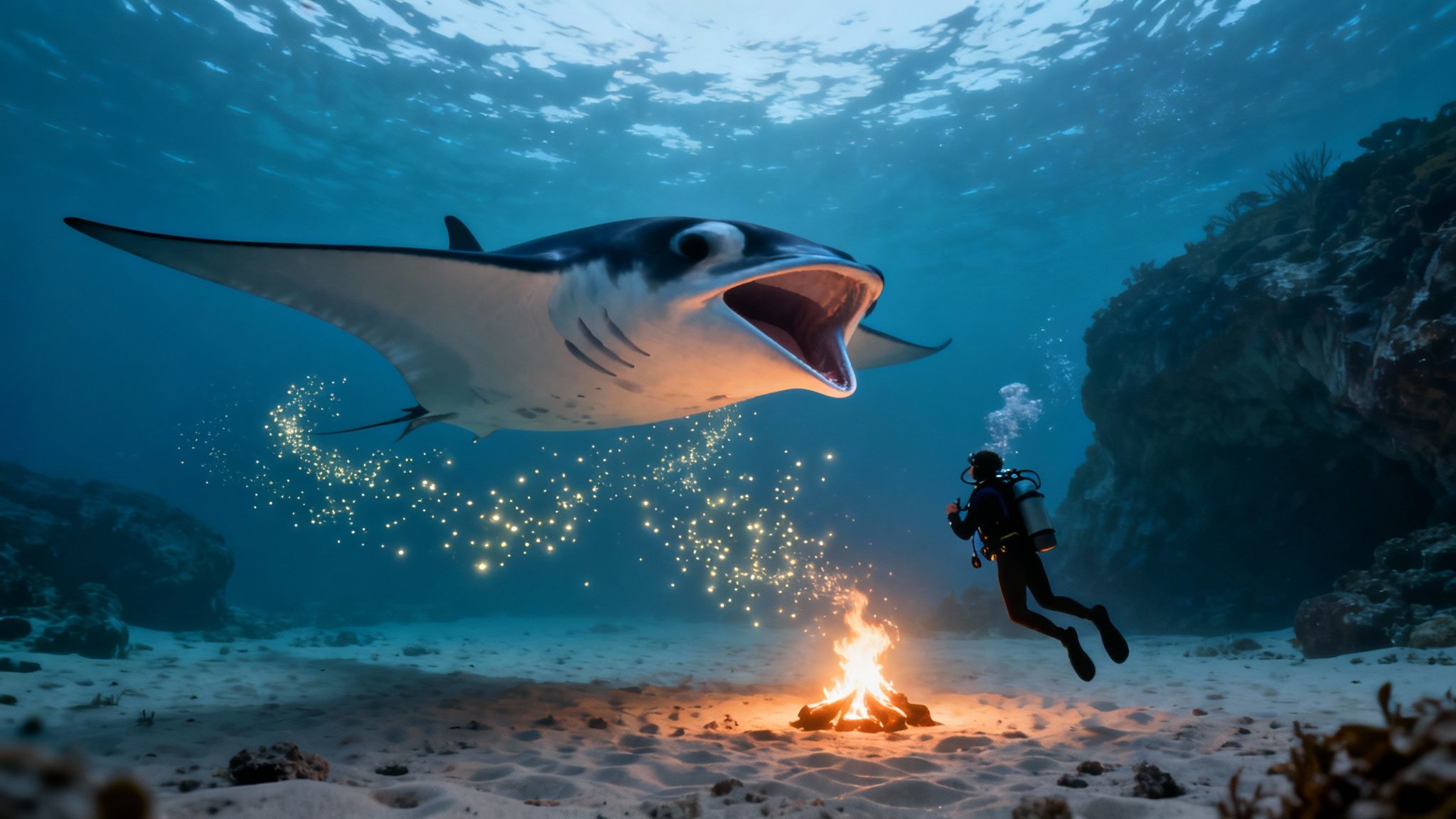
Some dives just stick with you forever. The Manta Ray Night Dive is one of them. It's an experience that lands on bucket lists for divers all over the world, and for good reason—it’s a surreal underwater ballet starring some of the ocean's most majestic creatures, and it all happens right here off the Kona coast.
Your adventure starts as dusk settles over the ocean. After a quick boat ride, you’ll descend into the warm, darkening water where your guide sets up what we affectionately call the "campfire"—a collection of powerful, upward-facing lights on the ocean floor.
This bonfire of light acts like a dinner bell, attracting swarms of tiny plankton into the illuminated water. Then, the magic begins. Giant, graceful manta rays emerge from the inky blackness, drawn by the promise of an easy meal. They perform a mesmerizing dance, gliding effortlessly just inches above your head, their massive mouths wide open to filter the plankton. Watching these gentle giants somersault through the beams of light is a spectacle you will never, ever forget.
Why Garden Eel Cove is the Premier Choice
While there are a couple of spots to see the mantas, Garden Eel Cove (also known as Manta Heaven) is the superior choice for a dive tour. The unique geography here gives divers a real advantage over other locations.
- It's Protected: Tucked away from the open ocean, the cove is naturally shielded from big swells. This means calmer, more stable, and much more comfortable conditions on the bottom, leading to a safer and more enjoyable experience.
- A Healthier Reef: The reefs surrounding Garden Eel Cove are noticeably more vibrant and full of life. This turns the first "warm-up" dive before sunset into a fantastic adventure all on its own, showcasing Kona's rich biodiversity.
- Better Viewing Area: The layout of the seafloor creates a natural, sandy amphitheater for divers. This provides a perfect, safe, and unobstructed viewing area to watch the manta feeding frenzy unfold without damaging any coral.
Choosing the right location is the key to an unforgettable encounter, and Garden Eel Cove consistently delivers a better, safer, and more spectacular dive from start to finish.
A Long History of Manta Encounters
The manta ray night dive is more than just a tourist attraction; it’s a tradition built on decades of research and conservation. It has become one of the planet’s most famous scuba adventures, with operators reporting manta sightings on an incredible 85-90% of trips.
Local dive shops have been tracking these animals since 1981, identifying individual rays by the unique spot patterns on their bellies. This long-term effort helps us monitor their movements, health, and life cycles, making Kona a global hub for manta ray conservation. You can learn more about the history and science of this incredible dive and the decades of research behind it.
Watching a creature with a 12-foot wingspan glide silently over you is a humbling and awe-inspiring moment. It’s a powerful reminder of the incredible beauty hidden just beneath the waves.
Here at Kona Honu Divers, we’ve perfected this extraordinary experience. Our two-tank manta ray night dive and snorkel tour prioritizes safety, respect for the animals, and a truly magical encounter for every guest. Our expert guides make sure you know exactly how to interact with the mantas passively, creating a safe space for both divers and rays.
To get a real feel for the experience, check out our guide on what it's like to go on the manta ray dive in Kona.
Ready for the dive of a lifetime?
Exploring Dive Sites Beyond the Mantas
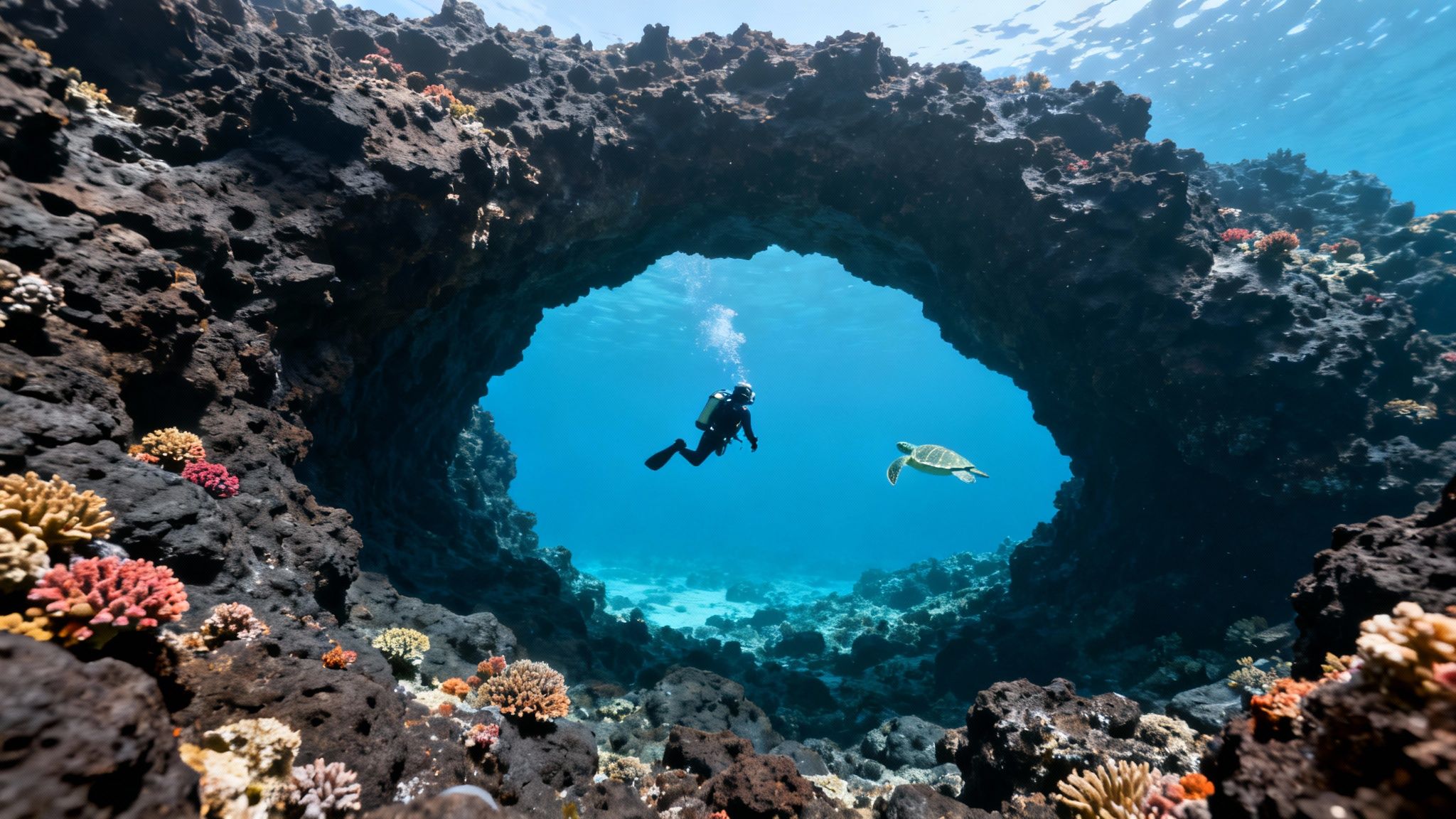
Look, the Manta Ray Night Dive is legendary for a reason, and you absolutely should do it. But thinking that's all the Big Island has to offer is like visiting Paris and only seeing the Eiffel Tower. The Kona coast, forged by eons of volcanic fire, is an underwater playground packed with dramatic structures and reefs that are absolutely teeming with life during the day.
Once you venture beyond the manta sites, you'll discover a world of submerged lava tubes, massive archways, and ancient, collapsed craters. These aren't just cool geological features; they're thriving cities for a mind-boggling variety of marine life. A daytime reef dive shows you a completely different, but just as captivating, side of scuba diving Big Island Hawaii.
Navigating Volcanic Wonderlands
Picture this: you descend into a sun-drenched cavern, follow its winding path, and emerge through a massive archway completely encrusted in coral. That’s not a fantasy—that’s just another day of reef diving in Kona. The island's volcanic past has left behind a complex and thrilling underwater landscape that just begs to be explored.
Every local diver has their favorite spots, and it’s easy to see why. These sites really show off Kona's one-of-a-kind topography and incredible sea life.
- Golden Arches: This spot lives up to its name, featuring a series of incredible lava rock arches that create perfect swim-throughs. The way the sunlight streams through the openings is an underwater photographer's dream.
- Turtle Pinnacle: This is a classic "cleaning station" where Hawaiian green sea turtles (honu) line up to let reef fish nibble away algae and parasites. It's about as close to a guaranteed honu sighting as you can get.
- Suck 'Em Up Lava Tube: If you love exploring overhead environments, this is a must. It's a big, safe cavern and lava tube system where you can often spot whitetip reef sharks just chilling out on the sandy bottom.
And that's just a small taste. Every dive here reveals new corridors to investigate and hidden critters to find, from shy octopuses tucked into crevices to colorful endemic fish you won't see anywhere else on the planet. To get a better sense of the island's unique underwater geology, you can check out our comprehensive guide to diving the Big Island.
The Thrill of the Deep Black
Ready for something completely different? For a truly mind-bending adventure that feels more like floating through outer space than diving in the ocean, you have to try the Kona Blackwater Dive. I’m not exaggerating when I say there is nothing else like it on Earth. This one is for the genuinely adventurous.
Here’s the setup: we motor miles offshore where the seafloor drops away to thousands of feet below. You'll drift in the deep, dark water, tethered to the boat for safety, and just… wait. Before long, a bizarre and beautiful parade of creatures begins to rise from the abyss—tiny, translucent squids, strange larval fish, and otherworldly bioluminescent jellies that glow in the dark.
The Blackwater Dive is a sensory experience that’s tough to put into words. You're witnessing the largest vertical migration of life on the planet, seeing animals that live their entire lives in the deep, open ocean. It's humbling, mysterious, and utterly unforgettable.
This dive is a rare window into a world almost no one ever sees. We offer a specialized Kona Blackwater Dive tour with expert guides who make sure your trip into the abyss is both safe and fascinating.
Advanced Diving Opportunities
For those of you with plenty of dives in your logbook, the Big Island has challenges that reward you with pristine conditions and rare sightings. The deeper sites along the Kona coast feature more complex terrain, can have stronger currents, and host marine life you simply won’t find in the shallows.
These dives demand excellent buoyancy control, solid navigation skills, and usually a nitrox certification to get the most out of your bottom time. But the payoff is huge: untouched coral reefs, dramatic drop-offs, and the chance to spot pelagics like eagle rays or even sharks cruising by in the deep blue. Kona Honu Divers runs premium advanced dive trips specifically for seasoned divers, ensuring even the most experienced explorers find a new thrill in Kona’s waters.
Choosing the Right Dive Operator in Kona
Let's be honest—the dive company you choose can make or break your trip. It’s the difference between a decent dive and a truly unforgettable underwater experience. When you're scuba diving the Big Island, the bar is set high, and your operator should be, too. A top-notch company puts safety first, provides gear you can trust, and knows the local dive sites intimately.
In Kona, Kona Honu Divers has earned a reputation for delivering a premium, safe, and deeply personal diving experience. They operate on a simple but powerful philosophy: quality over quantity.
A Focus on Small Groups and Quality Gear
You'll never feel like just another number on a crowded boat with Kona Honu Divers. They deliberately keep their dive groups small, which means you get personalized attention from their passionate and seasoned guides. Whether you're a newer diver who could use a little extra support or an old hand looking for unique photo opportunities, that low diver-to-guide ratio is a game-changer.
The quality of their equipment is another thing you'll notice right away. They provide high-end, meticulously maintained rental gear, giving you total peace of mind when you're 60 feet down. Their custom-built dive boats are also designed from the ground up for diver comfort, making everything from entries and exits to your time between dives as easy as possible.
Commitment to Conservation and the Aloha Spirit
The company's name says it all. 'Honu' is the Hawaiian word for the cherished green sea turtle, a symbol of their profound commitment to marine conservation. Their guides lead every dive with a deep respect for the ocean, showing you how to enjoy incredible wildlife encounters without ever being invasive. When you dive with them, you’re supporting a business that actively protects the very reefs you came to explore.
But don't just take our word for it—see what fellow divers are saying.
Picking the right dive operator is one of the most important decisions you'll make. For a deeper look at what to consider, check out our complete guide on how to choose a Kona dive shop.
Choosing Kona Honu Divers means you’re investing in a safe, high-quality adventure you can trust from start to finish.
How to Plan Your Big Island Dive Trip
Alright, you're hooked on the idea of diving the Big Island. Now for the fun part: making it happen. Planning a dive trip here isn't complicated, but a little insider knowledge goes a long way in turning a good trip into an unforgettable one.
Think of this as your pre-dive briefing. We'll walk through the best times to visit, what cert cards you'll need in your wallet, what to pack (and what to leave at home), and how we can all be better stewards of Hawaii's incredible underwater world.
Best Time to Visit Kona for Diving
Here's the great thing about diving the Kona coast: it’s fantastic all year. The island's massive volcanoes act as a natural shield, blocking the trade winds and leaving the western side with consistently calm, clear water. It’s why we get to dive almost every single day.
That said, there are some subtle seasonal shifts that might help you decide when to book your flight.
- Summer (May – September): This is when the water gets wonderfully warm, hovering around a balmy 80°F (27°C). The ocean is typically flat as a lake, making it a dream for divers of all skill levels, especially if you're just starting out. Visibility is usually off-the-charts good.
- Winter (October – April): The water temperature might dip into the mid-70s, but winter brings a trade-off that is absolutely magical: humpback whales. From December through March, the sound of their haunting songs becomes the soundtrack to your dives. Hearing a whale sing while you're 60 feet down is an experience that will stay with you forever.
To make it even clearer, let's break down the seasons.
Big Island Diving Seasons Compared
| Season | Water Temperature (Avg) | Key Marine Life Sightings | Conditions |
|---|---|---|---|
| Summer (May-Sep) | ~80°F (27°C) | Manta Rays, Turtles, Dolphins, Reef Fish | Calmest seas, excellent visibility, very warm water. |
| Winter (Oct-Apr) | ~75°F (24°C) | Humpback Whales (sound), Mantas, Turtles | Slightly cooler water, occasional swells, incredible whale songs. |
Ultimately, there's no bad time to dive in Kona. It really just comes down to whether you prefer bathtub-warm water or the chance to hear the whales.
Certification Levels and Requirements
Your certification card is your ticket to the show, and different dives have different prerequisites.
Your Open Water certification is the key that unlocks the vast majority of Kona's best sites. It gets you in the water for all the stunning daytime reef dives and, of course, the world-famous Manta Ray Night Dive. If you're not certified yet, no problem! A Discover Scuba Diving experience lets you try it out with one of our instructors in a safe, shallow environment.
For the more adventurous stuff, like the surreal Kona Blackwater Dive or deeper sites, you’ll need your Advanced Open Water certification. We also highly recommend getting your Nitrox certification to maximize your bottom time and feel better after multiple dives.
Packing and Gear Rental
Packing for a dive trip is an art form—balancing what you need with what you can rent. Most of your suitcase will be shorts and t-shirts, but there are a few dive-specific items you won't want to forget.
Pro Tip: Bring your logbook and cert cards! Even with digital apps, having the physical cards is a smart backup. Nothing’s worse than showing up for a dive and not being able to prove your certification.
Here’s a simple checklist to get you started:
- Must-Haves: Your certification cards and logbook. A dive computer is non-negotiable for safety, and we always recommend you bring your own. And, of course, any personal gear you love, like a mask that fits your face perfectly.
- Good to Bring: Reef-safe sunscreen is required by law in Hawaii to protect our corals. A rash guard is great for sun protection on the boat, and a light jacket or windbreaker is perfect for the ride back to the harbor after a sunset or night dive.
- What to Rent: Don't bother lugging your heavy gear across the Pacific. You can rent top-of-the-line, well-maintained BCDs, regulators, wetsuits, and fins right here from us at Kona Honu Divers. It just makes travel so much easier.
Being a Responsible Diver
This is the most important part. We are all visitors in a fragile and sacred space. In Hawaii, we have a deep cultural respect for the 'aina—the land and the sea—and that extends to how we act underwater.
As a diver, you're an ambassador for the ocean. Here’s how you can help protect it:
- Master Your Buoyancy: This is the single most critical skill for a reef diver. By controlling your position in the water, you avoid kicking, bumping, or breaking the delicate coral that can take centuries to grow.
- Look, Don't Touch: Never chase, corner, or handle marine life. The rule is simple: let the wildlife decide the terms of the interaction. NOAA guidelines require staying at least 10 feet away from sea turtles and a full 50 yards from our precious spinner dolphins.
- Leave Only Bubbles: The old saying holds true. The reef is a living system. Leave every shell, rock, and piece of coral exactly as you found it for the ecosystem's health and for the next diver to enjoy.
Understanding Safety and Marine Life in Hawaii
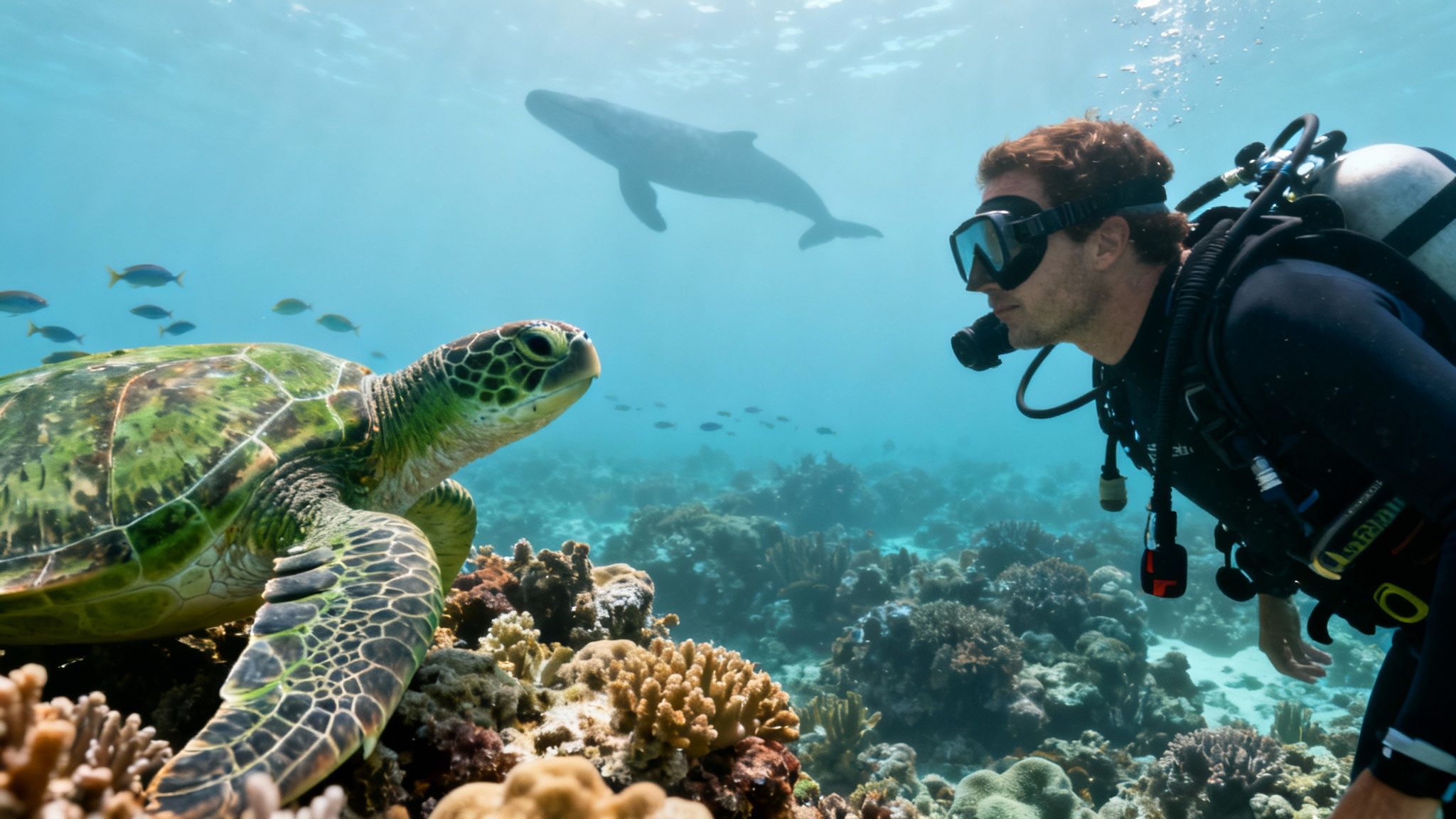
Jumping into a new ocean always brings up a few questions about what to expect, and that’s smart. The good news? When you’re scuba diving Big Island Hawaii, the Kona coast is one of the most welcoming and secure underwater environments you could ask for.
The conditions here are your best friend. We're talking about typically calm seas and visibility that often stretches beyond 100 feet, which makes for relaxed, awe-inspiring dives.
Of course, being a prepared diver means knowing how to evaluate any situation. Getting familiar with how to do a risk assessment is a great skill for any diver, but you can rest assured that serious incidents are exceptionally uncommon here.
A Realistic Look at Shark Encounters
Let's talk about the big question: sharks. Yes, species like requiem and tiger sharks live in Hawaiian waters, but the safety record for divers on the Big Island speaks for itself. It's truly excellent.
Official data shows that between 2003 and 2020, confirmed shark bites involving scuba divers were practically non-existent. Most recorded incidents involve surface activities, not divers exploring the reefs below. You can explore the incident data for more details right from the source at the Hawaiʻi Department of Land and Natural Resources.
The reality is, when you're underwater, you are a visitor in their world. By following guide briefings and maintaining situational awareness, you contribute to a safe and respectful encounter for both you and the marine life.
Beyond Safety: The Incredible Underwater Cast
While the mantas often get top billing, the sheer diversity of life here is what will keep you coming back. You’re sharing the water with an amazing cast of characters, many of which you can't find anywhere else on the planet.
- Hawaiian Green Sea Turtles (Honu): Seeing these ancient, graceful reptiles gliding over the reef is a quintessential Kona experience.
- Spinner Dolphins: You'll frequently spot their acrobatic displays from the boat, and if you’re lucky, you might even get a curious pass-by underwater.
- Endemic Reef Fish: The reefs are alive with a vibrant mix of fish found only in Hawaii, from brilliant yellow tangs to delicate butterflyfish.
- Unique Critters: Look closer into the volcanic nooks and crannies to find masters of camouflage like frogfish, clever octopuses, and moray eels.
And if you’re diving in the winter months, you’re in for a truly special treat. It’s not uncommon to hear the powerful, haunting songs of migrating humpback whales reverberating through the water. It’s a profound experience that makes an already incredible dive simply unforgettable.
Your Kona Diving Questions Answered
Got a few questions before you take the plunge? You're not alone. Here are some of the most common things divers ask us before they arrive on the Big Island, with straightforward answers to help you plan your trip.
Do I Need to Be Certified to Scuba Dive Here?
While having your Open Water certification will give you the most freedom, you don't necessarily need it to get in the water. We, like many shops in Kona, offer a 'Discover Scuba Diving' experience. It’s a fantastic way to try diving for the first time under the direct supervision of an instructor, no certification card required.
However, for most of our boat dives, and especially for the more advanced sites and any night diving, you'll need to be certified as an Open Water diver or higher.
What’s the Best Time of Year to Dive in Kona?
Honestly, there’s no bad time! Kona’s coastline is incredibly sheltered, which means we get fantastic diving conditions pretty much 365 days a year.
If you love warm water, the summer months (May to October) are perfect, with temperatures hovering around a balmy 80°F (27°C) and exceptionally calm seas. The winter (November to April) is a bit cooler, but it brings a truly magical bonus: the chance to hear the haunting songs of humpback whales echoing through the water on your dives. Visibility is almost always great, often clearing 100 feet.
Can My Non-Diving Partner Come on the Manta Ray Trip?
Yes, absolutely! The manta ray experience is just as breathtaking for snorkelers. We run our trips so that divers and snorkelers can be on the same boat, enjoying the same incredible spectacle.
Snorkelers float on the surface, holding onto a custom light board that attracts the plankton the mantas feed on. They get a spectacular bird's-eye view as these gentle giants glide and somersault just inches below. It's an unforgettable way for everyone in your group to share in the magic.
How Can I Help Protect Hawaii's Reefs When I Dive?
Living and diving here, protecting the ‘aina (the land and sea) is everything to us. You can make a huge difference with a few simple actions.
- Always wear reef-safe sunscreen. The chemicals in regular sunscreen are incredibly damaging to our coral.
- Work on your buoyancy. The goal is to never touch, kick, or even stir up sediment around the coral.
- Look, but don't touch. Never chase or handle any marine life.
- Follow the "take only pictures, leave only bubbles" philosophy.
Our dive briefings at Kona Honu Divers always cover local conservation practices. Being a responsible diver is a core part of the scuba diving Big Island Hawaii experience, and it ensures these stunning reefs will be here for generations to come.
Ready to see it all for yourself? The crew here at Kona Honu Divers can’t wait to show you the underwater world we call home. Whether you're dreaming of the world-famous manta night dive or a vibrant daytime reef trip, we’ve got an adventure waiting for you.
Check out our complete lineup of Hawaii diving tours and find the perfect dive for your trip.