
Picture this: you descend into warm, crystal-clear water, and the world below unfolds. Ancient lava flows have sculpted an incredible underwater playground of arches, caves, and dramatic canyons. This is scuba diving Big Island Hawaii—an experience that easily ranks among the world's best. The Kona coast, in particular, delivers a one-of-a-kind mix of perfect conditions and marine biodiversity you just won't find anywhere else.
Why the Big Island Is a Diver’s Paradise
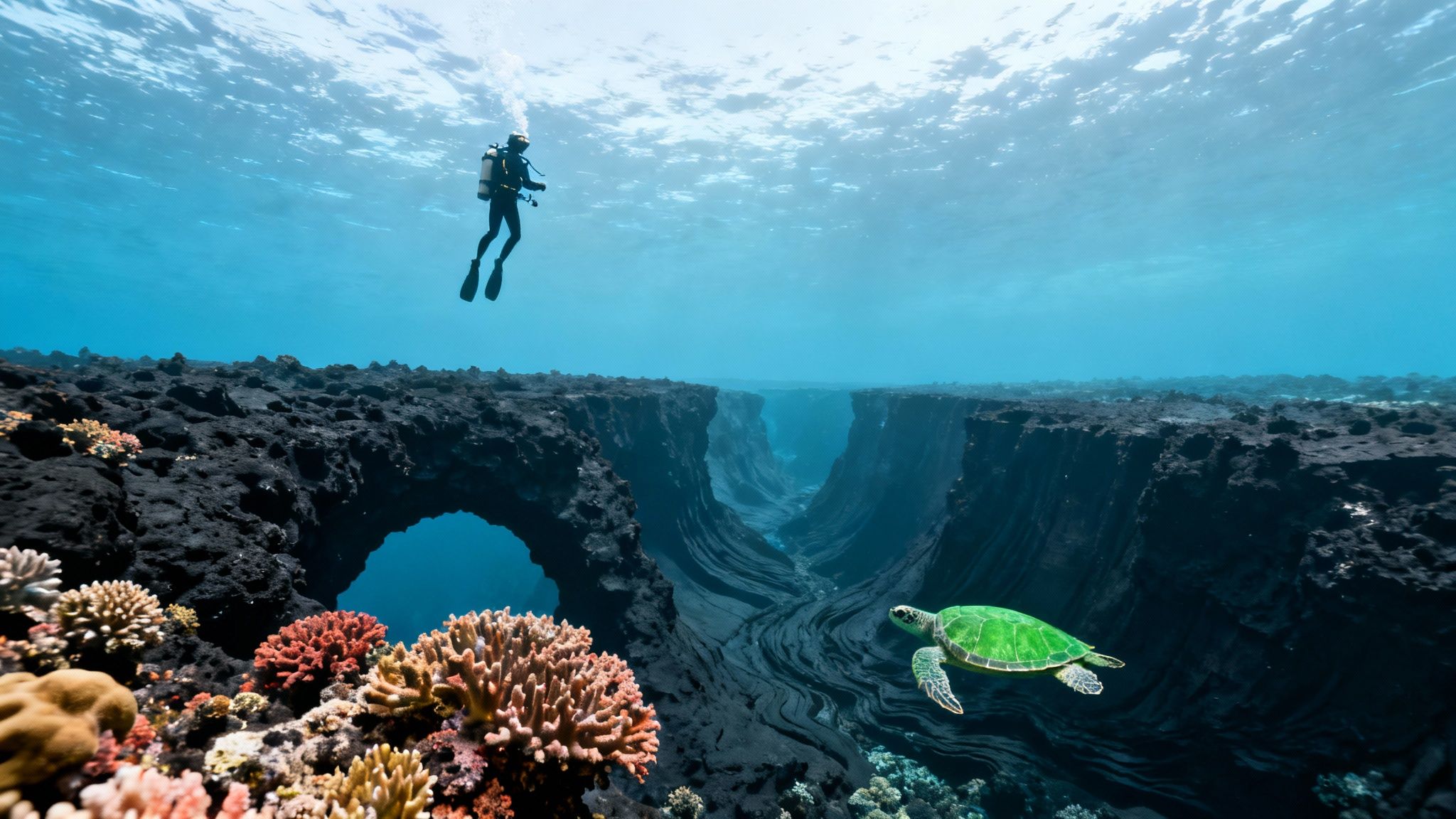
The Big Island isn't just another pretty spot on the map; it’s a living geological wonder. As the youngest island in the Hawaiian chain, its volcanic soul is on full display, both above and below the surface. Those ancient lava flows have carved out a spectacular underwater landscape, creating a maze of arches, lava tubes, and submerged caverns that are a pure joy to explore.
This unique topography is the secret to Kona's magic. The island's massive volcanoes, Mauna Loa and Hualalai, act as a natural shield, blocking the strong trade winds that hit other parts of Hawaii. The result? Exceptionally calm, clear water where visibility often tops 100 feet year-round.
A Thriving Underwater Ecosystem
Kona’s calm, sun-soaked waters are the perfect nursery for vibrant coral reefs. Unlike on older islands where reefs might show their age, the Big Island's coral gardens are healthy and buzzing with activity. This underwater city is home to an incredible cast of characters.
On any given dive, you're likely to meet:
- Honu (Hawaiian Green Sea Turtles): These gentle giants are everywhere, either snoozing on the reef or gliding past you with effortless grace.
- Endemic Fish Species: A huge chunk of the fish here, like the stunning Milletseed Butterflyfish, are found only in Hawaiian waters. It’s a truly unique aquarium.
- Larger Marine Life: Spinner dolphins love to escort the dive boats, and in the winter, the haunting songs of migrating humpback whales provide the ultimate underwater soundtrack.
The Big Island has earned its reputation for amazing diving and snorkeling, offering world-class encounters that are surprisingly easy to access.
Perfect Conditions for Every Diver
It doesn’t matter if you’re about to take your first breath underwater or you're a seasoned pro with a full logbook—the Big Island has a dive site for you. The combination of calm seas, gentle currents, and fantastic visibility makes it the ideal place for new divers to get comfortable and fall in love with the sport. You can dive deeper into what makes Kona diving so unique on our blog.
For experienced divers, the dramatic underwater structures offer endless opportunities for adventure and exploration. Because the conditions are so consistently good, you can spend less time fighting the elements and more time just soaking in the incredible marine life and scenery. It’s this perfect blend of easy diving and epic adventure that truly makes the Big Island a diver’s paradise.
Exploring the Big Island’s Most Legendary Dive Sites
The Big Island’s volcanic coastline hides an underwater world filled with true bucket-list adventures. While pretty much every dive here is special in its own way, a few legendary sites really define the experience of scuba diving Big Island Hawaii.
These are the encounters divers travel across the globe for—the kind that create moments of pure magic you'll be talking about for years.
The World-Famous Manta Ray Night Dive
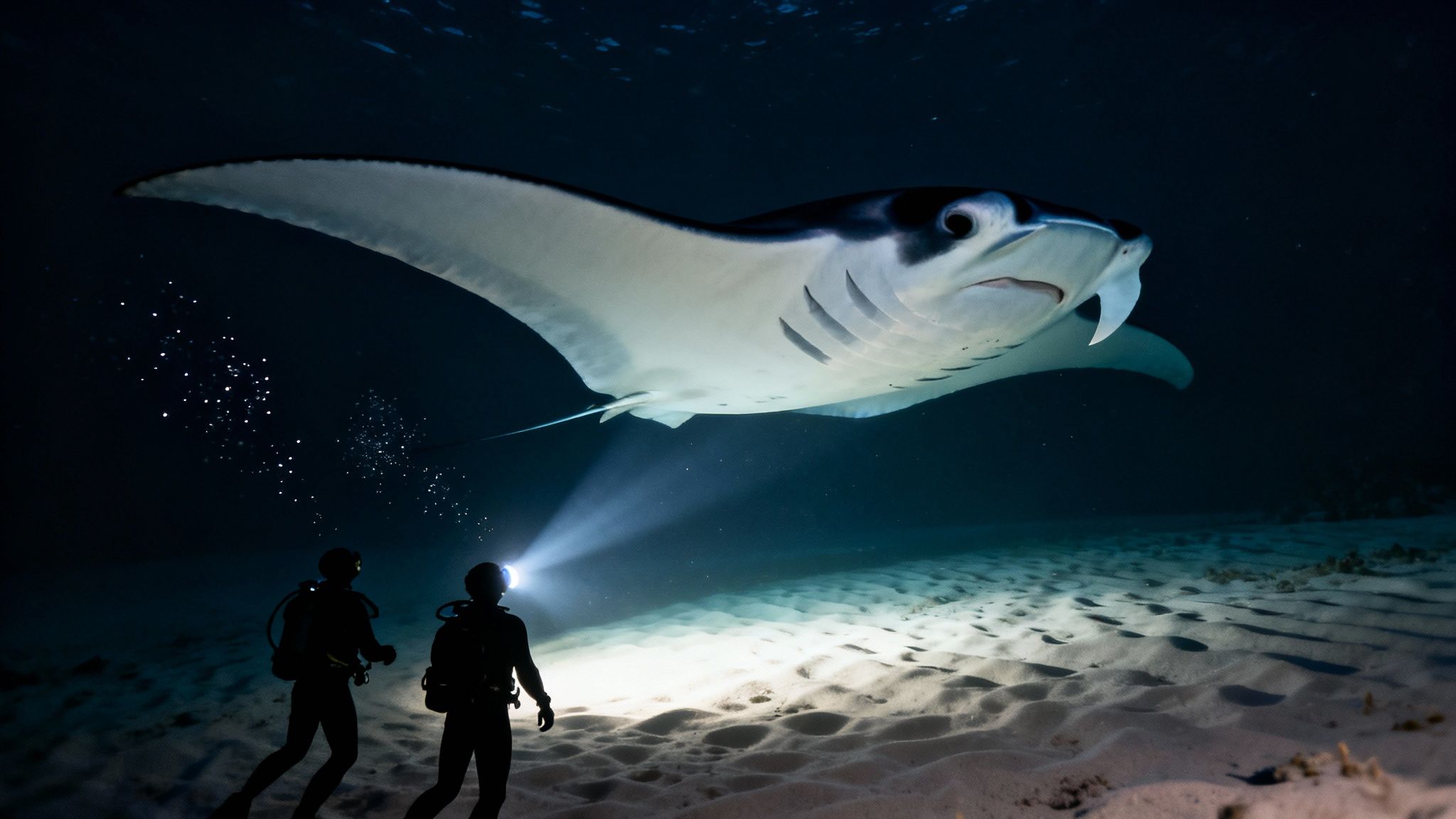
Topping that list is, without a doubt, the Kona manta ray night dive. It’s an experience that’s hard to put into words. As the sun sets and darkness takes over, a mesmerizing underwater ballet begins right before your eyes.
Powerful lights are set up on the ocean floor, illuminating the water and attracting clouds of plankton. This, in turn, draws in the stars of the show: majestic manta rays. These gentle giants, with wingspans that can stretch over 12 feet, glide, swoop, and barrel roll through the light beams in a stunning feeding display. It’s an otherworldly, almost spiritual experience.
And the best part? The encounters are incredibly reliable. We consistently see manta sightings on 85-90% of our trips. It’s not uncommon for divers to witness over 20 mantas on a single dive—an absolutely unforgettable spectacle.
Why Garden Eel Cove is the Premier Manta Spot
While there are a couple of locations for the manta dive, Garden Eel Cove (lovingly nicknamed Manta Heaven) is the superior choice for the dive tour. The site is naturally more protected from ocean swells, which means calmer conditions and clearer visibility for you.
Its layout is like a natural amphitheater with a better viewing area, allowing divers to settle comfortably on the sandy bottom and watch the show unfold above. This setup is perfect because it lets you observe without disturbing the mantas or the environment. Plus, the surrounding reefs are better—healthier and more vibrant—so you have plenty to look at while waiting for the main event to begin.
Big Island Signature Dives at a Glance
The Big Island offers a few truly unique dives that you won't find anywhere else. Here’s a quick look at what makes each one so special.
| Dive Experience | Best For | Key Marine Life | Experience Level |
|---|---|---|---|
| Manta Ray Night Dive | Unforgettable wildlife encounters, photographers | Giant Manta Rays, plankton clouds | Open Water Diver & up |
| Kona Blackwater Dive | Thrill-seekers, marine biology enthusiasts | Larval creatures, pelagic jellies, squids | Advanced Open Water & up |
| Kealakekua Bay | All divers, snorkelers, history buffs | Vibrant corals, huge fish schools, dolphins | Beginner & up |
Each of these dives offers a completely different, yet equally amazing, view of Hawaii's underwater world.
The Kona Blackwater Dive: A Journey into the Void
Ready for something completely different? For divers seeking an adventure that is truly out of this world, the Kona Blackwater Dive is an absolute must. This isn’t your typical reef dive. Far from it.
You'll be drifting over thousands of feet of open ocean in the middle of the night, safely tethered to the boat. This dive taps into the largest vertical migration of life on Earth, where deep-sea creatures ascend toward the surface to feed under the cover of darkness.
This unique dive reveals a hidden world of bizarre and beautiful creatures that rise from the abyss—species that are rarely, if ever, seen during the day.
You’ll encounter life in its larval stages—strange jellyfish, translucent squid, and otherworldly invertebrates that look like they belong on another planet. It’s a humbling and surreal experience that feels more like a spacewalk than a scuba dive, and it’s a key reason why Kona is considered one of the best places to dive on the Big Island.
Kealakekua Bay: A Pristine Marine Sanctuary
Beyond the thrilling night dives, the Big Island offers pristine daytime sites that are just as legendary. Kealakekua Bay, a protected Marine Life Conservation District, is easily one of the most beautiful dive spots in all of Hawaii.
Home to the Captain Cook Monument, the bay is shielded from wind and waves, creating exceptionally calm and clear conditions perfect for diving and snorkeling.
The coral gardens here are just flawless and absolutely teeming with fish. The moment you descend, you’re greeted by massive schools of yellow tang, butterflyfish, and parrotfish. The reef slopes gently, making it accessible for all skill levels while offering an incredible density of marine life. It's also a fantastic place for Kealakekua Bay Captain Cook Monument snorkel tours. Don't be surprised if you spot spinner dolphins playing in the bay or green sea turtles resting among the corals.
How to Choose the Right Dive Trip for You
With so many incredible underwater adventures to choose from, picking the perfect one for your scuba diving Big Island Hawaii trip can feel like a tough call. Don't worry, it's simpler than it looks. The secret is to honestly match your comfort, your certification level, and your personal sense of adventure with the right dive.
Whether you've never breathed underwater before or you have hundreds of dives in your logbook, there's a trip in Kona that’s perfect for you.
Just Starting Out?
If you're completely new to diving, your journey starts with an introductory "discover scuba diving" experience. Think of it as a test drive. It's a fantastic, low-pressure way to see if diving is for you, all under the watchful eye of a professional PADI instructor.
You’ll get a handle on the basics in a controlled setting before heading to a calm, shallow reef. That's where the magic happens and you get to see your first Hawaiian reef fish up close.
For the Newly Certified and Casual Diver
So you've got your C-card but are still building confidence. Or maybe you're an experienced diver who just wants a couple of beautiful, relaxing dives. Either way, the classic two-tank morning or afternoon boat trip is your go-to.
These charters are the heart and soul of Kona diving. They’ll take you to two different, vibrant reef sites known for their easy conditions and incredible amount of life.
The whole vibe is fun and stress-free. You can expect to drift through stunning coral gardens, peek into lava tubes, and swim through ancient arches at comfortable depths—usually between 40 and 60 feet. It's the ideal way to just soak it all in, spot a few green sea turtles, and enjoy the laid-back pace of Kona's underwater paradise.
For the Experienced and Adventurous Diver
Feeling the need for a bigger thrill? If you're an advanced diver, Kona has you covered. The underwater landscape here is packed with more experienced diving opportunities to push your skills and see things most divers only dream about.
Trips for advanced divers often head to deeper sites, explore more complex lava tube networks, or venture to more remote spots. These charters are for divers who are solid on their buoyancy, comfortable at depth, and ready for more intricate navigation. You’ll see dramatic drop-offs and hidden caverns that few others ever get to explore.
One of the most unforgettable experiences for advanced divers is the otherworldly Kona Blackwater Dive. This isn't your typical reef dive. It’s a one-of-a-kind pelagic dive miles offshore at night, where you get to witness the massive vertical migration of bizarre and beautiful deep-sea creatures. It’s a truly surreal adventure you’ll be talking about for years.
Finding the Right Dive Operator for Your Skill Level
No matter how many dives you have under your belt, choosing the right dive shop is the most important decision you'll make. A great operator is the key to a safe, memorable, and fun trip.
Look for a company that keeps its groups small, has genuinely experienced local guides, and takes meticulous care of its boats and gear. A good shop will ask about your certification, how many dives you have, and when you last dove. This isn't them being nosy; it’s how they make sure you’re on a boat that’s a perfect match for your skills and comfort level.
For a clearer picture of what’s available, you can explore different Hawaii scuba diving packages to see how trips are structured.
In the end, the best dive trip is one that makes you feel both comfortable and completely thrilled. By being honest about your abilities and picking an operator that fits your goals, you're setting yourself up for an amazing underwater adventure on the Big Island.
Essential Planning for Your Dive Adventure
A great dive trip on the Big Island isn't just about picking cool spots to explore underwater—it’s about getting the logistics right beforehand. While Kona’s diving conditions are famously reliable year-round, a little bit of planning makes all the difference, ensuring your trip is smooth, safe, and exactly what you hoped for.
One of the absolute best things about diving here is that there's no real "off-season." The water stays in a balmy 75-80°F (24-27°C) range all year, and the visibility is almost always fantastic. Seriously. Picture dropping into the gin-clear waters of Kealakekua Bay, where you can often see more than 100 feet in every direction. This protected marine sanctuary is a dream come true for divers, and we break down what makes it so special in our guide to Big Island diving conditions.
That said, what you'll see can change with the seasons. If you're here in the winter months (December to March), you're in for a treat—it's peak humpback whale season, and hearing their songs reverberate through the water is an experience you'll never forget. Summer, on the other hand, tends to bring even calmer, glassier seas, making it an ideal time for new divers to get their fins wet.
What to Pack for Your Kona Dive Trip
Packing smart is all about maximizing your fun and minimizing hassle. You can always rent top-notch gear from any reputable shop, but a lot of us prefer to bring our own stuff for that perfect fit and familiar feel.
- Bring These: Your personal mask, snorkel, fins, and dive computer are always worth the space in your luggage. These are your most personal pieces of gear, and having a mask that fits your face perfectly can make or break a dive.
- Consider Bringing: A 3mm or 5mm wetsuit is the sweet spot for Kona's water temperatures. Rentals are always an option, but nothing beats the comfort of your own suit.
- Rent These: Leave the heavy stuff at home. Tanks, weights, and BCDs are bulky and easy to rent right here on the island. Reputable operators like Kona Honu Divers have well-maintained equipment ready to go, so you don't have to lug yours across the ocean.
Safety First, Always
Nothing is more important than your safety. When you’re planning your trip, two things you absolutely need to consider are dive insurance and your no-fly times.
Dive insurance is something I strongly recommend. It's designed to cover things your regular health insurance probably won't, like hyperbaric chamber treatments or other dive-specific medical costs. It's a small price for huge peace of mind.
And don't forget the golden rule of "no-fly time." After a single no-decompression dive, you need to wait at least 12 hours before getting on a plane. If you've been doing multiple dives over a few days, that extends to a minimum of 18 hours. Plan your last dive accordingly so you can fly home safely.
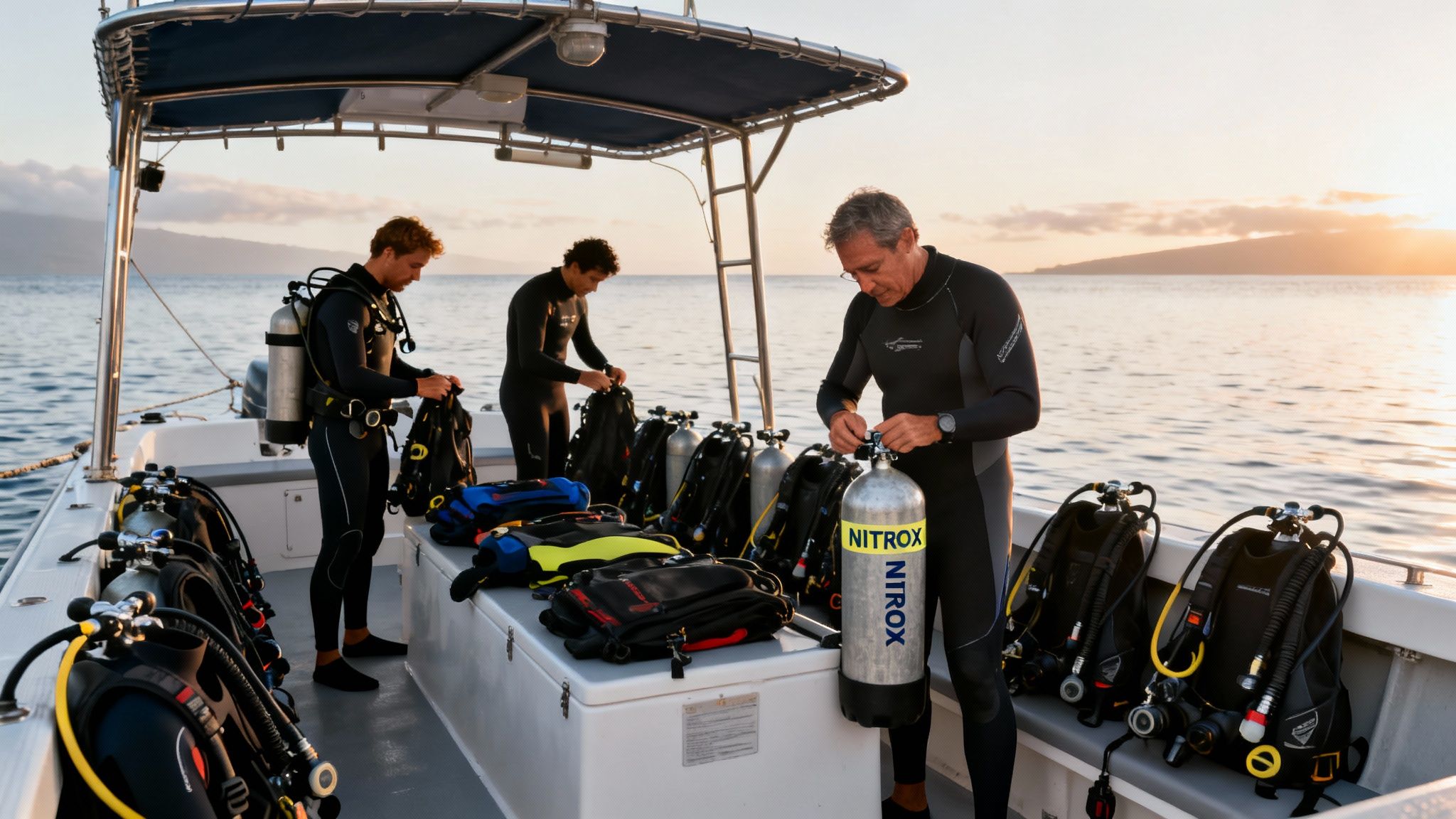
Ultimately, choosing a top-tier dive operator is your best safety net. A professional crew puts your well-being first with experienced guides, properly serviced boats and gear, and detailed safety briefings before every single dive. For instance, at Kona Honu Divers, we provide complimentary nitrox for certified divers. This can help reduce fatigue and safely extend your bottom time—it's those little details that really elevate your experience and security.
When you're ready to start putting it all together, check out our range of diving tours on the Big Island. We have trips for every skill level, all focused on giving you a safe and unforgettable adventure.
Booking Your Trip with Kona Honu Divers
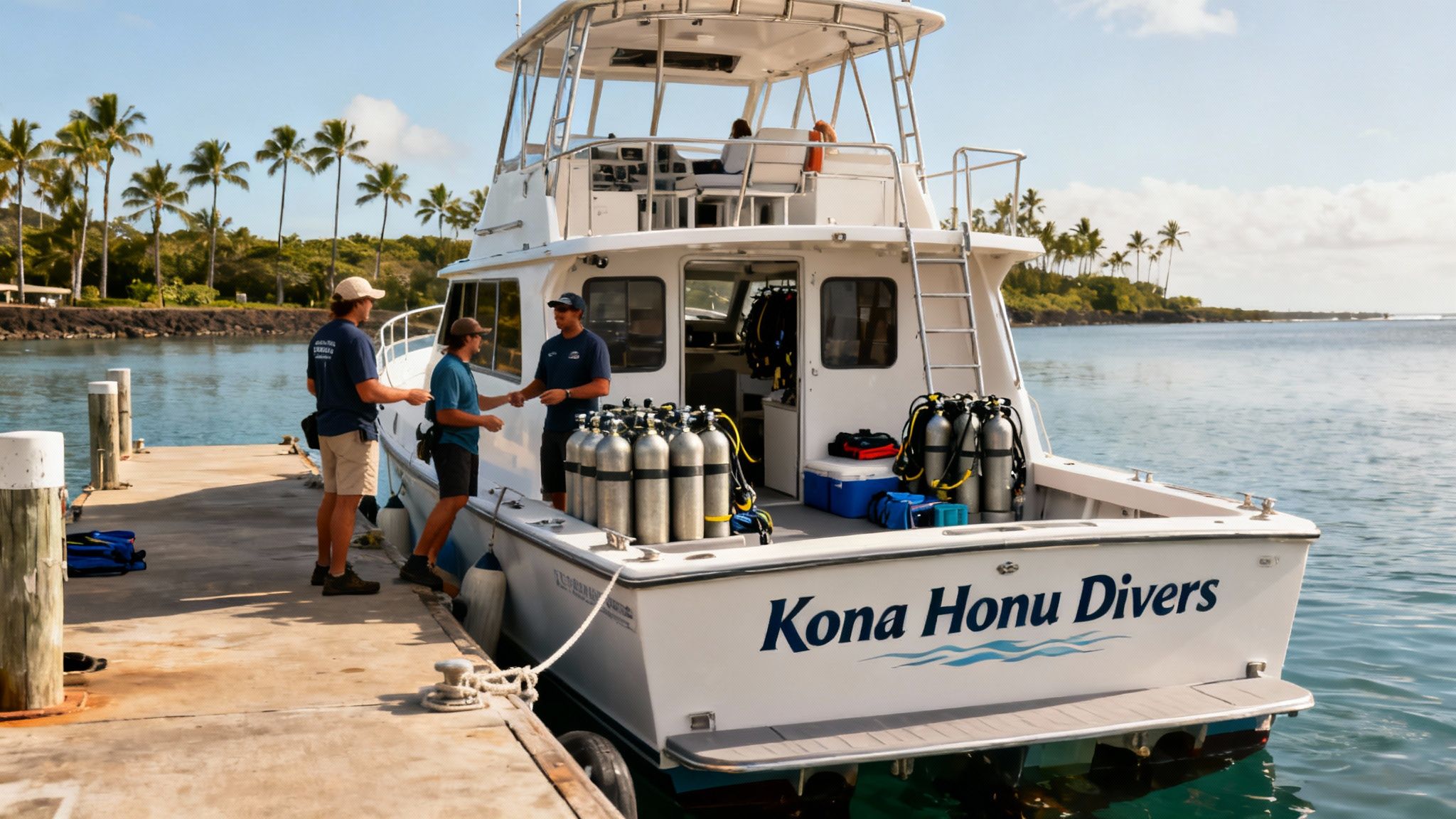
Ready to take the plunge? Picking the right dive boat can make or break your scuba diving Big Island Hawaii adventure. It’s the one decision that can turn a good trip into an absolutely unforgettable one, and this is exactly where Kona Honu Divers shines.
They’ve got it all: a fantastic crew, custom-built dive boats designed for comfort, and a genuine passion for making sure everyone has a great time. The whole experience is geared towards being seamless and fun, from the moment you step on board to your final ascent.
Why Choose Kona Honu Divers
It’s the little things that separate a good dive shop from a great one. Kona Honu Divers has earned its stellar reputation by focusing on professionalism, safety, and a true love for showing people Kona’s incredible underwater world.
Their guides live and breathe these waters. They know the reefs like the back of their hand, which means they can always pick the best spots based on the day's conditions, giving you the best shot at amazing marine life encounters.
Choosing a highly-rated, professional dive charter is the single most important step in ensuring your Hawaiian scuba adventure is unforgettable for all the right reasons.
You can also feel their commitment to safety in everything they do. The gear is meticulously maintained and the pre-dive briefings are thorough, so you can just relax and enjoy the dive, knowing you’re in good hands.
Exploring Their Popular Dive Tours
Kona Honu Divers offers a whole menu of popular diving tours that cater to pretty much every diver out there. Whether you’re dreaming of the world-famous Manta Ray Night Dive or just want to explore the vibrant reefs by day, they have a trip for you.
One of the best perks they offer is complimentary nitrox for all certified divers. This is a huge plus—it allows for longer bottom times and helps you feel less tired after diving, so you can really make the most of your time underwater.
But don’t just take our word for it—see what other divers are saying.
Booking is super easy. You can hop on their site, see the full schedule, and reserve your spot directly. In just a few clicks, you can go from daydreaming about a dive to locking in your spot on the boat.
Your Big Island Diving Questions Answered
Alright, let's tackle some of the most common questions we hear from divers planning a trip to the Big Island. Think of this as your final checklist to make sure you're ready for an incredible underwater adventure.
When is the Best Time to See Humpback Whales?
If you want to hear the unforgettable, haunting songs of humpback whales echoing through the water on your dive, winter is the time to be here. The peak season for humpback whales runs from December through March.
While you can't scuba dive with the whales (for their safety and yours), their presence creates a powerful, otherworldly soundtrack for your dives. It's a truly magical experience you won't forget.
Is There a Specific Manta Ray Season?
This is one of our favorite questions because the answer is so simple: nope! Kona's manta rays are homebodies; they don't migrate and are here year-round. They show up consistently for their nightly plankton feast.
This means any time of year is a perfect time to book the world-famous manta ray night dive. In fact, local operators report sighting success rates of over 90% all year long.
Do I Need to Be Certified to Scuba Dive?
Not at all! If you're curious about diving but aren't certified, you can jump right in with a Discover Scuba Diving experience.
You'll learn the essential skills from a PADI instructor in a safe, controlled setting before heading out for a genuine dive on a beautiful, shallow reef. It’s the perfect way to see if scuba is for you without committing to a full course.
Can My Non-Diving Partner Come on the Boat?
Absolutely. We love having non-divers, or "ride-alongs," join the fun. Most shops, including ours, welcome them aboard.
It's a fantastic way for friends or family to share the day, enjoy the stunning Kona coastline from the boat, and maybe do a little snorkeling while you're below the waves. Just make sure you book a spot for them ahead of time, as space can be limited.
What Does a Typical Dive Charter Cost?
For a standard two-tank morning boat dive here in Kona, you can expect to pay somewhere in the range of $180 to $220 per person. That usually covers your tanks, weights, and some snacks and drinks on the boat.
Keep in mind that specialty trips, like the Manta Ray Night Dive or the advanced Kona Blackwater Dive, will have different price points. Always double-check what's included, as rental gear is often an extra charge.
With these key questions answered, you're all set to lock in your plans and get ready to dive.
At Kona Honu Divers, our whole mission is to make sure every trip is safe, fun, and absolutely unforgettable. Take a look at our full range of Kona diving tours and let's find the perfect underwater adventure for you.