
Welcome to an underwater paradise, a world sculpted by fire and embraced by the sea. Scuba diving on the Big Island isn't just another dive trip; it's a full-immersion experience into a thriving world of ancient lava tubes, vast coral gardens, and marine life you won’t find anywhere else. Thanks to the sheltered Kona coast, we're blessed with some of the calmest, clearest water on the planet, making this a top-tier dive destination any day of the year.
Why The Big Island Is a World-Class Diving Destination
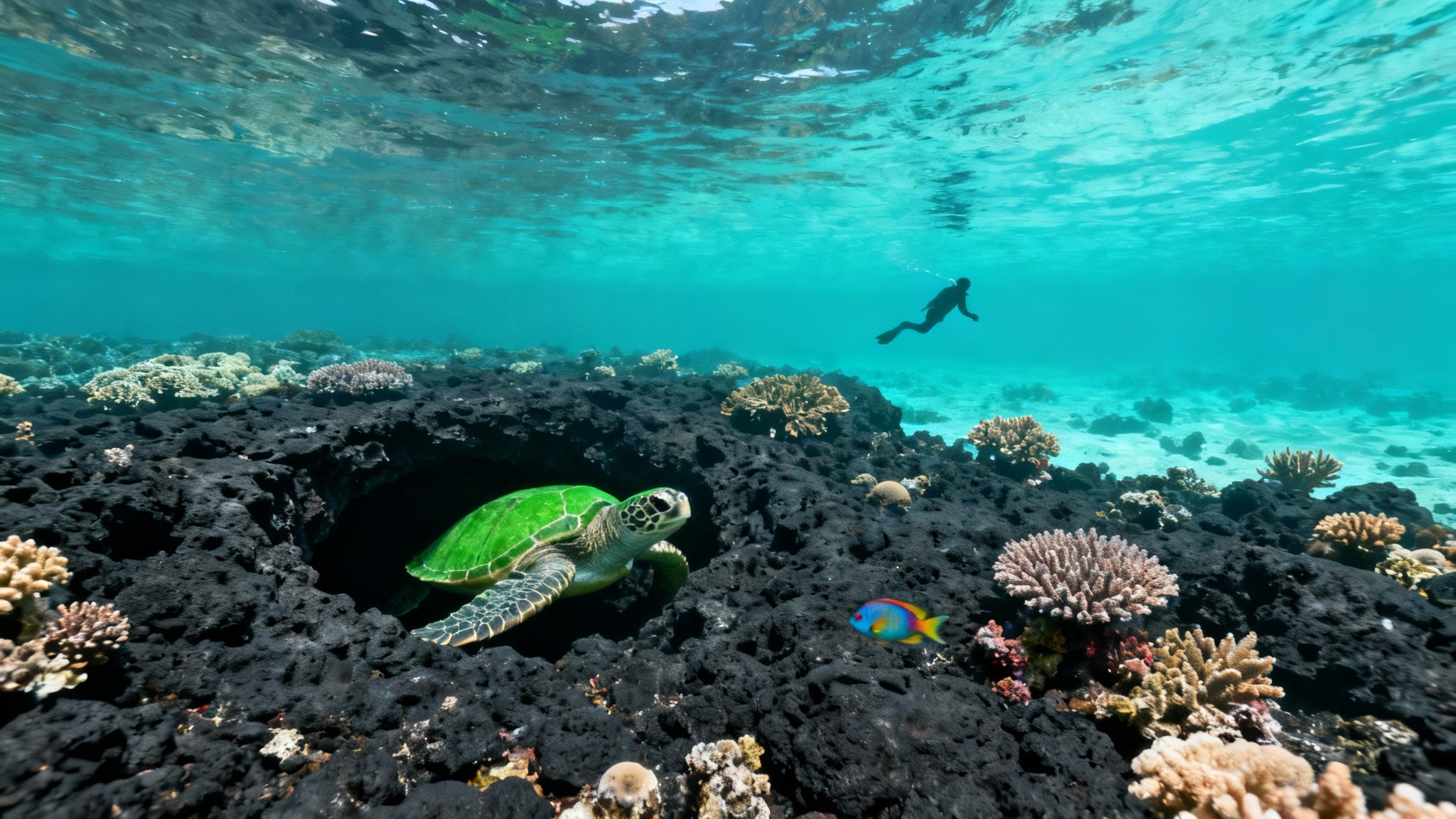
The secret to the Big Island’s incredible underwater landscape lies in its volcanic soul. Over countless millennia, lava flows have carved out a dramatic subaquatic playground of arches, caverns, and intricate lava tubes. It’s this unique geology that provides the perfect, complex habitat for an astonishing diversity of marine species.
Because our island is younger and rockier than the others, without the long, sandy shorelines, something special happens: our vibrant coral reefs can flourish much closer to shore. This creates some of the most accessible and genuinely breathtaking dive sites you could ever hope to explore.
Calm Waters and Crystal-Clear Visibility
One of the best things about diving here is the gift of Kona's geography. The sheer scale of the Mauna Loa and Hualālai volcanoes creates a massive natural shield, protecting the entire western coast from the blustery trade winds. The result? Incredibly calm and predictable ocean conditions, day in and day out.
That lack of wind and heavy current means one thing for divers: phenomenal visibility. It's totally normal to have visibility exceeding 100 feet (30 meters), turning every dive into a high-definition experience. These pristine conditions are perfect for new divers getting comfortable and for seasoned pros who want to soak in every last detail of the reef.
A Sanctuary for Unique Marine Life
Our isolation out here in the middle of the Pacific has turned the Big Island into a hotspot for biodiversity, with many species evolving to be found only in Hawaiian waters. When you descend into our reefs, you’re visiting a bustling metropolis of aquatic locals.
You can almost always count on seeing:
- Hawaiian Green Sea Turtles (Honu): We see these gentle giants everywhere, especially at "cleaning stations" where they patiently let small reef fish nibble algae off their shells.
- Endemic Fish Species: More than 20% of Hawaii's reef fish are found nowhere else! Keep an eye out for the stunning Psychedelic Wrasse or the unmistakable Bandit Angelfish.
- Iconic Pelagic Encounters: Kona is legendary for two things: the world-famous manta ray night dive and the surreal, otherworldly experience of the blackwater dive.
To give you a quick overview, here are some of the most unforgettable underwater adventures the Big Island has to offer.
Top Big Island Dive Experiences At A Glance
| Dive Experience | Best For | Key Marine Life | Typical Depth |
|---|---|---|---|
| Manta Ray Night Dive | Unforgettable encounters, all skill levels | Giant Manta Rays, Garden Eels | 30-40 ft (9-12m) |
| Blackwater Dive | Adventurous divers, unique pelagic life | Larval fish, jellies, squid | 30-50 ft (9-15m) |
| Reef Dives | Every diver, vibrant coral exploration | Turtles, endemic fish, eels, octopus | 30-80 ft (9-24m) |
| Lava Tubes & Caverns | Experienced divers, dramatic topography | Nudibranchs, crustaceans, reef sharks | 40-100 ft (12-30m) |
Each of these dives offers a completely different window into the magic of Hawaii's underwater world, showcasing just how special this place really is.
This guide is your complete playbook for planning the ultimate Big Island scuba adventure. We’ll cover everything you need to know, from our mesmerizing manta encounters to the details of what makes diving in Kona so unique.
Get ready to go deep—we're about to explore the heart and soul of scuba diving on the Big Island and help you make every moment of your trip count.
The Kona Manta Ray Night Dive: A True Bucket-List Experience

Picture this: you're kneeling on the sandy ocean floor just after sunset, surrounded by the quiet of the deep. A brilliant blue light illuminates the water in front of you. Then, a massive shadow emerges from the darkness, gliding effortlessly overhead—a gentle giant with a wingspan of up to 16 feet. This is the Kona manta ray night dive, an experience so breathtaking it's consistently named one of the best night dives on the planet. It’s less of a dive and more of an underwater ballet.
The whole setup is ingenious. We place powerful, purpose-built lights on the seafloor. These lights attract clouds of plankton, which just so happens to be the mantas' favorite meal. Divers gather around this glowing "campfire," and soon, the mantas arrive for a reliable and spectacular feast. What follows is a silent, graceful performance as they swoop, barrel roll, and soar through the light beams, often coming within inches of you.
Why This Encounter Is So Reliable
The Kona coast is one of the best places in the world to see manta rays, and it's no accident. We have a perfect storm of reliable food sources and well-established, safe viewing sites. The success rate for this dive is incredibly high, making it a dependable bucket-list adventure for anyone scuba diving on the Big Island.
The consistency is backed by years of research. Between 2009 and 2014, conservation groups logged thousands of manta sightings, proving that the plankton blooms bring the mantas in like clockwork all year round. On a truly epic night, divers have seen as many as 30 to 50 mantas at once—a powerful testament to the health of our local population. You can dive into the fascinating numbers yourself by checking out the data behind Kona's manta ray sightings.
The sheer consistency of the manta ray night dive is what makes it so special. Unlike many wildlife encounters that depend on luck, this dive offers a near-guaranteed front-row seat to one of nature’s most magnificent spectacles.
Why Garden Eel Cove Is The Superior Choice
While there are a couple of spots to do the manta dive, Garden Eel Cove (lovingly nicknamed Manta Heaven) is hands-down the best choice. It’s a bit further north and tucked into a protected bay, which makes for a much more controlled and comfortable experience for both the divers and the mantas.
Here’s why it stands out:
- Calmer Conditions: Being sheltered from the open ocean means a smoother boat ride out and much calmer conditions underwater. No one likes being tossed around by a swell.
- Better Viewing Area: The site has a natural sandy amphitheater. This lets divers settle in comfortably on the bottom in a designated circle, giving everyone an unobstructed view without disturbing the marine life.
- Healthier Reefs: The coral reefs surrounding Garden Eel Cove are simply more vibrant and full of life. This doesn't just make for a prettier dive; it supports the entire ecosystem that brings the mantas here in the first place.
The other site, "Manta Village," is closer to shore and can get choppy. It's also more exposed to runoff, which can mess with visibility. The thoughtful setup at Garden Eel Cove just provides a more respectful and all-around better interaction.
This unforgettable adventure is so much more than a dive—it’s a chance to connect with one of the ocean's most majestic creatures. From the moment you step on the boat at sunset to the final, awe-inspiring pass of a manta overhead, every part of the experience is designed to leave you speechless.
Ready for the adventure of a lifetime? Kona Honu Divers offers expert-led manta ray dive tours that prioritize safety, education, and deep respect for these incredible animals.
Beyond the Mantas: Exploring Kona’s Top Dive Sites
Look, everyone knows the manta ray night dive is legendary. It absolutely deserves its reputation. But if that's the only dive you do, you're just scratching the surface of what scuba diving on the Big Island of Hawaii has to offer.
The Kona coast is a massive underwater frontier, shaped by millennia of volcanic fire. This isn't your typical sandy-bottom dive destination. We’re talking about a dramatic world of sheer drop-offs, massive archways, and intricate lava tubes, all teeming with life. For any certified diver, the real magic is getting out there and exploring it all.
At Kona Honu Divers, we run a wide variety of diving tours that showcase the very best of these underwater landscapes. We're here to help you safely discover Kona’s premier sites.
Kealakekua Bay: A Protected Paradise
You can't talk about Kona diving without mentioning Kealakekua Bay. This isn’t just another pretty spot; it’s a historically significant and ecologically critical Marine Life Conservation District, home to the Captain Cook Monument. The bay is famous for some of the most pristine coral gardens in Hawaii, with visibility that often pushes past 100 feet.
Because Kealakekua Bay has been a protected, no-fishing zone since 1992, the marine life has absolutely exploded. The result is a bustling underwater city. You’ll see vibrant corals swarming with over 200 fish species, from huge schools of parrotfish to mesmerizing convict tangs. It’s also a favorite resting spot for massive pods of spinner dolphins, sometimes 50-100 strong. This incredible abundance and clarity is why so many divers consider it one of the top dive sites in the entire United States, and you can learn more about its incredible biodiversity to see why.
Lava Tubes and Turtle Hangouts
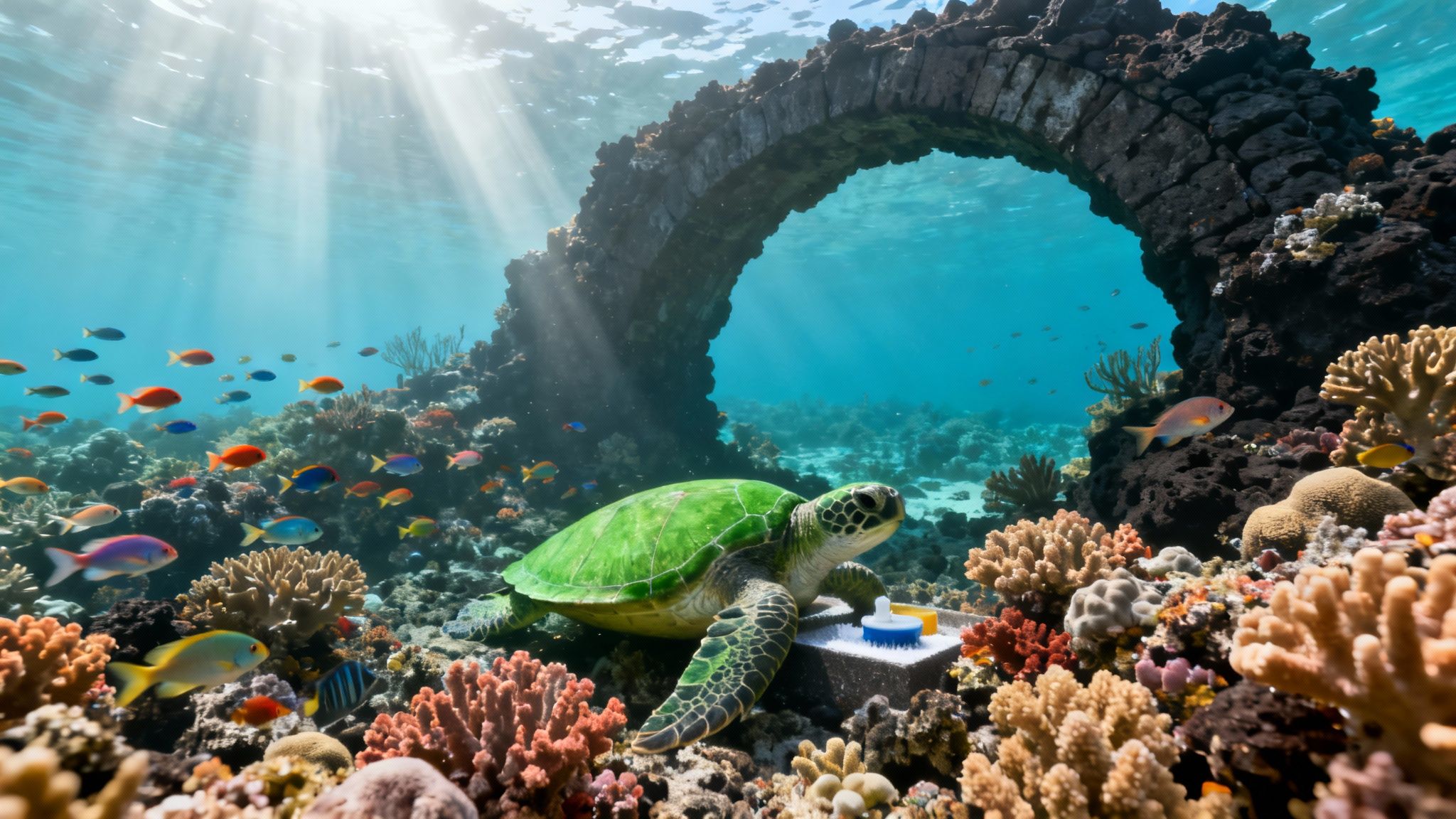
The adventure doesn't stop at the bay. The entire Kona coast is riddled with ancient lava tubes and swim-throughs, creating a natural underwater playground. Guiding divers through these submerged caverns and arches is one of our favorite things to do—it's a thrilling peek into the raw power that forged these islands.
These unique formations also happen to be perfect hangouts for our beloved honu, the Hawaiian green sea turtles. It's incredibly common to find them napping on the reef or lined up at "cleaning stations," where small fish meticulously pick algae off their shells. These moments offer amazing photo ops and a peaceful chance to watch these gentle giants in their element.
There's nothing quite like exploring a lava tube for the first time. The way sunlight punches through cracks in the ceiling, illuminating the cavernous space, reveals a hidden world. Every crevice might hold a surprise, from a sleeping whitetip reef shark to a shy octopus.
The Kona Blackwater Dive: A Journey Into the Abyss
For experienced divers looking for something truly unique, there is nothing on Earth like the Kona Blackwater Dive. Forget the reef. On this dive, you’re tethered to the boat in the pitch-black of night, suspended over thousands of feet of open ocean.
Here, you get a front-row seat to one of the planet's largest migrations, as bizarre and beautiful creatures rise from the depths to feed near the surface. It’s a mind-bending experience that feels more like a spacewalk than a scuba dive.
You’ll encounter a world of pelagic life few ever see:
- Bioluminescent jellies pulsing with an otherworldly glow.
- Translucent larval fish in their strange, early life stages.
- Deep-water squid and other alien-like organisms.
Kona Honu Divers runs expert-guided Blackwater Dive tours that put safety first, allowing you to witness this incredible deep-sea phenomenon. And for certified divers looking for a challenge on the reefs, we also offer dedicated advanced dive charters.
How To Plan Your Big Island Dive Adventure
A little bit of planning goes a long way toward making your Big Island dive trip a truly unforgettable one. When you get the logistics sorted out ahead of time, you can spend less time stressing and more time underwater, which is exactly where you want to be.
The great news? The Kona coast is a fantastic year-round dive destination. Thanks to the massive volcanoes that shield this side of the island, the waters are almost always calm and clear, making for some truly epic conditions no matter when you visit. Still, there are some subtle seasonal shifts that might help you decide on the perfect time for your trip.
When to Dive in Kona
The summer months, which run roughly from May to October, are when you'll find the warmest water. We're talking a balmy 78-82°F (26-28°C). This is also when the seas are at their most tranquil, often looking like a sheet of glass—perfect for smooth boat rides and easy-going dives.
Then there's winter, from November to April. The water temperature dips just a bit, hovering around a very comfortable 75-78°F (24-26°C). You might want a slightly thicker wetsuit, but the trade-off is absolutely magical: it’s humpback whale season. There is nothing quite like being on a dive and hearing the haunting songs of these gentle giants echoing through the water. It’s an experience that will stay with you forever.
To help you get a better picture, here’s a quick breakdown of what to expect throughout the year.
Big Island Diving Conditions Throughout The Year
| Season | Average Water Temp | Average Visibility | Marine Life Highlights |
|---|---|---|---|
| Summer (May-Oct) | 78-82°F (26-28°C) | 80-100+ ft | The calmest seas and warmest water for comfortable diving. |
| Winter (Nov-Apr) | 75-78°F (24-26°C) | 70-100 ft | The incredible opportunity to hear humpback whale songs underwater. |
| Year-Round | 75-82°F (24-28°C) | Consistently Excellent | Manta rays, sea turtles, and vibrant endemic fish are always here! |
No matter which season you choose, Kona’s underwater world is always ready to put on a show.
Certification and Skill Levels
Kona is an incredible spot for divers of all backgrounds, from those taking their first ocean breaths to seasoned veterans. An Open Water certification is your passport to most of the amazing reef dives here, and most importantly, it gets you a front-row seat for the world-famous Manta Ray Night Dive.
If you have a bit more experience under your belt, an Advanced Open Water certification will unlock even more adventures. Think deeper dive sites, exploring intricate lava tubes, and taking on unique challenges like the Kona Blackwater Dive. But don't worry if you're just starting out—our captains and guides always choose dive sites based on the conditions and the comfort level of everyone on the boat.
Health and Safety On Your Dive Trip
Keeping yourself safe and healthy is the key to a fantastic dive vacation. A few simple habits can make all the difference.
- Stay Hydrated: Seriously, drink water all day long. The Hawaiian sun and salty air can dehydrate you much faster than you realize. Guzzling water before and after your dives is a must.
- Use Reef-Safe Sunscreen: It’s not just a good idea—it’s the law in Hawaii. To protect our precious coral reefs, stick to mineral-based sunscreens with ingredients like zinc oxide. It’s a small change for you that has a massive positive impact on the ocean.
- Mind Your No-Fly Times: This one is crucial. Plan your dives for the beginning of your trip. The standard safety rule is to wait at least 18 hours after your last dive before getting on a plane. This helps you avoid any risk of decompression sickness.
Figuring out a budget is also a big part of planning. To get a clear idea of what to expect, check out our guide on how expensive scuba diving in Hawaii can be.
Choosing The Right Dive Operator In Kona
The difference between a good dive and an unforgettable one almost always comes down to the people guiding you. When you’re diving on the Big Island, your choice of dive operator is easily the most important decision you'll make. A truly great company doesn’t just shuttle you to a dive site; they ensure your safety, comfort, and pure enjoyment from the moment you book until you’re back on shore, buzzing from the experience.
Choosing the right operator means looking well beyond the price tag. You’re putting your trust in their hands in an environment that demands respect and deep expertise. This is where a premier operator like Kona Honu Divers truly sets itself apart.
What Defines a Top-Tier Dive Operator
As you start looking at dive companies in Kona, a few non-negotiable factors should be at the very top of your checklist. These are the things that form the foundation of a safe, professional, and genuinely memorable underwater adventure.
- Impeccable Safety Record: This is everything. A top-notch operator will have a flawless safety record, transparent protocols, and a highly trained crew who lead thorough, easy-to-understand dive briefings.
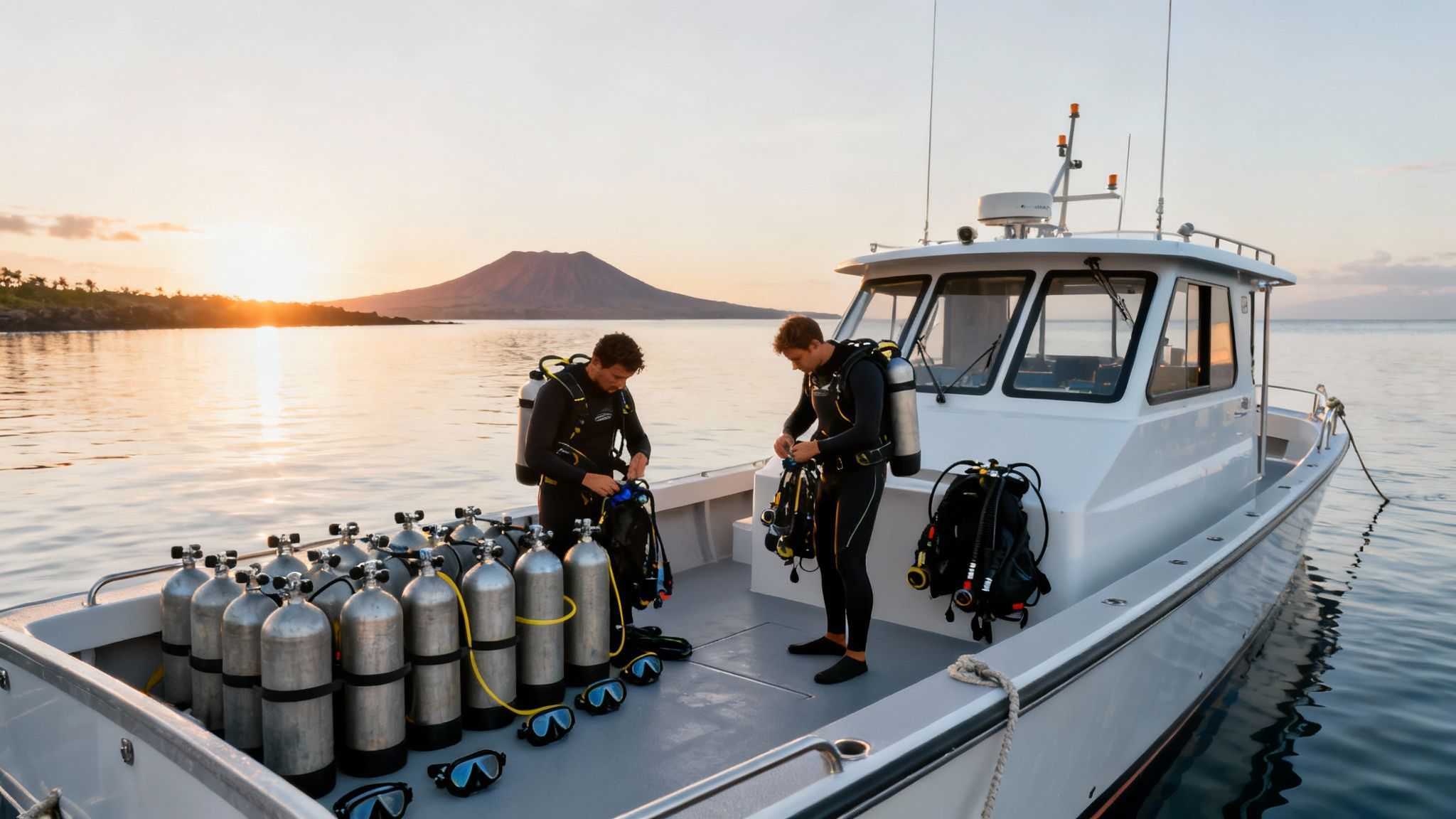
- Quality Boats and Gear: A comfortable, well-maintained boat makes a huge difference in your day. Look for operators with vessels actually designed for divers, complete with easy entry and exit points, shade, and other amenities. Their rental gear should be modern and serviced meticulously.
- Experienced Local Guides: There's simply no substitute for local knowledge. Guides who have spent years diving these specific waters know the currents, the hidden gems, and the unique behaviors of the local marine life. They know where to find the cool stuff.
- Small Group Sizes: Nobody likes being herded into a large, crowded group underwater. Smaller groups mean you get personalized attention, a safer dive, and a much more intimate encounter with the incredible underwater world.
Scuba diving in Kona offers world-class conditions, with visibility that often sits between an incredible 80-100 feet. But the ocean always, always demands respect. While you might hear about ocean-related incidents in Hawaii, scuba diving itself remains statistically very safe. The global fatality rate for certified divers is less than 0.02%, an excellent safety record maintained by professional operators with strict protocols.
The Kona Honu Divers Difference
At Kona Honu Divers, we've built our entire reputation on not just meeting these standards, but exceeding them. Our team brings a collective 200+ years of diving experience to the table, and that deep expertise is something you'll feel in every part of our operation.
Our custom-built dive boats, the Honu One and Honu Iki, were designed by divers, for divers. That means they feature ample shade (a must!), freshwater showers, and plenty of space to move around. We believe your comfort on the surface is just as important as your experience below it.
A great dive experience is about more than just what you see underwater. It’s about feeling safe, comfortable, and genuinely looked after. That’s why we invest in the best boats, the best gear, and most importantly, the best people.
We also offer unique perks that make a real difference in your dive day. For certified divers, we provide complimentary nitrox, which can help you feel less tired after a dive and safely extend your bottom time. It’s one of the many ways we focus on delivering a better experience, which is why we’re so proud of our 95% repeat guest satisfaction rate. We've even put together a comprehensive guide to help you figure out what to look for, which you can read more about right here: how to choose a Kona dive shop.
But don't just take our word for it. See what fellow divers have to say about their experiences with our crew.
Your Big Island Diving Questions, Answered
Planning a dive trip to the Big Island always brings up a few questions. We get it. To make sure you arrive feeling confident and ready to hit the water, here are some straight-up answers to the things we're asked most often.
What's the Best Month for Big Island Scuba Diving?
Honestly, there’s no bad time to dive the Kona coast. Its leeward position shields it from the worst weather, giving us fantastic conditions pretty much year-round.
That said, there are slight differences between seasons. The summer months, running from May to October, serve up the warmest water, usually a balmy 78-82°F (26-28°C), and the flattest, calmest seas.
If you visit in the winter, between November and April, the water dips a bit to a still-comfortable 75-78°F (24-26°C). The real magic of winter diving, though? It’s peak humpback whale season. Hearing their haunting songs resonate through the water on a dive is an experience that will stay with you forever.
Do I Need to Be an Advanced Diver?
Not at all! Kona is an incredible place for divers of every skill level, from freshly certified to seasoned pros.
Some of the most iconic sites, including the world-famous manta ray night dive and countless vibrant reefs, are well within the depth limits for Open Water divers. A great operator like Kona Honu Divers will always choose spots that match the experience of everyone on the boat.
But if you are looking to push your limits, we've got you covered. There are plenty of advanced dives to explore, from deeper volcanic ledges and intricate lava tubes to the one-of-a-kind blackwater dive.
Can My Non-Diving Family Join the Boat?
Absolutely! We love having the whole family out on the water. Many scuba diving Big Island Hawaii trips are fantastic for snorkelers and ride-alongs, especially those heading to protected spots like Kealakekua Bay. The reefs there are so healthy and shallow that snorkelers get an amazing view from the surface.
The manta ray night dive also has a snorkel option that’s just as breathtaking as the scuba version. When you book your diving tours, just give a heads-up that you'll have snorkelers or riders joining so the crew can plan a trip that’s perfect for everyone.
Should I Bring My Own Gear or Rent It?
This is totally a matter of personal preference and how much you feel like hauling across the Pacific. Many divers won’t travel without their own mask, regulator, and dive computer—and we understand wanting the comfort of a perfect fit.
On the other hand, renting from a top-notch shop like Kona Honu Divers means you get access to high-quality, meticulously maintained equipment without any of the travel hassle. Leaving bulky items like your BCD and wetsuit at home can free up a ton of luggage space. All our tours include tanks and weights, and our rental packages have everything else you need.