
Picture this: you're descending into warm, turquoise water so clear you can see for a hundred feet. All around you, vibrant coral gardens flourish on ancient volcanic rock formations. This isn't a dream—it's scuba diving on the Big Island of Hawaii. From otherworldly night dives with gentle giants to exploring pristine underwater sanctuaries, the island delivers some of the most unforgettable diving tours on the planet.
Why the Big Island is a Premier Scuba Diving Destination
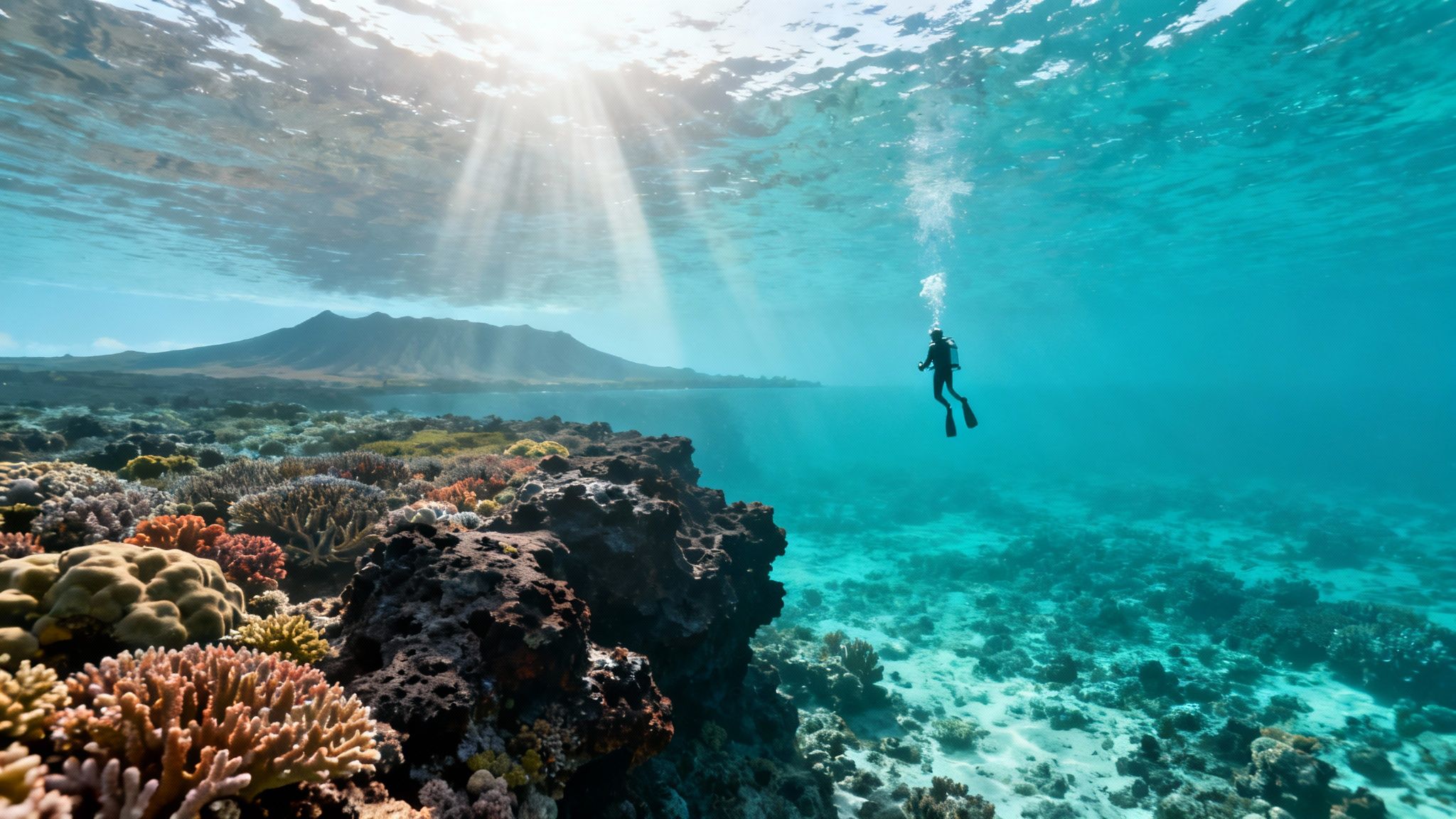
The Big Island isn't your average tropical hotspot; it's a world-class diving destination literally forged by fire. The island’s dramatic underwater landscape—carved by volcanoes—is a playground of lava tubes, massive archways, and sprawling coral gardens perfect for divers of every skill level.
In this guide, we’ll break down what makes diving here so incredible. We'll walk through the island's can't-miss experiences and introduce you to top-notch local operators like Kona Honu Divers, a team known for their commitment to safety and showing divers the very best of Kona.
Unmatched Marine Biodiversity
What truly makes the Big Island a bucket-list destination is its staggering biodiversity. Thanks to its remote location, the Hawaiian archipelago has evolved into a unique ecosystem teeming with life you won't find anywhere else.
It’s no surprise that diving here has become a global draw. The island’s waters are home to over 1,100 species of fish, and an amazing 129 of those species are endemic—meaning you can only see them in Hawaii. This biological richness makes it one of the most vibrant diving locations in the entire Pacific.
This incredible marine life flourishes in waters shielded by the island's geography, especially along the calm Kona coast. As you get ready to explore this underwater paradise, it’s important to remember the ongoing coral reef conservation efforts that help protect these fragile ecosystems for divers to enjoy for years to come.
This guide will cover key experiences, including:
- The world-famous Manta Ray Night Dive
- Top dive sites along the Kona Coast
- Advanced and unique diving adventures
- Essential safety tips for a worry-free trip
Whether you have hundreds of dives under your belt or are just getting started, the Big Island offers an underwater journey like no other. Let’s dive into what you can experience with Kona Honu Divers, your gateway to Hawaii's aquatic wonders.
Experiencing the Legendary Manta Ray Night Dive
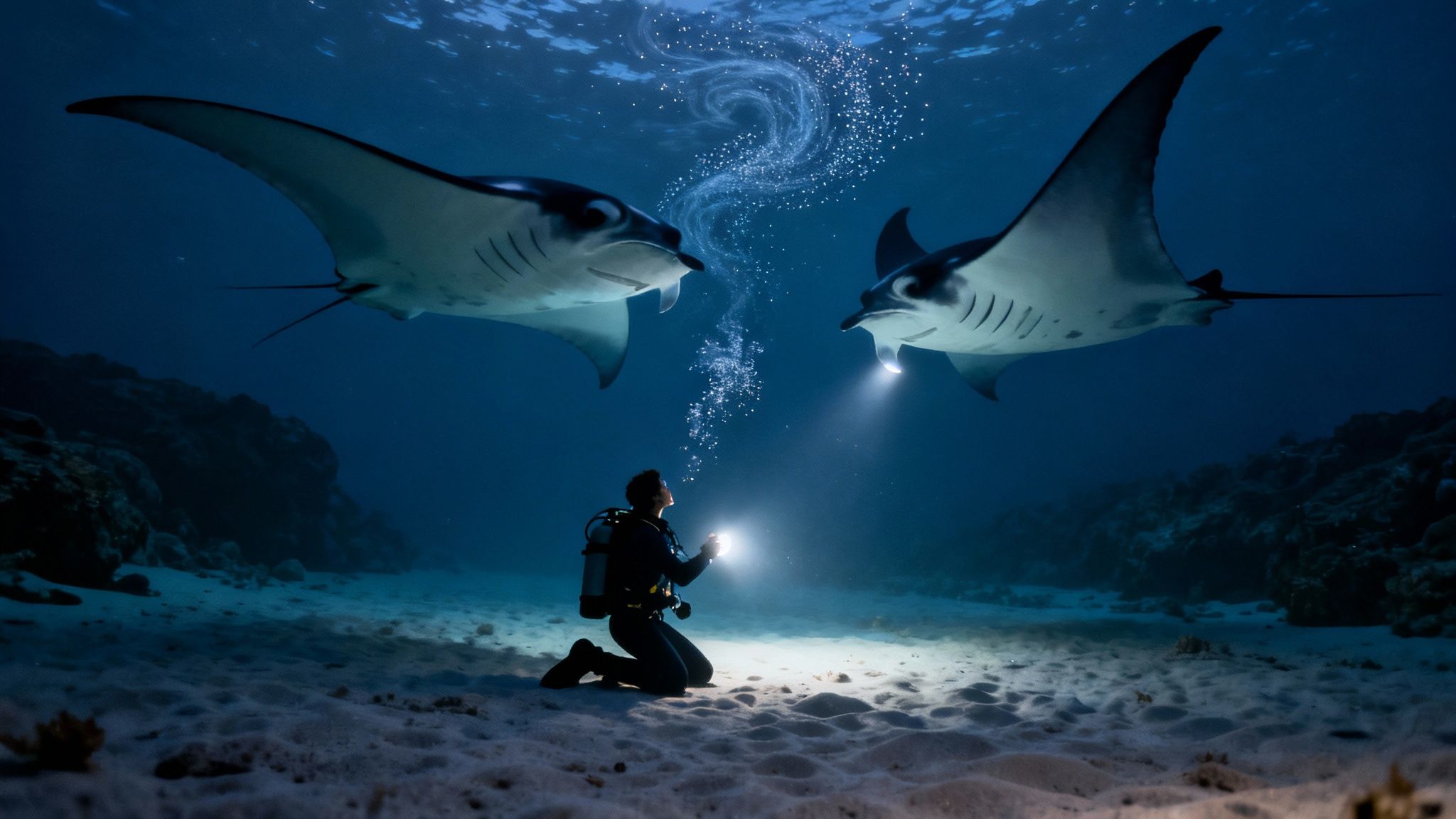
Picture this: you’re kneeling on the ocean floor as darkness surrounds you, your dive light pointing a beam into the inky water above. Out of nowhere, a massive, graceful shadow swoops down, gliding inches over your head. This is the world-famous Manta Ray Night Dive, the absolute pinnacle of scuba diving Big Island Hawaii and an experience that rightfully tops bucket lists worldwide.
This isn’t just a dive; it’s an underwater ballet, and you have a front-row seat. The magic starts when powerful lights are set up on the seafloor. These lights act like a magnet for clouds of plankton, which happen to be the manta rays' favorite meal. As the plankton gather, the gentle giants arrive for dinner.
With wingspans that can stretch over 15 feet, these incredible creatures perform effortless barrel rolls and soaring glides right through the light beams, scooping up mouthfuls of plankton. It's an intimate, surreal spectacle that feels like something from another planet.
Why Garden Eel Cove is the Premier Manta Ray Site
While you might hear about a couple of spots for this dive, those in the know will tell you that Garden Eel Cove (lovingly called "Manta Heaven") is the superior choice for the dive tour. There are a few solid reasons why it consistently delivers a better, more reliable experience.
For starters, its location is naturally more protected from the open ocean swell. This means calmer, more comfortable conditions for divers, making the whole trip more enjoyable. On rougher nights, dives at more exposed sites sometimes get canceled, but Garden Eel Cove often remains diveable. The viewing area is also better, allowing divers to settle in for an unobstructed show.
The reef here is also noticeably healthier and more vibrant than other manta sites. So while you're waiting for the stars of the show to arrive, you’re surrounded by a thriving ecosystem, adding another beautiful layer to an already incredible night.
What to Expect on Your Manta Ray Dive
Your adventure kicks off with a boat ride as the sun dips below the Kona horizon. The crew from a top-notch operator will give you a thorough safety briefing and share some fascinating facts about the local manta population. You’ll even learn that each manta is known by name, identifiable by the unique spot patterns on its belly.
Once you descend to the sandy "campfire" area, you'll get settled for the main event. For the next 45 minutes or so, you'll be mesmerized by the mantas' feeding frenzy. It’s a peaceful yet absolutely exhilarating feeling as these huge animals glide so close you feel you could reach out and touch them (but remember, touching is a huge no-no to protect their delicate skin).
To get a real feel for this magical encounter, you can read more about what it’s like to go on the manta ray dive in Kona.
After the dive, it's back to the boat for hot chocolate and snacks, where everyone is buzzing with excitement. The success rate for seeing mantas at Garden Eel Cove is incredibly high—often over 90%—so you can book with confidence. This isn't just another dive; it's a genuine connection with one of the ocean's most magnificent creatures.
Exploring the Top Dive Sites Along the Kona Coast
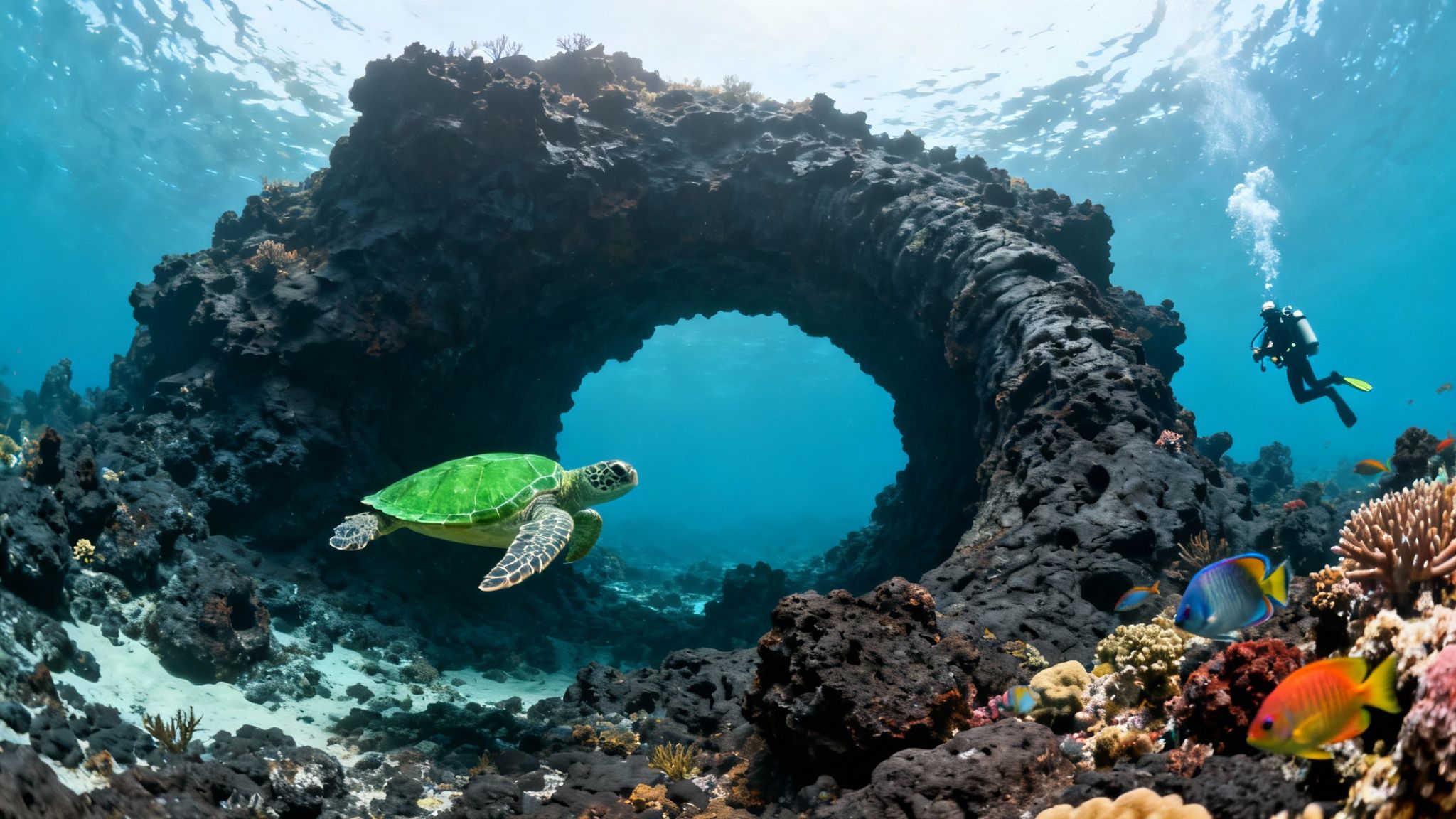
While the Manta Ray Night Dive gets most of the spotlight, don't sleep on the daytime scuba diving on the Big Island Hawaii. It's every bit as spectacular. The Kona Coast is a diver’s dream, a sprawling underwater playground shielded from the wild open ocean by the island's colossal volcanoes. This natural barrier creates incredibly calm and clear conditions almost year-round.
The underwater landscape here is a direct gift from the island's fiery volcanic heart. Ancient lava flows have sculpted a dramatic world of arches, canyons, and intricate lava tubes, which are now completely blanketed in vibrant coral and buzzing with life. Let's dive into a few of the can't-miss spots that make Kona so legendary.
Kealakekua Bay: A Pristine Marine Sanctuary
You can't talk about Kona diving without starting at Kealakekua Bay. This isn't just another dive site; it's a historically sacred and fiercely protected Marine Life Conservation District. It’s where Captain James Cook first made landfall, and a monument in his honor now marks one of Hawaii's most pristine underwater ecosystems.
Places like Kealakekua Bay are the reason the Big Island has such world-class diving. Designated a marine sanctuary way back in 1969, the bay has made an incredible comeback. Strict rules against fishing and anchoring have allowed coral and fish populations to flourish. It’s no surprise that visibility here often pushes past 100 feet. You can learn more about the benefits of marine sanctuaries on Kona Honu Divers' blog.
Dropping into the water here feels like jumping into a perfectly maintained aquarium. You're greeted by impossibly clear blue water and sprawling coral gardens that seem to go on forever. The reef is bursting with health, hosting huge schools of yellow tang, playful spinner dolphins, and even the occasional reef shark cruising the perimeter.
Turtle Pinnacle: Where Honu Reign Supreme
Just as the name implies, Turtle Pinnacle is your absolute best bet for guaranteed encounters with Hawaiian Green Sea Turtles, or honu. The main attraction is a "cleaning station," a specific spot on the reef where turtles patiently line up to let smaller fish nibble algae and parasites off their shells. It's an incredible piece of natural behavior to witness firsthand.
The site itself is a submerged pinnacle that juts up from the seafloor, acting as a magnet for all sorts of marine life. You can spend your entire dive just circling the formation, watching the turtles relax and get groomed. For underwater photographers, it's pure gold.
But it’s not just about the turtles. Keep your eyes peeled for:
- Moray Eels: You'll often spot them poking their heads out from rocky crevices.
- Octopuses: These masters of disguise are a real treat for sharp-eyed divers.
- Colorful Reef Fish: A vibrant mix of butterflyfish, parrotfish, and Moorish idols.
Golden Arches and Lava Tube Adventures
If you're a diver who loves exploring unique underwater architecture, Golden Arches is non-negotiable. Carved out by ancient lava flows, the site is famous for its massive archways and swim-throughs. When the sunlight streams through these openings, it creates stunning beams of light that dance through the water—a truly magical sight.
Gliding through these natural structures feels like you're exploring a sunken cathedral. The lava rock itself provides a home for a huge diversity of reef fish and invertebrates. It’s a perfect showcase of how the island's volcanic past created a diver's paradise.
Kona’s lava tube formations offer a completely unique diving experience. You can swim through tunnels and caverns forged by molten rock, which now provide shelter for all kinds of marine life and an exciting adventure for certified divers.
The sheer variety of dive sites is what makes the Kona coast so special. You can spend your morning watching turtles at a cleaning station and your afternoon exploring majestic underwater arches. Reputable operators like Kona Honu Divers have encyclopedic knowledge of these sites and will take you to the best spots based on the day's conditions and your skill level. Take a look at their awesome diving tours along the Kona Coast to find your next adventure.
With so many incredible spots, choosing can be tough. Here’s a quick breakdown to help you find the perfect dive.
Kona Coast Dive Site Highlights
| Dive Site | Key Features | Common Marine Life | Best For |
|---|---|---|---|
| Kealakekua Bay | Marine sanctuary, exceptional visibility, pristine coral | Spinner dolphins, yellow tang, vibrant coral reefs | All skill levels, snorkelers, photographers |
| Turtle Pinnacle | Turtle cleaning station, submerged pinnacle | Hawaiian Green Sea Turtles, moray eels, octopus | Turtle lovers, photographers |
| Golden Arches | Dramatic lava arches, swim-throughs, light beams | Reef fish, invertebrates, occasional large pelagics | Divers who love unique topography, adventurers |
| Manta Heaven | Manta Ray night dive | Manta rays, garden eels, nocturnal creatures | Night divers, bucket-list experiences |
Each site offers a window into a different facet of Kona's underwater world, ensuring every dive is a new discovery.
Advanced and Unique Diving Adventures
So you've logged some dives and your buoyancy is dialed in. You're comfortable, confident, and ready for something more. This is where scuba diving Big Island Hawaii truly starts to show off. Once you get past the postcard-perfect sunlit reefs, the island reveals a wilder, more challenging side that rewards experienced divers with sights most people will never see.
For those with the right skills, Kona opens up a completely different underwater world. Think intricate lava tube systems, drift dives with ripping currents, and encounters with big pelagic species. This is your chance to see the raw, untamed power of Hawaii’s volcanic origins up close. If you are looking for more experienced diving opportunities, check out an advanced dive tour page.
The Legendary Kona Blackwater Dive
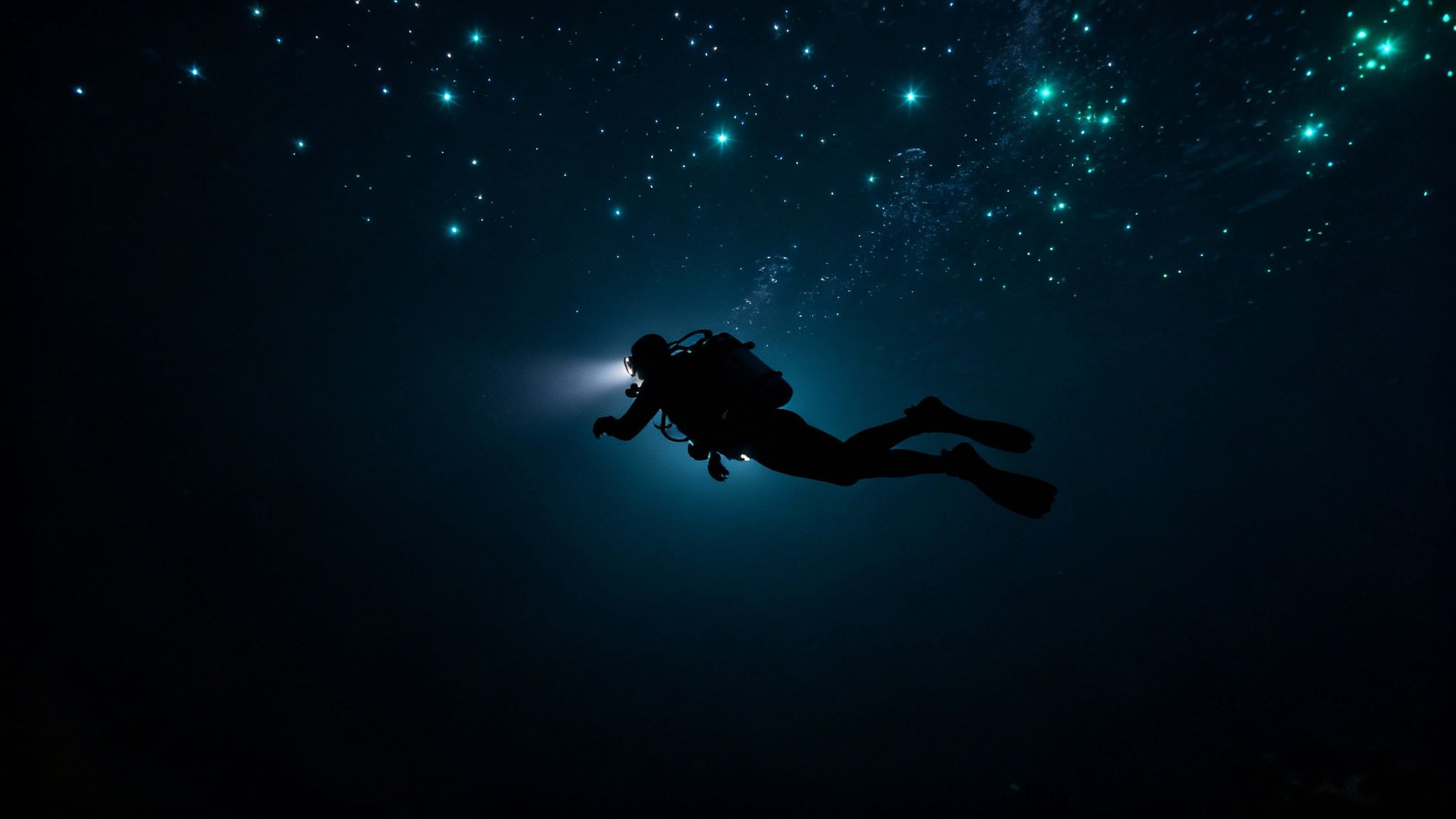
Picture this: you’re floating in absolute darkness miles from shore, suspended over thousands of feet of inky black water. This isn’t a dream—it’s the Kona Blackwater Dive, and it’s easily one of the most surreal and thrilling dives on the planet. It feels less like scuba diving and more like floating through deep space, where the stars are bizarre, bioluminescent creatures rising from the abyss.
On this one-of-a-kind night dive, you’re tethered to a boat and drift along with the current. The boat’s powerful down-lights act like a beacon, attracting an incredible array of life that takes part in the largest migration on Earth: the nightly vertical migration of zooplankton from the crushing depths to the surface.
This isn't just a dive; it's an encounter with life forms that seem completely alien. You'll see things like translucent larval fish, glowing squid, and pulsing, gelatinous critters that look like they belong on another planet. It’s a truly humbling, mind-bending experience.
Make no mistake, this is a highly specialized dive. It demands rock-solid buoyancy control and a calm head, but for any advanced diver looking for something truly extraordinary, it’s an absolute must-do.
Exploring Advanced Lava Formations and Deeper Reefs
Beyond the blackwater experience, the Big Island’s volcanic geology serves up endless opportunities for skilled divers. The same forces that forged the island itself also created a complex underwater playground of structures just waiting to be explored.
Advanced divers can push into deeper, more complex lava tubes than the ones you find on shallower sites. Navigating these submerged caverns requires precision and training, but the payoff is immense—you're literally swimming through geologic history. These formations often shelter unique species that have adapted to the darker, protected environment.
On top of that, some of the more exposed dive sites are known for their currents. And where there are currents, there’s usually bigger marine life. These drift dives can be an absolute blast, flying you along stunning reef walls where you might spot:
- Schools of Pelagic Fish: Big schools of jacks, barracuda, and other open-ocean hunters are a common sight.
- Sharks: While white-tip reef sharks are regulars, lucky divers might glimpse Galapagos or even tiger sharks.
- Eagle Rays: It’s always a treat to see these graceful rays cruising effortlessly in the blue.
These advanced opportunities are what make scuba diving Big Island Hawaii a destination you can return to time and time again, always finding a new challenge waiting. If you’re ready to take your diving to the next level, shops like Kona Honu Divers offer specialized trips designed to give experienced divers the thrill they’re looking for. You can check out their advanced dive tour options or take the plunge on the unforgettable Kona Blackwater Dive.
Essential Tips for Safe Diving in Hawaii
A great dive is a safe dive. It's as simple as that. While the waters off the Big Island are often beautifully calm and welcoming, the ocean always deserves our respect. Knowing how to stay safe isn't about being scared; it's about being prepared, confident, and a responsible diver. That's what ensures every single dive is memorable for all the right reasons.
Your first and most important safety decision happens long before you get your fins wet: choosing a great dive operator. Never cut corners here. Always book with a reputable, certified dive shop. PADI-certified outfits, for example, are held to strict international standards for everything from training and gear maintenance to handling emergencies. Their crews are pros who know these waters like the back of their hand—the currents, the sites, and the conditions of the day.
Respect the Briefing and Your Limits
Once you're on the boat, listen up. The pre-dive safety briefing is the most important conversation you'll have all day. I know it can be tempting to tune it out if you've done this a hundred times, but always listen carefully. This is where you get the critical, site-specific details—the entry and exit plan, any potential hazards to watch for, and the overall game plan for the dive.
Just as important is being honest about your own limits. If it’s been a while since your last dive, don't be a hero. A quick refresher course can make all the difference. Never let anyone pressure you into a dive that feels beyond your skill or comfort level. A good guide will respect that and work with you. If you're just starting out, getting a handle on the basics is the first step, and you can get a solid overview by reading about beginner scuba diving on the Big Island.
Master Your Buoyancy and Ocean Awareness
Great buoyancy control is the hallmark of a good diver. It’s more than just looking cool underwater; it’s about protecting the very environment we’re there to see. When you're neutrally buoyant, you avoid accidentally kicking or bumping the fragile coral, you save energy, and you use less air. Plus, you won't be that person stirring up sand and ruining the visibility for everyone else.
You also need to develop a feel for the ocean itself. While Kona’s waters are famously calm, conditions can always shift. Pay attention to:
- Currents: Understand which way they're running and what kind of dive you're doing. Are you drifting with it or swimming back to the boat?
- Surge: This is the back-and-forth motion you feel in shallower water. It can be surprisingly powerful, so learn to work with it, not against it.
- Marine Life: Look, but don't touch. Respect the animals' home and give them plenty of space.
Dive operators on the Big Island take safety extremely seriously. After all, Hawaii has a long history with the ocean, and local shops have built their standards around it. They run thousands of certifications and briefings every year to make sure divers are ready. You can learn more about Hawaii's ocean safety statistics from Honolulu Civil Beat.
Finally, take care of yourself. Drink plenty of water throughout the day, as dehydration can increase your risk of decompression sickness. And always, always follow the no-fly rules after your last dive. The standard recommendation is to wait 18-24 hours to give your body enough time to off-gas safely. Follow these simple rules, and you're setting yourself up for an incredible and safe scuba diving Big Island Hawaii adventure.
Planning Your Big Island Dive Vacation
Okay, let's get down to the brass tacks of making this trip happen. Planning is where the dream of diving in Hawaii becomes a reality, and a little forethought ensures your vacation is all about the adventure, not the logistics.
One of the best things about diving here is that there's really no "off-season." The Big Island offers incredible conditions all year long. Water temperatures are always inviting, typically ranging from a pleasant 75°F (24°C) in the cooler months to a balmy 80°F (27°C) in the summer. Visibility is often spectacular, frequently clearing 100 feet or more.
If you’re here between December and March, you might get an unforgettable bonus: the sound of migrating humpback whales singing during your dive. On the other hand, summer usually brings the flattest, calmest seas, which makes for glassy boat rides.
Packing and Preparing for Your Trip
Ah, the age-old question: what to pack? Beyond the obvious swimsuits and reef-safe sunscreen, the main debate for divers is always about the gear.
Bringing your own mask, fins, and dive computer is a great call—there’s nothing better than using equipment you know and trust. But dragging a full set of heavy gear across the Pacific? That can be a real pain. Fortunately, top-notch shops like Kona Honu Divers have high-quality, well-serviced rental gear, so you can leave the bulky BCD and regulators at home. It saves you a headache and those pesky airline baggage fees. To make sure your bags are up to the task, you might want to check out this guide on the best luggage for international travel.
For anyone looking to simplify the whole process, looking into Hawaii scuba diving packages is a smart move. You can often bundle multiple days of diving and even gear rentals into one simple booking.
Booking in Advance Is Essential
Insider Tip: Don't wait until you're on the island to book your dives. The most popular trips, like the Manta Ray Night Dive and the Kona Blackwater Dive, often sell out weeks—sometimes months—in advance.
To avoid the heartbreak of a "fully booked" sign, get your dive tours locked in before you even pack your bags. This is especially critical if you're traveling during a holiday or peak season.
Remember to check the certification prerequisites, too. Most charters require at least an Open Water certification, but some of the more unique dives, like the Blackwater, are reserved for advanced divers who have their buoyancy dialed in. Booking early secures your spot on the boat and lets you build your vacation around the incredible experiences you came for.
Your Big Island Diving Questions, Answered
What's the Best Time of Year to Dive on the Big Island?
Honestly, there's no bad time to dive here. The Big Island offers incredible diving all year round.
Water temperatures are always comfortable, hovering around a pleasant 75°F (24°C) in the winter and warming up to a balmy 80°F (27°C) in the summer. Visibility is usually spectacular, often stretching out past 100 feet.
The season really just adds a different flavor to the experience. Winter (December-March) brings the chance to hear the haunting songs of humpback whales echoing underwater, while the calm summer seas are absolutely perfect for smooth boat rides out to the dive sites.
Am I Experienced Enough to Dive in Kona?
You almost certainly are. The beauty of the Kona coast is its sheer variety. We have dive sites for everyone, from someone taking their first breaths underwater to divers with decades of experience under their weight belts.
Many of our best spots are tucked away in calm, protected bays with minimal current, making them ideal for training dives or for anyone just getting comfortable. For the more seasoned divers, there's a whole other world to explore with deep dives, intricate lava tubes, and the truly unique Blackwater Dive. The key is to always be honest about your experience and dive with a great local guide.
Is a Manta Sighting Guaranteed on the Night Dive?
While we can never make a 100% promise—these are wild animals, after all—the chances of seeing mantas on the Kona night dive are ridiculously high. We're talking a success rate that consistently stays above 90%.
The reason it's so reliable is that the established dive sites, like the famous Garden Eel Cove, have become consistent feeding grounds. The mantas know the drill. Going with a reputable crew that understands their behavior is the best way to ensure you get that mind-blowing, up-close encounter.
Can I Rent All My Scuba Gear on the Island?
Yes, absolutely. Traveling light is easy because all the professional dive shops, including us at Kona Honu Divers, have full sets of top-notch rental gear.
You can get everything you need—BCDs, regulators, wetsuits, masks, and fins—all well-maintained and ready to go. My advice? Reserve your gear when you book your dive. It just guarantees you’ll get the right sizes without any last-minute stress.
Ready to see Hawaii's incredible underwater world for yourself? Kona Honu Divers has a full range of diving tours for every skill and interest.