
If you're dreaming of world-class scuba diving, the Big Island of Hawaii should be at the very top of your list. The Kona coast, in particular, is a magnet for divers from around the globe, and for good reason. Its volcanic origins and sheltered waters create an underwater experience that’s truly second to none.
Why the Big Island is a Diver’s Paradise
This isn't just another pretty spot in the tropics; the Big Island is a geological marvel that continues far below the surface. The massive volcanoes of Mauna Loa and Mauna Kea act as a natural shield, protecting the Kona coast from the gusty trade winds. This lucky geography results in consistently calm, clear conditions, making scuba diving Big Island Hawaii an incredible adventure nearly every day of the year.
The underwater landscape here is a direct result of ancient lava flows. Over millennia, this volcanic activity has sculpted a dramatic seascape of caves, arches, and steep drop-offs. It's this intricate terrain that provides the perfect home for an astonishing variety of marine life.
The Big Island is a globally recognized hub for its remarkable diving conditions and biodiversity. Its western coast is home to around 1,100 marine species, including 129 endemic species found nowhere else on Earth. Learn more about the Big Island's unique underwater topography on ScubaDiving.com.
This sheer biodiversity means you never know what you'll see on a dive. One moment you could be swimming alongside a majestic Hawaiian green sea turtle (honu), and the next you might spot a shy whitetip reef shark resting in a cave or be greeted by a pod of acrobatic spinner dolphins.
To give you a quick snapshot, here's what makes Kona diving so special.
Big Island Diving At a Glance
| Feature | Details |
|---|---|
| Water Temperature | A comfortable 75°F to 82°F year-round. |
| Visibility | Typically excellent, often exceeding 100 feet. |
| Marine Life | Manta rays, turtles, dolphins, eels, reef sharks, and vibrant coral. |
| Topography | Lava tubes, arches, caverns, and dramatic volcanic drop-offs. |
| Skill Level | Sites suitable for everyone, from beginners to advanced divers. |
| Signature Dives | World-famous Manta Ray Night Dive and Kona Blackwater Dive. |
This table only scratches the surface of what's waiting for you beneath the waves.
What to Expect on Your Dive
Whether you just got your certification or have hundreds of dives logged, the Kona coast delivers. The huge variety of sites means there’s always something new to explore that matches your comfort and skill level.
Here's a glimpse of what makes diving here so unforgettable:
- Diverse Underwater Terrain: You can explore everything from shallow, sun-drenched coral gardens teeming with fish to deep, mysterious lava tubes that feel like another world.
- Abundant Marine Life: Expect to see colorful reef fish, curious eels, camouflaged octopuses, and graceful eagle rays soaring through the blue.
- Signature Dives: You can't miss the world-renowned manta ray night dive—a true bucket-list experience. For the more adventurous, the Kona Blackwater Dive is a thrilling plunge into the deep ocean.
- Exceptional Conditions: With warm water and crystal-clear visibility, conditions are almost always perfect for a fantastic day of diving.
Exploring this underwater playground with a seasoned guide is the best way to do it. Reputable operators like Kona Honu Divers run small-group diving tours that put your safety first while ensuring you have an absolutely epic experience.
Exploring the Top Big Island Dive Sites
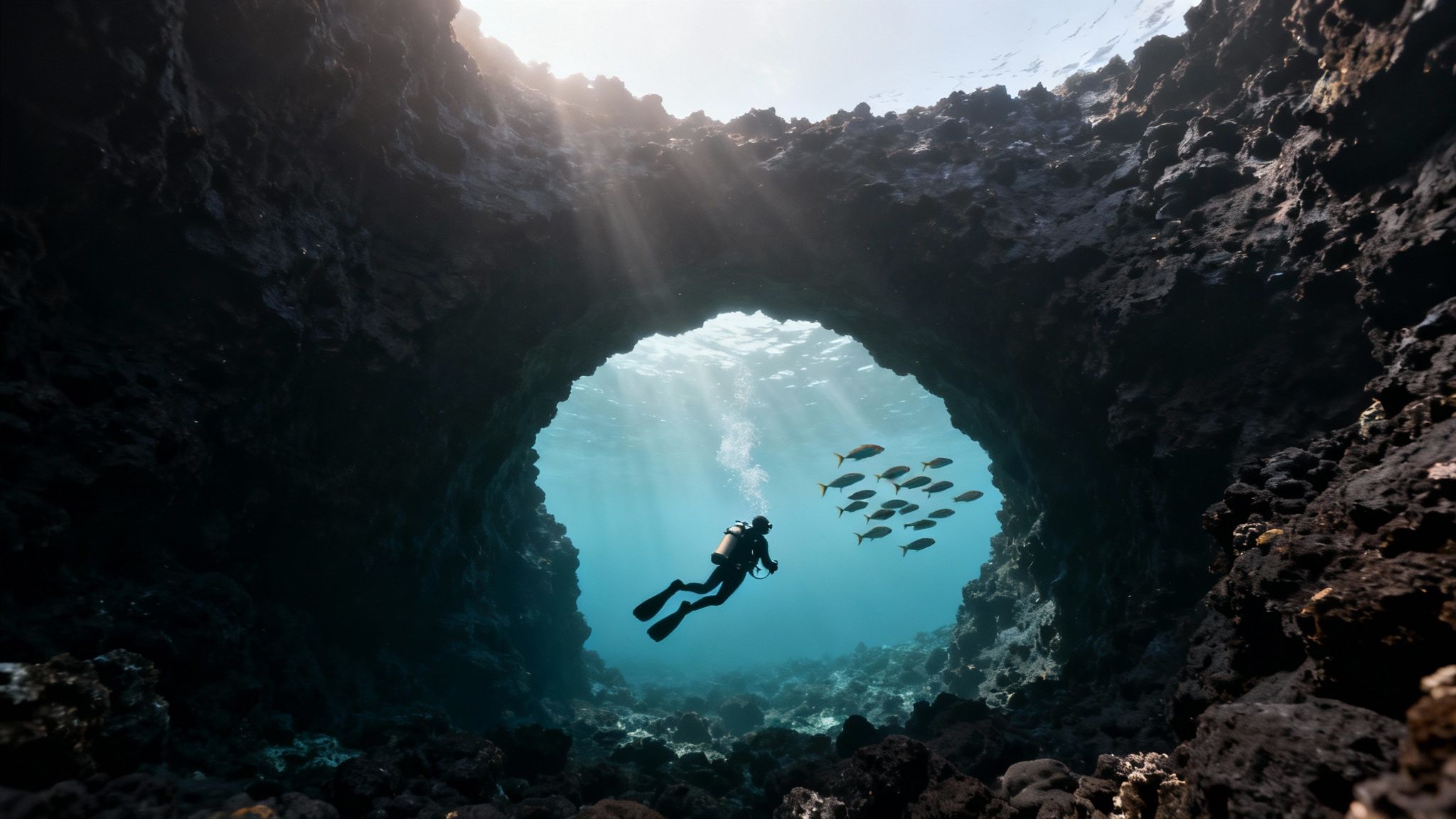
The Big Island’s volcanic DNA has shaped an incredible underwater world. When you drop beneath the waves here, you’re not just going for a swim—you’re exploring a submerged landscape of lava tubes, dramatic arches, and vibrant reefs. This is what makes scuba diving Big Island Hawaii so unforgettable.
The Kona coast is absolutely packed with world-class dive spots, and each one tells a different story. Whether you're just getting your fins wet or you're a seasoned pro looking for a challenge, there’s a dive site here with your name on it. Let's take a look at some of the legendary spots that put Kona on the map.
Dive Sites for Beginners
If you're new to diving or just want a chill, beautiful day in the water, Kealakekua Bay is the place to be. It's a protected marine sanctuary, which means the fish are plentiful and the coral is thriving. The visibility is usually fantastic, so you can just relax and watch massive schools of yellow tang and butterflyfish cruise by.
Another great spot is Two Step, famous for its incredibly easy shore entry and shallow, lively reef. It’s practically a guarantee you’ll see Hawaiian green sea turtles (honu) munching on algae here. These sites are the perfect, low-stress introduction to the magic of Kona's underwater world.
Intermediate Adventures
For divers who have some experience, this is where Kona really starts to show off. We're talking about exploring its famous lava tubes and archways—geological wonders left behind by ancient lava flows.
When you swim through a site like Golden Arches or Turtle Pinnacle, it feels like you're in a natural cathedral with sunlight streaming through the openings above. These spots are magnets for marine life. It’s common to find whitetip reef sharks resting on the sand inside a cavern or watch majestic eagle rays glide past in the deep blue.
To get a better sense of all the different underwater playgrounds, you can check out more about the Big Island diving sites and see what makes each one so unique.
Advanced and Thrilling Dives
Ready to push your limits? For advanced divers, Kona offers some truly mind-blowing experiences. Heading to deeper reefs and navigating more complex topography is a whole different ballgame. The light changes, the environment feels more mysterious, and the animals you encounter are often bigger and wilder.
Advanced dives are all about exploration. You get to see unique geological features and encounter pelagic species that just don't hang out in the shallows. It's a test of your skills that pays off with sights you'll never forget.
Here at Kona Honu Divers, we run specialized charters for divers with the training to go deep and explore further.
- Premium Advanced Trips: These charters take you to more remote and deeper sites. We’re talking about dramatic drop-offs and untouched coral gardens that very few divers ever get to see.
- The Kona Blackwater Dive: This is the ultimate thrill for the truly adventurous. On the Blackwater Night Dive, you drift in the open ocean at night, tethered to the boat, while bizarre and beautiful bioluminescent creatures rise from the abyss to greet you. It's like diving in outer space.
No matter your certification level, we have a trip designed to give you a safe, incredible, and unforgettable adventure under the waves. We offer a variety of advanced dive tours for more experienced divers.
The Unforgettable Kona Manta Ray Night Dive
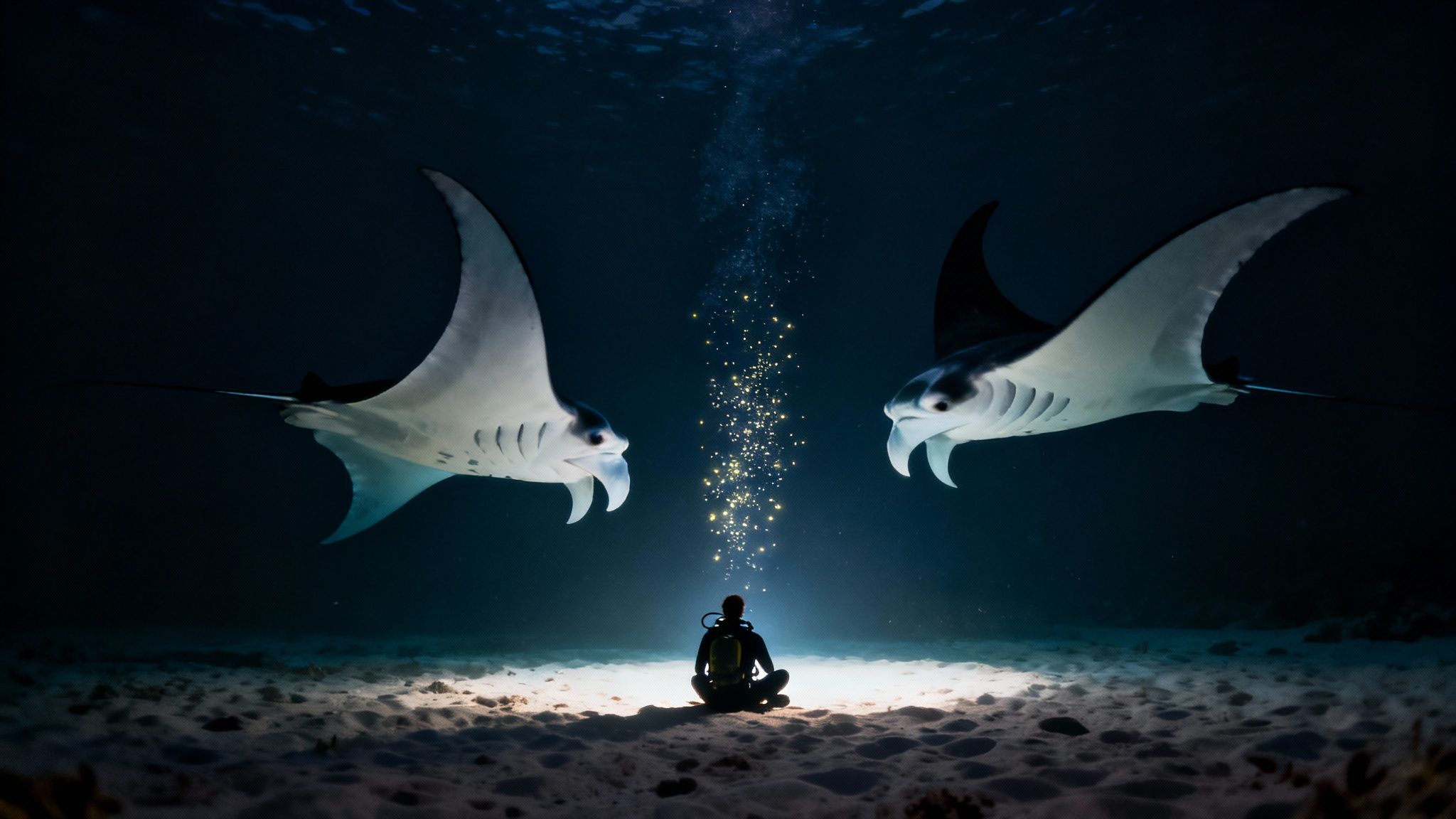
Picture this: you're kneeling on the ocean floor in the dark, watching giant, gentle shadows with wingspans up to 18 feet glide effortlessly above you. They look like stealth bombers from another world. This isn't a scene from a movie; it's the world-famous Kona manta ray night dive, a bucket-list experience that people talk about for the rest of their lives.
So, how does it all work? We create what's known as the "campfire." Powerful, stationary lights are set up on the seafloor, which attract swarms of plankton—the manta rays' favorite meal. It's like setting up a floating buffet that draws them in for a spectacular, silent feeding ballet.
The Magic of the Manta Encounter
From the pre-dive briefing to the moment you settle on the sandy bottom, the anticipation is electric. Then, the first manta swoops into the light, and it’s a moment that will genuinely take your breath away. They perform graceful barrel rolls and somersaults, scooping up plankton just inches from your head.
The dive site in Keauhou Bay is particularly legendary. Here, you'll sit at about 35 feet deep as sometimes more than 10 manta rays soar overhead. It's an experience that leaves a powerful, emotional mark on everyone who witnesses it.
If you're looking to dive deeper into planning this incredible encounter, check out this top Hawaii dive guide for Manta Rays in Kona, Big Island.
Respectful Manta Ray Etiquette
These are wild animals, and keeping them safe is our top priority. To make sure the mantas stay comfortable and return night after night, we follow a strict code of conduct. The number one rule is simple: observe only and never, ever touch a manta ray. Touching them can remove their protective mucus coating, which leaves them vulnerable to infections.
Here are a few key guidelines for a respectful interaction:
- Stay on the Bottom: We all remain stationary on the sand. This keeps the water column clear, giving the mantas plenty of room to maneuver.
- Lights Up: Always shine your dive light upward. This helps attract more plankton and beautifully illuminates the whole show.
- Control Your Bubbles: Try to time your breathing so you don't exhale directly into a manta's path as it passes overhead.
Following these rules protects these magnificent creatures and ensures this dive remains a sustainable, magical experience for years to come. You can learn more about how we run a safe and fun dive by reading our full guide on the Kona Manta Ray dive.
Choosing a seasoned, responsible operator like Kona Honu Divers is your best bet for a fantastic adventure. Our experienced crew will guide you through this once-in-a-lifetime experience, making sure you have a front-row seat to one of nature's greatest performances. We offer multiple manta ray dive tours to fit your schedule.
Discovering the Big Island’s Unique Marine Life
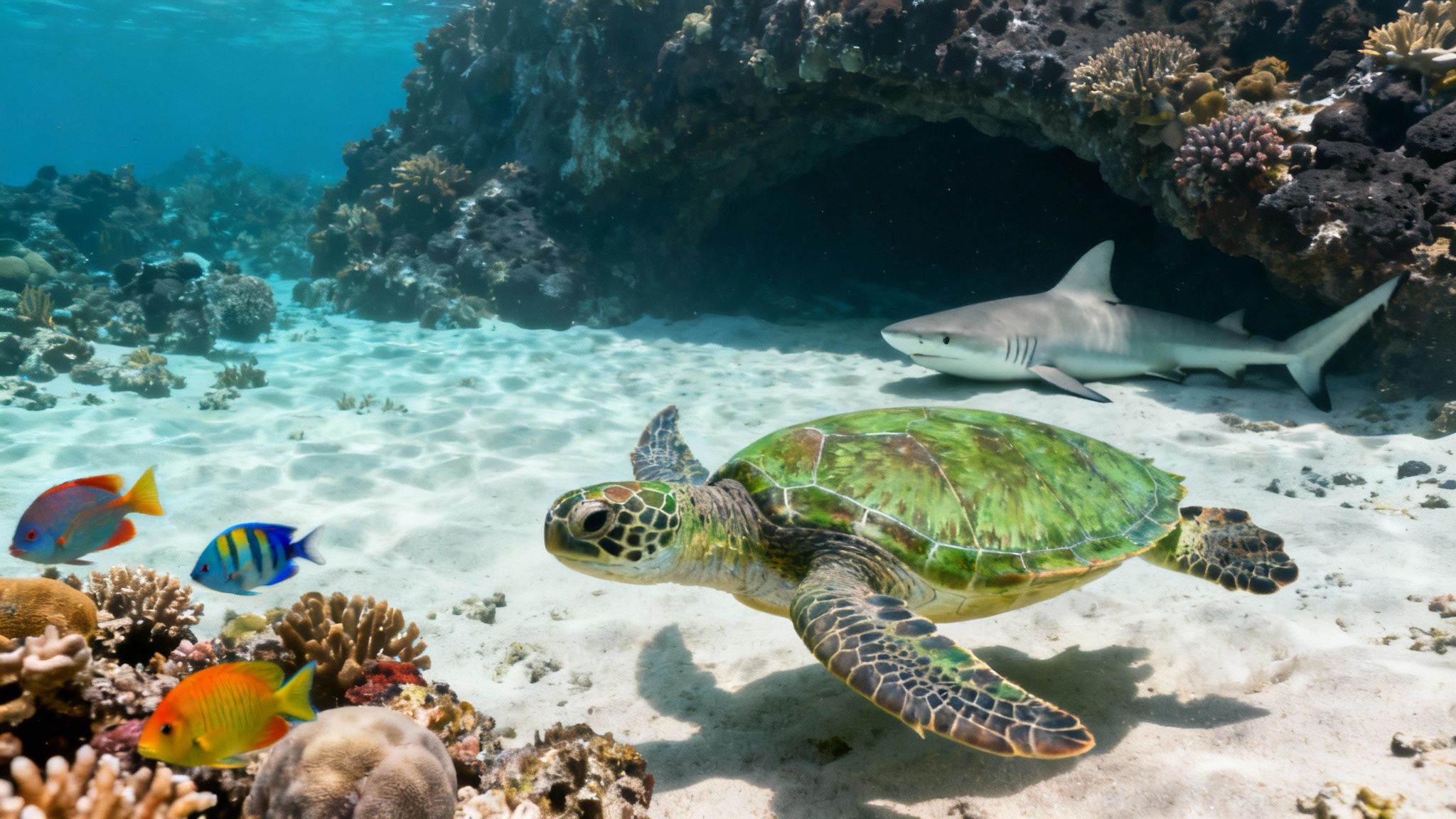
Sure, the manta rays get a lot of the limelight, and for good reason. But the waters off the Big Island are a bustling, vibrant metropolis of marine life you simply won't find anywhere else on Earth. Think about it—the island is one of the most isolated landmasses in the world. This incredible remoteness turned its surrounding ocean into a unique evolutionary incubator.
That's what makes scuba diving Big Island Hawaii so special; it's a journey of constant discovery. Because of this isolation, an astonishing 25% of the reef fish you'll see here are endemic. That means they're native to these waters and exist nowhere else. Every time you drop below the surface, you have a chance to see a species with a story millions of years in the making, from the striking bandit angelfish to the ornate Hawaiian turkeyfish.
Iconic Hawaiian Marine Animals
Beyond the rare fish, you’ll be sharing the water with some of Hawaii's most beloved marine residents. It’s hard to beat the feeling of swimming alongside a graceful Hawaiian green sea turtle, or honu, as they're known locally. You'll often spot these gentle giants resting peacefully on the sandy bottom or grazing on algae along the reef.
And don't be surprised if your dive boat is greeted by a playful pod of spinner dolphins. They absolutely live up to their name, putting on breathtaking acrobatic shows. Once you're in the water, keep an eye out for whitetip reef sharks—they’re surprisingly shy and are often found snoozing inside underwater lava tubes and caves during the day.
Rare and Fortunate Encounters
Part of the magic of diving here is that you truly never know what might swim out of the blue. The Big Island's deep offshore waters create the perfect stage for some genuinely rare and unforgettable encounters.
- Whale Sharks: Spotting the largest fish in the sea is a true once-in-a-lifetime moment. These gentle giants occasionally cruise through Kona's waters, filter-feeding near the surface.
- Humpback Whales: If you’re diving in the winter months (December to March), you might not see them, but you will almost certainly hear them. The haunting songs of humpback whales vibrating through the water is a powerful, humbling experience.
- Hawaiian Monk Seals: As one of the most endangered seal species on the planet, seeing a Hawaiian monk seal is an incredibly special and fortunate event for any diver.
Every dive here is so much more than just a tour; it's an immersion into a delicate, interconnected world. When you start to understand and appreciate this vibrant underwater community, every descent becomes a brand new adventure. Exploring these waters with a crew that knows their stuff can turn a beautiful dive into a fascinating educational journey.
Planning Your Trip with Kona Honu Divers
Let's be honest—the dive operator you choose can make or break your entire trip. A good dive becomes an epic one when you're with a crew that genuinely cares about your safety, comfort, and, most importantly, your sense of wonder. When you're planning a scuba diving Big Island Hawaii trip, that's exactly the kind of experience you're looking for. This is where Kona Honu Divers really shines, and it’s why they’ve become a go-to operator on the Kona coast.
Everything they do is built around the diver. It all starts with their commitment to small groups. You'll never feel like just another number on a crowded boat. This means you get more one-on-one time with your divemaster, more space to relax, and a much more personal, peaceful experience underwater with the marine life.
Why Divers Choose Kona Honu Divers
That dedication to a great experience shows in their gear and boats, too. Kona Honu Divers runs modern, comfortable vessels that make getting in and out of the water a breeze. They also offer top-notch, well-maintained rental equipment, so you don't have to stress about lugging your own gear across the ocean. Need a full setup or just a BCD? They've got you covered.
Don't just take our word for it—their reputation speaks for itself.
From morning reef dives to the world-famous manta ray night dive, they have a trip for every diver and every skill level. While Kona Honu Divers has perfected the small-group experience, it’s worth noting that the Big Island has other great operators. For instance, Jack’s Diving Locker has been a pillar of the local dive community since 1981, establishing itself as a PADI 5-Star IDC center that offers everything from training to charters.
To get a better feel for the local scene and see what makes this outfitter stand out, you can learn more about what it's like to dive the Big Island of Hawaii with Kona Honu Divers.
At the end of the day, a fantastic dive trip boils down to finding a crew that shares your passion for the ocean. With an expert team, top-of-the-line facilities, and a deep-seated respect for Hawaii’s incredible marine world, you’re in for a truly unforgettable adventure.
Your Big Island Diving Questions, Answered
Planning a dive trip always comes with a few questions. To help you get ready for your trip to Kona, we've pulled together some answers to the things we get asked most often. This way, you can show up feeling prepared, confident, and ready to jump in.
When’s the Best Time of Year to Dive?
Honestly, there's never a bad time to dive in Kona. The water is always inviting, hovering between a comfortable 75°F (24°C) in the winter and a downright balmy 82°F (28°C) during the summer months.
The choice really comes down to the experience you’re looking for. Winter, from about December to March, offers a truly magical bonus: the chance to hear humpback whale songs echoing through the water on your dives. But if you’re looking for the absolute smoothest boat rides, summer typically delivers the calmest, glassiest seas.
Do I Need to Be an Advanced Diver to Enjoy Kona?
Not at all! That's one of the best parts about diving here. The Big Island has an incredible range of dive sites that cater to everyone, from brand-new divers to seasoned pros.
Some of our most beautiful and lively reefs are in shallow, protected waters—perfect for those just getting certified or anyone who enjoys a nice, relaxed dive. We're experts at matching people with the right dive sites for their comfort and skill level, so everyone has a fantastic and safe time.
Where Can I Find the Calmest Dive Sites?
If you're looking for those perfect, placid conditions teeming with life, some spots are simply legendary. Kealakekua Bay, a protected marine sanctuary, is at the top of the list for a reason.
Because all fishing is prohibited, the marine life has absolutely exploded. The water is incredibly clear, with visibility often pushing past 100 feet, and the vast coral gardens are in pristine condition. You can learn more about why these protected areas are so special by exploring Big Island marine sanctuaries.
What Should I Pack for My Dive Trip?
Aside from your flip-flops and aloha shirts, a few dive-specific items will make your trip a lot smoother. The most important things are your certification card and logbook, so don't leave home without them!
While we provide all the top-notch gear you'll need, many divers prefer bringing a few of their own personal items. It just feels better.
- Personal Dive Gear: A mask that fits your face perfectly is a game-changer. Bringing your own snorkel and dive computer can also add a huge level of comfort and familiarity to your dives.
- Reef-Safe Sunscreen: This is non-negotiable. Standard sunscreens contain chemicals that bleach and kill our beautiful coral. Please, only pack and use sunscreens that are certified reef-safe to help us protect our underwater world.
- Surface Interval Comforts: A good hat, polarized sunglasses, and a reusable water bottle are must-haves for staying hydrated and comfortable on the boat between dives.
If you pack nothing else, bring your own mask and dive computer. Using gear you're already familiar with means less time fiddling with straps and settings and more time enjoying the incredible world unfolding in front of you.
Getting these details sorted before you leave means you can just relax and soak it all in. With the logistics out of the way, your mind will be free to focus on what you came here for: exploring one of the most incredible underwater environments on Earth.
Ready to see Kona's underwater magic for yourself? The crew at Kona Honu Divers would love to show you around. We specialize in small, personalized groups to ensure you have a safe and unforgettable adventure. Check out our range of diving tours suitable for every diver.