
Picture this: you're weightless, suspended in perfectly clear, warm water, gliding over dramatic volcanic landscapes that look like something from another world. All around you, vibrant fish—many of which exist nowhere else on Earth—dart through ancient lava tubes and intricate coral gardens. This isn't a dream; it's what scuba diving on the Big Island of Hawaii is all about.
This guide is your deep dive into why the Kona coast, in particular, is a magnet for divers from across the globe. Thanks to its uniquely sheltered position, it offers some of the most consistently calm and clear waters you'll ever have the pleasure of exploring.
Why The Big Island Is a Diver’s Paradise
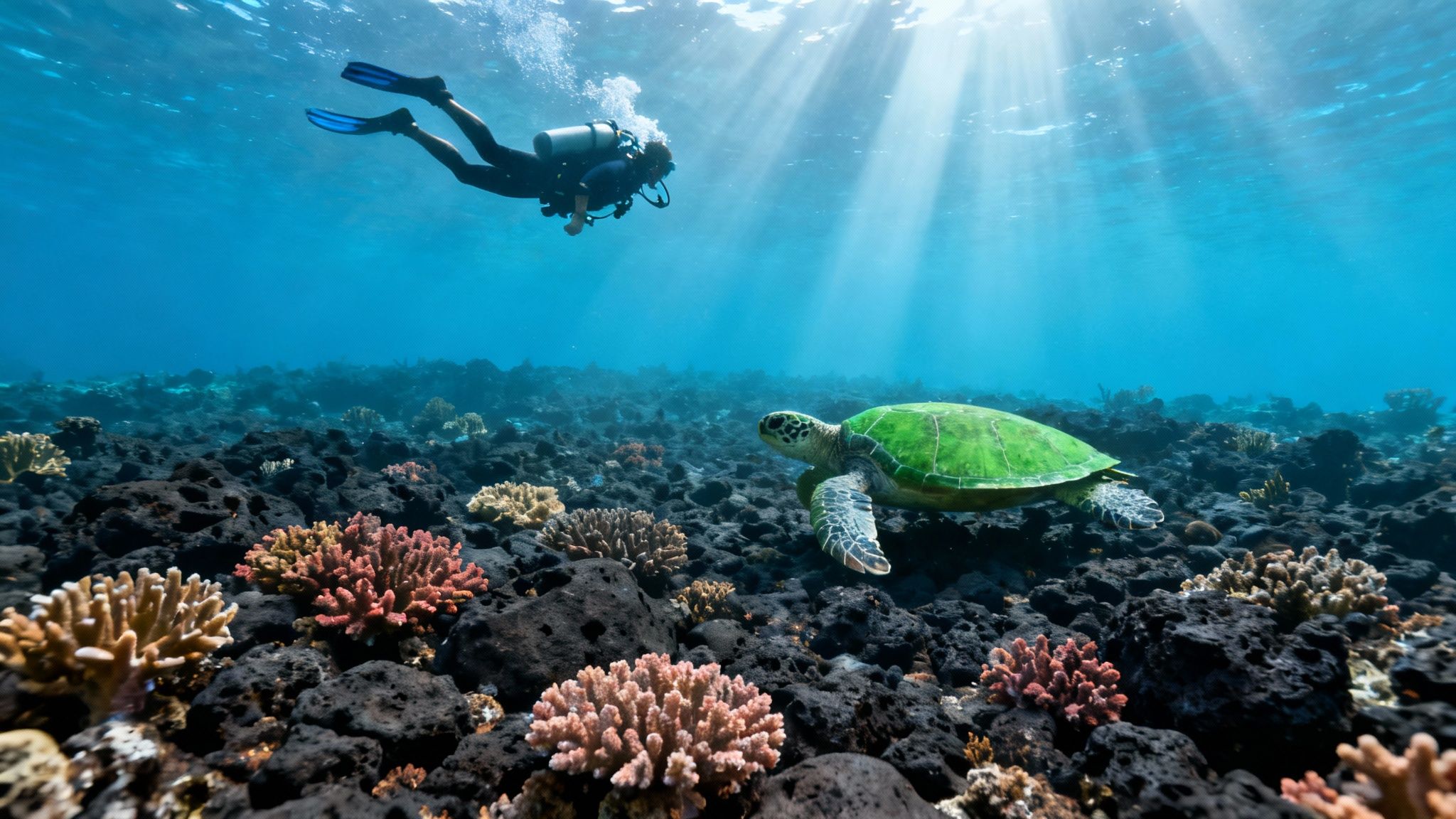
There's a reason the Big Island consistently appears on "world's best diving" lists, and it has a lot to do with geology. The Kona coast is nestled in the lee of two colossal volcanoes, Mauna Loa and Hualalai. These giants act as a natural shield, blocking the prevailing trade winds and creating a vast, protected underwater playground.
The result? Incredibly calm seas and phenomenal visibility that often stretches beyond 100 feet. Diving here feels like you're flying through a high-definition aquarium. But the real magic lies beneath the surface, where the island's fiery origins have sculpted a truly one-of-a-kind seascape.
Unique Underwater Landscapes
Forget flat, sandy bottoms. Diving in Kona means exploring a world shaped by volcanic fire. You'll navigate through ancient lava tubes that once channeled molten rock, swim under massive archways carved by the ocean, and weave through cavern systems that feel like submerged cathedrals.
These incredible structures aren't just for show; they create a complex and dynamic habitat that shelters an astonishing diversity of marine life. Every dive site offers something new, from dramatic underwater craters and pinnacles to sprawling, healthy coral gardens. It’s a sub-aquatic playground that keeps even the most experienced divers coming back for more.
A Hub for Incredible Marine Encounters
Beyond the breathtaking topography, the Big Island is famous for its residents. The marine ecosystem here is bursting with life, hosting over 1,100 species of fish. What's truly special is that 129 of those are endemic to Hawaii, meaning you literally can't find them anywhere else on the planet.
But it's the big-ticket encounters that truly define Kona diving. This is where you come for those unforgettable, once-in-a-lifetime moments. Think graceful green sea turtles (honu) gliding past you, or the world-renowned Manta Ray Night Dive—a surreal, ballet-like performance that we'll cover in more detail soon. To get a better sense of the local flavor, check out our post on what is unique about diving in Kona.
Whether you're taking your first breaths underwater or have logged thousands of dives, Kona delivers an experience that stays with you.
To give you a quick overview, here's a look at what makes the Big Island a world-class diving destination.
Big Island Diving At a Glance
| Feature | Highlight | Best For |
|---|---|---|
| Water Conditions | Calm, clear waters with 100+ foot visibility year-round. | All skill levels, from beginners to seasoned pros. |
| Underwater Topography | Volcanic lava tubes, arches, craters, and caverns. | Divers who love exploration and unique landscapes. |
| Marine Life | 1,100+ fish species, including 129 endemic to Hawaii. | Underwater photographers and wildlife enthusiasts. |
| Iconic Encounters | Famous Manta Ray Night Dive, sea turtles, and dolphins. | Thrill-seekers looking for unforgettable memories. |
With its unique blend of perfect conditions, otherworldly landscapes, and abundant marine life, the Big Island truly stands out as a diver's paradise.
Experiencing The World-Famous Manta Ray Night Dive
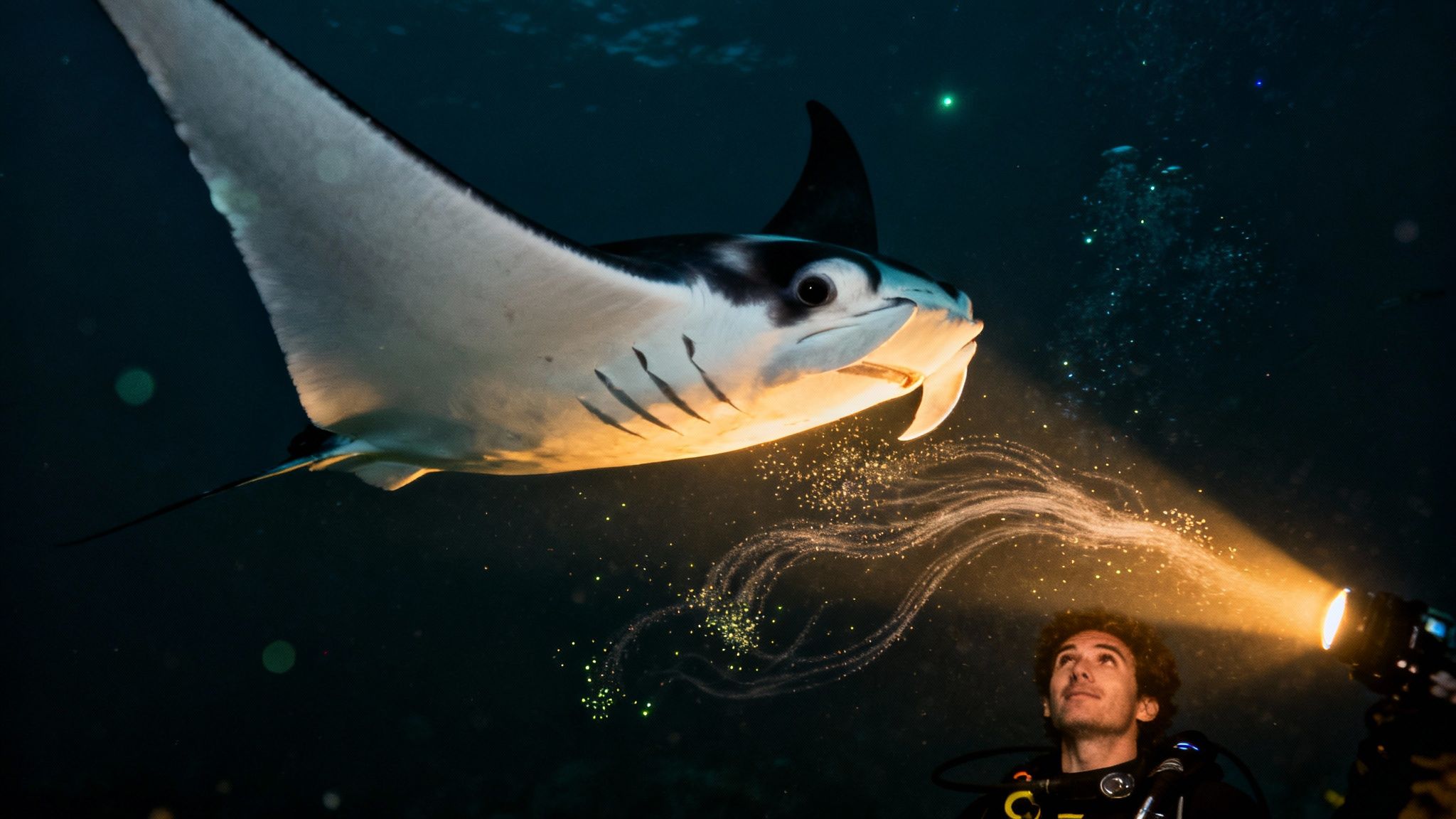
If there's one single experience that truly defines scuba diving on the Big Island of Hawaii, it has to be the world-famous Manta Ray Night Dive. This isn't just another dive on your logbook; it's an otherworldly underwater ballet, giving you a front-row seat to one of nature’s most breathtaking performances. Divers travel from every corner of the globe to the Kona coast for this very encounter.
The whole setup is brilliantly simple. As dusk settles, your group descends to a sandy spot on the ocean floor, usually around 30-40 feet deep. A powerful light rig, often called the "campfire," is placed in the center, pointing its beams straight up to the surface. This column of light acts like a massive bug zapper, attracting swarms of microscopic plankton.
And then, the magic begins. Within minutes, the ocean's gentle giants materialize from the darkness, drawn in by the all-you-can-eat plankton buffet. Giant manta rays, some with wingspans stretching over 15 feet, glide effortlessly into the light. They perform mesmerizing barrel rolls and graceful loops, filtering the water through their cavernous mouths, often soaring just inches above the captivated divers below.
Why Kona Is The Manta Ray Capital
The Kona coast isn't just a good spot for this—it's one of the most reliable places on the entire planet to see this feeding frenzy firsthand. Why? The local manta ray population doesn't migrate; they live here year-round. Over the decades, this has allowed for a unique, symbiotic relationship to form between the dive community and these magnificent creatures.
This dive has become so dependable that it's now a cornerstone of Big Island tourism. Local operators have tracked their sightings for years, and the success rate is staggering—manta rays are seen on 85–90% of these night dives. That's an incredible number for any wild animal encounter, which shows just how dependable this adventure truly is.
What To Expect On Your Manta Dive
Your trip kicks off with a scenic boat ride as the sun dips below the Pacific horizon. On the way out, your divemaster will give a thorough briefing, covering the dive plan and, just as importantly, the rules for a safe and respectful interaction with the mantas.
Crucial Interaction Guideline: The number one rule is simple: look, but don't touch. Never, ever touch a manta ray. Their skin is covered in a protective mucus layer, and a simple touch from a human hand can strip it away, leaving them vulnerable to nasty infections.
Once you're on the bottom and settled in your spot, the show starts. Here’s what you can prepare for:
- A Stationary Experience: This isn’t a typical swim-along dive. You'll stay in one place on the sandy bottom for the entire dive, simply looking up as the action unfolds above you.
- Up-Close Encounters: The mantas are completely focused on feeding and are totally unfazed by the divers. They will glide directly over your head, so close you can see every unique spot pattern on their bellies.
- A Symphony of Bubbles and Light: The scene is hypnotic. The combination of your group's exhaled bubbles rising through the powerful light beams, with silent, massive rays swooping through it all, is something you'll never forget.
This bucket-list dive is an absolute must-do for anyone visiting the Big Island. The feeling of a massive, gentle animal soaring silently over you is a moment that will stick with you for a lifetime. To learn more about what makes this interaction possible, check out our guide on whether you can scuba dive with manta rays.
For those ready to see the magic for themselves, booking a specialized tour is the way to go. The 2-Tank Manta Ray Dive tour is the perfect package to experience this incredible underwater spectacle.
Exploring Top Dive Sites Along The Kona Coast
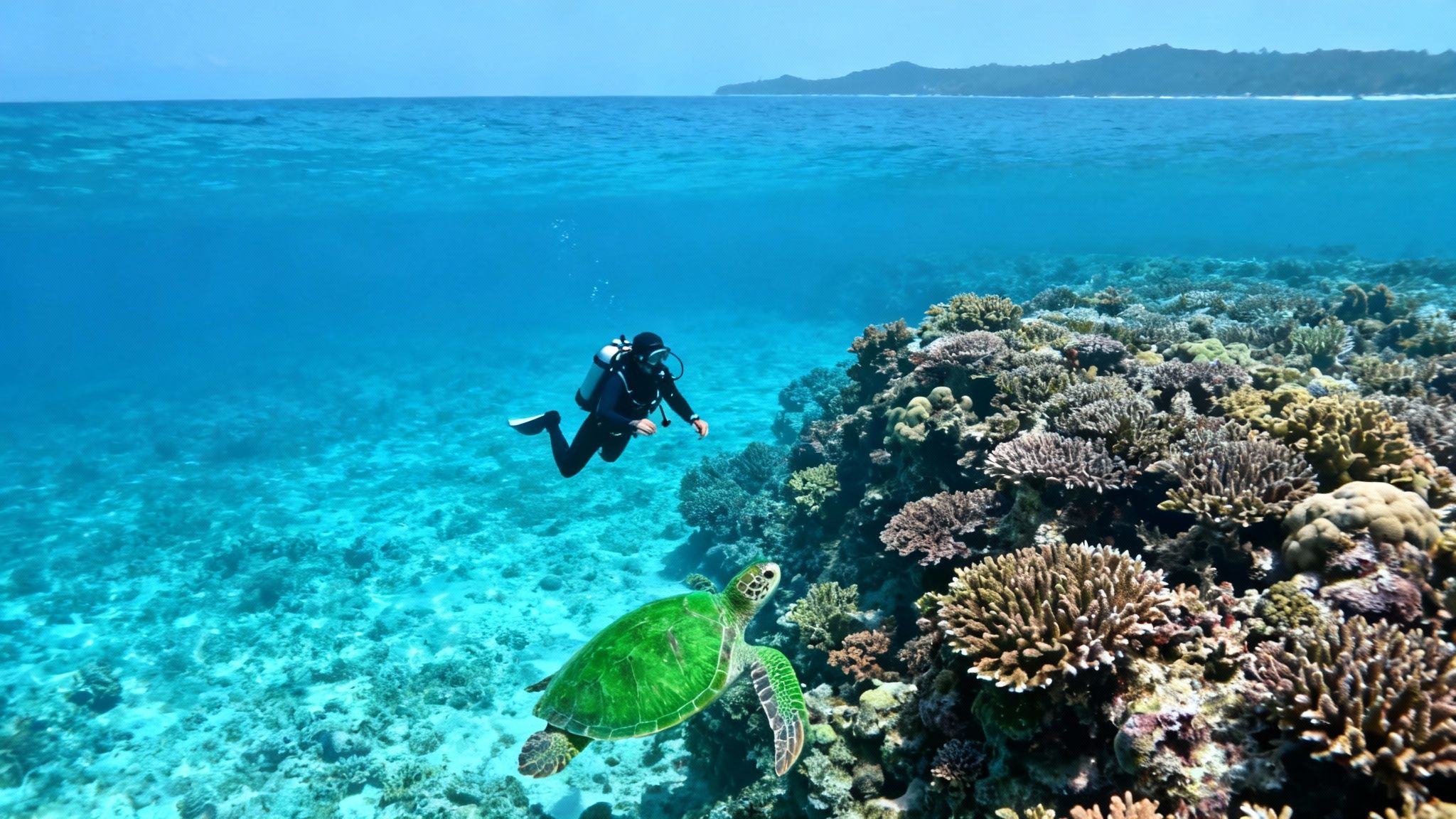
While the Manta Ray Night Dive gets a lot of the spotlight, the daytime scuba diving on the Big Island of Hawaii is an entirely different kind of magic. The Kona and Kohala coasts are lined with dozens of world-class dive sites, each offering a unique glimpse into the island's volcanic heart and teeming marine world.
What really sets this area apart is the water. Tucked away on the leeward side of the island, the coast is sheltered from the rougher trade winds, resulting in consistently phenomenal water clarity. It's not uncommon for visibility to exceed a jaw-dropping 100 feet. This crystal-clear water turns every dive into a high-definition experience, where you can see every detail of the reef and spot wildlife from way off in the blue.
The underwater landscape here is something else. The island's fiery origins have sculpted a diver's playground of dramatic lava tubes, massive archways, and intricate reef systems that you simply won't find anywhere else. To really get the most out of it, going with a seasoned guide from a top-notch operator like Kona Honu Divers makes all the difference—they know these sites like the back of their hand and can lead you to the best spots safely.
Kealakekua Bay: A Protected Sanctuary
You can't talk about Big Island diving without raving about Kealakekua Bay. This isn't just another pretty spot; it’s a Marine Life Conservation District. Think of it as an underwater national park, a protected sanctuary where marine life thrives, free from fishing pressure.
The result? Some of the most pristine and vibrant coral gardens in all of Hawaii. As soon as you drop beneath the surface, you’re immersed in a kaleidoscope of color. Schools of yellow tangs, parrotfish, and butterflyfish swirl around you. It’s also one of the best places to have a chance encounter with playful spinner dolphins and graceful green sea turtles.
The fact that Hawaii sees over 1.5 million scuba dives a year is a huge testament to its underwater appeal, and a massive chunk of those dives happen right here. The bay’s protected status is precisely why the reefs are so healthy and the visibility is so reliable, making it a true cornerstone of the Big Island diving scene. You can get a better feel for the Big Island's top-tier diving reputation and understand why sites like this are so legendary.
Pu'uhonua O Honaunau (Two Step)
Another must-do is Pu'uhonua O Honaunau, known to every local diver as "Two Step." It earned its nickname from the two natural lava rock steps that provide an incredibly easy entry into the ocean, making it a favorite for divers and snorkelers of all skill levels.
Once you're in the water, you’ll find a sprawling shallow reef buzzing with activity. This site is practically famous for its resident population of Hawaiian green sea turtles, or honu. You’ll almost certainly see them cruising by or just chilling out on the reef. The underwater terrain is also full of interesting rock formations and small caverns that are a blast to explore.
Diver's Tip: While Two Step is a fantastic shore dive, hopping on a boat charter can get you to the less-crowded outer sections of the reef. That's where you often find larger marine life and even more spectacular underwater scenery.
Hidden Gems and Lava Formations
Beyond the big names, the Kona coast is packed with hidden gems that show off the island’s one-of-a-kind geology. Many of the best dive sites are defined by incredible underwater architecture carved by ancient lava flows.
- Lava Tubes: Imagine swimming through a massive, hollow tunnel that once funneled molten rock. Sites like "Golden Arches" and "Catacombs" offer incredible swim-throughs where you can explore these dark, cavernous formations.
- Arches and Pinnacles: The volcanic past has also left behind stunning underwater archways and towering pinnacles that shoot up from the seafloor. These structures act as magnets for marine life and are often draped in colorful corals and sponges.
- Diverse Reefs: Whether you're a new diver looking for a shallow, sun-drenched reef or an experienced diver wanting to explore deeper systems, the variety here is immense. Each spot has its own unique character and cast of marine creatures.
It’s this sheer diversity that makes scuba diving the Big Island of Hawaii such an unforgettable adventure. One day you’re exploring a historic bay, the next you’re navigating a submerged lava tube. Every single dive brings something new to the table.
Ready to see these underwater wonders for yourself? A guided tour is the absolute best way to experience the magic of the Kona coast.
Advanced Diving And Unique Underwater Adventures
For those seasoned divers who think they've seen it all, scuba diving on the Big Island of Hawaii has a few more tricks up its sleeve. Once you venture beyond the sun-drenched coral gardens, you’ll find a whole other world of unique, challenging, and frankly, otherworldly encounters that really push the boundaries of what a dive can be.
These advanced dives aren't for everyone. They demand confidence, solid skills, and a genuine thirst for the extraordinary. But for those ready to take the leap, the island offers two truly profound adventures: the legendary Kona Blackwater Dive and deep-water trips to more remote, technically demanding sites. The payoff is a glimpse into the wild heart of the Pacific that you'll never forget.
The Legendary Blackwater Dive
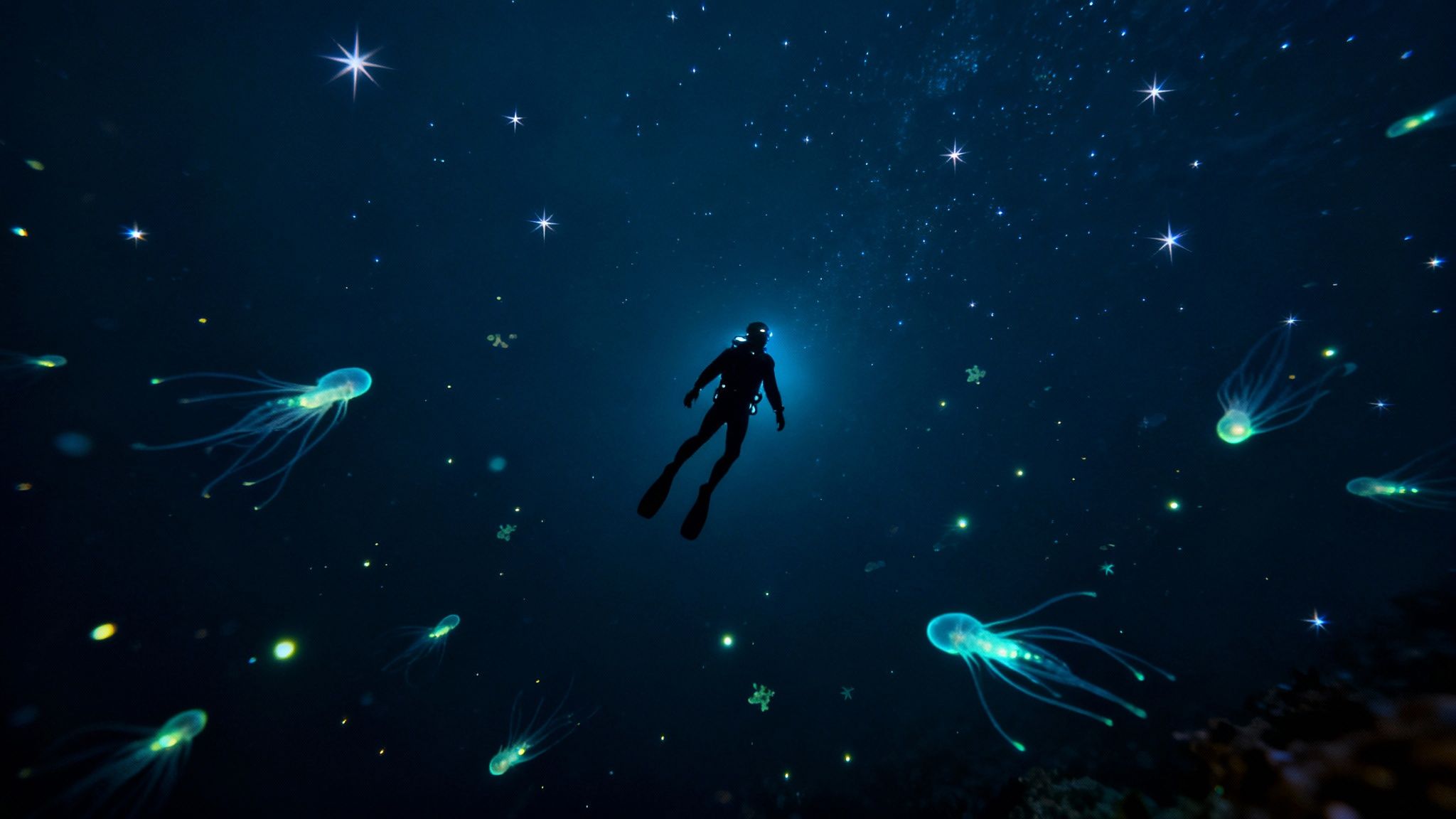
Picture this: you're suspended in pure, inky blackness. It’s night, you're miles from shore, and below you is thousands of feet of open ocean. The only things tethering you to our world are the lines dropping from the boat and the narrow beam of your dive light. This is the setup for the Kona Blackwater Dive, and it’s hands-down one of the most surreal experiences you can have underwater.
This dive isn't about exploring a reef. It's about witnessing the largest migration on Earth. Every single night, countless tiny, bizarre, and often glowing creatures journey from the crushing depths to feed near the surface. You simply float in the water column and wait for this alien world to reveal itself to you.
What you'll see looks like something straight out of a sci-fi movie. Translucent larval fish, pulsating jellyfish dripping with color, and strange, alien-like cephalopods materialize out of the dark. It’s both humbling and completely mesmerizing.
This is more than just a dive—it's a full-on sensory journey. You get the thrill of a deep-water night dive mixed with the pure wonder of pelagic marine biology. It’s a true adventure built for certified, experienced divers who are comfortable in the dark and ready for something completely different.
If you’re ready to jump into this incredible inner-space adventure, you can learn more about this specialized Kona Blackwater Dive tour.
Exploring Deep Reefs and Lava Tubes
Beyond the blackwater experience, the Big Island is riddled with opportunities for advanced day dives that take you into deeper, more complex environments. If you have your advanced certifications and rock-solid buoyancy, these sites offer a fantastic challenge and a chance to see some of the bigger residents of the reef.
These adventures often focus on a few key things:
- Deep Reef Exploration: Dropping down to 100 feet or more to see pristine reefs that don't get much diver traffic. These deeper spots are often patrolled by larger pelagic species—think sharks, eagle rays, and huge schools of jacks.
- Intricate Lava Formations: Navigating through more complex underwater lava tubes and cavern systems is a true test of skill. The reward is a breathtaking view of volcanic architecture that very few people ever get to witness firsthand.
- Remote Pinnacle Dives: Some of the best dives are on underwater pinnacles that shoot up from the abyss. They act like magnets for all kinds of marine life, and while they can have stronger currents, the biodiversity is absolutely incredible.
These kinds of dives are perfect for seasoned divers who want to sharpen their skills and see a side of Kona's underwater world that most recreational tours just can't get to.
For those up for the challenge, a premium advanced dive trip gives you the expert guidance and small group you need to explore these amazing sites safely.
How to Choose The Best Big Island Dive Operator
Picking your dive operator is probably the most important decision you’ll make for your entire trip. A good dive shop doesn’t just ferry you to a site—they shape your entire underwater experience. When you’re planning on **scuba diving on the Big Island of Hawaii**, finding the right crew is what turns a good dive into an incredible one.
A top-notch dive operation is built on a bedrock of safety and professionalism. Before you even get to the fun stuff, you need to look for signs that they take safety seriously. This means a flawless safety record and a clear commitment to the highest industry standards.
Core Factors For Choosing A Dive Shop
So, how do you separate the great shops from the merely okay ones? There are a few key things I always look for that have a huge impact on the quality and safety of your dives.
First, check their certifications. You want to see affiliations with globally recognized agencies like PADI. This isn't just a logo on their website; it's your assurance that their instructors and guides have met strict training and safety requirements.
Next, and this is a big one, look at their guide-to-diver ratio. Smaller groups are always, always better. An operator that keeps groups small, ideally 6 divers or fewer per guide, can provide more personal attention and better supervision. It makes for a much more relaxed and intimate dive, especially if you're exploring tricky spots like lava tubes.
Key Takeaway: A low guide-to-diver ratio isn't a luxury—it's a critical safety feature. It means your guide can actually keep an eye on everyone, respond instantly if something goes wrong, and has the time to point out that cool octopus you would have missed.
Don't overlook the boat and the gear. A comfortable, well-maintained boat designed for diving makes a world of difference. Are there shaded areas? Is it easy to get in and out of the water? Do they have a marine head (restroom) on board? The quality of their rental equipment also tells you a lot about how they run their operation.
Finally, read the reviews. And I don't mean the hand-picked testimonials on their homepage. Dig into third-party sites like Google to see what real customers have said recently. A long history of glowing, five-star reviews is the best indicator you've found a winner.
Premier Dive Operators In Kona
To give you a head start, here are a few of the most respected dive operators on the Big Island.
Kona Honu Divers has earned a fantastic reputation for their dedication to safety, marine conservation, and outstanding customer service. They run a wide variety of diving tours for every skill level, and you'll consistently hear people raving about their amazing guides and top-of-the-line boats. Their reviews really speak for themselves.
If you want to dive deeper into what makes a shop stand out, check out our guide on how to choose a Kona dive shop.
Of course, Kona is blessed with several fantastic operators. Jack's Diving Locker is another local legend. They've been around for a long time and are known for consistently providing great dive experiences.
Big Island Divers is also a very popular and professional operation with deep knowledge of all the best local spots.
Putting in a little time to research your operator isn't just about booking a dive; it's about investing in an amazing memory. It lets you relax and enjoy the magic of Hawaii's underwater world, confident that you're in the best possible hands.
Got Questions About Diving on the Big Island?
Planning a dive trip always brings up a few questions, even for seasoned divers. That’s a good thing! It means you’re thinking through the details to make sure your adventure is perfect. To help you feel completely ready to hit the water, we’ve put together answers to some of the most common questions we get from our guests.
Think of this as your final check-in before the fun begins. We’ll cover everything from the best time of year to dive to what you can expect to see and even how to get started if you've never breathed underwater before. Our goal is to give you clear, practical advice so you can just focus on the incredible experience ahead.
What’s The Best Time Of Year To Scuba Dive In Hawaii?
Honestly, the diving here is fantastic year-round. That's one of the best parts about the Big Island! But if you’re looking for the absolute best conditions, most divers aim for the summer months, from about May to October. This is when the Pacific tends to be at its calmest and warmest, giving you glassy surface conditions and super comfortable water temperatures.
That said, winter diving—from November to April—has a unique magic of its own. The water might be a few degrees cooler, but you get a truly incredible bonus: the chance to hear the haunting songs of humpback whales echoing through the water. It's an experience you'll never forget.
Do I Need To Be Certified To Try Scuba Diving?
Nope, not at all! This is probably the biggest myth that keeps people from trying scuba. If you're curious about diving but don't have a certification, you’re in the right place. Dive shops all over the island, including us at Kona Honu Divers, offer an experience called "Discover Scuba Diving."
It's a program designed specifically for first-timers. A certified PADI instructor will be right by your side the entire time, guiding you through the basics in shallow water before taking you on a real dive. It’s the perfect way to see if you love it without committing to a full certification course.
Good to Know: The Discover Scuba Diving program is all about safety, fun, and building your confidence. It's a taste of the real thing, designed to show you just how amazing it is to breathe underwater in one of the most beautiful places on earth.
What Kind Of Marine Life Can I Expect To See?
Get ready to have your mind blown. The marine life along the Kona coast is just teeming with activity and color. On pretty much any dive, you’re likely to run into some of Hawaii’s most famous underwater residents.
Here's a quick look at who you might meet:
- Hawaiian Green Sea Turtles (Honu): You'll see these guys everywhere! They're often found munching on algae, resting on the reef, or just gracefully gliding by.
- Spinner Dolphins: We often see them from the boat, but it’s a real thrill when a pod cruises past you during a dive.
- Manta Rays: Kona is world-famous for these gentle giants. The night dive is the main event, but you can definitely spot them during the day, too.
- Eels: Keep an eye on the little nooks and crannies in the reef—you’ll almost always spot a moray eel peeking its head out.
- Endemic Fish: A huge number of the fish you'll see are found only in Hawaii! Look for bright yellow tangs, butterflyfish, and of course, the humuhumunukunukuāpuaʻa (our state fish).
And if you get a little lucky, you might also spot eagle rays, reef sharks, or even a rare Hawaiian monk seal lounging on the rocks.
Is Shore Diving A Big Thing On The Big Island?
Oh, absolutely! The Big Island is a shore diver's paradise, especially along the Kona coast. The water is generally calm and protected, and there are tons of spots with easy entry points. It’s perfect for certified divers who like the freedom of going at their own pace without needing a boat.
Places like Pu'uhonua O Honaunau (you'll hear locals call it Two Step) and Puako are legendary in the shore diving community. You can just walk in from the lava rock shoreline and immediately find yourself in a world of vibrant coral and amazing sea life. If you're a comfortable, certified diver, it's an incredible way to explore scuba diving on the Big Island of Hawaii.
Ready to book your underwater adventure? Kona Honu Divers offers a full range of diving tours designed to showcase the very best of the Big Island, from beginner experiences to advanced excursions.