
Picture this: you descend into warm, turquoise water, the world above fading away. Below you, an otherworldly landscape unfolds—ancient lava flows frozen in time, sculpted into dramatic archways, caves, and canyons. This is the magic of scuba diving on the Big Island of Hawaii.
The Kona coast, in particular, is a global mecca for divers. It’s not just about the coral; it's about exploring a submerged volcanic world teeming with life you won’t find anywhere else on the planet.
Why Kona Is a World-Class Diving Destination
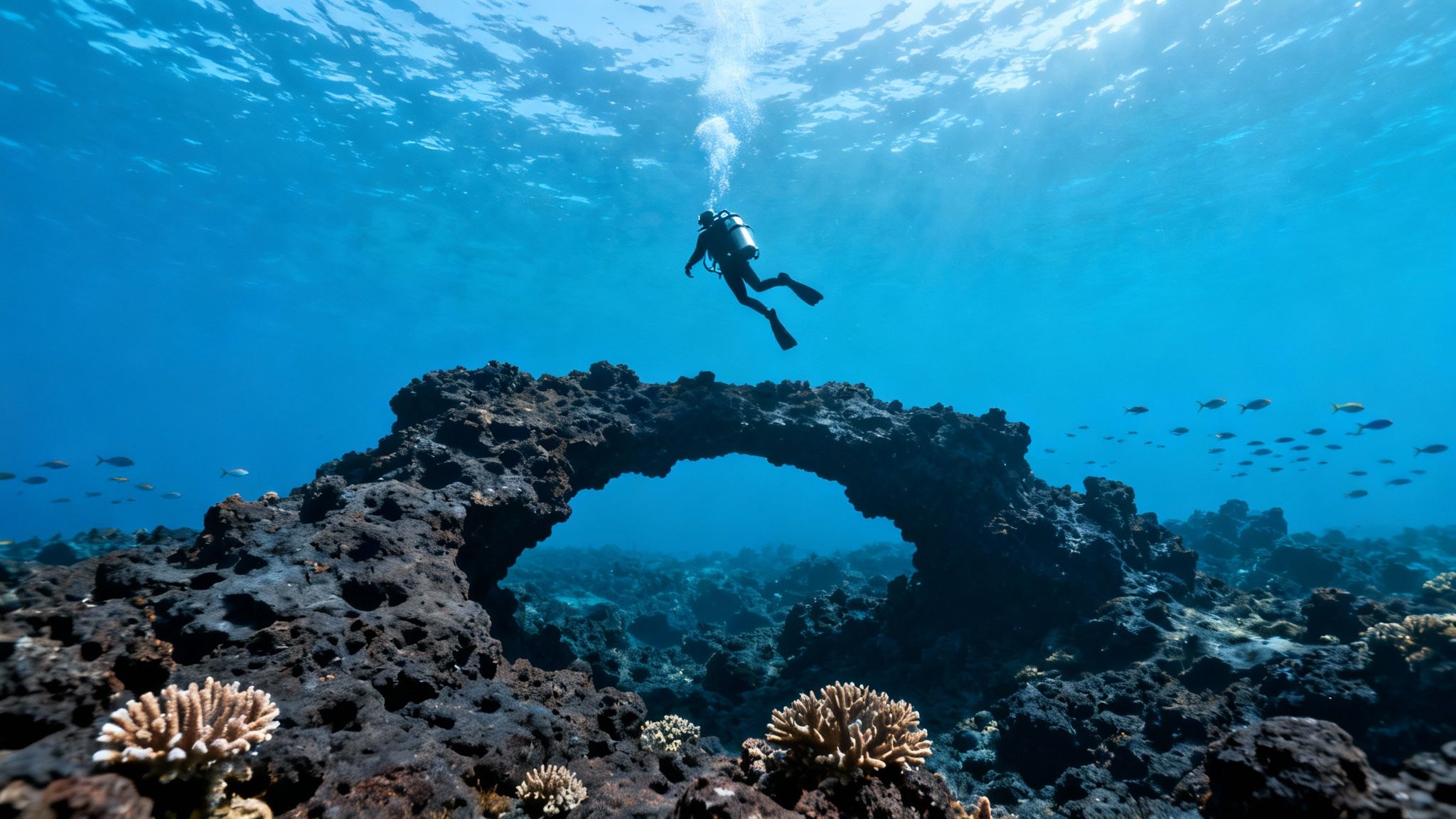
The Big Island is more than just another pretty tropical dive spot; it’s an entirely different realm, forged by the raw power of volcanoes. What really sets Kona apart is its geography. The massive volcanoes of Mauna Loa and Hualālai act as natural barriers, shielding the leeward coast from the prevailing trade winds.
The result? Exceptionally calm, clear waters almost year-round. This creates some of the most consistent and breathtaking diving conditions imaginable, making every trip underwater a genuine pleasure.
In this guide, we'll dive deep into what makes Kona a bucket-list destination. We’ll cover the must-do experiences that define Big Island diving, from the world-famous manta ray night dive to the surreal, inky-black depths of a blackwater dive. Whether you're a new diver looking for a calm reef or a seasoned pro eager to explore lava tubes, Kona has an adventure waiting for you.
A Unique Underwater Landscape
The island’s volcanic past and its sheer isolation in the middle of the Pacific have created a one-of-a-kind underwater ecosystem. As a diver, you get to explore lava tubes, swim through cavernous archways, and drift over sprawling reefs that are home to a high percentage of endemic marine life—species that exist only in Hawaii.
Conditions are fantastic all year, with water temperatures staying in a comfortable 75°F to 80°F (24°C to 27°C) range.
If you’re still wondering if the island is the right fit for your next dive vacation, our article on whether the https://konahonudivers.com/is-big-island-good-for-scuba-diving/ can help you decide.
Kona truly invites you to discover its incredible underwater world. For a closer look at the types of adventures you can have, check out some of Kona's 'Dive Discover' tours. The mix of geology and biology here is just incredible.
Exploring the Big Island’s Top Dive Sites
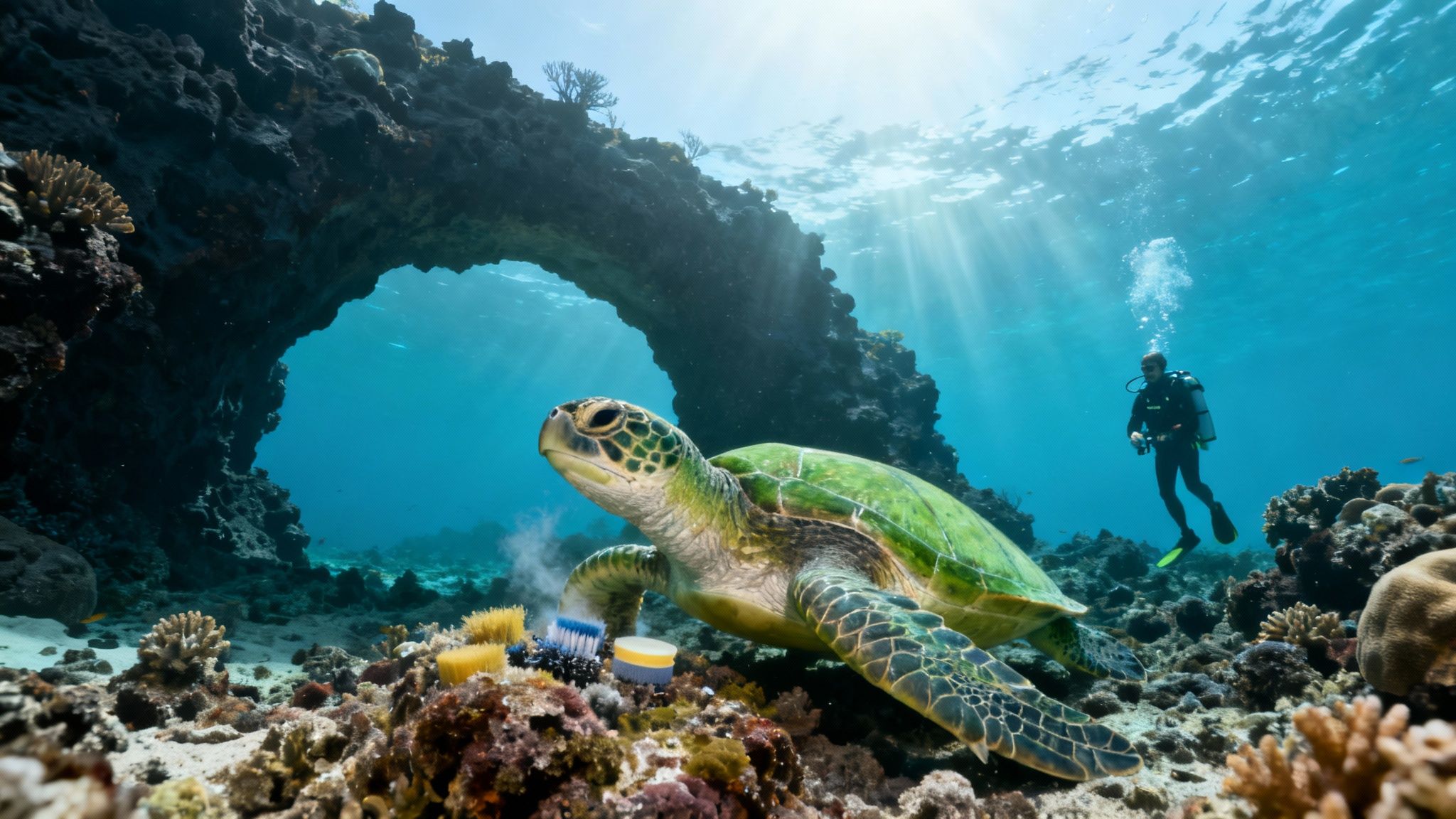
The Kona coast is more than just beautiful beaches; it’s a gateway to some of the most incredible diving in the world. The island's volcanic past has left behind a stunning underwater landscape filled with lava tubes, massive archways, and vibrant, pristine coral gardens. This is your insider's guide to the best spots for scuba diving on the Big Island.
We'll cover the legendary sites that welcome beginners with open arms and the thrilling deep dives that challenge even the most seasoned pros. Knowing what makes each spot special—from the critters you'll meet to the skills you'll need—is the first step to planning an unforgettable underwater adventure.
Kealakekua Bay: A Protected Paradise
Kealakekua Bay isn't just another pretty spot; it's a place of deep historical importance and, more importantly for us divers, a protected marine sanctuary. It's home to the famous Captain Cook monument, and because it’s a no-fishing zone, the marine life here is absolutely off the charts. The entire ecosystem is buzzing with activity.
Many divers come to Hawaii specifically for this bay. With visibility that often pushes past 100 feet (over 30 meters), it feels like you're flying. The corals are spectacular, providing a home for hundreds of species. If you want to understand what makes diving here so special, learn more about the Big Island's pristine diving conditions.
- Marine Life: Get ready for huge pods of spinner dolphins, dazzling schools of yellow tang and parrotfish, and frequent visits from gentle green sea turtles.
- Depth & Skill: Most of the action is in the 20 to 80-foot range, making it a perfect playground for divers of every skill level.
Golden Arches: An Architectural Wonder
Ever dreamed of swimming through giant, underwater archways carved by ancient lava flows? That's exactly what you get at Golden Arches. The site is named for two magnificent lava arches that are big enough to swim through safely and easily.
These structures are covered in colorful sponges and corals, making it a dream location for underwater photographers. The unique topography feels less like a reef and more like you’re exploring a submerged, natural cathedral.
The way the sunlight filters through the arches, lighting up the reef in beams of light, is just magical. It’s a perfect example of how the Big Island's volcanic origins have created a dive environment you won't find anywhere else.
Turtle Pinnacle: The Green Sea Turtle Haven
No prizes for guessing what this site is famous for! Turtle Pinnacle is hands-down one of the best spots on the Big Island to see Hawaiian Green Sea Turtles (or honu). The "pinnacle" is an underwater lava formation that juts up from the seafloor, and it serves as a natural turtle cleaning station.
You can watch as small reef fish swarm the turtles, cleaning algae and parasites from their shells. It's a fantastic example of symbiosis in action, and it gives you a chance to observe these calm, ancient creatures from a respectful distance as they get their spa day.
- Marine Life: Turtles are the stars of the show, but keep an eye out for moray eels, octopus, and all sorts of colorful reef fish.
- Depth & Skill: The top of the pinnacle is shallow at around 35 feet, with the base dropping to 60-70 feet. It’s a fantastic and easy dive for everyone.
Two Step: An Accessible Shore Dive
Located right next to Puʻuhonua o Hōnaunau National Historical Park, Two Step is probably the most famous shore dive in Kona—and for good reason. It gets its name from two natural lava "steps" that make getting in and out of the water a breeze.
For a spot you can just walk into, the diversity is astounding. You can spend your time in the shallow coral gardens, look for resting dolphins in the bay, or swim out to explore the deeper ledges. Its accessibility and vibrant marine life make it a hit with divers and snorkelers alike.
To help you decide where to splash in first, here’s a quick rundown of these incredible sites.
Big Island Dive Site Snapshot
| Dive Site | Key Feature | Common Marine Life | Best For |
|---|---|---|---|
| Kealakekua Bay | Protected marine sanctuary with incredible visibility. | Spinner dolphins, vast schools of reef fish, turtles. | All skill levels, photographers. |
| Golden Arches | Two massive, swim-through lava arches. | Reef fish, eels, macro life on the arches. | Underwater photography, all skill levels. |
| Turtle Pinnacle | A natural "cleaning station" for sea turtles. | Abundant Green Sea Turtles, reef fish, eels. | Turtle lovers, divers of all levels. |
| Two Step | Extremely easy and rich shore dive. | Dolphins, turtles, diverse coral gardens. | Shore divers, snorkelers, all skill levels. |
Each site offers a unique window into the Big Island's underwater world, so you really can't go wrong.
Deeper Dives for the Experienced Adventurer
For those with an advanced certification and a thirst for a bigger challenge, the Big Island absolutely delivers. Deeper sites like Au Au Crater (sometimes called "Turtle Heaven") offer more complex profiles, dramatic drop-offs, and the chance to see larger pelagic species cruising in the blue.
These dives aren't for everyone, as they require more experience and skill to navigate safely. If you're ready to see what lies in the deeper water, it's best to go with a pro. You can check out advanced dive tours that are specifically designed to explore Kona’s deeper, more thrilling secrets.
The Unforgettable Manta Ray Night Dive
Out of all the incredible experiences scuba diving on the Big Island of Hawaii has to offer, one stands head and shoulders above the rest. It’s a world-famous spectacle that’s part dive, part underwater ballet, and completely magical: the Manta Ray Night Dive.
This isn’t just another tank in your logbook. It’s the island’s signature aquatic adventure, drawing divers from every corner of the globe to witness something truly special.
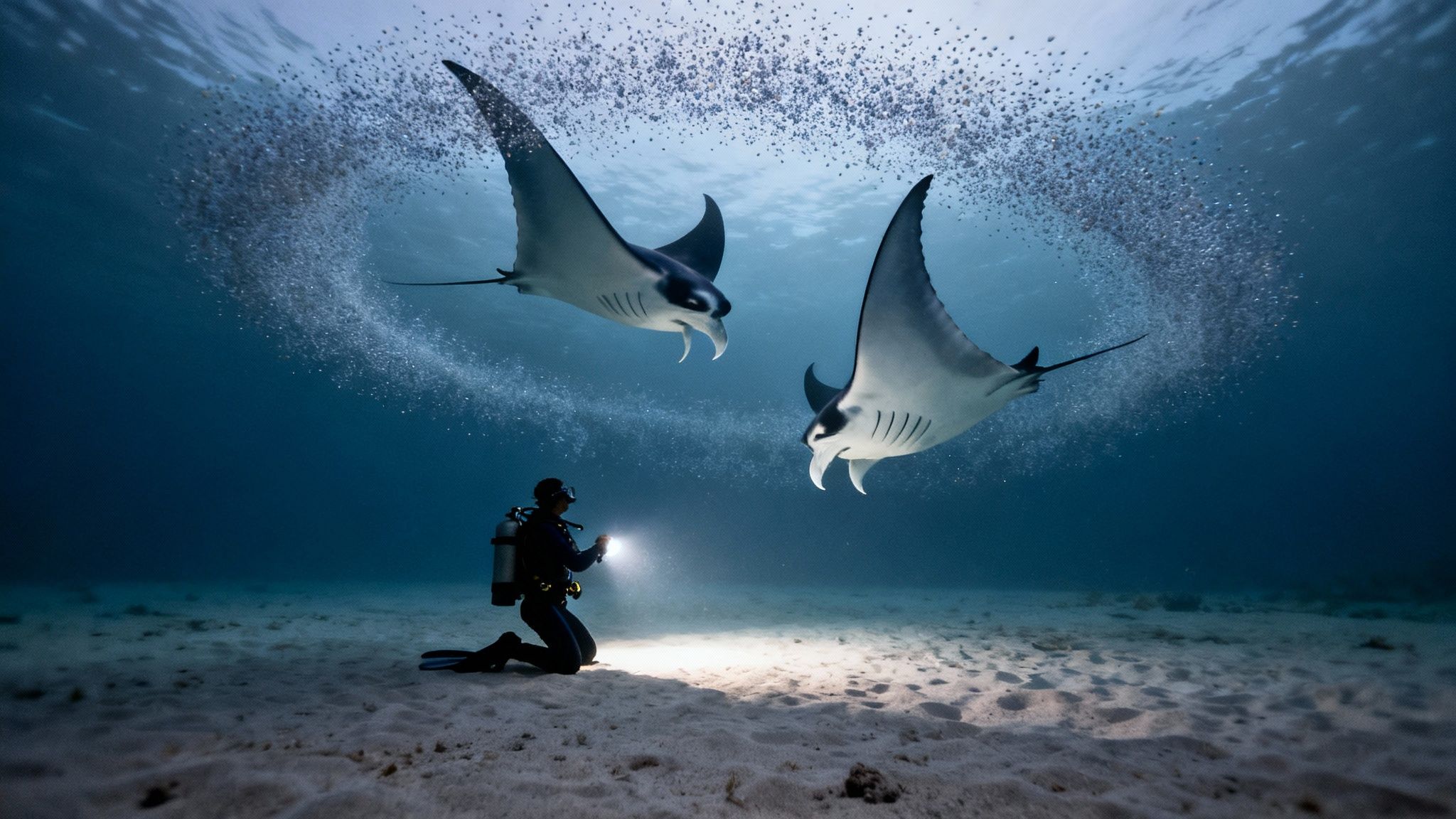
Imagine this: you're kneeling on the sandy ocean floor, the sun has just set, and the world is quiet. Then, powerful beams of light cut through the darkness, setting the stage for the show of a lifetime.
How The Magic Happens
The whole concept is brilliant in its simplicity. Dive operators bring a powerful, stationary light source—often called a "campfire"—down to the seabed. This light immediately begins attracting swarms of plankton, the tiny organisms that are the foundation of the ocean’s food chain.
Of course, this glowing, all-you-can-eat plankton buffet doesn't go unnoticed. Soon, the main event arrives. Majestic manta rays, with unbelievable wingspans that can stretch over 16 feet, glide in from the darkness to feed.
They perform stunning, weightless somersaults and barrel rolls, swooping through the light with their cavernous mouths wide open. You'll watch them filter the plankton-rich water, often passing just inches above your head. It’s an absolutely mesmerizing and humbling experience.
What To Expect On Your Dive
Most trips start with a beautiful boat ride along the Kona coast as the sun dips below the horizon. The crew will give you a detailed briefing, covering everything from the dive plan and safety rules to, most importantly, how to interact respectfully with the mantas.
Once you descend to the viewing area—typically a sandy spot around 30-40 feet deep—you'll settle in and get comfortable. The anticipation is palpable as you wait for the first ghostly silhouette to emerge from the darkness. Before long, more will follow, and the silent, graceful dance begins.
This encounter is one of the most satisfying things a person can do in the water. It’s impossible to describe the feeling of watching a massive fish the shape of a stealth bomber coming into vision. It is pure, unadulterated awe.
One of the best and most consistent spots for this dive is known as Manta Village, a site with a legendary success rate. In fact, top-tier dive charters report approximately 85-90% manta sighting rates, making this one of the most reliable wildlife encounters you can have anywhere in the world.
An Ethical and Safe Encounter
The Kona dive community has put a ton of effort into making sure this incredible experience is safe for divers and, critically, respectful of the mantas. Strict, non-negotiable guidelines are in place to protect these gentle giants.
- Observe Only: Touching a manta ray is absolutely forbidden. It can strip away their protective mucous coating, leaving them vulnerable to infections.
- Stay Put: To give the mantas a clear and safe flight path, all divers remain stationary on the bottom.
- Light Discipline: Everyone points their lights straight up to attract the plankton, creating the "campfire" without shining bright lights directly at the animals.
This commitment to responsible tourism is what keeps the mantas returning night after night. For those who want more detail on the dive itself, you can find everything you need in our guide at https://konahonudivers.com/manta-ray-night-dive-kona/. And if diving isn't your thing, you can still witness the magic on an unforgettable night snorkel with manta rays.
Ready to see the ballet for yourself? Don't wait—this is a true bucket-list dive that books up fast.
Adventures Beyond the Reef
Sure, the coral reefs are beautiful, but if you want to experience the real soul of scuba diving on the Big Island of Hawaii, you have to look beyond the colorful fish. The island's raw volcanic heart has sculpted some truly mind-bending underwater landscapes, offering dives that are a world away from your typical reef tour.
These aren't just dives. They're expeditions. They cater to divers who crave something a little more… extraordinary.
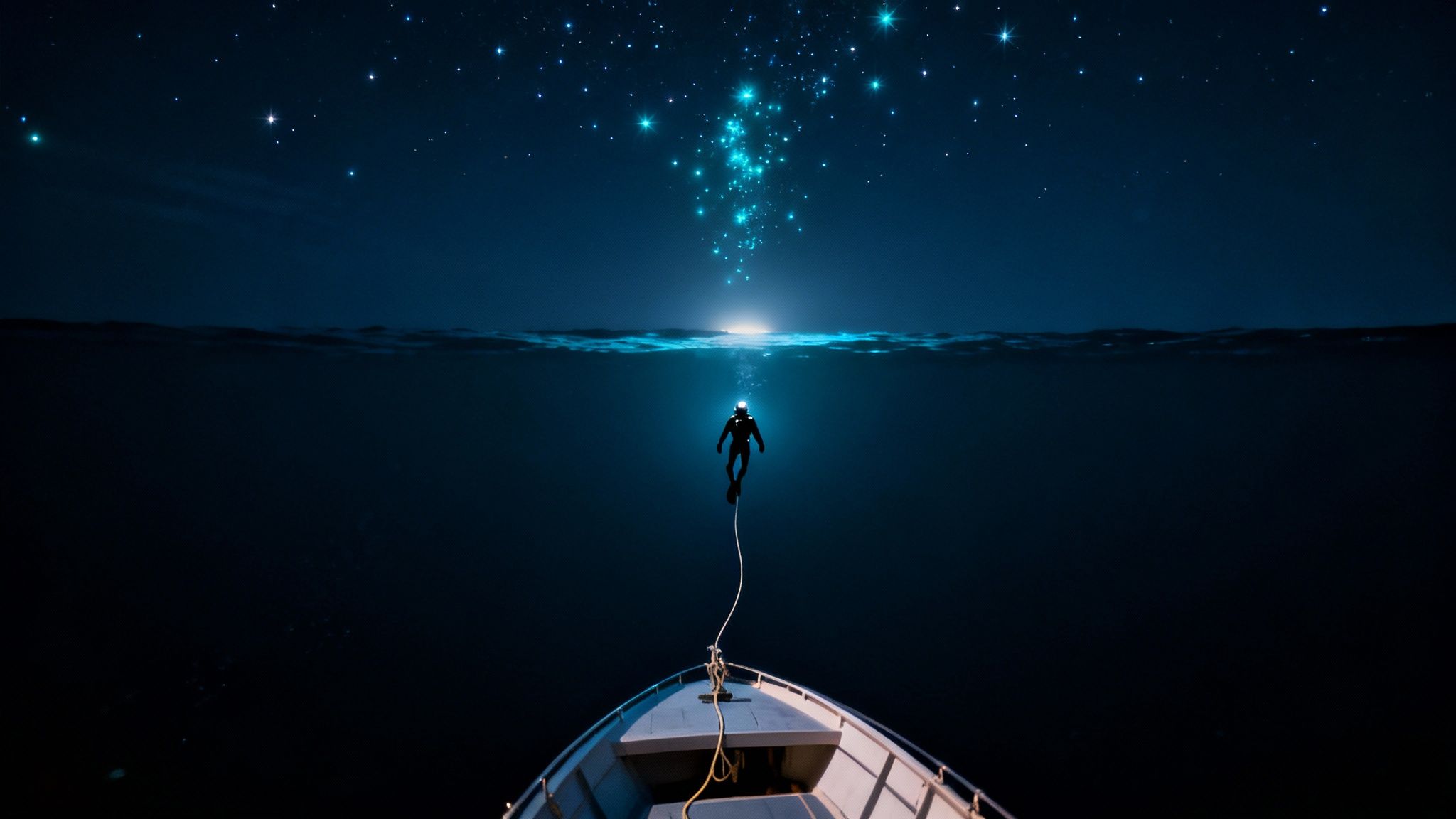
At the top of that list for many is the legendary Kona Blackwater Dive. Forget reefs and wrecks; this is a journey into the deep, dark abyss. You're tethered to a boat at night, drifting over thousands of feet of pitch-black ocean. It's as wild as it sounds.
The whole experience is surreal. You’re floating in the middle of one of the planet's largest migrations, as countless bizarre, bioluminescent creatures rise from the depths to feed. It's a parade of life few ever get to see—tiny, glowing aliens from an underwater world.
The Kona Blackwater Dive Experience
The setup is pretty unique. You're clipped into a tethered line that drifts along with the boat, which keeps everyone safely together in the vast emptiness. Then, the crew drops powerful lights into the water, and the magic begins as creatures are drawn in from the darkness.
What you'll see is straight out of a sci-fi movie:
- Pteropods and Ctenophores: Think glowing, gelatinous blobs that pulse with otherworldly light.
- Larval Creatures: You’ll see the baby versions of eels, lobsters, and fish, and they look absolutely nothing like their adult forms.
- Bioluminescence: It’s a natural light show. Organisms flash and sparkle all around you in the black.
I’ve heard it called an "underwater spacewalk," and that’s the perfect description. Just floating in the immense darkness, surrounded by glowing life forms, completely redefines what a dive can be. It’s an absolute must for photographers and any diver looking for a true adventure.
This isn't a dive for beginners, though. It’s a specialized, advanced experience. Operators will want to see that you have excellent buoyancy control and are completely comfortable in the water. If you’re up for what might be the most unique dive of your life, you can book a Kona Blackwater Dive tour with some of the pioneers of this dive.
Exploring Lava Tubes and Caverns
Beyond the blackwater, the island's volcanic past gives us another incredible playground: underwater lava tubes. Forged by ancient lava flows, these formations create a maze of dramatic swim-throughs, massive archways, and winding tunnels.
Diving through a lava tube feels like you’re swimming through the island’s veins. Sunlight streams through cracks in the ceiling, creating these incredible, shifting light beams that dance through the dark.
These caverns also provide shelter for all sorts of life you might not spot on the open reef. It's common to find resting white-tip reef sharks, shy lobsters tucked into crevices, and even rare species of shrimp.
As you’d expect, you'll need an advanced certification and rock-solid buoyancy skills to explore these environments safely. For those who are qualified, swimming through these submerged volcanic structures is a powerful, unforgettable reminder of the raw energy that created the Hawaiian Islands.
How to Choose Your Kona Dive Operator
Picking the right dive operator is probably the single most important choice you'll make for your scuba diving Big Island Hawaii trip. This isn't just about booking a boat ride; the crew you choose becomes your guide, your safety team, and your ticket to seeing the absolute best of Kona's underwater world. A fantastic operator makes for a smooth, safe, and truly memorable experience, while a bad one can ruin a dive day.
It all boils down to a few key things. You're looking for a shop with a stellar safety record, comfortable and well-maintained boats, and a philosophy that favors smaller groups. The quality of their gear and the real-world experience of their divemasters also make a huge difference in how your day goes.
What to Look for in a Dive Shop
When you start your search, the number of options can feel a bit much. The best way to cut through the noise is to focus on the things that really matter for your safety and enjoyment.
- PADI 5-Star Rating: Keep an eye out for dive centers with a PADI 5-Star rating. This isn't just a marketing gimmick; it’s a hard-earned designation for shops that go above and beyond in training, equipment, and promoting ocean conservation. Think of it as a reliable stamp of quality and professionalism.
- Guide-to-Diver Ratio: Always ask about their group sizes. A smaller ratio, like six divers per guide, means more personal attention. This is a game-changer if you're a newer diver or checking out a new environment like a lava tube for the first time.
- Boat Comfort and Safety: The boat is your home base for the day. Is it roomy with plenty of shade? Is it properly outfitted with safety gear like emergency oxygen, a first aid kit, and a marine radio? A comfortable boat makes the surface interval between dives so much better.
- Rental Equipment Quality: If you’re not traveling with your own gear, the shop's rental equipment is crucial. Good gear is non-negotiable for a safe dive. Reputable shops invest in high-quality, regularly serviced regulators, BCDs, and wetsuits.
For a deeper dive, we break it all down in our complete guide on how to choose a Kona dive shop.
Top-Rated Kona Dive Operators
Kona is blessed with some truly excellent dive companies, and each brings something a little different to the table. Here are a few of the most respected operators to help you find the right fit.
Kona Honu Divers
As a PADI 5-Star Instructor Development Center, Kona Honu Divers is consistently at the top of every "best of" list on the island. They're known for their custom-built boats designed purely for diving, a super experienced and friendly crew, and a serious commitment to safety that never gets in the way of having fun. With over 200 years of combined industry experience, their team can handle everything from a first-time diver to advanced technical training.
They’re especially famous for their world-class manta ray night dives and the unique thrill of their blackwater dives, making them a go-to for anyone chasing Kona's most iconic dives.
Jack's Diving Locker
Jack's Diving Locker is a true Kona legend and has been part of the dive community here for decades. They run a wide range of tours and courses for every skill level, from discover scuba dives to professional certifications. With their large, comfortable boats and a massive retail store, they're a great one-stop shop. Jack's has a well-earned reputation for being family-friendly and for its strong focus on ocean conservation.
Big Island Divers
Another long-standing and highly respected operator, Big Island Divers is known for its fun crew and laid-back "aloha" vibe. They offer a full slate of daily dive charters, including morning trips, afternoon reef dives, and of course, the manta and blackwater specialties. They do a great job of catering to divers of all experience levels, creating a relaxed atmosphere on board while never compromising on safety.
Putting It All Together: Planning Your Big Island Dive Trip
Alright, you've got the must-see dive sites on your list and you're dreaming of giant mantas. Now for the practical part: dialing in the logistics. Getting these details sorted out before you land means you can hit the ground running and spend less time stressing and more time submerged.
Think of it as setting the stage for an incredible adventure. A little planning goes a long way in making sure you’re comfortable, safe, and ready for whatever the Pacific has in store.
When to Visit and What to Wear
The good news is that Kona offers incredible diving pretty much 365 days a year. But the seasons do bring their own unique flavor to the experience.
Summer, roughly from May to October, is when you’ll find the calmest, glassiest seas. Water temperatures often climb to a balmy 80°F (27°C), making for some seriously relaxed and comfortable dives.
If you’re visiting in the winter (December through March), you might encounter a little more surface chop, but you’ll be rewarded with something truly magical: humpback whale season. There's nothing quite like hearing the haunting, otherworldly songs of humpbacks echoing through the water on your safety stop. It's a bucket-list experience for any diver.
As for what to wear in the water, a 3mm full wetsuit is the go-to for most people, most of the year. If you know you get chilly easily or plan on doing multiple dives a day, bumping up to a 5mm wetsuit is a smart move, especially in the slightly cooler winter months.
Where to Stay for the Best Dive Access
This one’s easy: stay on the Kona side. The western coast of the Big Island is where the action is. It's sheltered from the prevailing trade winds, and it’s where you'll find the vast majority of dive shops and premier dive sites.
Positioning yourself in or near Kailua-Kona is your best bet. You’ll be just minutes from the boat harbors, which means less time in the car and more time blowing bubbles. Plus, you’ll have easy access to fantastic restaurants for that all-important post-dive meal.
A Few Key Safety Reminders
Before you go, let’s quickly run through a few non-negotiable safety points. These are simple things that ensure your trip is memorable for all the right reasons.
- Get Dive Insurance: Seriously, don't skip this. Many operators require it anyway. A policy from an organization like DAN (Divers Alert Network) provides peace of mind and covers you for dive-specific incidents.
- Respect Your No-Fly Time: This is the golden rule. You absolutely must wait a minimum of 18-24 hours after your last dive before hopping on a plane. Look at your departure time and schedule your final dive accordingly.
- Hydrate, Hydrate, Hydrate: The Hawaiian sun is no joke. Drinking plenty of water before and after every dive is one of the easiest and most effective ways to stay healthy and reduce your risk of decompression sickness.
With your logistics locked in, you’re ready for the adventure of a lifetime. The vibrant reefs and volcanic wonders of the Big Island are waiting. To see what's available and get your trip on the calendar, take a look at the amazing diving tours in Kona.
Your Big Island Diving Questions, Answered
Got a few last-minute questions before you book your trip? Here are some quick answers to the things we get asked most often about scuba diving on the Big Island.
Do I Need to Be Certified to Scuba Dive?
Not necessarily! While you do need a certification to join most of our boat dives, you can absolutely get your first taste of the underwater world with a PADI Discover Scuba Diving experience.
Think of it as a test drive. We’ll have a professional instructor right by your side in a calm, shallow spot, guiding you every step of the way. It’s the perfect way to see if diving is for you, no prior experience needed.
What’s the Best Time of Year for Diving?
Honestly, there’s no bad time to dive in Kona. The conditions are fantastic year-round.
If you love warm, glassy-calm water, the summer months (May-October) are your best bet. But if you’re here in the winter (December-March), you’re in for a different kind of treat—it’s humpback whale season. Hearing their songs echoing through the water on a dive is something you’ll never, ever forget.
What Unique Marine Life Is Endemic to Hawaii?
Hawaii's incredible isolation in the middle of the Pacific means that about 25% of its reef fish are found nowhere else on the planet. It makes every dive feel like a treasure hunt.
Keep an eye out for local celebrities like the Milletseed Butterflyfish, the Hawaiian Cleaner Wrasse, the vibrant Potter's Angelfish, and the Hawaiian Sergeant. Spotting these endemic creatures is a huge part of what makes diving here so special.
Is the Manta Ray Night Dive Safe for Beginners?
Absolutely. It might sound intense, but it’s one of the safest and most well-managed dives you can do. The site is shallow (only 30-40 feet), and the whole dive happens in one spot—you just settle down on the sandy bottom and let the show come to you.
The divemasters give an incredibly detailed briefing beforehand and are right there with you in the water. It’s a jaw-dropping experience that’s perfectly suitable for new divers.
This dive is famous for a reason. You're kneeling on the ocean floor while these gentle giants, with wingspans up to 16 feet, glide and somersault just inches above your head in a silent, graceful ballet.
Ready to take the plunge and see Kona’s underwater world for yourself? Check out the different diving tours available and let's get you in the water.
Whether it’s your first time breathing underwater or you’re a seasoned pro, Kona Honu Divers has an adventure waiting for you. Find the trip that matches your dream Hawaiian dive vacation.