
When you think of scuba diving in Hawaii, the Big Island's Kona coast should be at the very top of your list. It’s home to some of the most consistently incredible underwater adventures you can find anywhere on the planet, all thanks to the calm, crystal-clear waters sheltered by our massive volcanoes.
We’re talking about everything from the world-famous Manta Ray Night Dive to pristine coral reefs and surreal lava tube swim-throughs. It's a genuine diver's paradise, and the unique volcanic geology has created an underwater world bursting with life.
Your Essential Guide to Scuba Diving Big Island Hawaii
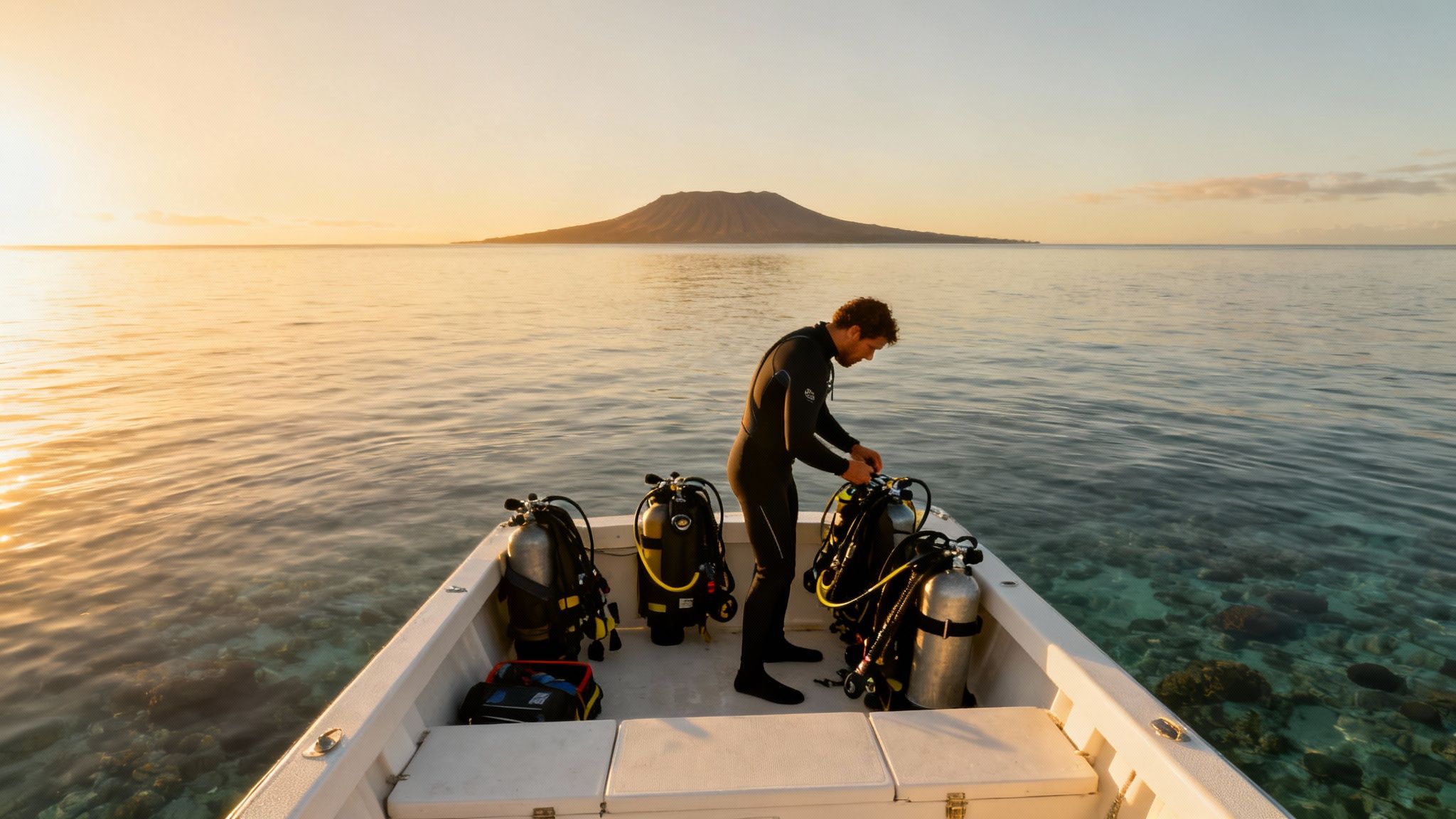
Welcome to the Big Island's underwater wonderland! This is a place where ancient lava flows have sculpted a breathtaking playground for divers. Because the Kona coast is protected from the Pacific trade winds, we get to enjoy exceptionally calm and clear conditions pretty much all year long.
Think of this guide as your personal dive briefing. We’ll walk you through everything you need to know to plan an unforgettable trip, from can't-miss dive sites to finding the right crew to show you the ropes.
What to Expect From This Guide
This isn't just a simple list of dive spots. We're going to get into the heart of what makes Kona so special—from the geology that creates such amazing conditions to the unique marine life you’ll meet along the way. You'll get an insider’s look at the dives that put the Big Island on every scuba enthusiast's bucket list.
Here’s a sneak peek at what’s coming up:
- Iconic Dives: We’ll pull back the curtain on legendary experiences like the Manta Ray Night Dive and the mind-blowing Kona Blackwater Dive.
- Top Dive Sites: Get ready for a virtual tour of the most vibrant reefs, lava tubes, and dramatic underwater arches lining the coast.
- Expert Guidance: We'll introduce you to Kona Honu Divers. As local experts, we've built our reputation on providing safe, fun, and truly memorable dives. Our guests' experiences say it all.
Your Adventure Starts Here
Whether you're a seasoned diver with hundreds of log entries or you're just starting out, scuba diving Big Island Hawaii has something incredible in store for you. It's not a question of if you should dive here, but how to get the most out of every moment underwater.
For a deeper look into what makes this island a world-class destination, check out our guide on why the Big Island is so good for scuba diving.
By the time you finish reading, you'll have everything you need to plan, book, and enjoy the diving adventure of a lifetime. Let's gear up and get started.
Why the Kona Coast Is a Diver's Paradise
So, what makes the Kona coast stand out from other beautiful shorelines and earn its reputation as a world-class dive destination? It’s not just one thing. It’s a perfect storm of geology and geography that creates an underwater environment you just won't find anywhere else.
It all starts with the island’s massive volcanoes, Mauna Loa and Hualalai. These giants act as a natural wall, shielding the coast from the powerful trade winds that batter most of the Hawaiian islands.
This protection gives us the leeward Kona coast, where the ocean is often incredibly calm and clear—we’re talking swimming-pool clear. It’s why we get amazing dive conditions almost all year long, with visibility that often pushes past 100 feet. Think of it as a massive, naturally protected aquarium, and you'll get the idea.
An Underwater Volcanic Playground
That volcanic history doesn't just stop at the surface. Below the waves, ancient lava flows have sculpted a breathtaking underwater landscape. This is no flat, sandy bottom; it's a dynamic world full of incredible structures just waiting to be explored.
The volcanic rock has created a true diver’s playground, complete with:
- Dramatic Drop-Offs: Imagine sheer cliffs plunging into the deep blue, attracting all sorts of open-ocean life.
- Lava Tubes and Caverns: These natural swim-throughs give you a thrilling sense of adventure and discovery.
- Intricate Arches: We have countless natural archways and formations that are now completely covered in healthy, vibrant coral.
This wild topography provides endless nooks and crannies for marine animals to call home, ensuring every dive feels like a brand-new adventure. The combination of calm water and complex habitat is the secret sauce that supports such a dense and diverse ecosystem.
The volcanic formations of the Kona coast create a structural complexity that is ideal for supporting a high diversity of reef fish and invertebrates. This unique habitat is a key reason why the area is so resilient and vibrant.
A Haven for Vibrant Marine Life
Those calm, nutrient-rich waters are a magnet for an incredible variety of marine creatures. When you dive here, you’re not just floating over pretty coral; you’re dropping into a bustling underwater city. On any given dive, you're likely to meet a fantastic cast of local residents.
Keep your eyes peeled for graceful green sea turtles (honu) snoozing on the reef, pods of playful spinner dolphins zipping by, and schools of colorful fish that can only be found right here in Hawaii.
Some of the unique Hawaiian species you might spot include:
- Potter's Angelfish: A small, brilliantly orange fish with delicate blue patterns.
- Hawaiian Cleaner Wrasse: These little helpers set up "cleaning stations" where bigger fish line up to get serviced.
- Milletseed Butterflyfish: You'll often see these in huge, shimmering yellow schools.
And if you’re really lucky, you might get a visit from a gentle whale shark or hear the songs of humpback whales echoing through the water during the winter months. Knowing what makes Kona’s underwater world tick makes every moment you spend down there even more special. It's a genuine privilege to explore such a pristine and lively ecosystem.
The World-Famous Manta Ray Night Dive
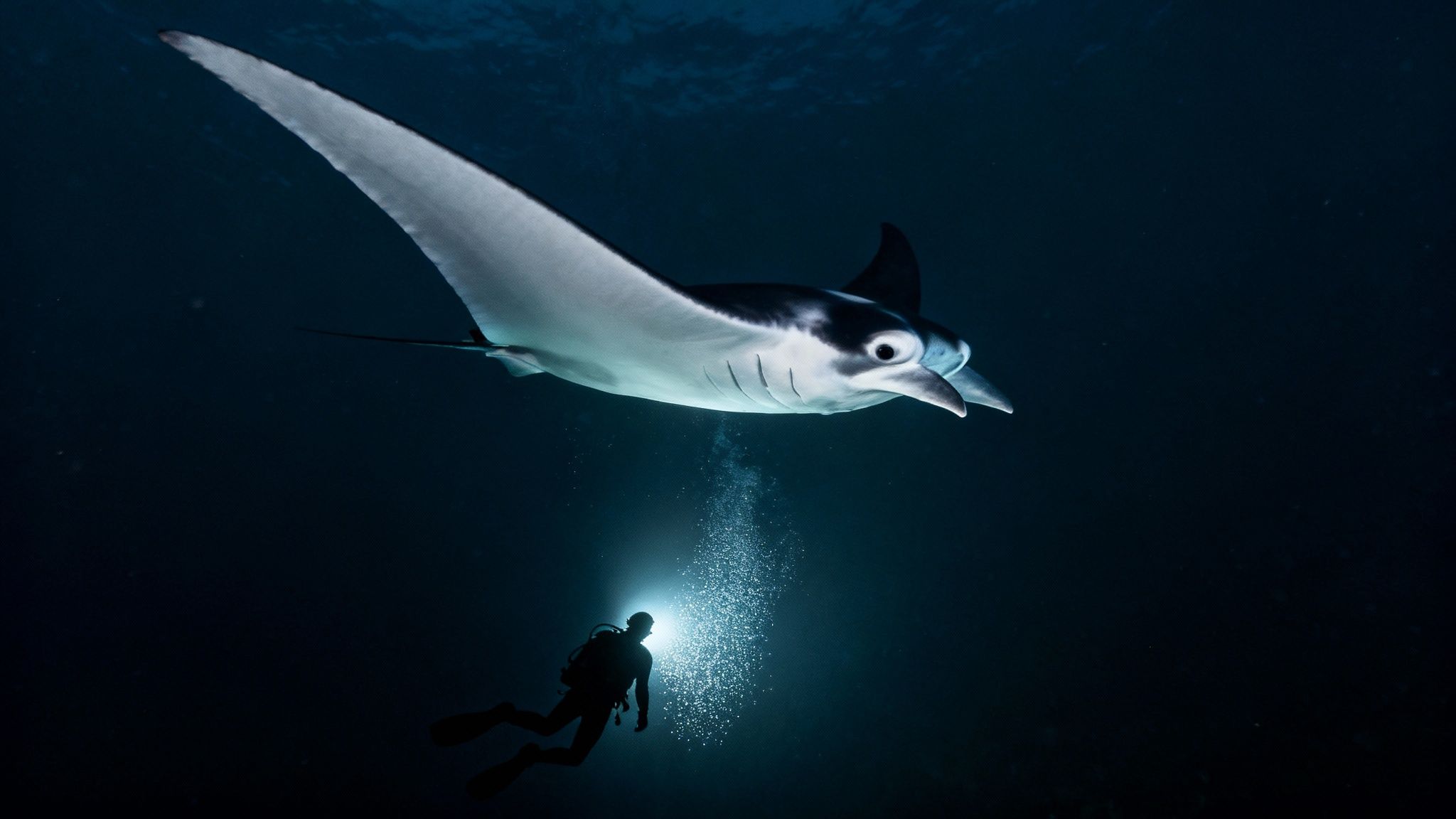
If there's one experience that defines scuba diving on the Big Island of Hawaii, this is it. The Manta Ray Night Dive isn't just another dive; it's a genuine, bucket-list adventure that feels completely surreal and deeply moving. It has rightfully earned a global reputation as one of the most reliable and awe-inspiring marine encounters you can have.
Picture this: you descend into the dark, calm ocean just as the last bit of sun vanishes. Your group finds a spot on the sandy bottom, settling in near a "campfire" of powerful underwater lights. These beams cut through the darkness, acting as a massive bug zapper in reverse—they attract clouds of microscopic plankton, which just so happens to be a manta ray’s favorite food.
Then, the show begins. Gliding silently out of the black, giant manta rays appear, some with wingspans stretching up to 16 feet. They perform a mesmerizing, silent ballet just inches over your head, swooping and barrel-rolling through the illuminated plankton. It’s a moment that will be etched in your memory forever.
What To Expect On This Unforgettable Dive
The Manta Ray Night Dive is a well-oiled machine, fine-tuned over decades to be both incredibly safe and ridiculously cool. Local operators have pinpointed the best spots, like "Manta Village," to ensure the most consistent sightings. Before you even get in the water, you'll get a thorough briefing on where to go and how to act to keep both you and the mantas safe.
The magic behind the whole encounter is actually pretty simple:
- Bring the Food: Bright lights are placed on the ocean floor, lighting up the water and drawing in plankton.
- The Guests of Honor Arrive: Manta rays are smart. They’ve learned that these lights mean an easy, all-you-can-eat buffet is served.
- You Get a Front-Row Seat: Divers and snorkelers form a circle around the lights, creating a natural feeding lane for the mantas and giving everyone an unbelievable view.
There’s a reason this dive is famous. The success rate for seeing mantas off the Kona coast is incredibly high, with sightings happening 85-90% of the time. While some nights you might see one or two, it’s not unheard of for divers to see up to 14 individuals in a single evening.
"Watching the manta rays feed is like witnessing a silent, choreographed dance. Their grace and size are truly humbling, and the entire experience feels like you've been invited into another world."
Diving And Snorkeling Options
One of the best things about this experience is that you don't need a scuba certification to see the show. For a different but equally amazing perspective, check out the fantastic night snorkel with manta rays Hawaii tours. Snorkelers hold onto a custom float board that has lights shining down, drawing the mantas right up to the surface.
Ready to see what all the hype is about? You can learn more about the history of the Kona Manta Ray dive right on our blog, or book one of the legendary manta ray dive tours today.
Exploring the Top Big Island Dive Sites
Sure, the Manta Ray Night Dive gets a ton of attention, but don't let it overshadow the rest of the Kona coast. This place is absolutely packed with world-class dive sites, each one offering a completely different kind of adventure.
Think of the coastline as a sampler platter of underwater experiences. You’ve got everything from sun-drenched, shallow reefs bursting with color to dramatic, deep lava tubes that feel like another world. To really get a feel for what makes Kona so special, you have to get out and see the variety.
Kealakekua Bay: A Protected Paradise
If there's one spot that truly captures the magic of Kona, it's Kealakekua Bay. This isn't just a pretty reef; it's a designated marine sanctuary, and that makes all the difference.
Because fishing is completely off-limits, the marine life here is thriving. The water is calm, incredibly clear—with visibility often pushing past 100 feet—and the ecosystem is just buzzing with activity. It's a stunning landscape of hard and soft corals that shelter an unbelievable number of reef fish. You can find out more about what makes this marine sanctuary so special.
The bay is also home to the Captain Cook Monument, adding a layer of history to its natural beauty. Diving here honestly feels like you’re swimming inside a perfectly maintained aquarium, where the fish are bold, plentiful, and completely unafraid.
Crescent Beach and Two Step
Looking for a little more drama in your dive? Crescent Beach delivers. This spot is famous for its massive underwater archways and lava tubes, which create some seriously thrilling swim-throughs for certified divers. It’s a dynamic site where you might just find whitetip reef sharks catching a nap on the sandy bottom.
For something a bit more laid-back with easy access, you can't beat Two Step. It's a local favorite for a reason. Named for the two natural lava rock "steps" that lead you right into the water, it’s a sprawling, healthy reef that’s perfect for divers of any skill level. It's also one of the best places to spot green sea turtles (honu) and catch a glimpse of the resident spinner dolphins. To get a better sense of all the amazing locations you can explore, check out our complete guide to diving on the Big Island.
Matching the Site to Your Skill Level
With so many incredible options, it helps to have a game plan. Are you looking for a relaxed tour of a vibrant reef or a more technical dive through volcanic formations? To help you decide, we've put together a quick comparison of our go-to spots.
Comparison of Top Big Island Dive Sites
Here's a quick look at some of the most popular dive sites along the Kona coast to help you find the perfect match for your next underwater adventure.
| Dive Site | Key Feature | Typical Depth | Experience Level | Access Type |
|---|---|---|---|---|
| Kealakekua Bay | Protected marine sanctuary, pristine coral, high visibility | 30-80 ft | All Levels | Boat |
| Crescent Beach | Dramatic lava arches and swim-throughs | 40-70 ft | Intermediate | Boat |
| Two Step | Healthy reef, easy shore access, abundant turtles | 15-50 ft | All Levels | Shore |
| Manta Village | Famous manta ray night dive | 30-40 ft | All Levels | Boat |
Of course, this is just scratching the surface of what the Kona coast has to offer. Each site gives you a different window into the island’s incredible underwater world. Ready to see it for yourself? Take a look at our full list of guided diving tours and find your next adventure.
Advanced and Unique Diving Experiences
Once you’ve got a few dives under your belt, you might start craving something more. For certified divers with a taste for real adventure, scuba diving Big Island Hawaii offers experiences that go way beyond the standard beautiful reef tour. These are the kinds of dives that test your skills and reward you with underwater encounters most people will only ever see in documentaries.
If you’re hunting for that next-level, truly unforgettable dive, the Kona coast is the place to be. We’re not talking about your average day trip here; we’re talking about expeditions into a whole different world.
The Kona Blackwater Dive: An Otherworldly Adventure
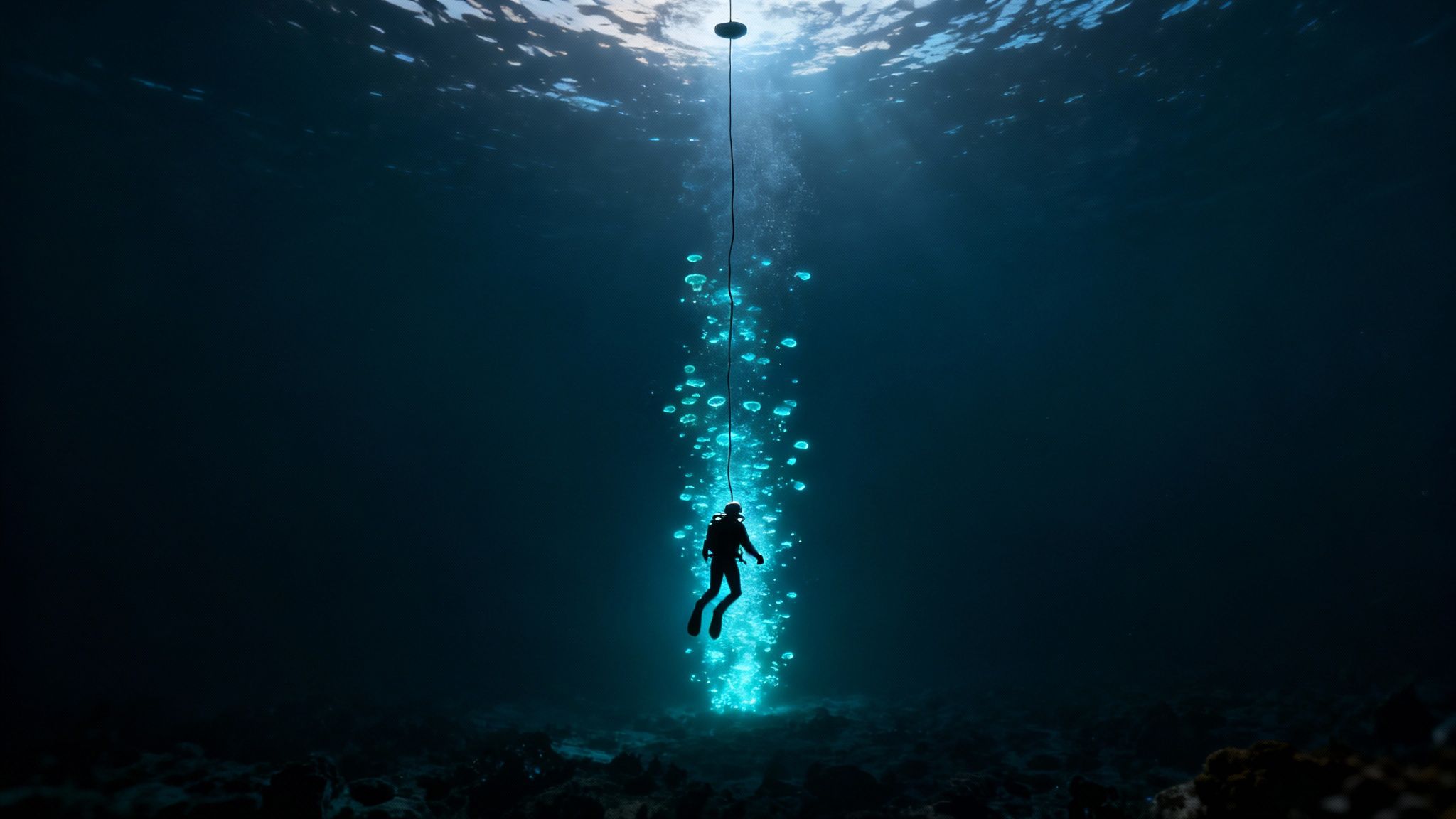
Picture this: you’re floating in absolute darkness miles offshore, tethered to a boat and suspended over thousands of feet of inky black ocean. You just hang there, waiting. This is the incredible setup for the world-famous Kona Blackwater Dive, an experience that feels less like scuba diving and more like floating through deep space.
Out there in the dark, you get a front-row seat to the largest vertical migration on Earth. Bizarre, alien-like creatures, many glowing with their own bioluminescent light, rise from the abyss to feed near the surface. You'll see things you never imagined could exist—tiny, translucent squids, the larval stages of familiar fish, and otherworldly jellies pulsing with an eerie internal light.
The Kona Blackwater Dive isn't just a dive; it’s a glimpse into a hidden ecosystem. It’s a humbling, mesmerizing peek into the deep ocean’s secrets, where life takes on the most fantastical forms.
This is absolutely a dive for those who are comfortable in the water and have their buoyancy dialed in. But the payoff is an adventure you will never, ever forget. If you're ready for the challenge, you can book your own Kona Blackwater Dive tour and get ready to meet the unknown.
Pushing the Limits with Advanced Diving
Beyond the blackwater trip, the Big Island’s dramatic volcanic coastline serves up plenty of other challenges for the seasoned diver. These dives will take you far from the crowds to explore deeper reefs, stronger currents, and more complex environments.
Here are a few advanced options to consider:
- Drift Dives: Forget kicking. Just relax and let the current carry you along sheer underwater cliffs and walls, watching the marine life that thrives in these dynamic waters.
- Deep Reef Exploration: Head down to deeper sites to discover the different species of fish and coral that prefer the cooler, darker waters below.
- Lava Tube Penetration: For divers with the proper overhead environment training, slipping into the island’s ancient lava tube networks is a true thrill of discovery.
These dives demand a higher skill level, but they deliver incredible rewards and a much deeper appreciation for the island's raw, underwater beauty. Kona Honu Divers runs specialized advanced dive trips for divers ready to explore these more demanding and spectacular sites.
A lot of credit for pioneering these experiences goes to Jack's Diving Locker. Since 1981, they’ve been a cornerstone of the island’s dive community. As the oldest PADI 5-Star IDC dive center here, they were instrumental in developing both recreational and technical diving, including the iconic Pelagic Magic blackwater dives that now draw people from all over the globe. You can read more about their long history of marine encounters and their role in putting Kona on the map.
Planning Your Big Island Dive Adventure
Alright, you’re sold on the incredible underwater world of the Big Island. Now for the fun part: planning the trip itself. Getting the logistics sorted out ahead of time is the key to a stress-free adventure, letting you focus on the amazing dives waiting for you.
So, when’s the best time to come? Honestly, there’s no bad time. Thanks to Kona’s location on the sheltered leeward side of the island, we’re blessed with calm, clear water almost all year round. That said, if you visit during the winter months—think December through March—you’re in for a special treat. That's when the humpback whales arrive, and there's nothing quite like hearing their otherworldly songs resonating through the water on a dive. It's a truly unforgettable soundtrack.
Gearing Up for Your Dives
Packing the right stuff will make all the difference in your comfort, both in the water and on the boat. The water here is warm and inviting, but a little protection goes a long way.
Here’s what you should have in your bag:
- The Right Wetsuit: For most daytime dives, a 3mm full wetsuit is plenty. But if you get chilled easily or are planning to do the manta ray night dive or a blackwater dive, you'll be glad you brought a 5mm wetsuit.
- Reef-Safe Sunscreen: Hawaii's reefs are a treasure, and we all have a part to play in protecting them. Please only use mineral-based sunscreens with zinc oxide or titanium dioxide. The chemicals in regular sunscreen are incredibly harmful to our coral.
- Your Personal Kit: Always pack your dive computer and a safety sausage (SMB). It’s always best to dive with gear you know and trust.
- Proof of Fun: Don't leave your certification cards behind! And bring your logbook—you’re going to have some incredible dives to add to it.
Finding the Right Dive Crew
This is probably the single most important choice you'll make. A great dive operator does more than just drive the boat; they create the entire experience. They ensure your safety, share their deep knowledge of the local sites, and their passion for the ocean is infectious.
Look for a company that keeps its groups small and is genuinely committed to protecting the marine environment. You want guides who live and breathe these waters. Here at Kona Honu Divers, that’s exactly who we are. Our team is focused on giving you a safe, personal, and absolutely epic adventure. But don’t just take our word for it—see what fellow divers have to say.
Once you have these details dialed in, you can book your trip knowing you’re ready for the adventure of a lifetime. Feel free to browse our full lineup of professionally guided Kona diving tours to find the perfect dives for you.
Your Big Island Diving Questions, Answered
Planning a dive trip always brings up a few questions. To help you get your gear packed and your fins ready, here are some straightforward answers to the things we get asked most often.
What Certification Do I Need to Dive on the Big Island?
Good news—the Big Island has something for everyone. Most of the classic Kona reef dives are in that sweet spot of 30-60 feet, making them a perfect playground for Open Water Divers. If you haven't taken the plunge yet, you can always start with an introductory dive.
For the more adventurous stuff, like our famous Kona Blackwater Dive or exploring some of the deeper ledges, you'll generally need your Advanced Open Water certification. The best bet is to just give a trusted operator a call. Here at Kona Honu Divers, we can point you to the diving tours that are a perfect fit for your experience and what you want to see.
Should I Be Worried About Sharks?
Seeing a shark is actually a great sign—it means you're in a healthy, thriving ocean. The sharks we usually run into, like whitetip reef sharks, are incredibly shy and would much rather keep their distance.
Safety is always our top priority, and every dive starts with a detailed briefing on how to be a respectful guest in their world. Unprovoked encounters are almost unheard of, and going with a professional guide is by far the safest way to explore. And for any diver who likes to be prepared for all scenarios, it doesn't hurt to learn about dive-related medicine; understanding hyperbaric oxygen therapy (HBOT) is a great place to start.
What's the Water Like? What Wetsuit Should I Pack?
The water here is wonderfully comfortable all year. Expect temperatures to hover between 75-77°F (24-25°C) in the cooler months and warm up to a balmy 79-81°F (26-27°C) in the summer. For most people, a standard 3mm full wetsuit is all you'll need for daytime dives.
That said, if you're joining us for the incredible Manta Ray Night Dive or the Blackwater Dive, or if you just tend to get chilly, a 5mm wetsuit is a smart move. Staying warm means you can relax and enjoy every single minute of the dive.
Is the Big Island a Year-Round Dive Destination?
Absolutely. Kona's spot on the leeward (sheltered) side of the island is our secret weapon. It shields us from the major wind and swells, giving us calm, clear water almost every day of the year. This makes the Big Island one of the most reliable dive destinations you'll find anywhere.
While other Hawaiian islands might get hit with rough surf in the winter (December to March), Kona’s dive sites usually stay calm and accessible. And as a bonus, winter diving means you might get to hear the haunting songs of humpback whales echoing through the water—it's an experience you'll never forget.
Ready to see why the Big Island has some of the best diving on the planet? The crew at Kona Honu Divers is waiting to show you an unforgettable underwater world. Book your adventure and let us show you why we're Hawaii's top-rated dive company.