
When people talk about world-class scuba diving, Hawaii always comes up, and for good reason. But the real heart of Hawaiian diving is found along the Kona coast of the Big Island. This place is a diver's dream, famous for its crystal-clear water, mind-bending volcanic landscapes, and an explosion of marine life. It’s not just a destination; it's an underwater adventure.
Why Kona Is a World-Class Diving Destination
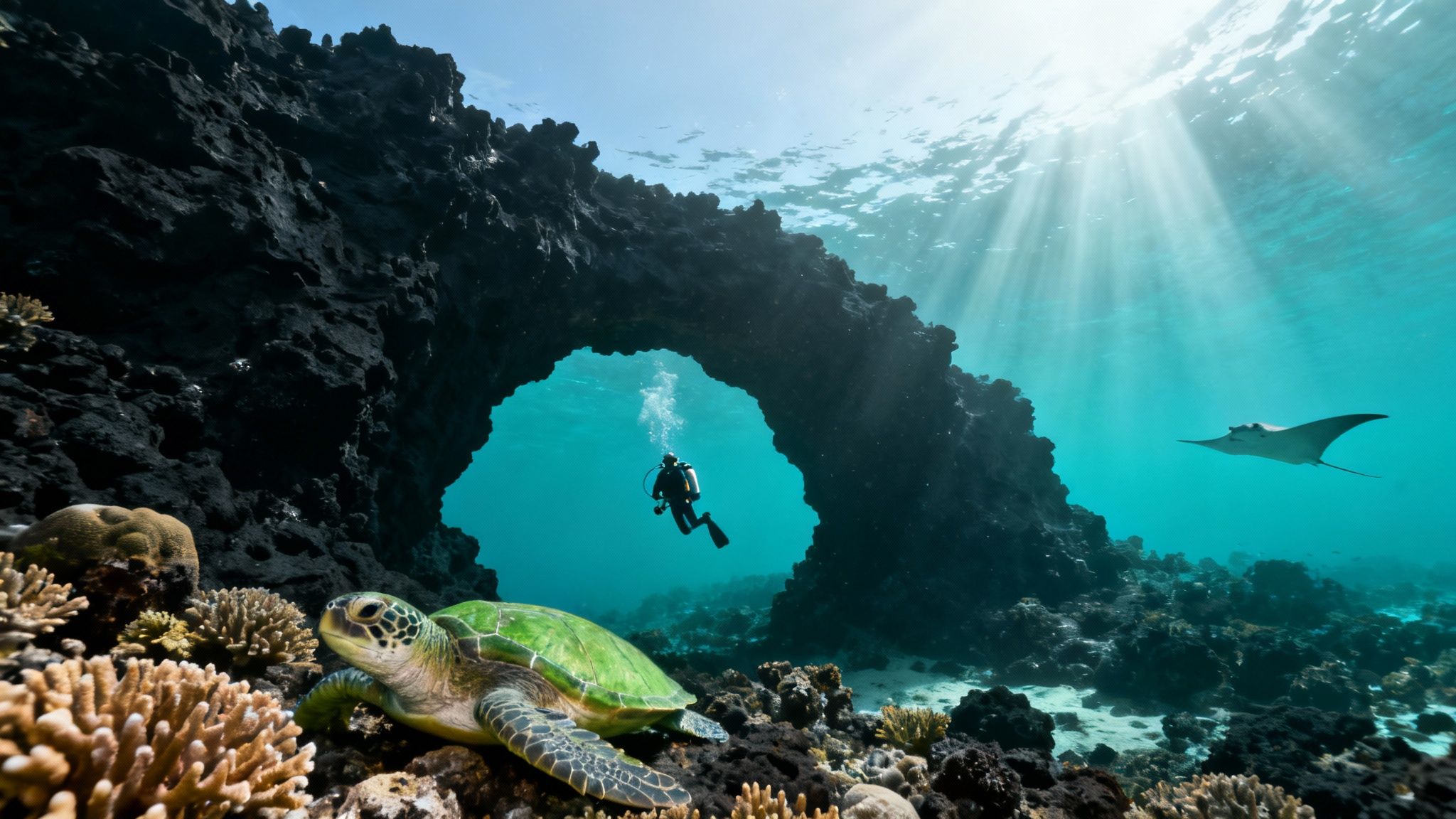
The Big Island isn't your average tropical paradise. It's a frontier, sculpted by raw volcanic power, and that's what makes its underwater world so unique. The Kona coast, tucked away on the leeward (sheltered) side of the island, is a haven for divers. Why? Because it’s protected from the strong trade winds, which means the ocean here is almost always calm and predictable.
That consistent tranquility is a game-changer. You spend less time battling rough seas and more time soaking in the sights. And what sights they are. Visibility often pushes past 100 feet, letting you take in the full scale of the dramatic seascapes carved out by ancient lava flows.
Volcanic Topography Meets Vibrant Marine Life
The geology is what truly sets Kona apart. Millennia of volcanic activity have created an underwater playground filled with massive lava tubes, towering archways, and hidden caverns. These aren't just cool to look at—they provide the perfect habitat for a staggering amount of marine life.
This unique environment is buzzing with biodiversity. You'll find endemic reef fish—species that exist nowhere else on Earth—flitting about alongside majestic green sea turtles (honu) and elegant eagle rays. The contrast between the dark, porous volcanic rock and the kaleidoscopic colors of the fish and coral is something you'll never forget.
An Unbeatable Hub for Divers
Hawaii is a global diving hotspot, with over 1.5 million dives happening every year across the islands. The Big Island, especially Kona, is the crown jewel. It's home to legendary sites like Kealakekua Bay, a protected marine life conservation district.
This protected status means the coral reefs are healthy and teeming with life, from schools of colorful fish to the occasional pelagic visitor from the deep. You can learn more about what makes the island so incredible for diving in our dedicated article on Big Island scuba diving. The mix of protected waters and a well-established local dive community makes Kona incredibly accessible and rewarding for everyone.
The sheer variety of what you can experience here is incredible. One day you’re exploring a shallow, sun-drenched reef, and the next you’re drifting through a deep-water lava tube. That’s Kona.
To get the most out of your trip, you really need to dive with a local operator who knows these waters inside and out. A top-rated outfit like Kona Honu Divers is invaluable. Their guides are true experts who are passionate about sustainable diving and have an intimate knowledge of the marine ecosystem. They make sure every dive is not only safe and unforgettable but also respectful of this fragile environment.
They offer a fantastic range of diving tours that let you fully explore this underwater paradise, whether you're taking your first breaths underwater or you're a seasoned pro with hundreds of dives logged.
Discovering Kona’s Most Unforgettable Dive Sites
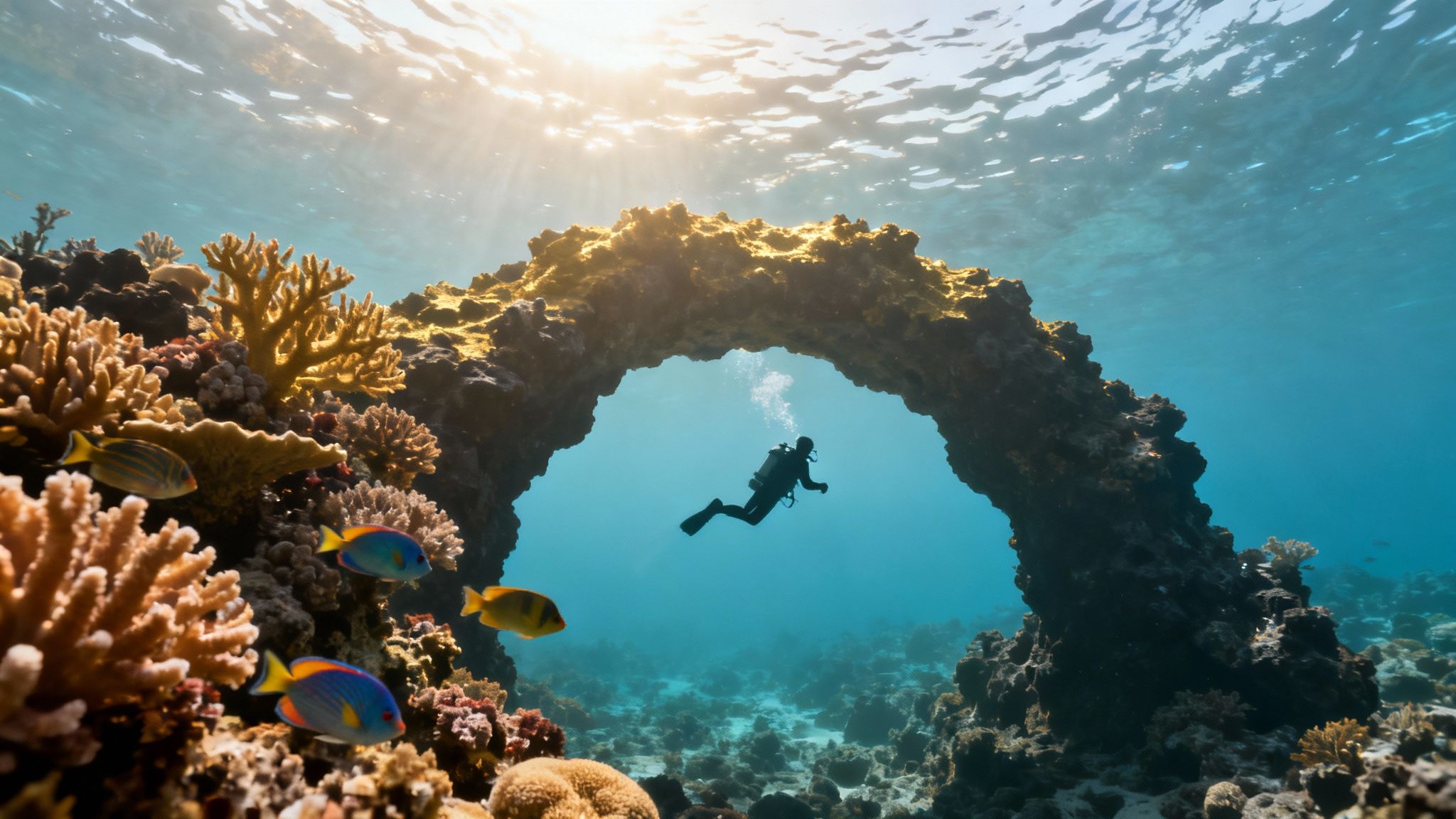
Ready to get in the water? The Kona coast is stacked with world-class dive sites, and each one offers a completely different vibe. Think of this less as a list and more as a guide to matching your dive style with the perfect underwater adventure, whether you're just getting certified or you’ve got hundreds of dives in your logbook.
Imagine gliding through sun-drenched lava tubes, drifting over sprawling coral gardens, or coming fin-to-face with a green sea turtle taking a nap. When planning your dive trip, knowing which sites fit your skill set and what you want to see is the secret to an incredible experience.
Kealakekua Bay: A Protected Paradise
Home to the iconic Captain Cook Monument, Kealakekua Bay is arguably the most famous snorkel and dive spot on the island. For good reason. It's a protected Marine Life Conservation District, which means its coral reefs are exceptionally healthy and just bursting with marine life.
The bay’s calm, clear waters make it an ideal spot for divers of all levels. You can expect to see massive schools of yellow tang, spinner dolphins playing in the distance, and incredibly intricate coral formations. Visibility is often fantastic, letting you soak in the whole vibrant ecosystem. Because it’s so protected, the fish are abundant and not particularly shy, which makes for some amazing up-close encounters.
Turtle Heaven: Honu Encounters Guaranteed
Just as the name implies, Turtle Heaven is your best bet for seeing Hawaiian Green Sea Turtles, or honu. Located a short boat ride north of Kona, the site is a network of lava ridges that create natural “cleaning stations.”
Here, you can respectfully watch these gentle giants as they rest on the sandy bottom or get their shells cleaned by eager reef fish. It’s a photographer’s dream and a genuinely peaceful dive. Beyond the turtles, keep an eye out for eels, octopus, and a huge variety of reef fish darting between the volcanic structures.
Golden Arches: Volcanic Underwater Architecture
If you want a dive that truly showcases Kona's unique volcanic underwater landscape, Golden Arches is a must-do. The site is famous for its massive lava arches and swim-throughs, which create a dramatic and thrilling playground to explore.
Diving here feels like navigating a submerged cathedral. Sunlight streams through the openings, creating stunning light rays that illuminate the cavernous spaces. It’s a fantastic spot for intermediate divers to work on their buoyancy control while taking in the wild geology. The arches are also home to schools of soldierfish and the occasional whitetip reef shark resting in the shadows.
Kona Coast Dive Site Snapshot
Picking a site can be tough when they all sound so good. Here’s a quick comparison to help you figure out where you want to drop in first.
| Dive Site | Max Depth | Experience Level | Key Features |
|---|---|---|---|
| Kealakekua Bay | 40-70 ft | Beginner | Pristine coral, dolphins, historical monument |
| Turtle Heaven | 30-50 ft | Beginner | High concentration of green sea turtles |
| Golden Arches | 40-60 ft | Intermediate | Dramatic lava arches and swim-throughs |
Every diver knows that the right location can transform a good dive into an unforgettable one. It's all about finding that perfect match between your comfort zone and the kind of underwater world you're excited to see.
To really get the most out of these sites—and discover the dozens of others that locals love—going with an experienced crew is the way to do it. A top-tier operator knows the secret spots and the best times to visit, making sure every dive is safe and spectacular.
You can browse a great selection of diving tours here to see what’s possible. For an even deeper look at all the underwater adventures Kona has to offer, check out this comprehensive guide to Big Island diving locations.
The Magic of the World-Famous Manta Ray Night Dive
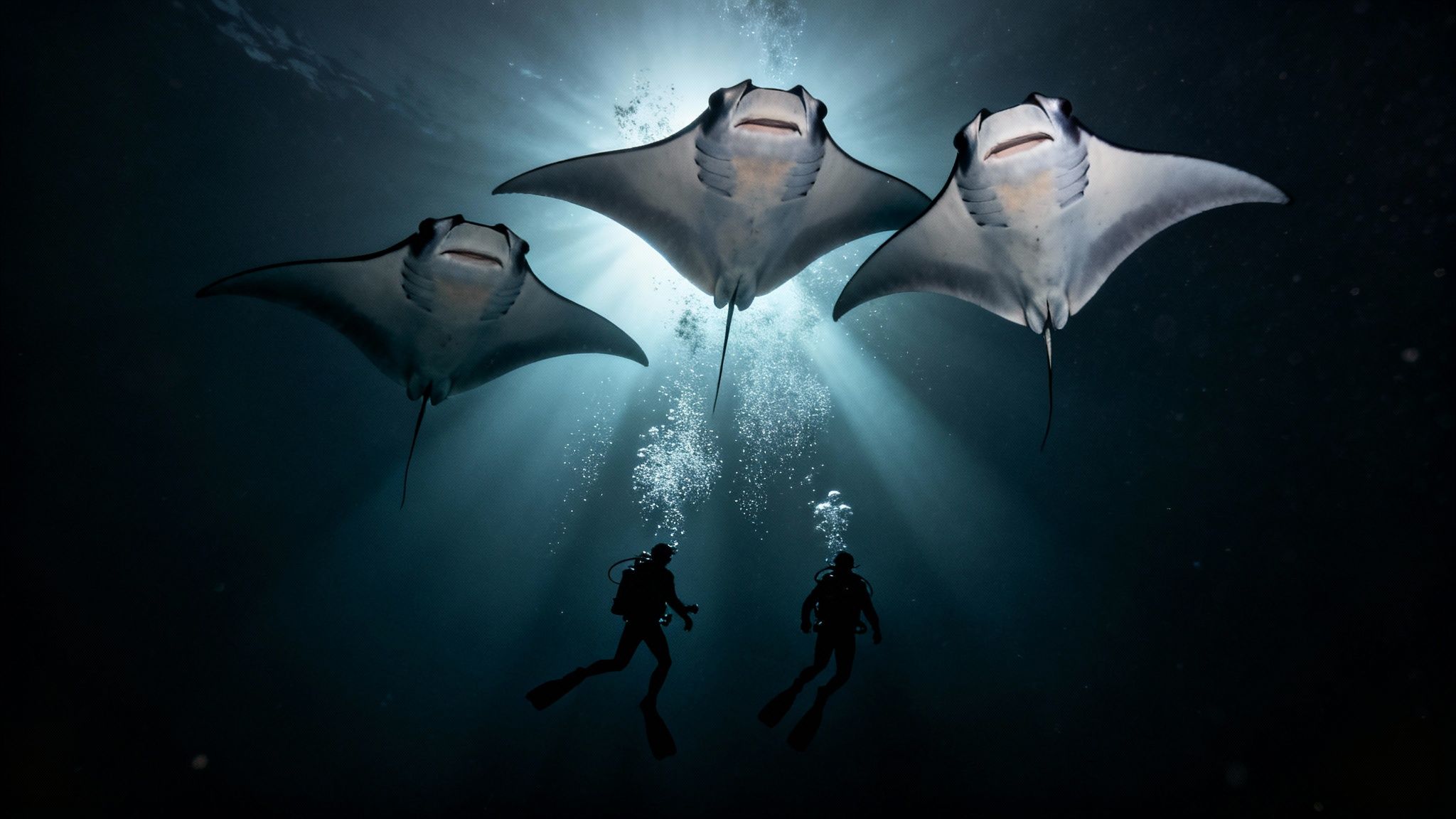
Some dives you remember. The manta ray night dive? That's one you never forget. It's the kind of experience that defines scuba diving Big Island Hawaii, turning a simple night dive into an underwater ballet that feels completely surreal. We're not talking about spotting marine life from afar—this is an up-close, awe-inspiring encounter you’ll be telling stories about for years to come.
The concept behind the dive is both simple and genius. Dive operators set up powerful lights on the ocean floor, creating a brilliant "stage." These lights attract swarms of plankton, the manta rays' favorite meal. And just like clockwork, the gentle giants swoop in for their nightly feast.
From the moment you get on the boat, you can feel the energy. You’ll head out to one of Kona's designated manta feeding sites as the sun dips below the horizon, listening to a detailed briefing about what's to come and how to interact safely with these amazing animals. Then, you'll gear up, descend, and find your spot on the sandy bottom. All that's left to do is point your light up and wait for the show to begin.
What to Expect Underwater
When the first shadow glides into the beams of light, everything else just melts away. These magnificent creatures, with wingspans that can stretch over 15 feet, perform a silent, graceful dance just inches above you. They soar, somersault, and barrel roll through the water, their enormous mouths open to filter the plankton.
This isn’t a dive where you swim around. You stay put, letting the mantas put on the performance. The whole experience is surprisingly peaceful and utterly mesmerizing, watching these colossal animals move with such elegance. It truly feels like you've been transported to another world.
This encounter is one of the most satisfying things a person can do in the water. It’s impossible to describe the feeling of watching a massive fish the shape of a stealth bomber coming into vision. It’s an unforgettable moment of pure wonder.
The best part is how reliable these encounters are. Thanks to well-established feeding grounds and responsible tour practices, manta sightings on the Big Island are incredibly consistent. For example, Jack's Diving Locker, one of the island's most experienced operators, reports a sighting success rate of 85-90%, with some nights hosting more than a dozen mantas.
An Adventure for Divers and Snorkelers Alike
What makes this experience so great is that you don't have to be a certified diver to see it. While divers get a fantastic view from the ocean floor looking up, snorkelers can join in on the action, too. They usually hold onto a custom float with lights on the surface, watching the mantas swoop up from the depths. You can learn more about the differences between the manta ray night dive and snorkel to figure out which one is right for you.
To keep both people and mantas safe, there are just a few simple rules everyone follows:
- Look, don't touch: Mantas are covered in a protective mucous layer. Touching them can strip this away, leaving them vulnerable to infections.
- Stay low: Divers are asked to stay on the sandy bottom. This keeps the water column open for the mantas to swim and feed freely.
- Lights up: Aim your dive light toward the surface. This helps create the "campfire" of plankton that attracts the mantas.
Booking Your Front-Row Seat
The manta ray night dive is easily one of the most sought-after activities in all of Hawaii, and for good reason. It’s incredibly popular, meaning tours fill up fast—often days or even weeks ahead of time, especially during busy seasons. Planning ahead isn't just a good idea; it's essential if you want to guarantee your spot. Booking one of the available manta ray dive tours in advance is the best way to secure a front-row seat to this incredible underwater show.
Exploring Kona’s Unique Diving Adventures
While the beautiful reefs and famous manta ray dives get most of the attention, some of the most unforgettable scuba diving Big Island Hawaii experiences happen far away from the sunlit coral. If you're a certified diver looking for something truly different—an adventure that goes way beyond a standard tour—Kona has you covered.
These dives are less about sightseeing and more about witnessing the raw, mysterious side of the ocean that very few people ever get to see.
Drifting Through the Abyss on a Blackwater Dive
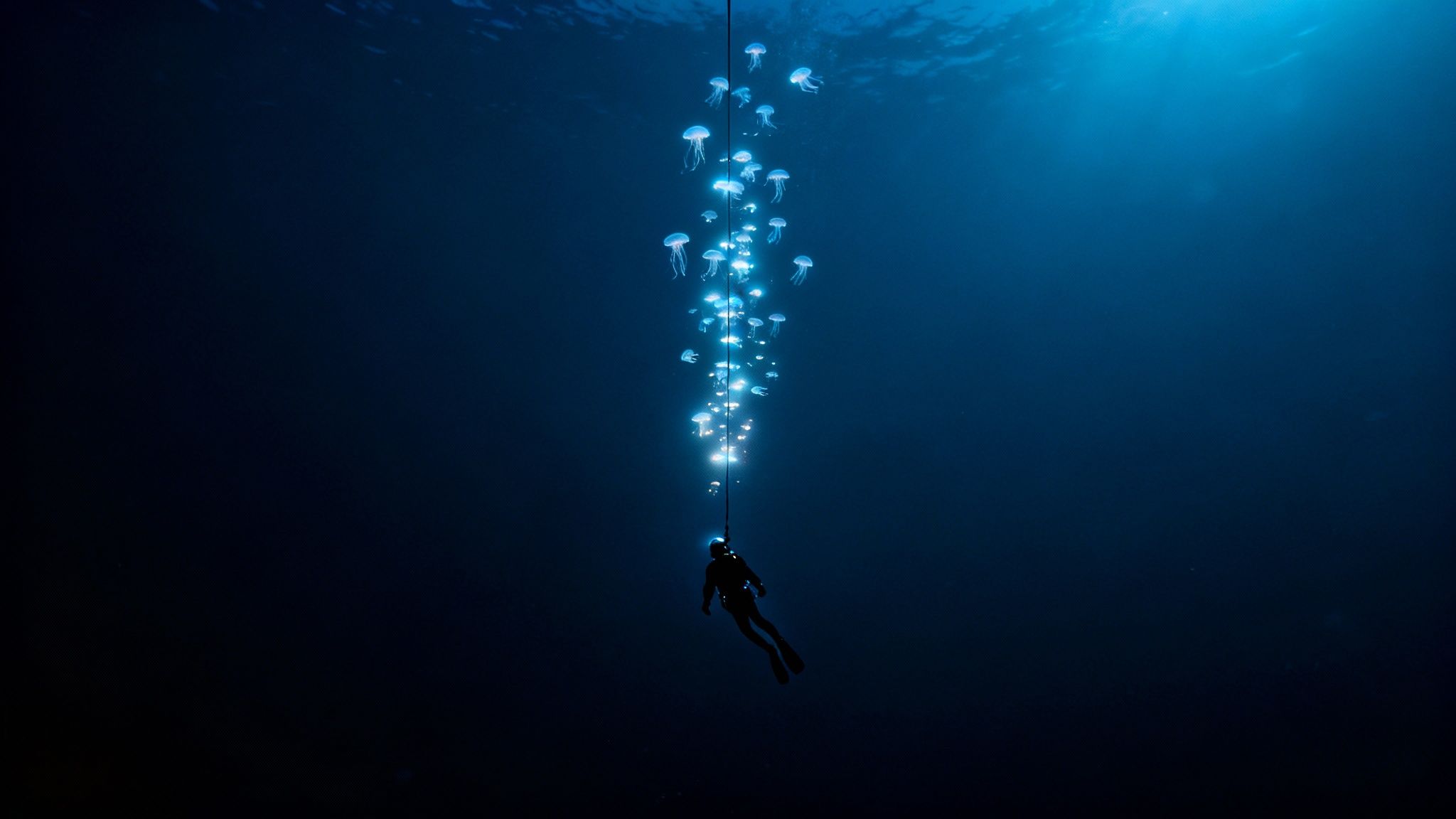
The absolute crown jewel of these unique dives has to be the Kona Blackwater Dive. Honestly, it sounds like something straight out of a science fiction movie. You descend into the deep, dark, open ocean at night, tethered to a line that runs back to the boat. You’re literally just drifting in the abyss.
This isn't a reef dive. The goal here is to witness one of the planet's largest migrations. Every single night, a countless number of bizarre and beautiful creatures rise from the depths toward the surface to feed, a phenomenon known as vertical migration. On a blackwater dive, you get a front-row seat to this parade of otherworldly life.
You’ll see things that look like they belong on another planet. Many are tiny, translucent larval versions of crabs, lobsters, and fish. Others are permanent residents of the deep, decked out with their own bioluminescent lights that twinkle in the darkness. It’s an incredibly surreal and humbling experience to just float in the vastness of the ocean while a universe of tiny, alien life drifts right past your mask.
For any adventurous diver, this is a must-do. You can book a specialized Blackwater Dive tour with an expert crew to experience this otherworldly realm for yourself.
Pushing the Limits with Advanced Diving
Beyond the blackwater experience, Kona offers some incredible opportunities for experienced divers who want to explore deeper and more complex environments. The underwater volcanic landscape creates a stunning playground for advanced diving, full of deep-water pinnacles, dramatic drop-offs, and intricate lava tube systems that require a higher level of skill.
These advanced charters take you to outer reefs where the marine life can be bigger and the encounters more wild. One day you might be exploring a submerged pinnacle teeming with life, and the next you could be navigating a network of ancient lava tubes that open into massive underwater amphitheaters. These dives naturally involve greater depths and demand excellent buoyancy control and situational awareness.
To make sure everyone has a safe and amazing time, these trips are run with small groups of certified, experienced divers. You can expect these key elements on an advanced dive:
- Deeper Profiles: You'll be exploring sites that go beyond the typical recreational limits, often between 80 and 130 feet.
- Complex Navigation: Get ready to maneuver through more challenging underwater structures like swim-throughs, caverns, and along sheer volcanic walls.
- Unique Marine Encounters: There’s a better chance of seeing different species that prefer deeper, cooler waters, including larger pelagics and sharks.
These advanced trips aren't just about going deeper; they're about expanding your skills as a diver and seeing a side of Kona's underwater world that remains hidden to most. It’s a challenge that comes with incredible rewards.
Venturing to these more demanding sites absolutely requires the expertise of a seasoned crew. Operators like Kona Honu Divers offer trips specifically for this purpose, led by guides who know the deeper sites and advanced protocols inside and out. If you feel ready to expand your diving horizons, joining a premier Advanced Dive tour is a fantastic way to challenge yourself and see the untamed beauty of Kona's deeper reefs.
How to Plan Your Big Island Dive Trip
A truly great dive trip begins long before your fins ever touch the water. A little bit of smart planning is what separates a good vacation from an unforgettable scuba diving Big Island Hawaii adventure. Getting the details sorted out ahead of time—from picking the right season to knowing what gear to pack—makes all the difference.
The fantastic news for divers is that Kona's leeward coast serves up incredible diving conditions pretty much year-round. That said, the timing of your visit can definitely shape the kind of experience you'll have.
If you’re looking for the calmest, glassiest seas, the summer months from May to October are your best bet. This period usually means incredibly smooth boat rides and some of the most relaxing diving conditions you could ask for.
But winter, between December and March, offers something truly magical. This is when humpback whales migrate through Hawaiian waters. While you'll likely see them from the boat, the real treat is hearing their complex, haunting songs underwater. It's a common, and completely awe-inspiring, soundtrack for your safety stop.
Choosing the Right Dive Operator
Who you dive with is easily one of the most important decisions you'll make. The right crew doesn't just keep you safe; they elevate the entire experience. When you're looking at different companies, don't let price be your only guide.
- Safety is Everything: Your first question should always be about their safety record. Look for a long-standing, impeccable history. This is absolutely non-negotiable.
- Think Small Groups: A boat with fewer divers means you get more personalized attention from the guide. It also means less crowding on the boat and a more intimate, respectful encounter with marine life below.
- Tap into Local Knowledge: An experienced local crew knows these waters like the back of their hand. They know the best spots for the day's conditions and, more importantly, where to find that specific critter you're hoping to see.
- Check the Gear: Whether you’re renting everything or just a tank, make sure the operator uses well-maintained equipment from reputable brands.
When you're choosing a charter, try to support operators who are actively committed to marine environmental protection. Preserving Kona's underwater world is a shared responsibility. Operators like Kona Honu Divers have built a reputation on both top-notch customer experiences and a deep respect for the ocean. They offer a range of diving tours that are perfect for exploring the Kona coast.
Logistics From Arrival to Accommodation
Getting the logistics ironed out early means you can hit the ground running. Most divers fly into Kona International Airport (KOA), which is perfectly situated close to all the main dive hubs. You'll find a wide array of diver-friendly places to stay nearby, from full-service resorts to cozy vacation rentals.
The Big Island is blessed with a stable, warm tropical climate. The water temperature stays in a comfortable range of 75-80°F (24-27°C) all year. This incredible consistency, combined with the island’s dramatic volcanic underwater topography, is what makes it a world-class dive destination. The easy access from major airports also helps support a sustainable tourism model that prioritizes reef preservation, which you can read more about in this guide to diving in Hawaii.
Here’s a pro tip: Schedule your dives for the beginning of your vacation. It builds in a buffer day in the rare case of bad weather, and it guarantees you have plenty of no-fly time before your flight home.
One of the biggest questions is always what to pack and what to rent. Here's a simple breakdown from my experience:
- Bring These for Sure: Your personal mask, fins, snorkel, and dive computer. Nothing beats the comfort and reliability of your own gear for these crucial items.
- Consider Bringing: Your regulator and BCD. If you dive often and love your setup, it's worth bringing. You know its service history, and it'll save you rental fees.
- Just Rent It: Tanks, weights, and wetsuits. These are bulky and easy to rent on-site. Given Kona’s warm water, a 3mm or 5mm wetsuit is all you'll need, and renting one will save you a ton of luggage space.
Thinking through these details beforehand frees you up to focus on what matters: having an amazing time exploring Kona's underwater world.
Your Kona Diving Questions, Answered
Planning a dive trip always comes with a few questions. To help you get ready for your Big Island adventure, I’ve put together some straightforward answers to the things divers ask us most often. We'll clear up any uncertainties about certifications, the manta dive, and what gear you should (and shouldn't) lug across the ocean.
What Certification Do I Need to Dive on the Big Island?
For most of the classic boat dives along the Kona coast’s beautiful reefs, an Open Water Diver certification is all you need. This is the foundational cert that gets you down to 60 feet and opens up a huge number of incredible sites here.
Now, if you’re looking to push the boundaries a bit—maybe on something as wild as the Kona Blackwater Dive or exploring deeper volcanic ledges—you'll likely need an Advanced Open Water certification. These dives go a little deeper and demand more comfort and skill in the water.
Not certified yet? No problem at all. Plenty of local shops run fantastic "Discover Scuba Diving" tasters, and you can even get fully certified right here in paradise.
Is the Manta Ray Night Dive Okay for Beginners?
Absolutely. The Manta Ray Night Dive is not only safe but it’s one of the most incredible experiences a newly certified diver can have. It’s actually a perfect first night dive.
Here's why: the dive is completely stationary and highly supervised. You’ll descend to a shallow sandy area, usually between 25-40 feet, and settle in near a light source that attracts the plankton mantas love. It's more like an underwater theater than a typical dive.
Divemasters give a thorough briefing before you get in and are right there with you the whole time to make sure everyone is safe and comfortable. You can book this unforgettable manta ray dive tour here.
The controlled environment and shallow depth make the manta ray dive one of the most accessible and awe-inspiring night dives in the world. It’s pure magic without the intimidation factor of a typical night dive.
What’s the Best Time of Year to Dive in Kona?
One of the best things about scuba diving Big Island Hawaii is that it’s a year-round destination. The water is always inviting, hovering between a comfortable 75-80°F (24-27°C).
- Summer (May-October): This is when the ocean is at its calmest. You can expect glassy seas, which make for super smooth boat rides and incredibly relaxing dives.
- Winter (December-March): The diving is still fantastic, but winter brings a major bonus: migrating humpback whales. Hearing their songs reverberate through the water while you're diving is an experience you will never, ever forget.
No matter when you come, the visibility is usually phenomenal, often clearing 100 feet. There's really no bad time to jump in.
Should I Bring My Own Gear or Just Rent It?
This is the classic diver's dilemma, and it really comes down to personal preference versus luggage space.
What to Bring:
If you bring anything, make it your mask and dive computer. A mask that fits your face perfectly is the difference between a great dive and a frustrating, leaky one. And using your own computer means you already know the display and how it works.
What to Rent:
Leave the heavy stuff at home. Renting bulky items like your BCD, regulator, wetsuit, tanks, and weights is almost always the easiest choice. You'll dodge those nasty airline baggage fees and won't have to deal with rinsing and drying gear in your hotel room before flying back. Reputable shops like Kona Honu Divers have top-notch, well-maintained rental equipment, so you can trust it'll perform flawlessly.
Kona Honu Divers is a fantastic, top-rated operator that can get you set up with any gear you need and take you to the most spectacular sites Kona has to offer.
Ready to explore the underwater wonders of the Kona coast? Kona Honu Divers offers a full range of diving tours for every skill level, from breathtaking reef explorations to the world-famous Manta Ray Night Dive.