
Picture this: you descend into a world literally sculpted by volcanoes. Ancient lava tubes create dramatic, cathedral-like archways underwater, and vibrant coral gardens burst with color against the dark volcanic rock. This isn't just a typical tropical dive—this is scuba diving on the Big Island of Hawaii, and it's an experience you won't find anywhere else on the planet. It’s a raw, dynamic, and breathtakingly beautiful landscape.
Why the Big Island Offers World-Class Diving Adventures
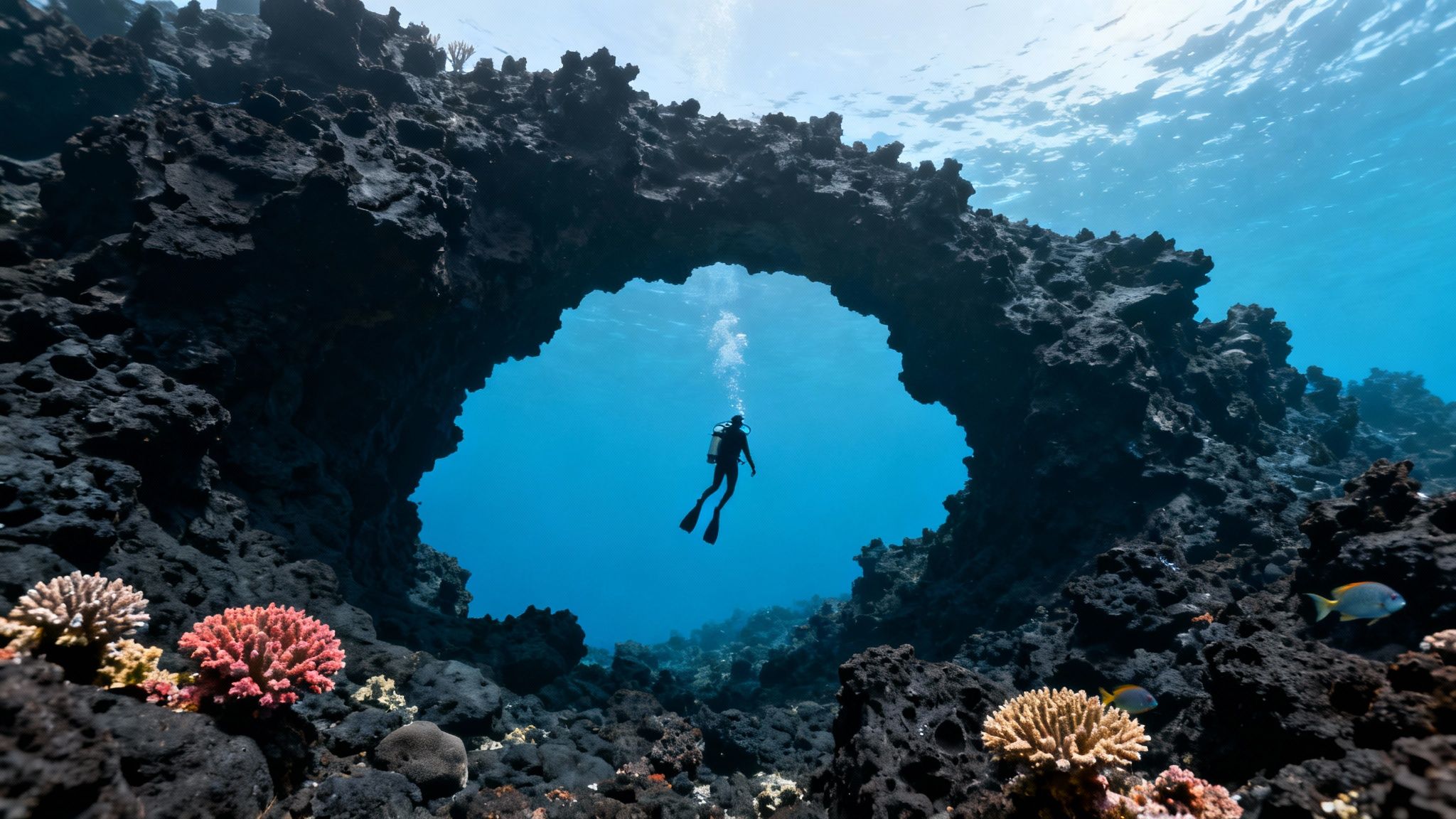
The Big Island’s biggest draw is its living geology. Unlike the older, more eroded Hawaiian islands, this one is still being actively shaped by volcanoes. That constant creation process translates into a truly spectacular and rugged seascape for divers.
You'll find yourself navigating massive archways, exploring intricate lava tube systems, and gliding along steep drop-offs that plunge into the deep blue. This dramatic topography just happens to be the perfect foundation for an incredible array of marine life to thrive.
A Sanctuary for Unique Marine Life
The volcanic coast of Kona acts like a magnet for biodiversity. The island's unique position in the Pacific, combined with its underwater structures, has created a haven for countless species. From the world-famous manta rays performing their nightly ballet to the colorful reef fish found only in Hawaiian waters, every single dive promises a new discovery.
There's a reason the Big Island is a global hotspot for diving, hosting a huge portion of the over 1.5 million dives that happen in Hawaii every year. The bustling dive community here is proof of the island's premier status. You can learn more about Hawaii's dive scene by exploring these insights.
The real magic of diving here is the contrast. The dark, imposing volcanic rock creates a stunning backdrop for the explosion of color from the coral reefs and the vibrant fish that call them home. It’s a visual that stays with you long after you surface.
Guided Exploration with Experts
Navigating this exceptional underwater world is one thing, but truly experiencing its secrets is best done with a local guide. A top-rated operator like Kona Honu Divers can lead you to the most spectacular sites, ensuring your adventure is both safe and completely unforgettable. Their experienced crew lives and breathes these waters, understanding the local conditions and marine life in a way that turns a good dive into an extraordinary one.
With a team dedicated to showcasing the very best of Kona's underwater treasures, you know you’re in good hands. Ready to explore the volcanic wonderland beneath the waves? Check out Kona Honu Divers' diving tours page to find the perfect trip for you.
Exploring the Top Big Island Dive Sites
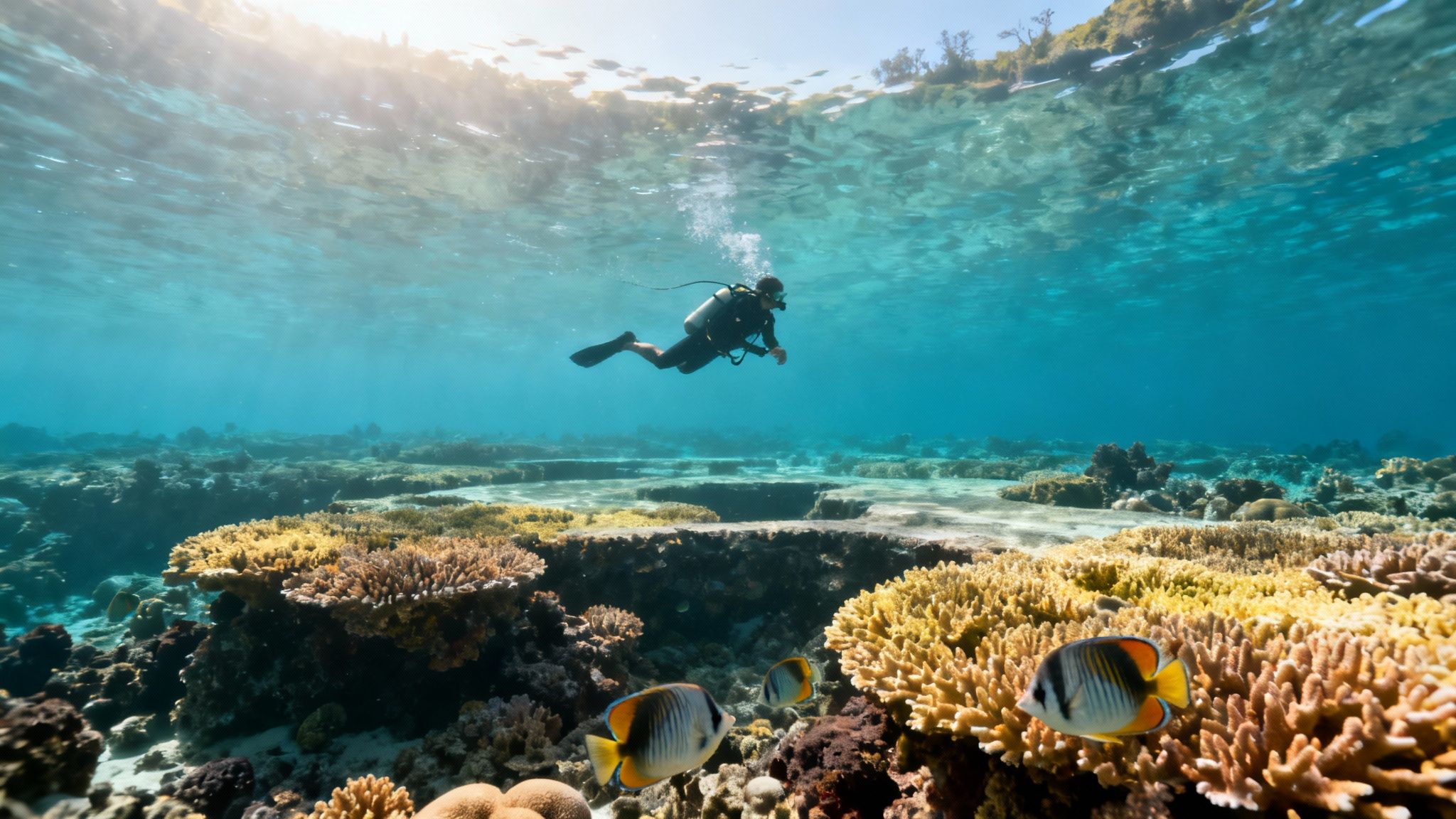
The Kona coast is a diver's dream. It’s a place where the underwater world offers something for everyone, no matter your experience level. You’ve got calm, sun-drenched reefs that are perfect for your first few dives, and then you have dramatic volcanic landscapes that will keep even the most seasoned diver on their fins. Honestly, figuring out where to dive is half the adventure.
What makes scuba diving on the Big Island of Hawaii so incredible is this sheer variety. One morning you could be floating peacefully in a bay with a pod of spinner dolphins, and the very next day find yourself exploring an ancient, submerged lava tube. So, let's dive into some of the must-see spots that absolutely have to be on your list.
Kealakekua Bay: A Protected Sanctuary
You can't talk about Big Island diving without starting with Kealakekua Bay. This isn't just another spot to get wet; it's a historically vital Marine Life Conservation District, home to the Captain Cook Monument. The bay’s historical weight and phenomenal diving conditions make it a true bucket-list destination for divers from all over the globe.
Because it's a protected marine sanctuary, activities like fishing are off-limits, which has allowed the ecosystem to absolutely flourish. The result? Water so clear that visibility often shoots past 100 feet. This lets you soak in the view of healthy hard and soft corals teeming with life, from huge schools of reef fish to the occasional pelagic visitor cruising by.
Two Step: Calm Waters and Abundant Life
If you're new to diving or just want a relaxing, shallow day in the water, Honaunau Bay—better known as Two Step—is pure magic. It gets its nickname from the two natural lava rock "steps" that make getting in and out of the water a breeze. Think of it as a vibrant underwater nursery.
The bay is wonderfully calm and protected, with depths sitting comfortably between 15 to 40 feet. It’s the perfect place to dial in your buoyancy control while being completely surrounded by an incredible amount of marine life. You're almost guaranteed to see:
- Green Sea Turtles (Honu): You'll often find them munching on algae or just chilling on the sandy bottom.
- Spinner Dolphins: Pods of dolphins are frequent visitors, using the bay to rest and play. They put on an amazing show during a surface interval.
- Vibrant Reef Fish: Prepare for clouds of parrotfish, yellow tangs, and butterflyfish.
Two Step is living proof that you don't need to go deep to have an unbelievable dive. The sheer density of life in the shallows here is astounding and a fantastic opportunity for underwater photographers.
Top Kona Dive Sites at a Glance
With so many incredible options, it can be tough to decide where to go. This quick guide should help you match a dive site to the kind of underwater adventure you're looking for.
| Dive Site | Best For | Max Depth | Key Features |
|---|---|---|---|
| Kealakekua Bay | All levels, photographers | 100+ ft | Pristine coral, amazing visibility, dolphins |
| Two Step | Beginners, snorkelers | 40 ft | Easy entry, calm water, turtles, shallow reef |
| Golden Arches | Intermediate divers | 60 ft | Lava tubes, arches, swim-throughs |
| Au Au Crater | Advanced divers | 130+ ft | Pinnacle dive, strong currents, large pelagics |
Each site offers a unique window into the Big Island’s underwater world. It's really just a matter of picking which one calls to you first!
Golden Arches: For the Adventurous Diver
Ready for something a bit more complex? For divers with a few more logged dives, Golden Arches delivers a thrilling underwater playground born from the island's volcanic past. This site is located a bit further north along the Kona coast and is well worth the trip.
The star of the show is a massive lava arch you can swim right through—it creates an unforgettable silhouette as the sunlight streams down from above. The topography here is rugged and full of swim-throughs, small caverns, and ledges where all sorts of critters love to hide out. It's a great spot to find moray eels peeking out, octopuses camouflaged against the rock, and sometimes even white-tip reef sharks napping on the seafloor.
Advanced Diving Opportunities
While Kona has plenty of sites for everyone, it also holds some real gems for advanced divers looking for a challenge. These spots often mean dealing with stronger currents, deeper drop-offs, or more technical navigation, but the payoff is always worth it.
Sites like Au Au Crater (also known as Turtle Pinnacle) and other offshore pinnacles act like magnets for bigger marine life, attracting huge schools of jacks and sometimes even sharks. Pulling off these dives requires solid planning and execution. If you're certified and craving that next-level adventure, you can learn more about these incredible sites in our comprehensive guide to Big Island diving.
Experiencing Hawaii’s Most Iconic Night Dives
When the sun finally dips below the horizon on the Kona coast, the ocean doesn't go to sleep—it comes alive. A whole new world awakens, setting the stage for two of the most unforgettable dives you'll ever experience. For many of us, scuba diving on the Big Island of Hawaii is defined by these incredible after-dark adventures.
It’s your chance to see marine behaviors that are completely hidden during the day. The familiar reefs and open water transform into a mysterious new frontier. These aren’t just regular dives; they are world-famous aquatic events that pull in divers and ocean lovers from all corners of the globe.
The World-Famous Manta Ray Night Dive
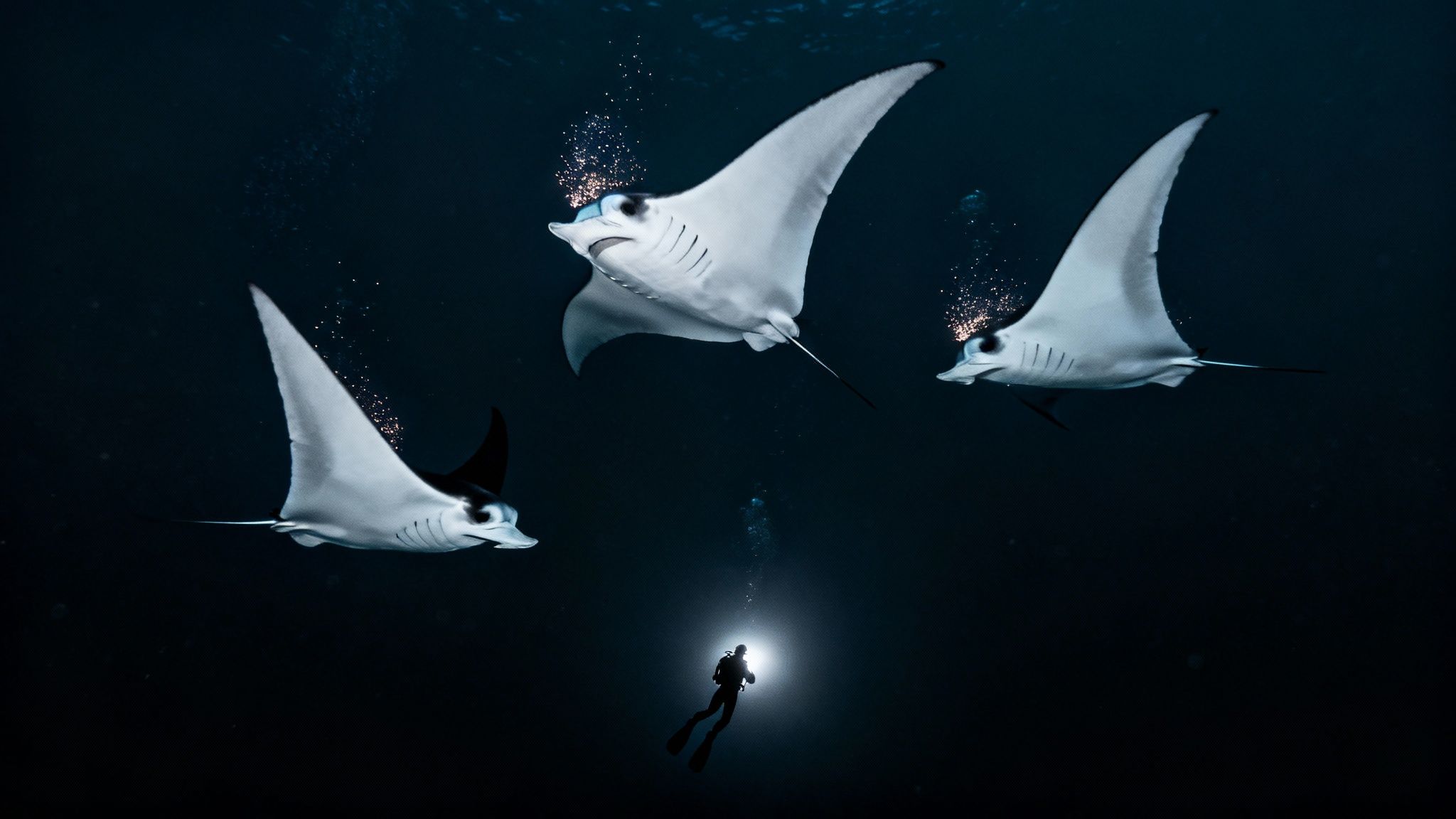
Picture this: you're kneeling on the sandy ocean floor in the quiet darkness, your dive light aimed straight up. Then, out of the black, a massive, graceful shadow with a wingspan of over 12 feet soars into the light. This is the Kona Manta Ray Night Dive, and it’s nothing short of an underwater ballet.
The idea behind it is pure genius. Dive operators set up powerful lights on the seafloor, which attract clouds of plankton—the manta rays' favorite meal. Before you know it, the gentle giants arrive for dinner, performing effortless barrel rolls and somersaults right over your head. It’s an incredibly close and personal encounter that will stick with you forever. When people talk about Hawaii's iconic night dives, the epic Manta Ray dive adventure in Kona is always at the top of the list.
And this isn't some hit-or-miss attraction. It's a remarkably reliable natural wonder. Dive operators report successful manta sightings on about 85-90% of their trips, with groups ranging from a few rays to more than a dozen. It’s a true bucket-list adventure you can count on. If you're ready to experience it, you can book a manta ray dive tour with local experts.
The Kona Black Water Dive
Ready for something completely different? For certified advanced divers craving a truly wild, almost surreal experience, the Kona Black Water Dive is the ultimate challenge. This isn't a reef dive. Far from it. Your boat takes you miles offshore, over thousands of feet of inky black water. You’ll be tethered to the boat, suspended and drifting in the deep, open ocean.
Your dive light is the only thing piercing the darkness. It’s here, in the middle of nowhere, that you witness the largest migration on Earth—the nightly journey of deep-sea creatures moving toward the surface to feed.
The Black Water Dive feels like floating through outer space. You'll witness bizarre and beautiful bioluminescent creatures that are rarely, if ever, seen during the day. It’s a glimpse into the mysterious world of the deep ocean that few people ever get to experience.
You’ll see an incredible cast of pelagic characters float by, including:
- Larval Creatures: Spot the tiny, translucent baby versions of octopus, lobster, and all sorts of fish. They look completely alien.
- Bioluminescent Jellies: Pulsating and glowing siphonophores and ctenophores drift past like living light shows.
- Strange Pelagic Life: Keep your eyes peeled for other deep-water oddities that make their way up from the abyss under the cover of night.
This dive demands excellent buoyancy and a real comfort with being in the dark. It's a genuine adventure that rewards experienced divers with a profound sense of connection to the vastness of the ocean. You can find out more about booking a Blackwater Dive tour and see our guide to scuba diving at night.
Discovering the Rich Marine Life of Hawaii
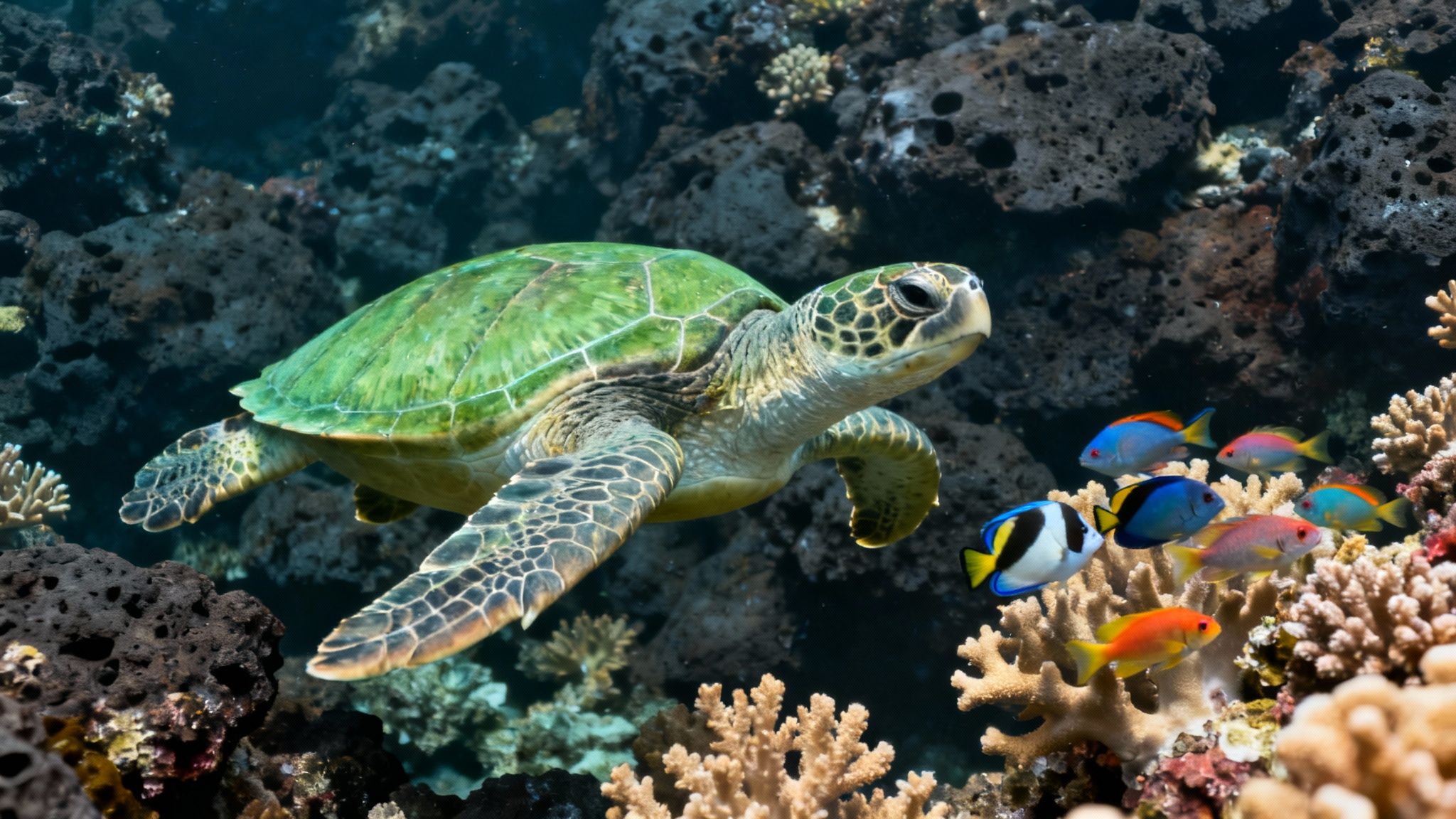
While the volcanic terrain gives scuba diving on the Big Island of Hawaii its dramatic backdrop, it's the sheer diversity of marine life that truly steals the show. Slipping beneath the surface here is like opening a living, breathing field guide where every dive introduces a whole new cast of characters.
But instead of just rattling off a list of species, let's look at the underwater community and the roles each creature plays. Knowing what to look for—and where—transforms your dive from a simple sightseeing trip into a genuine exploration.
The Reef Residents
Think of these as the ever-present locals, the animals that call the coral gardens and lava rock crevices home. They’re the heart and soul of the reef, providing constant color and movement on just about every Kona dive. You can't miss them.
You’ll spot this crew everywhere, from the calm, shallow waters of Two Step to the intricate structures at Golden Arches. Be on the lookout for:
- Butterflyfish (Chaetodontidae): With more than 20 species flitting about in Hawaiian waters, their vibrant yellow, black, and white patterns are a constant, cheerful presence.
- Moray Eels (Muraenidae): You'll often see them poking their heads out of holes in the reef. They look a bit intimidating, but they’re actually quite shy and more curious than anything else.
- Parrotfish (Uhu): The sound of them crunching on coral is the official soundtrack of the Hawaiian reef. Their powerful beaks are responsible for creating a lot of the fine white sand you see on the beaches.
The Gentle Giants
While the smaller reef fish provide the daily hustle and bustle, it’s the bigger, more majestic animals that create those heart-pounding, unforgettable moments. These encounters are a major highlight for anyone diving the Big Island, and thankfully, they happen all the time.
These larger creatures are often spotted cruising in the deep blue or resting in sheltered spots like Kealakekua Bay. Of course, the most iconic of all are the Hawaiian Green Sea Turtles, or Honu.
In Hawaiian culture, the Honu is a symbol of good luck and long life. There’s something profoundly calming about watching one glide effortlessly through the water or rest peacefully on the ocean floor. It’s an experience that connects you right to the spirit of the islands.
You'll often find them at "cleaning stations," where small fish helpfully nibble algae off their shells. Another gentle giant, the humpback whale, makes its presence known from December to April. While seeing one underwater is incredibly rare, hearing their hauntingly beautiful songs echo through the water during a dive is an experience you will never, ever forget.
Rare Treasures and Endemic Species
This last group is for the rare, the elusive, and the uniquely Hawaiian. Spotting one of these creatures takes a bit of luck and a sharp eye, which makes the moment all the more special. In fact, about 25% of Hawaii's reef fish are endemic, meaning you won't find them anywhere else on Earth.
One of the most prized sightings is the Hawaiian Monk Seal. As one of the most endangered seal species on the planet, seeing one lounging on a secluded beach or swimming gracefully past you is an incredible privilege.
Other rare treasures include the Frogfish, a true master of camouflage. They blend in so perfectly with the surrounding sponges and coral that they're almost impossible to spot. Finding one is a real badge of honor for any diver. It's these special encounters that make every dive a unique adventure, reminding you just how precious this underwater paradise really is.
How to Choose the Best Dive Operator in Kona
Picking the right guide for your scuba diving Big Island Hawaii adventure is probably the single most important decision you'll make for your trip. The right operator doesn’t just shuttle you to a dive site; they shape your entire experience, making sure you feel safe, comfortable, and absolutely thrilled from the moment you step on the boat. A great dive shop can easily turn a good trip into a legendary one.
When you're looking at your options, try to think beyond just the price tag. The best operators all share a few key qualities that show they're serious about what they do. These are the things that let you know you’re in good hands, so you can just relax and soak in the incredible underwater world.
What to Look For in a Kona Dive Shop
Before you put down a deposit, it pays to do a little digging. A few key details can help you tell a world-class operation from one that just gets by. Keep these points in mind while you're comparing shops:
- A Spotless Safety Record: This is non-negotiable. Look for shops with a long-standing reputation for safety, experienced divemasters who know their stuff, and equipment that's clearly well-maintained. A thorough, professional safety briefing is always a good sign.
- Comfortable, Well-Maintained Boats: You'll spend a good chunk of your day on the boat, so this matters. Are the boats spacious? Is there shade, a marine head (toilet), and an easy way to get in and out of the water?
- Small Group Sizes: This is huge. Smaller groups mean more one-on-one attention from your guide, less bumping into other divers underwater, and a much more personal encounter with the marine life. It truly makes all the difference.
- Experienced Local Guides: There's no substitute for experience. Guides who have been diving Kona's waters for years have a deep, instinctual knowledge of the area. They know the secret spots, can predict animal behavior, and will point out amazing creatures you’d swim right past otherwise.
For an even deeper dive into this topic, check out our guide on how to choose a Kona dive shop. It’s packed with more tips to help you make a confident choice.
Why We Think Kona Honu Divers Stands Out
While Kona has many great options, Kona Honu Divers consistently raises the bar. Their whole philosophy revolves around providing a top-tier, personal experience that feels less like a tour and more like an adventure with friends. They are especially well-known for keeping their group sizes small, which ensures every diver gets the attention they deserve.
What’s more, their commitment to the ocean is part of their DNA. As a recipient of the prestigious PADI Green Star Award, Kona Honu Divers is actively involved in local conservation. They champion responsible diving practices to help protect Hawaii's beautiful but fragile marine ecosystems for years to come. When you dive with them, you know you're supporting a business that actively gives back to the very reefs you're there to see.
But don't just take our word for it. Here’s what other divers are saying.
Other Highly-Regarded Kona Operators
The Kona coast is home to several fantastic dive shops, and the dive community here is strong. To help with your research, here is some authentic feedback for other well-regarded operators in the area.
A thriving dive community benefits everyone. When multiple operators uphold high standards of safety and environmental stewardship, it protects the reefs and ensures every visitor has an exceptional experience, strengthening Kona's reputation as a world-class diving destination.
Jack's Diving Locker
A true institution in the Kona dive community, Jack's has been around for ages and is well-known for its comprehensive training programs and a wide variety of tours.
Big Island Divers
Another top-rated choice, Big Island Divers consistently gets praise for its friendly, welcoming crew and its dedication to creating fun, memorable dives for people of all skill levels.
Ultimately, taking a little time to read reviews and understand what each shop specializes in will empower you to book your dives with total confidence. It's the best way to ensure your underwater adventure in Hawaii is everything you dreamed it would be.
Practical Tips for Planning Your Dive Trip
Alright, the excitement is building for your scuba diving Big Island Hawaii adventure! Let's dial in a few practical details to make sure the trip goes off without a hitch. A little bit of planning upfront is what separates a good trip from a truly incredible one, letting you just relax and soak in the underwater magic.
First thing to consider is timing. Honestly, the Big Island offers spectacular diving all year long, but each season has its own unique vibe. Summer is your ticket to the calmest seas and warmest water, often hitting a balmy 80°F (27°C). It's perfect for those long, chill dives. Winter, on the other hand, brings a massive bonus: it’s humpback whale season. There is nothing quite like hearing whale song echo through the water while you’re on a dive—it's an experience that will stick with you forever.
Packing and Safety Essentials
Figuring out what to pack can make or break your comfort level. While you can always rent excellent gear on the island, most divers I know prefer to bring personal items like their own mask and dive computer. They just fit better. As for wetsuits, a 3mm is usually spot-on for the warm summer months. If you're coming in the winter, you might appreciate the extra warmth of a 5mm.
Safety is non-negotiable on any dive trip. I can't stress this enough: double-check that you have dive insurance. It’s not just a suggestion; it’s a critical piece of your prep that gives you peace of mind to fully enjoy the adventure.
Beyond the big gear items, don't forget these essentials:
- Reef-Safe Sunscreen: This is a big one. Protect yourself and the fragile coral by only using a mineral-based sunscreen.
- Hydration: Diving can be dehydrating. Always have a reusable water bottle handy and keep sipping throughout the day.
- Logbook and Certification Cards: You'll need these! Dive operators will definitely need to verify your certification level before you hit the water.
Diving with Respect
Finally, remember that every time we dive, we're visitors in a delicate and beautiful world. The best thing you can do for the reef is to practice impeccable buoyancy control. This prevents you from accidentally kicking or touching the ancient coral formations. When you're a mindful, responsible diver, you're doing your part to keep Kona’s reefs stunning for the next generation.
And for those divers looking to fully immerse themselves for several days, exploring different options like liveaboard diving experiences can open up a whole new way to see the ocean.
Once your bags are packed and you’ve got safety squared away, you're all set for the dive of a lifetime.
Your Big Island Diving Questions, Answered
Planning a dive trip always comes with questions. Here are the answers to some of the most common ones we hear from divers getting ready for their Big Island adventure.
What’s The Best Time of Year to Dive on The Big Island?
Honestly, there’s no bad time to dive here—the Big Island is a year-round destination. That said, the seasons do offer slightly different experiences.
If you love calm, glassy seas and water that feels like a warm bath, aim for the summer months between May and October. Water temperatures hover around a balmy 80°F (27°C). But if you visit in the winter, from November to April, you get a different kind of magic. The water dips slightly to about 75°F (24°C), but you'll be treated to the incredible underwater symphony of humpback whale songs during your dives.
Can Beginners Do The Manta Ray Night Dive?
Yes, absolutely! This is one of the most accessible and unforgettable dives on the planet, and you don’t need to be an expert to experience it.
Most operators have a system where you hold onto a stationary light rig on the seafloor. You’ll be in a relatively shallow spot, usually around 30-40 feet, so you can just relax and watch the show without worrying about perfect buoyancy.
The whole manta ray experience is set up to be incredibly safe and controlled. It lets you focus on one thing: watching these gentle giants glide and somersault just inches from your face. It's truly a bucket-list dive for everyone.
Do I Need an Advanced Certification for Any of The Dives?
For some of the more unique dives, yes. A great example is the Kona Black Water Dive. It’s an otherworldly experience, but it’s considered an advanced dive for good reason.
You're tethered to a boat in the pitch black, drifting over thousands of feet of open ocean. Dive operators require an Advanced Open Water certification to ensure you have solid buoyancy skills and are comfortable in such a unique environment. If you’re an experienced diver looking for that next-level adventure, check out some of the options on this advanced dive tour page.
Should I Bother Bringing My Own Gear, or Just Rent?
This really boils down to personal comfort and convenience. A lot of divers won't travel without their own mask, fins, and computer—and I get it. There's nothing like the familiar fit and function of your own kit.
On the other hand, renting can make travel a whole lot easier by saving you luggage space and avoiding those hefty airline baggage fees. Reputable shops like Kona Honu Divers keep their rental gear in top-notch condition, so you know you'll be diving with quality equipment.