
Picture this: you're descending into the warm, turquoise waters off the Kona coast. Below you, ancient lava flows have created a dramatic underwater landscape, now home to some of the most vibrant coral reefs you'll ever see. This is what scuba diving on the Big Island is all about—a world-class destination that truly has something for every diver.
From the almost spiritual Manta Ray Night Dive to the deep-ocean thrill of a Blackwater dive, this place offers underwater experiences that belong on every diver's bucket list.
Your Unforgettable Scuba Big Island Adventure Begins Here
Think of this guide as your personal roadmap to exploring Hawaii's underwater paradise. We’ll pull back the curtain on Kona’s world-famous dive conditions and show you exactly what adventures are waiting just beneath the surface. You'll quickly see why this volcanic island creates a diving environment that’s unlike anywhere else on the planet.
We'll also introduce you to the crew at Kona Honu Divers—the local experts who make sure every trip is safe, smooth, and absolutely unforgettable. But don't just take our word for it; see what other divers have to say about their time with the team.
Ready to plan the dive trip of a lifetime? Before we dive deep into the details, here’s a quick look at the must-do dives that put the Big Island on the map.
Top Scuba Experiences on The Big Island
A quick look at the must-do dives that make the Big Island a world-class scuba destination.
| Dive Experience | What Makes It Special | Best For |
|---|---|---|
| Manta Ray Night Dive | An otherworldly ballet with giant, gentle mantas feeding in beams of light. | All divers and snorkelers. |
| Kona Blackwater Dive | A "spacewalk" in the deep ocean, witnessing bizarre bioluminescent life. | Adventurous, experienced divers. |
| Reef & Lava Tube Dives | Exploring vibrant coral gardens and unique volcanic underwater topography. | All skill levels. |
Whether you're about to take your first breaths underwater or you're a seasoned pro looking for your next big thrill, the Big Island delivers. For a full rundown of the amazing trips available, you can explore all diving tours in Kona and find your perfect adventure.
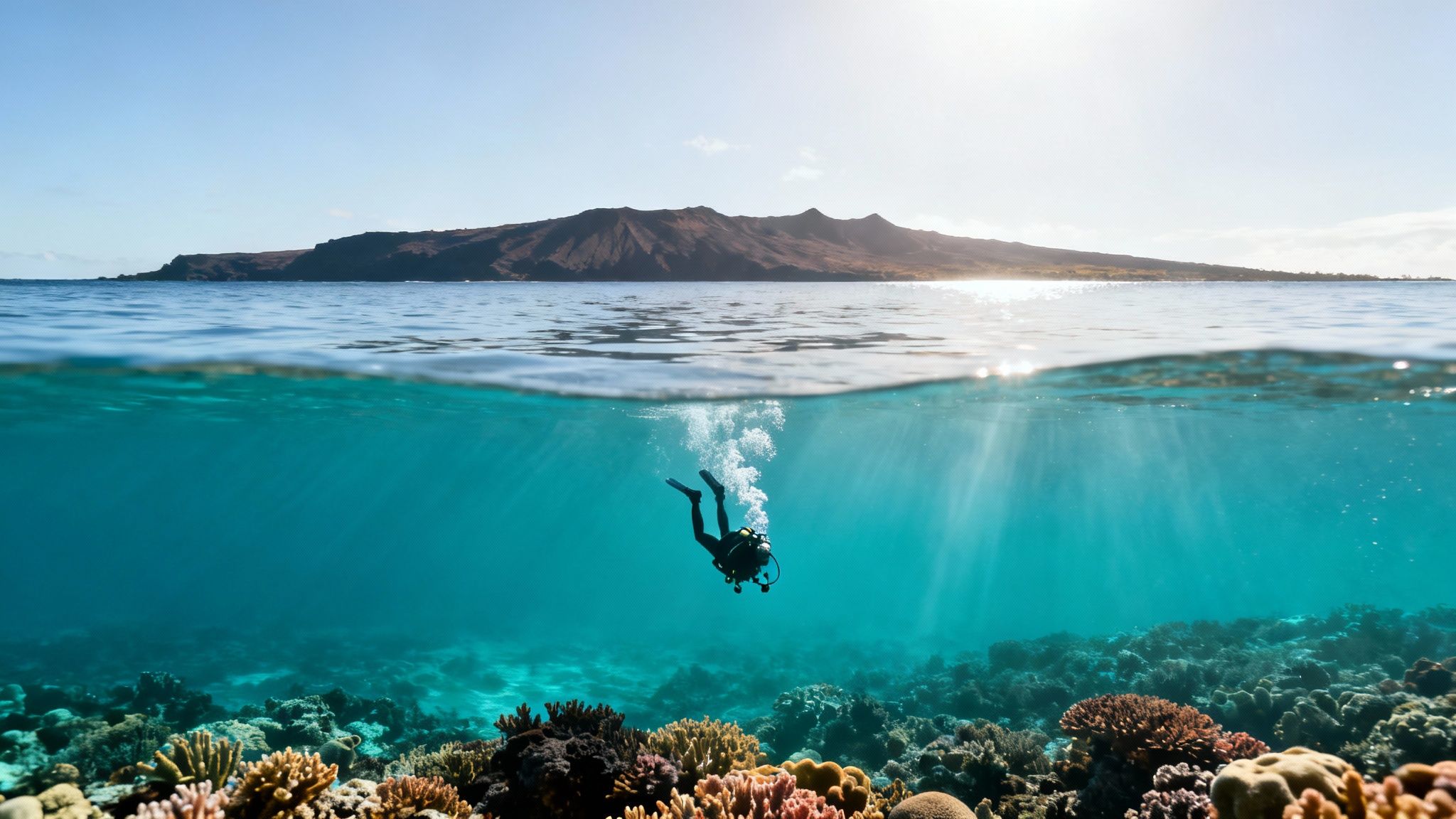
Why Kona Is The Epicenter Of Big Island Diving
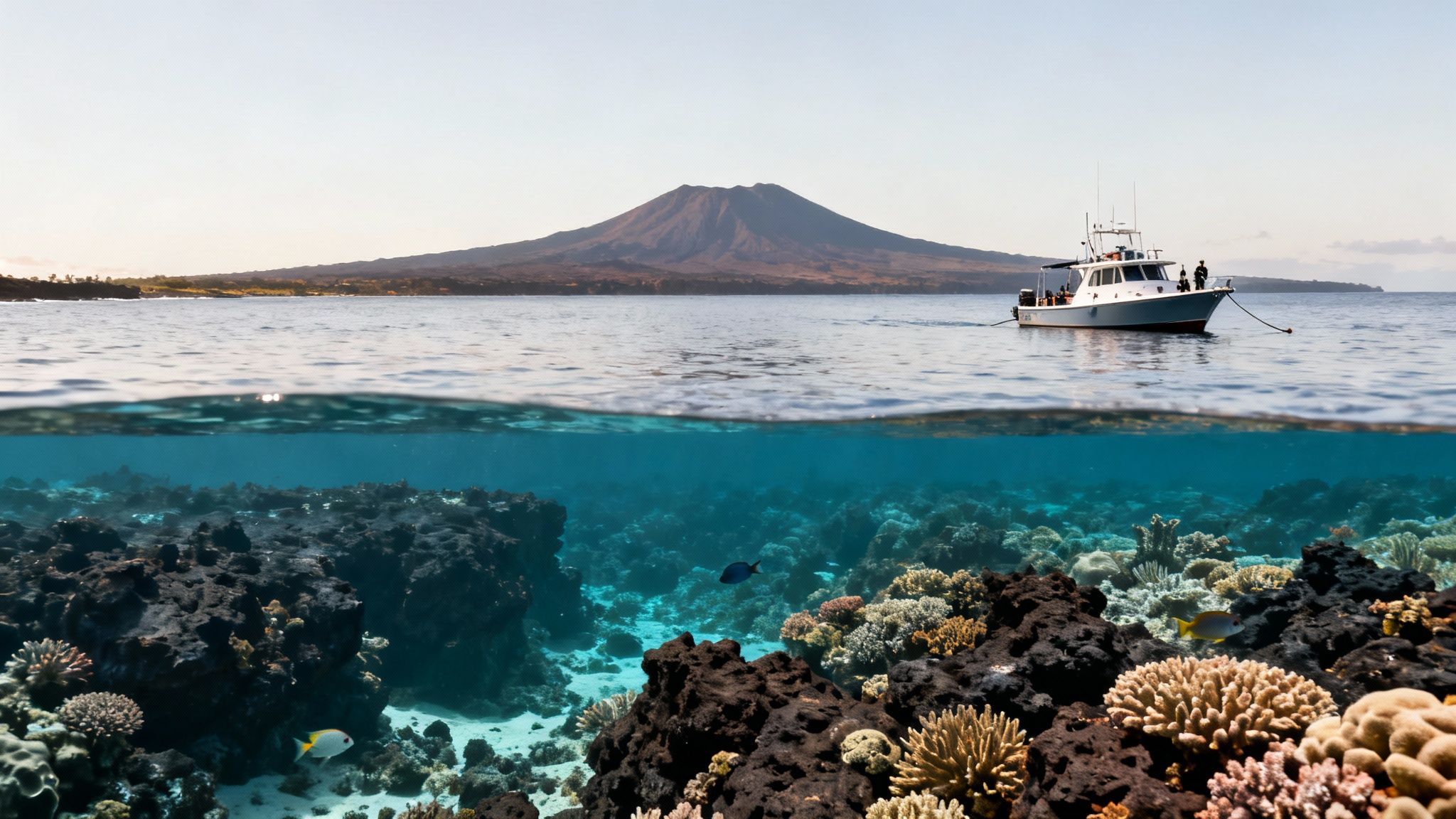
When divers dream about the ultimate scuba Big Island trip, their minds almost always land on one place: the Kona coast. That's no accident. The island's western shoreline is a diver's paradise, blessed by a perfect storm of geology and biology that creates some of the best underwater conditions you'll find anywhere.
It all starts with the island’s massive volcanoes, Mauna Loa and Hualalai. These giants act as a natural wall, shielding the coast from the powerful trade winds that batter other parts of Hawaii. What does that mean for you? Exceptionally calm, clear water, year-round. It makes every dive feel like you're floating through a vast, peaceful aquarium.
This sheltered environment allows an incredible variety of marine life to thrive. The Kona coast is a true biodiversity hotspot, a place where you can witness a vibrant underwater world that’s as unique as it is breathtaking.
A World of Endemic Marine Life
What really makes Kona stand out is its staggering concentration of endemic species. More than 20% of the fish you'll see here exist nowhere else on Earth. That means every single dive offers a genuine chance to encounter something truly special, from the flashy ornate butterflyfish to the shy masked angelfish. This exceptional biodiversity is a huge part of what makes diving in Kona so unique.
The underwater terrain is just as mesmerizing as the animals that call it home. Thousands of years of volcanic activity have carved out a dramatic subaquatic landscape you just have to see to believe. You'll get to explore:
- Intricate Lava Tubes: Imagine swimming through ancient tunnels forged by molten rock, now serving as quiet resting spots for sharks and crustaceans.
- Dramatic Arches and Pinnacles: You can navigate around stunning volcanic formations that shoot up from the ocean floor, creating complex cities for reef fish.
- Sprawling Coral Gardens: Get ready to glide over vast, healthy coral reefs that are just bursting with color and life.
To truly experience this intricate world, you need local knowledge. A great guide doesn't just point to a reef; they show you its secrets, leading you to the hidden spots that make a dive unforgettable.
The Kona Honu Divers Advantage
To really get the most out of what Kona has to offer, you need a team that knows these waters like the back of their hand. At Kona Honu Divers, our crew brings over 200 years of combined experience to every trip. We're intimately familiar with the 40+ distinct dive sites along this coast, and we know the currents, the wildlife patterns, and the can’t-miss features of each one.
Our boats aren't just any boats, either. They're custom-built for Kona's specific conditions, guaranteeing a safe, comfortable, and stable ride out and back. Whether you’re a family looking for a gentle introduction to the ocean or an advanced diver hungry for a new challenge, our professional guidance is what turns a good dive into an incredible one. But don't just take our word for it—see what fellow divers are saying.
The Big Island, and the Kona coast in particular, is easily one of the world's top scuba destinations, with places like the Kealakekua Bay Marine Life Conservation District often topping the list. This protected sanctuary has unbelievably clear water, where visibility often pushes past 100 feet. It allows you to fully immerse yourself in vibrant reefs teeming with sea turtles and spinner dolphins. Because fishing is banned, the marine life has absolutely exploded, and citizen science projects like the REEF Volunteer Fish Survey Project have logged countless sightings here. This dedication to both conservation and exploration is what makes Kona a global standout.
Experiencing The World-Famous Manta Ray Night Dive
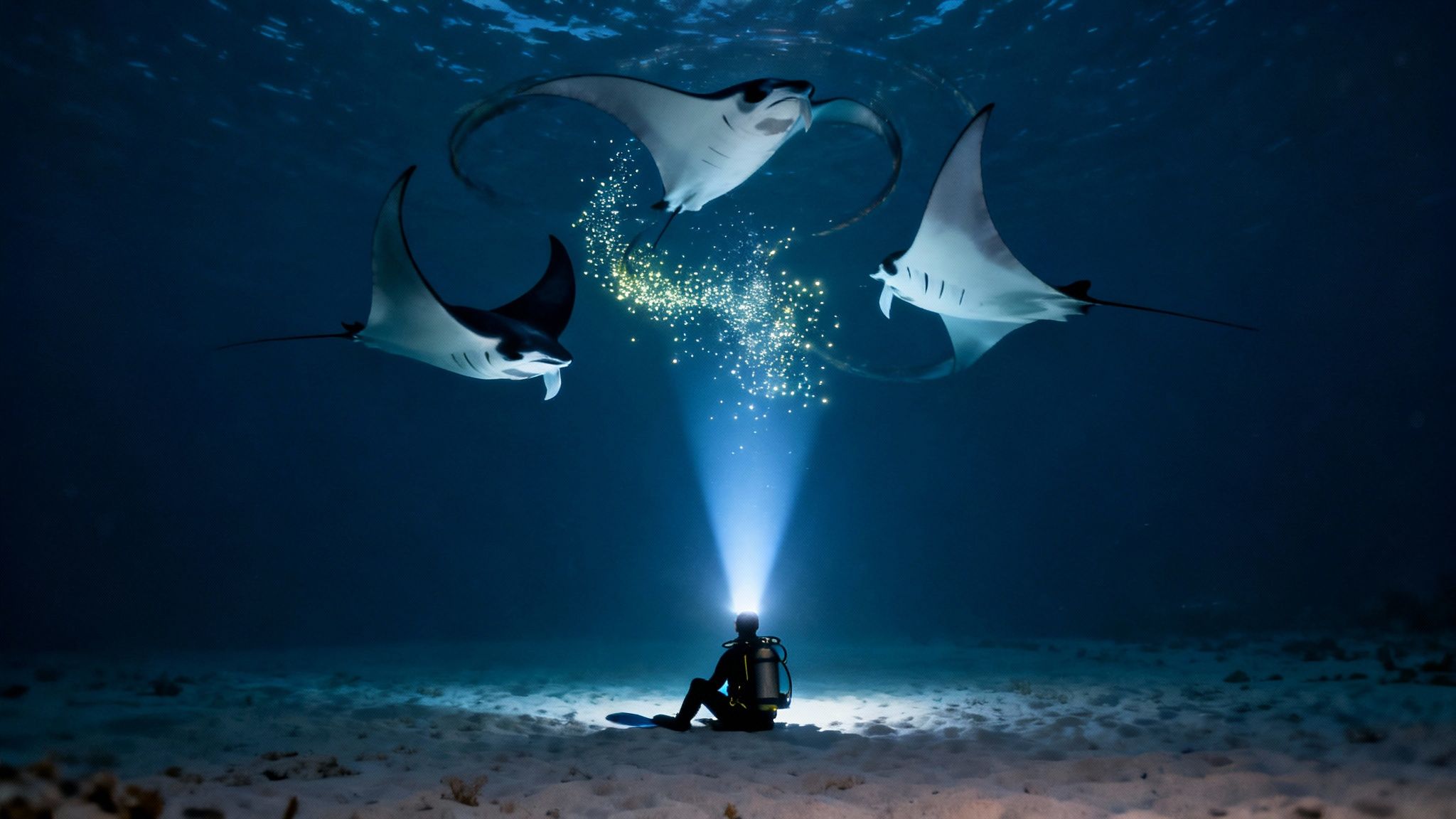
Some dives are unforgettable. Then there's the Manta Ray Night Dive—a completely different category of experience. This isn't just a highlight of a scuba Big Island trip; for many, it's a life-changing encounter with one of the ocean's most majestic and gentle giants.
The whole thing feels like a performance staged by nature itself. You descend into the ocean as twilight fades, the last rays of sun replaced by the bright beams of your group's dive lights. Once settled on the sandy seafloor, you'll point your lights straight up, creating what we call the "campfire." These columns of light are a dinner bell, attracting swarms of plankton.
And then, the stars of the show arrive. Emerging from the darkness, huge manta rays with wingspans that can stretch up to an incredible 16 feet glide into the light. They perform effortless, graceful barrel rolls just inches above your head, scooping up the plankton. It's a silent, mesmerizing ballet that feels both surreal and deeply moving.
Why Garden Eel Cove Is The Premier Choice
While a few spots host this world-famous dive, one location consistently delivers the best experience: Garden Eel Cove. Tucked away offshore from the Kona International Airport, this site is the superior choice for a dive tour because of its protected location, a better viewing area, and healthier reefs.
So, what makes it the go-to spot?
- Protected Location: The cove is naturally sheltered, which almost always means calmer seas. That translates to a smoother boat ride out and a more stable, comfortable time in the water.
- Better Viewing Area: The seafloor at Garden Eel Cove is shaped like a natural amphitheater. This layout allows us to position divers so everyone gets a front-row seat without getting in the mantas' way.
- Better Reefs: The reefs surrounding the "campfire" are vibrant and teeming with life, which adds another layer of beauty to the dive. A healthy ecosystem means a strong food chain, which is a big reason the mantas show up so consistently.
Choosing Garden Eel Cove isn't just about seeing the mantas; it's about seeing them in the best possible environment. Watching them maneuver through the water is often compared to seeing a stealth bomber in flight—an awesome, powerful, yet graceful sight you truly can't find anywhere else.
Kona's world-famous manta ray night dive is a bucket-list experience that draws divers from all over the globe, and for good reason. The average sighting success rate hovers between an incredible 85-90%. Imagine descending into inky black water, only to have massive reef mantas swoop in to feed on clouds of plankton, their mouths wide open like giant underwater vacuums.
This isn't just dumb luck. That high success rate is a direct result of the thriving local manta population. More than 300 individuals have been identified in the local aggregation, giving Kona one of the highest concentrations of reef mantas on the planet. We've had nights with over 30 mantas showing up! This reliable, wild encounter, guided safely and expertly by our team, is what makes this a must-do dive. You can book your own adventure on our manta ray dive tours page.
What To Expect On Your Manta Dive
Your adventure starts at the harbor, where you'll meet the crew and get a thorough briefing on the dive plan and proper "manta etiquette." The top priorities are always safety and respect for these amazing animals. The boat ride out to the site is often timed perfectly with a spectacular Kona sunset, setting the mood for the magic ahead.
Once you’re in the water, your only job is to be a passive observer. You’ll learn exactly why you should never touch a manta, as it can damage the protective mucous layer on their skin. Our professional guides manage every detail, so all you have to do is settle in, breathe, and enjoy the show. You can get a full rundown on what the trip involves by reading about our Manta Ray Night Swim experience.
Whether you’re a seasoned diver or a first-time snorkeler, this is an adventure you will be talking about for years to come. But don't just take our word for it—see what other divers are saying.
Exploring Dive Sites Beyond The Mantas
The Manta Ray Night Dive is legendary, and for good reason. But as incredible as it is, it's just the beginning of what scuba Big Island has to offer. Once you move past that incredible campfire of lights and gentle giants, a whole other world opens up, showcasing the full range of Kona's spectacular diving.
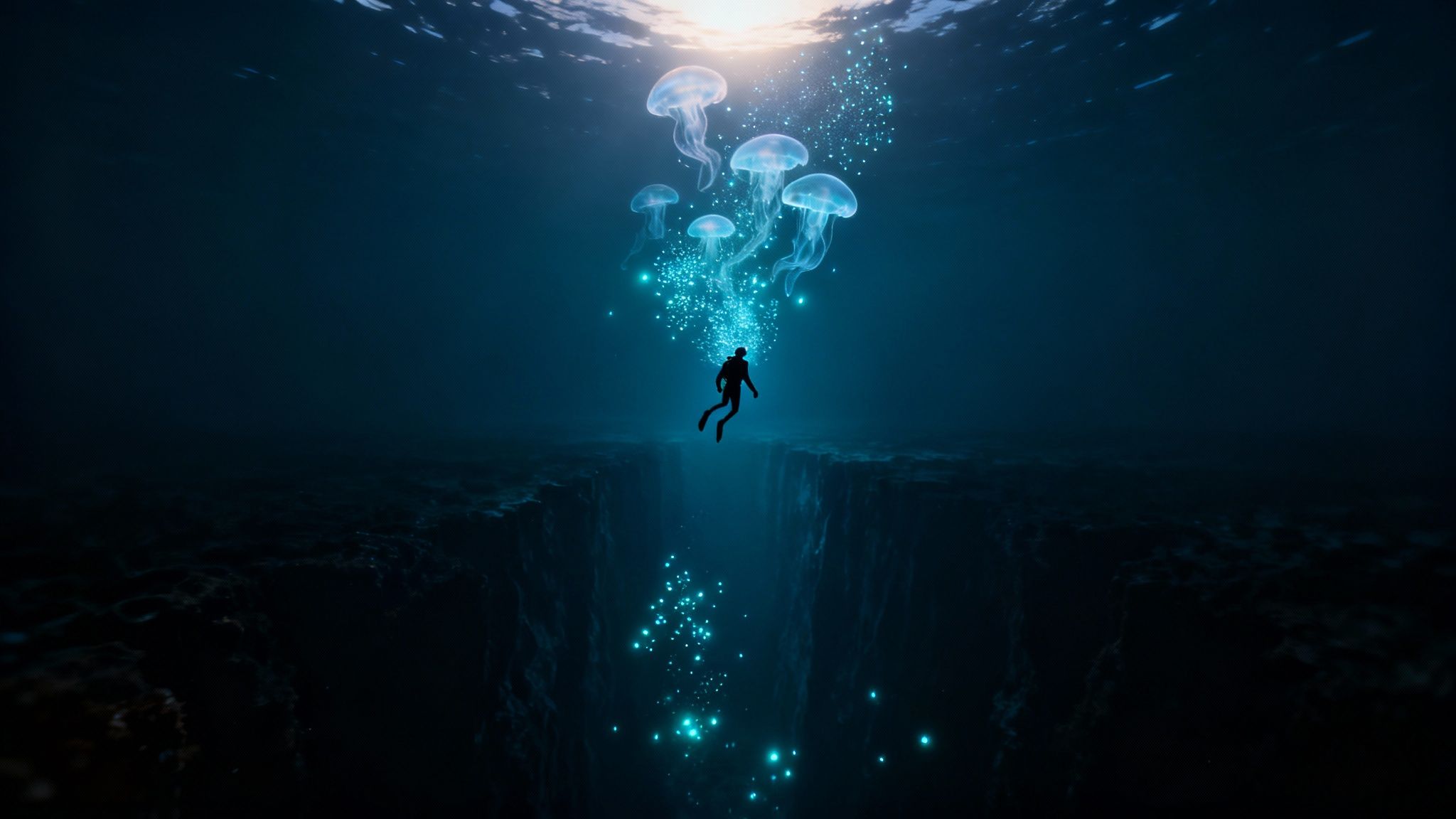
If you’re craving something truly different—something that borders on sci-fi—the Kona Blackwater Dive is it. This isn’t your typical night dive. We call it an "underwater spacewalk," where you drift tethered in the profound darkness over thousands of feet of open ocean.
What you're witnessing is the planet's largest daily migration, as bizarre and beautiful bioluminescent creatures rise from the abyss. You’ll come face-to-face with translucent larval fish, glowing squid, and alien-like siphonophores pulsing with their own internal light. It's a humbling, surreal experience that connects you with an ecosystem few will ever see. You can learn more about this one-of-a-kind experience on our Blackwater Dive tour page.
Lava Tubes and Vibrant Reefs
Back in the daylight, the Big Island’s volcanic DNA is on full display. The underwater terrain is a diver's playground, sculpted by ancient lava flows into a maze of unique structures.
You can spend days just exploring sites that feature:
- Pristine Coral Reefs: Glide over sprawling gardens of hard and soft corals that are absolutely teeming with life.
- Dramatic Lava Tubes: Swim through massive, hollowed-out tunnels where molten rock once flowed. Today, they're quiet sanctuaries for resting white-tip reef sharks and other critters.
- Ancient Volcanic Arches: Navigate through majestic arches and pinnacles that form stunning underwater cathedrals, with schools of fish swirling all around you.
On any given reef dive, you’ll likely spot green sea turtles (honu) snoozing on coral heads, spot moray eels peeking from their rocky homes, and get lost in massive schools of colorful fish. And with visibility that often pushes past 100 feet, the vibrant colors just pop.
Advanced Opportunities for Experienced Divers
Have a few more dives in your logbook? The Big Island has plenty to keep seasoned divers excited. The deep blue just off the Kona coast offers thrilling drift dives and sheer walls that drop off into the abyss.
These advanced sites are a chance to explore deeper environments where you might encounter larger pelagic species or unique geological formations. It's an opportunity to challenge yourself and experience a completely different side of the island's underwater personality. To see what challenges await, check out our advanced dive tour page.
The sheer variety is what makes the Big Island a world-class dive destination. In a single trip, you can experience the deep-sea oddities of a blackwater dive and then explore a sun-drenched coral garden, and you've still barely scratched the surface.
From the mantas to the deep and everything in between, the Big Island delivers. There’s an adventure waiting for every diver, no matter what you're into. You can see the full range of what's out there by exploring our complete guide to Big Island diving.
With so many incredible sites to choose from, the hardest part is deciding where to drop in first.
How To Plan Your Perfect Big Island Scuba Trip
Turning your dream of diving the Big Island into a reality is easier than you might think. With a little bit of smart planning, you can make sure every detail is dialed in, from picking the best time of year to booking the dives that get your pulse racing. Let’s walk through the steps to get you from daydreaming at your desk to descending into Kona’s incredible blue water.First things first: when should you come? The great news is that Kona’s leeward coast offers phenomenal, protected diving all year round. That said, there are some subtle differences between the seasons that might sway your decision.
- Summer (May-October): This is when you'll find the warmest water, often hitting a bath-like 80-82°F. The seas are typically at their calmest, making for glassy boat rides and super relaxing dives. If you love warm water and smooth sailing, summer is your sweet spot.
- Winter (November-April): The water cools down a bit, but it’s still a very comfortable 72-76°F. The real draw for the winter months? Humpback whales. They migrate here to breed and calve, and while you can't plan a sighting, hearing their otherworldly songs echo through the reef on a dive is a truly soul-stirring experience you'll never forget.
Choosing The Right Dive Operator
Once you have your dates penciled in, your next big decision is choosing who to dive with. Honestly, this can make or break your entire trip. You’re not just looking for a boat ride; you want a professional crew that puts safety above all else, maintains their gear meticulously, and genuinely cares about your experience.
This is where Kona Honu Divers really shines. We’re talking about a crew with over 200 years of combined experience in these exact waters. They know every lava tube and coral garden like the back of their hand. Plus, their boats are custom-built for Kona's conditions, which means a comfortable, stable ride out to the sites.
A top-tier operator offers perks that actually make a difference in your dive. For instance, Kona Honu Divers provides complimentary nitrox for certified divers. That means more bottom time and less fatigue—letting you squeeze every last drop of awesome out of your dives.
Another thing to look for is small group sizes. It’s the difference between feeling like a number and getting personalized attention from your guide. The focus on a better guest experience is something you'll see echoed time and again in reviews from fellow divers.
Packing For Your Dive Adventure
With your dives booked, it's time to think about what to throw in your bag. While you can always rent high-quality gear, most seasoned divers find that bringing a few key personal items makes everything more comfortable.
Here’s a quick-and-dirty packing list:
- Certification Cards: Don’t leave home without them! Bring your physical card and have a digital copy on your phone just in case.
- Logbook: You’ll want to remember every amazing fish and manta you see.
- Dive Computer & Mask: A mask that fits your face perfectly and a computer you know how to use are game-changers for comfort and safety.
- Swimwear & Reef-Safe Sunscreen: Help us protect our fragile coral reefs by choosing a sunscreen without oxybenzone and octinoxate.
- A Warm Layer: Even in paradise, it can get a little breezy on the boat. A simple hoodie or light jacket is perfect for surface intervals.
To see how you can bundle your dives and save, check out the different Hawaii scuba diving packages available and find the perfect fit for your itinerary.
Speaking of our reefs, the Big Island's diving community is a huge part of marine conservation. Divers here contribute valuable data to citizen science projects like the REEF Environmental Education Foundation. The project's massive 14 million sightings database is powered by surveys from everyday divers exploring Kona’s unique volcanic seascape. With nearly 18,000 participants globally, this effort helps scientists track the health of ecosystems that are home to over 200 fish species. You can learn more about how divers are making their observations count on REEF.org.
Booking Your Dives And Courses
Now for the fun part—locking it all in! It’s always a good idea to book your dives in advance, especially for world-famous trips like the Manta Ray Night Dive. The boats fill up fast, particularly during peak seasons.
Whether you're finally ready to get your Open Water certification or you’re an experienced diver looking to take an advanced course, planning ahead means you won’t miss out. The process is simple and ensures your spot on the boat is saved.
Your Big Island Scuba Questions, Answered
Got questions about diving the Big Island? You’re not alone. Here are the answers to some of the most common things we hear from divers getting ready to explore Kona’s legendary waters.What’s The Best Time of Year to Dive Kona?
Honestly, there’s no bad time. The Kona coast is a diver's dream year-round because the island's massive volcanoes act as a natural shield, blocking the trade winds and keeping the waters remarkably calm.
If you love warm water and glassy-flat seas, aim for the summer months from May to October. But if you're here in the winter (November to April), you're in for a different kind of treat: the chance to hear the haunting songs of humpback whales echoing through the water on your dive.
Do I Need to Be an Advanced Diver to Dive Here?
Absolutely not! Kona is fantastic for divers of all experience levels. We have dozens of beautiful, shallow reefs that are perfect for beginners, students getting certified, or anyone just looking for a relaxed, colorful dive.
But for the thrill-seekers, there's plenty to get your heart pumping. Advanced divers can explore dramatic deep walls, navigate ancient lava tubes, and even brave the famous Kona Blackwater Dive for a truly unique deep-ocean experience. Check out the advanced dive tours to see what's in store.
What Kind of Marine Life Will I See?
Kona is world-famous for its manta rays, and for good reason! But that's just the beginning. The biodiversity here is incredible.
On a typical day, you can expect to hang out with Hawaiian green sea turtles (honu), spot pods of playful spinner dolphins, and find moray eels and octopuses tucked into the reef. Add to that hundreds of species of tropical fish, and you've got a packed dive log. With a bit of luck, you might even cross paths with whale sharks, tiger sharks, or migrating humpback whales.
Should I Bother Bringing My Own Dive Gear?
That really comes down to personal comfort and preference. You're always welcome to bring your entire setup, but top-notch shops like Kona Honu Divers have high-quality rental gear that's professionally maintained. It can definitely save you the headache and baggage fees of lugging your own heavy equipment.
That said, nothing beats the comfort of your own gear. Most seasoned divers find that at the very least, bringing their own mask and dive computer makes a huge difference. Ready to pick your adventure? Browse all the diving tours in Kona and find the perfect fit.