
Picture this: you descend into warm, impossibly clear turquoise water, surrounded by ancient lava tubes that have become dramatic underwater canyons, just pulsing with life. This isn't just any dive spot—this is the Big Island, a truly world-class destination where raw volcanic landscapes crash into vibrant marine ecosystems.
It’s right here, along the Kona coast, that you’ll find some of the most unique and unforgettable underwater adventures anywhere on the planet.
Your Guide to Scuba Diving on the Big Island
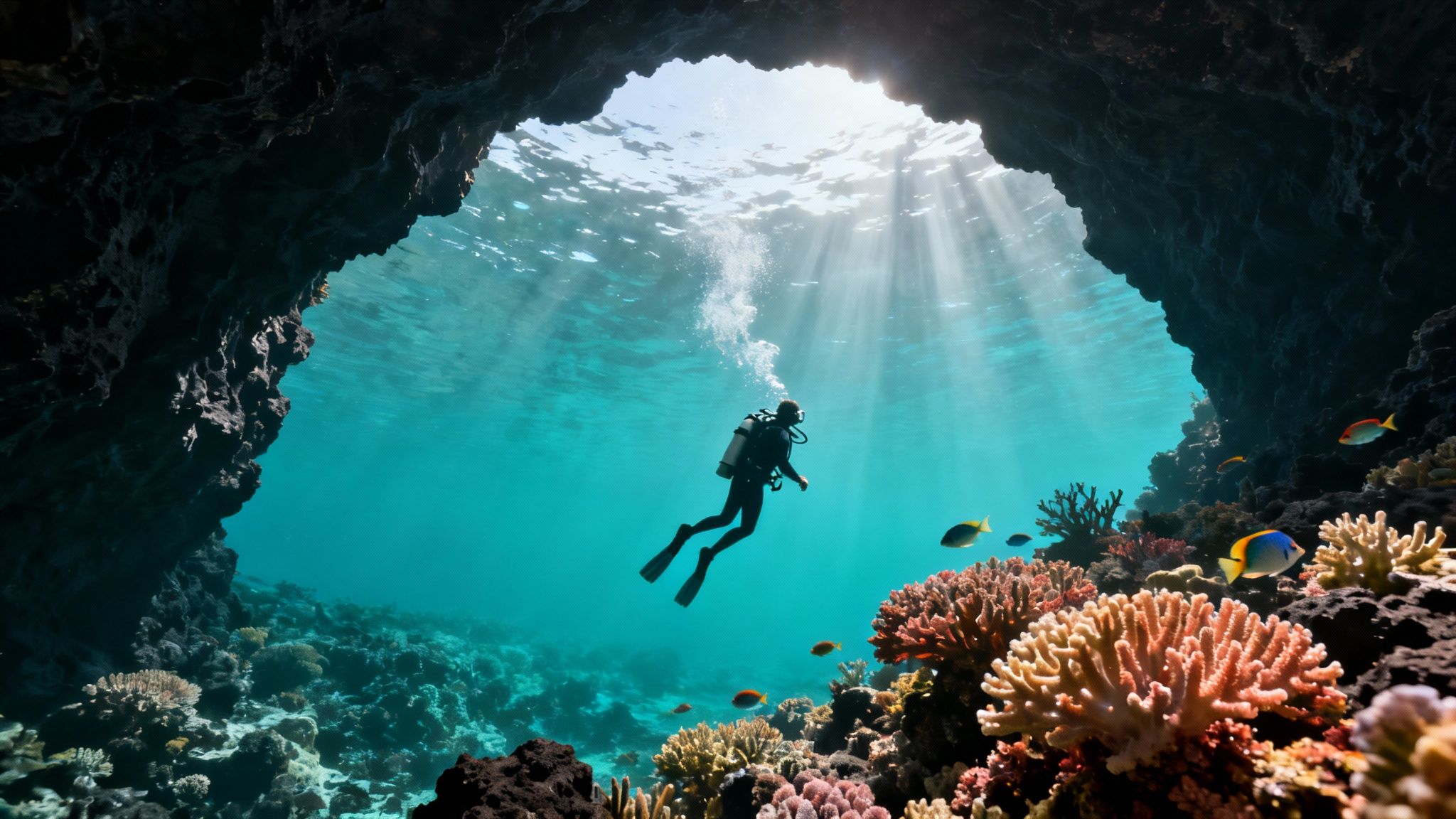
Think of this guide as your personal passport to an incredible adventure. What sets the Big Island apart from the other Hawaiian islands is its volcanic soul. This has sculpted a truly special underwater world, especially on the leeward side. The Kona district is naturally shielded from the powerful trade winds, which means we get consistently calm waters and absolutely stunning visibility that often pushes past 100 feet.
This unique geography sets the stage for a mind-blowing variety of underwater encounters. The topography alone is breathtaking, from navigating submerged arches and lava tubes to discovering pristine, untouched coral gardens. But what truly makes Kona a diver's paradise is the life that calls these structures home.
What Makes Kona Diving So Special
Diving here is so much more than a hobby; it’s a full-on immersion into a thriving, dynamic ecosystem. The Kona coast is famous for a few signature experiences you just won't find anywhere else.
- Legendary Encounters: Kona is home to the world-famous Manta Ray Night Dive, a surreal, silent ballet where you can watch majestic manta rays glide, loop, and feed just inches from your face.
- Unique Volcanic Features: The underwater landscape is a direct map of past volcanic activity. This gives us the chance to explore otherworldly lava tubes, massive swim-throughs, and dramatic rock formations that feel like another planet.
- Abundant Marine Life: Our healthy coral reefs support a dense, bustling population of tropical fish, green sea turtles (honu), and even resident pods of spinner dolphins.
This guide will show you exactly how Kona Honu Divers unlocks these incredible moments. We combine top-tier service, a deeply experienced crew, and awesome perks like free nitrox for certified divers to make your trip seamless and spectacular.
Whether you're a seasoned pro looking for your next big challenge or someone just taking their first breath underwater, get ready to discover why scuba Big Island is an adventure like no other. For a deeper dive, check out our detailed overview of Big Island scuba diving.
Exploring World-Famous Big Island Dive Sites
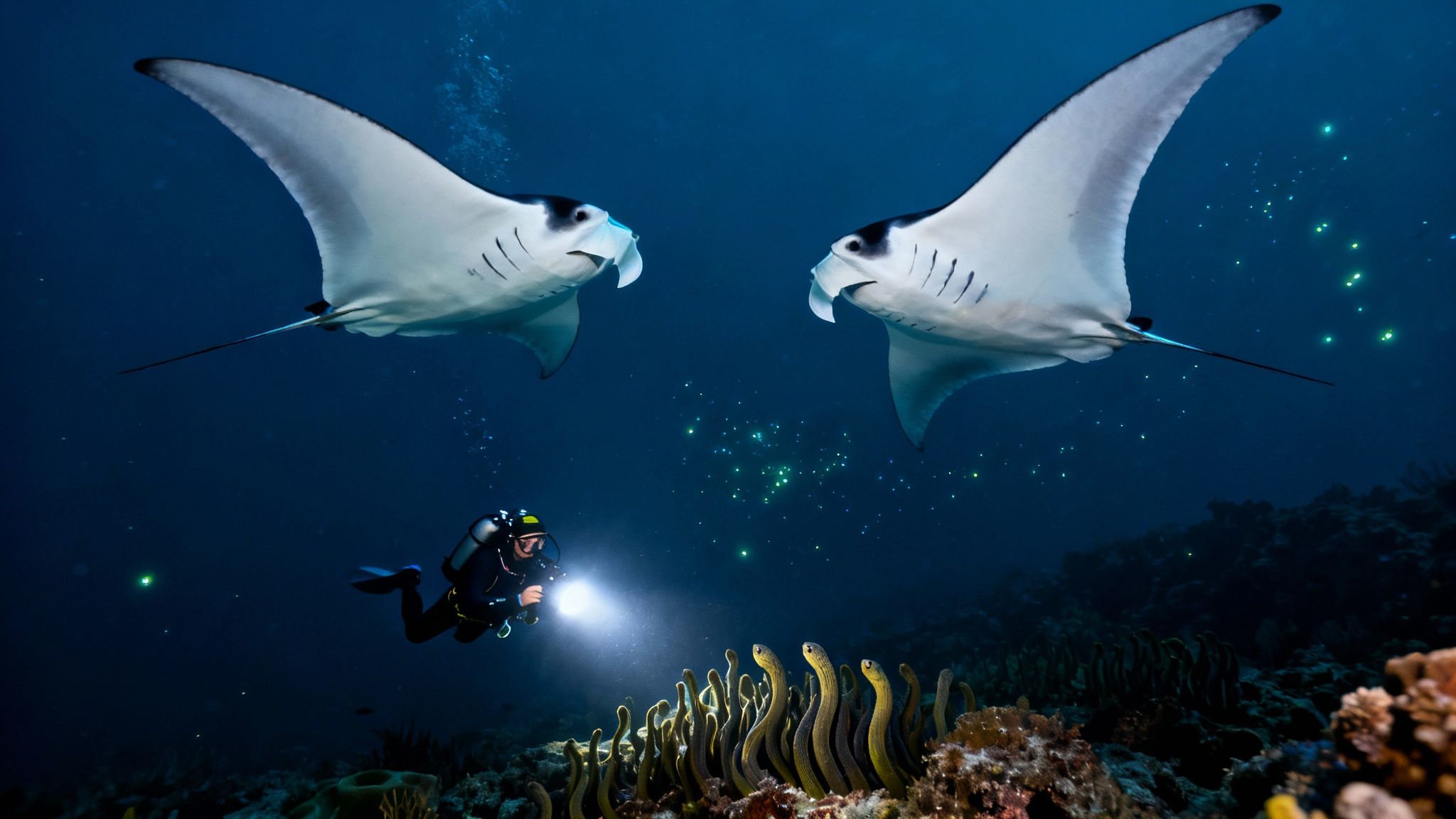
The Kona coast isn't just a place to go diving; it's a collection of legendary underwater stages, each hosting a world-renowned performance. Divers come from all over the planet to witness spectacles you just can't find anywhere else. These sites are the heart and soul of the scuba Big Island experience.
From the silent, graceful ballet of manta rays after dark to a surreal journey into the ocean's deep abyss, every dive here tells its own story. Getting to know what makes each of these spots unique is the first step in picking the perfect underwater adventure for your trip.
The Manta Ray Night Dive: A Surreal Ballet
The Manta Ray Night Dive is consistently voted one of the best dives in the world, and once you do it, you'll understand why. It's an experience that’s hard to put into words. You settle onto the sandy bottom, point your dive light up, and just wait for the show to begin.
The beams of light attract a cloud of plankton, and soon after, the stars of the show arrive. Giant manta rays, some with wingspans stretching up to 16 feet, glide in from the darkness to feed. They perform effortless barrel rolls and soaring loops, often swooping within inches of your mask. It's a humbling, awe-inspiring encounter that sticks with you long after you surface. This is one of the most popular manta ray dive tours available.
Manta rays are gentle giants. They don't have stingers or barbs, making this encounter completely safe and peaceful. They're only interested in the plankton, which allows for a mesmerizing and up-close observation of one of nature's most magnificent creatures.
While you can do this dive at a couple of spots, Garden Eel Cove is the superior choice. Its location is more sheltered from ocean swells, which means calmer, more comfortable conditions for divers. The seafloor here also forms a kind of natural amphitheater, giving everyone a fantastic front-row seat to watch the spectacle unfold. Plus, the surrounding reefs are healthier and more vibrant.
The Kona Blackwater Dive: A Journey Into The Abyss
Ready for something completely different? For the truly adventurous diver, the Kona Blackwater Dive pushes the boundaries of exploration. This is not a reef dive. Instead, you're tethered to the boat and drifting in the pitch-black open ocean miles from shore, with thousands of feet of water below you.
Every single night, one of the largest migrations on Earth takes place as countless strange and wonderful creatures travel from the deep ocean toward the surface to feed. This dive puts you right in the middle of that migration. You’ll see bizarre, bioluminescent organisms that look like they’re from another planet—tiny larval fish, alien-like jellies, and translucent squid. It's a dive into the great unknown, offering a rare and fascinating glimpse into a world few ever get to see.
Kealakekua Bay: A Protected Sanctuary
Kealakekua Bay is much more than just a stunning dive site; it’s a historically significant and ecologically vital marine sanctuary. As a protected Marine Life Conservation District, fishing is completely off-limits, a rule that has allowed marine life to absolutely flourish. This protection makes it a crown jewel for scuba Big Island divers.
The result is an underwater paradise teeming with life, from enormous schools of tropical fish to pods of spinner dolphins that are known to play in the bay. Visibility here is often incredible, frequently clearing 100 feet and creating a crystal-clear window into a thriving coral wonderland. The historic Captain Cook monument standing on the shore adds another layer of meaning to the whole experience.
To help you decide which of these iconic dives is right for you, here’s a quick rundown:
Top Big Island Dive Experiences at a Glance
| Dive Experience | Best For | Typical Depth | Key Marine Life | Skill Level |
|---|---|---|---|---|
| Manta Ray Night Dive | Unforgettable, close encounters with gentle giants | 25-40 ft | Manta Rays, Garden Eels | Open Water & Above |
| Kona Blackwater Dive | Adventure seekers and macro-photography lovers | 40-60 ft (Tethered) | Bioluminescent Larval Creatures, Pelagic Jellies, Squid | Advanced |
| Kealakekua Bay | Pristine reefs, amazing visibility, and abundant fish life | 30-80 ft | Spinner Dolphins, Turtles, Vibrant Coral, Schooling Fish | Open Water & Above |
These three spots are true highlights, but they're just the beginning. The Kona coast is lined with dozens of other incredible locations, each with its own character—from dramatic underwater lava tubes to peaceful coral gardens. There's a whole world to explore down there.
To learn more about all the incredible diving tours we have, check out our guide on diving around the Big Island.
Choosing the Best Dive Operator in Kona
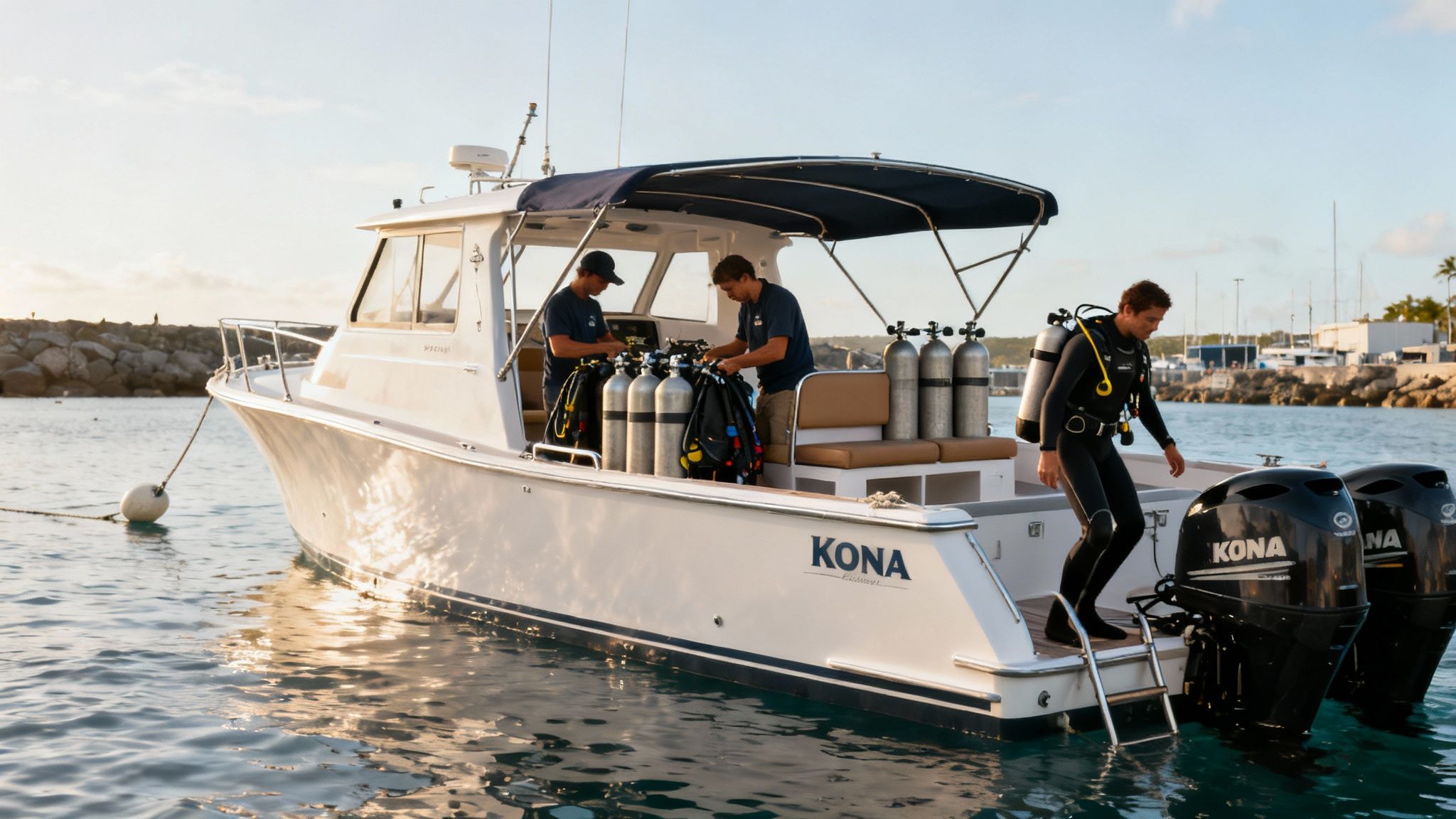
Let’s be honest: your dive operator can make or break your entire trip. It’s not just about booking a ride on a boat. It’s about trusting a team with your safety, your time, and your dream of an incredible underwater adventure. The right crew doesn't just take you diving; they elevate a good dive into an unforgettable one.
So, how do you sort through the options? When planning a scuba Big Island adventure, there are a few non-negotiables. You need a shop with an impeccable safety record, boats actually built for diving, top-notch gear, and a crew whose passion for the ocean is absolutely infectious.
Think of it as an investment in a seamless, expertly guided, and genuinely safe exploration of Kona's underwater world.
Why Experience and Safety Record Matter Most
The moment you start your descent, absolute confidence in your crew is everything. A truly great dive operator’s commitment to safety comes directly from deep, hands-on experience. This means finding a company that doesn’t just meet industry standards but actively helps set them.
This is exactly why Kona Honu Divers is consistently rated one of the top operations in Hawaii. With over 200 years of combined crew experience, they offer something far more valuable than a simple tour—they deliver a world-class adventure built on a solid foundation of expertise.
That level of experience means the crew can read the ocean, anticipate changing conditions, and make smart calls that keep every dive as safe as it is spectacular. It also means they have an intimate, first-hand knowledge of the reefs and know exactly where to find that elusive octopus or the best vantage point for the manta ray ballet.
What Sets a Premium Dive Operation Apart
Beyond the critical elements of safety and experience, the best operators obsess over the details. It's those little things that transform the experience from feeling like just another transaction to feeling like a valued guest on a special expedition.
Here are a few of the standout features that really make a difference:
- Custom-Built Dive Boats: Comfort is key. Kona Honu Divers runs boats designed from the hull up for divers. That means more space, easy entry and exit from the water, and amenities that make the time between dives just as enjoyable.
- Top-of-the-Line Rental Gear: You should never have to second-guess your equipment. A premium operator provides meticulously maintained, high-quality rental gear that you can trust without a second thought.
- Complimentary Nitrox: For certified divers, this is a huge perk. Getting Nitrox for free means you can safely extend your bottom time and shorten your surface intervals, letting you pack more into your dive day.
Investing in a premium operator means you're not just paying for a dive. You're paying for peace of mind, expert guidance, superior comfort, and access to the best possible underwater experience the Big Island has to offer.
The demand for responsible, eco-friendly adventures is booming, and the scuba diving market in the USA is projected to swell to USD 1,585 million by 2035. Kona is at the heart of this growth, with operators like Kona Honu Divers leading the way with world-famous experiences like the manta ray night dive that draws divers from all corners of the globe.
Maximizing Your Dive Value
Choosing the right operator also means looking for one that offers unique opportunities and smart perks. For divers looking to explore different aspects of the local dive scene, it can be helpful to understand the distinctions between the various outfits. You can read more about what makes each Kona diving company unique in our detailed article.
Kona Honu Divers provides ways to enhance your trip and get the most bang for your buck. They offer premium advanced dive tours for experienced divers eager to explore deeper sites or more challenging environments under expert supervision. Plus, for those who plan ahead, early diver discounts reward you for booking your underwater adventures in advance. It’s all part of a commitment to catering to every diver, no matter their skill level or budget.
How to Plan Your Big Island Scuba Adventure
A little bit of prep work on the front end can make all the difference between a good dive trip and an unforgettable one. Nailing down the logistics for your Big Island scuba vacation means you can spend less time worrying about details and more time focused on the incredible world waiting just below the surface.
Let's walk through everything from the best time to visit to what you should throw in your bag. Think of this as your mission control for a seamless, stress-free Kona diving adventure.
When Is the Best Time to Dive?
Honestly, there’s no bad time. The Kona coast sits on the sheltered, leeward side of the Big Island, shielded from the prevailing trade winds by the colossal Mauna Loa and Hualālai volcanoes. This unique geography blesses us with remarkably calm, clear water pretty much year-round.
You can count on comfortable water temperatures, usually hovering between a pleasant 75-80°F (24-27°C). Visibility is often spectacular, frequently stretching past 100 feet. While the diving is consistently excellent, a couple of seasons have their own special perks:
- Winter (December – March): This is peak humpback whale season. You might not see one on a dive, but hearing their hauntingly beautiful songs reverberate through the water column is an experience that will stay with you forever. It’s a truly magical soundtrack for your underwater exploration.
- Summer (June – August): These months typically deliver the flattest seas and warmest water. It's an absolutely perfect time for anyone who loves spending time on and in the ocean.
The bottom line? Don't overthink it. The legendary dive sites and vibrant marine life are here waiting for you 365 days a year.
Your Essential Packing Checklist
Packing smart means you can roll off the plane and get straight to the good stuff. While we have top-notch rental gear, bringing a few key personal items can seriously boost your comfort.
- Your C-Cards: Don't leave home without them! Bring your physical and digital certification cards for every level you’ve achieved, especially specialties like Nitrox.
- Logbook: This is your underwater journal. It’s the perfect way to remember the incredible dives you did in Kona, and our crew loves stamping them.
- Personal Dive Gear: If nothing else, most divers prefer their own mask for that no-leak, perfect fit. A dive computer you already know inside and out is also a great idea.
- Reef-Safe Sunscreen: This is a big one. Hawaii state law requires mineral-based sunscreens (look for zinc oxide or titanium dioxide). It's a small change that makes a huge difference in protecting our fragile coral reefs.
- Reusable Water Bottle: Hydration is key for safe diving. A reusable bottle helps you stay topped up and cuts down on plastic waste.
- A Warm Layer: Trust me on this one. Even in paradise, the boat ride back to the harbor can feel chilly after a couple of dives. A simple windbreaker or hoodie is a must.
Getting Certified or Advancing Your Skills
If you've ever thought about learning to dive or taking your skills to the next level, Kona is the place to do it. The calm, clear, and warm water creates the perfect underwater classroom. You can go from a non-diver to a certified Open Water Diver right here.
Already certified? Great! This is an amazing opportunity to build confidence and open up new diving possibilities.
A fantastic next step is getting your Enriched Air (Nitrox) certification. It’s a game-changer, allowing for longer bottom times. That means more precious minutes exploring Kona’s incredible reefs and hanging out with the wildlife.
Whether you're taking your very first breath underwater or mastering a new technique, earning a certification in Hawaii isn’t just a course—it’s an experience you’ll never forget.
Diving Safely and Protecting the Reefs
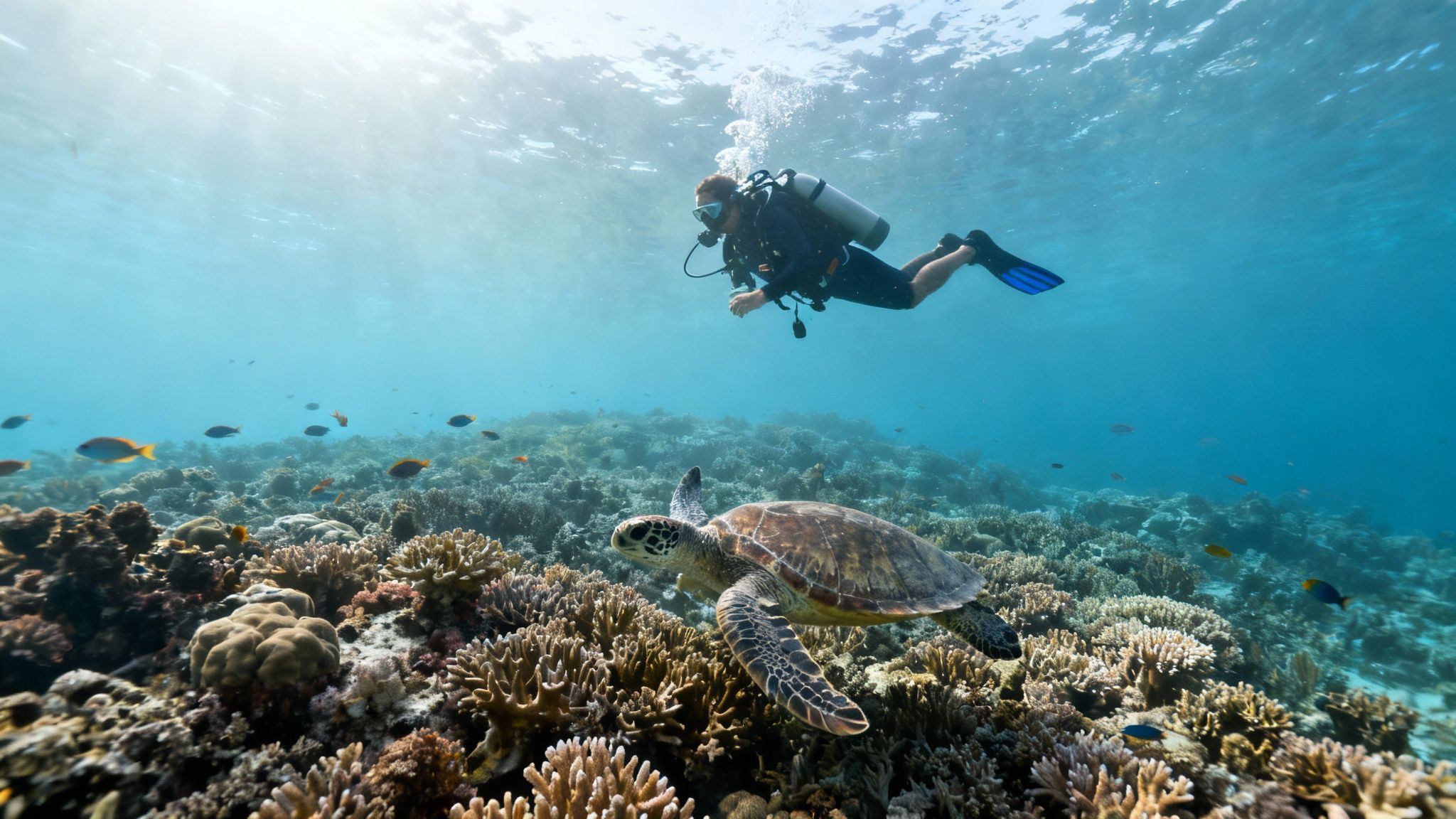
Being a great diver isn’t just about what you see; it’s about how you act underwater. When we slip beneath the waves on the Big Island, we’re entering a fragile world. That means we have a shared responsibility to keep ourselves safe and protect the very ecosystems we’ve traveled so far to admire.
Your safety checklist should start long before you even gear up. Under the warm Hawaiian sun, something as simple as staying hydrated is key to reducing your risk of decompression sickness. It’s also about being honest with yourself—always dive within your certification limits and comfort level. And don't forget to respect those surface intervals, especially before you fly home. It's the best way to ensure your adventure ends as safely as it began.
Becoming an Ocean Steward
Beyond our own safety, we have to become guardians of the reef. Every dive is a chance to leave things better—or at least, exactly as we found them. It all starts with your buoyancy. Think of it as learning to float effortlessly in mid-water. Nailing this skill is what prevents you from accidentally bumping, kicking, or crushing fragile coral that took centuries to grow.
This mindful approach leads us to the golden rule of scuba Big Island diving: the 'no-touch' policy.
The rule couldn't be simpler: look, but don't touch. This goes for everything, from the smallest coral polyp to the largest marine animal. Interacting with wildlife can disrupt their natural behaviors, cause them stress, or even do real harm.
This is especially true when you meet some of Hawaii’s most famous locals. The revered honu (green sea turtles) and the graceful manta rays are wild animals that deserve our space and respect. The urge to reach out and touch can be strong, but resisting it is what keeps the encounter truly wild and special for both you and the animal. It’s always a good idea to understand the animals you're seeing, so you know the answer to questions like, Can Manta Rays Sting You?
Ultimately, our goal as divers is to be ghosts underwater, leaving no trace behind. You can learn more about how to be a true caretaker of this precious ecosystem by reviewing some tips on responsible and considerate diver etiquette. When you dive with care, you're not just a tourist; you're an ambassador for the ocean.
Your Big Island Scuba Questions, Answered
Even the most seasoned travelers have questions, and when it comes to a trip as exciting as diving in Hawaii, that's a great sign. It means you're already picturing yourself in the water! We get a lot of great questions, so we’ve gathered the most common ones here to help you get ready for an incredible adventure.
Think of this as a conversation with one of our divemasters. We're covering all the practical stuff—from water temps to rental gear and what happens on a rainy day—so you can feel totally confident before you even step on the boat.
What’s the Best Time of Year to Dive on the Big Island?
Honestly, any time is a good time. That's the real magic of diving in Kona. The massive volcanoes on the island act as a natural shield, protecting the Kona coast from the gusty trade winds that can stir up the water elsewhere. The result? The conditions are typically calm and clear year-round.
The water stays in that perfect "just right" zone, hovering between a comfortable 75-80°F (24-27°C). So, you can plan your trip for July or January and expect amazing diving. The only real seasonal bonus is in the winter (December through March) when you can often hear the incredible songs of humpback whales echoing through the water on your dives. It’s a truly unforgettable experience.
Do I Need to Lug All My Own Scuba Gear Over?
Not unless you really want to! We have a full fleet of high-quality, meticulously maintained rental gear ready to go. From BCDs and regulators to dive computers and wetsuits, everything is professionally serviced to make sure it's in top-notch shape for your dives.
That said, we totally get it if you prefer your own stuff. Many divers choose to bring a couple of key items for comfort and familiarity. A personal mask that you know fits your face perfectly is a game-changer, and bringing your own dive computer means you won't have to learn a new device. But if traveling light is your goal, just show up—we've got you covered.
I'm Not Certified. Can I Still Do the Manta Ray Dive?
This is probably one of the most frequent questions we hear, and it’s a great one. The short answer is that you do need to be a certified scuba diver to do the actual Manta Ray Night Dive. That specific tour involves descending with a scuba tank and watching the mantas from the seafloor, which requires the skills you learn in an Open Water course.
But here's the good news: you absolutely do not have to miss out on the experience! You can join a manta ray night snorkel tour instead. Snorkelers float at the surface, usually holding onto a custom light board that attracts the plankton, and watch the mantas swoop and feed right below them. It is every bit as magical and breathtaking.
What Happens if the Weather Looks Bad on My Dive Day?
Your safety is our absolute, number-one priority. Period. Our captains are constantly checking the weather and sea conditions, using both real-time data and their years of local experience on these waters. Luckily, the Kona coast is naturally protected, so weather cancellations are pretty rare.
If the captain does make the call that conditions are unsafe, we won't go out. It's as simple as that. In that unlikely event, we’ll first try to reschedule you for another day. If your travel plans don't allow for that, you will get a full refund. You can book with peace of mind, knowing we will always put your safety and comfort first.
How Likely Is It That I'll Actually See Manta Rays on the Night Dive?
While you can never 100% guarantee a wildlife sighting, the Kona Manta Ray Night Dive is about as close as you can get. The system of using lights to attract plankton works incredibly well, and because of that, the dive boasts an 85-90% success rate for manta sightings. It’s one of the most reliable big animal encounters in the world.
This isn't just a hopeful guess; it's a consistent track record that turns a night dive into a near-certain spectacle. You can even check out real-time reports on the local manta population on jacksdivinglocker.com. On the very rare night the mantas don't show, most reputable operators will invite you back to try again on another night for free.
Here at Kona Honu Divers, our whole mission is to give you a safe, unforgettable, and expertly guided look at Kona's underwater world. Ready to see it for yourself? Book your dive tour today and start making memories that will last a lifetime.