
Picture this: you slip beneath the surface into brilliant turquoise water, sunbeams piercing the depths to light up a wild, dramatic landscape carved by ancient volcanoes. This is what it’s like to scuba dive on the Big Island. For those in the know, the Kona coast isn't just another dive spot—it's the crown jewel of diving in Hawaii, offering an underwater experience you simply won't find anywhere else.
Discovering Hawaii’s Premier Scuba Diving Destination
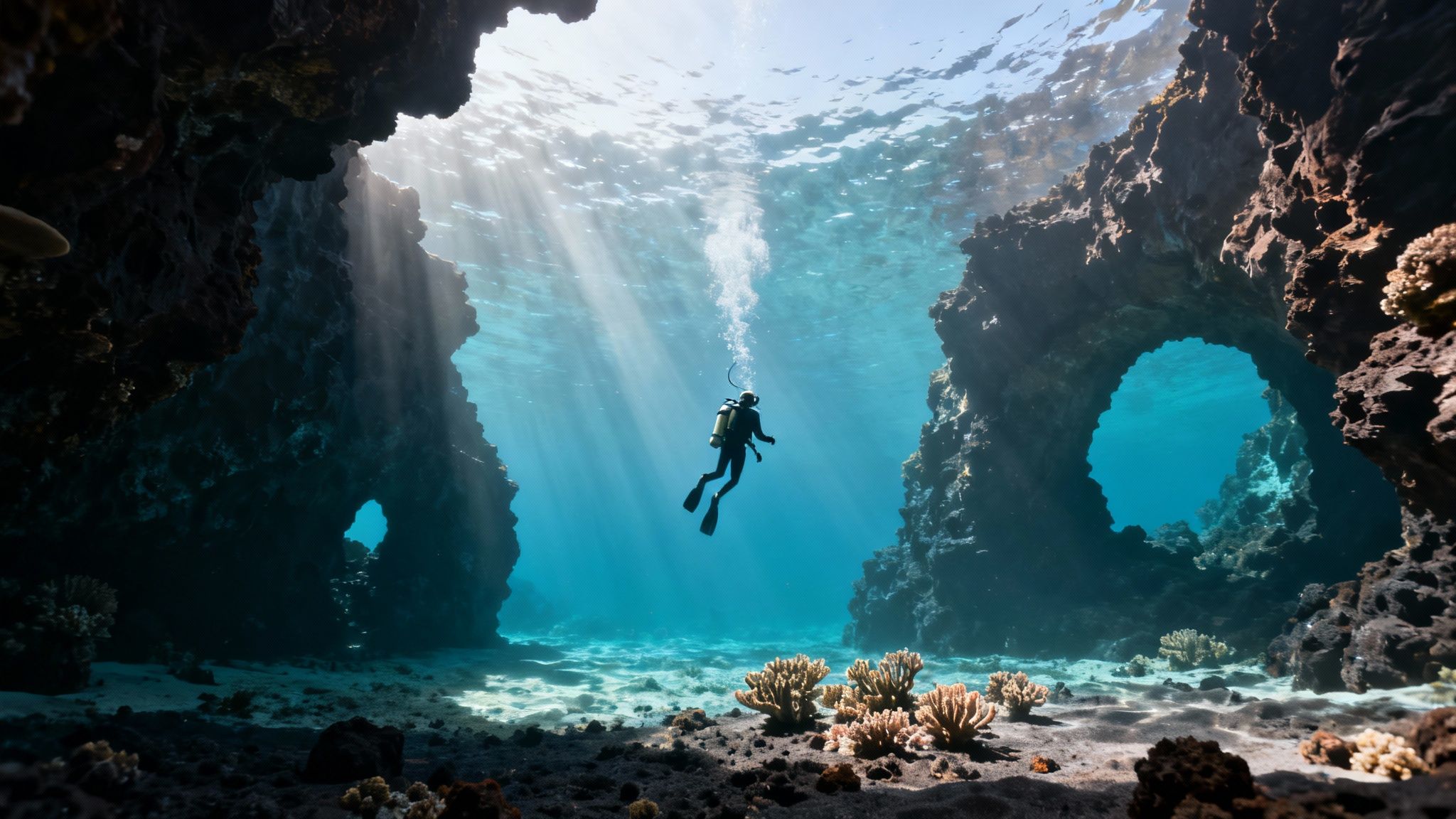
So, what makes the Big Island the undisputed champion of Hawaiian diving? It all comes down to its unique geology. The sheer size of the Mauna Loa and Hualālai volcanoes creates a massive natural shield, protecting the western Kona coast from the gusty trade winds that batter the other islands.
This incredible shelter effect results in remarkably calm, clear waters nearly all year long. While divers on other islands might have to contend with choppy seas and unpredictable conditions, Kona consistently delivers the goods, making it a dream for everyone from first-timers to seasoned pros.
An Underwater Playground Like No Other
The island’s volcanic past has created an underwater world that is anything but boring. Forget flat, sandy bottoms; here, you'll be exploring a dynamic and rugged seascape full of incredible features.
- Lava Tubes: Swim through ancient, hollowed-out conduits that once channeled molten lava, now home to all sorts of marine critters.
- Arches and Pinnacles: Navigate dramatic formations that shoot up from the seafloor, covered in a tapestry of colorful corals and sponges.
- Vibrant Coral Gardens: Drift over some of the healthiest and most extensive reef systems in Hawaii, teeming with life.
This ever-changing terrain means you could dive here for weeks and never get bored. Every site offers a completely new adventure.
The Big Island isn't just a great place to dive; it's the place. The numbers speak for themselves: divers log around 100,000 certified dives here annually, with more than 150,000 dive tourists visiting the Kona coast each year to experience its famous volcanic underwater landscapes and reliable marine life encounters.
What seals the deal is the phenomenal water clarity, which often surpasses 100 feet of visibility in the summer. With most sites sitting at a comfortable 30 to 60 feet, the conditions are perfect for divers of all skill levels.
To really understand what makes this place so special, let's break down the key advantages.
Why the Big Island Is Hawaii’s Top Diving Destination
| Feature | Why It Matters for Divers |
|---|---|
| Volcanic Topography | Creates unique lava tubes, arches, and caverns for exciting exploration. No two dives are alike. |
| Wind Shadow | The massive volcanoes block trade winds, resulting in consistently calm and clear water on the Kona coast. |
| Exceptional Visibility | Regularly exceeds 100 feet, allowing you to fully appreciate the stunning landscapes and marine life. |
| Healthy Coral Reefs | The island is home to some of Hawaii's most pristine and vibrant coral ecosystems. |
| Abundant Marine Life | From manta rays and dolphins to endemic fish, the biodiversity is simply staggering. |
In short, the Big Island offers a combination of reliable conditions, unique underwater scenery, and incredible biodiversity that the other islands just can't match.
Your Gateway to Adventure
To truly unlock the magic of Big Island scuba diving, you need to go with an operator that prioritizes safety and knows the waters inside and out. At Kona Honu Divers, our entire mission is to provide safe, awe-inspiring underwater journeys. Our experienced crew will get you to the best, most pristine dive sites along the coast.
Whether you're checking off a bucket-list item like the Manta Ray Night Dive or just looking for a peaceful reef tour, we tailor every trip to showcase the best of Kona's underwater world. This guide is your starting point, but to learn more about the local scene, check out our article on whether scuba diving is big in Hawaii. Ready to see it for yourself?
Exploring Kona’s World-Class Dive Regions
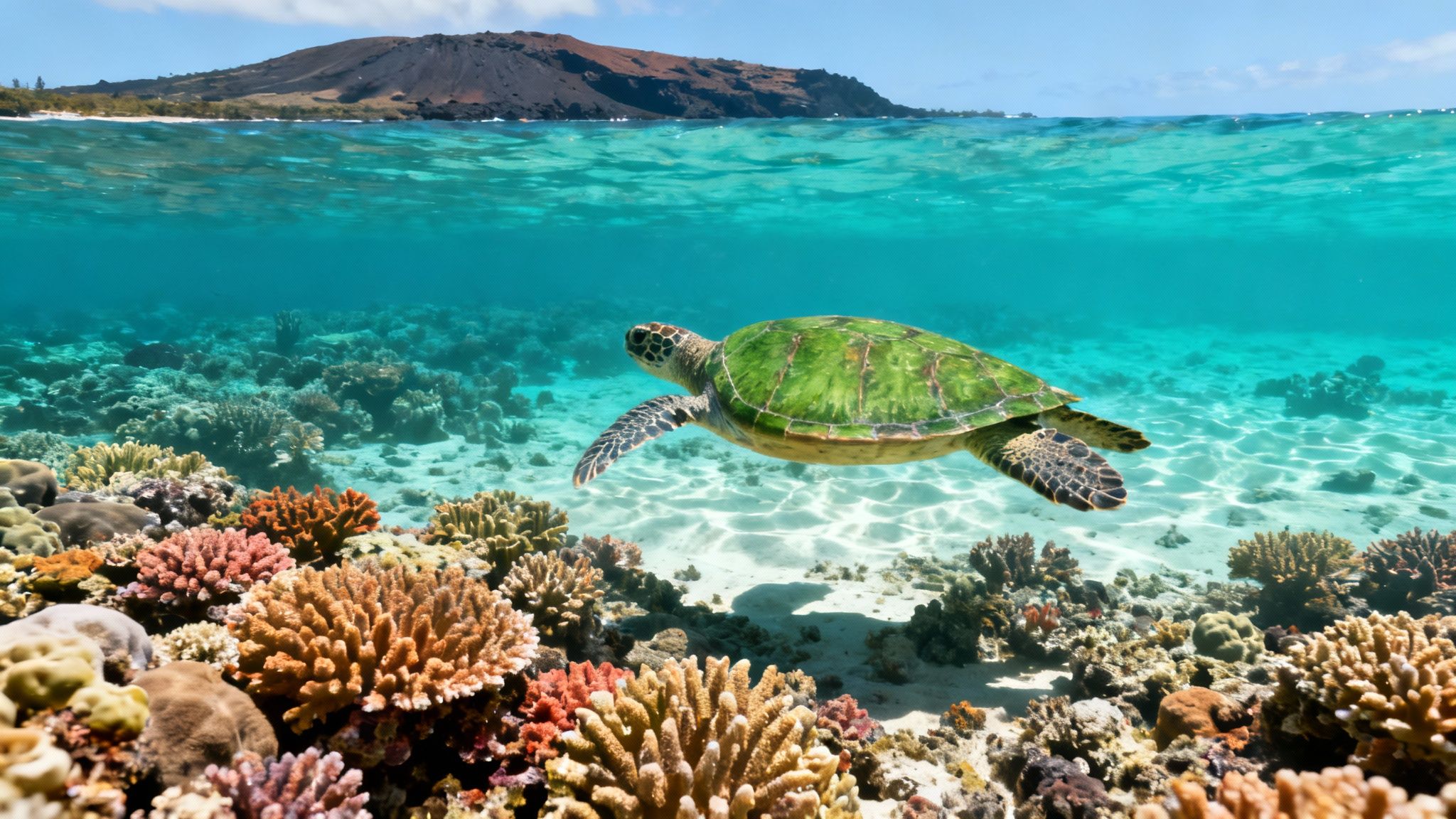
When people talk about Big Island diving, they're really talking about the Kona coast. There's a good reason for that. We're in the massive "wind shadow" of Mauna Loa and Hualālai, two giant volcanoes that block the whipping trade winds. The result? Exceptionally calm, clear water, day after day. It’s the perfect setup for an underwater playground.
This protection allows for an incredible variety of dive spots to thrive. You’ve got everything from sun-drenched shallow reefs where honu (Hawaiian green sea turtles) munch on algae to dramatic volcanic drop-offs. The island’s fiery origins are on full display down there—we're talking intricate lava tubes, towering pinnacles, and huge arches just waiting to be explored.
Pristine Sanctuaries and Vibrant Reefs
If there's one crown jewel on the Kona coast, it has to be Kealakekua Bay. It’s a designated Marine Life Conservation District, which is a fancy way of saying it’s been left alone to flourish. And it shows. The coral reefs are as pristine as they come, and the fish populations are so dense it’s like swimming through colorful clouds.
Diving here feels like dropping into a perfectly kept, wild aquarium. It’s a perfect example of why this region is legendary for scuba on the Big Island. On a good day, the water is so clear you can see the whole reef slope, from the bright coral gardens at the top all the way down to the deeper ledges. It's a must-do if you want to see a Hawaiian reef at its absolute best.
The real magic of Kona diving is how much there is to see—and how you see it. While you can get your feet wet with a shore dive, the truly untouched wonders are only unlocked by boat. That's where you find the stuff most visitors never get to see.
Shore Diving vs. Boat Diving
Deciding between jumping in from the shore or heading out on a boat will completely change your day. Both are great, but they offer two very different adventures.
- Shore Diving: This is all about flexibility. You can dive on your own schedule from easily accessible beaches. It's fantastic for a relaxed, easy-going day. The trade-off is that you're limited to spots near the road, which can sometimes get a bit more crowded.
- Boat Diving: This is where the real exploration begins. Getting out on the water with an operator like us takes you to remote, offshore sites that are impossible to reach from land. These spots are healthier and teeming with more marine life simply because fewer people get to them. Plus, you get the crew's inside knowledge of where to go based on the day's conditions.
If you're trying to wrap your head around everything the area has to offer, you can learn more about the specifics of Kona scuba diving and see why it’s consistently ranked one of the best dive destinations on the planet.
The Kona Honu Divers Advantage
Heading out on a boat with a seasoned crew isn't just about safety; it's about seeing the absolute best stuff. Our team has spent years exploring these waters, and we know exactly where to find the most spectacular underwater landscapes and where the coolest critters hang out.
We can guide you through a hidden lava tube you'd never find on your own, introduce you to a resident turtle we know by name, or put you in the perfect spot to watch a massive school of fish drift past. To truly experience the wild, untamed beauty of Kona's underwater world, you have to get on a boat and book one of our many diving tours.
Must-Do Signature Dives on the Big Island
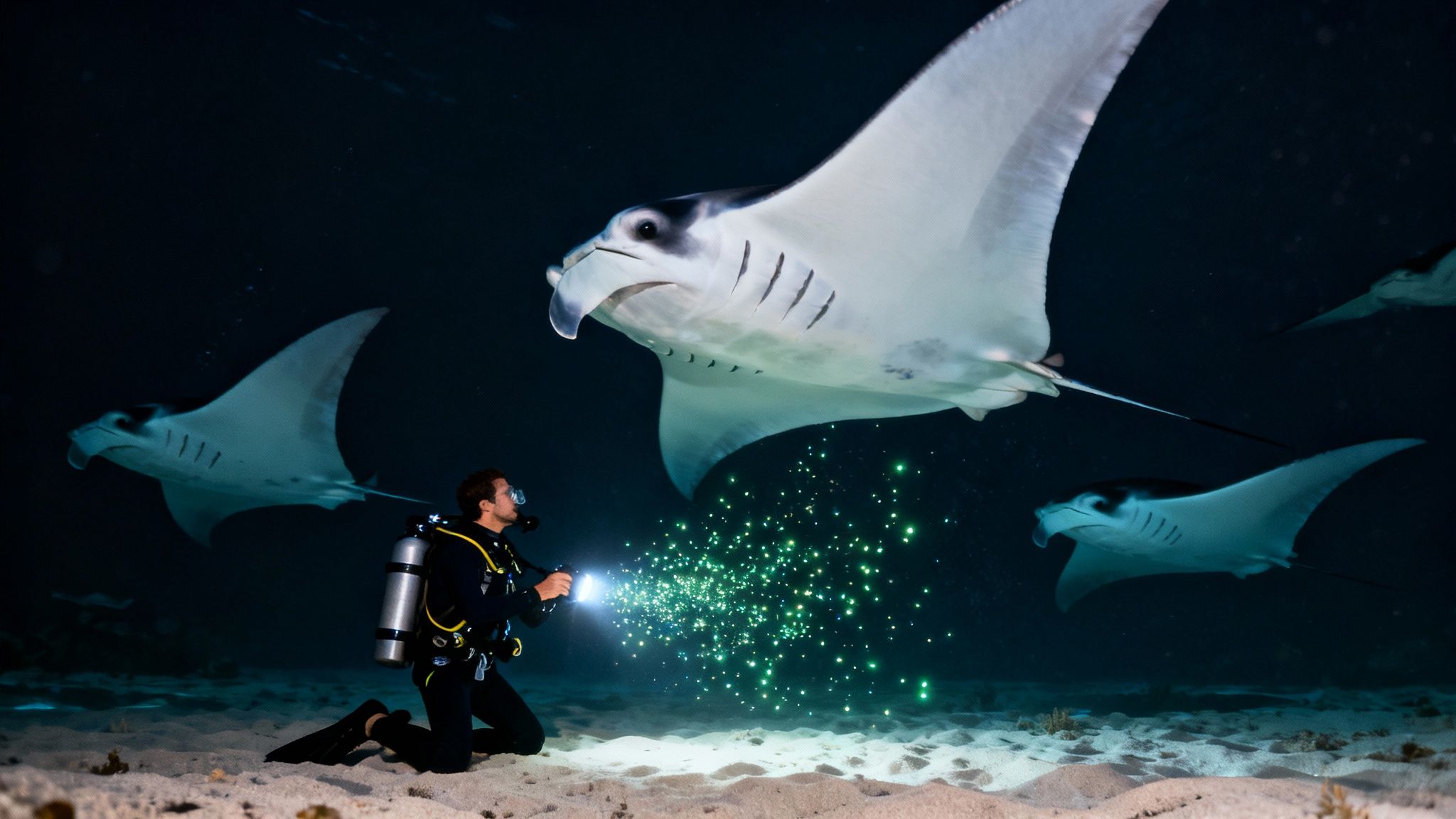
Some underwater experiences are so powerful they completely change your perspective on the ocean. Here on the Big Island, we have a few dives that aren't just activities on an itinerary—they're life-altering encounters you'll be talking about for years. These are the dives that put Kona on the global map.
At the very top of that list is the world-famous Manta Ray Night Dive. Just imagine it: you’re kneeling on a sandy patch of the ocean floor, and massive manta rays with wingspans over 12 feet perform a silent, graceful ballet just inches above your head. They swoop and barrel roll through the beams of divers' lights, feeding on the clouds of plankton drawn to the glow.
This dive is legendary for a reason. With sighting success rates hovering between 85-90%, it's a true bucket-list experience for divers from all over the world. These gentle giants put on their show in relatively shallow water, usually around 40-60 feet, making the encounter both accessible and absolutely mesmerizing.
Garden Eel Cove: The Premier Manta Experience
While you can see mantas at a couple of spots, Garden Eel Cove (also known as Manta Heaven) is hands-down the best location. It's tucked into a bay that offers much better protection from the open ocean swell, which means calmer, more predictable conditions for the dive.
The site is set up like a natural underwater amphitheater. Divers can settle in comfortably on the sandy bottom, giving them a front-row seat as the mantas perform their acrobatic feeding ritual overhead. Plus, the surrounding reefs here are healthier and more vibrant, adding to the magic of the entire experience. It's this combination of protection, a perfect viewing setup, and a beautiful reef that makes it the undisputed champion for the manta ray dive.
The manta dive is an exercise in stillness and wonder. You don't swim around looking for the action; you become the center of it. It's both humbling and exhilarating as these gentle giants accept your presence and carry on with their nightly feast.
To really get a feel for what this incredible night is all about, check out our guide to the manta ray night swim. It breaks down everything you need to know, whether you're diving or snorkeling.
Venturing into the Deep Dark
If you're looking for an adventure that feels more like a trip to outer space than a scuba dive, then the Kona Blackwater Dive is for you. This is not a reef dive. You drift in the pitch-black of night, tethered to the boat, suspended over thousands of feet of open ocean.
As you hang there in the darkness, some of the ocean's strangest and most beautiful creatures migrate up from the abyss. You'll see bizarre, often bioluminescent organisms that spend their days in the deep and only rise to the surface under the cover of night. It's a dive that rewards patience with sightings of alien-like critters you’ve probably never even seen in pictures.
For the Experienced Thrill-Seeker
Beyond the big-name dives, the Big Island is an adventure playground for experienced divers. Our volcanic underwater landscape is honeycombed with deep lava tubes, intricate archways, and remote offshore pinnacles that are absolute magnets for marine life.
These advanced dives take you to deeper, more challenging sites that demand excellent buoyancy control and a true sense of adventure. There's nothing quite like navigating a winding lava tube or exploring a seamount that materializes out of the deep blue. These spots are less crowded and give you a glimpse into the wilder side of scuba on the Big Island.
Planning Your Big Island Dive Trip
A little bit of planning is all it takes to turn a good dive vacation into a great one. Getting your scuba Big Island trip organized is part of the fun, and thinking through a few key details now means you can relax and just enjoy the ride once you’re here.
From figuring out the best time of year to visit to deciding what gear to pack, we'll walk you through the essentials. This is the practical, no-nonsense advice you need to get ready for an unforgettable adventure on the Kona coast.
Choosing the Best Time to Visit
"When should I go?" It's the first question on every diver's mind. The fantastic news is that Kona serves up incredible diving all year long, but each season has its own personality.
Summer (May to October): This is what many people consider prime time. The seas are typically at their calmest, the water is a balmy 80°F (27°C), and visibility can easily top 100 feet. If you're dreaming of those classic, sun-drenched reef dives, this is your season.
Winter (November to April): The water might be a few degrees cooler, but winter brings an awe-inspiring bonus: humpback whales. Hearing their songs echo through the water while you’re diving is a powerful, almost otherworldly experience you won't forget.
Honestly, there's no bad time to dive in Kona. It really just comes down to whether you prefer the warmest, glassiest conditions or the chance to share the water with singing giants.
Certification Levels and Continuing Education
The Big Island has something for everyone, no matter how many dives are in your logbook. Many of our most beautiful, vibrant reefs are in shallow, protected areas—perfect for freshly certified Open Water divers to build confidence.
However, if you want to explore the more dramatic sites, like deep lava tubes or the offshore pinnacles, you'll need your Advanced Open Water certification.
Looking to level up your skills? Kona is the perfect classroom. Kona Honu Divers offers the full lineup of PADI courses, from your very first underwater breaths to specialized training. Our instructors are fantastic at creating a safe, fun environment to help you become a more capable and confident diver.
Pro Tip: If you're certified, diving with Enriched Air Nitrox is a total game-changer. It allows for longer bottom times, which means more time exploring and looking for cool critters. We offer complimentary Nitrox for all certified divers because we want you to get the most out of every single tank.
Packing Your Gear vs Renting
Ah, the age-old diver's dilemma: to pack or to rent? Bringing your own mask for a perfect fit or your computer for familiarity is always a good move. But let's be honest, hauling a full set of gear across the Pacific can be a real pain.
Kona Honu Divers has you covered with top-notch, meticulously maintained rental equipment. Our BCDs, regulators, and wetsuits are serviced constantly, so you can dive with the peace of mind that comes from using reliable, professional gear. Plus, it frees up a ton of luggage space and saves you from the chore of rinsing all that salty gear in your hotel room.
Safety should always be the top priority on any boat trip. Whether you're on our vessel or your own, being prepared is key. For a thorough overview, this Ultimate Boat Safety Checklist is an excellent resource for making sure all your bases are covered.
Booking Your Dives
Once you have a plan, it's time for the exciting part—locking in your spot! The most popular scuba Big Island experiences, especially the Manta Ray Night Dive, fill up fast. This is especially true during peak travel seasons, so we always recommend booking as soon as your travel dates are set.
The easiest way to secure your adventure is by booking your Big Island diving tours online. In just a few minutes, you can see what's available, pick your dates, and get one step closer to an incredible underwater journey.
Why Kona Honu Divers Is Your Best Choice
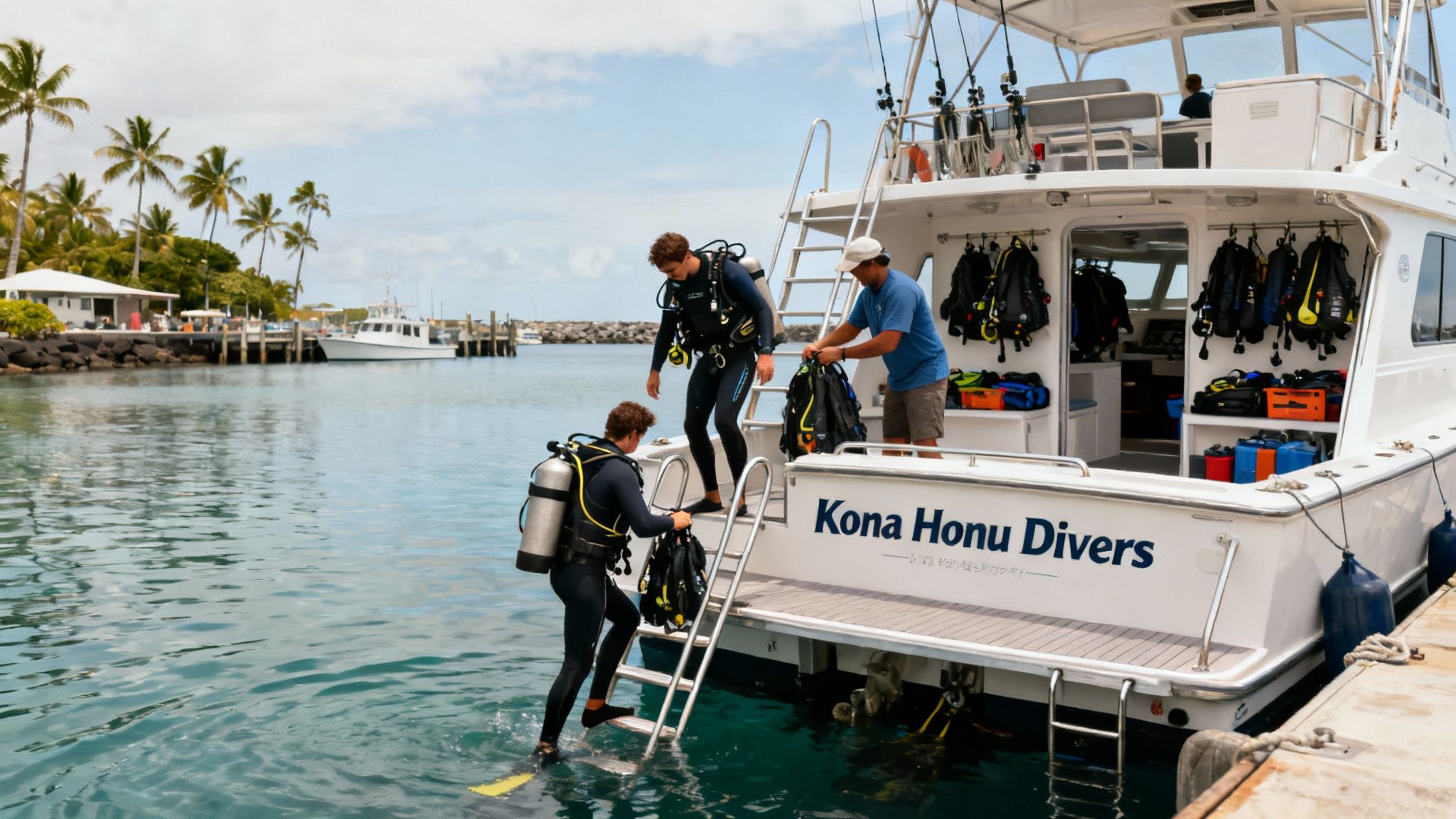
Let's be honest, the dive operator you choose can make or break your entire trip. It’s the difference between just getting wet and having an experience you’ll talk about for years. Here at Kona Honu Divers, we’ve poured everything we have into making sure your time with us is exceptional.
It really comes down to the people. Our crew isn't just a group of employees clocking in and out; they’re divers who live and breathe this stuff. We're talking about a team with a collective 200+ years of professional diving experience. They know Kona’s underwater world like the back of their hand and are genuinely excited to share it with you, safely and with a ton of fun along the way.
Designed for Divers, By Divers
You’ll feel the difference the moment you step onto one of our boats. These aren’t just repurposed fishing vessels—they were built from the ground up with a diver's needs in mind. Think spacious decks where you aren't tripping over gear, easy entry and exit points, and all the little comforts that make for a relaxing day on the water.
This deliberate design means less time fumbling with gear and more time soaking in the incredible views, both above and below the surface. Everything is set up to be smooth and comfortable, so you can focus on the adventure ahead.
At Kona Honu Divers, our goal is simple: to share our love for Kona's underwater world with you. We believe in creating memorable, personal experiences by keeping our groups small and our standards high.
Unique Offerings and Personalized Adventures
We love catering to all kinds of divers, from the person who wants a chill reef tour to the experienced pro looking for something new. That’s why we’ve created a few signature trips that show off the very best of Kona diving.
- Specialized Night Dives: Our one-of-a-kind Kona Blackwater Dive is a must-try. You’ll drift through the deep, open ocean at night, witnessing bizarre and beautiful creatures rise from the abyss.
- Premium Advanced Trips: Got a lot of dives under your belt? We run special trips to remote, challenging sites that most divers never get to see.
- Small Group Philosophy: We keep our groups small on purpose. This means you get a more personal trip, more space on the boat, and more one-on-one time with your guide.
Our commitment goes deeper than just running tours. We’re passionate about protecting the reefs and marine life we’re so lucky to visit every day. When you dive with us, you’re not just another customer; you're a guest in an incredible underwater sanctuary, and we treat it with the respect it deserves.
Your Big Island Diving Questions, Answered
Planning a dive trip always comes with a few questions. To make sure you feel completely ready for your adventure, we've put together answers to some of the most common things we get asked. Think of this as your pre-trip briefing to get you sorted and even more excited for your scuba Big Island experience.
Let's dive into the details, from what the water feels like to what you’ll see beneath the waves.
What Is the Best Time of Year to Scuba Dive on the Big Island?
Honestly, there's never a bad time to dive here, but the absolute prime season is during the summer, from May through October. This is when you'll find the calmest, glassiest seas and warm water that often hits a perfect 80°F (27°C). The visibility can be mind-blowing, sometimes stretching out well beyond 100 feet.
That said, the winter months (November to April) have their own unique magic. The water is a bit cooler, but the trade-off is hearing the haunting songs of humpback whales echoing through the water on your dives—an experience you will never forget. Even if the surface gets a little choppy, the Kona coast's geography keeps most dive sites wonderfully protected.
No matter when your travels bring you here, we run scuba diving tours every day, always heading to the best spots for the current conditions.
Do I Need to Be an Advanced Diver to Enjoy the Big Island?
Not at all! The Big Island is one of the most welcoming places for divers of every experience level. Many of our most stunning and vibrant reefs are in calm, relatively shallow water—think 30-60 feet. This makes them perfect for new divers who want to build confidence without missing out on incredible scenery.
But if you're an experienced diver looking for more, don't worry, we've got you covered. The Kona coast offers plenty of challenges, from deep lava tubes and dramatic offshore pinnacles to the unique thrill of our specialized night dives. We even run premium advanced dive trips specifically for seasoned divers who want to explore those more demanding sites.
Ultimately, our goal is to match you with dives that fit your comfort and skill level, ensuring everyone has a safe, memorable day in the water.
You don’t need to be a pro to enjoy the best of Kona. The beauty of diving here is the accessibility of world-class sites. A calm, 40-foot reef dive can be just as breathtaking as a deep, technical one.
What Kind of Marine Life Can I Expect to See?
Get ready for an incredible show. The marine life here is so rich and diverse it’s like diving in a world-class aquarium. On pretty much any dive, you'll see Hawaiian green sea turtles (honu) gliding by or just relaxing on the reef. The corals are alive with fish you can't find anywhere else on the planet, like our brightly-colored butterflyfish, angelfish, and parrotfish.
Look closer in the cracks and crevices, and you’ll find moray eels peeking out, octopuses showing off their camouflage skills, and huge schools of fish moving as one. Of course, the real headliners are the gentle giants on the world-famous manta ray night dive. And for those with a truly adventurous spirit, the Kona blackwater dive offers a rare glimpse at the bizarre and beautiful bioluminescent creatures that rise from the deep ocean at night.
What Should I Bring on a Dive Trip with Kona Honu Divers?
Our goal is to make your day as seamless and enjoyable as possible, so we provide all the high-quality scuba essentials: BCD, regulator, wetsuit, and tanks. We even offer complimentary Nitrox for any certified diver who wants it.
If you love your own gear and it's in good shape, feel free to bring it along. Otherwise, just focus on packing your personal items. Here’s a quick list of what we recommend:
- Reef-safe sunscreen (this is a big one for protecting our coral!)
- A hat and sunglasses for the boat ride.
- Your favorite reusable water bottle to stay hydrated.
- A towel and maybe a dry change of clothes for after.
- Your certification card and logbook—you'll want to log these dives!
The most important things to bring are your sense of adventure and a camera. We’ll take care of the heavy lifting.