
When people dream of the ultimate scuba Big Island adventure, they’re almost always picturing the Kona coast. Sheltered by the sheer mass of the Mauna Loa and Hualālai volcanoes, Kona’s waters are famously calm, crystal clear, and absolutely teeming with life. It's hands-down Hawaii's top spot for divers of every skill level.
Why the Big Island Is a Diver’s Paradise
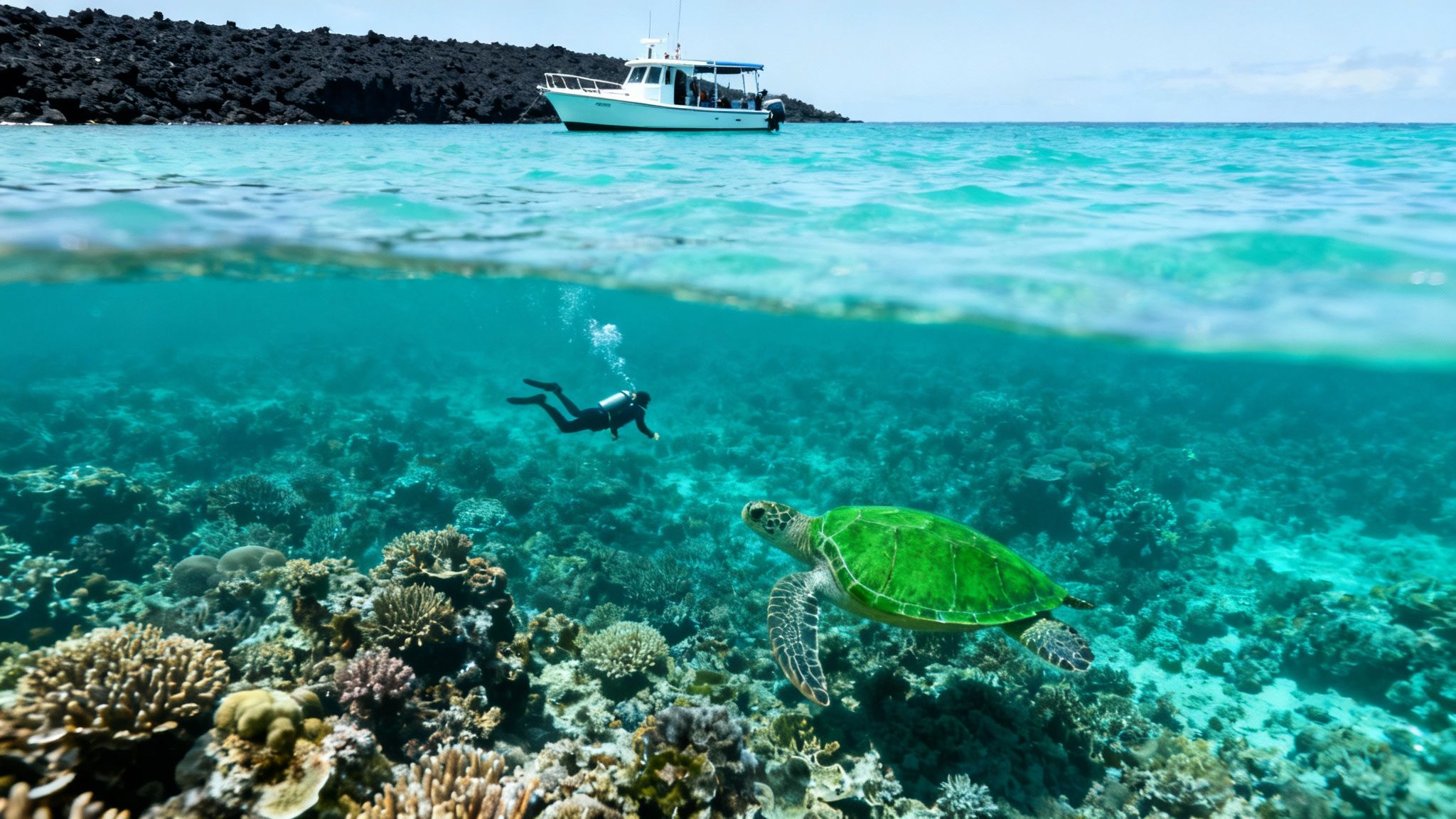
The real secret to Kona's world-class diving is its unique geography. Those enormous volcanoes act as a natural shield, blocking the gusty trade winds that churn up the water elsewhere. This creates a calm leeward side where the ocean often looks more like a vast, turquoise lake—and these perfect conditions hold up pretty much year-round.
This incredible predictability is what allows the vibrant coral gardens to thrive, creating a bustling underwater metropolis for an amazing array of marine life. You’ll see everything from the iconic green sea turtles (honu) peacefully munching on algae to schools of rainbow-colored reef fish zipping through ancient lava tubes. Every single dive is a fresh discovery.
The island's volcanic past is on full display below the surface, too. Get ready for dramatic underwater landscapes packed with arches, caverns, and submerged lava flows that you just won't find anywhere else.
What Makes Kona's Diving So Special
It’s that powerful mix of perfect conditions, unique topography, and incredible biodiversity that truly sets the Big Island apart. Scuba diving here isn't a one-size-fits-all experience; it’s a whole spectrum of adventures.
Here's a quick look at why so many divers consider Kona the pinnacle of Hawaiian diving.
Big Island Diving At a Glance
| Feature | Description | Best For |
|---|---|---|
| Calm, Clear Waters | The Kona coast is sheltered from trade winds by massive volcanoes, resulting in lake-like conditions with visibility often exceeding 100 feet. | All divers, especially beginners, photographers, and those prone to seasickness. |
| Volcanic Topography | Underwater landscapes are defined by ancient lava tubes, dramatic drop-offs, arches, and intricate caverns formed by volcanic activity. | Explorers, photographers, and anyone looking for unique underwater structures. |
| Rich Marine Life | Home to green sea turtles, spinner dolphins, and 20% of fish species found nowhere else on Earth. | Wildlife lovers, underwater naturalists, and divers of all interests. |
| Bucket-List Dives | World-famous for unique experiences like the Manta Ray Night Dive and the thrilling Blackwater Dive in the open ocean. | Adventurous divers, photographers, and those seeking a once-in-a-lifetime encounter. |
This unique combination is exactly why the global diving community has taken notice.
Many seasoned divers will tell you the Big Island offers the best diving in Hawaii—even topping other fantastic islands like Maui—simply because of its unmatched variety and reliability.
So, whether you're about to take your very first breath underwater or you're a seasoned pro with hundreds of dives under your weight belt, the Kona coast delivers an unforgettable experience. And when you dive with a top-tier operator like Kona Honu Divers, you can be sure your adventure will be safe, comfortable, and perfectly managed from start to finish.
Witness the World-Famous Manta Ray Night Dive
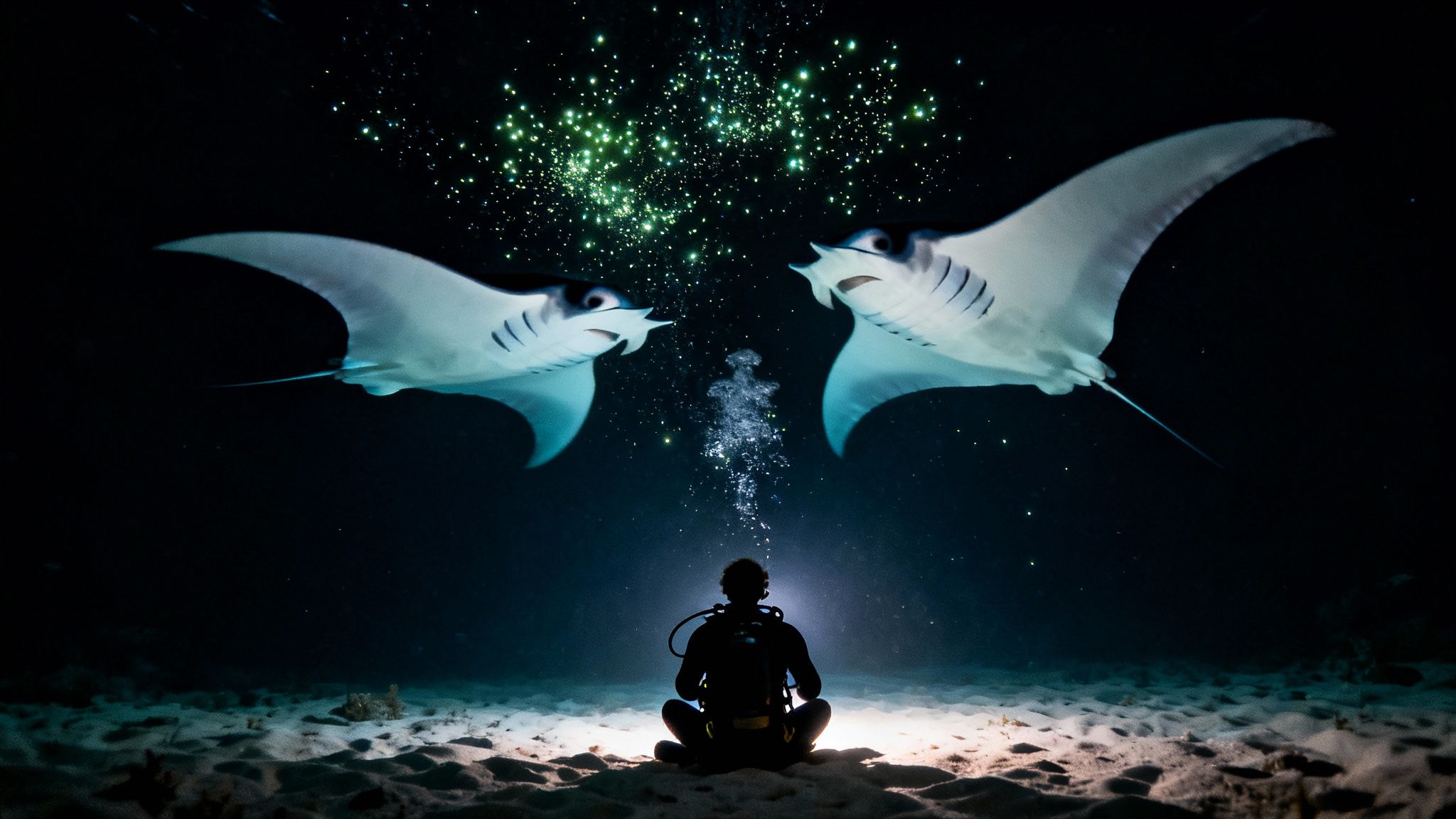
When people talk about the absolute can't-miss scuba Big Island experience, one dive always comes up first: the Manta Ray Night Dive. This isn't just another dive; it's a genuine spectacle. It’s frequently called one of the best night dives on the planet for a reason—you're not just observing, you're a guest at an underwater ballet.
The idea behind it is actually pretty simple. As the sun goes down, you and your group head to a specific spot on the sandy ocean floor. Your guides set up powerful, upward-facing lights, which act like a giant bug zapper for plankton, attracting a massive cloud of the tiny organisms that manta rays love to eat.
What follows is pure magic. Drawn in by the free buffet, massive manta rays glide out of the darkness. With wingspans that can stretch up to an incredible 16 feet, they perform effortless barrel rolls and flips, scooping up plankton and often passing just inches above your head.
Why Garden Eel Cove is the Premier Manta Dive Site
You can do this dive at a couple of spots, but the experience at Garden Eel Cove (aptly nicknamed Manta Heaven) is in a league of its own. Its location is naturally shielded from the big open-ocean swells, which means the water is almost always calmer and clearer. That protected location, better reefs, and a superior viewing area just make for a much more comfortable and predictable dive.
That protected environment also means the reef is healthier, which keeps the plankton supply rich and consistent. It's the perfect recipe for a reliable show. By choosing an operator that goes to Garden Eel Cove, you're setting yourself up for a premium experience you can count on. We break down even more of the details in our complete guide to the Big Island manta ray night swim.
It’s often described as watching a squadron of stealth bombers moving through the water in complete silence. The grace of these animals is mesmerizing, and it creates a connection to the wild that’s hard to put into words.
Good operators like Kona Honu Divers have this dive down to a science, with a combined team experience of over 200 years ensuring every trip is safe and respectful of the animals. And the best part? It's incredibly reliable. Statistics from another top local operator show an 85-90% success rate for manta sightings. This isn’t a roll of the dice; it’s a bucket-list item you can actually plan on.
What to Expect on Your Manta Dive
Your adventure starts with a sunset boat ride out to the site—a pretty epic beginning in itself. After a detailed briefing, you'll gear up and descend in the twilight to a sandy patch about 35 feet down.
Once you’re settled on the bottom, your only job is to relax, breathe, and watch the show unfold. There’s really nothing that can prepare you for the feeling of a giant, gentle creature gliding silently over you. It's a moment that no photo or video will ever do justice.
Kona Honu Divers has truly perfected this manta ray dive tour. They make sure everyone gets a front-row seat, and their commitment to small groups makes the whole thing feel intimate and special.
If you are planning a scuba trip to the Big Island, the manta ray night dive isn't just recommended—it's essential. It is a breathtaking experience that will stick with you forever.
Exploring Kona’s Best Dive Sites by Day
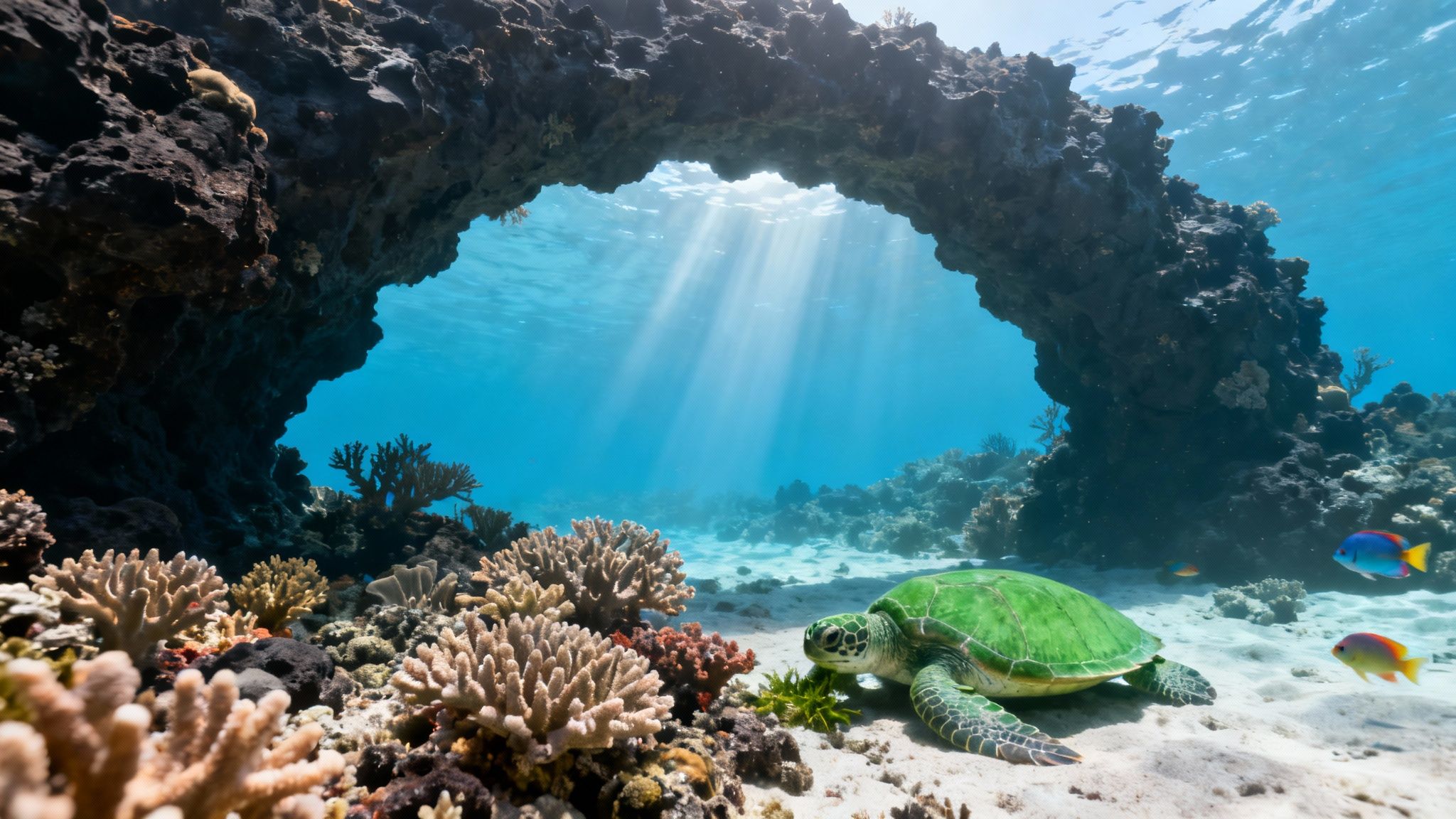
While the manta ray night dive gets a lot of the spotlight—and for good reason—the diving during the day is where the Kona coast truly shows off its incredible diversity. This place is a goldmine for divers, with over 50 unique sites up and down the coast, each one shaped by ancient lava flows.
When you drop into the water here, you’re greeted by stunning clarity, with visibility that often pushes past 100 feet. Daytime dives are all about exploration. Forget staying in one spot; this is your chance to glide through dramatic lava tubes, under massive archways, and over sprawling coral gardens. Every turn reveals something new, whether it’s a perfectly camouflaged octopus hiding in plain sight or a green sea turtle soaring past you.
The Magic of Volcanic Topography
So, what makes Kona's daytime diving so special? It's the geology. The same volcanoes that protect the coast from the trade winds have created an underwater playground unlike any other. You're not just looking at a reef; you're swimming through a masterpiece of natural architecture.
Here’s a taste of what you’ll find:
- Lava Tubes and Caverns: These are natural swim-throughs formed by cooling lava, creating tunnels where beams of sunlight dance in the dark. It's a surreal experience and a great place to spot nocturnal critters hiding out.
- Arches and Pinnacles: Imagine massive rock formations rising from the ocean floor like underwater skyscrapers. Drifting under a giant lava arch is a moment you won't soon forget, and these structures are magnets for schooling fish.
- Pristine Coral Reefs: Kona boasts some of Hawaii’s healthiest coral. You’ll see intricate finger and cauliflower corals teeming with life, providing a buffet and a home for countless reef fish.
This wild topography means no two dives are ever the same. One minute you’re examining a tiny nudibranch on a coral head, and the next you’re floating through a cavern so huge it feels like an underwater cathedral.
Encounters with Iconic Marine Life
All this structure supports an insane amount of marine life. During the day, you get to see the whole ecosystem in action. On a typical two-tank charter, you have a fantastic shot at seeing some of Hawaii’s most famous underwater residents.
Keep an eye out for these regulars:
- Honu (Green Sea Turtles): You’ll see them everywhere. These gentle giants are often found snoozing on the sandy bottom or peacefully munching on algae.
- Reef Fish Galore: Get ready for a sensory overload. The reefs are buzzing with schools of vibrant yellow tangs, ornate butterflyfish, Moorish idols, and of course, Hawaii's state fish, the Humuhumunukunukuāpuaʻa.
- Eels and Octopuses: If you look closely into the reef’s nooks and crannies, you’re almost guaranteed to find a moray eel peeking out or a day octopus showing off its incredible ability to change color and texture.
The best way to see all this is with a local guide who knows the sites like the back of their hand. Shops like Kona Honu Divers are brilliant at choosing the right spots based on the day's conditions and what their divers want to see. Their daily diving tours are top-notch, and an experienced crew can really make a trip unforgettable.
Whether you're a brand new diver hoping to see your first turtle or a seasoned pro hunting for that perfect photo, Kona's daytime dives always deliver.
The Thrilling Kona Blackwater Dive for Advanced Divers
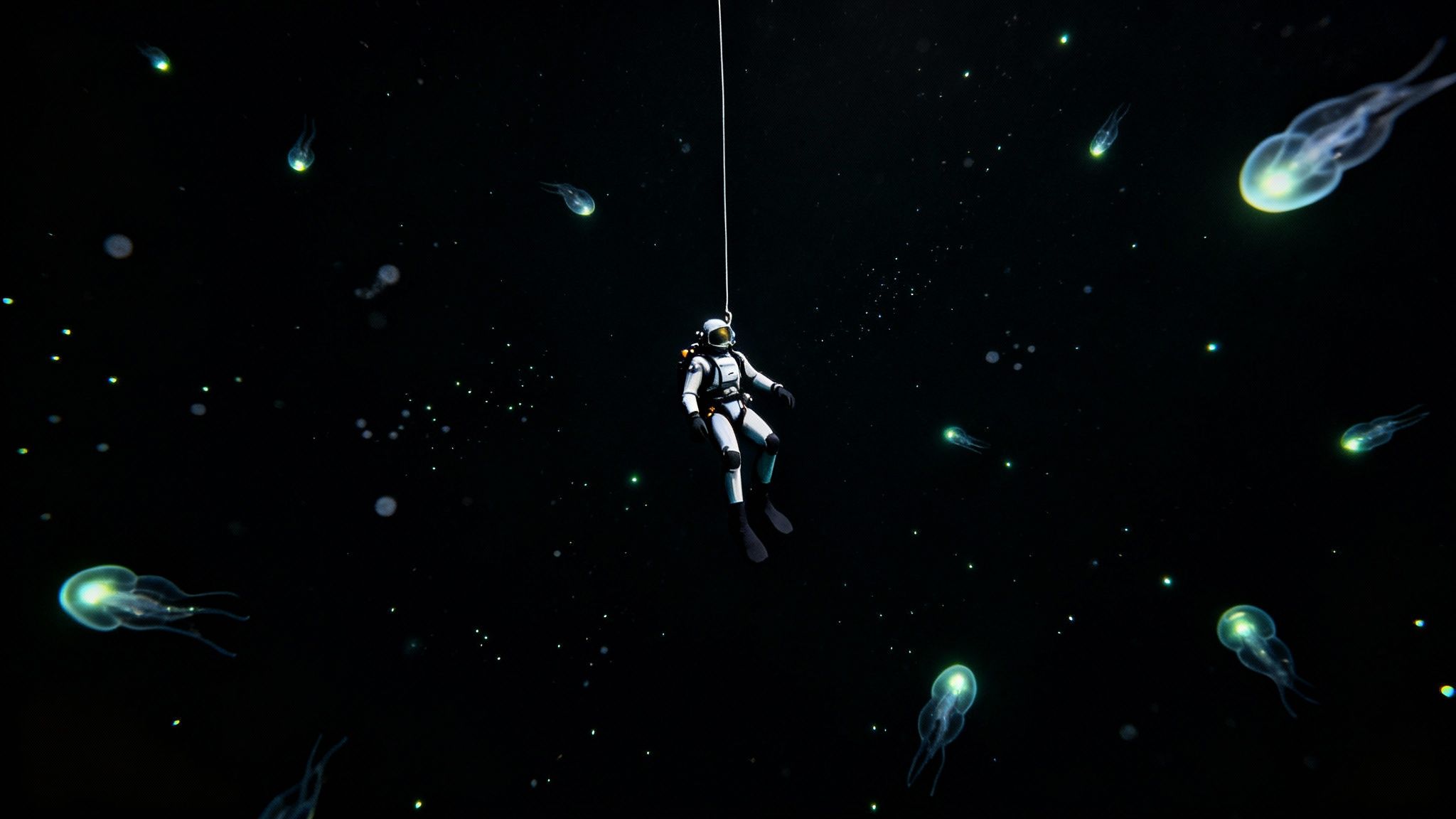
If you're an experienced diver looking for something beyond the reef, something that truly pushes the envelope, the Kona coast has an answer: the Blackwater Dive. This isn't your typical night dive. It's not about exploring a familiar reef after sunset. This is a journey into the deep, dark, open ocean.
Picture this: you're miles offshore, floating in thousands of feet of water, tethered to a boat above. Below you is pure abyss. It’s an experience that divers often describe as feeling like an astronaut floating through space. You're there to witness one of the planet's most incredible phenomena—the largest vertical migration on Earth, where countless creatures rise from the depths to feed under the cover of night.
You are, quite literally, drifting through a real-life science fiction movie.
What You Might See in the Deep
As you hang suspended in the darkness, the beam of your dive light will catch a bizarre and beautiful parade of life. These are the pelagic animals of the open ocean, many of which are transparent, bioluminescent, or in their tiny larval stages.
Keep your eyes peeled for what might drift by:
- Larval Creatures: You'll see fish and invertebrates in their earliest, most alien-like forms. Many look nothing like their adult counterparts, appearing as tiny, ghost-like organisms.
- Bioluminescent Jellies: A whole host of gelatinous creatures pulse with their own light, creating a private, otherworldly light show just for you.
- Pelagic Cephalopods: Look for glowing squid and octopuses that hunt in the open water, often putting on stunning displays of color and light as they move.
This is a cutting-edge type of diving that drops you right into the ocean's midnight zone. The blackwater dive has become one of the most talked-about and thrilling experiences on the Big Island, drawing adventurous divers from all over the world. To get a better sense of this unique adventure, you can explore our detailed guide to the Kona Blackwater Dive.
A Dive for the Experienced Adventurer
Let’s be clear: this is a serious dive for confident, advanced divers. It requires a calm mindset and a solid skill set. Excellent buoyancy control, being completely comfortable in darkness, and having prior night diving experience are non-negotiable.
Because it's such a specialized dive, choosing the right operator is absolutely critical. You need a team that has pioneered this type of exploration and has iron-clad safety protocols. Experienced guides are there to ensure everything runs smoothly, allowing you to focus on the mesmerizing world unfolding around you. Kona's unique offshore geography makes this "Pelagic Magic" possible, offering a chance to see creatures you simply can't find anywhere else.
For those with the right certifications and a hunger for a truly extraordinary experience, the Kona Blackwater Dive is the ultimate underwater quest. It’s an unforgettable plunge into the heart of the ocean’s greatest mysteries.
How to Choose the Right Dive Operator in Kona
Let's be honest, the dive operator you choose can make or break your entire scuba Big Island trip. It's the one decision that truly separates a good vacation from an unforgettable one. With a handful of great shops in Kona, it might seem tough to pick, but the best ones always stand out for the same reasons.
A world-class operator doesn't just drive a boat to a reef. They build an entire experience from the ground up, focusing on safety, comfort, and a genuine love for the ocean. You can feel it in the quality of their boats, their gear, and especially their crew. When an operator invests in their people and their equipment, you can relax and just enjoy the magic of the dive, knowing you're in great hands from start to finish.
When you're looking at your options, try to see past the price tag. The real value is in the entire experience—not just what you see underwater, but how you feel throughout the day.
What to Look for in a Dive Shop
So, what actually makes a difference? Here’s a simple checklist of what I look for when I'm checking out a new operation:
- A Squeaky-Clean Safety Record: This is the absolute bottom line. You want a shop with a long-standing reputation for putting safety first, with well-maintained gear and crews who clearly know their emergency procedures.
- Boat Comfort and Quality: You'll spend hours on this boat, so it matters! Look for custom-built dive boats. Little things like a hot freshwater shower, room to move around, and an easy way to get in and out of the water make a world of difference.
- The Vibe of the Crew: An amazing crew makes all the difference. You want guides who are not just experienced divers but are also fun, approachable, and passionate about sharing their knowledge of local marine life.
- Small Group Sizes: This is a huge one. Diving with a small group means you get more personalized attention, you're not bumping into other divers, and the whole experience just feels more intimate and relaxed.
- Value-Added Perks: The little extras show a shop really cares. Things like complimentary nitrox for certified divers, top-notch rental gear, or even just great snacks after a dive are signs of an operator committed to a first-class experience.
Why Kona Honu Divers Stands Out
While Kona has some solid operators, Kona Honu Divers consistently raises the bar. They just nail all the details. Their team has an incredible 200+ years of combined experience, and that depth of knowledge shows in everything they do.
Their boats, the Honu One and Honu Two, are purpose-built for diving. They're spacious, comfortable, and have those warm freshwater showers that feel like pure luxury after a long dive. They are absolutely dedicated to keeping their groups small, so you never feel like you’re just another tank on the boat. This approach lets their guides give you real, personal attention—pointing out that elusive frogfish or just making sure you're feeling confident and comfortable.
Plus, one of their biggest draws for certified divers is the free nitrox. This is a fantastic perk that allows for more bottom time and shorter surface intervals, meaning you get to spend more time exploring the reefs. It’s this blend of expert service, top-tier amenities, and genuine care that has people raving about them.
Other Respected Kona Operators
To give you a full picture, there are a couple of other mainstays in the Kona diving scene that have been around for a long time and earned solid reputations.
Jack's Diving Locker is one of the original shops on the island. They're well-known for their extensive training programs and have a fleet of large, comfortable boats.
Big Island Divers is another very popular choice. They run a wide variety of tours and are known for having a really friendly and high-energy crew.
Ultimately, the best operator for you comes down to what you value most. But if you focus on safety, quality, and the overall experience, you're guaranteed to have an incredible Big Island diving adventure. Once you know what to look for, you can book your trip with total confidence.
Planning Your Big Island Scuba Adventure
Alright, let's get down to the brass tacks. You're sold on the idea of swimming through ancient lava tubes and coming face-to-face with gentle giant manta rays. Now, how do you actually make it happen?
The good news is that planning a dive trip to Kona is surprisingly straightforward. The massive volcanoes on the island act as a natural shield for the Kona coast, blocking the winds and leaving the water exceptionally calm and clear almost all year.
Water temperatures are also a dream. You can expect a comfortable 75°F (24°C) in the winter months, climbing to a toasty 82°F (28°C) in the summer. Honestly, there's no "bad" time to dive here.
What to Pack and What to Rent
Every dive traveler faces the same dilemma: what to lug across the ocean and what to leave behind. My rule of thumb is to bring the gear that’s personal to your comfort and fit.
- Bring These: Your own mask (no one likes a leaky rental), fins that fit just right, and your dive computer are non-negotiables. If you have a wetsuit that you love, it's worth packing, too.
- Rent These: Leave the heavy lifting to the dive shop. BCDs and regulators are bulky and a pain to travel with. A good operator, like the ones we recommend, keeps their rental fleet in excellent shape, so you can trust the gear.
A quick pro-tip: book your dives well in advance, especially the popular ones. This doesn't just guarantee your spot on the boat; it also gives you a chance to chat with the shop about what gear you'll need to rent.
Sample Dive Itineraries
To give you a better feel for how a trip could look, I've put together a couple of sample schedules. These are just ideas, of course, designed to mix Kona’s must-do dives with enough time to relax.
A 3-Day Dive Plan:
- Day 1: Ease into it. A classic two-tank morning boat dive is perfect for getting your fins wet and seeing some of Kona’s gorgeous reefs and resident green sea turtles.
- Day 2: Take it easy during the day because tonight is the main event: the world-famous Manta Ray Night Dive. It’s an experience that will stick with you forever.
- Day 3: One last morning on the water. A final two-tank dive lets you explore a couple more sites before you have to fly home.
A 5-Day Dive Plan:
- Day 1: Settle in with a two-tank morning charter.
- Day 2: Ready for something different? A premium two-tank trip can take you to more advanced sites with unique underwater landscapes.
- Day 3: Give your body a break. This is a perfect day to off-gas and see what the Big Island has to offer on dry land.
- Day 4: It’s Manta time! Gear up for the legendary Manta Ray Night Dive.
- Day 5: If you're an experienced diver looking for a truly unique thrill, cap off your trip with the surreal Kona Blackwater Dive. It’s like diving in outer space.
All that’s left is to pick your dates, book your diving tours, and get ready for an adventure you'll be talking about for years to come.
Your Big Island Diving Questions, Answered
Got questions about planning your dive trip to the Big Island? You're not alone. Here are straightforward answers to the things we get asked most often, coming straight from divers who have spent countless hours exploring these waters.
What’s the Best Time of Year to Dive Here?
Honestly, there's no bad time to dive in Kona. The massive volcanoes on the Big Island act as a natural shield, protecting the Kona coast from the gusty trade winds that can stir up the water elsewhere. This means we get fantastic conditions pretty much year-round.
Water temps are always comfortable, hovering around a refreshing 75°F in the winter and climbing to a balmy 82°F in the summer. If you love that bathtub-warm water and glass-calm seas, the summer months are hard to beat, but great diving is always on the menu.
Do I Need to Be an Advanced Diver for the Manta Ray Night Dive?
Nope, and that's one of the best things about it! This world-famous experience is totally accessible for Open Water certified divers. It's a very controlled and safe dive designed for maximum enjoyment.
We take you down to a shallow, sandy bottom at about 35 feet, get you settled in, and then the show begins. Since you stay in one spot, it's a perfect dive for almost any skill level. You just get to relax and watch the magic happen.
Besides Mantas, What Else Am I Going to See Down There?
The Big Island’s volcanic underwater landscape is teeming with life. On just about any dive, you can expect to run into green sea turtles (honu), see pods of spinner dolphins playing in the boat's wake, and spot moray eels and octopuses tucked into the lava rock.
The reefs are also buzzing with huge schools of colorful fish—butterflyfish, angelfish, and triggerfish are everywhere. And if you get really lucky, you might just spot an eagle ray gliding by, a gentle whale shark, or even migrating humpback whales during the winter months. You never know what the ocean will surprise you with!
Should I Book My Dives Ahead of Time?
Absolutely, one hundred percent. My best piece of advice is to book your dive tours well in advance, especially for bucket-list trips like the manta ray night dive. The top-rated operators that keep their groups small fill up weeks, sometimes months, ahead of time during the busy seasons (winter and summer).
Booking early means you get your spot, period. It takes the stress out of your vacation and guarantees you won't miss out on the incredible underwater adventures Kona is known for. It’s the easiest way to make sure your perfect scuba Big Island trip actually happens.