
When people talk about world-class scuba diving, Hawaii's Big Island—and specifically the Kona coast—is always part of the conversation. There's a good reason for that. Thanks to the island's massive volcanoes, the waters here are calm, clear, and absolutely packed with life. It's a diver's paradise, sculpted by ancient lava flows and perfect for everyone from first-timers to seasoned pros.
Why Kona Is a World-Class Diving Destination
Picture this: you roll back into the deep blue, and the Hawaiian sun cuts through the water, lighting up a wild, volcanic underwater world. That’s diving in Kona. The coast is shielded by the colossal Mauna Loa and Hualālai volcanoes, which block the gusty trade winds that churn up the water elsewhere. This natural barrier gives us incredibly calm, clear conditions year-round—a luxury few dive spots on the planet can claim.
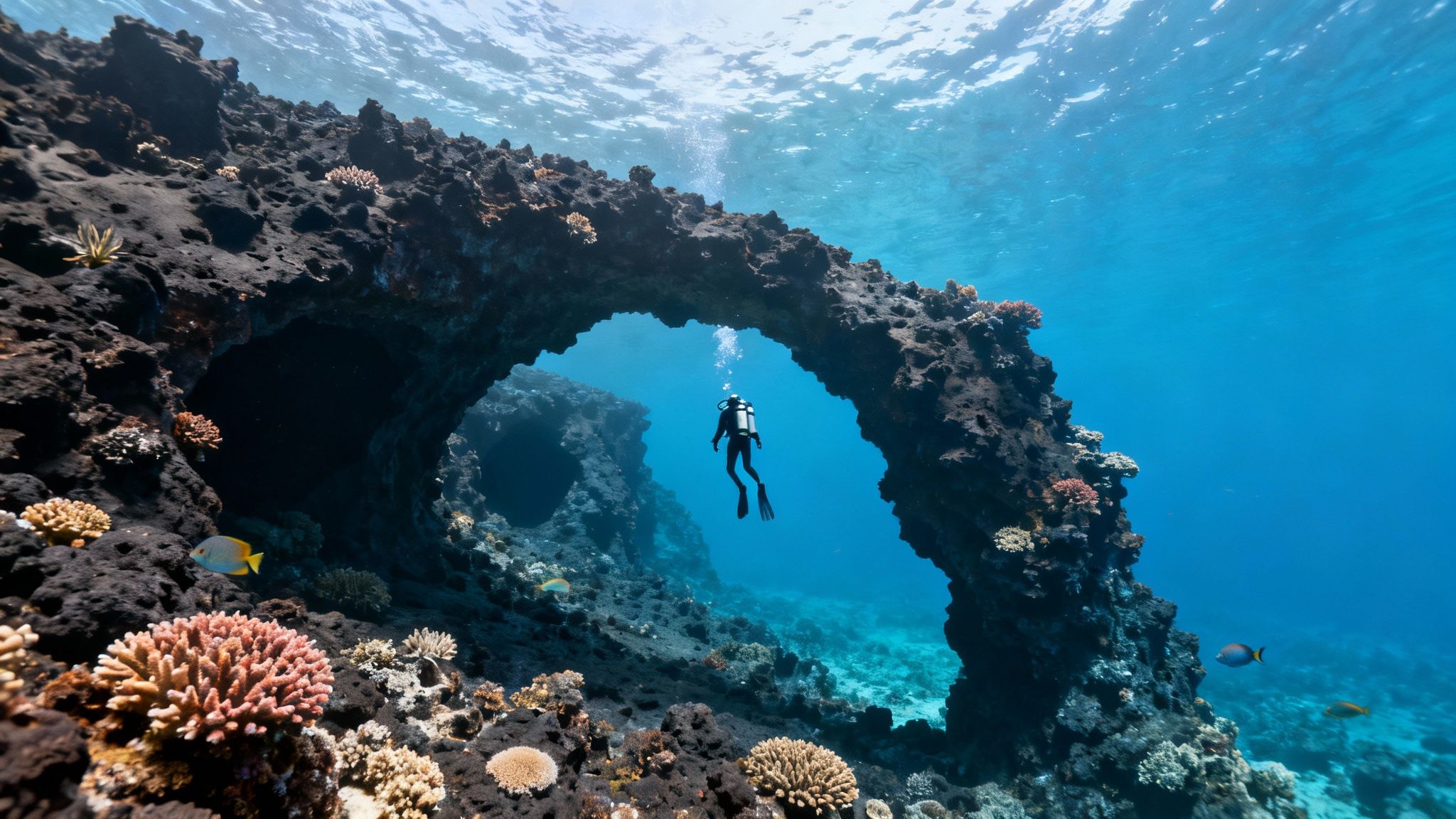
The island's volcanic heart isn't just on land; it's what makes the underwater scenery so breathtaking. We're talking dramatic lava tubes you can swim through, massive archways carved by nature, and intricate caves begging to be explored. These aren't just rocks; they're the foundations of a thriving marine ecosystem. Every dive is different, from sun-drenched coral gardens bustling with fish to deep, mysterious drop-offs where bigger creatures patrol the blue.
An Abundance of Marine Life
What really makes Kona special is the sheer amount of life you'll see. The coral reefs are healthy and vibrant, acting as a magnet for an incredible diversity of animals. On a typical dive, you’re almost guaranteed to run into:
- Honu (Green Sea Turtles): These graceful creatures are everywhere, gliding effortlessly past or just chilling on the reef. It never gets old.
- Endemic Fish Species: Hawaii has a ton of fish you won't see anywhere else on Earth. Keep an eye out for the bright Milletseed Butterflyfish or our state fish, the Humuhumunukunukuāpuaʻa.
- Eels and Octopuses: Always check the little nooks and crannies in the reef! You'll often find a moray eel peeking out or a master-of-disguise octopus hiding in plain sight.
- Pelagic Visitors: The deep offshore waters bring in the big guys. It’s common to see spinner dolphins on the boat ride, and underwater, you might spot eagle rays, and yes, even the occasional shark.
Ideal Conditions for Every Diver
The Big Island is a top-tier destination, and it’s no secret that the Kona coast is the main event. This is where operators like Kona Honu Divers thrive, taking advantage of the fantastic visibility and calm seas all year. Water temperatures are delightful, hitting a warm 82°F (28°C) in the summer, so you can leave that thick wetsuit at home.
The volcanic history here has created a stunning underwater playground, from the protected, vibrant reefs of Kealakekua Bay to deep blue water where you can encounter rare pelagic species. It's an environment that caters to everyone. Whether you're just starting out or have hundreds of dives under your belt, you can find the perfect diving tours in Kona for your adventure.
Here’s a quick snapshot to help you plan your trip.
Big Island Diving At a Glance
| Feature | Details |
|---|---|
| Water Temperature | 76-82°F (24-28°C) year-round |
| Visibility | Excellent, often 100+ feet (30+ meters) |
| Best Time to Dive | Year-round, with summer having the warmest water and calmest seas |
| Marine Life Highlights | Manta rays, green sea turtles, spinner dolphins, endemic fish, eels |
| Top Dive Types | Manta Ray Night Dive, Blackwater Dive, reef dives, lava tubes |
| Required Certification | Open Water Diver (for most boat dives); Advanced for deeper sites |
Simply put, the Big Island offers a consistently amazing underwater experience that will leave you wanting to come back for more.
Witness the Famous Manta Ray Night Dive
If there’s one dive that defines the Big Island, it’s the Manta Ray Night Dive. This isn't just another dive; it's a front-row seat to an underwater ballet, and it’s an experience that will stick with you forever. Imagine sinking into the dark, warm Pacific, finding your spot on the sandy ocean floor, and watching as massive, graceful manta rays glide inches over your head. It’s a surreal, breathtaking spectacle that feels completely otherworldly.
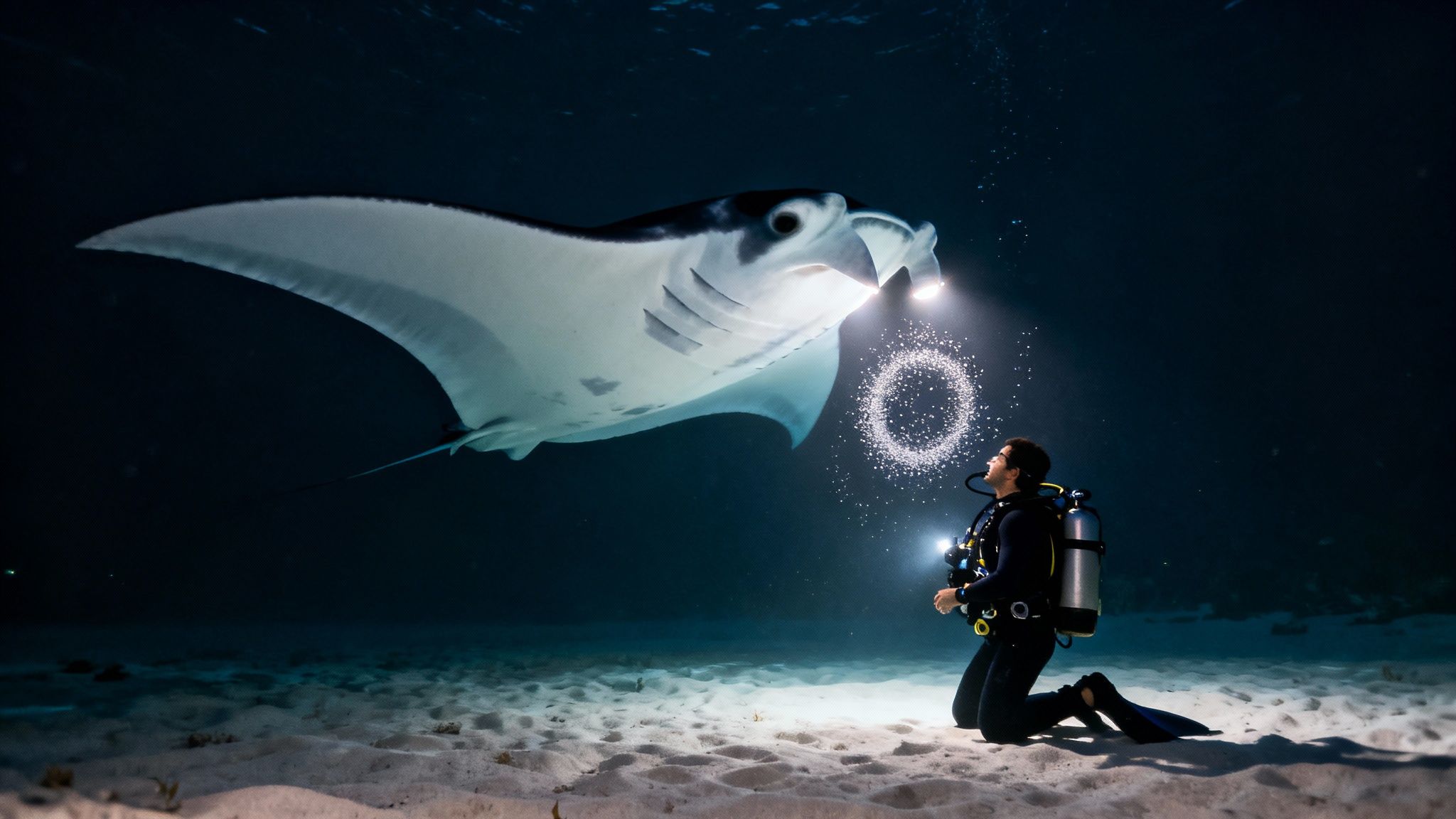
The magic behind this encounter is brilliantly simple. We set up powerful lights on the ocean floor, creating a sort of "campfire" that illuminates the water column. This light attracts swarms of plankton—the manta rays' favorite food. Before you know it, these gentle giants, with wingspans reaching up to 18 feet, arrive for their nightly feast, performing effortless barrel rolls and loops right in the beams of our lights.
And this isn't some rare, lucky sighting. The Kona coast is world-famous for this dive for a reason. These nightly gatherings happen at established "cleaning stations" in 30-40 feet of water, and local dive logs consistently show sightings on 85-90% of trips. It’s one of the most reliable megafauna encounters on the planet.
Choosing the Premier Manta Dive Location
While you can see mantas at a couple of spots, they are not all created equal. From years of experience, we can tell you that one location consistently delivers a better, more magical experience: Garden Eel Cove.
Garden Eel Cove is a naturally protected bay. This means it’s sheltered from the open ocean, which translates to calmer water, less surge, and a much more comfortable and stable viewing experience for divers on the bottom.
This sheltered geography is a complete game-changer. It creates a calm, predictable environment where the viewing "arena" is perfectly set. The smooth, sandy bottom feels like a theater floor, giving you the perfect vantage point to sit back and enjoy the show above.
The alternative site, while still an option, is more exposed to the elements. This can lead to choppier surface conditions and more surge underwater, which can make it harder to relax and take it all in. For this reason, Garden Eel Cove is the superior choice for a dive tour.
Why Garden Eel Cove Excels
The advantages of Garden Eel Cove go beyond just calmer waters. Here’s a quick breakdown of what makes it our go-to spot:
- A Natural Amphitheater: The layout of the seafloor here creates a perfect viewing area. It allows everyone to find a spot without disturbing the mantas or the marine habitat, guaranteeing a front-row seat for all.
- Vibrant Reefs: The surrounding coral at Garden Eel Cove is teeming with life. This is a huge plus because on a two-tank trip, your first dive is often a stunning sunset reef dive here, adding even more value to your excursion.
- Decades of Mantas: This spot isn't a recent discovery. It's a long-established, reliable feeding ground that mantas have been visiting for decades, making sightings incredibly consistent.
What to Expect on Your Manta Dive Tour
Joining one of our manta ray dive tours is a seamless adventure from start to finish. We typically head out in the late afternoon for a two-tank trip. Your first dive is usually a beautiful exploration of the reef as the sun goes down. It’s a great way to get comfortable and watch the underwater world transition from day to night.
After coming up for snacks and a briefing during your surface interval, it’s time for the main event. You'll descend with your guide to the viewing area, settle onto the sand, and switch on your dive light, pointing it straight up. Then, the magic begins. For about 45 minutes, you’ll be mesmerized as these gentle giants dance in the light above you.
Respecting these amazing creatures is our top priority. The golden rule is simple: look, but don't touch. Touching a manta ray can harm its protective mucous coating, making it vulnerable to infection. The best approach is to remain still and let them glide gracefully around you—it's how we ensure a safe and unforgettable interaction for everyone involved, mantas included.
Exploring Dive Sites Beyond the Mantas
The Manta Ray Night Dive is absolutely a bucket-list experience, but believe me when I say it’s just scratching the surface of what the Big Island has to offer. The entire Kona coast is a submerged volcanic wonderland, packed with a huge variety of dive sites for every skill level. While some divers travel the world for specific thrills like [diving with sharks](https://www.guesswhatidid.co.uk/blogs/guess-what-i-did/diving-with-sharks-uk), here in Kona, it’s the dramatic lava-formed topography that creates our unique underwater playground. For those looking for a more thrilling experience, we offer [advanced dive tours](https://konahonudivers.com/diving-tours/premium-advanced-2-tank-trip/?ref=blog).
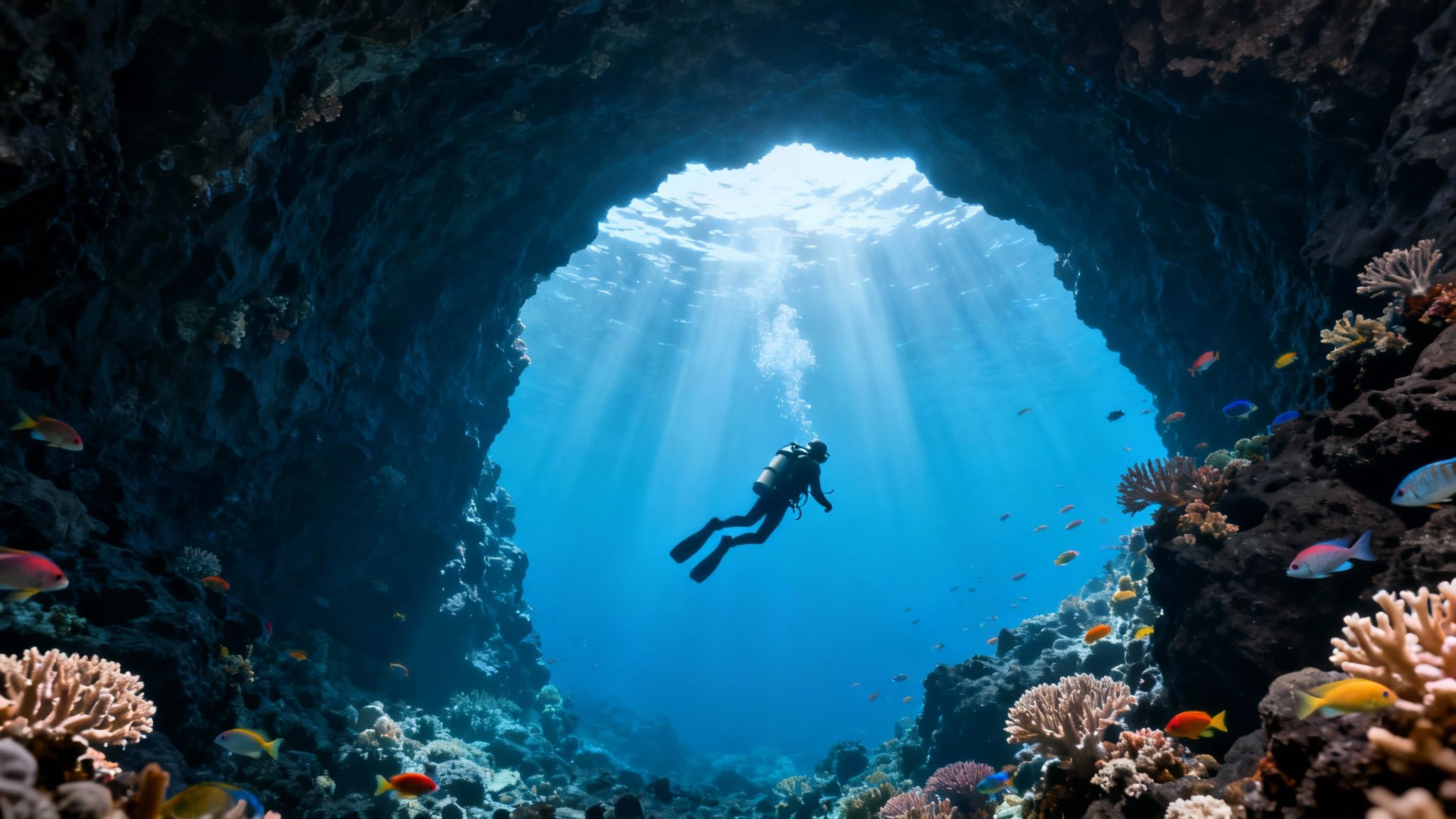
The island's fiery origins have literally sculpted an underwater landscape you won't find anywhere else. As a diver, you get to navigate through ancient lava tubes, swim under majestic arches, and explore intricate cave systems—all remnants of powerful volcanic flows that met the sea. These structures have since become the foundation for bustling communities of vibrant marine life.
Lava Tubes and Coral Gardens
Many of Kona's most beloved dive sites are built around these incredible volcanic features. Places like Golden Arches and Turtle Pinnacle show off not only gorgeous coral gardens but also the dramatic lava formations that really define what Kona diving is all about. It’s here you’ll see huge schools of fish, including many endemic species found nowhere else on Earth.
When you're exploring these sites, you're bound to find a world of hidden creatures. Keep your eyes peeled for:
- Whitemouth Moray Eels: You'll almost always spot them peeking out from the cracks and crevices of the lava rock.
- Frogfish: These guys are masters of camouflage. Spotting one of these unique fish perfectly blended in with the sponges is a real treat.
- Hawaiian Green Sea Turtles (Honu): It’s a rare dive when you don't see them resting on the reef or gracefully gliding past.
These sites are perfect for any certified diver looking for that classic Kona underwater experience. To get a better feel for all the different spots, you can explore our complete guide to Big Island diving sites.
The Kona Blackwater Dive: A Pelagic Adventure
Now, for the truly adventurous and experienced divers, Kona offers something utterly unique: the Blackwater Dive. This isn't your typical reef dive. Far from it. You're taken miles offshore, tethered to the boat, and suspended over thousands of feet of deep, dark, open ocean. Honestly, it feels more like a spacewalk than a scuba dive.
The Blackwater Dive is a journey into the abyss. You're witnessing the largest vertical migration of life on the planet as countless strange and wonderful creatures rise from the depths to feed near the surface under the cover of darkness.
Under the glow of powerful lights, you'll meet bizarre, bioluminescent organisms that very few people ever get to see. I'm talking translucent squid, alien-like larval fish, and shimmering siphonophores that look like something out of a sci-fi movie. This dive isn't for the faint of heart—it demands excellent buoyancy control and being completely comfortable in the dark. But the reward is an encounter you will never, ever forget.
Accessible Shore Diving
While our boats can get you to Kona's most spectacular offshore sites, the island also has some fantastic shore diving for certified divers who enjoy exploring at their own pace. Sites like Pu'uhonua O Hōnaunau (better known as Two Step) and Kahalu'u Beach Park offer incredibly easy entry points and healthy, shallow reefs teeming with life.
These spots are perfect for a relaxed afternoon dive, for practicing your macro photography, or just for enjoying the abundant fish in calm conditions. You can often see turtles, eels, and huge schools of tangs just a short swim from where you parked your car. With plenty of local shops offering gear rentals, it’s easy to plan your own underwater adventure. Whether you're after deep-water thrills or a casual reef exploration, the Big Island has you covered.
How to Choose the Right Kona Dive Operator
Your choice of dive operator will make or break your trip. I’m not exaggerating. It’s the single most important decision you’ll make, dictating everything from your safety and comfort to whether you have a decent time or an absolutely unforgettable one.
The best shops aren't just boat taxis; they're your gateway to the underwater world. They should be built on a foundation of experienced guides, small group sizes, and top-notch equipment. No compromises.
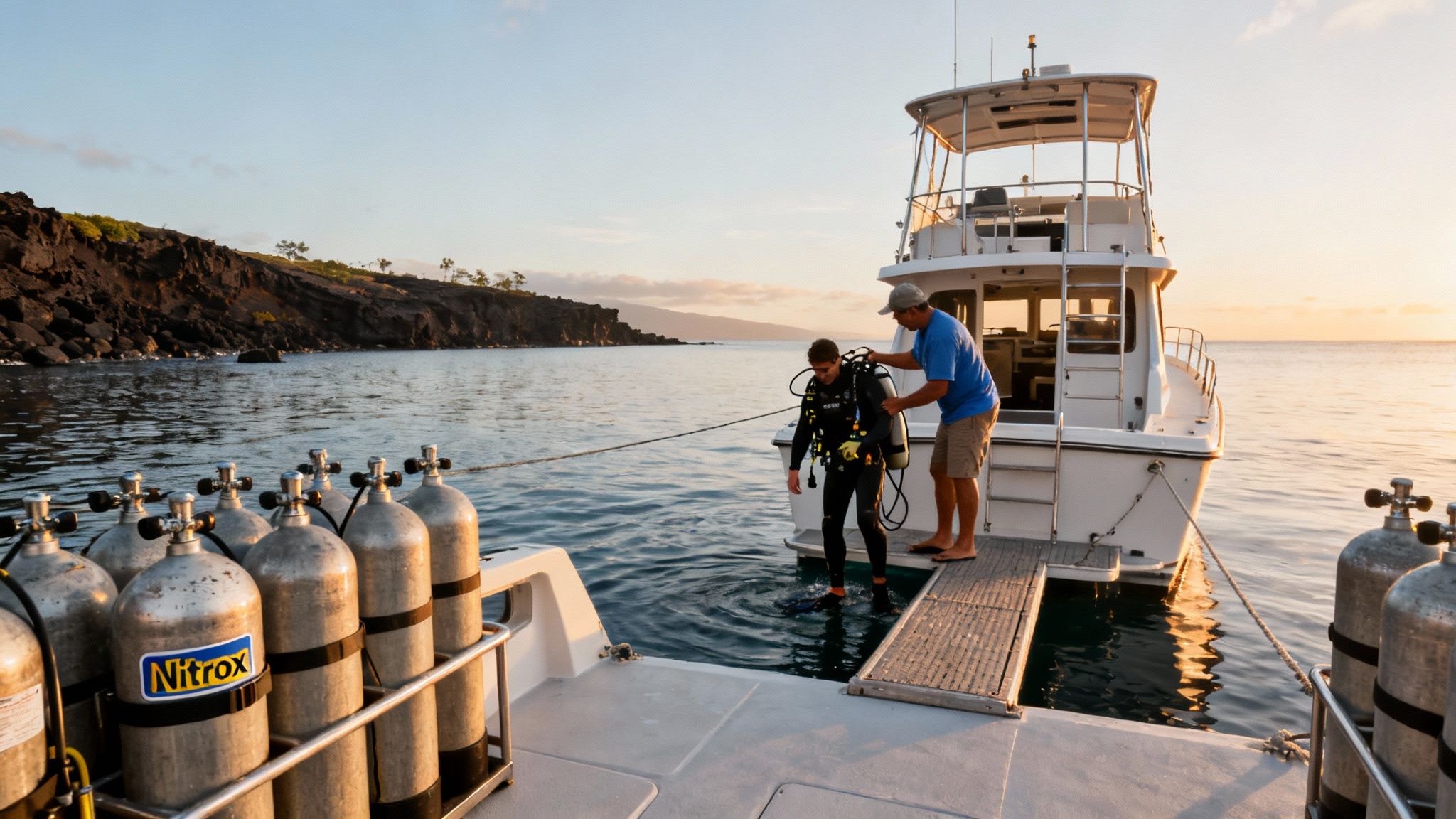
When you’re looking at different companies, prioritize deep local knowledge. A great guide doesn’t just know the location of a dive site; they know its personality. They can show you the specific lava tube where a shy whitetip reef shark naps, the coral head that doubles as a turtle cleaning station, or that one little ledge where frogfish love to hang out. That kind of insight only comes from years of diving these exact waters every single day.
Also, keep a close eye on group sizes. Any operator cramming as many divers as possible onto their boat is signaling that you’re a number, not a guest. Smaller groups are a game-changer. It means your guide can actually guide—pointing out incredible marine life, offering a quick tip on your buoyancy, and making sure everyone feels safe and looked after.
What Sets a Top-Tier Operator Apart
When you're trying to figure out who's who, it helps to use a well-regarded shop like Kona Honu Divers as a benchmark. A premier company invests in the details, from custom-built dive boats designed for comfort to premium perks that show they care about your experience.
Take free nitrox, for example. We offer it to all our certified nitrox divers. This isn't just a gimmick; it's a practical benefit that means more time exploring the reef and less time waiting on the boat. It’s a clear sign that the operator is focused on giving you the best dive day possible.
A truly five-star operation is defined by its crew. An experienced team with a passion for diving and a dedication to marine conservation elevates every aspect of your trip, from the pre-dive briefing to the post-dive celebration.
When you compare shops, look beyond the sticker price to see the true value. A slightly higher upfront cost often includes high-quality rental gear, genuinely knowledgeable guides, and thoughtful extras that other places nickel-and-dime you for. Comparing Kona Honu Divers to another Kona diving company can really highlight these crucial differences.
To make it easier to see what I mean, here’s a quick breakdown of what you get with a premium operator versus a standard one.
Kona Honu Divers vs. Standard Operators
| Feature | Kona Honu Divers | Standard Operators |
|---|---|---|
| Nitrox | Free for certified divers | Usually an extra charge ($10-$20/tank) |
| Guide Ratio | Small groups (6:1 max) | Often larger (8:1 or more) |
| Boats | Custom-built for diving, spacious | Multi-purpose or crowded boats |
| Crew Experience | Experienced, passionate, local experts | Varies, sometimes seasonal/newer staff |
| Conservation | Actively engaged (reef-safe practices) | Policies may be less clear or enforced |
| Gear | High-quality, well-maintained | Can be basic or show heavy wear |
As you can see, the "extras" add up to a completely different, safer, and more enjoyable experience underwater.
Questions to Ask Any Dive Shop Before You Book
Before you put down your credit card, ask these questions. The answers will tell you everything you need to know.
- What is your guide-to-diver ratio? Anything more than 6 divers per guide is a red flag. You want personalized attention.
- How many divers do you take out on the boat? This will give you a real sense of how crowded the trip will feel, both on the surface and underwater.
- Is nitrox available, and is it included? This is a huge tell. Including nitrox shows a commitment to the diver's experience.
- Can you walk me through your safety protocols? They should be able to instantly tell you about their emergency oxygen, first aid kits, and emergency plans.
- What are your conservation policies? A responsible operator should be passionate about protecting the very reefs you're paying to see.
Asking these questions helps you see past the slick marketing and find a dive partner who is truly committed to delivering a safe, memorable, and world-class adventure.
Planning Your Big Island Scuba Vacation
A truly great dive trip starts long before you feel the splash of water on your face. It's all in the planning. Nailing down the logistics before you even think about packing means your Big Island scuba adventure will be exactly what you dreamed of: smooth, exciting, and perfectly timed.
Let's start with the big question: when should you come? While Kona is a fantastic year-round dive destination, the seasons do bring their own special flavor to the underwater world. The "best" time really comes down to what you want to see.
When to Visit The Big Island for Scuba
Knowing the subtle shifts in the seasons can take your trip from good to absolutely unforgettable. The water here is always warm and the visibility is usually great, but each time of year has its own unique charm.
- Summer (June – September): This is when the ocean feels like a warm bath, often getting up to a balmy 82°F (28°C). The seas are typically at their most calm—think glassy, smooth boat rides and incredibly peaceful dives. If you're the type who loves diving in just a rash guard, this is your season.
- Winter (December – March): The water might cool down a bit to around 75°F (24°C), but winter brings something truly magical: humpback whales. They come to Hawaii to breed and calve, and hearing their haunting songs reverberate through the water on a dive is an experience that will stay with you forever. It's a surreal, full-body soundtrack to your underwater adventure.
It's no secret that diving in Hawaii is becoming more popular. The whole U.S. diving tourism market is on a major upswing, projected to grow from USD 1,101.6 million in 2025 to USD 1,585 million by 2035. This boom is fueled by divers looking for exactly what Kona delivers—healthy reefs and unforgettable encounters with big marine life. You can read more about the growth of the diving tourism market to see where the trends are headed.
Your Diver-Specific Packing Checklist
Packing smart means you can spend your time enjoying the dives, not worrying about what you left at home. Aside from your usual vacation gear, a few dive-specific items are essential for a trip to the Big Island.
Essential Gear and Accessories:
- Certification Cards: Don't leave home without them. Bring your physical cards, but also have digital copies saved to your phone just in case. This goes for your base certification and any specialties like Nitrox.
- Dive Computer & Logbook: These are non-negotiable for tracking your dives safely and keeping a record of all the incredible things you'll see.
- Mask, Snorkel, Fins: Even if you rent the big stuff, bringing your own mask, snorkel, and fins is a game-changer. Nothing beats the comfort of gear that fits you perfectly.
- Wetsuit: For most people, a 3mm wetsuit is perfect for the Big Island any time of year. If you know you run cold, maybe consider a 5mm for the slightly cooler winter months.
Health and Comfort Items:
- Reef-Safe Sunscreen: This is a big one. Hawaii has banned sunscreens with oxybenzone and octinoxate because they damage our coral reefs. Please look for mineral-based sunscreens with zinc oxide or titanium dioxide.
- Reusable Water Bottle: Staying hydrated is so important when you're diving. Most boats have a water cooler for refills, making it easy to cut down on plastic waste.
- Seasickness Medication: Even if you think you're immune, it’s better to have it and not need it. The Kona coast is usually calm, but why risk a great dive day?
- Dry Bag: A small one is perfect. It'll keep your phone, keys, and a towel from getting soaked on the boat.
Dive-Friendly Accommodations and Getting Around
Kailua-Kona is the hub of all the diving action, so staying in or near town is your best bet for convenience. You can find everything from sprawling oceanfront resorts to cozy, budget-friendly condos, many of which are just a quick drive from Honokohau Harbor, where our boats depart.
On that note, we can't recommend renting a car enough. The Big Island lives up to its name—it's huge! A car gives you the freedom to explore on your off-gassing days. Go see the craters at Hawaii Volcanoes National Park or chase waterfalls on the Hamakua Coast. It also makes getting to the harbor for those early morning dive charters a whole lot easier. Just be sure to book your rental car well in advance, especially if you're coming during a busy season.
Got Questions? We’ve Got Answers.
Planning a dive trip always brings up a few last-minute questions. To make sure you arrive in Kona feeling prepared and excited, we've rounded up the answers to some of the most common things divers want to know.
What’s the Best Time of Year to Dive in Kona?
Honestly, there’s no bad time to dive here—it’s fantastic year-round. It really just depends on what you’re looking for.
If you love warm, glassy-calm water, the summer months from June to September are pure bliss. But if you visit in the winter, between December and March, you get a truly magical bonus: the sound of humpback whale songs echoing through the water on your dives. It’s an experience you’ll never forget.
How Thick Should My Wetsuit Be?
You can leave the drysuit at home. The water along the Kona coast is wonderfully comfortable, hovering between 75-82°F (24-28°C) all year.
For most divers, a standard 3mm wetsuit is all you'll ever need. If you're someone who gets chilly easily, you might feel a bit more comfortable in a 5mm, especially during the slightly cooler winter months.
I’m Not Certified. Can I Still Try Scuba Diving?
You absolutely can! If you've always wondered what it's like to breathe underwater, this is the perfect place to find out.
Reputable dive shops like Kona Honu Divers offer introductory experiences, often called a PADI Discover Scuba Diving course. You'll learn the basics from a professional instructor and then go for a real dive in a shallow, protected reef under their direct, one-on-one supervision.
What Kind of Marine Life Can I Expect to See?
Get ready for an incredible show. On nearly every scuba Big Island dive, you’re almost guaranteed to encounter Hawaiian green sea turtles (honu), moray eels peeking out from the reef, and a huge diversity of vibrant tropical fish you won't find anywhere else on Earth.
Keep an eye out for pods of spinner dolphins on the boat ride, too. And if you sign up for one of the iconic specialty dives, like the manta ray night dive or a blackwater dive, you'll open up a whole new world of majestic rays, reef sharks, and bizarre, fascinating creatures from the deep.
Ready to see it for yourself? Kona Honu Divers has a full lineup of diving tours perfect for every diver, from first-timers to seasoned pros.