
Picture this: you're descending into a world of impossible blue, surrounded by a kaleidoscope of coral gardens and ancient lava formations. This is what it’s like to scuba the Big Island. For those in the know, it’s the undisputed crown jewel of diving in Hawaii. The Kona coast, in particular, offers up consistently calm seas and visibility that often stretches beyond 100 feet, creating an underwater experience that’s simply second to none.
Welcome to Your Big Island Scuba Adventure
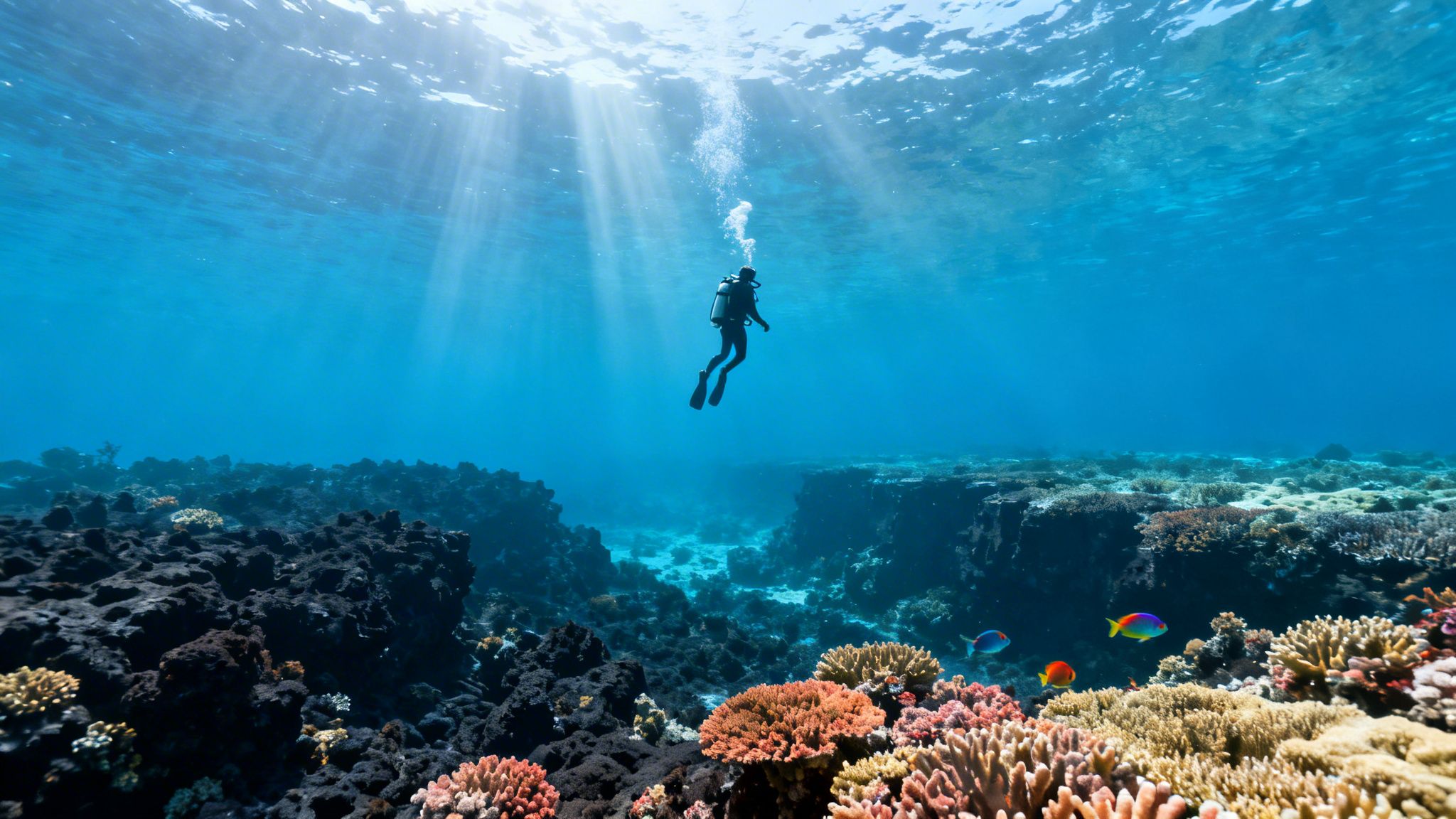
Think of this guide as your personal roadmap to the unforgettable underwater world waiting just for you. We’re about to dive into everything that makes this place a diver’s paradise, from the world-famous Manta Ray Night Dive to surreal, deep-water Blackwater Dives that feel more like a trip to outer space.
The Big Island isn’t just another pretty spot on the map; its magic comes from a unique blend of geology and biology. The sheer scale of its volcanoes shields the Kona coast from the whipping trade winds, creating a calm, protected leeward side that’s perfect for diving all year long. This natural shield means exceptionally clear water and thriving, delicate reefs you just won't find on more exposed islands.
What Awaits Beneath the Waves
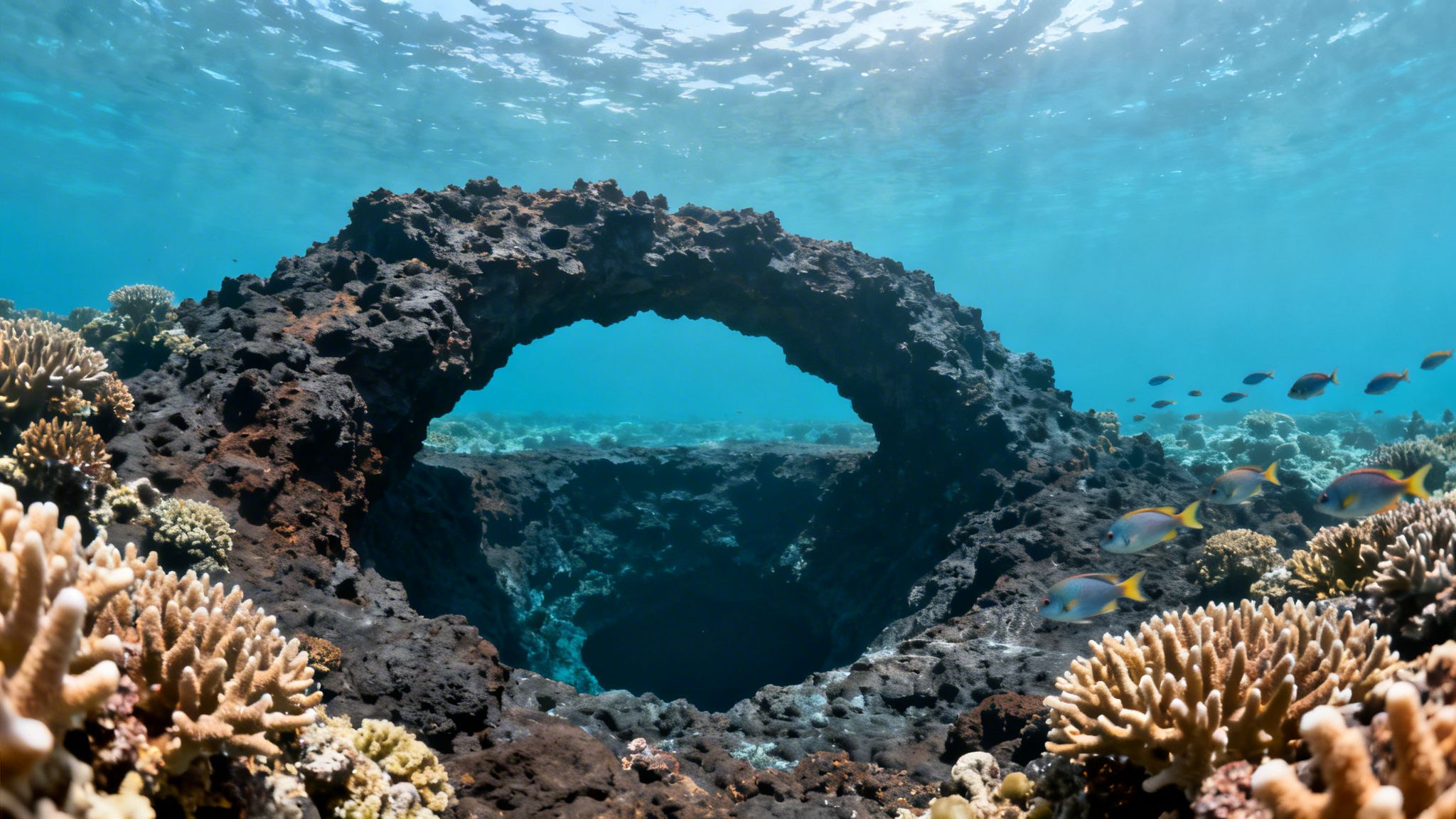
Down below, the topography is a direct story of the island's volcanic past. It’s an underwater playground of dramatic structures you won't find anywhere else on earth. You’ll be navigating through ancient lava tubes, swimming under massive archways, and exploring submerged craters that are now bursting with life. This incredible landscape is the perfect backdrop for a mind-blowing variety of marine creatures.
Here's just a taste of what makes diving here so special:
- World-Famous Night Dives: The Big Island is home to two of the planet's most unique night dives—the Manta Ray Night Dive and the Kona Blackwater Dive.
- Abundant Marine Life: Get ready for up-close encounters with green sea turtles, playful spinner dolphins, and countless species of endemic fish that live only in Hawaiian waters.
- Pristine Coral Reefs: Thanks to great conservation efforts and those ideal conditions, the reefs are genuinely vibrant and healthy, supporting a dense and colorful ecosystem.
Throughout this guide, we'll introduce you to top-notch operators like Kona Honu Divers, a team that truly specializes in turning a great dive into a lifelong memory. Their experienced crew, custom-built boats, and commitment to small groups mean you're getting a safe, comfortable, and personalized adventure every time. See what other divers have to say about their experience.
Ready to plan your trip? You can explore a variety of incredible diving tours in Kona that cater to every interest and skill level.
Check AvailabilityWhat Makes Big Island Diving So Unique
So, what really sets the Big Island apart from every other dive spot in Hawaii? It all comes down to a perfect storm of geology and geography. The Kona coast is tucked away on the leeward side of the island, shielded from the relentless trade winds by the sheer mass of Mauna Kea and Mauna Loa.
This natural windbreak is our secret weapon. It creates incredibly calm, clear waters that are the envy of the Pacific. While other islands are battling choppy seas and stirred-up sediment, Kona often greets us with glassy conditions and visibility that can easily push past 100 feet. That kind of consistency makes planning your scuba Big Island trip a whole lot easier and more rewarding.
The underwater landscape here is a direct result of the island’s volcanic birth—a dramatic, fiery masterpiece now teeming with life. As a diver, you get to explore incredible lava tubes, massive archways, and sunken craters. It's an amazing feeling to swim through a passage that was once a river of molten rock. You’re literally diving through the history of Hawaii’s creation.
The Volcanic Advantage
This volcanic topography isn't just for show; it creates an intricate and vibrant habitat. These unique structures provide the perfect shelter from currents and predators, allowing delicate corals to flourish and giving countless critters—from octopuses to eels—a place to call home.
- Lava Tubes and Caves: These are so much fun to explore. They offer thrilling swim-throughs and are often hiding spots for Hawaiian turkeyfish and spiny lobsters.
- Massive Archways: Formed by ancient lava flows, these awe-inspiring structures are usually draped in corals and attract huge schools of fish.
- Submerged Craters: Think of these as natural amphitheaters. They create protected areas where marine life gathers, making for some truly epic photo ops.
This underwater architecture makes for a dynamic playground for divers of every skill level. You can dive deeper into the unique geology of Kona diving and see how it truly shapes the experience.
Thriving Marine Sanctuaries
On top of the incredible natural features, the Big Island is also home to several fiercely protected marine sanctuaries. The Kealakekua Bay Marine Life Conservation District is a perfect example, serving as a vibrant nursery that seeds the entire coastline with new life. Thanks to strict regulations, the area is packed with fish and boasts some of the healthiest coral reefs you'll ever see.
This powerful combination—calm, sheltered waters, dramatic volcanic structures, and a strong commitment to conservation—is what makes scuba diving on the Big Island genuinely special. It’s an environment that delivers a more reliable and impressive dive every time, while ensuring this underwater paradise remains pristine for the future.
The Big Island’s Unmissable Dives
This is where your dive log gets some serious bragging rights. The Big Island isn’t just about beautiful reefs; it's home to some of the most famous and truly unique underwater encounters on the planet. Each one offers a completely different kind of adventure.
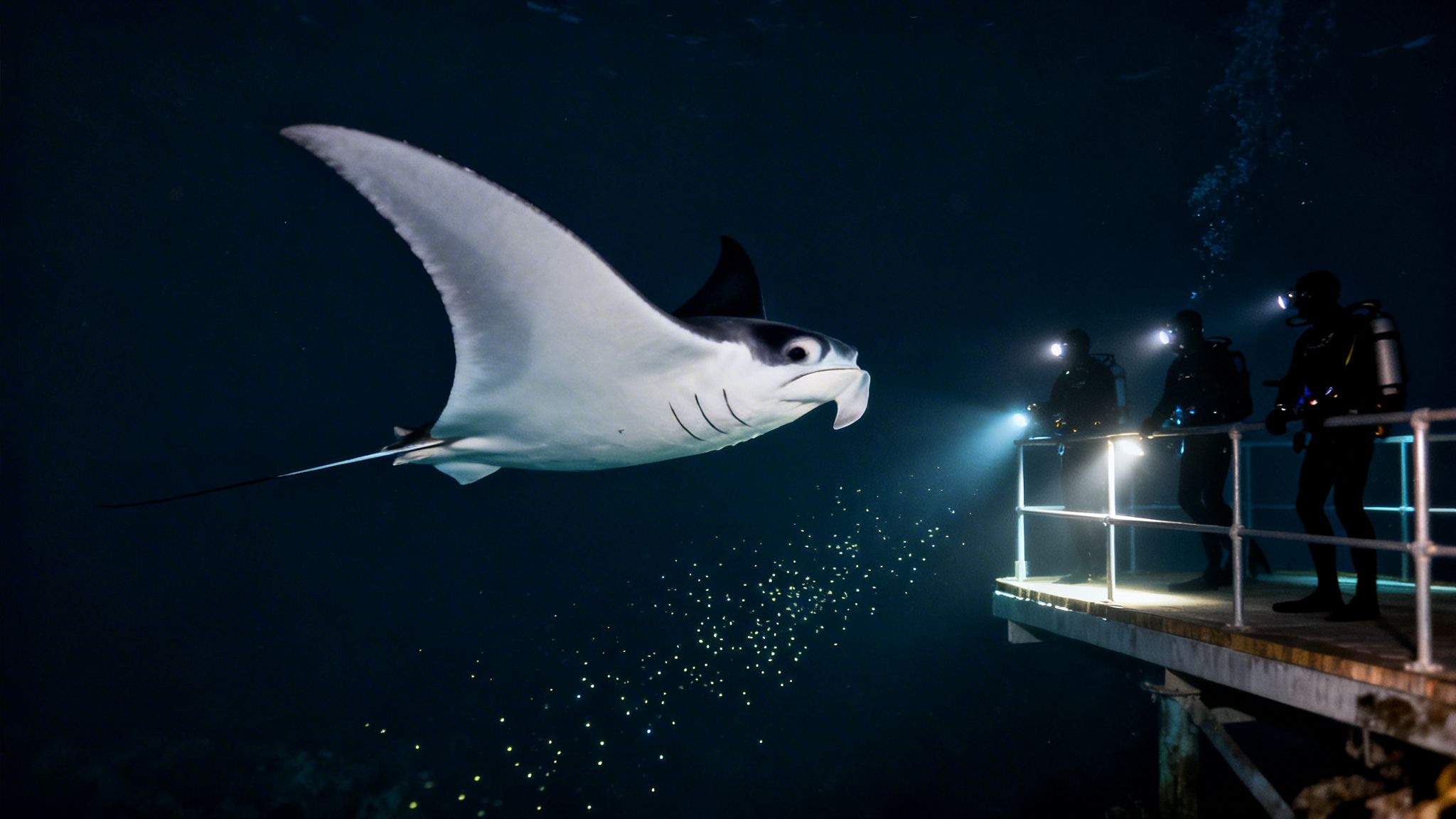
The undisputed star of the show is the world-famous manta ray night dive. Picture yourself kneeling on the sandy bottom in the dark as these gentle giants, some with wingspans over 12 feet, perform a graceful ballet just inches above your head. It’s a surreal, humbling experience that rightfully sits at the top of countless divers' bucket lists. If you do one dive in Kona, make it Kona's Manta Ray Night Dive.
The Best Manta Experience: Garden Eel Cove
While there are a couple of spots for this dive, Garden Eel Cove is the superior choice. It's tucked into a bay that offers more protection from the open ocean swell, which often means calmer, more enjoyable conditions.
Even better, the underwater landscape forms a natural amphitheater. This gives everyone a front-row seat without having to crowd, making for a much better viewing area and a more intimate experience. The reefs here are also incredibly healthy, so your descent and safety stop are beautiful dives in their own right.
And yes, the mantas show up. These encounters are incredibly reliable, with sighting rates hovering around 85-90% year-round. It's not uncommon for dives to see anywhere from 2 to 32 individual mantas in a single outing.
Drifting Through Inner Space: The Kona Blackwater Dive
For a completely different kind of thrill, you have to try the Kona Blackwater Dive. Forget the reef. On this dive, you're tethered to the boat, drifting over thousands of feet of inky black water as bizarre, beautiful, and often bioluminescent creatures rise from the deep.
These are animals that spend their days in the abyss, migrating vertically toward the surface at night to feed. You’ll come face-to-face with creatures that look like they belong on another planet.
The experience is often compared to floating through outer space. You'll see translucent squids, otherworldly larval fish, and pulsating jellies putting on a light show. It completely redefines what a night dive can be.
Kona's Vibrant Reefs and Advanced Dives
Of course, the daytime diving here is just as spectacular. For more experienced divers looking for a challenge, there are plenty of deeper reef systems to explore. The island's volcanic origins have sculpted an incredible underwater world of lava tubes, arches, and thriving coral gardens that are best seen on an advanced dive tour.
- Crescent Beach: A photographer's playground, famous for its dramatic lava archways and swim-throughs. It's packed with endemic Hawaiian fish like the milletseed butterflyfish.
- Golden Arches: This site lives up to its name with a series of lava rock arches. It's also a fantastic place to find green sea turtles resting or visiting cleaning stations.
The Big Island is a massive playground. We've got a dive site for every mood and skill level. You can learn about the incredible variety in our complete guide to Big Island diving sites.
Big Island Signature Dives Overview
To help you choose, here's a quick look at how these iconic dives stack up against each other.
| Dive Experience | Best For | Key Marine Life | Difficulty Level |
|---|---|---|---|
| Manta Ray Night Dive | Unforgettable "bucket list" encounters and photographers. | Giant Manta Rays, Garden Eels | Beginner / Intermediate |
| Blackwater Night Dive | Adventurous divers seeking a unique, otherworldly experience. | Bioluminescent creatures, larval fish, deep-sea organisms. | Advanced |
| Daytime Reef Dives | Exploring volcanic topography and vibrant coral ecosystems. | Sea Turtles, Endemic Reef Fish, Eels, Dolphins. | All Levels |
Each dive offers a window into a different facet of the Big Island's incredible marine biodiversity. From the majestic ballet of the mantas to the alien world of the blackwater, the diving here is simply world-class.
Check AvailabilityChoosing a Dive Company You Can Trust
Let's be honest, the dive operator you choose can make or break your entire scuba Big Island vacation. It’s about so much more than just a boat ride. Your safety, comfort, and the overall quality of your adventure are in their hands. A great company doesn't just drop you at a dive site—they create an experience you'll remember for years.
This is where a top-rated crew like Kona Honu Divers really shines. They’ve built their reputation on serious expertise and a genuine passion for the ocean. When you’re diving with a team that has over 200 years of combined industry experience, you can actually relax, knowing you’re in good hands. That confidence lets you truly soak in the magic of Kona's underwater world.
The Value of a Premium Experience
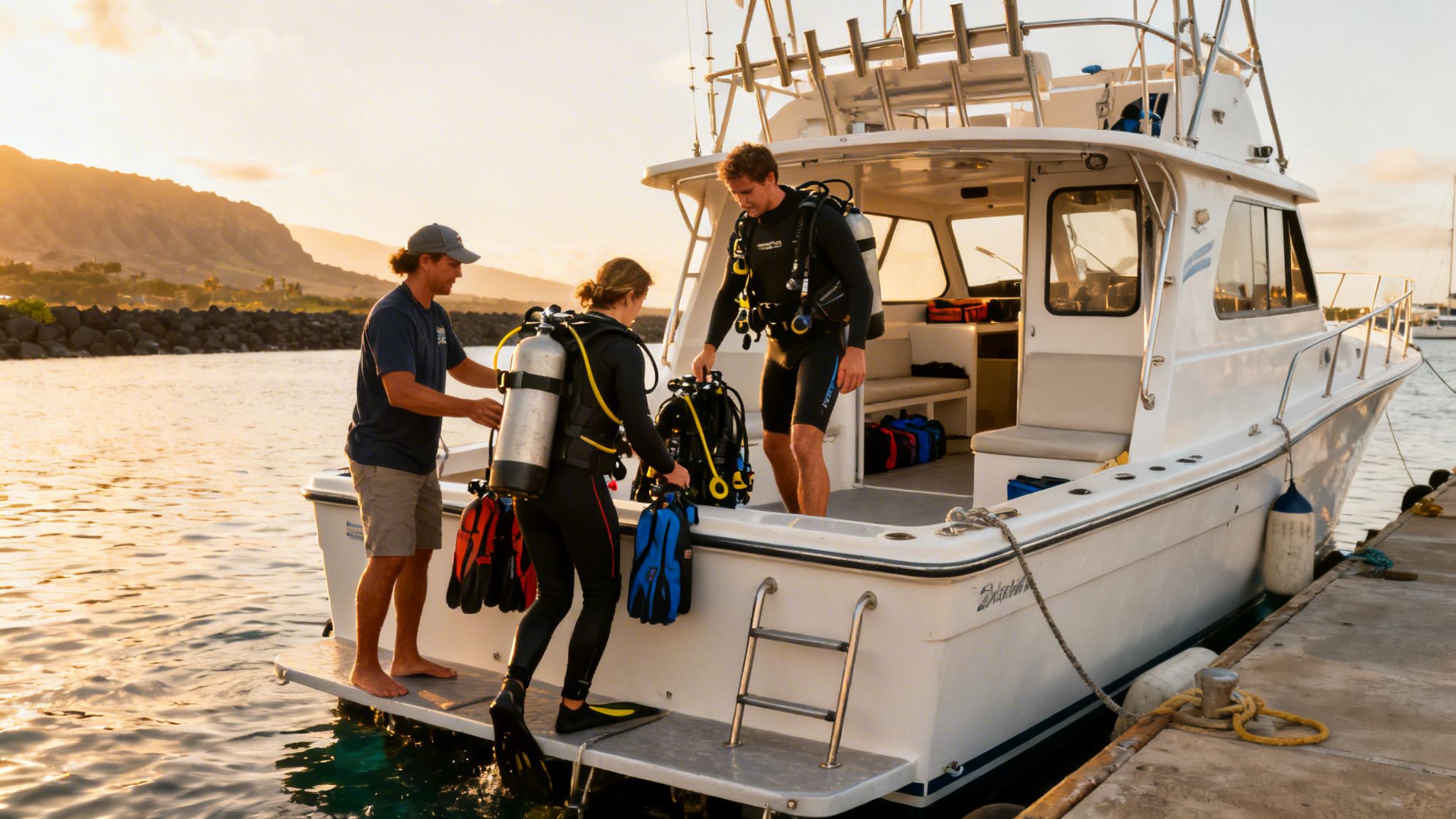
So, what does a premium dive experience actually feel like? It starts the moment you step on the boat. Kona Honu Divers uses custom-built dive boats, designed from the ground up for diver comfort. Think plenty of space to gear up, easy entry and exit from the water, and amenities that make your time on the surface genuinely enjoyable.
Their philosophy on the water is just as important. They focus on small group sizes, so you never feel like you're just another person in a crowd.
- Personalized Attention: In a smaller group, your divemaster can give you one-on-one tips, point out that camouflaged octopus you would have missed, and tailor the dive to what the group wants to see.
- Enhanced Safety: It's simple math—with fewer divers per guide, the crew can keep a much closer eye on everyone, making for a safer, more controlled dive.
- Uncrowded Dive Sites: Small groups have less impact on the reef and the animals. It means you get a more peaceful, intimate encounter with the underwater world.
Choosing a dive operator isn't just a logistical step; it's an investment in your safety and enjoyment. A company with a stellar reputation has earned it dive by dive, year after year.
Perks That Make a Difference
Beyond the big things like safety and expertise, it’s often the little perks that elevate a good trip to a great one. For instance, Kona Honu Divers offers complimentary nitrox to all certified nitrox divers. Diving on nitrox can mean longer bottom times and less fatigue, which lets you explore more and feel better doing it.
Little extras like that show a company is truly focused on giving you the best day possible. When you’re weighing your options, look at what’s included and think about how those details will affect your trip. Learning what sets a great Kona diving company apart will help you make a smart choice.
Ultimately, picking a highly-rated operator with a solid track record means you can put your mind at ease and focus on what you came for: the breathtaking beauty of the Big Island's reefs. Don't just take our word for it—the reviews from thousands of happy divers speak for themselves.
How to Plan Your Perfect Scuba Trip
Alright, let’s get into the nitty-gritty of planning. Pulling together a dive trip to the Big Island is actually pretty simple once you know the key pieces. A little planning up front means you get to spend more time enjoying the water and less time dealing with last-minute hassles.
The first thing everyone asks is, "When's the best time to come?" Honestly, the scuba diving here is fantastic all year long. That’s the beauty of Kona’s calm, protected leeward coast. But, the seasons do have their own unique vibes.
- Summer (May – October): This is when the water gets downright toasty, often hitting a comfortable 80°F (27°C). The seas are usually glassy and calm, making for super smooth boat rides and relaxing surface intervals.
- Winter (November – April): The water might be a few degrees cooler, but this is prime time for humpback whales. While seeing one underwater is incredibly rare, hearing their songs echo through the reef on a dive? That’s pure magic you’ll never forget.
Packing and Preparing for Your Dive Adventure
Once you’ve got your dates locked in, you need to decide on gear. Bringing your own versus renting is a personal call. Renting from a quality shop means less luggage to drag through the airport. But if you're like me, there’s a certain comfort and confidence that comes from diving with your own, familiar equipment.
No matter what you decide about gear, a few items are absolutely essential. At the top of that list is reef-safe sunscreen. The chemicals in regular sunscreen are seriously harmful to our delicate coral. Being a good diver means protecting both your skin and the reefs we love to explore.
Don't forget to take care of yourself, too. The warm Hawaiian sun can be deceiving. Knowing how to master your hydration for diving is key to feeling good and staying safe out on the water.
Booking Logistics for a Seamless Trip
For accommodations, I always suggest staying near Honokohau Harbor. It’s the main launch point for most dive boats, and being close by means you can skip a long, early-morning drive. The Kona and Waikoloa areas are both excellent choices with plenty of options.
If I can give you one single piece of advice, it's this: book your dive charters way in advance. The best boats, especially the ones that keep their groups small, fill up fast—sometimes weeks or even months ahead for holidays and summer.
Getting your dives on the calendar first means you can build the rest of your vacation around them without stress. Wait too long, and you risk missing out on that manta dive you were dreaming of or settling for a crowded boat. A little foresight guarantees you get the experience you really want with a crew you can trust.
Taking a look at the full range of diving tours available is a great way to start building the perfect underwater itinerary for your Big Island trip.
Check AvailabilityAdvancing Your Skills in Paradise
The Big Island isn't just a playground for veteran divers; it's one of the best underwater classrooms you could ask for. The calm, clear, and warm waters along the Kona coast make for a stress-free place to learn, turning every training dive into a genuine adventure surrounded by incredible marine life.
This passion for diving isn't just a local phenomenon. It's part of a massive global trend, with the diving tourism market valued at around USD 11.2 billion and expected to hit USD 18.5 billion by 2035. PADI alone has issued over 30 million certifications worldwide, which tells you just how many people are discovering the magic of the underwater world.
From Beginner to Specialist
Whether you're about to take your first breath underwater or you're looking to master a new skill, Kona has a full range of PADI courses to get you there. Most people start with the Open Water Diver certification, which gives you all the essential skills you need to dive safely and feel comfortable exploring.
But getting certified is just the beginning. From there, a whole new world of specialty courses opens up, letting you dive deeper into what interests you most.
- Enriched Air (Nitrox) Diver: This is a game-changer. You'll learn how to use air with higher oxygen content to safely extend your bottom time. More time on the reef? Yes, please.
- Night Diver: If you want to get the most out of the Manta Ray Night Dive, this course is a must. You'll master the unique techniques needed for navigating and communicating when the sun goes down.
- Deep Diver: Ready to explore a bit further? This course gives you the training to safely descend to 130 feet, opening up a whole new world of volcanic ledges and deeper reefs.
If you're looking for a course that is as rewarding as it is challenging, the PADI Rescue Diver program is your next step. It’s designed to build serious confidence by teaching you how to anticipate, prevent, and manage problems in the water. Find out how the Rescue Diver certification can completely change the way you dive.
No matter which path you choose, improving your skills in the middle of a tropical paradise is an experience you won't soon forget.
Your Big Island Scuba Questions, Answered
Got a few last-minute questions before you book your trip? You're not alone. Here are the answers to the things we get asked most often, so you can feel totally confident about your upcoming dive adventure.
When Is the Best Time to Dive in Kona?
Honestly, there’s no bad time to dive in Kona. The water is almost always clear and calm, thanks to the massive volcanoes blocking the trade winds. The "best" time really just boils down to what you want to experience.
Summer (May-October): This is when you'll find the warmest water, often hitting a balmy 80°F (27°C). The seas are usually glass-calm, making for incredibly smooth boat rides. If you love warm water and buttery conditions, this is your season.
Winter (November-April): This is humpback whale season. While you'd have to be the luckiest person on earth to see one underwater, you will almost certainly hear them. Hearing their songs echo through the reef on a dive is a haunting, beautiful experience that will stick with you forever.
Can Beginners Do the Manta Ray Night Dive?
Absolutely. The world-famous Manta Ray Night Dive is surprisingly accessible for certified divers of all skill levels. The dive itself is fairly shallow, and you spend most of your time kneeling on the sand, so it’s not physically demanding.
If you have non-divers in your group, or if you aren't certified yourself, the manta snorkel trip is a fantastic alternative. You get an incredible bird's-eye view of the entire spectacle from the surface.
What Will I See Besides Mantas?
The Big Island’s reefs are bursting with life. While the mantas are the headliners, you're almost guaranteed to run into green sea turtles snoozing on the reef. We frequently see pods of spinner dolphins on the boat ride out, and it's common to spot whitetip reef sharks resting on sandy patches.
Beyond that, keep your eyes peeled for moray eels peeking out of crevices, octopuses camouflaged against the rocks, and a whole rainbow of reef fish. You'll also spot fish you can't see anywhere else on Earth, like the milletseed butterflyfish and the saddle wrasse, Hawaii's state fish.
What If I Haven’t Dived in a While?
It happens to the best of us! Life gets in the way, and suddenly it's been a year or two since you were last underwater. Your safety (and comfort) is what matters most.
If it’s been over a year since your last dive, a quick refresher is the way to go. We, like most quality dive shops, offer a short pool session with an instructor to run through the essential skills. It's the perfect way to knock off the rust and get your confidence back before heading out on the boat. You’ll feel much more relaxed and ready to enjoy the reef.