
Picture this: you're suspended in warm, impossibly clear blue water. Sunlight streams down from the surface, lighting up a world of brilliant coral, ancient volcanic rock formations, and a kaleidoscope of fish. This isn't a dream—it's just another day of scuba diving on the Big Island. It's a place that offers a genuine connection to one of the most vibrant marine ecosystems on the planet, making it a bucket-list destination for divers from all walks of life.
Why the Big Island Is a World-Class Diving Destination
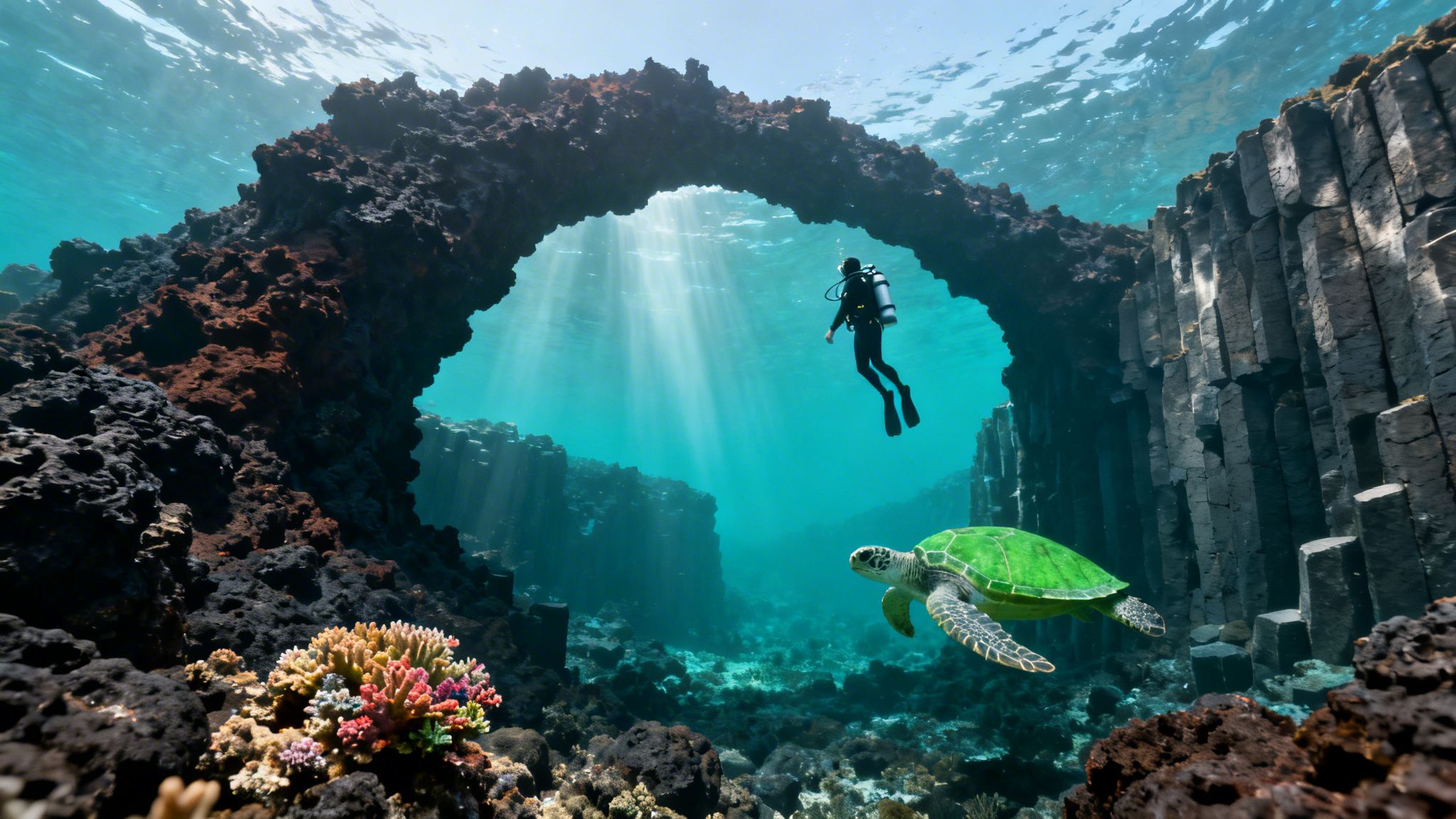
The secret to the Big Island’s incredible diving lies in its fiery volcanic heart. The island's geology has created a spectacular underwater playground of lava tubes, submerged craters, and dramatic archways. You just won't find this kind of topography anywhere else.
This rugged, volcanic seascape provides the perfect home for an astonishing amount of marine life. Better yet, the Kona coast is protected from the strong trade winds by the sheer size of Mauna Loa and Hualalai, creating reliably calm, clear conditions that are a dream for divers.
A Sanctuary of Marine Biodiversity
Because of these sheltered waters, the local ecosystem is absolutely thriving. You can expect to see something amazing on every single dive. The Big Island has earned its reputation as the best diving spot in the Hawaiian archipelago, and it’s easy to see why.
Take Kealakekua Bay, for instance. This protected marine sanctuary on the Kona coast consistently offers visibility that pushes past 100 feet. It’s this blend of unique volcanic structures and crystal-clear water that makes the island a magnet for new and experienced divers alike. To get a better sense of what makes it a premier destination, check out our guide on why the Big Island is so good for scuba diving.
The sheer diversity of life here is staggering. On any given day, you might see:
- Green Sea Turtles (Honu): These graceful, ancient reptiles are a constant and welcome presence on Kona’s reefs.
- Endemic Fish: A huge percentage of the fish here are found nowhere else on Earth, turning every dive into a new discovery.
- Spinner Dolphins: You'll often spot pods of these acrobatic dolphins playing in the boat's wake between dives.
- Manta Rays: The island is world-famous for its gentle giants, and the Manta Ray Night Dive is an experience that will stay with you forever.
Your Unforgettable Underwater Journey Awaits
From the surreal, ballet-like performance of the Manta Ray Night Dive to the peaceful joy of exploring a sun-drenched reef, diving here is more than just a sport—it's a profound adventure. It’s your chance to step into one of the most dynamic and beautiful underwater worlds on Earth.
Choosing a first-rate dive operator is key to making the most of your trip. With expert guides who know these waters inside and out and an unwavering commitment to safety, a company like Kona Honu Divers ensures you can simply relax and soak in the wonder of it all.
Exploring the Top Big Island Dive Sites
The Big Island’s underwater landscape is nothing short of dramatic. It’s a diver’s paradise, home to some of the most unique and sought-after dive sites in the world. From otherworldly night dives with gentle giants to sun-drenched volcanic reefs, an adventure is waiting for every certified diver.
Planning your dives is half the fun, and let me tell you, Kona’s legendary sites do not disappoint. Each one offers a different window into the vibrant Pacific ecosystem. Whether you’re here for the mantas or the thrill of exploring deep, dark waters, the Kona coast delivers an experience you’ll never forget. This is your inside guide to the signature dives that make scuba Big Island a truly world-class destination.
The Legendary Manta Ray Night Dive
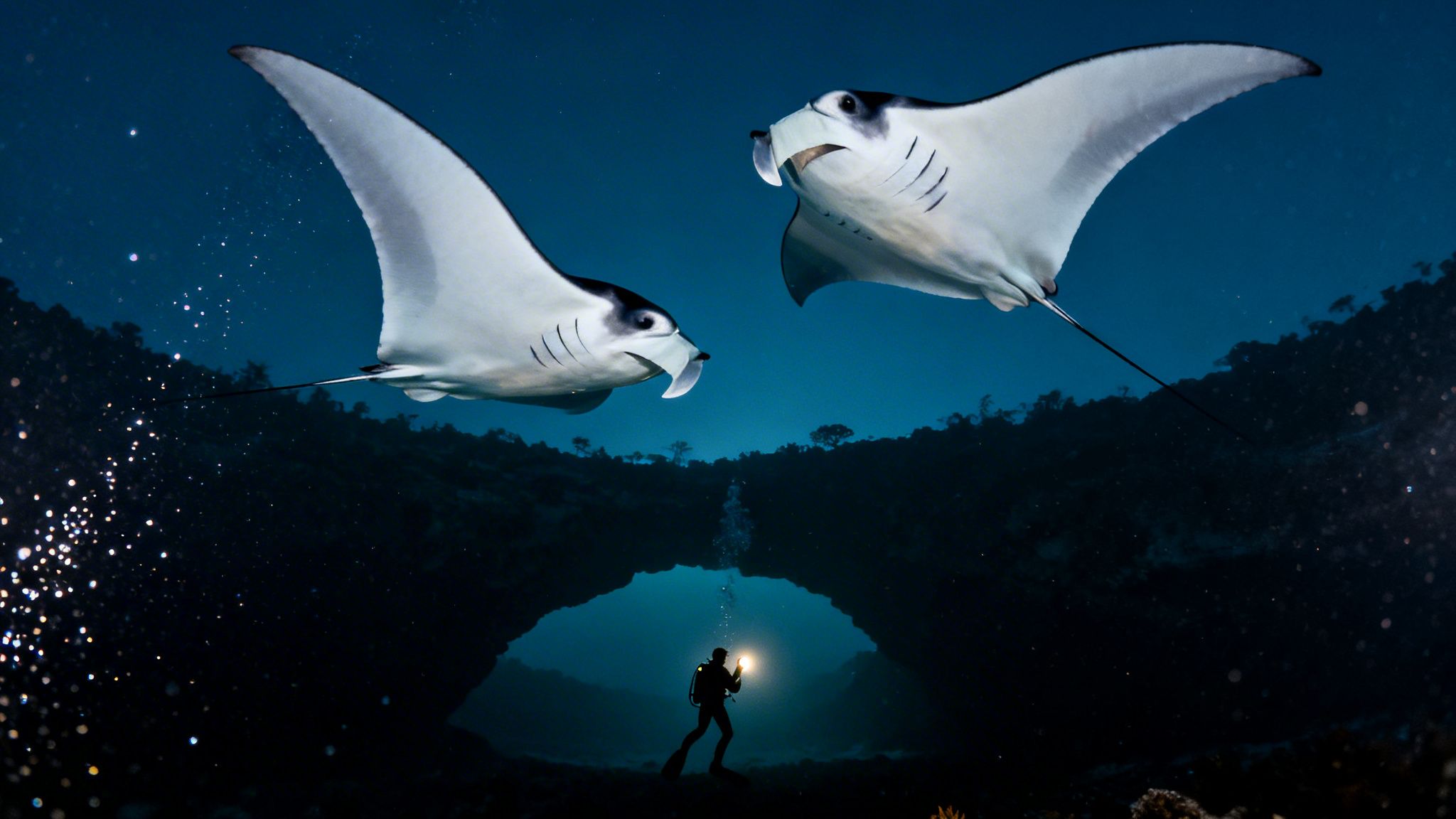
You can't talk about diving on the Big Island without talking about the Manta Ray Night Dive. It’s consistently ranked one of the best night dives on the planet, and for good reason. The concept is simple but brilliant: after sunset, we descend to a specific spot on the seafloor, point our lights up, and wait for the magic to happen.
The beams of light attract swarms of plankton, which is basically a dinner bell for the area's resident manta rays. These gentle giants, some with wingspans over 15 feet, swoop and glide right over your head in a mesmerizing, silent ballet. It’s a powerful, humbling experience that connects you directly with one of the ocean's most magnificent creatures.
While you can do this dive at a couple of spots, Garden Eel Cove is the superior choice for the dive tour because of its protected location with a better viewing area and better reefs. It’s more sheltered from the open ocean swells, which means calmer, more predictable conditions for everyone. The viewing area there also tends to offer more intimate encounters, and the surrounding reefs are simply healthier.
Best of all? This isn't a "maybe you'll see one" kind of dive. The success rate is astonishingly high, with local operators reporting encounters on 85-90% of trips. That reliability has cemented its status as an absolute must-do for any diver visiting Hawaii.
The Mysterious Kona Blackwater Dive
Ready for something completely different? For certified divers with an adventurous spirit, the Kona Blackwater Dive is an expedition into the abyss. This isn't your typical reef dive. We head miles offshore at night, over thousands of feet of water, tether ourselves to the boat, and simply drift in the darkness.
Your dive light becomes a portal to another world. You're witnessing the largest migration on Earth, as bizarre and beautiful creatures rise from the depths to feed under the cover of night. You'll see things that look like they're straight out of a sci-fi movie—alien-like larval fish, translucent squid, and all sorts of glowing jellies. It’s a surreal experience you have to see to believe.
Vibrant Daytime Reefs and Advanced Dives
Beyond the famous night dives, the Big Island’s daytime diving is spectacular. The volcanic coastline has created an incredible underwater playground that's a joy to explore.
- Lava Tubes and Arches: Sites like Golden Arches, Turtle Pinnacle, and Kaiwi Point are famous for their dramatic lava formations. Swimming through these ancient, submerged structures feels like exploring an underwater cathedral.
- Abundant Marine Life: The healthy coral gardens host a dense population of fish, including countless species you'll only find here in Hawaii. Keep an eye out for eels, octopuses, and the occasional reef shark.
- Challenging Topography for Experienced Divers: Got your advanced certification? Deeper sites offer more complex environments and bigger rewards. We run dedicated advanced dive tours to explore these more demanding locations, perfect for seasoned divers looking for a real challenge.
To get a better sense of what makes these underwater environments so special, you can read more about the diving tours.
Big Island Signature Dives Comparison
Not sure which dive is right for you? This table breaks down the Big Island's top underwater experiences to help you find the perfect fit for your skill level and what you hope to see.
| Dive Experience | Best For | Depth | Key Marine Life | Required Certification |
|---|---|---|---|---|
| Manta Ray Night Dive | All certified divers | 30-45 ft | Manta Rays, Eels, Jacks | Open Water Diver |
| Kona Blackwater Dive | Adventurous, experienced divers | 40-50 ft | Pelagic Larval Fish, Jellies, Squid | Advanced Open Water Diver |
| Daytime Reef Dive | All certified divers | 40-80 ft | Turtles, Reef Fish, Eels, Octopus | Open Water Diver |
| Advanced Lava Tube Dive | Experienced divers | 60-100 ft | Reef Sharks, Unique Topography | Advanced Open Water Diver |
Each dive offers a completely different, yet equally amazing, view of the Big Island's marine world. From the graceful dance of the mantas to the strange creatures of the deep, there’s an adventure here for everyone.
At Kona Honu Divers, our entire crew is dedicated to making sure every trip is safe, fun, and unforgettable. We know these sites like the back of our hands and can't wait to share them with you.
Why You Should Dive with Kona Honu Divers
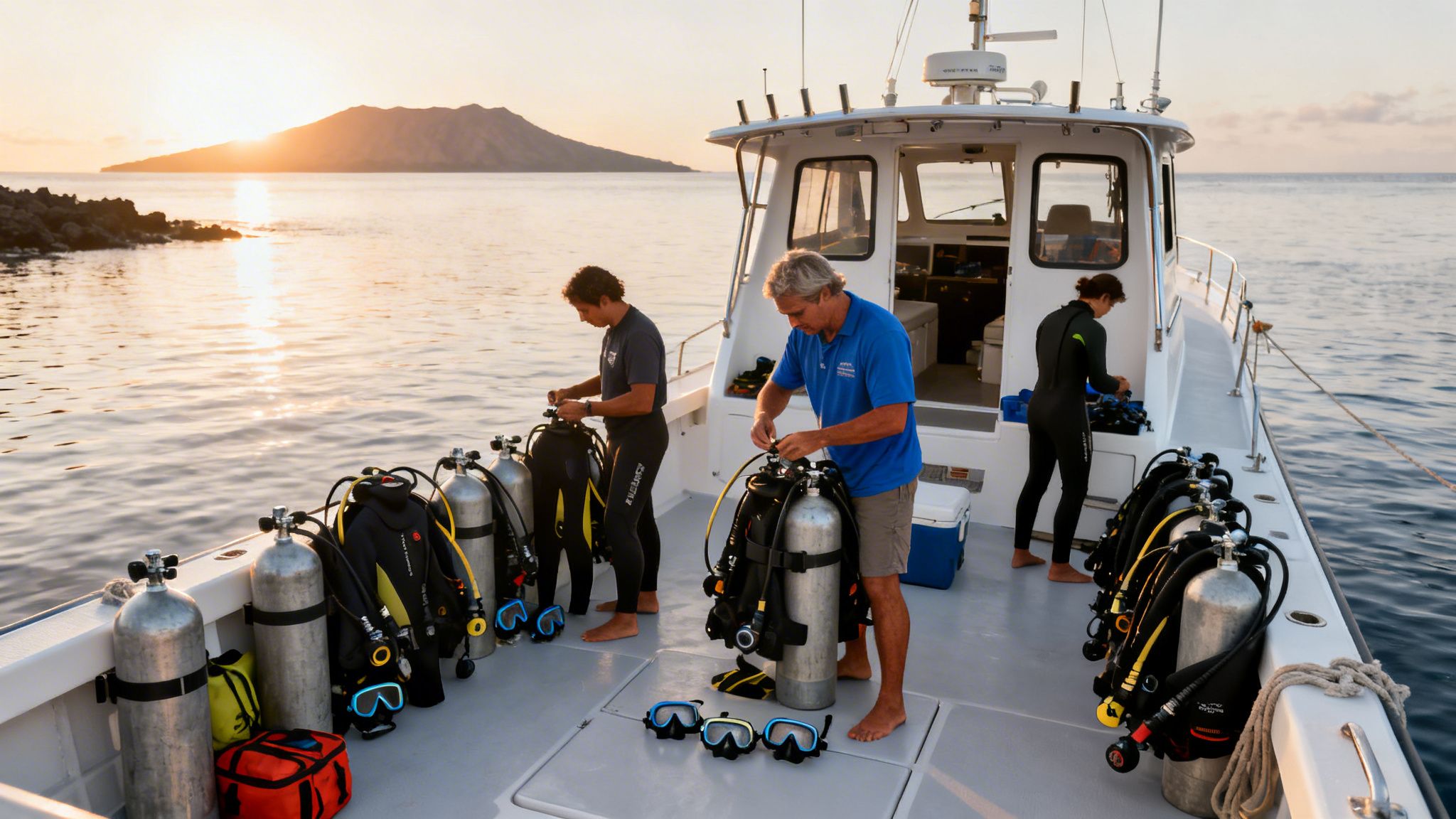
When you're planning a scuba Big Island trip, the dive operator you choose can make or break your entire vacation. A great shop doesn't just drive the boat; they shape your whole adventure with their expertise, safety standards, and real passion for the ocean. That's exactly where Kona Honu Divers comes in—they’ve earned their reputation as Hawaii's top-rated and most-awarded scuba company for a reason.
The crew brings over 200 years of combined professional diving experience to the deck. Think about that for a second. This isn't just a summer job for them; it’s a career built on a deep love for marine life and exploration. Their intimate knowledge of Kona's dive sites means they know precisely where to go and when, putting you in the best spot for incredible encounters.
Every little detail is handled, so all you have to do is focus on the magic unfolding below the surface.
A Fleet Built for Divers
You won't find any cramped, repurposed fishing boats here. Kona Honu Divers runs a fleet of custom-built dive vessels designed from the hull up with divers in mind. The goal is to make the boat ride just as comfortable and enjoyable as the dive itself.
Here’s what that actually looks like:
- Spacious Decks: Plenty of room to set up your gear without constantly bumping elbows with your dive buddy.
- Easy Entry and Exit: Custom ladders and wide swim steps make getting into and out of the water smooth and hassle-free.
- Onboard Amenities: Little things like freshwater showers for a post-dive rinse, shaded areas to relax, and clean marine heads (restrooms) make a huge difference.
- US Coast Guard Certified: Every vessel meets strict safety standards, so you can relax and dive with total peace of mind.
This focus on quality carries over to their rental gear, too. Everything is meticulously maintained and serviced, so you can count on it to perform flawlessly when you need it most.
The Kona Honu Divers Advantage
Beyond the top-notch crew and boats, a few key perks really set this operation apart from the crowd.
One of the best examples is their nitrox policy. If you’re a certified nitrox diver, they provide it absolutely free on every single dive. This is a game-changer, allowing for longer bottom times and shorter surface intervals, which means more time exploring underwater.
You'll also appreciate the smaller group sizes, which allow for more personal attention from the guides. The crew isn't just professional; they're genuinely friendly and supportive, always happy to help with gear, answer questions, or just share cool facts about the critters you saw.
The thousands of five-star reviews from fellow divers tell the real story. This is a company built on delivering safe, unforgettable adventures, time and time again. You can learn more about how they ensure a superior dive on the Big Island on their website.
But don't just take our word for it—see what other divers have to say.
Ready to experience the best scuba diving the Big Island has to offer?
How to Plan Your Big Island Scuba Trip
A little prep work goes a long way in turning a good dive trip into an epic one. Thankfully, planning your scuba Big Island adventure is pretty straightforward. We'll walk you through everything from the best time of year to visit to what you should actually throw in your bag, so you can show up in Kona feeling relaxed and ready to hit the water.
The great thing about Kona is that the diving is fantastic all year round. The island’s massive volcanoes act as a natural shield against the trade winds, which means the water along the coast is almost always calm and clear. Water temps are a dream, typically staying between a comfortable 75-80°F (24-27°C). It’s a perfect destination no matter when you can get away.
While the diving is always on, some seasons offer special bonuses. If you visit in the winter, from December through March, you’ll be here during peak humpback whale season. You can’t dive with them, but hearing their haunting songs underwater during a dive is an experience you will never, ever forget.
Your Essential Packing Checklist
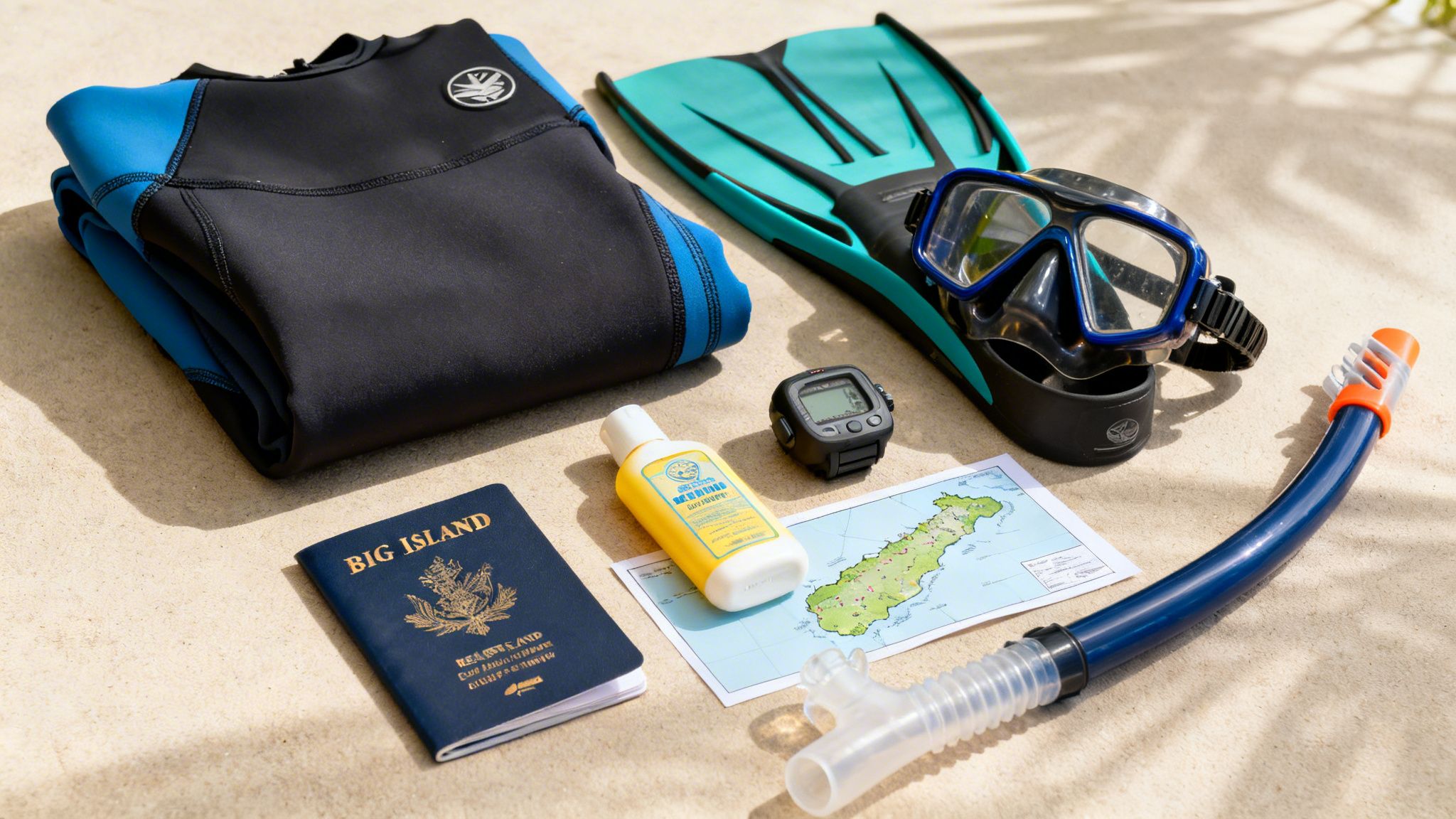
Packing smart makes all the difference. While you can always rent high-quality gear here, most seasoned divers find that bringing a few personal items makes their dives much more enjoyable.
- Dive Gear: If nothing else, bring your own mask, snorkel, fins, and dive computer. A comfortable, well-fitting mask can make or break a dive, and you already know how to work your own computer.
- Exposure Protection: Even in warm water, you'll want a wetsuit for multiple dives. A 3mm or 5mm full suit is usually perfect for keeping you comfortable on your second or third dive of the day.
- Certifications and Logbook: Don't leave home without your C-card and logbook. We'll need to see your certification, especially if you're signing up for advanced or specialty dives.
- Eco-Friendly Items: Protecting our reefs is everything. Please pack reef-safe sunscreen (look for ones without oxybenzone and octinoxate) and a reusable water bottle to help us keep our oceans pristine.
- Personal Comforts: A hat, sunglasses, and a light jacket or windbreaker for the boat rides are always a good idea. And if you're prone to seasickness, it's best to bring your preferred remedy with you.
Getting Around and Finding the Boat
Most dive charters, including ours at Kona Honu Divers, depart from Honokohau Harbor. It's super convenient, located just a short drive from both the Kona International Airport (KOA) and the main town of Kailua-Kona.
Renting a car is hands-down the easiest way to get around the Big Island. It gives you the freedom to explore the island’s other amazing sights and makes getting to the harbor for an early boat call a lot less stressful. Just double-check your meeting time and location with the dive shop before you head out.
A quick word of advice: if you're planning a trip during a popular time like the winter holidays, spring break, or summer, book your dives in advance. The boats fill up fast, and you don't want to miss out on must-do experiences like the Manta Ray Night Dive.
The Big Island is also an incredible place to level up your dive skills. The calm, clear conditions are perfect for everything from getting your Open Water certification to tackling an Advanced course to unlock deeper dive sites. Take a look at all the diving tours and options we offer to find the perfect fit for your trip.
Putting Safety First on Your Dive Adventure
The raw beauty of the ocean is matched only by its power, and that’s why safety is the absolute cornerstone of every single dive we do. When you decide to explore the underwater world of the Big Island, going with a professional, safety-obsessed operator isn't just a good idea—it’s everything. It's what lets you relax and truly soak in the experience.
This is where a top-tier company like Kona Honu Divers really shines. Our commitment to your well-being starts long before your fins ever hit the water.
Every trip kicks off with a detailed pre-dive briefing. Our expert guides walk you through the dive site, what to expect with the day's conditions, and the exact safety procedures we'll follow. Our custom dive boats are fully stocked with emergency oxygen and first aid kits, so we're ready for anything. This isn't just us being cautious; it’s a necessary approach in Hawaii.
Sadly, recent data shows that ocean safety is still a major concern here. Hawaii has the second-highest drowning rate per capita in the United States. Between 2020 and 2024, a heartbreaking 187 Hawaii residents drowned in the ocean statewide. That statistic is a stark reminder of why professional guidance and strict safety protocols are so critical when you’re out on the water.
Mastering Marine Conservation and Etiquette
Real dive safety goes beyond just you and your buddy. It means protecting the very reason we're all out here: the incredible, fragile marine ecosystem. Responsible diving ensures the reefs stay vibrant for generations to come and keeps both you and the wildlife safe.
Think of it as good underwater manners. A few simple rules make all the difference:
- Maintain a Respectful Distance: Always give marine life plenty of room to breathe—or, well, swim. Chasing or cornering an animal stresses it out and can trigger a defensive reaction. Let them come to you.
- Practice a Strict 'No-Touch' Policy: It's tempting, but coral is a living animal. Even a light touch can damage its protective mucus layer, leaving it open to disease. This rule applies to every creature down there. Look, don't touch.
- Perfect Your Buoyancy Control: This is probably the most important skill you can master as a diver. Good buoyancy keeps you from accidentally kicking fragile coral or stirring up sand that can smother the reef.
Following these guidelines means your visit leaves nothing behind but bubbles. If you want to brush up on other key procedures, check out our guide on the essentials of a scuba safety stop.
Preparedness Above and Below the Water
Being a prepared diver also means having a basic understanding of what to do if something unexpected happens. For example, knowing what hyperbaric oxygen therapy is is important for understanding how decompression sickness, a rare but serious condition, is treated.
By choosing a reputable operator that lives and breathes safety and by diving responsibly yourself, you can fully and safely immerse yourself in the unparalleled wonders of scuba Big Island adventures. This commitment allows you to relax, knowing you're in good hands, and just focus on the incredible experience of exploring Kona's underwater world.
Answering Your Big Island Diving Questions
Planning a dive trip to the Big Island always brings up a few questions. We get it. Below, we've tackled some of the most common things people ask, so you can feel confident and ready for the incredible underwater world waiting for you in Kona.
What Certification Level Do I Need to Dive in Kona?
One of the best things about diving here is that it’s accessible to just about everyone. If you have your Open Water Diver certification, you’re good to go for the vast majority of Kona’s most spectacular reef sites. These are the spots loaded with vibrant coral, ancient lava tubes, and tons of marine life.
Now, for some of our more unique adventures, you'll need a bit more training. The world-famous Kona Blackwater Dive, a one-of-a-kind drift dive in the deep ocean at night, requires an Advanced Open Water certification. It’s just a different kind of environment out there. The same goes for some of our deeper reef and wreck dives that go beyond standard recreational limits. If you’re thinking about leveling up, doing it here in Kona is a fantastic way to expand your skills.
Do I Need to Bring My Own Dive Gear?
This really comes down to personal preference and how much you want to pack. If you love the familiar fit of your own gear, by all means, bring it! Our custom-built boats have plenty of space to store your equipment.
That said, you absolutely don't have to lug it all across the ocean. We have a full inventory of high-quality, meticulously maintained rental gear to make your travel a breeze. It's often easier and cheaper than paying for extra baggage fees. We’ve got you covered with:
- BCDs: Top-brand, regularly serviced jackets for perfect buoyancy control.
- Regulators: High-performance regulators that include a dive computer.
- Wetsuits: A full range of sizes in both 3mm and 5mm thicknesses.
- Masks, Fins, and Snorkels: All the essentials to round out your kit.
Better yet, for divers certified in its use, we offer nitrox for free. Choosing our rental gear just means less stress and lighter bags.
What Is the Water Temperature and What Wetsuit Should I Wear?
Kona's water is beautiful and warm year-round, which is why it's such a reliable place to dive. Water temperatures typically stay in a very comfortable range, somewhere between 75°F and 80°F (24-27°C).
Even with that warmth, you'll still want a wetsuit, especially if you're planning on doing multiple dives in a day. It helps your body maintain its core temperature so you don't get chilled on your second or third drop. For most people, a 3mm full wetsuit is perfect. If you know you get cold easily, or you're visiting in the slightly cooler winter months, a 5mm wetsuit will keep you extra toasty. We have both available for rent.
Are There Any Dangerous Marine Animals I Should Worry About?
This is a totally fair question and something a lot of new visitors wonder about. The short answer is no, you don't need to worry. Serious incidents with marine life in Kona are incredibly rare. The underwater world here is far more peaceful than you might imagine. Yes, we have sharks and eels, but they are not aggressive towards divers.
The key to safe and amazing encounters is respect. Before every single dive, our guides give a thorough briefing that covers how to interact with wildlife responsibly. It all boils down to one golden rule: look, but don't touch.
By simply observing animals from a respectful distance and never chasing, cornering, or trying to touch them, you can have the most incredible, peaceful encounters. The marine life here is used to seeing divers and will generally go about its business, giving you a front-row seat to their world.
Our guides are experts in marine animal behavior and your safety is their number one priority. They keep a close watch on the divers and the environment to make sure everyone has a secure and unforgettable experience. We offer a full range of diving tours designed for all comfort and experience levels, so you can choose the adventure that feels just right for you.
Ready for the dive of a lifetime? Book your adventure with Kona Honu Divers and discover why we're Hawaii's top-rated scuba company. Explore our full range of dive tours and book your spot today!