
Picture this: you're gliding weightlessly through an ancient underwater lava tube. A graceful sea turtle swims lazily beside you, and all around, a vibrant coral reef bursts with life. This isn't a dream—it's just another day of scuba diving on the Big Island, Hawaii's absolute best spot for underwater adventure.
The island's dramatic volcanic landscape and incredibly clear waters have created a playground for divers of every skill level.
Why Scuba Diving On The Big Island Is Unforgettable
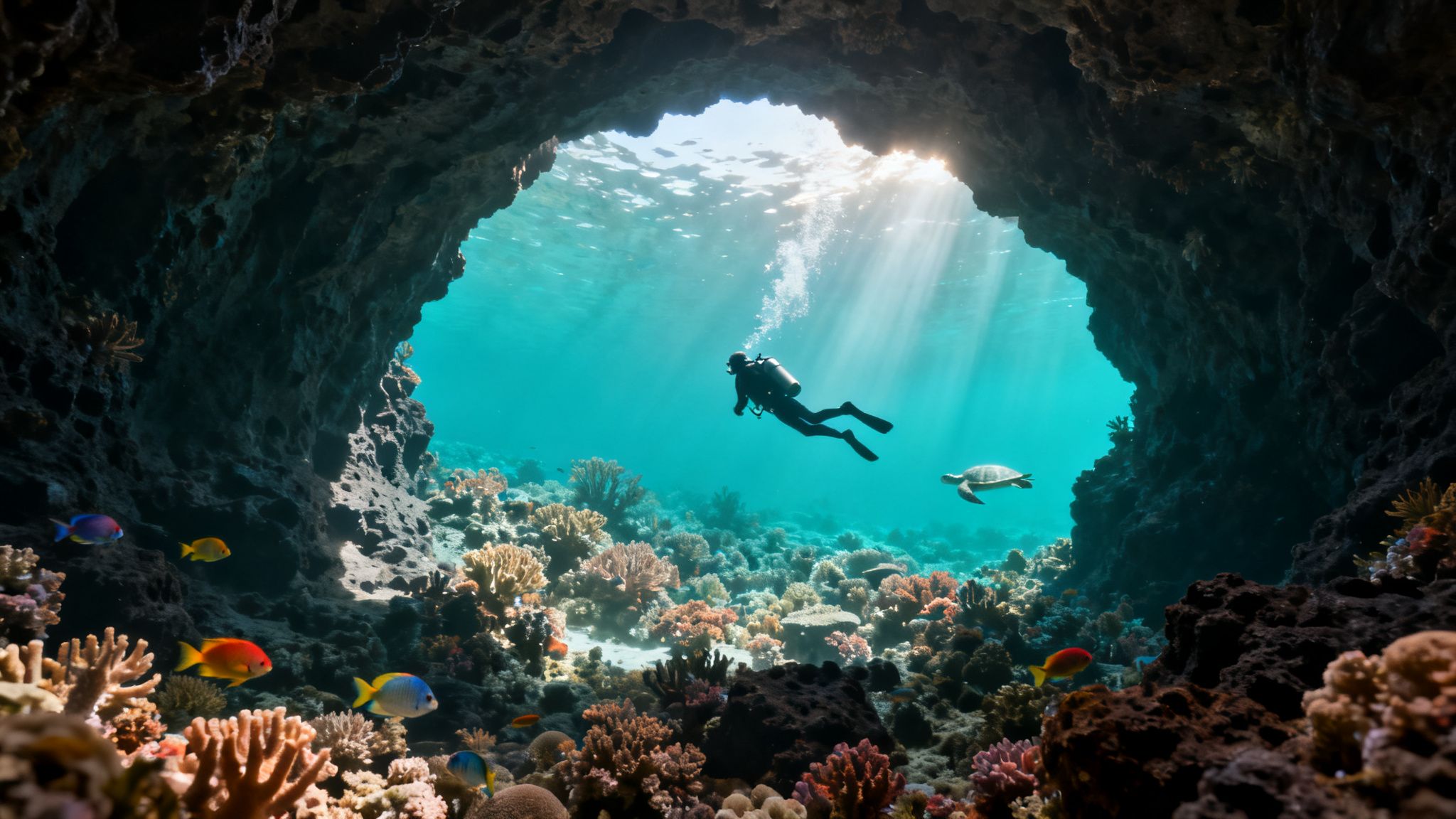
The Big Island isn't just some other tropical dive destination. It's a geological marvel, sculpted by the raw, creative power of volcanoes. This ongoing volcanic activity has forged a breathtaking underwater world you simply won't find anywhere else on the planet.
As a diver, you get to explore a stunning spectacle of natural arches, vast caverns, and intricate lava tube formations. These aren't just beautiful backdrops; they're complex habitats that shelter an incredible diversity of marine life.
The Kona Coast: A Diver's Paradise
The west side of the island, known to everyone as the Kona coast, is where the real magic happens. It's perfectly shielded from the typical trade winds by the colossal volcanoes of Mauna Loa and Hualālai. This natural barrier creates exceptionally calm, clear water pretty much year-round, which is perfect for diving.
Visibility here often stretches beyond 100 feet, letting you soak in every vibrant color and detail of the reef. It's this protected environment that consistently puts the Big Island at the top of the list for diving in Hawaii, even beating out popular spots like Maui.
One of the crown jewels is the Kealakekua Bay Marine Life Conservation District. It's a protected sanctuary where fishing is prohibited, and the results are spectacular. Studies have shown that fish populations in these protected zones can be 3 to 5 times greater than in areas open to fishing, which massively boosts your chances of having those mind-blowing wildlife encounters.
What Makes Big Island Diving So Unique?
It's the powerful combination of volcanic geology and protected waters that makes for such unforgettable diving.
- Lava Formations: You get to explore ancient lava tubes and swim-throughs that feel like you're navigating a submerged cathedral.
- Vibrant Coral Reefs: Unlike many reefs around the world, Hawaii's are thriving with some of the highest coral cover, supporting a dense and bustling fish population.
- Endemic Species: A huge chunk of Hawaii's marine life can't be found anywhere else on Earth. Diving here gives you a chance to see truly rare and beautiful creatures.
- Gentle Giants: The Kona coast is world-famous for its reliable, year-round encounters with majestic manta rays and seasonal visits from humpback whales.
Honestly, the key to unlocking the very best of what the island offers is diving with a professional guide. An experienced operator like Kona Honu Divers can take a good dive and make it truly extraordinary. Their deep local knowledge means you'll hit the most spectacular sites at just the right times, all while keeping you safe and comfortable. They’re your ticket to exploring Hawaii’s unique underwater world—a realm shaped by fire and preserved for generations to come.
The Signature Dives That Define The Big Island
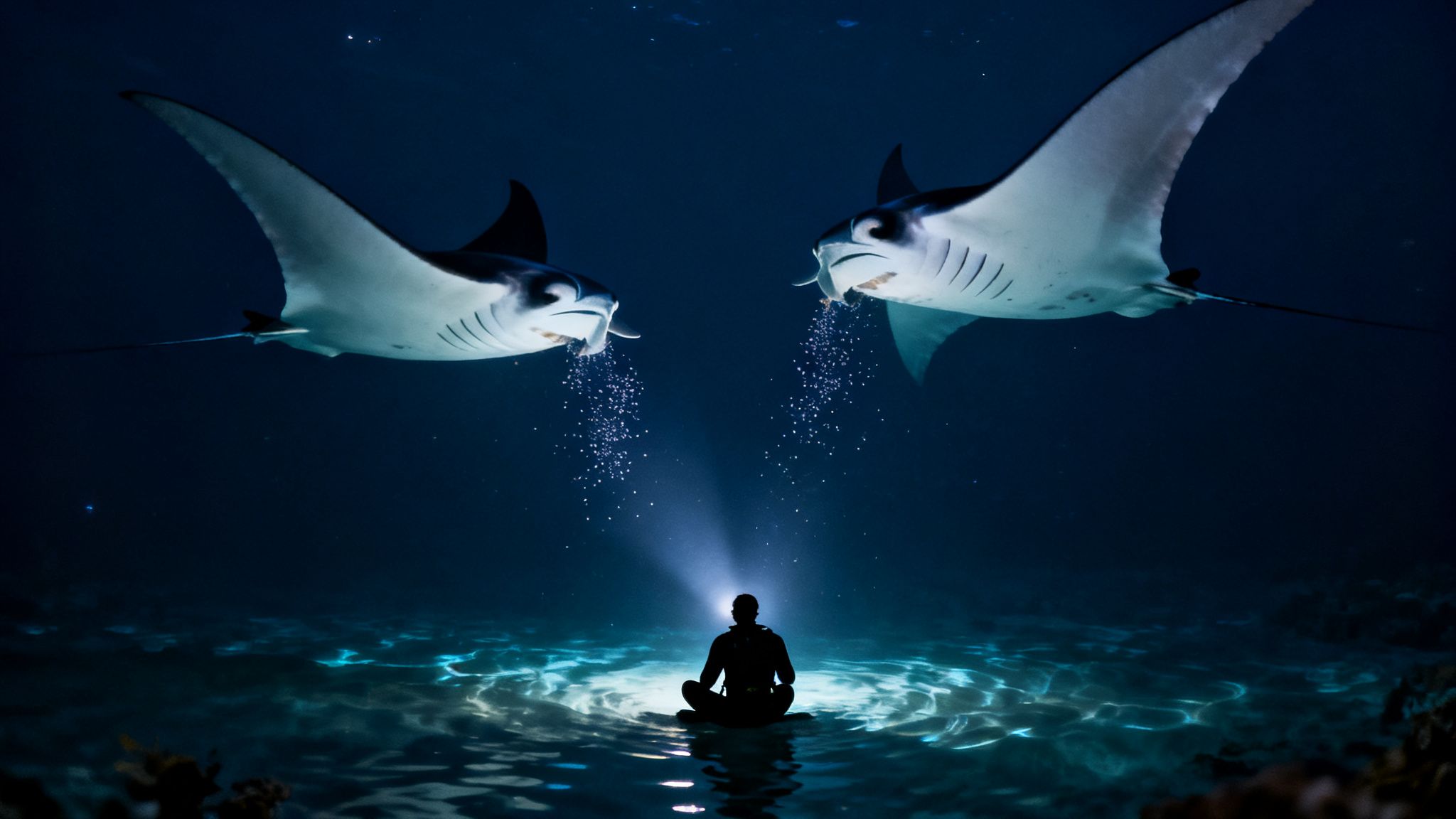
While you can find incredible diving all along the Kona coast, a few specific experiences have truly put the Big Island on the global map. These aren't just dives; they're legendary encounters that people travel the world to see. They are the absolute essence of what it means to scuba Big Island.
From the silent, graceful ballet of gentle giants to the alien world of the deep open ocean, each of these dives offers something profoundly different. They showcase the sheer diversity of marine life thriving just offshore. Let's dive into the experiences that should be at the top of every diver's list.
The World-Famous Manta Ray Night Dive
Picture this: you're kneeling on the sandy ocean floor in the dark, your dive light aimed straight up, creating a column of light in the water. Out of the blackness, a huge, silent shadow emerges. It’s a giant manta ray, and it glides effortlessly into the beam, somersaulting just inches over your head. This is the Kona Manta Ray Night Dive, and it’s a surreal, jaw-dropping spectacle often called one of the best night dives on Earth.
The whole encounter is a brilliant, beautiful accident. Years ago, a hotel turned on its lights, attracting plankton. The mantas came to feed, and an amazing, harmonious dive was born. Today, dive operators recreate this by using powerful lights to draw in the plankton, which in turn brings the mantas for a feast. It's a completely non-intrusive way to witness these magnificent creatures up close.
The consistency here is what’s truly special. It’s not a rare, maybe-you’ll-see-it event. On some nights, divers have reported seeing as many as 30-32 mantas. Local researchers have identified over 500 individual mantas in Kona waters, noting a 95% return rate to their favorite feeding and cleaning spots. This incredible natural show attracts over 50,000 people every year and is widely considered one of the top five dive spectacles on the planet.
While several sites host this dive, Garden Eel Cove is hands-down the superior choice. Its geography provides more protection from ocean swells, meaning calmer conditions and far fewer cancellations. More importantly, the site has a natural underwater "amphitheater" where we can settle in for an unobstructed, front-row seat to the show. The better reefs in the area also make for a spectacular first dive.
The Otherworldly Kona Blackwater Dive
If you're looking for something truly different—a dive that pushes the boundaries of exploration—the Kona Blackwater Dive is it. This isn't like any other dive you've ever done. You're not exploring a reef. Instead, you're tethered to a boat, suspended in the deep, inky blackness thousands of feet above the seafloor.
Most divers describe it as floating through outer space. Your light cuts through the darkness, revealing a hidden universe of bizarre and beautiful creatures that make a nightly journey from the abyss toward the surface.
On a blackwater dive, you'll meet some of the rarest marine life on the planet:
- Bioluminescent jellies pulsing with an ethereal, living light.
- Larval fish and squids in their strange, translucent juvenile forms.
- Pteropods and other alien-like organisms that look like they belong on another world.
This is a dive for the adventurous at heart. The sheer mystery of what might float out of the darkness makes every single blackwater dive a completely unique and unforgettable expedition.
Sunlit Reefs and Volcanic Topography
Beyond the legendary night dives, the Big Island’s daytime reef diving is absolutely world-class. The underwater landscape is a direct result of the island's volcanic origins, creating dramatic lava tubes, sweeping archways, and intricate caverns that are just teeming with life.
These vibrant coral gardens are home to an incredible array of marine species, many found nowhere else in the world. On any given dive, you can expect to see everything from clouds of colorful reef fish to moray eels peeking out from crevices, green sea turtles cruising by, and even whitetip reef sharks resting on the sand.
Each dive site has its own personality, offering endless opportunities for exploration and underwater photography. The best way to experience it all is by exploring the specifics of Kona scuba diving.
Big Island Signature Dives At A Glance
To help you decide which adventure is right for you, we’ve put together a quick comparison of the Big Island’s three most iconic dives. Each offers a completely different window into the underwater world.
| Dive Experience | Best For | What You'll See | Typical Depth |
|---|---|---|---|
| Manta Ray Night Dive | Thrill-seekers & photographers | Giant manta rays, plankton clouds | 30-40 ft (Shallow) |
| Kona Blackwater Dive | Adventurous & experienced divers | Bioluminescent creatures, larval fish | 40-60 ft (Mid-water) |
| Daytime Reef Dive | All divers & nature lovers | Turtles, reef sharks, endemic fish | 40-80 ft (Varies) |
Whether you're looking for a breathtaking spectacle, a journey into the unknown, or a relaxing exploration of volcanic reefs, the Big Island delivers an unforgettable experience.
Choosing The Best Dive Operator In Kona
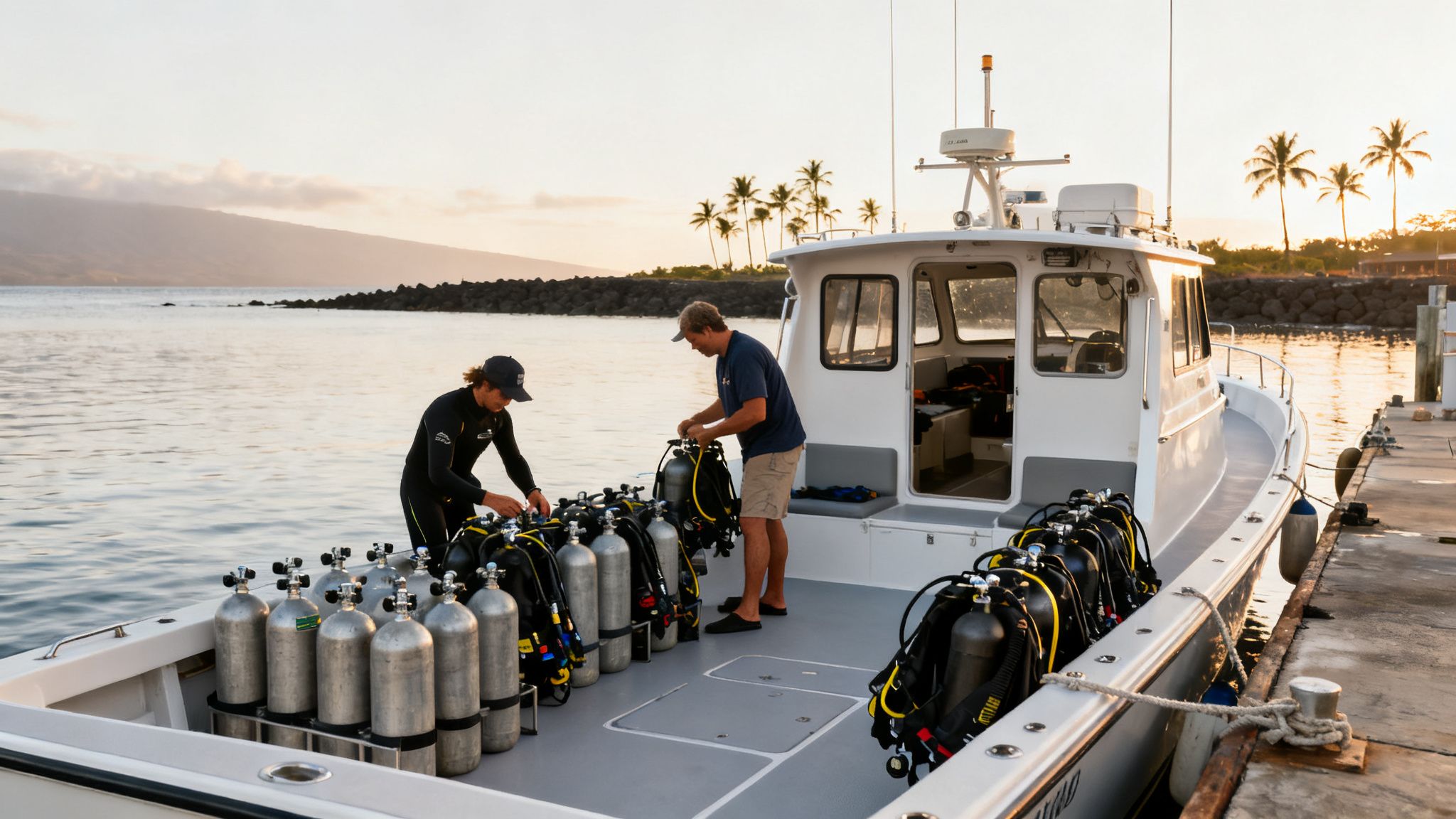
Let's be honest: the dive operator you pick can make or break your entire trip. A great company doesn't just motor you out to a reef; they shape the whole experience. They bring the expertise, the safety-first mindset, and a genuine love for the ocean that's downright contagious. This is probably the most important decision you'll make when planning your scuba Big Island adventure.
When you're looking at different outfits in Kona, there are a few things that should be absolute deal-breakers. A stellar safety record is non-negotiable, and right behind that is the experience of the crew running the boat and leading the dives. You'll also want to look at the boats themselves. A commitment to reliable boat maintenance practices isn't just a nice-to-have; it means you can relax and know you're in good hands.
And don't forget group size. Smaller groups almost always mean a better, more relaxed dive. You get more one-on-one time with your guide and a much more personal look at the underwater world.
What Sets The Best Operators Apart
The truly exceptional dive shops go way beyond just checking the boxes. They add value in ways that make every part of your day better.
- Custom-Built Dive Boats: Think boats designed by divers, for divers. That means more room to move, easy ways to get in and out of the water, and welcome comforts like freshwater showers and actual bathrooms (marine heads).
- An Experienced Crew: A crew that has been diving these waters for years knows exactly where to go based on the day's conditions. They're the ones who will point out that rare frogfish you would have swam right past.
- A Small-Group Philosophy: When an operator deliberately keeps groups small, it shows they're focused on quality over quantity. It's a direct reflection of their commitment to personal service and safety.
- Valuable Extras: Little things can make a big difference. Think complimentary Nitrox for certified divers, top-notch rental gear that's well-maintained, and discounts for booking in advance.
Why Kona Honu Divers Is A Top Choice
Kona Honu Divers consistently hits all these marks and then some. Their crew brings a staggering 200+ years of combined industry experience to the table, and that level of expertise shows on every single charter. They run a fleet of modern, custom-built boats, including the legendary Honu One, known for being one of the smoothest rides on the water.
Their dedication to small groups means every diver gets the attention they deserve, whether you're a seasoned pro with thousands of dives or just got your open-water certification. It makes for a safer dive and a much more friendly, laid-back vibe on the boat.
One of the biggest perks of diving with Kona Honu Divers is how much value they pack in. They are one of the only operators in Kona to offer FREE Nitrox to certified divers, which means more bottom time and less time waiting around on the surface. When you combine that with their early bird discounts, you get a world-class experience without breaking the bank.
But don't just take our word for it—the real proof comes from other divers. The glowing reviews say everything you need to know about their commitment to creating amazing underwater memories. For a more detailed breakdown of what to look for, check out our guide on how to choose a Kona dive shop. The stories from past guests really paint a picture of the incredible service and adventure you can expect.
Planning Your Big Island Dive Trip
Alright, you’ve seen the incredible dives the Big Island has to offer. Now, let's get into the nitty-gritty of making it happen. The good news? Planning a dive trip here is surprisingly straightforward. The Kona coast is one of those rare gems where the diving is spectacular nearly every single day of the year.
Unlike a lot of other world-class dive spots that have tight "good weather" windows, Kona's unique geography shields it from the worst of the weather, creating a diver's paradise. The water temperature hovers at a blissfully comfortable 78-80°F (25-27°C) all year long. Visibility is also consistently fantastic, often stretching beyond 100 feet, so you get a crystal-clear look at all the amazing reefs and lava tube formations.
Best Time Of Year To Visit
You honestly can't pick a bad time to dive in Kona, but the seasons do offer slightly different flavors.
- Summer (May – October): This is when the ocean is at its most calm. We're talking glassy, flat seas that make for silky-smooth boat rides and super easy entries. If you love calm conditions, this is your time.
- Winter (November – April): Winter brings something truly magical: the humpback whales. You'll often hear their complex, haunting songs echoing through the water during your dives. It's an unforgettable experience, and your surface intervals often turn into impromptu whale-watching tours.
So, the choice is yours: perfectly calm water or the soundtrack of migrating whales? You win either way.
Certification And Experience Requirements
The Big Island has something for everyone, whether you're just starting out or you're a seasoned pro with hundreds of dives under your belt. Your certification level just determines which underwater playgrounds you get to explore.
Most of the stunning reef dives along the Kona coast are perfect for Open Water certified divers, with depths typically between 40 and 60 feet. Even the world-famous Manta Ray Night Dive happens in relatively shallow water, making it accessible for almost everyone.
If you’re looking to go a little deeper or try something more unique, having your Advanced Open Water certification is a great idea. It’s your ticket to incredible experiences like the surreal Kona Blackwater Dive, where excellent buoyancy is a must. For those really wanting to push their skills, Kona Honu Divers runs some amazing premium advanced trips to deeper, less-visited sites that will blow you away.
Packing For Your Dive Adventure
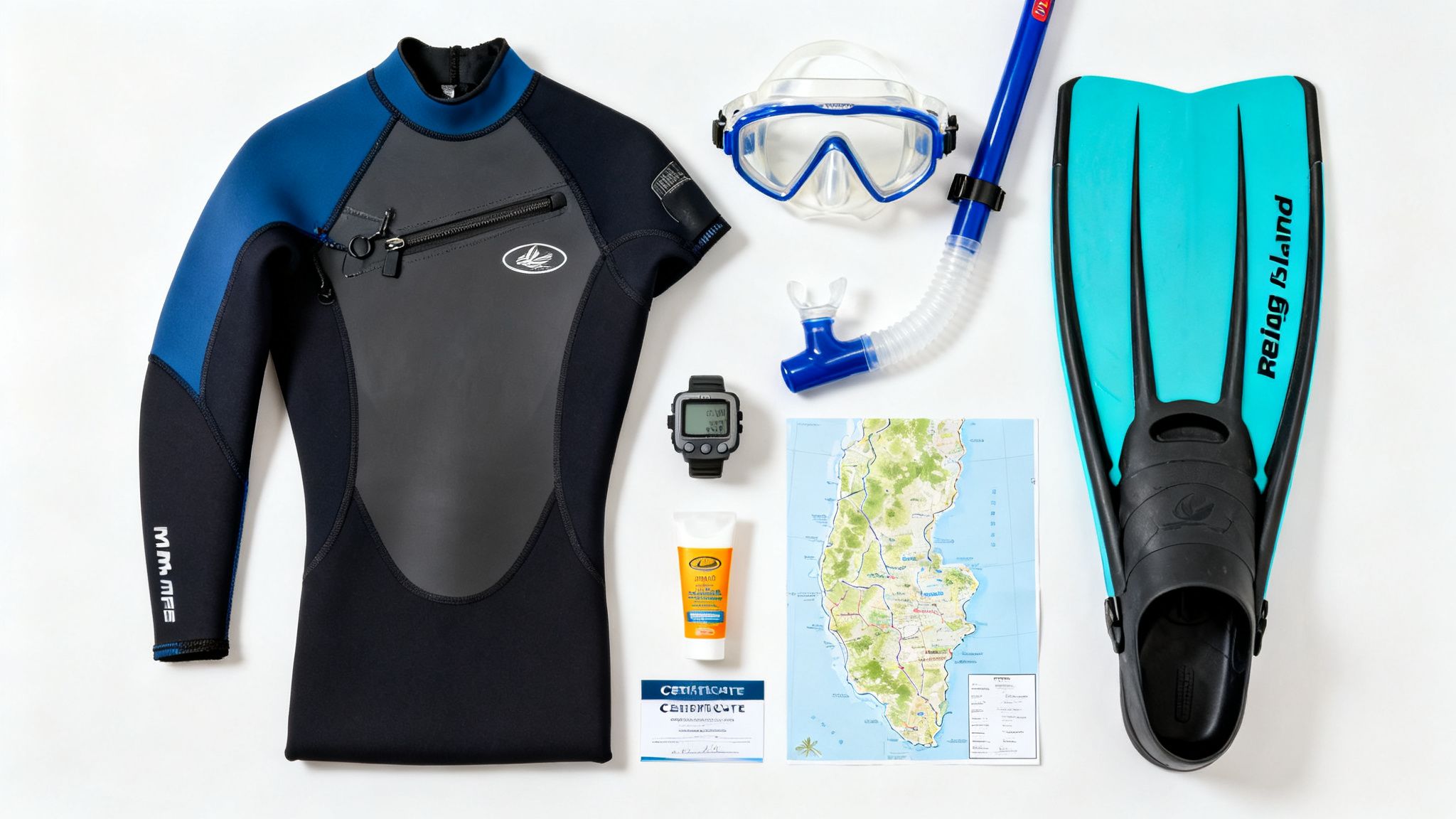
Being comfortable and prepared is key to a great dive trip. While you can always rent a full set of high-quality gear from us, we know many divers feel most comfortable with their own equipment.
Here's a simple checklist to make sure you don't forget anything important:
- Exposure Suit: A 3mm full wetsuit is the sweet spot for most people year-round. If you get chilled easily, you might consider a 5mm suit or adding a hood and vest, especially if you're planning multiple dives in a day or doing a night dive.
- Essential Dive Gear: Your own mask, snorkel, fins, and dive computer are the big four. A good fit makes all the difference.
- Certification Cards & Logbook: Make sure to bring your C-cards (physical or digital). And don't forget your logbook to document all the amazing things you're about to see!
- Reef-Safe Sunscreen: This is a big one. Hawaii has banned sunscreens with oxybenzone and octinoxate to protect our fragile reefs. Please only bring mineral-based, reef-safe options.
- Dry Bag: A small dry bag is a lifesaver on the boat for keeping your phone, keys, and a towel from getting splashed.
- Warm Layer: Even on the sunniest Hawaiian day, it can get a little breezy on the boat. A light jacket or hoodie is perfect for staying warm between dives.
Getting your gear sorted ahead of time means less stress and more time to focus on the adventure. If you're wondering how to budget for your trip, check out our helpful guide on how expensive scuba diving is in Hawaii.
Why You Should Always Dive With a Professional Guide
The ocean’s raw power and sheer unpredictability command respect. When you’re planning your Big Island dive trip, the single most critical decision you'll make isn’t which site to visit—it’s who you trust to take you there. Going with a professional guide turns a potentially risky outing into a secure, relaxing, and truly unforgettable adventure.
Let's be real: as beautiful as Hawaii is, its waters can be unforgiving for those who aren't prepared. It’s a sobering fact that Hawaii residents have the second-highest drowning rate per capita in the United States, a statistic often tied to unguided ocean activities. You can read more about this in local reporting on the topic.
But the story for professional scuba operations is completely different. Data from the Divers Alert Network (DAN) shows an incredibly low fatality rate of just 0.04 per 10,000 dives for professionally guided excursions. That number speaks volumes about the massive safety advantage of diving with certified pros.
The Pillars Of Professional Dive Safety
Reputable dive companies like Kona Honu Divers build their entire operation on a foundation of strict, time-tested safety protocols. This isn't just about having a first-aid kit handy; it’s a comprehensive system that covers every single moment of your dive.
These measures are in place to minimize risk so you can maximize your fun:
- Following the Standards: Operators adhere to rigorous guidelines from international agencies like PADI and SSI. This ensures every dive follows globally recognized safety procedures, no matter where you are in the world.
- Detailed Dive Briefings: Before you even dip a fin in the water, your guide will walk you through the dive site, point out potential hazards, review emergency procedures, and make sure everyone is on the same page with hand signals.
- Perfectly Maintained Gear: Professional shops invest in top-tier rental equipment that's meticulously maintained and regularly serviced. This peace of mind means you never have to worry about gear failure.
- Highly Trained Crews: From the captain to the divemasters, every crew member is certified in CPR and first aid. They are also experts in emergency oxygen administration and rescue techniques.
It's More Than Just Safety: Local Knowledge and Better Diving
A great guide does more than just keep you safe—they unlock the secrets of the reef. Their local expertise is priceless. They know exactly which crevice hides the octopus or which lava tube makes for the most dramatic photo. They can read the currents and conditions to make sure you’re hitting each site at the absolute best time.
If you’re a certified diver looking to sharpen your skills, a professional guide is the best mentor you can ask for. They can help you dial in your buoyancy, improve your air consumption, and build the confidence you need to take on more advanced dives. Exploring with an expert opens up a world of incredible advanced diving opportunities that you might have otherwise missed.
Ultimately, investing in a professionally guided diving tour is an investment in your safety, your confidence, and the overall quality of your underwater memories.
Your Big Island Scuba Questions Answered
Let's wrap up with a few of the most common questions we get from divers planning their trip. Think of this as a final check to clear up any lingering thoughts so you can book your Kona adventure with total confidence.
What Is The Best Time Of Year To Scuba Dive On The Big Island?
Honestly, there's no bad time to dive here—the Big Island offers incredible, world-class diving all year long. The real difference comes down to personal preference.
The summer months, from about May to October, tend to have the calmest seas and the warmest water. We often see temperatures hovering around a balmy 80°F (27°C).
Winter, running from November to April, is spectacular for a different reason: it’s humpback whale season. There's nothing quite like hearing their songs reverberate through the water on a dive, and you’ll almost certainly see them breaching from the boat. Visibility is fantastic year-round, often clearing 100 feet.
Do I Need To Be An Advanced Diver For Kona's Best Sites?
Not at all! That's one of the best things about diving the Kona coast. It’s incredibly accessible, with a huge variety of sites perfect for every skill level. Many of our most stunning, vibrant reefs are in the 40-60 foot range, making them ideal for Open Water certified divers.
Even the world-famous Manta Ray Night Dive is a fairly shallow dive, usually taking place around 30-40 feet. This means one of the most unforgettable underwater encounters on the planet is open to most certified divers. Of course, if you are looking for a bigger challenge, we offer specialized advanced dive tours that explore deeper sites and unique experiences like the one-of-a-kind Kona Blackwater Dive.
Can My Non-Diving Family Join The Tour?
Absolutely, and we highly encourage it! This is a huge perk of a Kona dive vacation. At Kona Honu Divers, we love welcoming snorkelers and ride-alongs on our boats.
It’s an especially great option for the Manta Ray Night Dive, where snorkelers get a front-row seat to the action as the mantas feed right at the surface. It's a perfect way for everyone in your group to share in the magic of the ocean, certified or not. Just make sure to confirm spots for non-divers when you book your diving tours.
What Makes The Garden Eel Cove Manta Dive Special?
While there are a couple of spots to see the mantas, those in the know will tell you Garden Eel Cove is the premier location. There are a few key reasons for this.
First, its geography protects it from the open ocean swell, which means a smoother boat ride and calmer conditions in the water—leading to far fewer cancellations. More importantly, the underwater layout is perfect. It creates a natural amphitheater where divers can settle onto the sandy bottom and look up.
This gives you an unobstructed, cinema-like view as the giant mantas perform their graceful acrobatics in the lights just feet above your head. It's a truly magical experience you will never forget.
Ready to experience the best scuba diving the Big Island has to offer? Kona Honu Divers has a tour for you. Check out our full range of dive and snorkel adventures and book your spot today!