
So, you're thinking about going pro. The PADI Divemaster certification is your first major step into the world of professional scuba diving, and it’s a big one. This isn't just another C-card for your wallet; it's the beginning of a journey that reshapes your entire relationship with diving.
What a PADI Divemaster Certification Really Means

Becoming a PADI Divemaster marks the exact moment you stop being just a passenger on the dive boat and start becoming part of the crew. You transition from a diver who follows the plan to a leader who makes the plan. It's where your personal passion for the underwater world transforms into a professional responsibility to guide, mentor, and protect others.
This certification is your passport to the professional side of scuba. It’s what allows you to lead certified divers on unforgettable tours, assist PADI Instructors as they teach new students, and serve as a true role model for everyone dipping a fin into the water for the first time. You become the go-to person—the one who handles the logistics, keeps an eye on everyone, and ensures the dive is both amazing and safe.
From Diver to Leader
At its heart, the PADI Divemaster certification is all about leadership. Suddenly, your focus expands. You’re no longer just managing your own air and buoyancy; you’re subconsciously tracking the whole group, anticipating potential issues before they happen, and managing the dive from the surface to the seafloor. This requires a much deeper grasp of dive physics, physiology, equipment, and the local environment.
The Divemaster course is less about learning brand new skills and more about refining the ones you have to a razor’s edge. It's designed to forge true confidence so you can conduct clear dive briefings, map a dive site, and manage a group of divers with calm authority.
To get you there, the training is intense and comprehensive. You'll dive deep into advanced dive theory, push your rescue skills far beyond what you learned in the Rescue Diver course, and master the art of dive supervision and management. These aren't just classroom concepts—you'll live and breathe them in the open water.
For a quick overview of what the program entails, check out this table.
PADI Divemaster At a Glance
| Component | Description |
|---|---|
| Knowledge Development | Covers 9 topics including dive physics, physiology, equipment, and supervising divers. |
| Waterskills Development | Stamina exercises (400-yard swim, 15-minute tread, etc.) and perfecting 24 basic scuba skills. |
| Practical Application | Real-world workshops like dive site setup, dive briefing, and mapping an open water site. |
| Internship | Assisting on actual PADI courses like Open Water Diver, Advanced Open Water, and Rescue Diver. |
| Prerequisites | PADI Rescue Diver, 40 logged dives to start, 60 to finish, EFR Primary/Secondary Care within 24 months. |
| Outcome | First professional-level PADI certification, enabling you to work in the dive industry worldwide. |
This training ultimately prepares you for the real-world demands you'll face every day at a busy dive center.
Real-World Responsibilities
Once certified, you're entrusted with duties that are absolutely critical to the smooth operation of any dive shop. A typical day might involve:
- Supervising Dive Activities: This could mean leading a group of experienced photographers on a guided tour or managing the dive deck on a busy charter boat.
- Assisting with Training: You become an instructor’s right-hand person, helping demonstrate skills, wrangling student gear, and providing an extra set of eyes on new divers.
- Ensuring Diver Safety: From pre-dive safety checks and headcounts to being the first responder for minor issues, safety is always your top priority.
- Promoting Environmental Awareness: As a leader, you have a platform to teach others how to dive responsibly and protect the fragile marine ecosystems we all love.
This is the kind of rigorous, hands-on training that prepares you to work at incredible destinations around the globe—including right here on the Big Island. Elite PADI 5-Star dive centers like Kona Honu Divers specialize in transforming passionate divers into confident, capable professionals ready to lead the way.
Checking All the Boxes Before You Begin
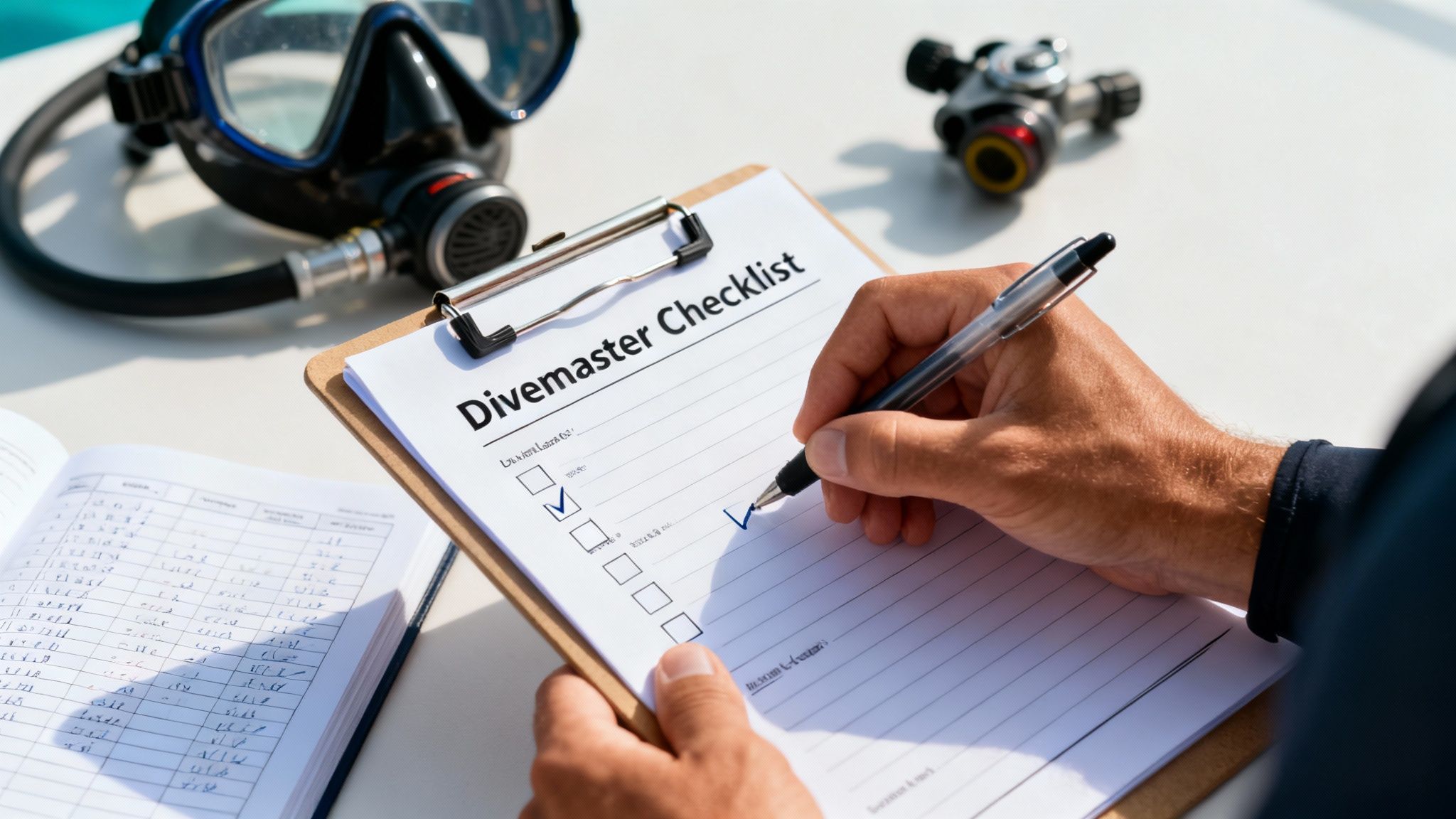
Before you can even think about becoming a PADI professional, you need a solid foundation of dive training and real-world experience. These prerequisites aren't just arbitrary rules; they're the building blocks that ensure you're truly ready to take on a leadership role. The PADI Divemaster certification is a serious step, and it builds directly on the skills you’ve already mastered.
The first one is simple: you must be at least 18 years old. This isn't just a number—it’s about having the maturity to handle the responsibilities that come with being a dive pro. From there, the requirements dive deeper into your actual certifications and time spent underwater.
Your Certification Pathway
You don’t just wake up one day and decide to be a Divemaster. There's a clear path of certifications you need to complete first. This progression is designed to make sure you've dialed in your personal dive skills long before you start learning to supervise other people.
Your dive resume needs to include these three core certifications:
- PADI Open Water Diver: This is where it all began—learning the absolute essentials of breathing underwater.
- PADI Advanced Open Water Diver: Here, you proved you could handle more, exploring different types of diving like deep and navigation.
- PADI Rescue Diver: This is the game-changer. It's the course that fundamentally shifts your focus from just taking care of yourself to actively looking out for everyone else in the water.
The Rescue Diver course is non-negotiable, and for good reason. It’s where you develop the critical thinking and emergency management skills that are the heart and soul of a great Divemaster. You can dive deeper into what the PADI Rescue Diver course covers and see why it’s so crucial for anyone wanting to go pro.
Essential Safety and Experience Requirements
With the core certifications under your belt, there are just a few more things to sort out. These requirements confirm you have the practical experience and are prepared to handle a real emergency.
First, you’ll need proof of current Emergency First Response (EFR) Primary and Secondary Care training, or an equivalent CPR and first aid certification. "Current" means it must have been completed within the past 24 months so your life-saving skills are sharp.
A huge part of being ready is simply putting in the time. PADI requires you to have at least 40 logged dives just to begin the Divemaster course. To actually get certified, you'll need a minimum of 60 logged dives. There’s no substitute for experience.
Finally, your health is a top priority. You must have a medical statement signed by a doctor within the last 12 months that clears you for diving. This is to make sure you're physically fit to handle the demands of the job—from hauling gear to performing rescues. Once you’ve got all these pieces in place, you’re ready to take that exciting first step into the world of professional diving.
What You’ll Actually Learn and Master
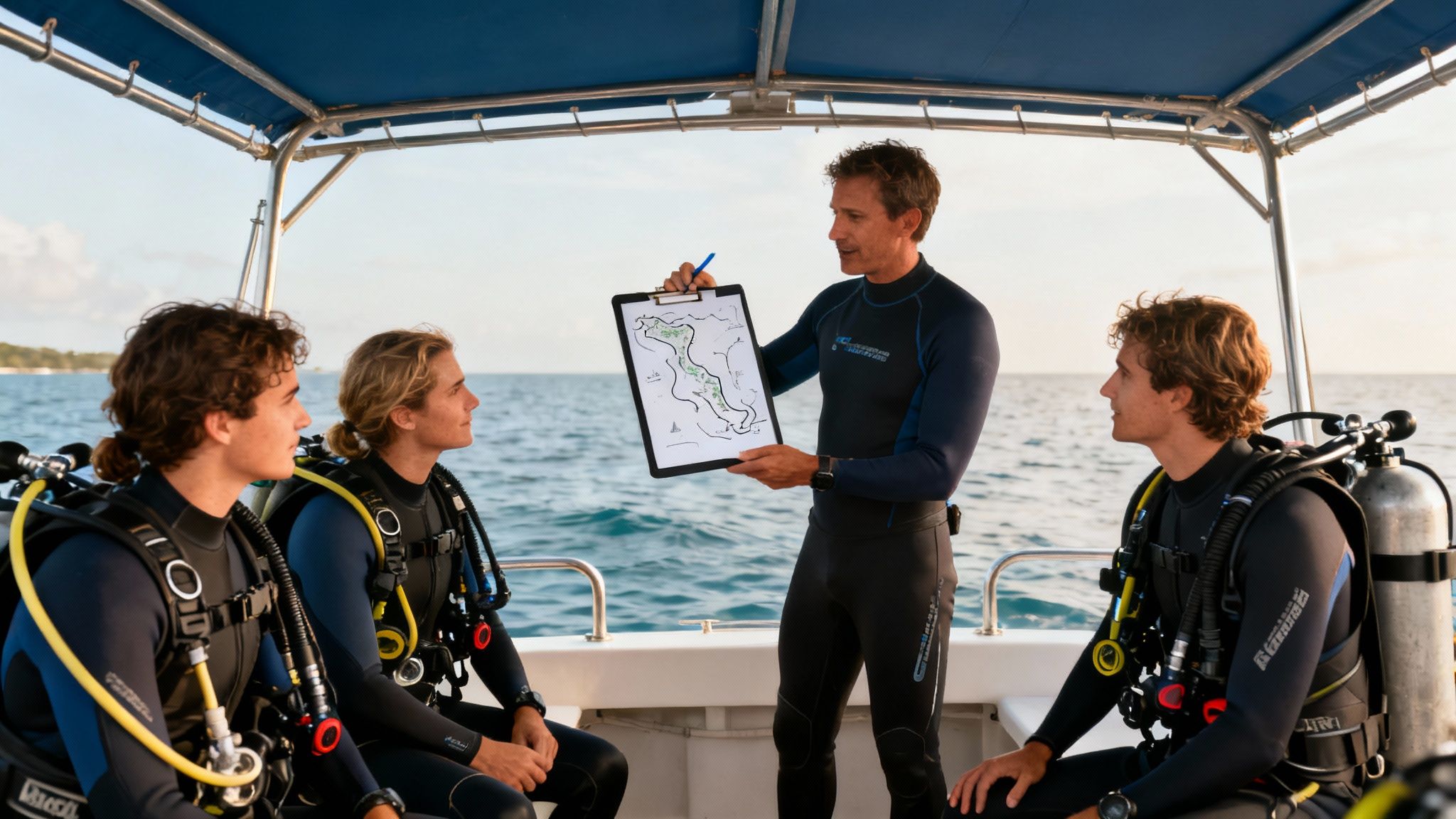
The PADI Divemaster certification is where the rubber really meets the road. All the theory you've picked up in previous courses gets put to the test in a big way, as you move from being a good diver to becoming a genuine professional. The training is built on three core components that work together to shape you into a confident, capable leader.
This isn’t just about checking boxes on a list. It’s a complete mindset shift that teaches you how to think, act, and make decisions like a pro, all while keeping others safe and making sure they have an amazing time.
Going Pro with Your Dive Knowledge
First up is knowledge development. Think of this as upgrading your brain's operating system from "diver" to "dive professional." You've learned about dive physics and physiology before, but now you'll go so much deeper that you can explain these complex ideas in a way that anyone can understand.
You'll get a firm grasp on the tough stuff:
- The Physics of Diving (pressure, volume, density, and why they matter)
- Diving Physiology (the science behind decompression sickness and gas narcosis)
- Scuba Equipment (how to troubleshoot gear like a seasoned mechanic)
- Supervising Divers and Managing Risk (the heart of the Divemaster role)
- The Business of Diving and Your Career
A lot of this is handled through PADI’s eLearning, which lets you knock out the bookwork on your own time. This solid academic foundation is what gives you the confidence to make the right call when you're the one in charge.
Polishing Your Skills to "Demo-Quality"
Next, we hit the water to focus on waterskills and stamina. This is where you prove you have the physical chops and precision to be a dive pro. It’s no longer good enough to just do a skill—you have to perform it perfectly, like you're on stage.
You’ll have some timed swims and floats to demonstrate your fitness, but the centerpiece is the "skill circuit." Here, you'll practice and perfect all 24 basic scuba skills from the Open Water Diver course until they are "demonstration quality"—meaning slow, exaggerated, and crystal clear for a student to copy.
Think of it like a chef sharpening their knives. A good home cook can chop an onion, but a professional chef does it with flawless, efficient, and repeatable technique. As a Divemaster, your skills need to be that sharp and that consistent.
This level of practice builds the muscle memory you need to perform skills without a second thought, freeing up your mental bandwidth to focus on the divers you're leading. It's a high standard, and it's attracting a new generation of dedicated divers. PADI data reveals that around 40% of new Divemasters are between 20 and 29 years old, and another 30% are in their 30s. You can get more insights into who is joining the pro ranks from PADI's demographic data.
Getting Your Hands Dirty with Real Leadership
The final and most important piece of the puzzle is practical application. This is where everything clicks. You’ll be working alongside our seasoned instructors, learning by doing in real-world situations. It’s less like a class and more like an apprenticeship.
Through a series of hands-on workshops and real-life training sessions, you’ll learn the day-to-day duties of a Divemaster.
You will personally lead and complete projects like:
- Dive Site Setup and Management: Learning the logistics of organizing a dive from the moment divers arrive to when they head home.
- Mapping Project: Creating a detailed underwater map of a local dive site to sharpen your navigation and observation.
- Dive Briefing: Mastering the art of giving a clear, confident, and interesting pre-dive briefing that gets everyone excited and informed.
- Search and Recovery Scenario: Leading a team to find a "lost" item and bring it to the surface using lift bags and proper search patterns.
- Deep Dive Scenario: Planning and leading a deep dive, focusing on managing narcosis, gas supply, and safety protocols.
On top of these workshops, you'll be an active assistant on actual PADI courses, helping real students learn to dive. You’ll also get the chance to lead certified divers on underwater tours, which is the ultimate test of your briefing, navigation, and group management skills. This is where you truly earn the title.
So, What Can You Actually Do with a Divemaster Certification?
Earning your **PADI Divemaster certification** isn’t just about getting another C-card. It’s your official entry pass into the professional dive world, a credential that lets you swap your office desk for a dive deck, pretty much anywhere on the planet. This is the certification that turns your passion into a potential career.
With this ticket in your pocket, you can find work at dive resorts, on liveaboard boats, and at PADI Dive Centers from the Caribbean to Southeast Asia. The opportunities are as vast and exciting as the ocean itself.
Your Professional Pathways
As a certified PADI Divemaster, you become the go-to person for a wide range of essential roles. You’re the one who helps make incredible underwater experiences happen for divers every single day.
Here are the most common roles you'll be qualified for:
- Guiding Certified Divers: You'll lead underwater tours, pointing out cool marine life and making sure everyone has a safe, awesome dive.
- Assisting PADI Instructors: You become an instructor’s right hand during courses, helping student divers nail their skills and build confidence.
- Managing Dive Logistics: You’ll be the backbone of the operation, whether that means running the dive deck, organizing gear, or giving clear, confident dive briefings.
- Working in Dive Retail: Your firsthand experience makes you a trusted advisor for customers looking to buy the right gear or book their next dive trip.
A Divemaster certification is globally recognized, making it one of the most versatile professional credentials out there. It’s your ticket to living and working in some of the most beautiful places on Earth.
Since its launch, the PADI Divemaster cert has become the most respected professional scuba rating in the world. PADI has issued over 30 million diver certifications since 1967, and a steady stream of those divers are always looking to go pro. With around 6,600 PADI Dive Centers and 128,000 pros working in 186 countries, Divemasters are a vital part of the global dive industry. You can learn more about PADI’s global reach and training standards directly from them.
Beyond the Dive Boat
While guiding tours is the classic Divemaster job, your certification opens doors to so much more. Many pros use their skills to give back and help protect the oceans we all love.
You could find yourself working with non-profits and research groups on projects like:
- Marine Conservation Initiatives: Think coral reef surveys, fish counts, and gathering data that helps scientists understand and protect marine ecosystems.
- Ocean Cleanup Projects: You can lead and organize underwater cleanups to remove fishing nets, plastics, and other debris.
- Environmental Education: Become an ambassador for the ocean, educating fellow divers and the community on how to dive responsibly and protect our blue planet.
The Stepping Stone to Instructor
For many, becoming a Divemaster is the final, crucial step before becoming a PADI Open Water Scuba Instructor (OWSI). It’s the perfect training ground. The experience you gain managing groups, solving problems on the fly, and assisting with classes is precisely the foundation you need to teach.
The leadership skills you develop as a Divemaster will prepare you for the Instructor Development Course (IDC) and make you a much more attractive hire for dive shops around the world. If a long-term career is your goal, check out the different scuba diving jobs that open up once you go pro.
Why Train with Kona Honu Divers in Hawaii
Choosing where to earn your PADI Divemaster certification is a huge decision. It's not just about passing exams—it's about the environment you learn in, the mentors you work with, and the real-world situations you face. Those things shape the kind of dive pro you’ll become. Training here in Kona gives you a world-class underwater classroom, but doing it with us gives you a serious edge.
As a PADI 5-Star Instructor Development Center (IDC), we live and breathe high standards. We've built our program from the ground up to forge confident, capable, and highly employable dive leaders.
An Unmatched Training Ground
Forget simulations in a pool. Imagine doing your practical training at some of the most famous dive sites on the planet. Kona’s coastline is a diver's dream, a vibrant world of pristine coral reefs, ancient lava tubes, and unique volcanic geography. It’s the perfect, dynamic environment to sharpen your skills in a huge variety of real scenarios.
During your program, you won’t just be practicing dive briefings or pretending to guide. You’ll be doing it for real, getting hands-on experience on our world-renowned charters:
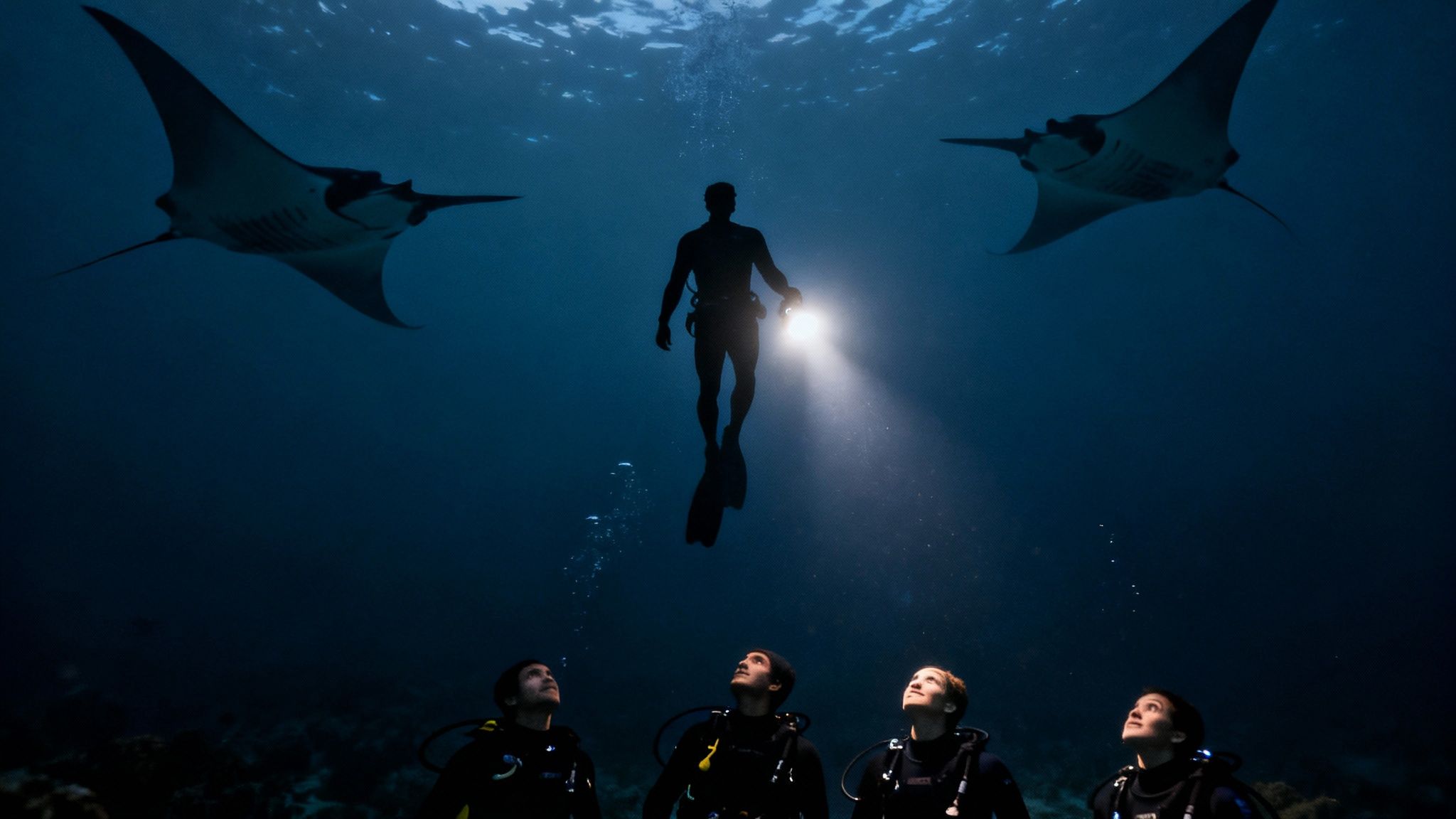
- The Manta Ray Night Dive: You'll learn the intricate logistics of managing one of the most incredible dives in the world, guiding divers on the legendary Manta Ray Night Dive.
- The Blackwater Dive: You’ll tackle the unique challenges of a Kona Blackwater Dive, leading divers in the open ocean at night to find bizarre and beautiful creatures that rise from the deep.
- Advanced Dive Excursions: You'll assist on trips to deeper, more challenging sites, learning to manage experienced divers on our popular advanced dive tours.
This isn't just training; it's a true apprenticeship. You’ll graduate with a logbook full of the kind of experience that makes dive operators everywhere sit up and take notice.
Mentorship from a Team of Veterans
Here at Kona Honu Divers, you’ll learn from a team with over 200 years of combined industry experience. Our instructors and captains are more than just teachers; they are seasoned pros who have worked all over the globe, and they bring a treasure trove of practical knowledge you'll never find in a textbook.
You’ll spend a ton of time on our custom-built dive boats, learning the nuts and bolts of boat logistics, safety protocols, and real-world customer service from the best in the business. This mentorship is the heart of our program.
We've worked hard to be recognized as the best dive shop in Kona, a reputation built on the strength of our team and the success of our graduates. Our goal is to see you succeed, and our instructors are dedicated to giving you the personal attention needed to get there.
The Kona Honu Divers Advantage
We’ve structured our Divemaster program to give you every possible advantage. We don't just check the boxes—we go far beyond the PADI minimums to make sure you graduate as a well-rounded professional, ready for a career in diving on day one.
Here are a few perks you get when you train with us:
- Real-World Experience: You’re an active part of our crew, not a bystander. You’ll assist on a wide variety of our daily diving tours.
- Extensive Boat Time: You’ll log serious hours on our boats, learning everything from handling lines and managing a dive deck to anticipating the needs of your guests.
- Career Preparation: We focus on the crucial "soft skills"—like public speaking, problem-solving, and top-tier customer service—that turn a good divemaster into a great one.
Think about it from a business perspective. Dive tourism is a massive industry, and it runs on skilled professionals. As of 2020, PADI had over 6,600 Dive Centers and 128,000 professional members worldwide, all relying on capable Divemasters. A single active Divemaster can guide hundreds of dives a year, directly impacting a shop's safety record, customer satisfaction, and repeat business. You can read more about PADI's global impact to see just how vital this role is.
Our program is designed to make you a valuable asset to any dive operation in the world. If you're ready to start your pro journey in one of the most beautiful places on Earth, we're ready to show you the way.
Your Divemaster Questions, Answered
So, you’re thinking about going pro. It’s a huge, exciting step, but it’s totally normal to have a ton of questions. How much time will it take? What’s the real cost? What can you actually *do* with the certification?
Getting clear answers upfront is the best way to plan your adventure. Let's break down some of the most common questions we hear from aspiring Divemasters.
How Long Does the PADI Divemaster Course Take?
One of the first things people want to know is the time commitment. The truth is, there's no single answer. The PADI Divemaster course is incredibly flexible, which is great because you can find a program that fits your life, not the other way around.
Broadly speaking, you've got two main routes:
- The Express Track: Some programs are structured as intensive, full-time courses. Think of it as a boot camp. These usually run for about four to eight weeks, and they're perfect if you can clear your schedule and just want to get it done.
- The Internship Path: This is a far more popular (and, in our opinion, more valuable) approach. An internship can last anywhere from a couple of months to a full season. You’re not just a student; you become part of the dive shop crew, learning the ropes through hands-on, daily experience.
The internship model lets you learn at a more natural pace. You’re not just memorizing facts for a test; you’re seeing how a real dive operation works by assisting on actual scuba diving tours on the Big Island. That’s the kind of practical wisdom you just can’t get from a textbook.
What Are the Total Costs to Become a Divemaster?
Figuring out the budget is a big one. It's more than just the price tag on the course itself, so it’s smart to look at the whole picture to avoid surprises.
Here’s a realistic breakdown of what you should plan for:
- The Course Fee: This is the big ticket item, covering all your training, mentorship, and pool/ocean sessions with the dive center. The cost can vary a lot depending on the location and how long the program is.
- PADI Materials: You'll need the official PADI Divemaster crew pack. This includes your manuals, slates, and other essential learning tools.
- PADI Fees: Once you finish, you pay a one-time application fee directly to PADI. To keep your pro status active, you'll also pay an annual membership fee each year.
- Your Own Gear: As a dive professional, you’re expected to have your own complete set of scuba equipment. You might already have the basics, but you'll need pro-level tools like a solid dive computer, a compass, a cutting tool, and surface marker buoys.
- Dive Insurance: Professional liability insurance isn't just a good idea; it's often required. This protects you when you start working with certified divers.
Try to think of it all as a direct investment in your new career. Every piece is a building block toward becoming a confident, respected dive pro.
Can I Work Anywhere in the World with This Certification?
Yes, you absolutely can! Your PADI Divemaster card is your passport to the global diving community. It’s the single most recognized professional scuba certification in the world, opening up job opportunities in more than 180 countries and territories.
A dive shop owner in the Red Sea, the Great Barrier Reef, or the Caribbean knows exactly what a PADI Divemaster can do. That universal standard is the biggest strength of the PADI system—it makes you instantly credible, anywhere.
Of course, your certification is just the first step. To legally work in another country, you'll still need the right work visa or permit. And don't underestimate the power of language! Being able to speak the local language (or other languages common among tourists) will make you a much stronger candidate for the best jobs.
What's the Main Difference Between a Divemaster and an Instructor?
This is a really important question, because it helps you map out your career goals. While both are PADI Professionals, they have very different jobs. A simple way to think about it is a guide versus a teacher.
Here’s how their roles break down:
- A PADI Divemaster is a leader for certified divers. Your job is to guide underwater tours, manage the dive boat, and assist instructors with their classes. You're the expert guide making sure everyone has a safe, amazing time.
- A PADI Instructor (OWSI) is a teacher who creates new divers. An instructor is qualified to teach the full range of PADI courses, from the first-time Discover Scuba Diving experience all the way up to Divemaster, and issue certifications.
Basically, Divemasters lead the fun, and Instructors teach the skills. For most pros, becoming a Divemaster is the critical final step before heading to the Instructor Development Course (IDC). It’s where you build the leadership skills and real-world confidence you’ll need to become a great teacher.