
Picture this: your scuba tank is filled with a special blend of gas that lets you stay underwater longer and feel less wiped out when you're done. That's nitrox in a nutshell. The biggest draws are the extended bottom times and shorter surface intervals, but many divers swear by it for reducing that post-dive drain, making your whole dive vacation that much better.
What Is Nitrox and Why Does It Matter for Your Dives
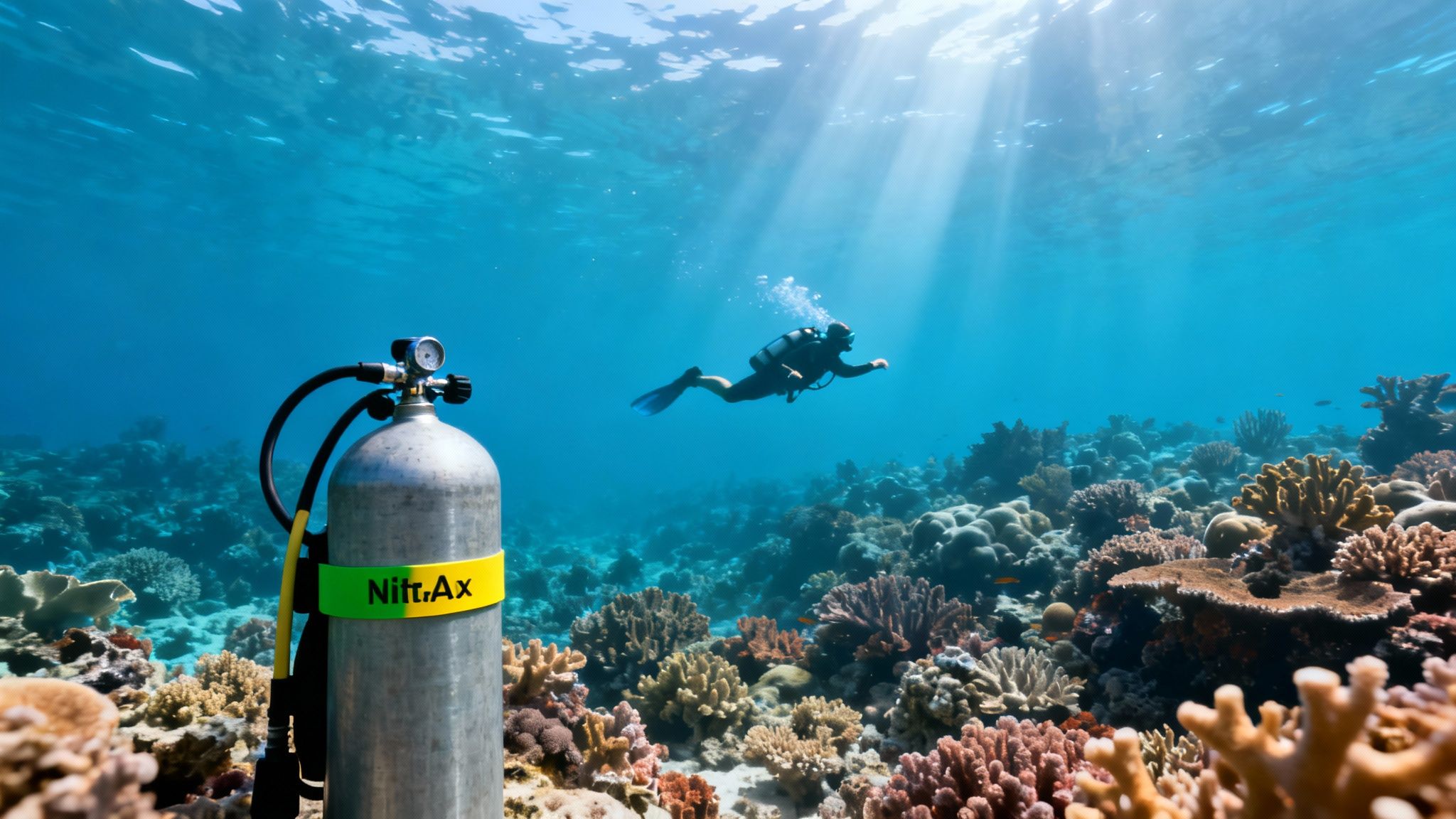
At its heart, Enriched Air Nitrox (EANx) is just breathing air that has been tweaked to have more oxygen and, by extension, less nitrogen. The air you're breathing right now—and what's in a standard scuba tank—is roughly 21% oxygen and 79% nitrogen. Nitrox simply changes that recipe. The most common mixes you'll see in recreational diving are 32% and 36% oxygen.
Think of it like choosing your morning coffee. Regular air is like a standard cup of joe; it works great and gets the job done. Nitrox is more like a finely tuned espresso shot—it's a specialized blend designed for a specific kind of performance. For a diver, that "performance" means more quality time exploring the underwater world.
The Real-World Advantage for Every Diver
So, why should you care about a little less nitrogen in your tank? Because that's the whole secret. When you dive, your body absorbs nitrogen, and that's what limits your time at depth. By breathing a mix with less nitrogen from the start, you get some game-changing advantages.
Here's what that looks like in practice:
- Longer No-Decompression Limits: This is the big one. You can stay at your planned depth for longer without having to make mandatory decompression stops. More time to watch that octopus or explore the nooks and crannies of a wreck.
- Shorter Surface Intervals: Since you've absorbed less nitrogen, your body needs less time on the boat to off-gas before the next dive. That means less waiting around and more time back in the water.
- Reduced Post-Dive Fatigue: This one is a bit more anecdotal, but countless divers report feeling way less tired and more energetic after a day of nitrox diving compared to a day on regular air.
Making Nitrox Accessible in Paradise
These perks are especially awesome in a world-class dive destination like Hawaii's Big Island, where you want to squeeze every drop of magic out of your time underwater. When you're doing multiple dives a day to explore the incredible Kona coast, nitrox lets you maximize your vacation. You see more on every dive and still have the energy to enjoy a nice dinner afterward.
Understanding just how much nitrox improves the experience, top-tier shops like Kona Honu Divers make it a no-brainer. They offer free nitrox fills for all certified nitrox divers who join their amazing diving tours, completely removing the cost barrier. It's a commitment that makes choosing nitrox the easy and obvious decision for anyone wanting to fully appreciate the stunning underwater landscapes of Kona.
The Science of Maximizing Your Underwater Time
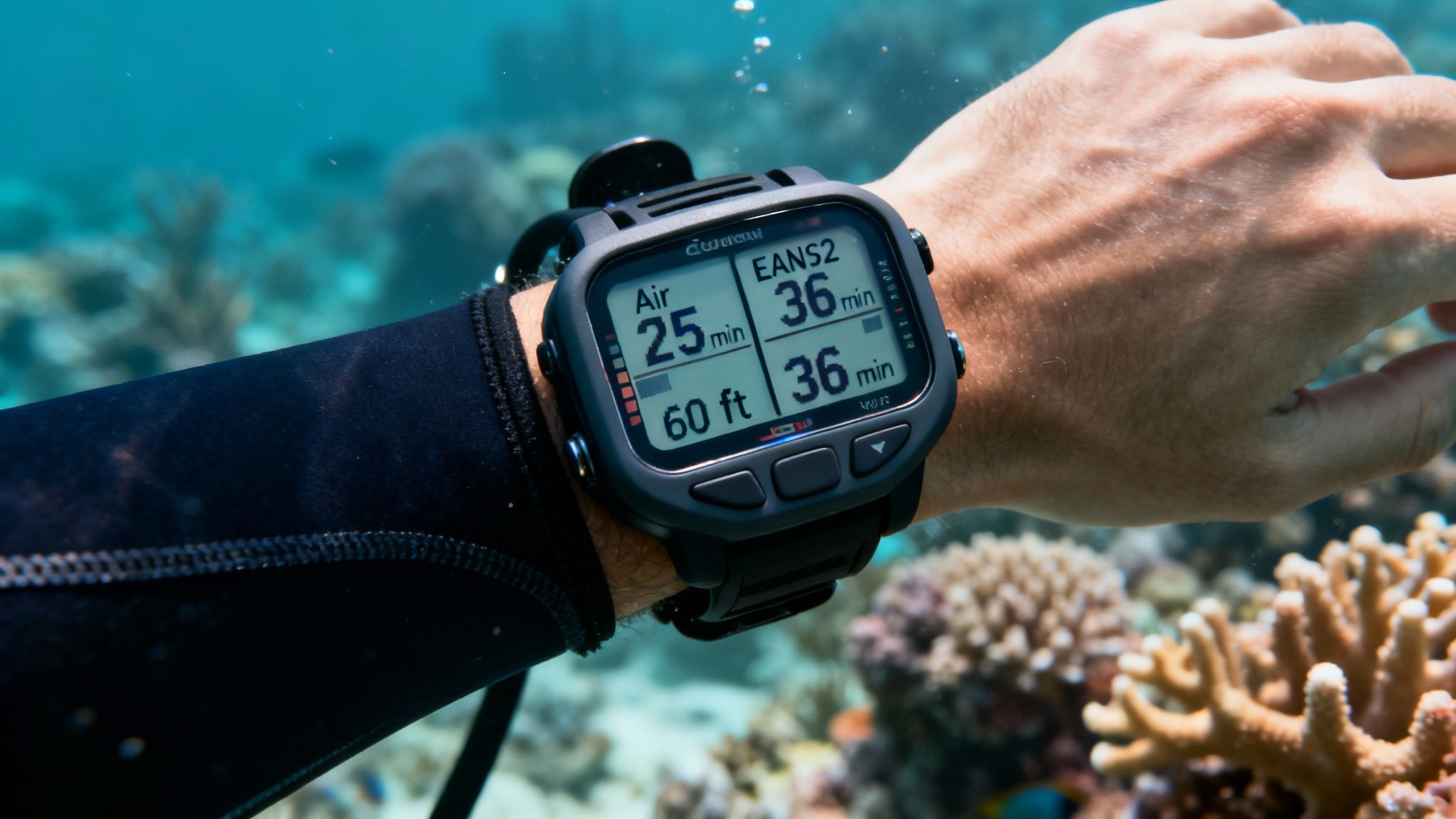
The number one reason divers get certified to use nitrox is simple: more time underwater. It might seem technical, but the science behind this incredible benefit is surprisingly easy to grasp. It all boils down to managing the nitrogen your body soaks up under pressure.
When you dive with a standard tank of air, you’re breathing a gas mix that’s roughly 79% nitrogen. As you descend, the increasing pressure forces this inert gas into your body’s tissues. Your dive computer is constantly tracking this nitrogen load, and once you hit your limit—what we call the No-Decompression Limit (NDL)—it’s time to head up. That limit is the main reason your dive ends when it does.
This is where nitrox completely changes the game. By enriching the air with more oxygen, typically to 32% or 36%, you are simultaneously reducing the percentage of nitrogen. Less nitrogen in every breath means your body absorbs it far more slowly. This one simple change dramatically extends your NDL, letting you stay down and explore for much, much longer.
Nitrox in Action on Kona's Reefs
To see what this really means, let's look at a typical dive scenario right here on the Big Island. Imagine you're exploring a beautiful Kona reef, like the ones we visit on our daily diving tours, at a nice, relaxed depth of 60 feet. You're trying to get that perfect photo of a Hawaiian green sea turtle.
On regular air, your dive computer would give you about an hour at that depth before calling the dive. But with nitrox (EAN32), you could stay for over 90 minutes. That's a 50% increase in your dive time—plenty of extra moments to patiently wait for that perfect shot without ever feeling rushed.
The advantage becomes even more significant on deeper dives. For divers exploring Kona’s incredible lava tubes and deeper ledges, the extra time nitrox provides isn't just a luxury; it's a game-changer.
A Clear Comparison of Bottom Time
The numbers really tell the story. The deeper you go, the more you appreciate every extra minute nitrox gives you. Let's compare standard air against EAN32, a common nitrox mix with 32% oxygen, at depths you’ll find all around Hawaii.
Table: Air vs Nitrox (EAN32) No-Decompression Limits
This table shows just how much more time you get with nitrox on a single dive. The difference is staggering.
| Depth (Feet) | Bottom Time with Air (Minutes) | Bottom Time with EAN32 (Minutes) | Increase in Dive Time |
|---|---|---|---|
| 60 feet | ~ 60 min | ~ 92 min | +53% |
| 70 feet | ~ 40 min | ~ 60 min | +50% |
| 80 feet | ~ 29 min | ~ 42 min | +45% |
| 90 feet | ~ 25 min | ~ 35 min | +40% |
| 100 feet | ~ 20 min | ~ 25 min | +25% |
As you can see, these aren't minor improvements. They are massive gains that can completely transform your dive experience. At 80 feet, an air diver gets 29 minutes, while a nitrox diver gets 42 minutes. That's nearly 50% more time to explore a wreck or watch the manta rays. It's the difference between a rushed glimpse and a full, immersive experience. You can explore more of the science behind these calculations on MichaelBStrauss.com.
At the end of the day, more bottom time means a better, more rewarding dive vacation. You’ll spend less time watching your computer and more time soaking in the unparalleled beauty of Kona's underwater world.
Feel Better, Dive Safer: The Hidden Perks of Nitrox
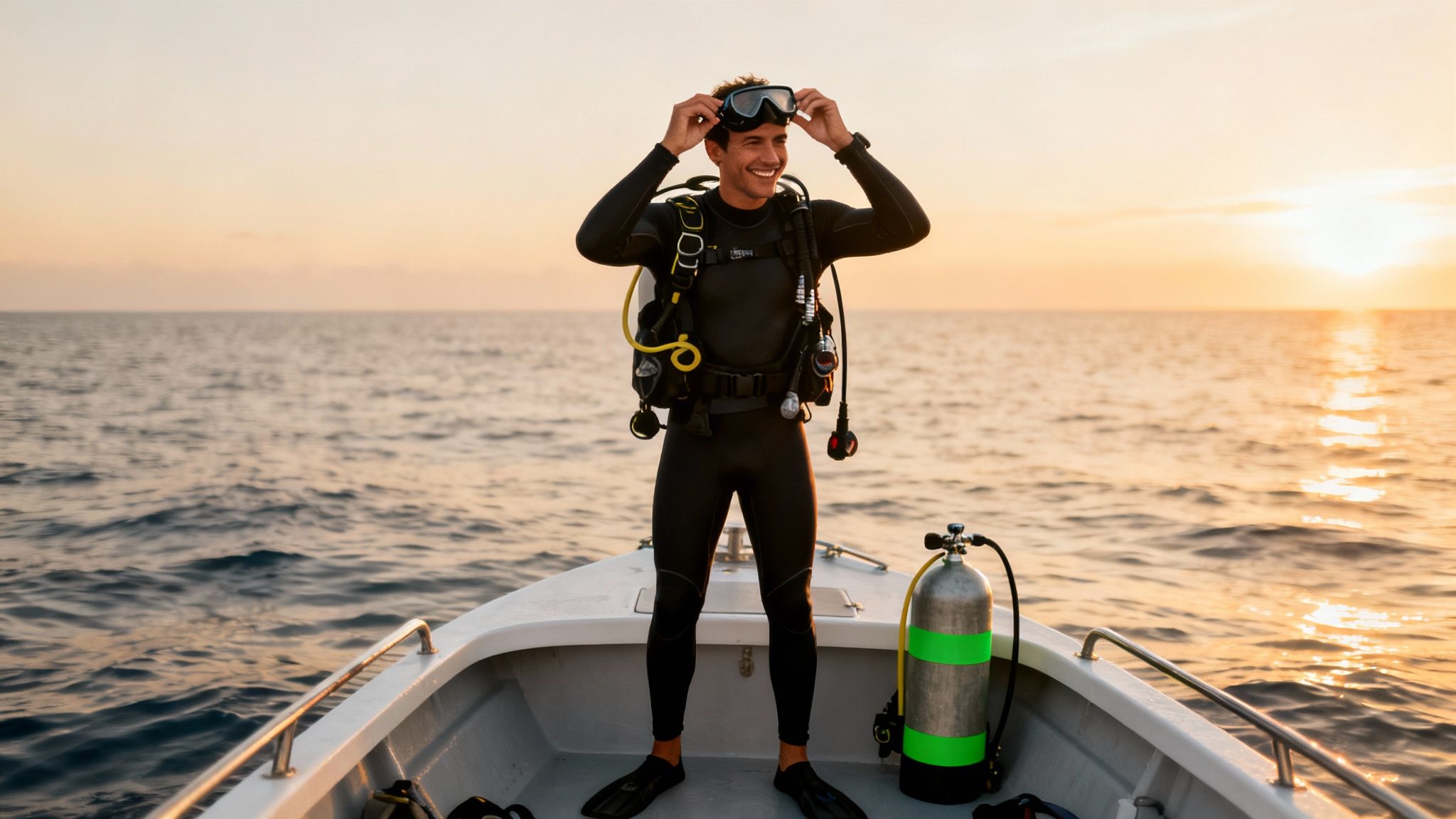
Longer bottom time is a fantastic perk, but the real magic of nitrox often happens after the dive. Two of the most celebrated benefits are a serious boost in your safety margin and a noticeable drop in that classic post-dive exhaustion. For anyone on a multi-day dive vacation, these perks can completely transform the experience.
The safety logic behind nitrox is refreshingly simple: less nitrogen in your tank means less nitrogen absorbed by your body's tissues. Since that excess nitrogen is the culprit behind Decompression Sickness (DCS), you’re automatically lowering your risk profile on every single dive.
Imagine diving the exact same profile—depth and time—as you would on air, but doing it on nitrox instead. You’re essentially giving yourself a much bigger safety buffer. It’s like driving 55 mph in a 65 mph zone; you have more room for error and can handle the unexpected with greater confidence.
The Fatigue Factor: Why Divers Swear By Nitrox
Talk to any group of experienced divers, and you'll hear the same story over and over: "I just feel better after diving with nitrox." While the hard science is still catching up, a mountain of anecdotal evidence is impossible to ignore. Divers consistently report feeling more alert and energetic after a two-tank trip on nitrox versus a similar day on standard air.
This isn't just a minor detail; it’s a game-changer. Instead of feeling drained and ready for a nap by lunchtime, you have the energy to explore Kona, enjoy a great dinner, or even get ready for an epic Manta Ray night dive.
So, what's going on in our bodies? The leading theory is that your body simply has less work to do.
- Less Physiological Strain: With a lower nitrogen load to manage, your body isn't working as hard to off-gas during your surface interval and after your dives are done.
- Fewer "Micro-Bubbles": Some research suggests that even on "safe" dives, tiny, symptom-free bubbles can form in our system. Breathing less nitrogen may reduce the formation of these micro-bubbles, resulting in less underlying stress on your body.
A Deeper Dive into Safety Margins
The safety advantages of nitrox really shine on repetitive dive days. A diver making multiple dives to 60 feet for 45 minutes on air would find their second dive time drastically cut short.
But with EAN32, that same diver could enjoy a 43-minute second dive after a reasonable surface interval. On air? They’d be limited to just 14 minutes. That’s a massive difference.
This reduced nitrogen load also has a direct impact on your post-dive plans, especially when it comes to flying. To learn more about this crucial safety protocol, check out our guide on why you can't fly right after diving.
Ultimately, using nitrox helps you make the most of your vacation time—both in the water and out—all while adding a welcome layer of peace of mind.
Understanding Nitrox Rules and Safety Procedures
The upsides of diving with nitrox—more time underwater and feeling less drained afterward—are fantastic, but they come with a few ground rules. Nitrox diving is incredibly safe, but it plays by a different set of rules than standard air. Getting these safety procedures down isn't just a box-ticking exercise; it’s what allows you to confidently unlock everything nitrox has to offer.
The biggest thing to keep in mind is managing your exposure to the higher oxygen concentration in your tank. This brings up a critical concept called Oxygen Toxicity. We need oxygen to live, of course, but under pressure, too much of a good thing can become toxic. That’s why every nitrox dive is planned around two key limits that every certified diver learns to live by.
Maximum Operating Depth (MOD)
The golden rule of nitrox diving is knowing your Maximum Operating Depth (MOD). This is the absolute deepest you can safely go on a specific nitrox mix before the partial pressure of oxygen (PPO2) gets too high.
This brings us to one of the biggest myths about nitrox:
The key takeaway here is that nitrox is for longer dives, not deeper ones. In fact, your maximum depth on nitrox will always be shallower than it would be on regular air.
For instance, if you're diving with a common EAN32 blend (32% oxygen), your MOD is right around 111 feet. Pushing past that depth significantly increases the risk of oxygen toxicity, which is why your dive plan is so important. Your dive computer is your best friend here—set it correctly, and it will give you clear warnings if you get close to your MOD.
The Non-Negotiable Pre-Dive Checklist
Since the oxygen percentage can vary slightly from one tank fill to the next, there’s a pre-dive safety check that every single nitrox diver must perform. This isn't just a friendly suggestion; it's a mandatory part of the process that ensures your dive computer has the right information to keep you safe.
Here are the essential steps you'll perform before every nitrox dive:
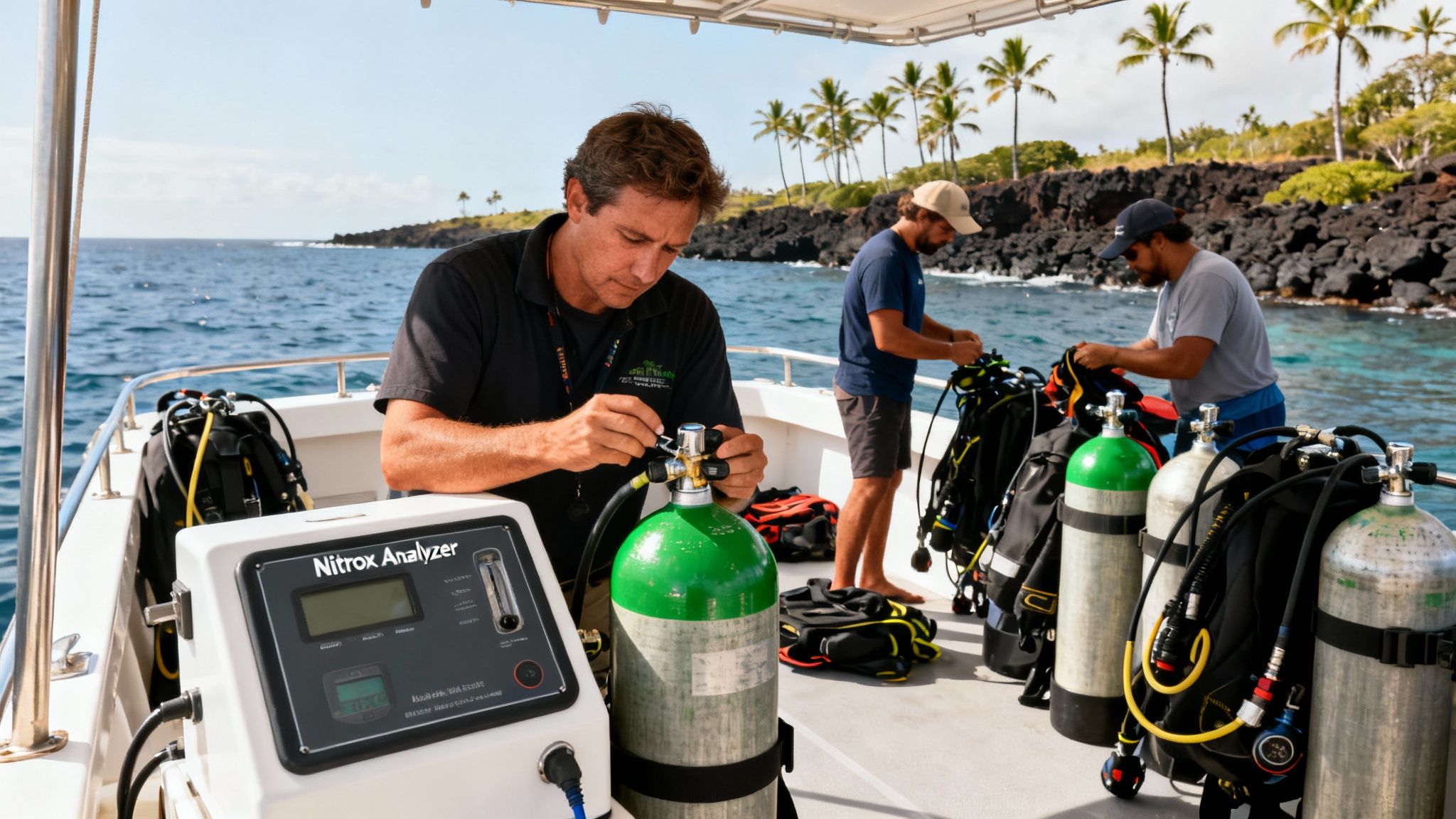
- Personally Analyze Your Gas: First, you'll use an oxygen analyzer to check the exact O2 percentage in your cylinder. You never take someone else's word for it. Even a 1% difference matters, so you have to verify it yourself.
- Mark Your Cylinder: Once you've analyzed your tank, you’ll fill out a tag or sticker on it. This log includes the O2 percentage you just found, the calculated MOD for that specific mix, and your signature. It’s a clear label for you and the crew.
- Set Your Dive Computer: The final, critical step is to program your dive computer with the exact oxygen percentage from your analysis. This is what allows your computer to accurately calculate your no-decompression limit, track your oxygen exposure, and display your correct MOD.
Following these simple but vital steps ensures you get all the nitrox diving benefits while staying well within the safety limits. Proper training is the foundation for all this, which is why getting certified is a must. If you're ready to get started, the PADI Enriched Air Diver course is the perfect place to learn these procedures from a pro. It’s one of the best investments you can make in your diving.
How to Experience Nitrox Diving in Kona Hawaii
It’s one thing to read about the benefits of nitrox, but it’s another thing entirely to actually feel the difference on a dive. Kona’s unique underwater landscape—full of dramatic lava tubes, deep reefs, and thriving ecosystems—is the perfect place to see what enriched air can really do.
Think about a typical two-tank dive trip along our coast. With nitrox, you can stretch out every moment underwater. That extra bottom time might mean a few more precious minutes watching a rare Hawaiian turkeyfish or catching a pod of spinner dolphins cruising overhead. And when you’re doing multiple dives a day, those benefits really start to add up, letting you see more and feel less drained at the end of the day.
Where Nitrox Makes the Biggest Impact
While nitrox is great for just about any dive, it’s a real game-changer on certain dive profiles we see here in Kona. If you’re planning on repetitive, multi-day diving, you will absolutely appreciate the shorter surface intervals and reduced nitrogen in your system. Instead of feeling wiped out by day three of your vacation, you’ll feel fresh and ready for your next dive.
This is especially true for experienced divers wanting to explore our deeper, more dramatic sites. On our Premium Advanced 2-Tank Trip, for instance, nitrox is more than a nice perk; it’s a strategic tool. These dives often take you to depths between 70 and 100 feet, where the extended no-decompression limits from nitrox are a huge advantage. It simply means more time to explore these incredible places safely and comfortably.
Making Nitrox Effortless and Accessible
Here at Kona Honu Divers, we believe that if you’re certified to use nitrox, you should be able to. We don't want cost to be a barrier. That's why we proudly offer FREE nitrox fills for all EANx-certified divers on our boats. It’s a simple way to help you upgrade your entire dive experience.
Our goal is to make the whole process seamless. When you dive with us, your analyzed nitrox tanks are waiting for you on one of our custom-built boats, ready to go. Our expert crew will walk you through the pre-dive checks, making sure you’re comfortable and confident before you even get in the water. This commitment to service is a core part of what we do, and it’s something our guests notice.
If you’re curious about what a full dive setup looks like, you can learn more about the gear you will need for your Kona diving adventure in our detailed guide.
Don't just take our word for it—see what fellow divers have to say about their experience with our crew and services.
Ready to feel the nitrox difference for yourself? Experience longer dives, shorter waits, and more energy on your next trip. Book your Kona dive adventure today and discover why so many divers choose enriched air to explore Hawaii’s incredible underwater paradise.
Your Nitrox Questions, Answered
Even with all the benefits laid out, it's totally normal to have a few questions rolling around in your head. Switching from standard air to enriched air is a bit of a shift, and being curious is a sign of a smart diver. We’ve put together answers to the most common questions and busted a few myths that just won't seem to go away.
Think of this as your go-to spot for clearing up any confusion. Getting straight answers will help you feel 100% confident when you decide to get your nitrox certification and start enjoying those longer dives for yourself.
Is Nitrox Really Safer Than Air?
When you use it the right way, absolutely. In fact, nitrox can give you a much wider safety margin compared to diving on regular air. By breathing a mix with less nitrogen, your body absorbs far less of it on every single dive. This directly lowers your risk of decompression sickness (DCS), which is a massive safety boost, especially when you're doing multiple dives over a few days.
But there's a trade-off: oxygen toxicity. This is a new risk you have to manage, and you do it by never, ever descending past your Maximum Operating Depth (MOD). As long as you analyze your tank, program your dive computer correctly, and stick to your dive plan, you've got this risk handled. Good training is what makes nitrox a safer way to explore the underwater world.
So, Can I Go Deeper on Nitrox?
This is easily the biggest myth out there, and the answer is a hard no. Actually, you'll be diving shallower on nitrox than you would on air. Because there's a higher percentage of oxygen in your tank, you'll hit your safe oxygen exposure limit (your MOD) at a shallower depth.
The real magic of nitrox isn't about going deeper; it’s about staying longer. You get more no-decompression time at the popular recreational depths where all the cool stuff is.
Do I Need a Special Regulator or Gear?
For the standard recreational blends you'll find at most dive shops—anything up to 40% oxygen—your modern regulator is almost certainly good to go. These days, manufacturers build their gear with oxygen-compatible materials and lubricants right from the factory.
Of course, you should always double-check your regulator's manual just to be sure, but it's very rare to need special equipment for common mixes like EAN32 or EAN36. The need for "O2-clean" dedicated gear only kicks in for technical divers who are working with mixes over 40% oxygen.
Is the Nitrox Certification Worth the Money?
Without a doubt. The PADI Enriched Air (Nitrox) certification is one of the most practical and useful specialties you can get. For a pretty small investment, you unlock longer dives, shorter surface intervals, and that amazing feeling of being less tired after a day of diving. It completely changes the game for dive travel.
And here in Kona, the value is a no-brainer. Dive shops like Kona Honu Divers actually provide free nitrox fills for all certified divers. Your certification pays for itself on your very first dive trip with us. You get all the perks without paying extra for every tank.