
Nowhere else on Earth gives you manta rays like Hawaii's Kona coast does. Wild reef mantas gather at feeding sites within easy reach of shore, and on a good night they pass close enough that you can read the spot patterns on their bellies.
Those patterns matter more than visitors tend to realize. Each one is unique to the animal, and researchers have used them to track individual rays at Kona's feeding sites for more than a decade. What looks like a fresh cast every night is really a small resident stock of roughly 104 adult breeders. The same rays, again and again.
After thousands of manta dives, I can tell you that framing is the first thing first-timers get wrong. These are wild animals working a real feeding site, and a stock that size cannot absorb careless pressure the way an open-ocean population might. Where you book, when you visit, and how you behave in the water all feed directly into whether Kona's mantas keep coming back.
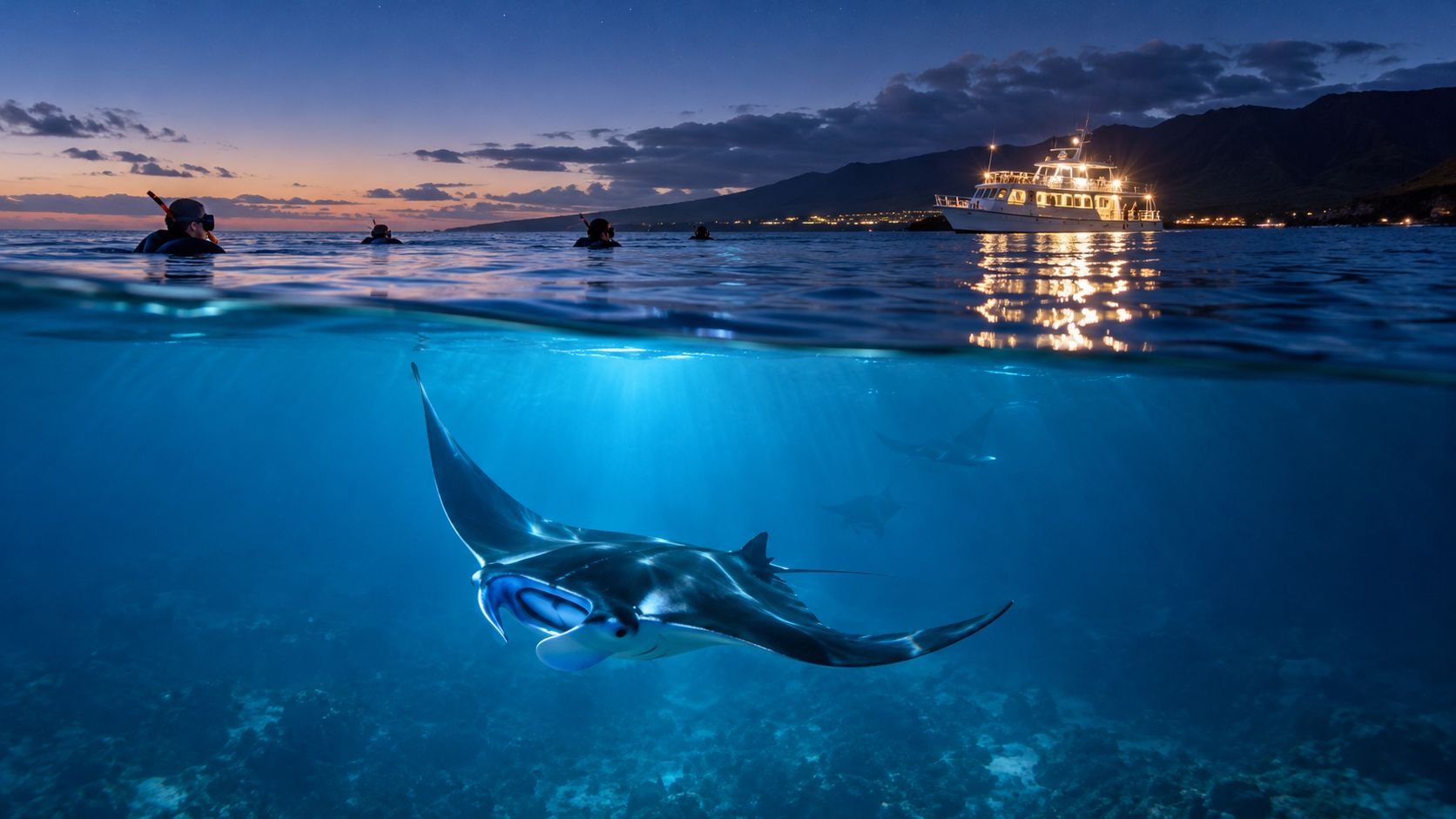
Why Manta Rays in Hawaii Are Unlike Anywhere Else
Kona's manta encounter feels personal because many of the rays are known individuals. They are not anonymous animals briefly passing a random stretch of coastline. Long-term monitoring has linked repeated visits to the same feeding areas, which means the animal overhead tonight may be one researchers and crews have recognized before.
That residency is the difference. Kona has a small, locally recurring population, so site choice, season, and conduct affect the same animals again and again. A crowded pass or careless fin kick is not an isolated incident for a breeding stock this small. It becomes part of the pressure placed on a finite group.
Familiar rays, finite margin
I tell first-timers to stop scoring the night by how many mantas appear. These rays gather where food is available and leave when conditions stop favoring them. A good operator prepares guests for that variability and treats a quiet pass as part of a wild feeding pattern.
Long-term monitoring gives Kona another unusual advantage. Researchers can compare seasonal changes, prey availability, and individual returns instead of treating every encounter as an isolated sighting. As noted earlier, the monitoring record also indicates that the aggregations have stayed relatively stable while tourism has grown.
Stability has limits. Calm positioning, controlled lights, and hands-off behavior keep the encounter predictable for animals that have learned to use these sites. That is why Kona stands apart: visitors are entering the routine of a resident population whose continued health depends on how carefully each encounter is run.
The Resident Reef Mantas of Kona
Kona's mantas behave less like passing tourists and more like a small town that knows its own shoreline. The animals visitors meet at the lights are part of a local reef manta stock, Mobula alfredi, with limited exchange between island groups.
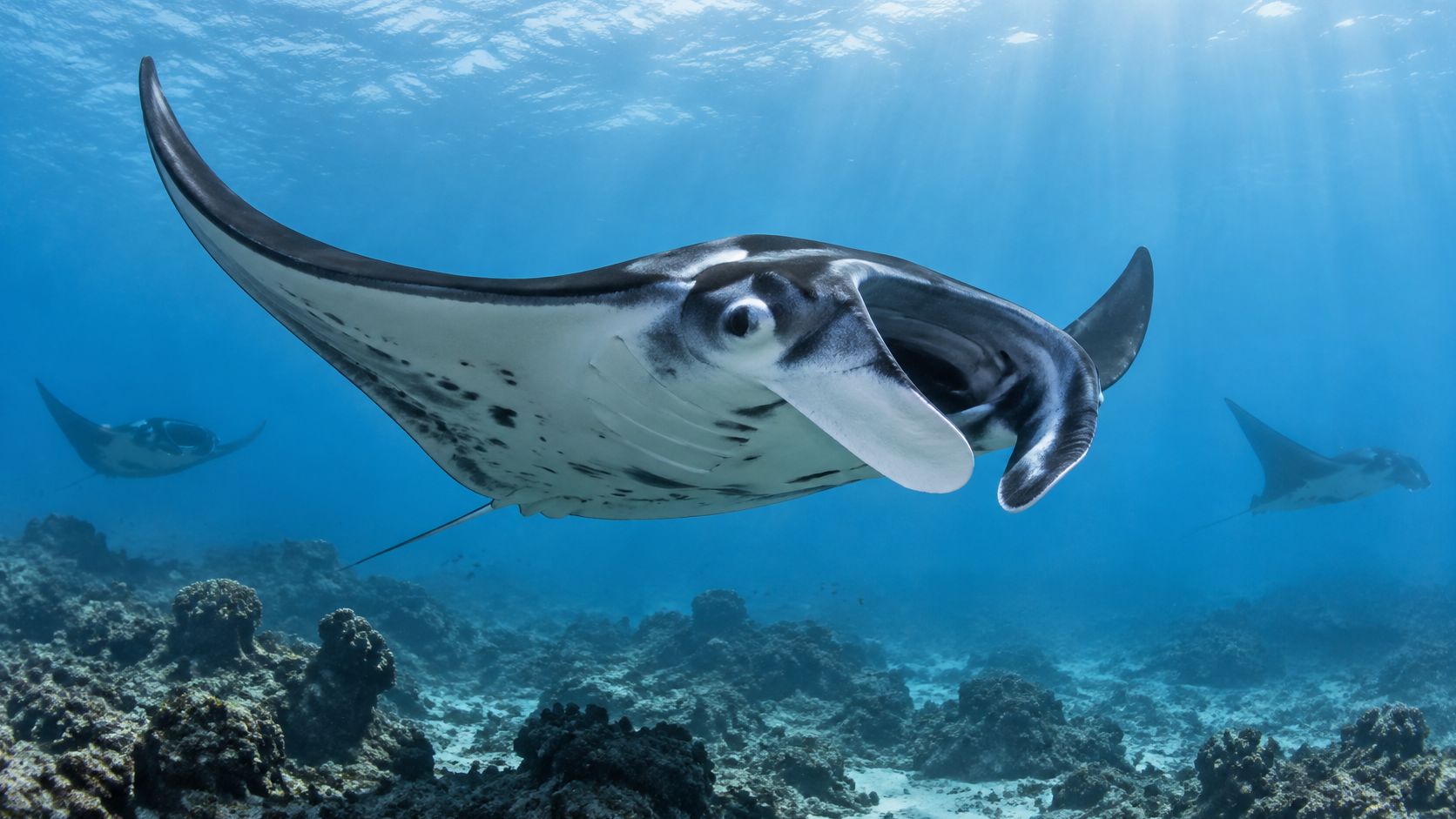
Genomic work estimates about 104 effective adult breeders around Hawaiʻi Island, with a 95% confidence interval of 99-110, and 129 around Maui Nui with a 95% confidence interval of 122-136, alongside sex-biased movement in which females mostly remain near their birth island while males disperse more often (genomic research on Hawaiian manta populations). Those figures describe breeders, not a headcount of every ray that might cruise through on a given night.
Small stock, big consequences
A breeder estimate that low changes how a diver should read a “slow” night. If only a few mantas show, that is not a failed tour. It can be prey, tide, mood, or the simple math of a small resident group.
It also changes the stakes when something goes wrong. A ray with fresh fishing-line scarring or a prop wound is not an anonymous animal in an open ocean. It is one member of a stock with little spare capacity and slow replacement from elsewhere.
I tell first-timers to stop counting “sightings” and start thinking in terms of neighbors. The same individuals can reappear across seasons, so repeated pressure at feeding or cleaning areas lands on animals that cannot be swapped out for a new batch next week. Keep position low, let the ray set the pass, and never reach for a ride or a selfie touch.
That mindset fixes expectations before the boat leaves the harbor. You are visiting a monitored resident population, not chasing a guaranteed spectacle. For timing, conditions, and realistic seasonal patterns, use this guide to the best time to see manta rays in Kona.
Garden Eel Cove and Keauhou Compared
Run enough night dives off Kona and the two sites start to feel like different neighborhoods of the same small town. Both are established feeding areas, but a study tracking the local mantas found they don't draw the same crowd: Garden Eel Cove consistently produced larger aggregations, while Keauhou sightings skewed heavily female, with females showing stronger site fidelity there (study comparing Kona manta sites).
That split changes what a visitor is likely to see. Bigger, mixed groups at Garden Eel Cove mean more rays moving through the viewing area on a given night. Keauhou's pattern points the other way: the same females returning again and again, which is valuable for researchers monitoring a resident population but a different kind of encounter for a first-timer.
| Factor | Garden Eel Cove | Keauhou |
|---|---|---|
| Aggregation size | Consistently larger aggregations | Smaller groups on a typical night |
| Sex composition | Relatively balanced male and female use | Sightings skew female |
| Site fidelity | Mixed use across the local population | Females return repeatedly to the same site |
| What it shows best | Larger feeding aggregations in a protected setting | Repeat encounters with known individuals |
Why site protection matters
As noted earlier, researchers estimate Kona's breeding stock at roughly 104 adults. When a population that small uses two sites differently, both sites matter. Degrading either one removes a function the animals rely on, whether that's a large feeding arena or a stretch of reef the same females have returned to for years.
So which site should a visitor pick? When guests ask me, I point first-timers toward Garden Eel Cove: the protected location, clear viewing area, and better odds of a large aggregation suit someone seeing mantas for the first time. Keauhou appeals more to repeat visitors and divers interested in watching individual animals over the course of a night. Either way, the etiquette stays the same. Hold your position, let the rays set the distance, and treat each site as habitat.
What Happens on a Kona Manta Night Dive
The manta viewing setup relies on light and plankton, not bait or handling. Lights are directed into the water, plankton concentrates near the illuminated area, and mantas may approach from below to feed, making repeated passes or barrel rolls (description of Kona's light-based manta viewing).
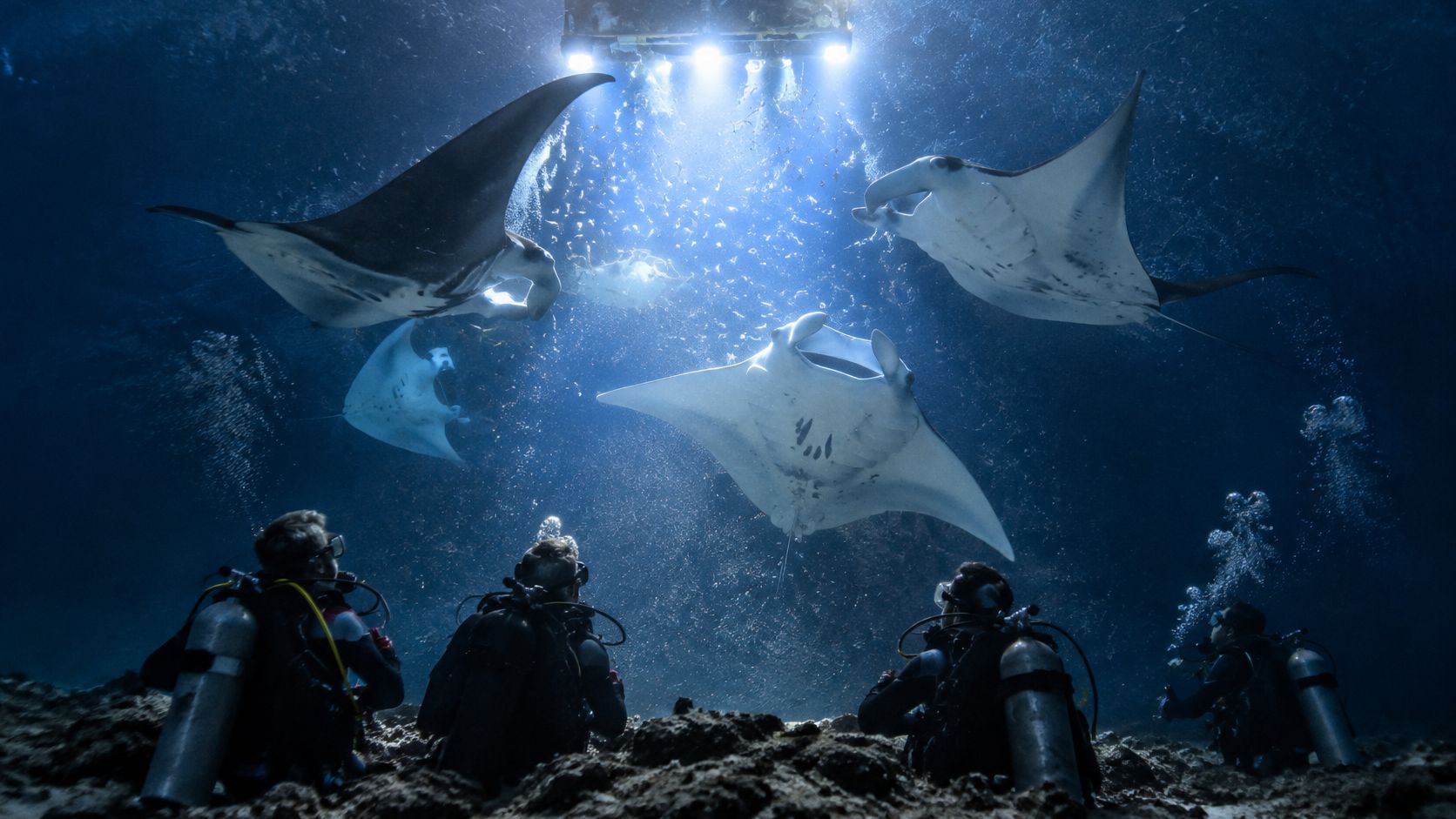
The experience from the boat to the water
The crew begins with a safety and activity briefing. Listen closely: you'll learn where to position yourself, how to use the lights, and what to do if conditions or the group's arrangement changes. Once the boat reaches the site, participants enter the water according to the crew's direction.
Snorkelers remain at the surface, holding position near the light setup and looking down as mantas move beneath them. Divers descend to the designated viewing area and settle near the dive lights. The details differ by operator, but the central idea is the same: you stay in place, and the rays decide whether to approach.
The light draws plankton. The mantas choose to feed. Your job is to watch without getting in their way.
A scuba dive offers an underwater viewpoint from the designated dive area. A snorkel keeps you at the surface, where you can watch the rays from above without scuba certification. Neither format gives you permission to pursue a manta for a closer look. Don't swim after a ray or try to reposition yourself directly in its path.
The encounter can be vivid even when a manta passes close. Keep your body settled, your attention on the crew's directions, and your hands to yourself. The best moments usually come from holding position and letting the feeding activity unfold around the lights.
Manta Etiquette and Safety Rules That Matter
Mantas come to the lights to feed. Your movements can disrupt their path, disturb the viewing area, or interfere with other guests' sightlines. With a small, resident population that has limited interchange with other island groups, calm behavior is more than good manners. It's part of reducing avoidable disturbance to locally important habitat.
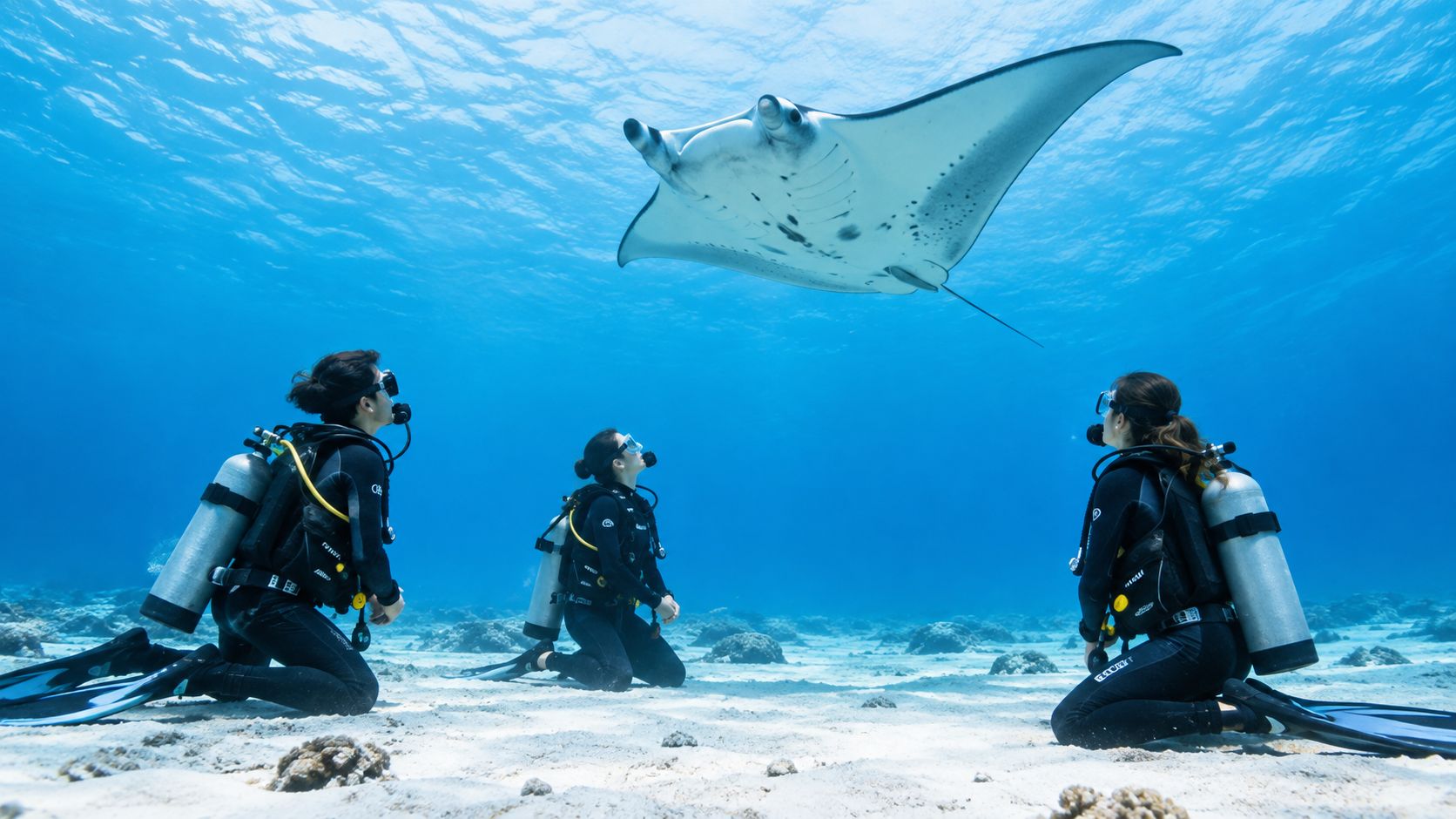
Give the mantas room to feed
Don't touch, chase, or block a manta. Touching interferes with a wild animal, while chasing or blocking can interrupt its feeding pass. If a ray comes close, resist the instinct to reach out or move toward it. Stay still and let it pass.
Hold your position. Divers should stay low and controlled in the designated area; snorkelers should remain at the surface where the crew directs them. Keep your lights steady and aimed as instructed. Sudden movements can scatter plankton or startle an animal, while swimming across a manta's route forces it to adjust its movement.
For divers, good buoyancy is essential. A fin kick that stirs the bottom can cloud the viewing area, and poor control can put you where a ray is trying to feed. Snorkelers who feel uneasy should focus on a steady breathing rhythm and keep hold of the flotation or viewing setup the crew provides. If a manta approaches unexpectedly, don't flail or dive toward it. Pause, remain calm, and allow it to move away.
Use this guide to considerate diver etiquette to prepare for the broader habits that help protect marine life.
Before entering the water, check these reminders:
- Listen to the briefing. Follow the crew's instructions for entry, positioning, and lights.
- Stay predictable. Keep your body steady and your movements small.
- Leave space. Don't swim into a manta's path or crowd another guest.
- Ask for help early. If you're uncomfortable, signal the crew rather than trying to solve it by swimming away on your own.
Choosing How to Experience the Mantas
Pick the format that puts the least strain on a small resident stock while still matching your skill. Kona does not have an endless cast of mantas moving through; researchers monitor a local population of roughly 104 adult breeders, so crowding, poor control and rushed entries matter more here than at a generic big animal stop. The practical question is simple: can you hold steady where the crew needs you, for the whole feeding window?
| Experience | Best fit | Trade-off to weigh |
|---|---|---|
| Manta night dive | Certified scuba divers already comfortable on night dives | Bottom view near the lights, but only if buoyancy and fin control are dependable |
| Manta night snorkel | Non-divers, mixed groups and prone-to-chill guests | Easier entry and surface position, with a downward view into the same feeding beams |
| Day reef snorkel or freedive | Visitors who want daylight reef time | Better for coral, fish and lava topography than for the nighttime plankton draw |
| Advanced dive trip | Experienced divers seeking a more demanding outing | More range and challenge, subject to conditions, separate from the manta viewing setup |
Certified divers get the closest perspective because they settle low and watch the rays pass above the lights. Snorkelers get a wider view of the same action, with less demand on scuba skills but more exposure to surface chop and cold. If you are torn between staying on the surface and going down on scuba, compare snorkeling versus diving with manta rays before you book.
For certified divers who want more after the manta night, Kona Honu Divers lists advanced two-tank trips for experienced divers, a blackwater night dive for open-water nighttime exploration, and broader Kona diving tours beyond the manta encounter. The operation uses spacious custom boats, provides complimentary nitrox and keeps rental gear on proactive service schedules, which matters if you are bringing specific equipment needs or asking the crew to match a trip to your experience.
Book the version you can do calmly. A snorkeler who stays flat at the light and a diver who keeps fins off the bottom give the same resident animals room to feed.
Photographing Mantas and Respecting the Rules
The most common mistake on a manta night dive is a photographer leaving the bottom to chase the shot. The image rarely works, the ray swings away from the plankton it came for, and everyone else's view fills with fins and bubbles. Dark water, a moving animal, and suspended particles that light up under any beam make this a demanding place to shoot anyway. Good manta photography starts with staying planted.
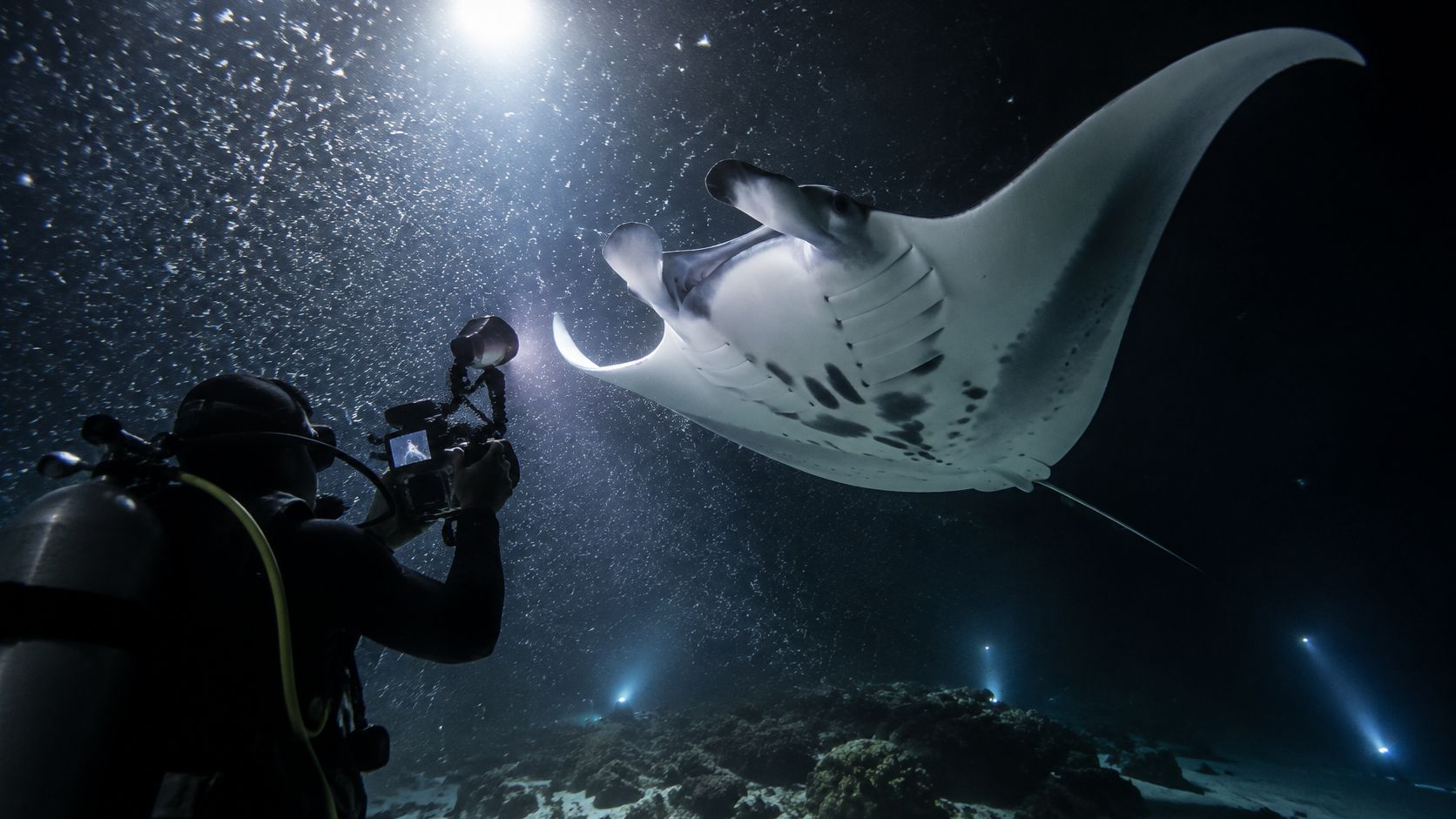
Make the image from your position
On a compact camera, use the underwater or low-light mode you have already tested, ideally on a daytime reef dive rather than manta night itself. With a mirrorless or DSLR rig, a wide-angle lens lets you fill the frame from your spot instead of pursuing the animal, and a shutter speed fast enough to freeze wing motion matters more than squeezing out extra brightness. Settings depend on your camera, your housing, and the operator's rules, so confirm before you get in the water whether strobes and focus lights are permitted.
Angle strobes outward from the center of the frame to cut backscatter from suspended particles. Keep any focus light where the divemaster told you to keep it, and never sweep it across the group or into another diver's mask. The animal does the moving. You stay put. For a sense of what patient, stationary shooting can produce, look through these Kona manta ray dive pictures.
Photography can also pull real weight for conservation here. Each manta carries a unique pattern of spots on its belly, and clear ventral photos are exactly what researchers use for photo-identification of the resident stock, roughly 104 breeding adults tracked along the Kona coast. If your footage shows a fresh injury, entangled line, or an animal with unusual behavior, tell your crew before you leave the site. Hawaiʻi law prohibits knowingly capturing, possessing, injuring, or killing manta rays in state waters, as noted earlier, and no frame justifies touching or corralling an animal to get it.
Planning Your Kona Manta Trip
The strongest Kona manta plan starts from the fact that this is a small resident stock, roughly 104 adult breeders in the population described earlier, and site pressure adds up fast. Treat date choice as a trade-off: pick travel days that work, then leave slack for ocean conditions and the possibility that plankton shifts change how many rays feed at the lights, as noted earlier.
Book ahead when dates are fixed, especially for a specific boat format or a mixed group of divers and snorkelers. Pack swimwear, a towel, and a warm layer for the ride back; first-timers often underestimate how cool they feel after floating at night. If seasickness is a known issue, ask a medical professional before the trip rather than testing a new remedy on the dock.
Confirm operator details before paying: what gear is included, whether lights and snorkel or scuba equipment are provided, what certification level the dive requires, and where the boat checks in. Snorkel guests need comfort in open water after dark more than paperwork. Certified divers should be honest about recent experience; a rusty diver usually has a better night after an easier warmup dive.
Plan lodging and departure together. A short drive matters after a night boat, so use this guide to places to stay on the Big Island for divers when choosing a base. Keep one morning free before your manta night if your schedule allows, since a tired or rushed group is likelier to break position, crowd the viewing circle, or ignore the briefing.
The reason to keep rules tight is simple: every visitor shares habitat with the same resident rays. Leave the feeding site as you found it, take only the memory, and let the mantas decide whether the light is worth visiting.
Kona Honu Divers offers guided manta night dives and snorkel outings, with the crew directing guests to the viewing area and briefing them on safe, hands-off encounters. Check availability with Kona Honu Divers and choose the format that matches your experience and comfort in the water.