
Picture this: giant, graceful shadows gliding through the dark, moonlit water right in front of you. That's the magic of a manta ray tour on the Big Island, and it's one of the most unforgettable and reliable wildlife encounters you can have anywhere on the planet. This guide will walk you through everything you need to know to experience it for yourself.
Your Essential Guide to Big Island Manta Ray Encounters
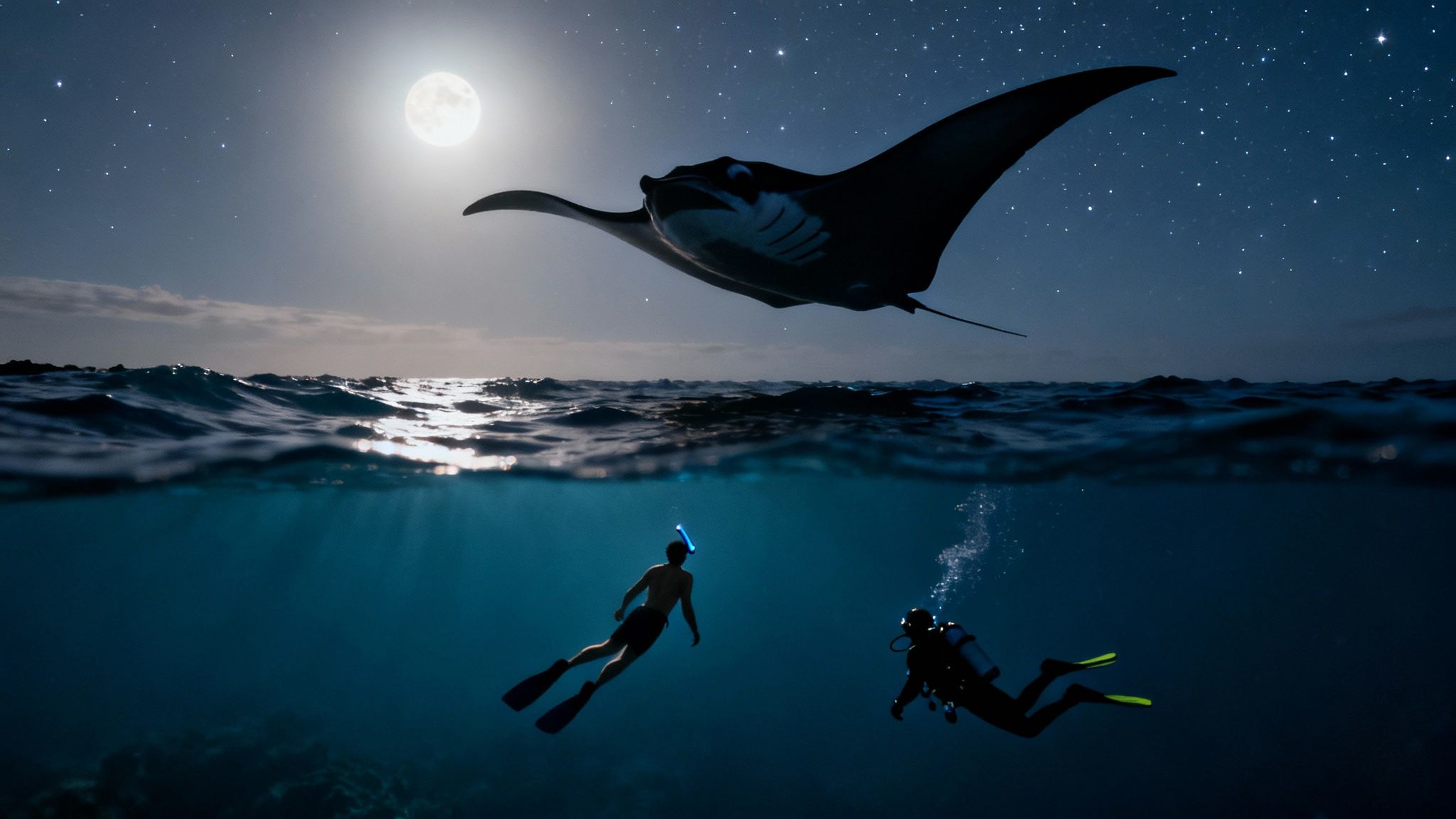
The Kona coast isn't just a world-famous destination for manta rays by accident. The unique underwater landscape here creates the perfect feeding grounds, which has drawn in a large, year-round population of these incredible animals. It's this amazing consistency that puts the experience at the top of so many bucket lists.
In fact, the Big Island is one of the most dependable places in the world to see mantas in their natural habitat. Tour operators report sightings on about 85–90% of their trips. That means 8 or 9 out of every 10 boats that go out get to see at least one manta ray. Those are incredible odds for a wild animal encounter and exactly why Kona is a must-visit spot.
How to Experience the Manta Ray Ballet
So, how do you get in on the action? You've got two main options for witnessing this incredible underwater show: snorkeling or scuba diving. Each gives you a completely different, but equally amazing, perspective.
Snorkeling vs Scuba Diving: Which Manta Tour is Right for You?
This quick comparison should help you decide whether you want to float above the action or get a view from the seafloor.
| Feature | Snorkeling Tour | Scuba Diving Tour |
|---|---|---|
| Perspective | Top-down view, looking at the mantas from the surface. | Bottom-up view from the ocean floor, watching mantas soar above. |
| Experience | Hold onto a floating light board that attracts the plankton. | Kneel or sit on the sandy bottom, using a dive light. |
| Requirements | No experience needed; great for families and non-swimmers. | Requires scuba certification (e.g., PADI Open Water). |
| Proximity | Mantas swoop up very close to the surface to feed. | Mantas perform barrel rolls just inches above your head. |
| Freedom of Movement | Limited; you stay with the group at the light board. | Limited; you stay in a designated spot to avoid disturbing the mantas. |
Ultimately, both snorkeling and scuba diving offer breathtaking views. Your choice comes down to your comfort level in the water and whether you're a certified diver.
The whole experience is often called a silent, underwater ballet. As the plankton gather in the light beams, the mantas perform these graceful loops and turns, coming within inches of you but never making contact. It’s absolutely mesmerizing.
As you get ready for this once-in-a-lifetime night, you'll also want to think about your other travel plans. Getting your packing dialed in is key, so checking out tips on packing efficiently for your Big Island adventure can make a huge difference.
No matter which way you choose to see them, you're in for a night you will never forget.
Why Garden Eel Cove Is the Premier Manta Ray Dive Site
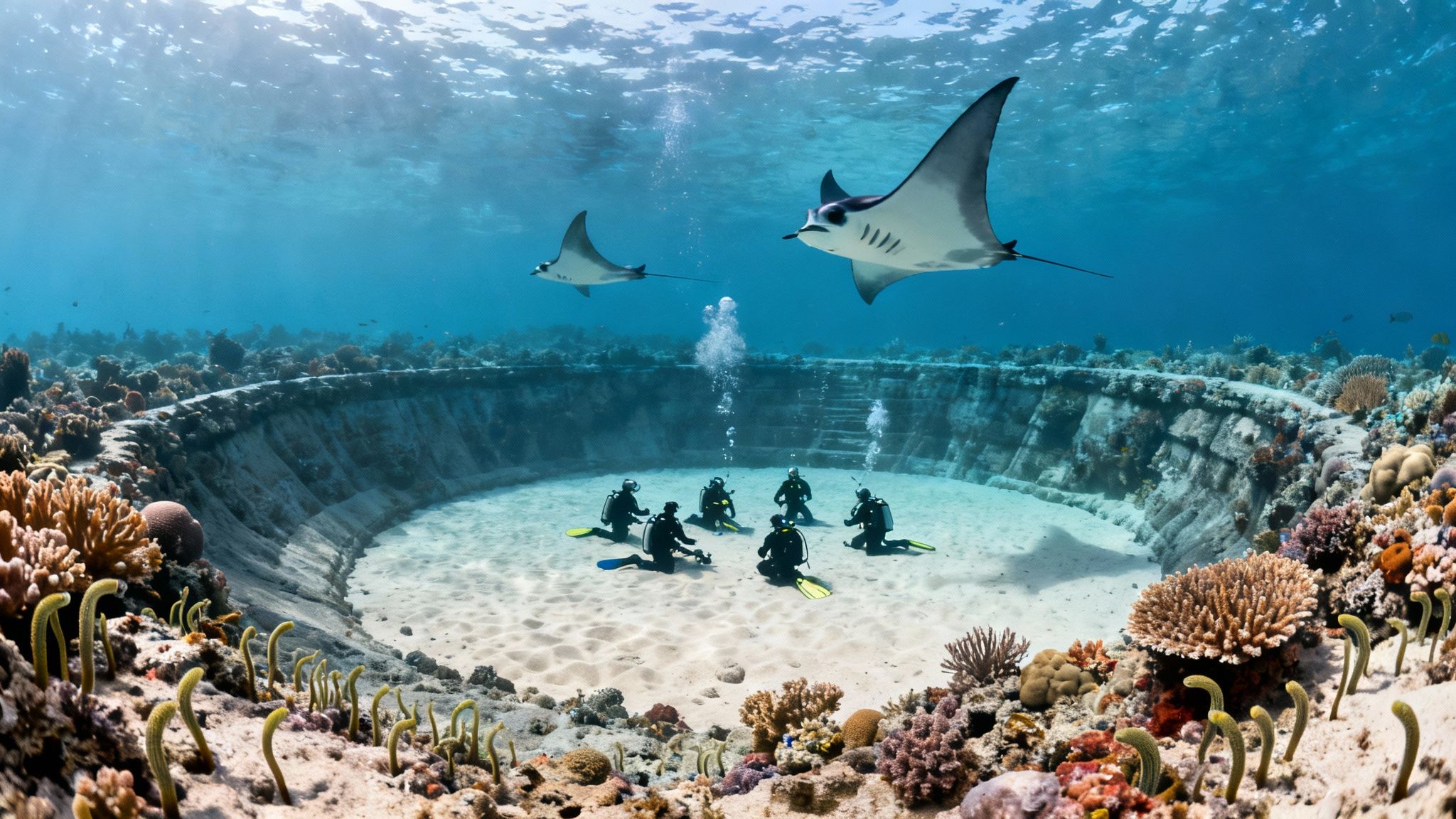
When you're looking into manta ray tours big island, you'll quickly learn that not all dive sites are created equal. While you can see mantas at a few spots, one location consistently delivers an unforgettable experience for divers: Garden Eel Cove. For divers seeking the ultimate encounter, this is the superior choice. We locals call it Manta Heaven, and for very good reason.
What makes it so special? It all starts with the geography. Garden Eel Cove is tucked away, naturally sheltered from the big open-ocean swells that can churn up other spots along the Kona coast. This protection means calmer water, which makes for a more pleasant dive and, just as importantly, far fewer cancellations due to rough seas. When you're planning a bucket-list trip, that kind of reliability is a huge deal.
A Natural Amphitheater for Manta Viewing
Beyond the calm conditions, the layout of the seafloor here is what truly sets it apart. The site features a large, sandy clearing completely surrounded by a vibrant reef, creating a perfect natural amphitheater. This unique setup allows dive groups to settle in comfortably on the bottom for the best possible view.
We call this the "campfire," and it's the heart of the experience. Divers get situated in a semi-circle and point their lights straight up. This beam of light acts like a magnet, drawing in clouds of plankton—the mantas' favorite food. The mantas then swoop in for dinner, gliding like acrobats just inches over your head.
This organized approach has some serious perks:
- Safety First: It keeps everyone stationary in a controlled spot, preventing anyone from accidentally bumping into a manta or damaging the delicate reef.
- Front-Row Seats for Everyone: The exceptional viewing area ensures there’s no jostling for position. Everyone gets an amazing, unobstructed view of the action.
- Better Manta Action: By concentrating the light, we create a dense plankton buffet. This encourages the mantas to put on their best show, performing those famous barrel rolls right above the group.
It’s a world away from more exposed sites where the viewing can be scattered and unpredictable. The whole setup at Garden Eel Cove is designed to maximize both your safety and the sheer magic of the encounter.
More Than Just Mantas: A Thriving Reef Ecosystem
Another thing that puts Garden Eel Cove in a class of its own is the incredible health of its surrounding reef. The location is teeming with life, which makes the first dive on a two-tank manta ray tour an adventure in itself.
Before the sun goes down and the mantas make their grand entrance, you get to explore stunning coral gardens full of colorful fish, moray eels, and the occasional octopus. This "warm-up" dive is the perfect way to get comfortable with your gear and watch the reef transition from day to night. By the time you surface for your break, the anticipation for the main event is electric.
It turns the trip into a complete underwater experience, not just a one-act show. To truly understand what makes this site the pinnacle of manta diving, check out our deep dive on Manta Heaven at Garden Eel Cove. For any diver wanting the absolute best manta encounter, the combination of calm waters, a superior viewing layout, and a vibrant reef makes Garden Eel Cove the undisputed champion.
Choosing the Right Operator for Your Manta Tour
Picking the right company for your manta ray tour on the Big Island is hands down the most important decision you'll make. It’s what separates a truly magical, once-in-a-lifetime experience from one that's just… okay. A great operator doesn’t just ferry you out to see the mantas; they build an entire experience around it, focusing on safety, comfort, and sharing their genuine passion for these animals.
When you start your search, the number of options can feel a bit dizzying. To cut through the noise, just zero in on a few key things that are hallmarks of a top-notch operation. These are the non-negotiables that will make or break your adventure.
What to Look for in a Manta Ray Tour Company
Before you click that "book now" button, it pays to do a little homework. Any company worth its salt will be totally transparent about its safety practices and proud of its crew and boats.
Here’s what really matters:
- Safety First, Always: This is the big one. You're looking for an operator with a squeaky-clean safety record, a crew of certified pros (Divemasters and Instructors), and gear that’s clearly well-maintained. A thorough safety briefing before you hit the water is an absolute must.
- Small Group Sizes: Ever been on a cattle car tour? It’s no fun. A crowded boat leads to a crowded, chaotic time in the water. Operators who keep their group sizes small offer a much more personal and intimate encounter, giving you more space and better access to the guides.
- An Experienced Crew: A seasoned crew makes all the difference. They know the ocean like the back of their hand, they understand manta ray behavior, and they're experts at making everyone feel comfortable. The best guides can even identify individual mantas by name and share incredible stories that bring the whole experience to life.
- The Boat and Amenities: The vessel itself plays a huge part in your overall comfort. Is it a boat actually designed for diving and snorkeling? Does it have things like a marine head (that's a restroom!), hot water showers for after your swim, and maybe some snacks and hot cocoa? These little touches go a long way.
The best tour isn't just about what happens underwater. It's about feeling safe, comfortable, and genuinely cared for from the moment you step on the boat until you're back on shore, buzzing with excitement.
Why Kona Honu Divers Stands Apart
When you start ticking those boxes, Kona Honu Divers quickly rises to the top. They’ve really built their entire operation around providing a premium, safety-first experience that never skimps on guest comfort or the quality of the manta encounter.
Their two custom-built dive boats, the Honu One and Honu Iki, were designed by divers, for divers. That means they’re spacious, stable, and decked out with all the comforts you could want, including those glorious hot showers and private changing areas. It's this focus on the details that lets you just relax and soak in the adventure.
Better yet, their commitment to small groups means you’ll never feel like just another face in the crowd. The crew has over 200 years of combined industry experience, and they use it to give everyone personalized attention. It doesn't matter if you're a first-time snorkeler or a seasoned diver; they'll make sure you have a safe and amazing time. But you don't have to take our word for it—their reputation speaks for itself.
Choosing your guide is a critical step, and knowing what to look for helps you make a confident decision. For a more detailed breakdown, you can check out our complete guide on how to choose a Kona dive shop.
Ultimately, you're looking for a company that respects the ocean, puts your safety above all else, and is genuinely passionate about sharing the magic of Kona's manta rays. With the right operator, you're not just booking a tour; you're setting yourself up for an evening of pure wonder that you'll be talking about for years to come.
Meet the Famous Resident Manta Rays of Kona
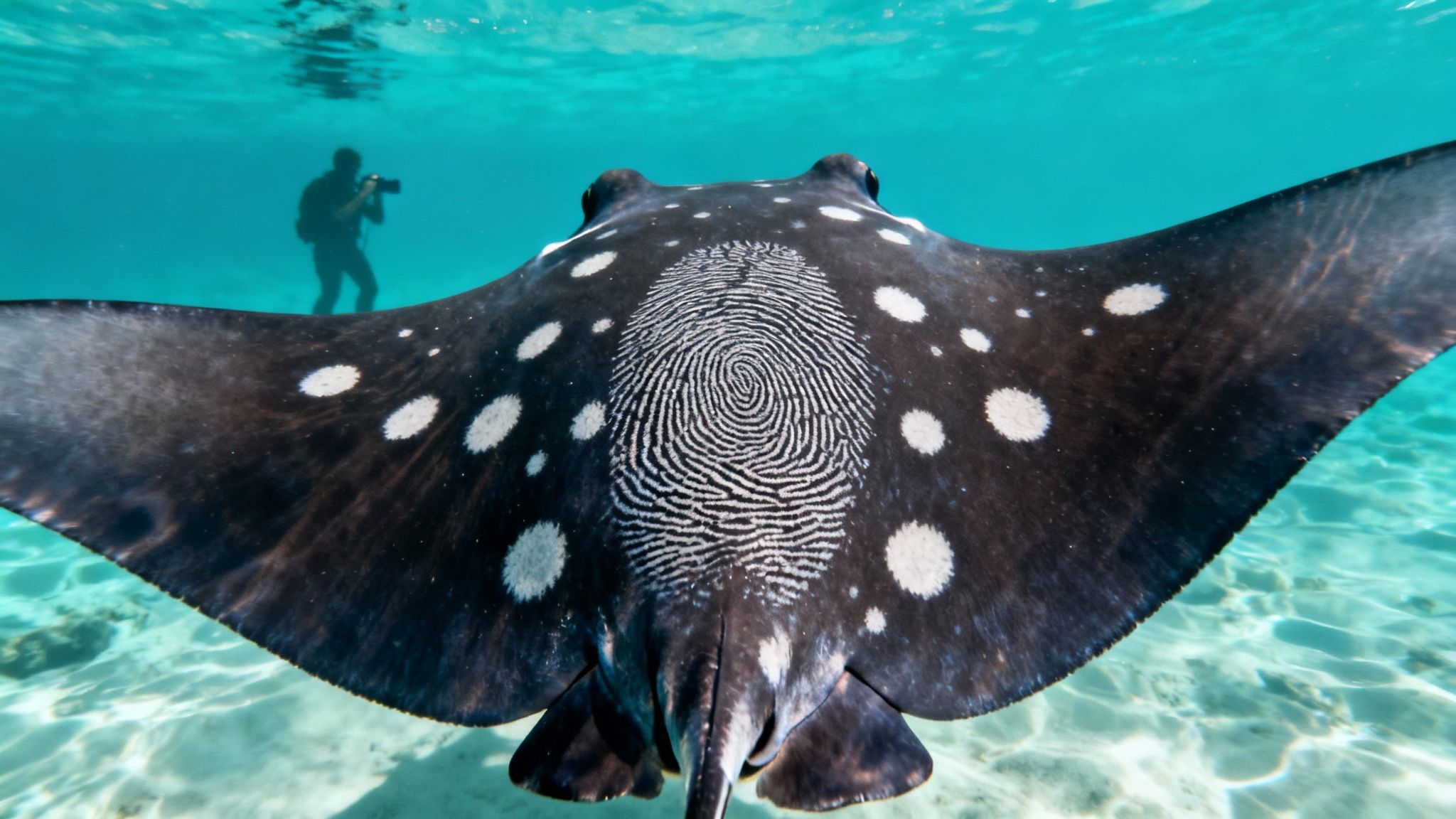
When you join a manta ray tour on the Big Island, you’re not just hoping to get lucky and spot a random animal passing by. You’re actually being introduced to a well-known, year-round community of marine celebrities. This isn’t like whale watching, where you might see a creature on a long migration. The mantas you'll meet here are true locals, each with a unique identity and a story to tell.
This incredible connection is possible because of decades of dedicated work by researchers and local dive guides. They’ve discovered that you can identify individual manta rays by the one-of-a-kind spot patterns on their undersides. Just like a human fingerprint, no two manta bellies are the same. This allows us to track the local population with amazing precision, all without ever bothering the animals.
This photo-identification process has turned a simple wildlife tour into a powerful citizen science project. Every single night, the photos and videos captured by guides and even guests contribute to a massive database, helping us keep tabs on these magnificent creatures.
A Database of Kona's Underwater Stars
Since 1998, conservation groups and tour operators have been meticulously building a photo-ID database of Kona's resident mantas. They document who shows up, where, and when. Thanks to this incredible effort, we now know that Hawaiʻi is home to an estimated 130 resident manta rays just off the Kona Coast. This science is what allows your guides to often recognize specific mantas by name and share their personal histories. You can dive deeper into the fascinating world of manta ray statistics and the research that makes this possible.
This level of familiarity completely changes the experience. You won't just see a manta ray; you might just meet a local legend.
Getting to Know the Locals
Go out with an expert crew from a company like Kona Honu Divers, and your tour transforms into an introduction to a whole cast of characters. Your guide might point out an individual and tell you all about them.
"See that one? That's Big Bertha! She's one of our largest and oldest residents. She's been visiting this site for over 20 years and is easy to spot because of the big notch in her right cephalic fin."
Suddenly, the whole encounter feels deeply personal. You might also be introduced to other famous residents, such as:
- Lefty: He's one of the easiest mantas to identify, known for his distinctive, bent left cephalic fin.
- Koie: Named in honor of a beloved local waterman, this manta is a frequent and graceful presence at the feeding sites.
- Kailey Ray: Known for being one of the most acrobatic feeders, she often puts on a spectacular show with her barrel rolls.
Hearing these stories fosters a real, profound connection to the animals and their ocean home. It’s a powerful reminder of why it's so important to protect this unique population and their habitat. When you choose a knowledgeable operator, you get more than just a view—you get a personal introduction to the famous residents of Kona's underwater world, turning a great tour into an unforgettable one.
How to Be a Safe and Responsible Manta Ray Tourist
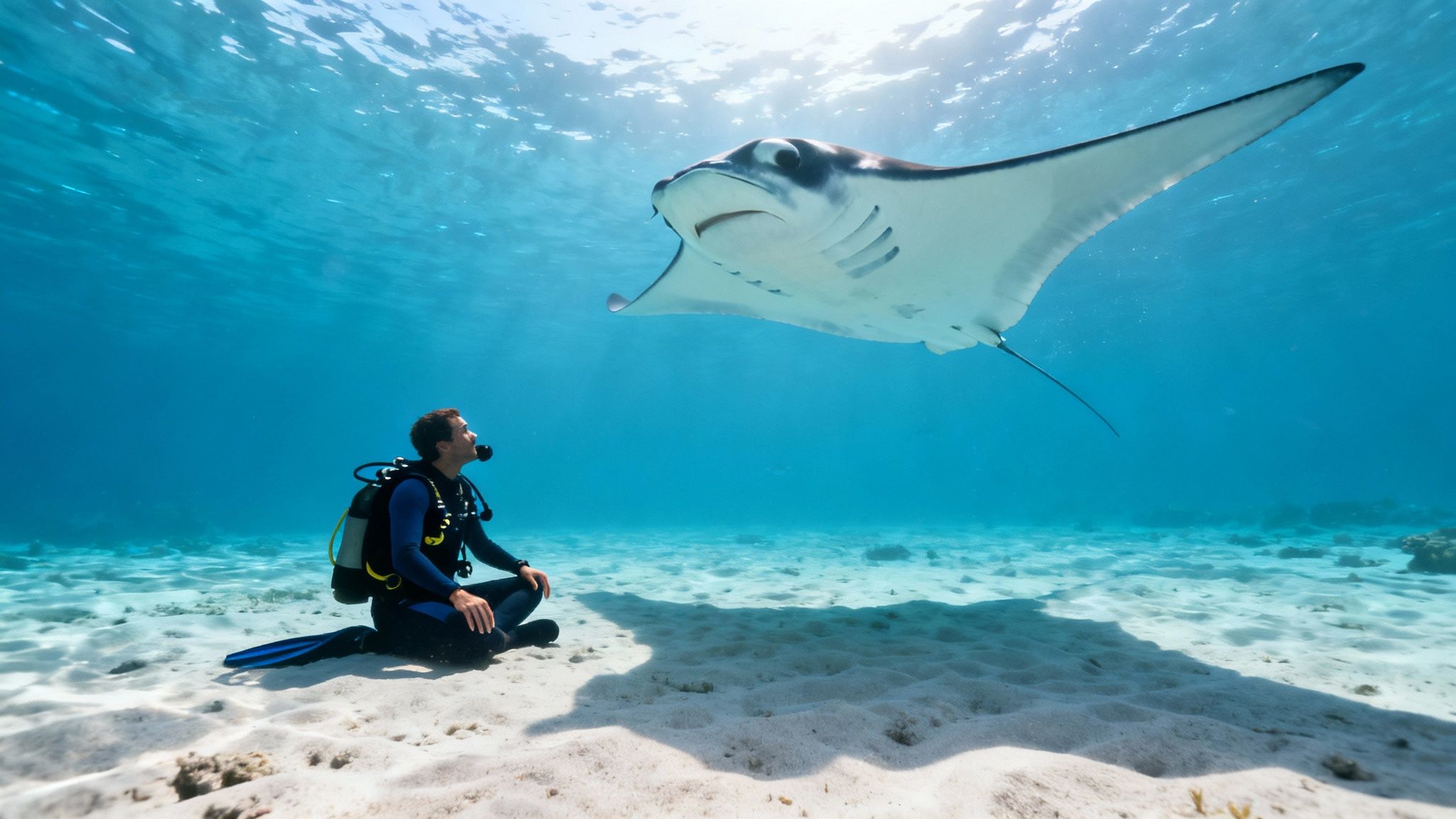
Jumping into the water to see a manta ray is one of those life-changing moments. But with this incredible experience comes a big responsibility. We're guests in their world, and how we act has a direct impact on their well-being and the future of these amazing tours. Being a responsible tourist means we can all keep enjoying this magic for years to come.
The absolute golden rule is simple: look, but don't touch. It's not just a guideline; it's essential. Manta rays have a protective mucus layer covering their skin, which is their primary defense against nasty bacteria and parasites. When we touch them, we can accidentally strip that coating away, leaving them vulnerable to infection.
Think of it this way—when you give the mantas their space, they feel safe and comfortable. And a comfortable manta is far more likely to stick around and put on an unforgettable show for everyone.
Guidelines for a Sustainable Encounter
To make sure every interaction is safe and respectful, everyone in the water needs to follow a few key guidelines. Your tour operator will go over these in detail during your briefing, but knowing them ahead of time helps set the right tone for the night.
The main idea is to be a passive observer. You're there to watch the show, not become part of it.
- Stay Calm and Move Slowly: No sudden movements or frantic splashing. Smooth, predictable actions help keep the mantas completely at ease.
- Hold Your Position: If you're snorkeling, this means holding onto the light board. If you're diving, it means staying settled in your spot on the sandy bottom.
- Listen to Your Guides: These folks are the experts on manta behavior and safety. Following their lead is the single most important thing you can do for the safety of the animals and everyone in your group.
The goal is to be a silent observer in their world. Think of it like being a guest in someone's home—you want to be respectful, quiet, and leave things exactly as you found them. This approach ensures the most natural and prolonged interaction possible.
The Importance of Choosing a Manta-Approved Operator
The popularity of manta ray tours on the Big Island has absolutely exploded, and for good reason. These tours now draw an estimated 80,000 snorkelers and divers every single year. For a resident manta population of just over 130 individuals, that works out to more than 600 human encounters per manta, per year. That number alone shows just how critical it is to choose the right operator.
You can learn more about the challenges of managing this incredibly popular activity to understand the full picture.
Operators like Kona Honu Divers are dedicated to "Manta-Approved" practices, which always put the animals' welfare first. This means enforcing strict no-touching rules, keeping group sizes manageable to avoid overcrowding, and giving thorough educational briefings. They also actively support research and conservation, which helps ensure the long-term health of Kona’s manta population. By following these best practices, we all become better stewards of the ocean. For more tips, check out our guide on practicing responsible and considerate diver etiquette.
Your choice of tour operator really does matter. When you support businesses that champion sustainable tourism, you're doing your part to protect these magnificent creatures for generations to come.
Exploring Other World-Class Dives on the Big Island
While the manta ray night dive is an absolute must-do on any trip to the Big Island, it's really just the tip of the iceberg for what Kona's waters have to offer. Think of the manta dive as your grand introduction. The same incredible volcanic topography and clear, plankton-rich waters that draw in the mantas create an underwater playground for divers of every stripe.
Once you’ve experienced that magical manta ballet, I guarantee you'll be itching to see what else is down there. The great news is, you're already in one of the best dive destinations on the planet. Operators here offer a whole menu of adventures that show off every facet of Kona's vibrant marine world.
Beyond the Mantas: Daytime Adventures
Diving in Kona during the day is a totally different vibe, but it's every bit as breathtaking. The island's volcanic past has sculpted a dramatic underwater landscape you won't find anywhere else. We're talking massive lava tubes you can swim through, stunning archways, and sprawling coral gardens teeming with life.
On a daytime charter, you’ll explore some of Hawaii's most pristine reefs. You can expect to see everything from clouds of colorful reef fish and gentle green sea turtles to shy octopuses and moray eels peeking out from their dens. It’s a chance to see the ecosystem buzzing with activity, and there are amazing sites for every skill level. Hopping on one of the many Kona diving tours is the easiest way to get out there.
The Kona Blackwater Dive: A Journey into the Abyss
For the truly adventurous diver, there’s an experience that might just top the manta dive: the Kona Blackwater Dive. This is not your typical reef dive. Here, you'll be suspended in the open ocean at night, drifting over thousands of feet of pitch-black water. You're there to witness one of the largest migrations on Earth, as strange and wonderful deep-sea creatures travel toward the surface to feed under the cover of darkness.
What you'll see is straight out of science fiction. Many of these creatures are bioluminescent, putting on a private light show in the deep. It honestly feels like you’ve been transported to another planet. This is a highly specialized dive for those seeking the ultimate underwater thrill, and you can get all the details on the Blackwater Dive tour page.
I've heard seasoned divers say the Blackwater Dive is one of the most surreal and unforgettable things they've ever done. It's a rare glimpse into a hidden world that most people will never, ever see.
If you're an experienced diver looking to push your limits, Kona has plenty to offer. There are deeper sites and more technical dives that explore remote locations with unique challenges. If that sounds like your kind of adventure, you should definitely check out the options for an advanced dive tour.
Frequently Asked Questions About Manta Ray Tours
Alright, let's wrap up your planning for one of the most incredible experiences the Big Island has to offer. We get a lot of the same questions from travelers, and getting these sorted out now will help you book with confidence and be totally ready for an unforgettable night.
What Is the Best Time of Year for Manta Ray Tours on the Big Island?
This is one of the best parts about planning your trip: there's really no "off-season" for manta rays in Kona. Unlike a lot of other marine wildlife, our local manta rays are a resident population. They live here year-round, so you don't have to worry about catching them at the right time.
The unique geography of the Kona coast protects us from major ocean swells, which means conditions are usually calm enough to run tours just about any night of the year. Your odds of a fantastic encounter are just as good in December as they are in July.
What Happens If We Don't See Any Manta Rays on the Tour?
It's a fair question—we are dealing with wild animals, after all! But the good news is that the success rate for seeing mantas in Kona is incredibly high, usually sitting around 85-90%. It’s pretty rare for them to be a no-show at their favorite feeding grounds.
That said, in the unlikely event the mantas decide to be shy, any reputable tour operator will have a "manta guarantee." This usually means they’ll give you a voucher to come back and try again on another night, completely free of charge. It’s their way of showing they’re committed to you having an amazing experience.
Is the Manta Ray Snorkel Safe for Children and Non-Swimmers?
Absolutely. The snorkel tour is specifically designed to be safe and accessible for almost everyone, including families with kids and people who aren't strong swimmers. For any good operator, safety is the number one priority.
Snorkelers are provided with wetsuits and other flotation gear, and you’ll hold onto a large, stable light board that floats on the surface. You really don't have to swim at all—you just float comfortably and watch the ballet unfold beneath you. Just be sure to check the specific age requirements for kids when you book.
What Should I Bring on a Manta Ray Tour?
The tour company provides all the important gear like wetsuits, masks, and snorkels or dive equipment. You just need to bring a few personal items to make your trip more comfortable.
Here’s a quick checklist to make sure you’re all set:
- A towel to dry off after you get out of the water.
- A warm change of clothes or a jacket for the boat ride back.
- A reusable water bottle to stay hydrated.
- Any personal medications you might need.
With those common questions out of the way, you should be all set to book your own manta ray adventure. It truly is a once-in-a-lifetime encounter.