
At night off the Kona coast, a manta ray snorkel is a surface-level experience, not a swim chase. The goal is to float still above the lights while mantas feed below, and the best nights feel calm, close, and unhurried.
The first thing visitors want to know is whether the experience is worth planning around. In Kona, it usually is, because the encounter has grown from a rare wildlife moment into a managed visitor activity, and the difference between a good trip and a frustrating one usually comes down to positioning, patience, and how well you follow the light.
What a Manta Ray Snorkel Actually Feels Like
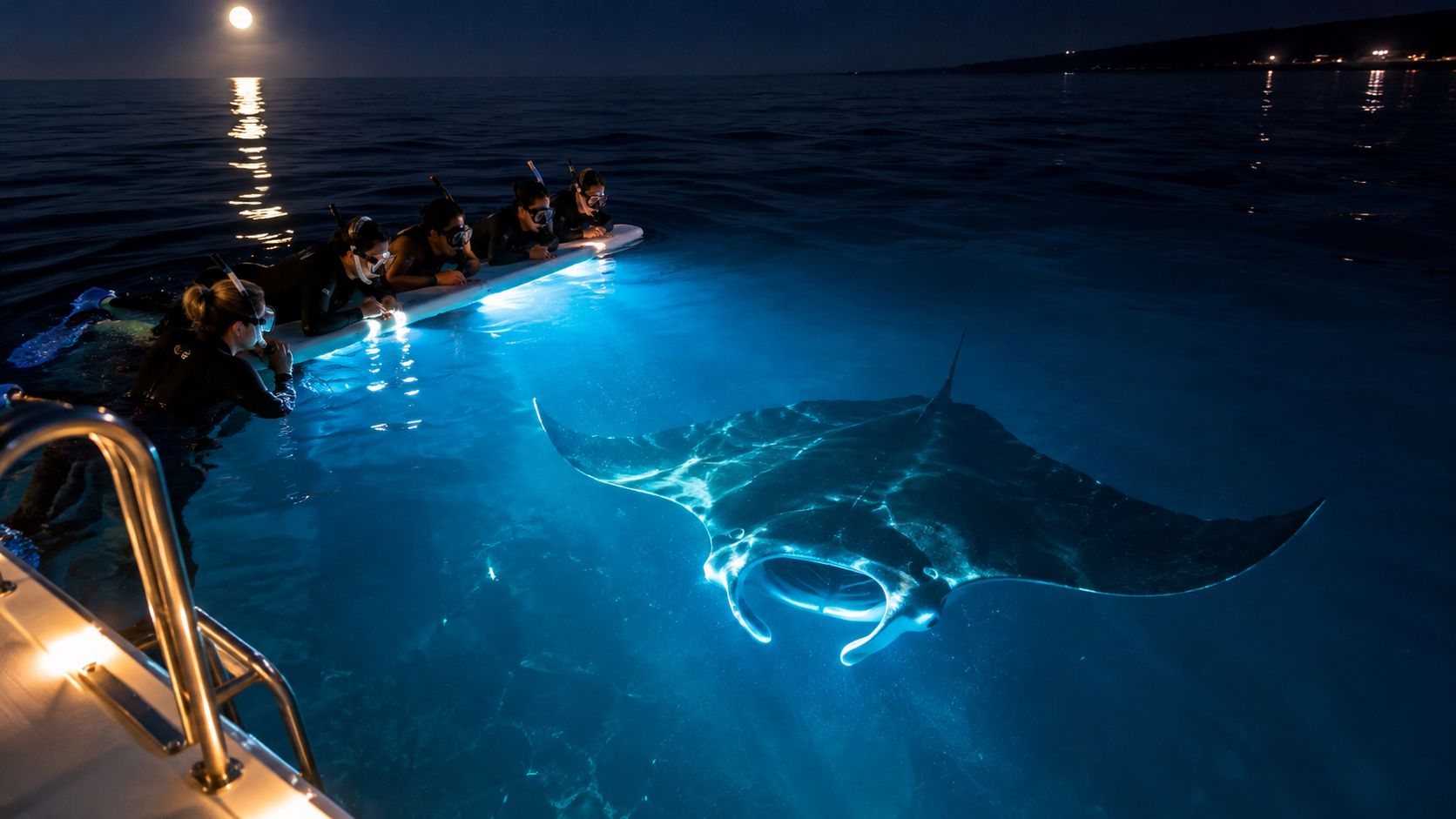
A typical Kona night starts. You board, settle in, get the briefing, and ride out to a viewing site where lights are already doing the hard work of attracting plankton, the small organisms manta rays filter feed on. That's the simple reason the animals come close, they're following food, not people.
Once you're in the water, the experience is more observational than athletic. You hold position at the surface, keep your fins low, and wait for the shape to rise out of the dark. When a manta turns into the light, it doesn't feel like a dramatic stunt, it feels like the ocean has suddenly become organized around one slow, graceful path.
What the water actually feels like
Kona's manta sites developed into a major nighttime activity after encounters began at local sites in 1984, and by 2015 there were at least 42 commercial operators identified around the two principal viewing areas, with boats ranging from 6 to 40 passengers source. That scale matters because it explains the rhythm you feel on the water, there are often other boats, other lights, and other swimmers nearby.
The water itself usually feels more manageable than people expect. The encounter is built around floating still, not swimming hard, so guests who are comfortable at the surface tend to do better than guests who are strong swimmers but restless. The temperature and sea state still matter, but the biggest comfort factor is whether you can relax and let the manta choose the path.
Practical rule: if you feel yourself wanting to kick toward the action, you're already doing too much.
I tell guests to expect a night that feels short in the moment and vivid afterward. The best trips don't feel like you “got close” to a manta, they feel like you were let in on a feeding pattern that was already happening before you arrived.
When to plan the trip
For timing, Kona is one of the few places where manta viewing has enough consistency to plan around with real confidence. A single night is often enough if your group is ready and the weather cooperates, while a second night gives you breathing room if conditions change. That flexibility matters more than chasing a perfect forecast.
Location choice matters too. Different sites attract different crowd levels and have different reef settings, and that changes the feel of the trip even when the animals are behaving normally. If you want a visual sense of the boat-and-light setup before you go, the Kona Honu manta photo gallery is useful because it shows how the surface viewing position looks from the water.
Gear, Fitness, and Comfort Prep
Good gear helps, but it doesn't rescue a bad approach in the water. For a manta ray snorkel, the essentials are a mask that seals well, a snorkel that doesn't fight your breathing, fins that let you kick lightly without splashing, and flotation that keeps you at the surface without effort. If your setup is uncomfortable on land, it'll feel worse once the boat lights are off.
Pack for stillness, not speed
What matters most is basic comfort in the water and the ability to float without standing. You don't need to be a high-mileage swimmer, but you do need to stay calm while breathing through a snorkel and waiting in place. For gear rentals, some guests also use freediving rentals when they already know what fits them best, but most first-time snorkelers are better served by simple, well-fitted standard gear.
A few practical choices make the evening smoother:
- Mask fit: test the seal before you ever leave shore, because leaks are distracting and harder to ignore at night.
- Fins: choose comfort over power, since you're not chasing anything.
- Flotation: use it if it helps you stay still, especially if you get anxious in open water.
- Cover-up: bring a layer for the ride back, because warm air on land can still feel cool after a night swim.
Seasickness is the one comfort issue people underestimate. If you're prone to motion discomfort, it's smart to come prepared with options like a Ship-EEZ Seasickness Patch, Dramamine pills, Bonine pills, Sea Band wristbands, or ginger chews. The right choice depends on what your body tolerates, but going in prepared is better than hoping a short boat ride won't bother you.
Bring less than you think you need. Anything loose, bulky, or fussy becomes one more thing to manage when the lights go down.
Fitness is mostly about calmness, not power. If you can breathe steadily, float without panic, and keep your body relaxed on the surface, you're already much closer to being ready than a strong swimmer who can't stop moving.
Day Versus Night Manta Snorkel Options
The night snorkel is the classic Kona version because lights concentrate plankton at the surface and bring the mantas into view. It's the more reliable format for most visitors, and it's the one people usually mean when they say they want a manta ray snorkel.
Daytime encounters can happen, but they're far less predictable. They tend to suit families and guests who want a brighter, less intimidating setting, while the night trip suits confident snorkelers who want the full surface-light experience.
How to choose the right format
If your group includes kids who are nervous in dark water, daylight may feel easier even if it isn't the iconic version. If your group is comfortable at night and wants the classic feeding setup, the night trip makes more sense. The choice is less about what's "better" in theory and more about what your group can enjoy without tension.
A useful comparison is simple:
| Option | What it feels like | Best for |
|---|---|---|
| Day encounter | Brighter, calmer, less dramatic | Families, cautious first-timers |
| Night snorkel | Surface lights, feeding action, stronger contrast | Confident snorkelers, return visitors |
For a deeper comparison of the two formats, the manta ray dive and snorkel guide is a helpful planning reference. What matters most is matching the format to your group's comfort, not treating the night trip as the only real option.
How to Behave in the Water Around Manta Rays
The biggest mistake guests make is trying to manage the encounter themselves. A manta ray snorkel works best when you become a fixed part of the surface, not another moving object in the feeding lane. The manta should have a clear view of you and a clear path around you.
Position beats motion
Keep your body at the surface, hold your fins below the waterline, avoid splashing, and do not freedive into the feeding column. Approach only from the side and stay at least 3 m from the animal, because a field assessment found avoidance behavior in 31% of approaches closer than 3 m, compared with only 3% when approaches were made from 4–5 m source.
That gap is why stillness matters. You are not trying to earn a better view by moving in closer, you are giving the manta room to keep feeding naturally. The best viewing spot is one you can hold without correction, then you let the animal decide whether to pass by.
What the animal is doing
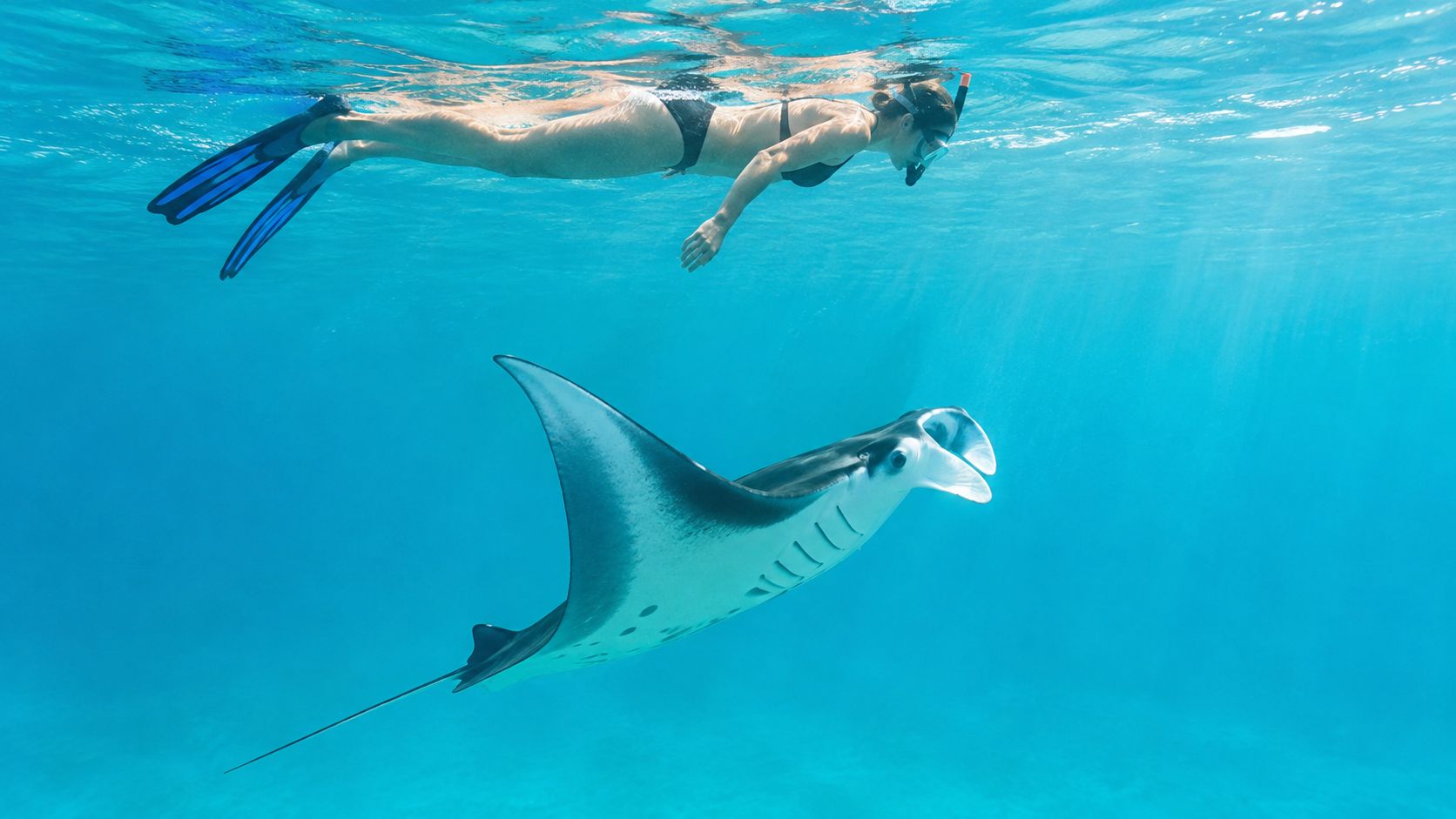
Hawaiʻi's Division of Aquatic Resources describes manta rays as filter feeders that eat zooplankton, using cephalic fins to funnel water and prey into the mouth while gill rakers retain food source. That feeding style is why you should never touch, block, chase, or cut across the ray's route. For a fuller set of in-water manners, see this guide to responsible, considerate diver etiquette.
A useful field habit is to think in lanes, not distance alone. If your body is in front of the animal's path, you are in the way even if you are not close. If you stay off to the side and remain quiet, the manta can keep feeding and still pass within view.
Quiet wins because it preserves the route. A manta that is not forced to change direction is the manta most likely to stay.
For anyone tempted to move more, keep it simple. The same rule applies with any wild animal, an intrusion changes behavior, and here the behavior you are protecting is the feeding route.
Why a Quiet Encounter Beats a Close One
A lot of visitors arrive thinking the best trip is the one with the closest possible pass. That's backwards. In Kona, the strongest encounters usually happen when the manta barely notices you, because the animal stays relaxed enough to keep feeding and return through the light again.
The broader population context matters here. NOAA says the global population of giant manta rays is unknown, regional estimates are often small, and depleted populations recover slowly because of low reproductive output source. In other words, these aren't abundant animals you can treat casually, they're highly visible animals that still need careful management.
Crowding changes the encounter too. In visitor research, 82% of surveyed snorkelers and divers felt crowded by other snorkelers, and respondents considered an average of no more than 52 snorkelers acceptable at one time, while 77% encountered more than that preferred level source. That's why guides who control spacing and behavior usually produce calmer, longer viewing windows than boats that treat the site like a floating crowd.
If the water feels busy, the answer isn't to swim harder. It's to settle down and claim a stationary spot.
The practical trade-off is simple. Close approach can make the moment feel intense, but passive positioning is what keeps the manta feeding and gives you repeated passes. If you care about the quality of the encounter, the quieter version is the better one.
Breathing, Lights, and Photos in the Water
Breathing should stay slow and boring. If you're breathing hard through a snorkel, your body is telling the rest of the group that you're not settled yet, and unsettled guests tend to kick, splash, and reposition. I tell people to rehearse one pattern before they enter the water, smooth inhale, smooth exhale, no breath-holding unless you're experienced and comfortable.
Use light like a tool, not a spotlight
The viewing setup depends on light, but light works only when it's aimed properly. The recommended snorkeling position is at the surface, with lights aimed downward, so snorkelers stay out of the feeding path and the plankton field stays where the mantas expect it source. That's the whole game, illuminate the water without turning the surface into a moving flashlight show.
If you're using a camera, treat it as secondary to your body position. The temptation is to drift, follow, and frame the animal constantly, but the better habit is to plant yourself first and take whatever shot is available from that fixed spot. Chasing a better angle usually costs you the better encounter.
What to do when a manta comes close
Close passes are normal, and they can startle first-timers because the animal is bigger and smoother than expected. Don't grab, don't kick, don't separate from the group, and don't follow the ray into deeper water. Let it pass, then reset your position and keep floating.
For guests who aren't strong swimmers, the main question isn't whether they can enter the water. It's whether they can remain passive in open water at night. The most recent visitor research found crowding concerns from snorkelers, boats, and divers, which tells you that flotation support and guide proximity help, but they don't replace calm water habits source.
If a child or anxious adult can't settle on the surface, I'd rather they enjoy the boat, the briefing, and the look of the site from above than force a half-baked snorkel. Not every person who can get in the water should do the full night session, and there's no shame in waiting until the timing is better.
Booking Your Manta Ray Snorkel and What Comes Next
The right decision is usually pretty clear by now. You want the night format if your group likes calm dark-water viewing, you want a stationary plan if you care about the encounter quality, and you want enough margin in your schedule to handle weather or nerves without rushing.
Kona Honu Divers runs a guided manta ray snorkel with a briefing style built for passive viewing, and the trip is organized around the same surface-light pattern that makes the encounter work. If you want a sense of the boat-side setup and the viewing area itself, the Big Island manta ray tour page is the place to check next.
A good booking decision leaves less to chance on the night itself. Once your gear is sorted and your group knows to stay still, the only real job left is to float, watch, and let the mantas do the moving.
If you're ready to turn the planning into an actual night on the water, visit Kona Honu Divers and choose a manta ray snorkel that fits your group's comfort level. Their crew keeps the encounter structured around calm surface viewing, which is exactly what makes this trip work.