
Picture this: you’re floating in the warm, dark waters of the Pacific Ocean off the Kona coast. Suddenly, graceful shadows with massive wingspans—some up to 16 feet across—glide just inches beneath you. This is the world-famous manta ray night swim, and it's a genuine bucket-list experience where nature delivers its most awe-inspiring performance. It’s an underwater ballet, and Kona is the best seat in the house.
Why Kona Is the Manta Ray Night Swim Capital of the World
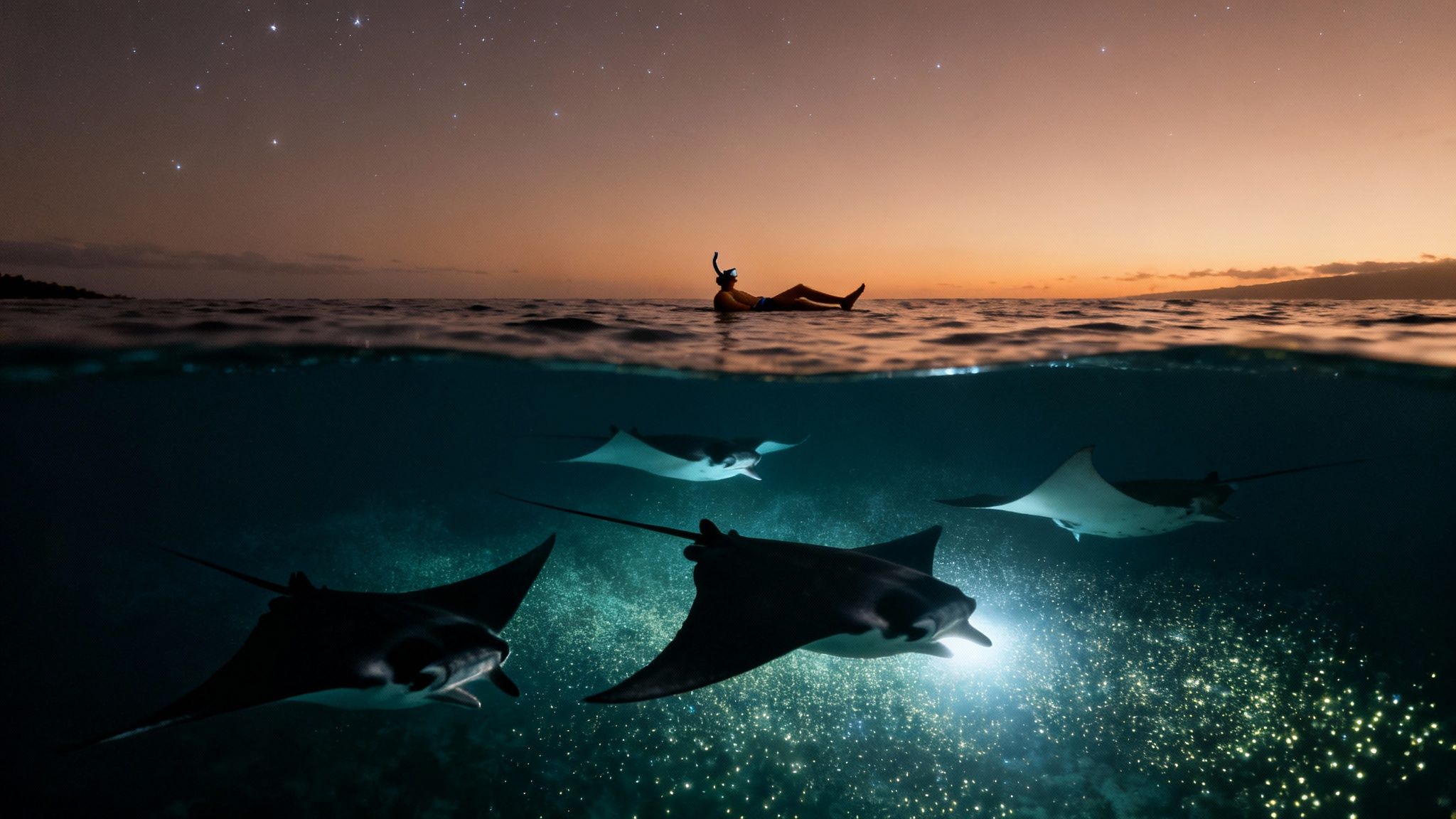
So, what makes Kona the undisputed global hotspot for this adventure? It's a clever, yet simple, bit of science mixed with a healthy, resident population of these gentle giants.
Here’s how it works: tour operators use powerful, submerged lights. These bright beams attract massive clouds of plankton, which just so happens to be the manta rays' favorite meal. Think of it as an all-you-can-eat buffet that the mantas simply can't resist.
This setup draws the rays in to feast, and what a show they put on! They swoop, glide, and perform effortless barrel rolls to scoop up the tiny organisms, creating a stunning acrobatic display right before your eyes. While other destinations have seasonal or hit-or-miss sightings, Kona’s manta population is here year-round, making the experience incredibly reliable.
To give you a quick overview, here's a snapshot of what makes this experience unique.
Kona Manta Ray Night Swim at a Glance
| Aspect | Details |
|---|---|
| Location | Kona Coast, Big Island, Hawaii |
| Wingspan of Mantas | Up to 16 feet |
| Best Time to Go | Year-round |
| Sighting Success Rate | 85-90% consistently |
| Annual Participants | Approximately 80,000 |
| Core Principle | Passive observation (no touching) |
This table really highlights why Kona stands out—the consistency and scale of the activity are unmatched anywhere else in the world.
The Numbers Don't Lie
This isn't just a local secret; it's a global phenomenon. The manta ray night swim is a cornerstone of the Big Island’s eco-tourism, drawing around 80,000 participants annually to Kona alone. Top operators consistently report sighting success rates between 85-90%, figures that leave other global hotspots in the dust.
For comparison, Ningaloo Reef in Australia hovers around 60-70%, while Raja Ampat in Indonesia is closer to 50-60%—and both of those are highly seasonal.
This incredible consistency takes the stress out of planning your trip. You can book your adventure any month of the year with a very high degree of confidence that you’ll get to see this incredible spectacle. It’s this reliability that transforms a "once-in-a-lifetime" dream into an accessible reality. The unique marine environment is a big part of what makes all our Kona scuba diving so special.
More Than Just a Swim
What truly sets the Kona experience apart is the responsible and well-established framework built around this activity. Decades of experience have led to standardized, safe practices that protect both the people in the water and the manta rays themselves.
There are strict guidelines in place to ensure all interactions are passive. You get to look and marvel, but you never, ever touch.
This deep commitment to conservation means the local manta population continues to thrive, ensuring this magical encounter will be available for generations to come. It’s the perfect blend of a thrilling adventure and sustainable tourism, cementing Kona’s reputation as the ultimate place for a manta ray night swim.
Choosing the Best Manta Viewing Location
When you start looking into a manta ray night swim, two spots will pop up again and again: Manta Village in Keauhou Bay and Garden Eel Cove in Makako Bay. While you can see mantas at both, there's a reason the top-tier operators, including us, almost always head to Garden Eel Cove. It simply offers a better, more consistent, and more protected experience.
Manta Village, right offshore from the Sheraton Keauhou Bay Resort, was the original hotspot. The trouble is, it's more exposed to the open ocean, which can mean rougher seas. That can make for a less-than-comfortable boat ride and swim, especially for snorkelers.
Garden Eel Cove, on the other hand, is tucked away in a much more protected bay. This typically means calmer, glassier water, which makes a huge difference for everyone, whether you’re snorkeling on the surface or diving down below. The smoother conditions just make the entire adventure more enjoyable from the get-go.
Why Garden Eel Cove Is the Superior Choice
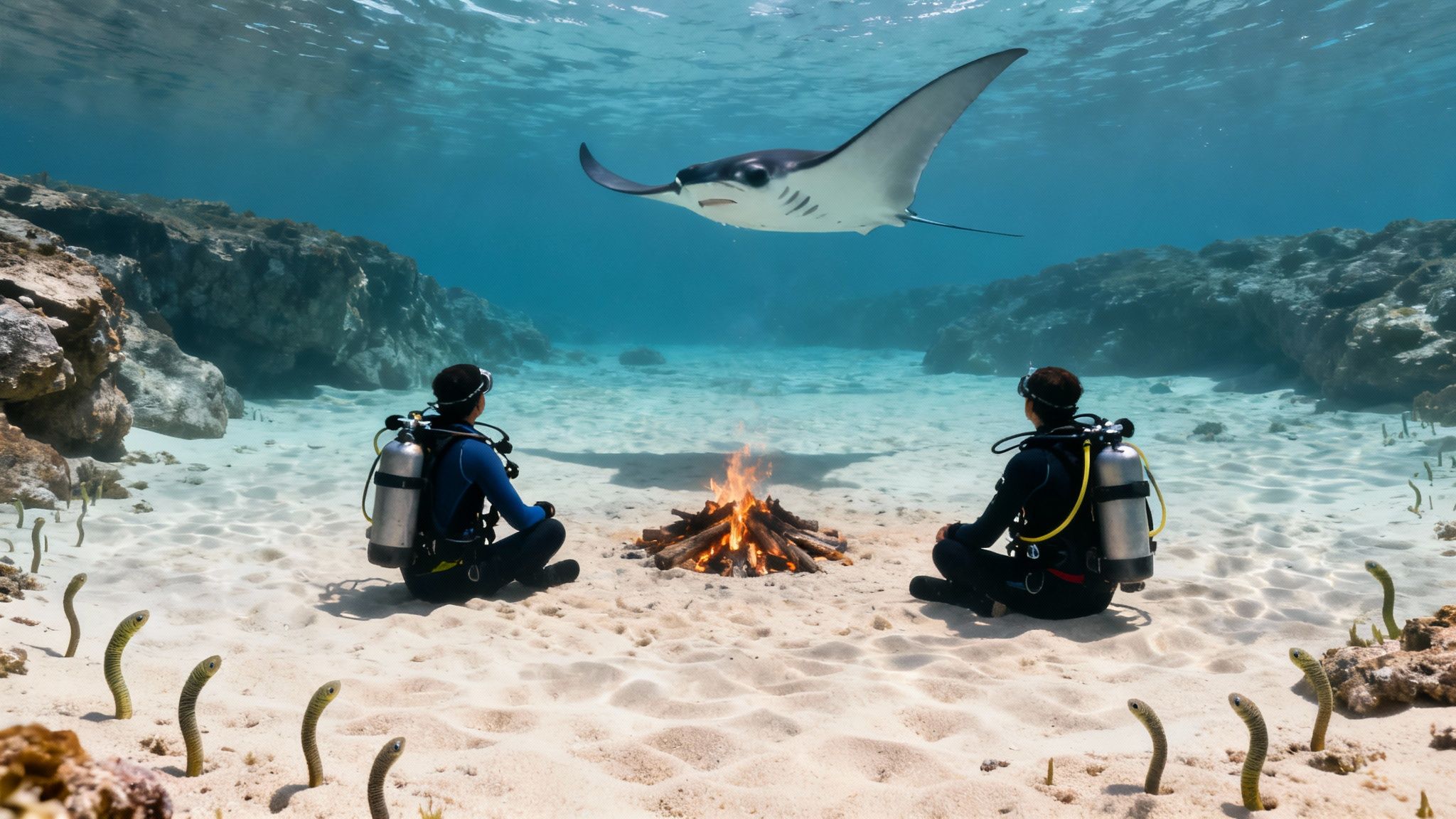
The real magic of Garden Eel Cove is what’s happening underwater. The topography is practically tailor-made for this experience, featuring not only a better viewing area but also healthier reefs. It has a shallow, sandy bottom that creates the perfect arena for the mantas and ensures great visibility for everyone.
This setup has led to the creation of a natural amphitheater for divers. We settle on the sandy floor in a semi-circle, pointing our lights up. We call this the "underwater campfire," and it’s an incredible way to see the show.
Here’s why this arrangement works so well:
- Unobstructed Views: You get a front-row seat looking straight up as these gentle giants swoop and barrel-roll right over your head.
- Minimal Disruption: By staying put on the sand, we don’t interfere with the mantas' natural feeding behavior. They come to us.
- Enhanced Safety: The organized viewing circle keeps everyone in a controlled, safe, and comfortable position.
This unique layout and protected location make Garden Eel Cove the undisputed champion for an unforgettable, up-close encounter. It’s a far more intimate and awe-inspiring way to meet these amazing animals.
The natural sandy bottom at Garden Eel Cove not only protects the vibrant reef but also provides divers with the perfect vantage point, creating a truly immersive and respectful wildlife encounter.
When you choose an operator like Kona Honu Divers, you’re choosing a team that knows this site inside and out. We go to Garden Eel Cove because we’re committed to giving you the best possible manta experience, and that's where it happens. Ready to see the difference for yourself? You can book the ultimate manta ray dive tour today.
Your Manta Ray Night Swim from Start to Finish
So, what’s it really like to float in the dark with giant manta rays? Let's walk you through the entire experience, step by step, so you know exactly what to expect. Forget the nerves; this is all about pure, wide-eyed wonder.
Your adventure kicks off at the harbor. You’ll be welcomed aboard by a seasoned crew who lives and breathes this stuff. Before you even leave the dock, they'll give you a thorough safety briefing. They cover everything: how the gear works, what to do in the water, and—most importantly—the rules for interacting respectfully with the mantas. It's all about making sure both you and the rays have an amazing, safe time.
With the briefing done, the boat heads out. As you cruise toward the manta site, you'll get a front-row seat to a breathtaking Hawaiian sunset. The energy on the boat starts to build. This is your chance to soak it all in, ask any last-minute questions, and get geared up for the main event.
Entering the Manta Theater
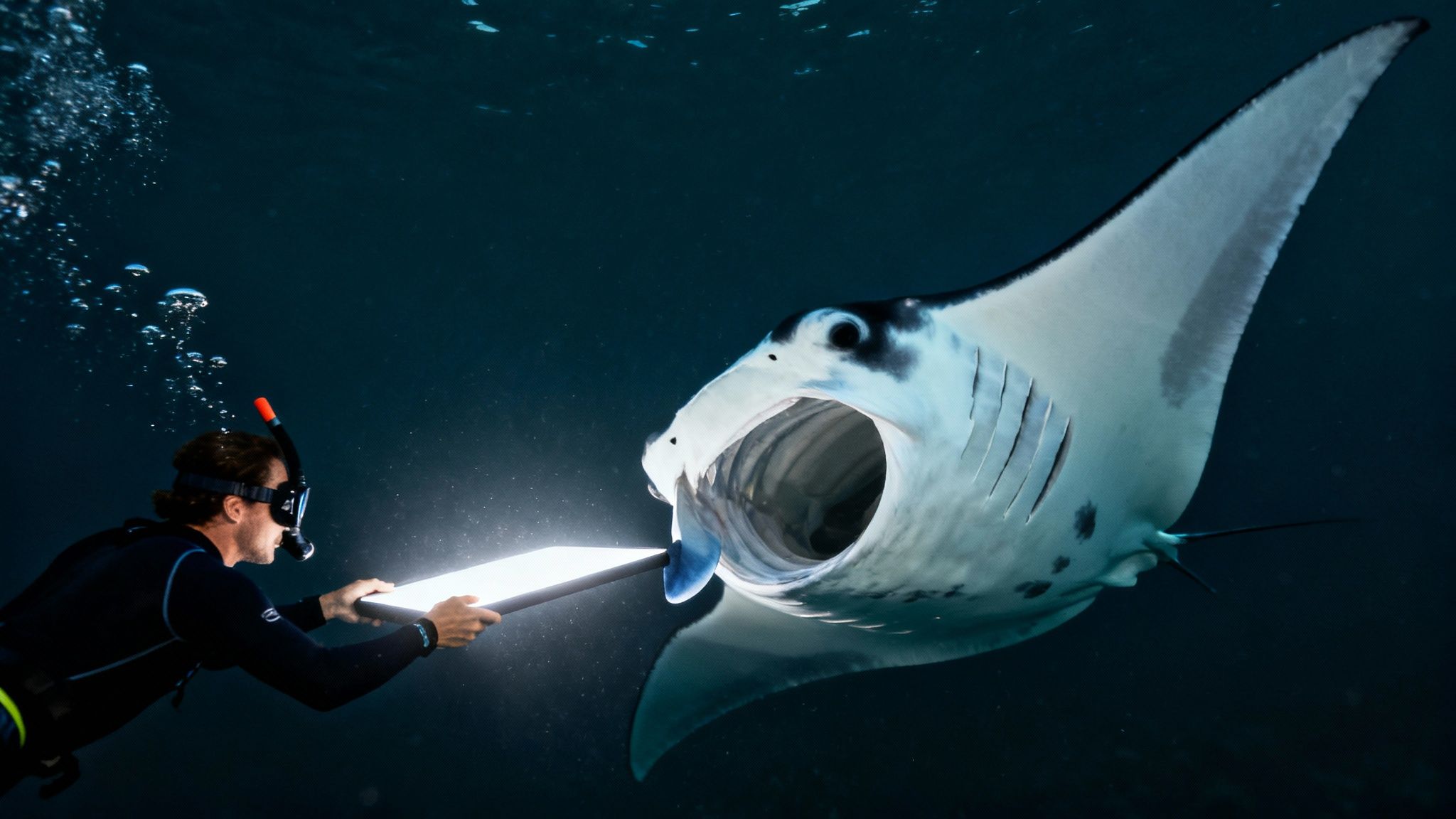
Once the boat is anchored, it’s showtime. If you're snorkeling, you'll be guided to a custom-built light board that floats on the surface. You just grab onto the handles and relax. The powerful lights shine down into the deep, acting like a giant dinner bell for plankton—and the mantas that love to eat them.
For certified divers, you'll descend with your guide to the sandy bottom, around 25-35 feet down. You’ll settle into a designated spot, often called the "campfire," and shine your dive light straight up. Your beam joins the others, creating a brilliant column of light that the mantas find irresistible.
And then, it happens. A shadow emerges from the darkness. It glides closer, taking shape until you realize you’re looking at a massive, graceful creature. The first manta has arrived.
This isn't just a lucky break; it's an incredibly reliable encounter. On a good night at Kona's prime sites, it's common to see 10-20 mantas, with the underwater show lasting a solid 30-45 minutes. We have a core group of about 20 resident mantas that we see all the time, some with unbelievable 12-16 foot wingspans. You can read more about Hawaii's magical manta encounters to see why people come from all over the world for this.
The Silent, Otherworldly Dance
Soon, one manta becomes two, then five, then more. They begin a silent, mesmerizing ballet, performing effortless barrel rolls just inches from your face. Their giant mouths are wide open, scooping up the plankton concentrated in the light beams. It’s hypnotic.
The experience is completely serene. There's no sound but your own breathing as these magnificent creatures glide past, their movements fluid and hypnotic. It’s a powerful connection to the natural world that stays with you long after you’ve left the water.
Whether you're watching from the surface or the seafloor, it’s a profoundly moving experience. After about 30-45 minutes of pure awe, it’s time to head back to the boat. You’ll climb aboard feeling completely exhilarated, ready for a warm ride back to the harbor with a story you’ll be telling for years.
How to Choose the Right Manta Ray Tour Operator
Picking the right company for your manta ray night swim is probably the most critical decision you'll make for this adventure. It's what separates a "good" trip from a truly unforgettable, safe, and magical one. Believe me, not all operators are the same, and focusing on the overall value—not just the price tag—is the key to getting the experience you're dreaming of.
When you're looking at your options, you'll want to find a company with a solid track record of both expertise and a serious commitment to safety. This is where a top-tier operator like Kona Honu Divers really shines. Their crew has over 200 years of combined industry experience, which is an incredible amount of know-how. That deep well of knowledge means you get a smoother, safer, and far more interesting tour from the moment you step on the boat. They just get the ocean's quirks and the mantas' behavior, which puts you in the best possible spot for a breathtaking encounter.
What Sets the Best Apart?
The best tours really think about the details that make or break your experience. For starters, they use boats built specifically for this kind of work—comfortable, efficient, and designed to get you to the site without a hitch. But even more important is where they take you. Kona Honu Divers almost always operates at Garden Eel Cove, which is hands-down the premier spot. Its waters are more protected, the viewing is better, and the reefs are healthier compared to the more exposed Manta Village.
Here are a few other things that make a huge difference:
- Smaller Group Sizes: This is a big one. It means a more personal trip where you aren't fighting for a view. You get a front-row seat to the show.
- High-Quality Gear: You want equipment that's well-maintained, from wetsuits that actually keep you warm to reliable dive gear. It's a non-negotiable for comfort and safety.
- A Focus on Education: A great crew doesn't just ferry you out to sea. They're passionate and knowledgeable, teaching you about the incredible marine life you're witnessing.
The Proof Is in the Reviews
At the end of the day, the most honest gauge of a company's quality is its reputation. When you see a long history of consistent five-star reviews, you know you've found an operator dedicated to getting it right. Those reviews come from people who felt safe, amazed, and confident that their experience was worth every penny.
Choosing an operator like Kona Honu Divers is an investment in a premium service that delivers time and time again. If you're still weighing your options, there's an ultimate guide to the best manta ray snorkel Kona tours that does a great job comparing different companies. When you're ready for an incredible manta ray dive experience with a team that puts safety and quality above all else, you know who to call.
Preparing for Your Manta Ray Adventure
A little bit of prep work can make all the difference between a good trip and a truly unforgettable one. Getting ready for your manta ray night swim is pretty straightforward, and it really just boils down to comfort and safety. The single most important rule? Listen closely to your crew’s briefing and stick to passive observation. Look, but never, ever touch. This keeps both you and these magnificent creatures safe.
It's also worth understanding just how special this ecosystem is. Each year, 80,000 adventurers come to Kona for this incredible experience. With over 42 tour operators reporting an 85-90% sighting success rate, it’s a well-oiled machine built on solid safety protocols and a deep commitment to conservation. A portion of every permit goes directly to vital ID research, helping scientists track the local manta population that makes these encounters so reliable. So when you join a tour, you're becoming part of the solution.
What to Bring and What to Expect
The great news is that your tour operator will handle most of the heavy lifting, providing all the essential gear like wetsuits, masks, snorkels, and fins. You just need to bring a few personal items to make the trip more comfortable.
Here’s a simple checklist to get you started:
- Swimsuit: The easiest thing is to just wear it under your clothes when you head to the harbor.
- Towel: You'll definitely want this for drying off after you get out of the water.
- Warm Layer: A sweatshirt or a light jacket is perfect for the boat ride back. It can get surprisingly chilly once the sun goes down.
- Reusable Water Bottle: Always a smart move to stay hydrated.
For any adventure like this, looking into an essential guide to adventure travel insurance is a wise step that can give you extra peace of mind.
Capturing the Moment Safely
Of course, you'll want to take photos! Bringing an underwater camera is a fantastic idea, but it’s crucial to do it responsibly. Try to keep your camera settings simple and avoid using a powerful external flash, as bright, sudden lights can disorient the mantas.
The best strategy is to simply hold your position and let these graceful giants glide past you. Focus on capturing their natural movement without getting in their way. Following these simple tips helps make sure the experience is magical for everyone involved—mantas included. To learn more, check out our guide on responsible and considerate diver etiquette.
Discovering Kona’s Other Night Dives
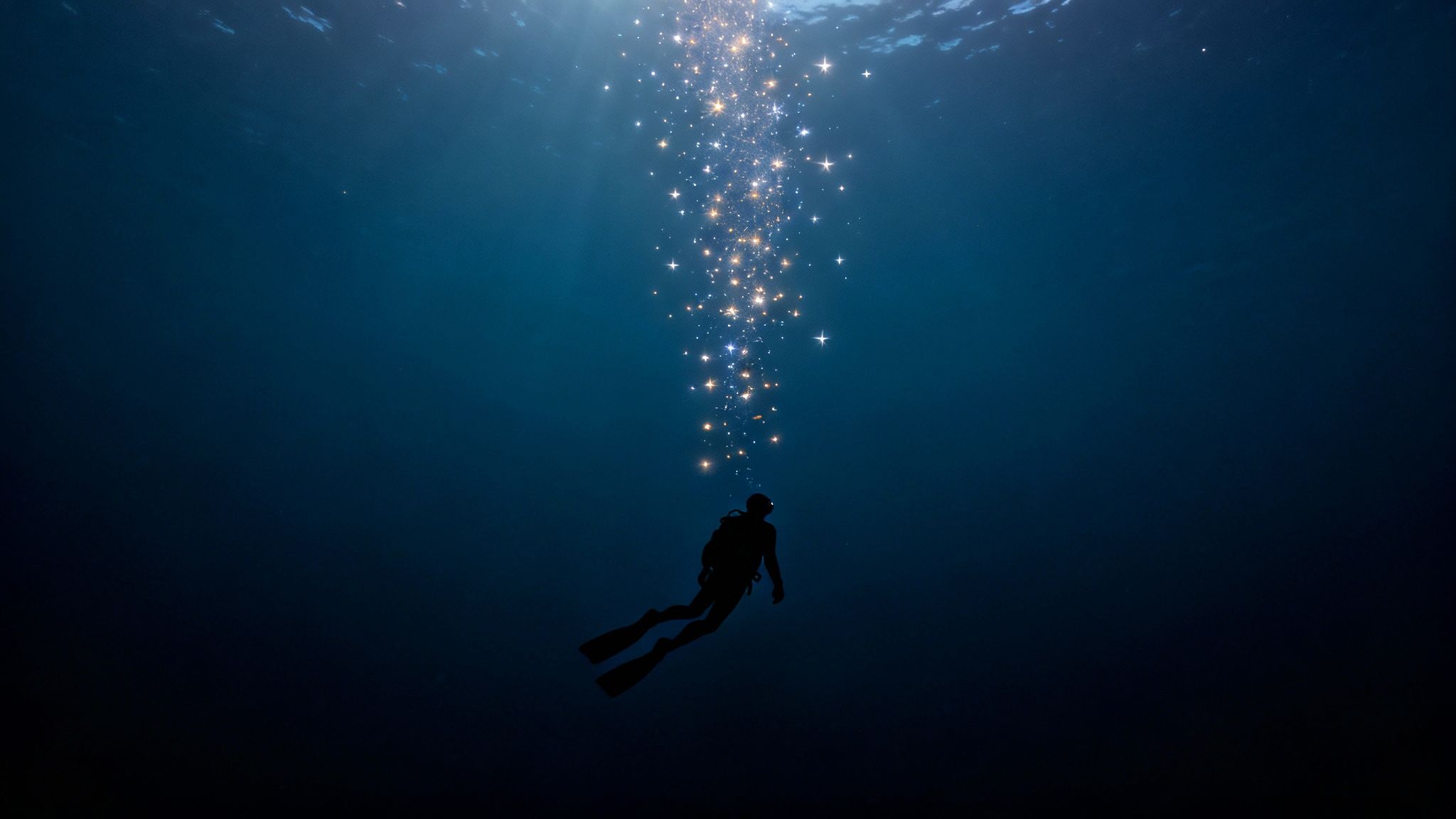
The manta ray night swim is an absolute showstopper, but it's really just the opening act for what Kona's waters offer after dark. For certified divers hungry for a truly unique thrill, the legendary Kona Blackwater Dive is an experience that can only be described as otherworldly. It’s your front-row seat to one of the planet's largest migrations, and it happens every single night.
This isn’t your typical reef dive. We head miles offshore into the deep, open ocean for a drift dive. You're safely tethered to the boat, suspended in the deep blue of the water column. Here, you get to witness the nightly vertical migration—a phenomenon where countless strange and mesmerizing bioluminescent creatures rise from the abyss to feed near the surface.
A Journey into Inner Space
Picture yourself floating in an inky universe, surrounded by sparkling, alien-like life forms. It feels less like scuba diving and more like a spacewalk. You’ll see creatures that look like they’re straight out of a sci-fi movie—translucent larval fish, pulsating ctenophores, and other deep-sea oddities rarely witnessed by human eyes.
The Blackwater Dive is a mesmerizing encounter with the ocean's hidden realm. It connects you to the vast, mysterious ecosystem that thrives just beyond the reef, offering a humbling and unforgettable perspective on marine biodiversity.
For underwater photographers, this dive is a dream. For marine biology buffs, it's pure bliss. It’s an adventure that pushes the boundaries of exploration, giving you a peek into a world that feels both ancient and futuristic. If you’re ready to see what comes up from the deep after sunset, you can find out more about our Kona Blackwater Dive tour.
Kona’s incredible variety of underwater environments makes it a world-class destination for divers of every skill level. And for those looking to take their abilities to the next level, we offer plenty of opportunities to explore deeper reefs and more challenging sites on our advanced dive tours built for the experienced diver.
Common Questions About the Manta Ray Night Swim
It’s totally normal to have a few questions before you jump in the water with giant manta rays at night. In fact, we encourage it! The more you know, the more you can relax and just soak in the incredible experience. We’ve answered thousands of questions over the years, and a few pop up more than others.
Let's clear the air on some of the most common ones so you can feel completely confident and ready for an unforgettable night.
Is the Manta Ray Night Swim Safe?
This is easily the number one question we get, and the answer is a resounding yes. Manta rays are gentle giants. They’re filter feeders, which means they don’t have teeth, stingers, or barbs like a stingray. They are completely harmless to people and are only interested in the clouds of plankton drawn to our lights.
On top of that, we run a tight ship. Every trip starts with a thorough safety briefing, and our expert guides are in the water with you every step of the way. Our entire operation is built around keeping both our guests and the mantas safe.
Do I Need to Be a Strong Swimmer?
Not at all. You just need to be comfortable in the water. For our snorkelers, we’ve made the experience as effortless as possible. You'll hold onto a custom-built light board that floats on the surface.
This board not only illuminates the incredible scene below but also gives you a stable platform to hold onto, so you can just float and watch. The wetsuits we provide also add extra buoyancy, making it even easier to hang out on the surface. Our crew is always right there if you need a hand.
The manta ray night swim is designed to be accessible for almost everyone. With the flotation boards and buoyant wetsuits, even people who aren't strong swimmers can float comfortably and focus all their attention on the amazing manta ballet unfolding beneath them.
What if We Don’t See Any Manta Rays?
Look, we’re dealing with wild animals, so nothing is ever 100% guaranteed. That said, the Kona manta ray swim is one of the most reliable wildlife encounters in the world, with a success rate that consistently hovers around 85-90%. A night with no mantas is extremely rare.
But in the unlikely event that the stars of the show don't appear, we've got you covered. Like most reputable operators, we offer a "manta guarantee." This means we'll bring you back out on another night, free of charge, for a second chance to see the magic.
When Is the Best Time of Year to Go?
Here's some great news: any time is a good time! The manta ray night swim in Kona is a fantastic, year-round activity. The manta population here is residential, meaning they stick around all year instead of migrating. This gives you a great shot at an amazing encounter no matter when you visit.
If you want to get into the nitty-gritty, you can learn more about the best time to see manta rays in Kona in our more detailed guide.