
You're comparing tour pages, trying to work out whether you'll be expected to swim around in dark water or float and watch. The practical answer is that a well-run Kona manta ray night dive snorkel is a guided, surface-based wildlife encounter. The deciding details aren't flashy gear or promises of a guaranteed sighting. They're the site, the light setup, and whether the crew keeps guests orderly.
Table of Contents
- What a Manta Ray Night Snorkel Actually Is
- Best Time, Season, and Conditions
- The Night of the Snorkel Step by Step
- Choosing the Right Site and Operator
- In-Water Etiquette and Safety Rules
- Photography Tips for the Night Snorkel
- Booking, Logistics, and What to Ask Before You Pay
What a Manta Ray Night Snorkel Actually Is
At a designated viewing site, the crew places lights in the water to attract plankton. Snorkelers hold a floating light board at the surface, look down through their masks, and let reef manta rays come to feed. You don't swim after them. Your job is to stay in position and watch.
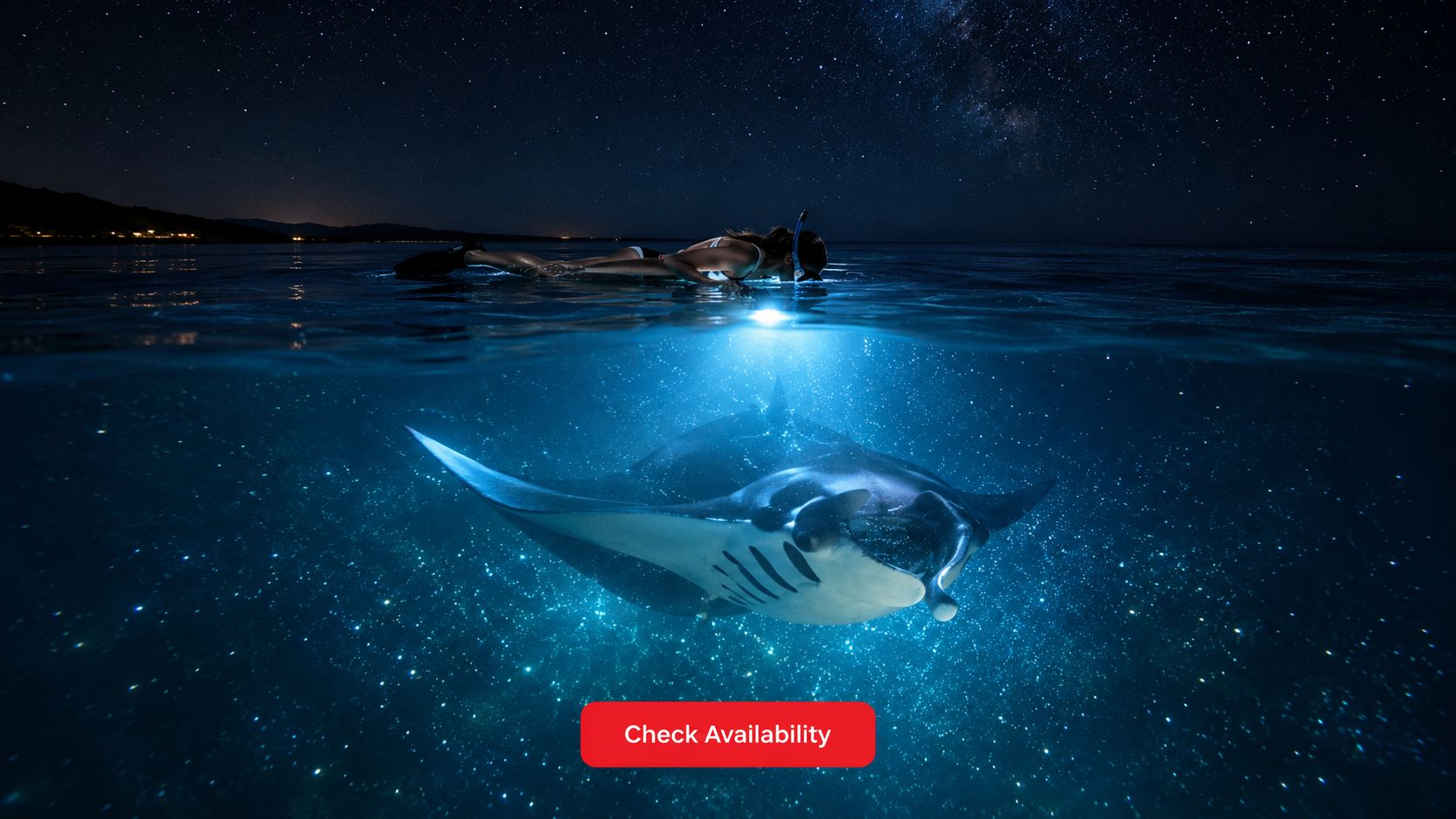
These are reef manta rays, not stingrays. They feed on plankton, and the encounter is based on observation, not handling or feeding by guests. Their looping passes through the lit water can look close and dramatic, but they're moving through the feeding area on their own terms. Follow the guide's instructions and keep your hands to yourself.
Kona's manta encounters aren't a new novelty. A peer-reviewed study published in 2013 surveyed operators and reviewed available literature across 23 countries with organized manta dives and snorkels. It estimated more than US$73 million in annual direct revenue for dive operators and US$140 million in annual economic impact when associated visitor spending was included. Those are historical estimates, not today's revenue figures, but the study established that manta tourism had become a substantial form of non-consumptive marine tourism. It also showed why keeping mantas alive and available for future encounters can create ongoing value for local communities. (The 2013 international study of manta tourism)
A snorkel and a scuba dive give you different viewpoints. Snorkelers float above the lights and look down; divers settle lower and look up into the feeding area. If you're deciding between those perspectives, this guide to snorkeling or diving with manta rays lays out the choice. For the snorkel, you don't need scuba certification, but you do need to be comfortable following instructions in open water at night.
Best Time, Season, and Conditions
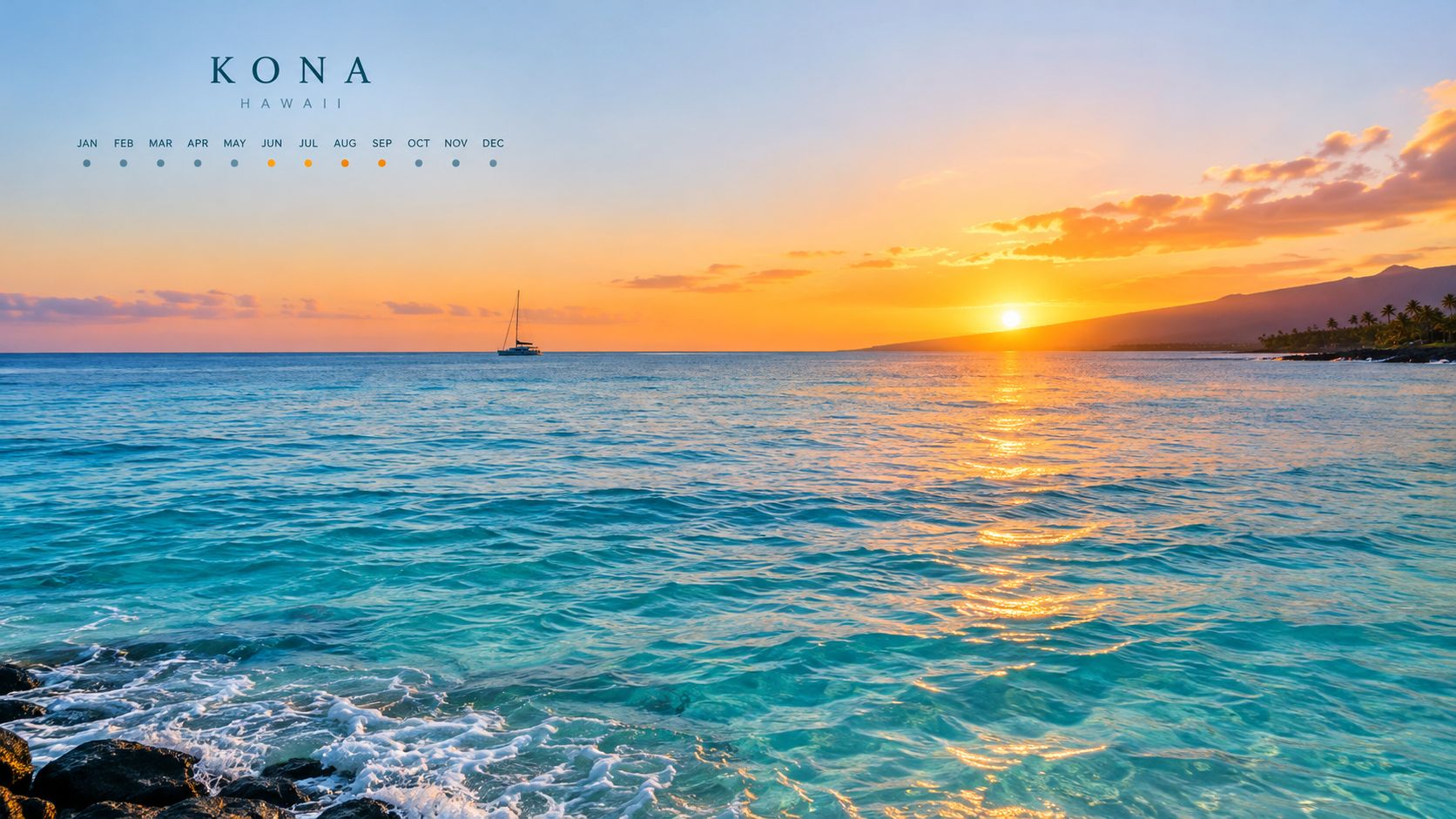
Kona manta trips are offered at night, but the right booking is about more than the calendar. State boating rules define manta-viewing operations between 4:00 p.m. and 4:00 a.m. During those hours, operations must use a commercial mooring; live boating is limited to entering and leaving the area, rafting is prohibited, and a vessel can't leave the zone while guests or crew remain in the water. Some sites have additional restrictions, including a prohibition on scuba-diving tours during manta-viewing hours at Kaukalaelae. (Hawaiʻi boating-management rules for manta viewing)
Choose a night for the whole experience
There isn't a single month that guarantees a better encounter. Manta viewing is a wild-animal activity, and conditions at sea, plankton availability, and the animals' movements all matter. A 2025 University of Hawaiʻi study found that aggregation size at Kona's two principal nighttime sites closely followed changes in zooplankton density, so a site's usual reputation can't promise what the mantas will do on a particular night. (The University of Hawaiʻi study of Kona's nighttime manta sites)
Moonlight can change how dark the water appears, but don't book on moon phase alone. Ask the operator how it decides whether conditions are suitable and what happens if the sea state makes the trip unsafe or uncomfortable. A calm surface makes it easier to hold the light board without getting knocked around; choppy water can make staying in formation tiring, particularly for someone new to snorkeling at night.
Reserve the earliest available night in your Kona stay if your schedule allows. That leaves room to respond if the operator has to change plans because of conditions. Before paying, read the cancellation and rescheduling terms instead of assuming a departure will run in any weather.
Pack to stay warm and keep your hands free
Wear a swimsuit under the wetsuit, and confirm what the operator supplies. A quality setup should include a wetsuit, mask, snorkel, and flotation support. Bring a towel and dry clothes for afterward, plus reef-safe sunscreen if you'll be outside before sunset. Keep belongings simple: leave jewelry, loose accessories, and equipment you're not confident handling in the water behind.
If you're considering a camera, choose something you already know how to operate in low light. Don't make a new camera setup the center of the trip. A stable, simple setup is easier to manage while you're holding position.
For more on timing, check this guide to the best time to see manta rays in Kona.
The Night of the Snorkel Step by Step
The evening should feel organized from check-in onward. A good crew explains the plan before anyone enters the water, then keeps the group together instead of leaving first-timers to figure things out in the dark.
From check-in to the water
At check-in, confirm that your mask fits and tell the crew if you're nervous, inexperienced, or need flotation support. Pay attention to where you'll enter and exit, how the guide will signal the group, and what to do if you need a break. The boat then travels to the viewing site and secures at the designated mooring under the applicable rules.
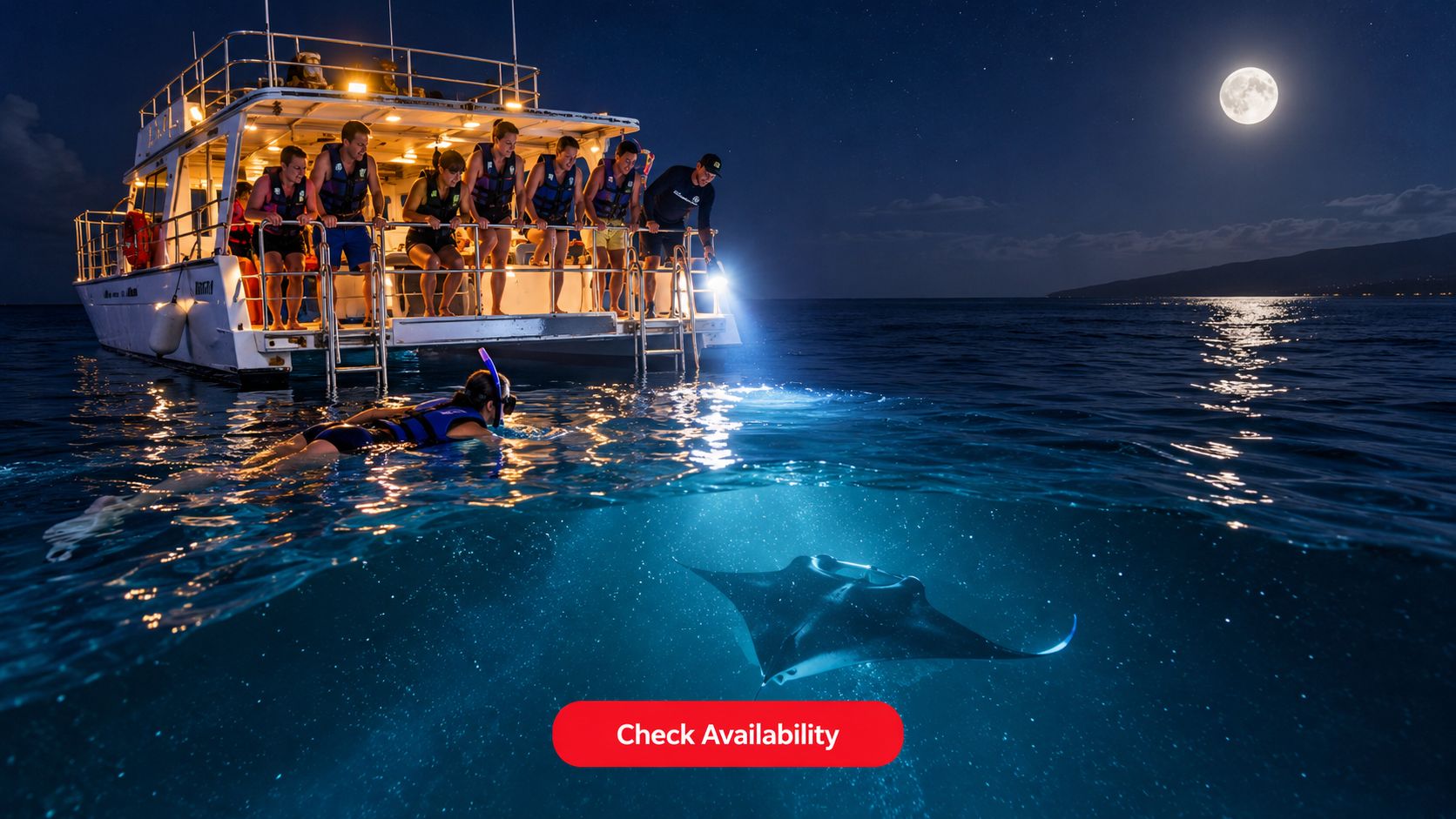
Once on site, the crew sets up the floating lights and gives the in-water briefing. Enter when instructed, move to the light board, and settle into the position the guide assigns. Keep your face in the water only when you're ready. You can lift your head, breathe normally, and reset your position without chasing a manta.
While you're watching
The lights make a bright viewing area surrounded by darkness. That contrast can feel strange at first, but you're not expected to swim around looking for animals. Hold the float, listen for the guide's signals, and keep your movements small. Mantas may arrive after you've been waiting; don't pursue the first one or try to reposition directly in its path.
When the guide calls the end of the snorkel, follow the crew's exit instructions and return to the boat in the designated way. Don't swim off independently or cross through the feeding area to reach the ladder. A clear sequence, controlled entry, and supervised exit make the night easier for everyone, especially guests who haven't snorkeled after dark before.
Choosing the Right Site and Operator
Your two real options are Garden Eel Cove and Keauhou, roughly 20 kilometers apart on the Kona coast, and they are not interchangeable. University of Hawaiʻi researchers analyzed more than 23,000 sightings of 167 individually identified reef manta rays recorded from 2010 through 2022 at both sites. Garden Eel Cove consistently supported larger aggregations, while Keauhou showed stronger female site fidelity and appeared to serve ecological functions beyond nighttime feeding. (The University of Hawaiʻi research on Garden Eel Cove and Keauhou)
Book Garden Eel Cove. The study above found the larger aggregations there, and its protected location and defined viewing area give a crew room to set a stable light zone. Keauhou remains important to the manta population, but a first-timer looking for a dedicated feeding-viewing setup gets the better experience at Garden Eel Cove.
Then vet the operator. A strong site still fails if the crew lets guests drift into the light zone, crowd the board, or enter without a clear briefing. Ask which site the boat plans to use, whether it can switch with conditions, how it manages a shared viewing area when several boats moor, and where guides position guests relative to the lights. Capacity matters here. Smaller groups and a guide who stays in the water are worth paying for.
For a broader checklist, use this guide to choosing a Kona diving company. Compare the actual operating plan, not promotional photos or the lowest price.
In-Water Etiquette and Safety Rules
The best manta snorkeler often does almost nothing. Stay on the surface, keep your position, and let the rays decide where to pass. Chasing a manta for a closer look puts you in the animals' maneuvering corridor and disrupts the orderly viewing area.
NOAA wildlife-interaction guidance recommends that snorkelers point lights downward to concentrate plankton near the surface, stay out of the feeding water column, and avoid contact, chasing, grabbing, riding, or attempting to redirect a manta. Divers should stay near the bottom, leave the open water column clear, and avoid directing bubbles at an approaching ray. (NOAA guidance for viewing manta rays)
For a fuller rundown of in-water behavior, see this guide to responsible, considerate diver etiquette.
The useful rule: Hold your place. Don't try to manufacture a closer encounter.
Crowding affects the experience
Capacity isn't a cosmetic issue. In a survey of 444 manta-tour participants, 82% felt crowded by snorkelers, 78% by boats, and 69% by scuba divers. Actual encounters exceeded respondents' acceptable norms for snorkelers for 77% of participants, for divers for 67%, and for boats for 68%. (Research on crowding and manta-viewing norms)
So a full boat or a high manta count doesn't automatically mean a good trip. If the viewing area gets packed, your job stays the same: stay centered over the light field, keep your fins near the surface, and hold your float. Signal the guide if you're tired or uncomfortable, and know where the exit point is before you get in.
Photography Tips for the Night Snorkel
Night photography from a floating position is difficult. You're managing darkness, moving animals, and your own body position at the same time. Set a modest goal: get a few usable images if conditions allow, but don't turn the whole encounter into a camera-handling exercise.
Keep the setup simple
A wide lens gives you a better chance of fitting a manta into the frame as it passes. A phone in a waterproof housing can document the scene, but it may struggle in low light and can tempt you to move around for a better angle. Dedicated underwater cameras offer more control, but only use equipment you already know how to operate.
- Secure the camera: Use a wrist strap or mount that lets you keep hold of the float. Don't let go to frame a shot.
- Use video when stills are frustrating: A short clip is often a more realistic record of movement than a series of dark, blurred photos.
- Keep your light pointed down: NOAA guidance recommends downward-directed lights for snorkelers, which also keeps the feeding area organized. Don't aim a beam at a manta or use a strobe near one.
- Skip complicated settings in the water: Set up your camera before boarding, and ask the operator what lighting is allowed.
The best light is the one that supports the viewing setup, not one that turns the manta into a target. For specific photo-package details, see the Kona manta night dive photo package information.
Decide whether everyone in your group is ready
Don't assume that “family-friendly” means suitable for every swimmer. Ask the operator about its minimum age, required swimming ability, flotation options, guide supervision, group size, and how a guest can leave the water early. These details matter more than a general promise that beginners are welcome.
A guest who refuses to enter dark water, can't follow instructions while floating, or has an open cut that can't be covered should reconsider. If someone becomes anxious, they should tell the guide rather than swim away from the light board. A well-managed trip should have a clear plan for assisting guests and getting them back aboard safely.
Booking, Logistics, and What to Ask Before You Pay
Book early if your dates are fixed, and choose a departure early in your stay when your schedule permits. Before paying, read the cancellation terms and confirm what gear and supervision the fare includes. Operators may provide a wetsuit, mask, snorkel, flotation, and in-water guide support, but verify the details rather than assuming every trip is identical.
Kona Honu Divers offers a guided manta snorkel experience with snorkel equipment, including wetsuits, masks, and fins, as part of its manta tour setup. Review the Kona manta ray dive and snorkel tour options, and ask which site is planned and how the crew handles crowding and guest support.
Before you reserve, ask:
- Which viewing site will the trip use, and can that change with conditions?
- Does a guide stay in the water with snorkelers?
- What flotation is available, and how does the crew handle a guest who wants to exit?
- What happens if conditions prevent a safe departure?
Are manta rays dangerous? The activity is still an ocean outing, but the rules are designed to keep guests observing without touching or pursuing the animals.
Can non-swimmers join? Don't assume so. Ask the operator directly about its swimming requirements and flotation support.
What if it rains? Ask the crew how it evaluates sea conditions and when it cancels or changes plans. Rain alone doesn't tell you whether the ocean is suitable.
Is there a best season? There's no single month that guarantees a sighting. Choose a reputable operator and leave flexibility in your schedule.
Kona Honu Divers offers guided manta snorkel trips with the equipment and crew support needed for a surface-based encounter. If Garden Eel Cove and a well-managed light zone are what you're looking for, review the tour details and visit Kona Honu Divers to plan your night on the water.