
You're standing at the harbor with a wetsuit in your bag, the sun dropping behind the Kona mountains, and one big question in your head. Will the night dive deliver, or is it just another pretty boat ride with a lot of hype?
The honest answer is better than hype. A manta ray night dive Kona experience works because operators have learned how to create a predictable feeding setup, then get out of the way and let the animals do what they already do at night. That's why the right trip feels calm, organized, and almost surreal, while the wrong one feels crowded, rushed, and noisy.
What Makes the Kona Manta Ray Night Dive Special
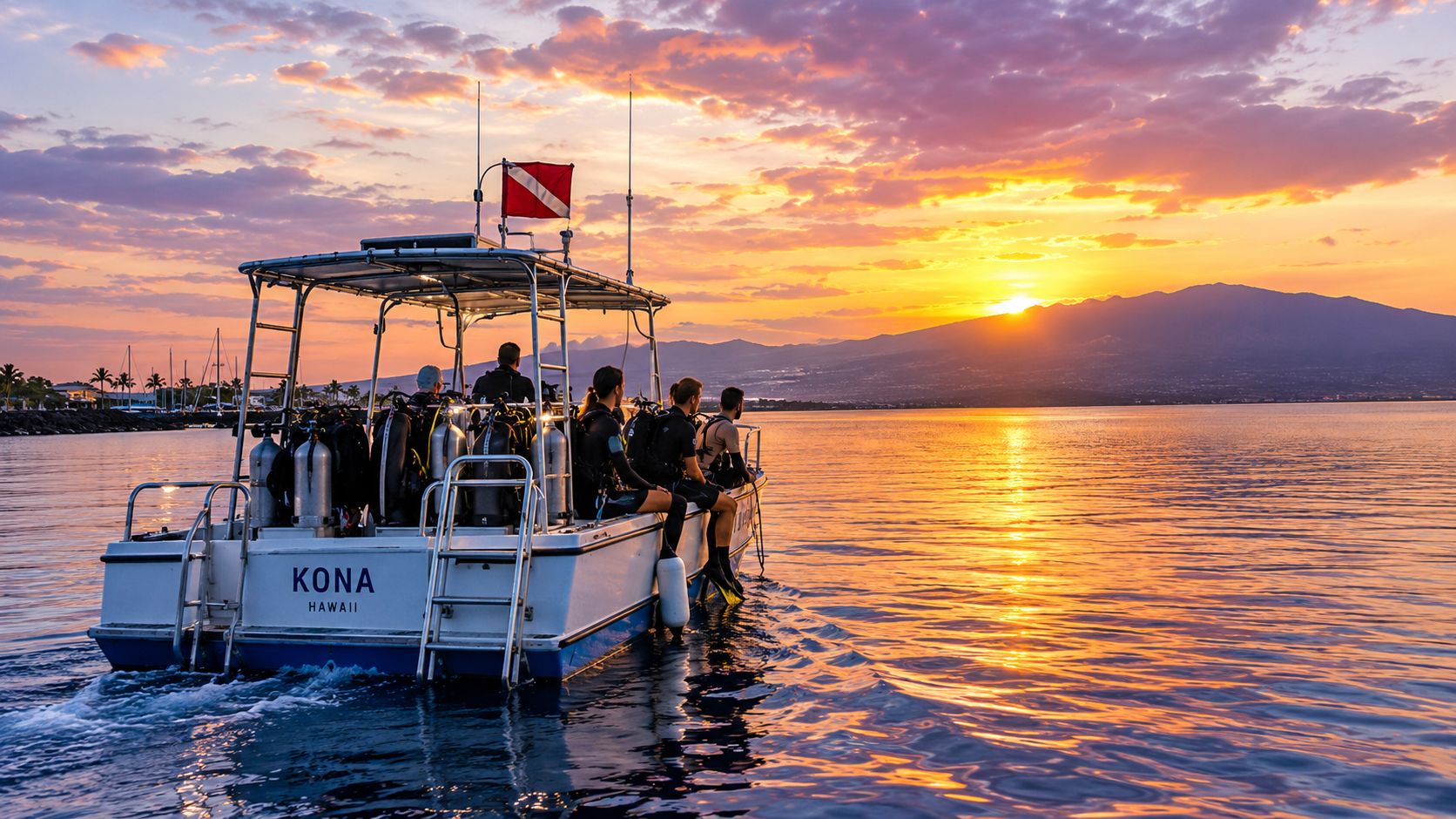
A first-timer often feels the shift before the dive even starts. The sunset looks ordinary, the coastline fades into dark, and then the crew explains how that quiet patch of water becomes a feeding station.
Kona's manta reputation did not appear by accident. It grew from the old Kona Surf Hotel, now the Sheraton Keauhou Bay Resort, where underwater spotlights drew plankton close to shore in the late 1980s and manta rays followed the food into view. Organized night diving expanded in the early 1990s, and Hawaii legislative testimony later described how the experience had already become economically important to Kona tourism, based on a survey of nine dive shops and a broader operator estimate (Hawaii legislative testimony on Kona manta history and scale).
Why the setup works
The mechanics are straightforward, and that is part of the appeal. Upward-facing diver lights attract phototactic zooplankton, and the manta rays arrive to feed inside that illuminated plankton cloud (NOAA guidance on manta dive setup). The setup looks choreographed because the animals are wild and the operators are shaping the conditions, not directing the animals themselves.
Practical rule: A good manta dive looks engineered, but it should never feel forced.
Why Kona stands out
Kona combines warm water, nearshore reef structure, and a long history of operators refining the protocol. That combination gives the night dive a rare balance, structured enough to be safe and low-impact, but still dependent on wildlife behavior that changes from night to night.
The shallow viewing zone is only part of the story. NOAA's manta framework notes that mantas can move from shallow surface water during the day to much deeper nighttime foraging, including descents of approximately 200 to 450 meters and dives exceeding 1,000 meters (NOAA manta framework). That range helps explain why one evening can feel crowded with passes while another stays quiet.
For the bigger picture on why Kona dives so well, see this overview of diving in Kona.
How the Night Dive Unfolds Step by Step
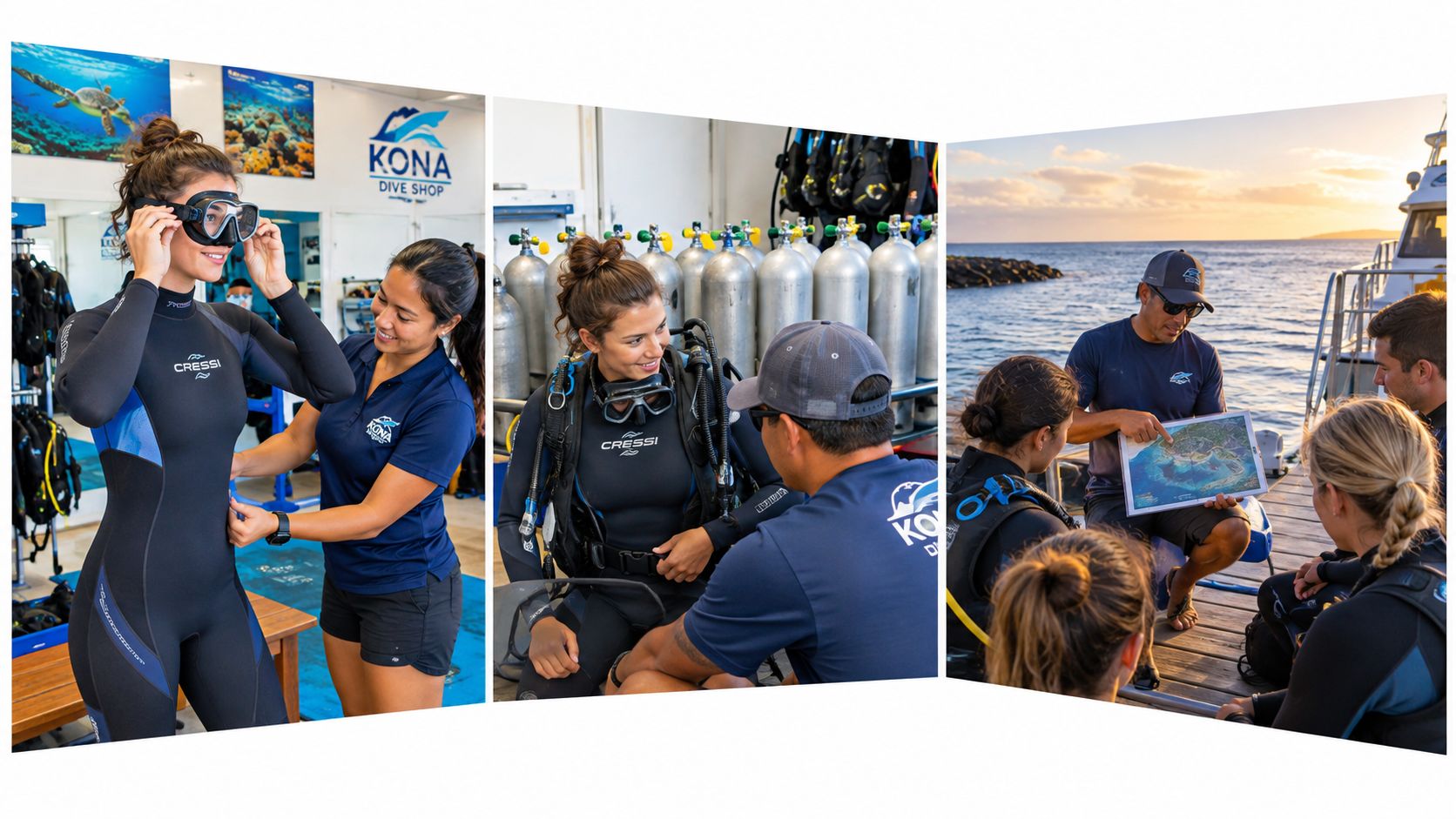
A first manta dive feels less mysterious when you break it into stages. You check in, fit gear, listen to the dock briefing, and board the boat while there is still enough light to see how everything is organized. Good crews use that window to make the process clear, so guests are not trying to absorb new instructions once the deck is dark and the boat is underway.
From dock to descent
The ride to the site is usually short, which helps keep excitement high and seasickness low. After anchoring, the crew gives a final surface briefing and explains where divers will hold position, where snorkelers will stay, and how the light board or dive lights will be used. Divers then descend to sand, rubble, or boulder bottom, not coral, because that protects the reef and keeps the center water column open for the mantas to move through.
The lighting setup matters. Lights point upward or sit in a controlled position so they project into the water column instead of washing across the reef, which concentrates plankton in the viewing zone and leaves the manta's feeding lane clear. Divers also need steady buoyancy and calm breathing. Sudden bubbles or an errant fin can interrupt a ray that is passing just overhead, so following the NOAA interaction guidance covered above is only part of good discipline. The rest is keeping your body still and your gear under control.
Stay still, stay low, and let the animal choose the distance.
What happens once the mantas arrive
The first sighting is usually subtle. You do not get a dramatic splash, just a dark shape at the edge of the light, then a smooth pass through the illuminated water. NOAA-archived movement work notes that monitored reef-manta dives commonly began right after sunset, around 18:00, and ran for about one hour, which fits the post-sunset feeding window (NOAA movement study).
That timing matters because the trip is built around manta behavior, not around a clock. If plankton is present and the site settles down, the animals usually arrive on their own schedule. If conditions change, the encounter changes with them. That is why good operators keep guests calm and stationary instead of asking them to chase the manta around the site.
A quality outing also shows in the small operational details. Clear briefings, controlled lighting, and patient positioning tell you the crew understands how to reduce stress on the animals and keep the viewing clean for guests. If you want a photo option that fits that style of trip, Kona Honu Divers' manta night dive with photo package is a natural add-on.
Garden Eel Cove Versus Keauhou and Why Site Choice Matters
Site choice separates a crew that understands the ocean from one that is repeating a sales pitch. Kona's two main nighttime manta sites work differently, and a good operator should explain those differences in plain language.
| Criterion | Garden Eel Cove | Keauhou |
|---|---|---|
| Protected setting | More sheltered from swell | More open to southern swell; sightings depend more on sea state |
| Viewing area | Wider working space for divers and snorkelers | More site-specific, with a tighter layout |
| Reef condition | Generally described as the better reef environment | Strong site fidelity for female mantas |
| Encounter consistency | Often supports larger aggregations | Smaller, steadier groups dominated by returning females |
| Operator signal | Easier to manage group spacing | Requires more careful site-specific judgment |
The long-term research points in a clear direction. A 2025 University of Hawaiʻi study analyzed more than 23,000 sightings of 167 individual reef mantas across 13 years at Kona's two main nighttime feeding sites, and it found that aggregation size tracked zooplankton density. The same study also found that Garden Eel Cove generally supported larger aggregations, while Keauhou showed strong female site fidelity and may serve ecological functions beyond nighttime feeding (University of Hawaiʻi long-term manta study).
Why Garden Eel Cove usually wins for guests
For visitors, that usually means calmer logistics. Sheltered water and a broader viewing area make it easier to hold position, keep spacing clean, and give the mantas room to move through the light. A site that works well for the animals also tends to work better for the dive team.
Garden Eel Cove is the stronger choice for a classic manta dive because it more often delivers the kind of encounter guests expect, while giving the crew more control over the setup.
Keauhou still matters, just in a different way. The research suggests it plays a more site-specific role for some animals, especially returning females, so a quieter or more variable pattern is not a sign that the site is “worse.” It is a different ecological pattern. If an operator can explain why they expect one site rather than the other on a given night, that is a good sign. If they cannot, that tells you something too.
For a broader comparison of the Big Island's dive locations, this Kona diving site guide is a useful next read.
Why Manta Sightings Vary and What to Realistically Expect
A lot of visitors ask the wrong question first. They want to know whether the dive is "good," when the correct question is whether the ocean is carrying enough plankton that night to bring the mantas into the lit area. That is the part that changes from evening to evening.
What drives the encounter
The pattern is simple once you see it. Aggregation size tracked zooplankton density in the University of Hawaiʻi study discussed in the site-comparison section above, so food availability plays a major role in manta presence and group size. Currents, moonlight, weather, and site conditions all affect how much food drifts into the light. One night can bring a busy cluster, while the next feels quiet even at the same site.
The same long-term work also showed that the aggregations stayed relatively stable despite increased tourism. That is reassuring, but it does not make every trip equal. It supports honest expectations, not promises that every outing will look the same.
Good expectation: You are buying a high-probability wildlife encounter, and the ocean sets the ceiling on any given night.
How to think about “how many mantas”
Guests often focus on the number of rays they might see, but that misses the point. One manta can be unforgettable if it stays close and circles cleanly. Several mantas can turn the site into a living ceiling.
A quiet night can still be normal. Wild animals do not follow a schedule, and that variability is part of the experience.
Judge the trip by more than the count. Look at how naturally the animals moved, how well the site was managed, and whether the crew respected the feeding pattern instead of trying to force a moment.
Certification, Age, Health, and Seasickness Preparation
The entry requirements are different for divers and snorkelers, and that's where a lot of first-time confusion starts. For scuba, a standard Open Water certification is the basic floor, but Advanced Open Water is a better fit for many guests because you're doing a night dive on a sand bottom with buoyancy control that needs to be steady. For snorkelers, no certification is needed, but comfort in open water matters a lot more than people expect.
Readiness by traveler type
Children and families need to check the operator's minimum age policy before booking, because those cutoffs vary by company. If you're traveling with younger kids, the bigger question isn't just age, it's whether the child can stay calm in dark water and follow directions without getting overwhelmed. That's the difference between a memorable family night and a stressful one.
If motion sickness is part of your travel history, plan for it before the boat leaves. Stay hydrated, eat lightly, and skip alcohol before the trip. If you prefer medication or non-drug aids, the usual options include the Ship-EEZ Seasickness Patch, Dramamine pills, Bonine pills, Sea Band wristbands, and ginger chews. Some guests like the patch because it stays in place, while others prefer the more familiar over-the-counter tablets or the simpler wristbands.
What to bring and what to wear
A small, warm layer for the ride back helps more than people think. The water may be warm enough once you're in it, but a damp body plus night air can cool off quickly on deck. Bring a towel, dry clothes, and any personal medication you might need in a dry bag.
If you want a practical reminder list before you go, this sea-sickness guide is worth a look. It's not about overpreparing, it's about making sure the actual dive gets your full attention.
Conservation Etiquette and How to Spot a Quality Operation
Crowding changes the experience for guests and the animals. In a survey of 444 manta-viewing participants, 82% felt crowded by snorkelers, 78% by boats, and 69% by scuba divers, which tells you something important about how people experience the site (survey of manta-viewing participants). The same source summarizes documented potential effects of human activity on manta rays, including stress, injury, disease, altered feeding behavior, and habituation.
What good management looks like
A responsible operation doesn't just say “safety first.” It shows it in the boat handling and the briefing. Divers get screened, the boat is positioned so propellers and anchors aren't a problem, surface support is present, and emergency procedures are explained clearly before anyone hits the water. Ecological management matters just as much. Group size should be controlled, divers should remain stationary, lights should be placed so they don't block the feeding corridor, and the mantas need an escape route through the middle.
That's why a briefing should sound practical, not theatrical. You should hear exactly where you'll be placed, how long the crew expects the setup to run, and what happens if conditions are rough or the animals don't show. If the crew can't explain the why behind the layout, that's a warning sign.
The best crews make the night feel easy because they've already removed the avoidable problems.
Green flags and red flags
Green flags: clear site choice, calm boat positioning, specific behavioral rules, a crew that doesn't crowd the water, and a briefing that covers both guest safety and manta welfare.
Red flags: vague answers about group size, a rush to get everyone in the water, lights placed without regard for the feeding lane, or staff who treat animal contact as a joke. If the operation sounds busy before the dive even starts, the dive will probably feel busy too.
For respectful in-water behavior, this diver etiquette guide lines up with the same low-impact mindset.
Pricing, Sample Itineraries, and Booking Tips
Pricing changes often enough that it is smarter to think in terms of structure than exact figures. A two-tank manta dive or snorkel package usually includes the boat ride, briefing, gear, and crew support, and some operators add warm drinks or photo options. Extras like nitrox or a GoPro rental may be offered depending on the shop, but the key question is whether the operation is well run, not whether the sticker price looks low.
Two ways to build the evening
A half-day manta plan works well if your schedule is tight. You check in in the late afternoon, get fitted for gear, ride out at sunset, spend the prime viewing window in the water, and return in time for a low-key dinner or a quiet night back at the hotel.
A full Big Island dive day makes sense if you want to pair a daytime reef dive with the evening manta trip. That works especially well for certified divers who already know they're comfortable in the water twice in one day. The key is not to stack the day so tightly that you arrive at the manta site tired, underfed, or cold.
Booking tips that actually help
Peak travel periods tend to fill earlier, so book ahead if your dates are fixed. If your schedule has some flexibility, hold a backup night in case weather or site conditions change. Ask about cancellation policy before you commit, because the best trip for you is the one that still works if the ocean doesn't cooperate.
If you're comparing operators, the Kona Honu Divers manta dive page is a useful reference point for what a structured outing looks like.
Putting It All Together and Answering Common Questions
A strong manta ray night dive Kona experience comes down to four choices. Pick the right format for your comfort level, choose the site that fits the conditions, book an operator that manages the water well, and show up prepared for a calm, low-impact night. That's the difference between a vague wildlife tour and a memorable encounter that feels clean from start to finish.
Guests tend to ask the same few questions before booking. Are mantas guaranteed? No, because they're wild animals, but Kona's feeding setup gives you a high-probability encounter. Can beginners join? Often yes for snorkeling, and certified divers can join a properly run night dive if they're comfortable at that level. Is it worth it? If you want one of the most distinctive marine encounters in Hawaii, yes, especially when the operation respects the animals and the briefing is clear.
Kona Honu Divers runs guided manta ray night dive trips from custom dive boats, with options that fit both certified divers and snorkelers. If you're ready to compare dates, site options, and what's included, visit Kona Honu Divers and choose the trip that matches your comfort level and travel plans.