
You're sitting in a hotel room in Kailua-Kona with six tabs open, every one promising mantas, and no clear way to tell which trip, site, or format is right for you. That's normal. A Manta ray night dive in Hawaii looks simple in photos. On the water, the site, the briefing, and how still your group stays make the difference.
What a Manta Ray Night Dive in Hawaii Actually Feels Like
The first sign isn't a wing. It's a change in the light. You're settled on the bottom at Garden Eel Cove after dark, your beam pointed up into black water, watching plankton drift through it like slow snow. Then the beam dims from above, a wide shape folds out of the dark, and a reef manta rolls through the column close enough that you stop breathing for a second so your bubbles don't get in its way.
That moment is why people book this dive. It's also why the details matter before you ever leave Honokohau Harbor. The ride out happens as daylight fades, the briefing happens under cabin lights while you're still dry and can ask questions, and the entry puts you into warm black water where your world shrinks to what your light reaches. There's no reef tour to follow and no animal to chase. Your job is to get to your station, stay there, and let the feeding happen around you.
How the Lights Do the Work
The mechanics are straightforward. Strong lights concentrate plankton in the water column. Reef mantas feed on that plankton, so they move into the light and barrel roll through it with their mouths open, funneling food dense water as they turn. You're not feeding them and nobody is using bait. You're creating a lit patch where their food gathers, then sitting still while they decide how close to come.
That distinction is the whole experience. A manta that chooses its own path will pass overhead, veer off, come back through the brightest part of the beam, and sometimes repeat the same loop while the plankton holds. A manta that gets chased, lit in the face, or bubbled from below leaves. The best nights feel calm because everyone in the group understands they're part of the setup, not the show.
You're not there to get the manta to come to you. You're there to be boring enough, still enough, and well lit enough that feeding near you costs it nothing.
How an Accident Became a Nightly Encounter
Kona's manta tourism grew out of an incidental discovery. In the early 1990s, artificial lights near Keauhou Bay attracted plankton, which drew reef mantas into predictable nighttime feeding areas, and what started as a chance wildlife encounter became organized tourism at Keauhou Bay, commonly called Manta Village, and at Hoona Bay, associated with Garden Eel Cove or Manta Heaven, as documented in long term NOAA monitoring of Kona's reef manta aggregation. No bait or capture was needed. Naturally occurring feeding behavior became repeatable because the food, and therefore the animals, kept returning to the same lit water.
The science behind that repetition is unusually solid for a wildlife tour. That six year study recorded observations on 2,017 of 2,192 possible nights at Manta Heaven and on 1,702 nights at Manta Village, documenting 25,444 observations of 118 individual reef mantas across both sites. Manta Heaven accounted for 19,841 observations and Manta Village for 5,603. Those aren't one off sightings of passing animals. They're recurring individuals coming back to known feeding sites, which is why your guide can talk about this population as residents rather than luck.
The Two Sites You'll Hear About
Every booking conversation eventually lands on the same two names. Manta Village sits at Keauhou Bay, where the phenomenon began. Garden Eel Cove, also called Manta Heaven, sits in the Hoona Bay and Makako Bay area north of town. Both can produce strong encounters, and both host the same basic setup of divers on the bottom looking up and snorkelers on the surface looking down.
They don't feel the same in the water, though. Viewing geometry, protection from surge, reef structure, and how many boats and bodies share the light all change what you experience. My position, after running this charter in both places, is that Garden Eel Cove is the stronger choice for most divers and snorkelers, and the rest of this guide builds toward why. The right operator matters as much as the right night, because the operator controls the briefing, the station discipline, the light setup, and the call on whether conditions are worth going at all.
Set your expectations plainly before you book. This is an encounter, not a performance. On a good night, mantas feed in the light for extended stretches and pass close overhead. On a quiet night, you may watch plankton, reef life after dark, and open water, and that's still an honest wildlife night. Anyone who sells you certainty is selling you something else.
Snorkeler vs Diver Who Should Choose Which
Start with certification, because it decides half the question for you. If you're not a certified diver, you're snorkeling, and that's not a consolation prize. Confident swimmers on the surface get a top down view as mantas rise toward the light board, often passing directly beneath them. If you are certified, the bottom station gives you a more controlled, stable, and typically longer encounter, with the mantas silhouetted overhead against the beams.
Snorkel vs Scuba on a Kona Manta Night
| Factor | Surface Snorkel | Scuba Dive |
|---|---|---|
| Position | Floating at the surface at a light board | Stationary on the bottom in a designated area |
| View | Looking down as mantas rise and roll below you | Looking up as mantas pass overhead |
| Light direction | Beams directed downward | Beams directed upward into the water column |
| Requirement | Swimming comfort, no certification | Scuba certification and night comfort |
| Best for | Non divers, mixed groups, anxious first timers | Certified divers, photographers wanting stability |
Families with mixed abilities do well splitting the group rather than forcing one format on everyone. Certified parents can dive while non divers snorkel above the same light setup, and nobody misses the encounter. Anxious first timers usually settle faster on snorkel, where they can lift their head, talk to a guide, and hold the board. Divers who are newly certified but shaky on buoyancy should be honest about that at booking, because a manta station rewards stillness and punishes flailing.
Photographers face a real trade off. The bottom gives you a stable platform and cleaner upward angles, but you're managing buoyancy, bubbles, and a housing in the dark. The surface is simpler and closer to the light, but surge moves you and your framing with it. If shooting matters more than bottom time, pick based on which instability you'd rather manage. There's a fuller breakdown in this comparison of snorkeling versus diving with manta rays.
If you want a reef dive and the manta dive in one charter, look at a two tank manta dive and snorkel trip rather than booking two separate outings. You get a dusk dive to settle your buoyancy and check your gear in fading light, then the night station when you're already comfortable. That first tank handles most of the problems that ruin second tanks.
Booking Timing and the Pre-Dive Checklist
Book the manta night early in your trip, not on your last evening. If weather, surge, or a quiet manta night forces a reschedule, you still have days left to use. In peak summer, reserve well ahead, because the better boats fill and the site itself gets busy. For seasonal context before you lock dates, read this guide to the best time to see manta rays in Kona and then confirm conditions with the operator close to departure.
Pack for the boat ride, not just the dive. Most discomfort on this trip happens above water.
- Swimsuit on under your clothes: Changing on a moving boat in the dark is nobody's strength.
- Warm layer and towel: Even warm nights feel cold after a night immersion on the ride back.
- Motion sickness prep taken early: Whatever you use, take it before boarding, not after you feel it.
- Reef safe sunscreen for the dusk tank: Apply it well before entry so it isn't washing straight off.
- Leave valuables at the hotel: Watches, loose jewelry, and anything you'd mourn belong in the safe.
At check in, expect waivers, certification checks for divers, and rental gear fitting while there's still light to spot a bad mask seal or a fin strap that's about to fail. Speak up there. A mask that leaks a little in the shop leaks constantly at night. The onboard briefing then covers stations, light direction, and no touch rules. Listen even if you've done night dives elsewhere, because manta station protocol is its own thing.
You're paying for more than a boat ride to a GPS point. You're paying for the site call, the light rig, guides in the water, and a crew that will pull a guest who endangers the animals. Kona Honu Divers runs its manta charter as a guided two tank trip combining a dusk reef dive with the night encounter at Garden Eel Cove, with tanks, weights, and a dive light included, which is one concrete model of how that package comes together.
On the Boat and in the Water Step by Step
The evening starts at the harbor while it's still light enough to load tanks, fit gear, and meet your guides without headlamps. Departure takes you along the Kona coast as the sun drops, and that's when a good divemaster runs the briefing. Pay attention to three things in it: where your station is, which way your light points, and what happens with your bubbles. Everything else is detail. Those three decide whether mantas stay.
The Entry and Descent
- Gear up in order: Divers kit up first so snorkelers aren't waiting in wetsuits, and everyone does a buddy check under the cabin lights.
- Enter cleanly: Giant stride or backroll depending on the boat, then clear the entry area immediately so the next diver isn't landing on you.
- Descend to your station: Divers follow the guide down to the designated bottom area and settle in a fixed position, lights aimed upward to concentrate plankton.
- Snorkelers take the surface: The surface group holds position at the light board with beams directed downward, forming the top half of the same light column.
That bottom versus surface separation is the core of the protocol described in established Kona manta viewing guidance. Divers stay stationary and let mantas choose their approach path. Nobody swims after an animal, touches it, or raises equipment into its flight path. Divers time exhalations so bubbles don't rise directly into a manta passing overhead, since a bubble stream into its underside can interrupt feeding and cause avoidance.
Practical rule: If a manta is coming over you, stop exhaling, keep your light steady, and do nothing. Doing nothing well is the skill this dive rewards.
During the Encounter and the Exit
Once feeding starts, your only jobs are buoyancy, light discipline, and awareness of the divers beside you. Keep fins still, keep your beam in the column rather than sweeping it across the group, and don't reposition for a better angle during a close pass. Boats rotate through the site in shifts through the evening, so your guide manages your group's time at the station and signals the move before your air or the rotation forces it.
The exit reverses the entry. Ascend with your buddy, hold your light so the boat crew can track you, and clear the ladder area fast for the next diver. Back on board you'll log the dive, usually while comparing notes on how many individuals showed and which passes came closest. The ride back to the harbor is quiet in the good way. People are wet, a little cold, and replaying a roll that happened close enough to remember in detail.
Why Garden Eel Cove Is the Better Site
Most guides treat the two Kona sites as interchangeable. They aren't. Garden Eel Cove wins on three practical grounds: a more protected location that softens surge at the station, a wider viewing area that spreads divers and snorkelers around the light instead of stacking them, and healthier reef structure around the viewing area that gives you a real dusk dive and better reef separation at night. A protected site with a clear viewing area is preferable to an improvised encounter location, as noted in wildlife interaction guidance for manta viewing.
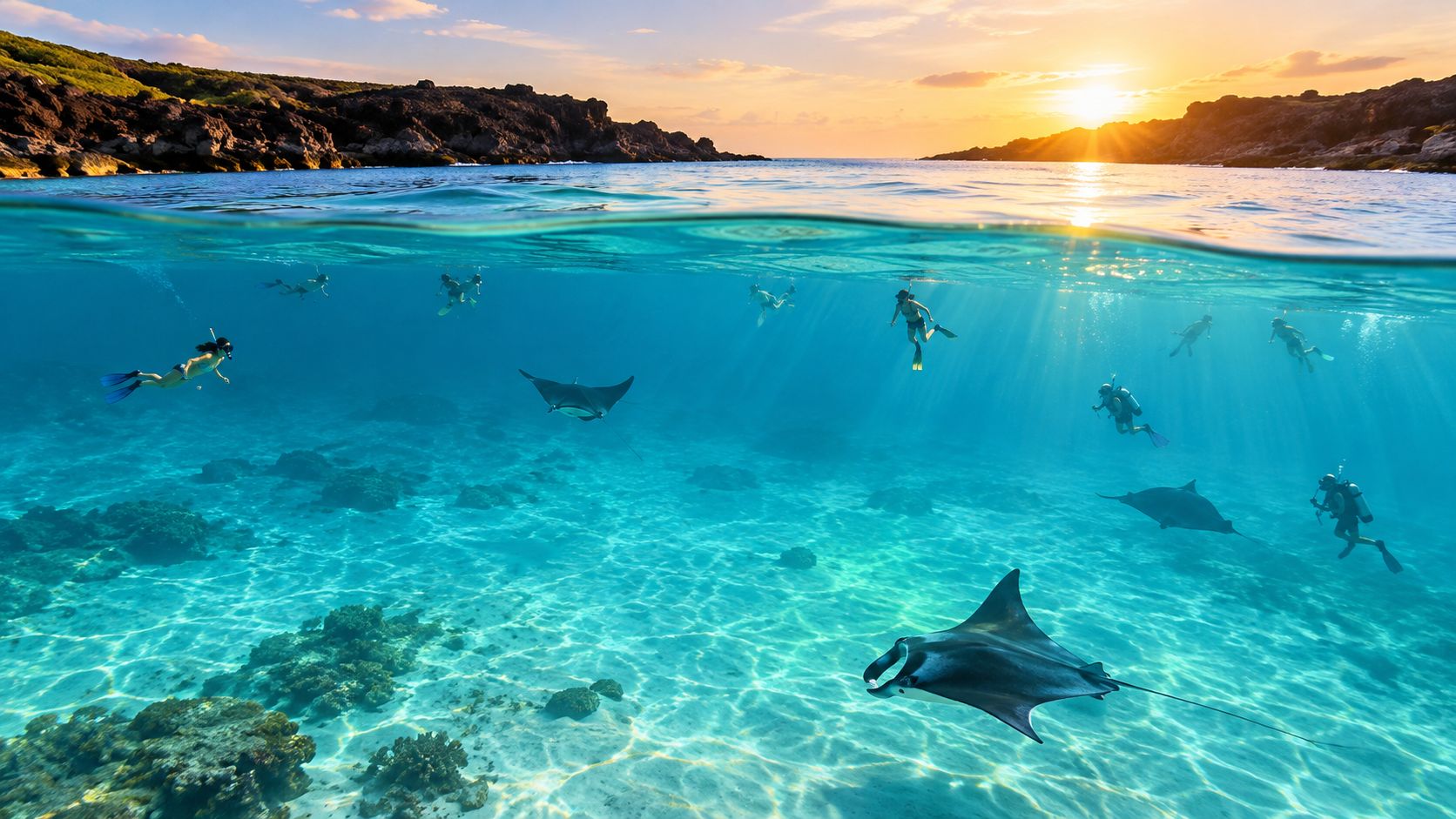
Crowding is the factor visitors underestimate until they're in it. A survey of 444 manta viewing participants found the sites can receive as many as 30 tour boats and 300 participants in a single day, with 82% of respondents feeling crowded by snorkelers, 78% by boats, and 69% by scuba divers, according to the participant crowding study submitted to Hawaii County. That pressure is exactly why a wider viewing area and disciplined spacing matter more than marketing language about exclusivity.
Regulators have noticed the same pressure. Hawaii's Department of Land and Natural Resources identified Makako Bay, also called Garden Eel Cove, as one of two official manta viewing zones alongside Kaukalaelae Point near Keauhou Bay, and reported approximately 60 to 70 viewing vessels bringing guests near feeding mantas across both zones, with proposed measures including a cap of 24 commercial permits per zone, in the DLNR manta viewing management proposal. Formal zoning tells you this is a managed wildlife site, not an informal gathering of boats.
None of that makes Manta Village a bad night. It can produce excellent encounters, and you may end up there because of weather, because your operator runs south, or because a last minute booking put you on whichever boat had space. Take that trip happily. But if you're choosing in advance and can pick your site, pick the protected one with the better viewing geometry and the better reef. The head to head in this Manta Heaven versus Manta Village guide lays out the same trade offs site by site.
Photography and Light Setup for Manta Encounters
Forget everything daytime reef photography taught you about ambient light. At a manta station, visibility is whatever your light reaches, the background is open black water, and your subject moves faster than it looks like it should. A wide angle rectilinear or fisheye lens is the right starting point because the animal fills the frame from close range and you can't back up without leaving your station. If you're shooting from the bottom, you're shooting up, so compose for the belly and the roll rather than the approach.
Settings reward restraint. A slower shutter at higher ISO usually beats fighting the plankton with strobe power, because every strobe blast lights up the particulate between you and the animal as backscatter. If you use strobes or video lights, keep them focused or snooted into the water column and aimed so they don't fire across the viewing group into other divers' eyes. Set manual white balance against the blue green water rather than letting the camera guess under mixed beams from a dozen lights.
- Hold your hover first: Neutral buoyancy and still fins matter more than any setting, since a photographer who drifts into the flight path ends the pass for everyone.
- Keep the rig compact: Strobes and housings stay clear of the animal and low, never raised into its path as it comes over.
- Don't reposition mid pass: Finning for a better angle during a close approach reads as movement, and movement is what mantas veer from.
- Watch your bubbles too: Camera focus makes divers forget exhalation timing right when the animal is overhead.
For a sense of what's achievable from a disciplined station, browse these Kona manta dive photos before you pack a rig. Then make an honest call about whether this is your shooting dive or your watching dive. First timers often get better memories, and better footage on a simple action camera left running, than photographers who spend the encounter managing a housing. The etiquette rule that overrides every tip above is simple: your shot never outranks the animal's path or the diver beside you.
Safety Etiquette and What to Do When Mantas Don’t Show
The safety system on a manta night is mostly behavioral. Stay at your station, keep distance by letting the animal set it, never touch, never chase, and never aim a light or flash into a manta's face. Remove your snorkel from your mask and secure it in a buoyancy compensator pocket before the dive, since a close pass can snag a snorkel and dislodge your mask at the worst moment. A good divemaster will correct a guest once and remove a participant whose conduct endangers the animals, and that enforcement protects your encounter as much as the mantas. The broader habits behind that protocol are covered in this responsible diver etiquette guide.
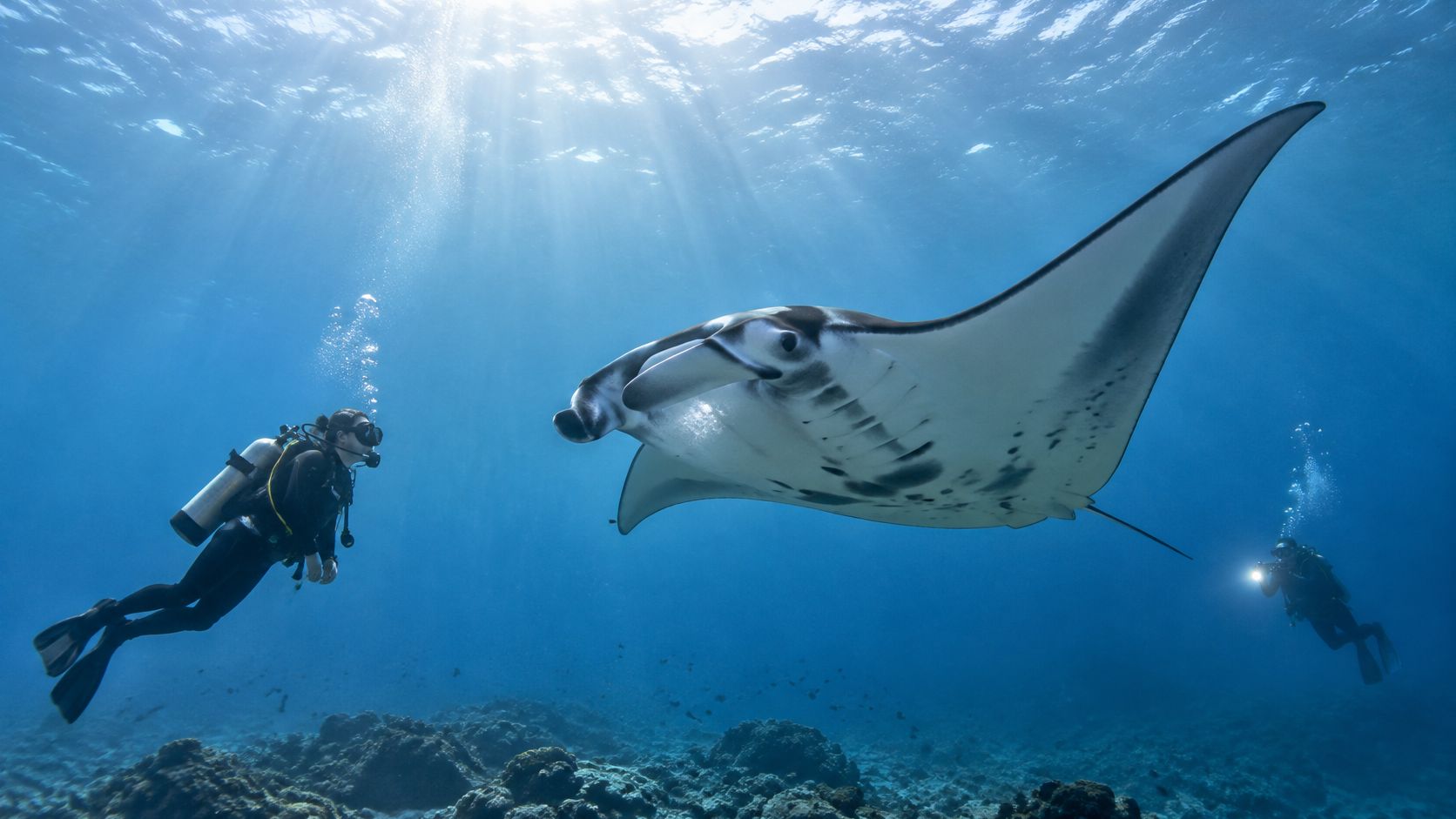
Now the honest part. Mantas don't always show, and the reason usually isn't the operator or the moon. A 2025 University of Hawaii study analyzing more than 23,000 sightings of 167 individual reef mantas found aggregation size tracked zooplankton density, making prey availability the primary driver of manta presence rather than season or booking date, as shown in the University of Hawaii study of Kona manta aggregation drivers. Garden Eel Cove generally supported larger groups than Keauhou, while Keauhou showed strong female site fidelity, which is another data point behind choosing your site deliberately.
Reported sighting odds vary by source, with Hawaii tourism reporting citing approximately 80 to 90% sightings in favorable peak summer conditions and independent conservation guidance reporting a broader 60 to 80% chance at Kona sites, as summarized in Hawaii marine life sighting reporting. Treat any of those as context, not a promise. Before booking, ask directly what the operator does after a no show: reschedule, partial credit, or nothing. Book early in your trip so a reschedule is usable, check the marine forecast for surge and visibility, and distinguish a night where a manta was merely present from a night of close, prolonged feeding, because those are different outcomes and only one of them is in anyone's control. For your wider Kona diving plans beyond the manta night, Kona diving tours cover the daytime reef options worth pairing with it.
Book your manta night at Garden Eel Cove early in your trip, pick the format that matches your certification, and choose an operator that briefs stations, bubbles, and no touch rules before anyone gets wet. Kona Honu Divers runs guided two tank manta charters from Kona pairing a dusk reef dive with the night encounter, so you settle your gear and buoyancy before the lights go on. Check dates and reserve your spot through Kona Honu Divers before peak nights fill.