
Table of Contents
- Choose your position, not just your photograph
- Why Garden Eel Cove gets the first booking
- Make the planning decisions in order
- Understand what the animals are doing
- Settle into the viewing layout
- Leave the animal and habitat intact
- Ask questions that reveal the operating plan
- Judge the explanation, then the behavior
- Are young children welcome?
- Will I definitely see a manta?
- Is a night dive harder than a day dive?
- Can experienced divers do more?
- What should a mixed-experience group agree on?
- Make the reservation fit the guest
- Pack for the return ride as well as the water
- Confirm the boundary before entering
You've found an evening on your Big Island itinerary, and now you're comparing manta tours that look almost identical online. Every photo shows a ray turning through bright water. What the photos don't tell you is where you'll wait, how the crew controls boat traffic, or what happens if the animals don't arrive.
A good manta ray night on Hawaii's Big Island is a managed wildlife encounter, not a guaranteed show. Choose the viewing site first, match snorkeling or scuba to your actual water comfort, and judge the operator by the briefing and in-water organization, not the closest-looking photograph.
Snorkel or Dive and Which Cove to Pick
Most visitors should start with a Garden Eel Cove night, then choose whether to watch from the surface or the bottom. For the dive, its protected location, better viewing area, and healthier reef make it the stronger default, provided the evening's conditions support the plan.
How to pick your Big Island manta night
| Option | Best for | Where you watch | Conditions | Sighting reality |
|---|---|---|---|---|
| Night snorkel | Families and non-certified swimmers | Surface, light aimed down | Flotation vest, shared plankton lights, confirm the boat ride | Shares the feeding event without scuba certification |
| Certified night dive | Certified divers, beginner through advanced | Kneeling on suitable sand or rubble in a supervised semicircle | Stationary, lights above the head, guide in the water | Close overhead passes are possible, never promised |
| Garden Eel Cove | Default for most bookings | Protected cove viewing area | Generally calmer conditions, healthier reef, larger aggregations | Strongest default for a reliable feeding area |
| Keauhou | An alternate when the operator selects it | The other principal Kona night site | Assess swell exposure that evening; stronger female presence | Can produce a strong night when prey concentrates there |
Choose your position, not just your photograph
Snorkeling suits swimmers who don't need scuba to enjoy the encounter. You remain at the surface, supported by the flotation arrangement the crew provides, and watch the illuminated water below. A vest helps with flotation, but it doesn't replace swimming ability or comfort putting your face in open water after dark.
The dive puts certified guests below the feeding lane. Instead of swimming alongside a ray, you settle into the assigned area and let animals pass overhead. That perspective appeals to divers, but it also demands control of buoyancy, equipment, and attention while other people and bright lights surround you.
For a mixed family, choose around the least comfortable participant rather than trying to give everyone the same underwater perspective. This comparison of snorkeling and diving with manta rays can help you decide which position fits your group.
Why Garden Eel Cove gets the first booking
The biological case supports the site preference: a 2025 University of Hawaiʻi study analyzed 13 years of community observations from 2010–2022, covering more than 23,000 sightings of 167 individually identified reef mantas, and found consistently larger aggregations at Garden Eel Cove, stronger female presence at Keauhou, connectivity between the sites, and an approximately 1:1 observed sex ratio across them (University of Hawaiʻi study).
These are recurring feeding locations used by individually recognizable animals, not places where a passing manta occasionally appears. Keauhou remains a legitimate alternate, especially when the crew's assessment favors it that evening. It isn't a consolation prize, but neither would I choose it over Garden Eel Cove solely because a departure promises a prettier sunset.
Booking judgment: Pick the viewing arrangement you can manage calmly. A relaxed snorkeler is better positioned to enjoy the night than an uncomfortable diver chasing a supposedly better view.
When to Go and Why Some Nights Are Quiet
Plan the night around conditions and flexibility, not a promise that a particular departure will deliver animals. Calm water makes it easier for guests to hold position, communicate, and leave the feeding area unobstructed.
Make the planning decisions in order
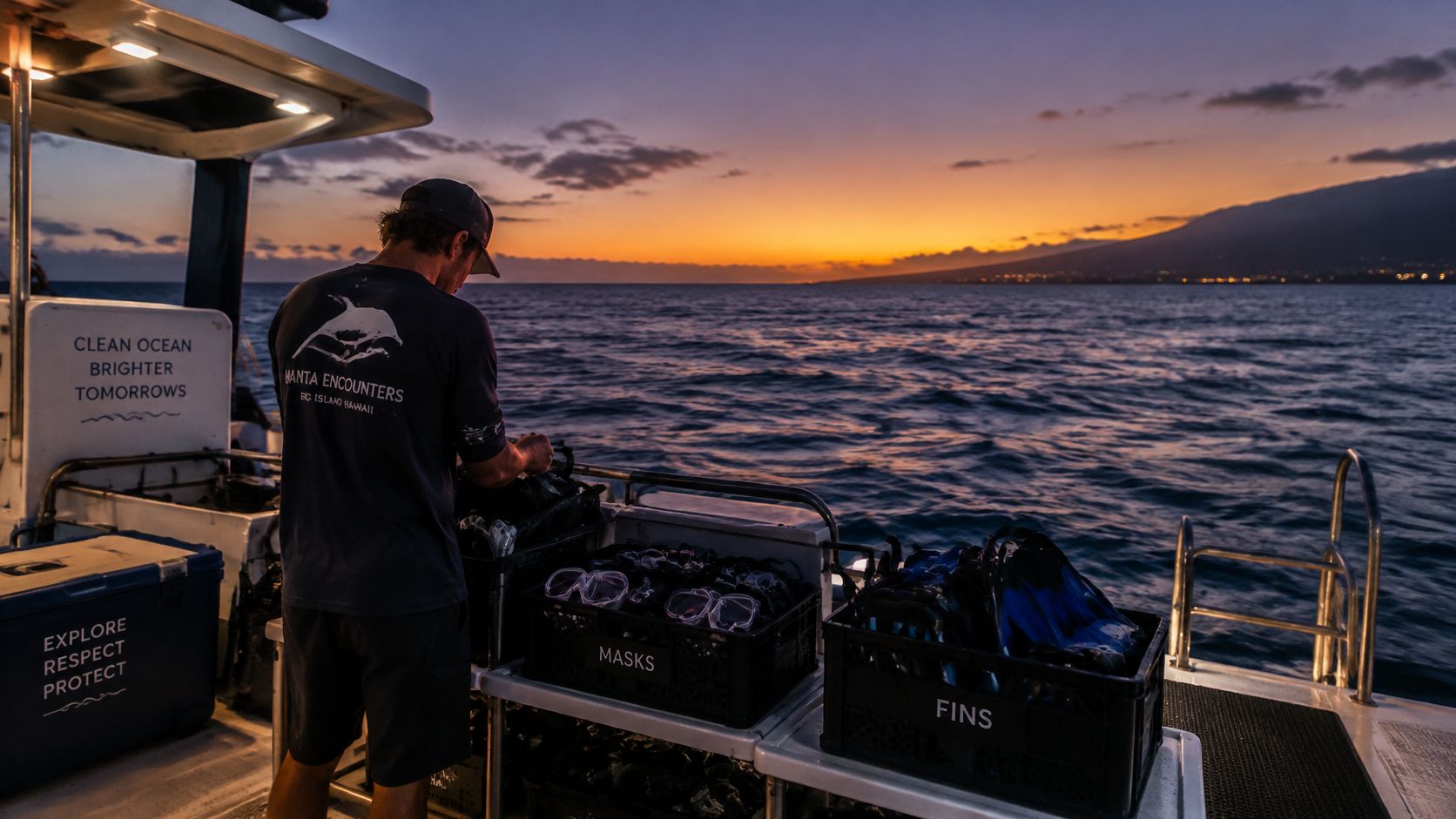
Favor calm summer conditions if your calendar allows. The Hawaii Guide discussion of nighttime marine life gives an operator-reported benchmark of approximately 80–90% encounter success during peak summer periods when conditions are calm, not a scientific guarantee applicable to every night, season, or site.
Reserve before the rest of the itinerary becomes rigid. Our most popular departures, including the manta ray night dive, often sell out weeks in advance. Place your preferred evening early enough in your stay that you retain some flexibility if weather changes the plan.
Keep Garden Eel Cove as the initial site preference. Then let the crew evaluate the actual water. A familiar site name isn't a reason to ignore an uncomfortable approach or deteriorating conditions.
Accept a justified site change. Moving to Keauhou can make sense when the crew is seeking more manageable water or a better feeding opportunity. Asking the captain to try another cove just because you're impatient isn't a sound operating plan.
Set an abort threshold before entering. Wind, swell, poor visibility, current, or a distressed swimmer can end the water portion. Leaving the harbor doesn't create an obligation to continue.
Our divers have seen manta rays on 92% of Manta Ray Night Dive trips. That's our trip history, not an individual guest guarantee, and it shouldn't be substituted for the separate summer benchmark.
Understand what the animals are doing
Reef mantas are plankton-feeding filter feeders. Feeding chains and barrel rolls can bring them close, but those movements aren't trained greetings or invitations to reach out. The animals are following food through the illuminated water.
Lights help concentrate the feeding opportunity, but they can't manufacture a manta's arrival. Prey distribution, weather, and the room animals have to maneuver all affect what guests can observe. A crowded lighted area doesn't automatically produce a better encounter.
A quiet night isn't evidence that the crew should chase harder. Hold position, keep the light steady, and leave the water column open.
Use this guide to the best time to see Kona's manta rays to weigh your travel dates, but keep the evening's go-or-no-go decision with the crew. Ask about no-sighting terms before paying, rather than assuming a return trip or refund is included.
What the Water Feels Like and the Rules
After entry, the important change isn't that it's dark. You're joining an organized observation layout where your position, light, and equipment affect everyone around you. Divers are assigned a specific viewing area rather than being released to explore the feeding site independently.
Settle into the viewing layout
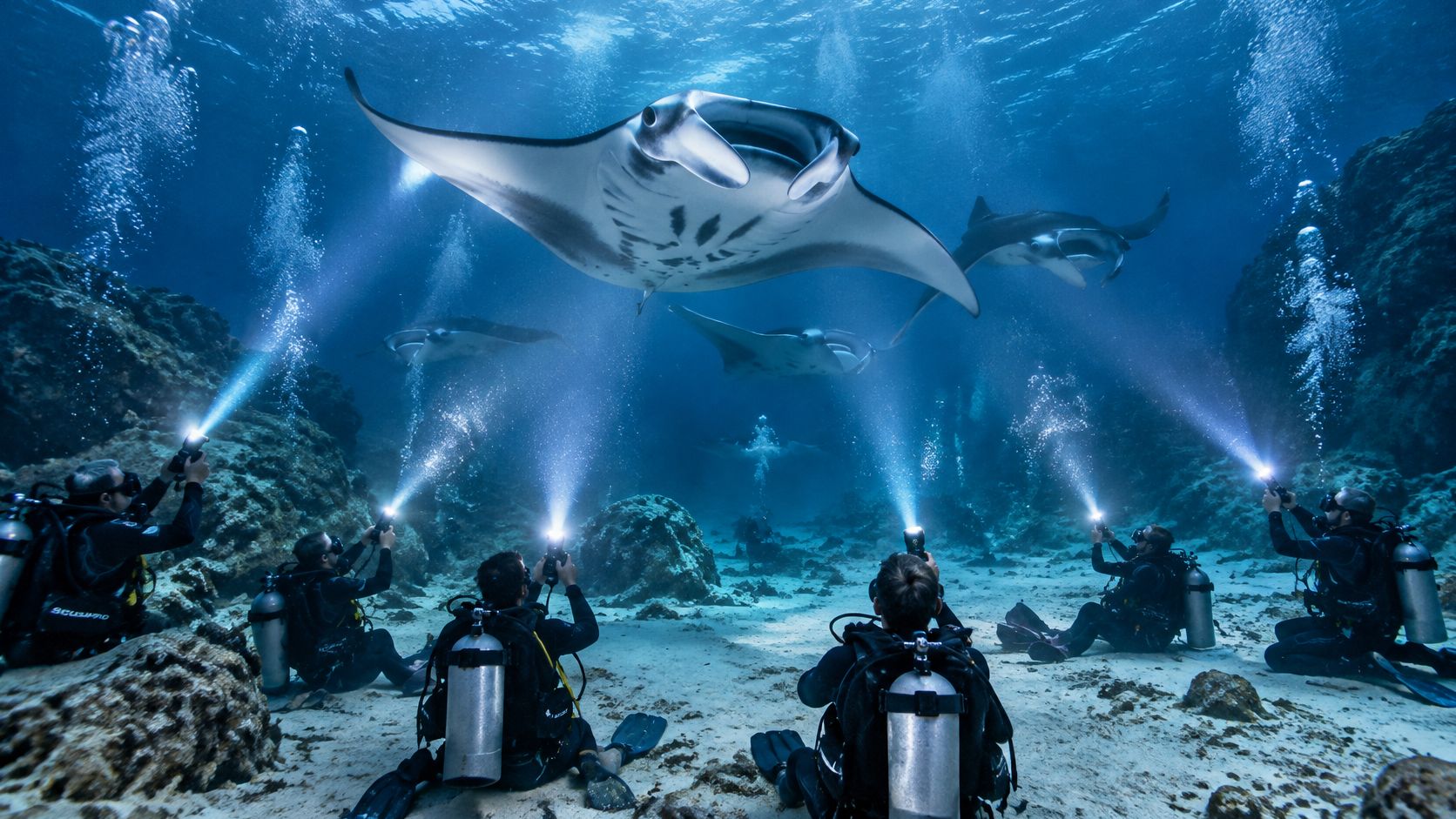
The NOAA-hosted manta viewing guidance describes a low-impact arrangement: divers remain on suitable sand, rubble, or boulder substrate, form a semicircle without sitting on live coral, and hold lights above their heads into the water column. Snorkelers remain at the surface with lights aimed downward, preserving a maneuvering corridor between the groups.
The illuminated setup creates a bright viewing area, so this isn't an exercise in staring into complete darkness. Beyond that pool of light, however, orientation can become less obvious. Keep track of the guide and your buddy rather than turning to follow every movement.
Before entering, confirm:
- Buoyancy control. You can descend and settle without landing on coral or another diver.
- Light direction. You know where to aim your handheld light and won't sweep it across faces.
- Assigned position. You understand where the guide wants you and how to remain there.
- No-contact behavior. Hands, fins, cameras, and dangling equipment stay out of the animals' path.
- Exit communication. You recognize the signal to leave and know whom to follow.
Divers should also manage exhalations so bubbles don't rise directly into a manta's path. Don't hold your breath to achieve that. Follow the guide's positioning instructions and maintain normal, continuous breathing.
Leave the animal and habitat intact
Touching can remove the protective mucus layer. Chasing, grabbing, riding, and swinging a light to draw a manta away from the group are inappropriate, even when someone calls it a harmless photo opportunity. Apply the same discipline to cameras described in our responsible diver etiquette guide: getting the image doesn't justify occupying the animal's route.
The stakes are local: NOAA's account of the genetic study reports 318 unique mantas identified around Hawaiʻi Island since 1979, with genetic estimates indicating only about 104 actively breeding adults. The study distinguished this population from Maui Nui and found that females reproduce at their natal island, with extremely limited exchange between island groups.
The same NOAA account explains that Hawaiʻi has prohibited killing or capturing mantas since 2009, and that mantas produce one pup every two to three years. Slow reproduction and isolation mean local losses aren't easily replaced.
A quiet night can still be well run. Nobody sitting on coral, nobody touching an animal, and everyone returning under control are meaningful outcomes.
How to Spot a Lower-Risk Boat
Darkness, bright lights, submerged people, and moving vessels need active coordination. A calm sea doesn't eliminate those hazards, and a small passenger count alone doesn't prove that a crew has them under control.
The state-commissioned boating assessment and associated safety concerns identify ineffective capacity controls and gaps around nighttime swimming among motoring vessels; a 2024 investigation documented boats passing within 10–20 feet of unlit snorkelers and traveling over submerged divers. Those findings justify specific questions, not a blanket claim that every manta excursion is unsafe.
Ask questions that reveal the operating plan
Who is watching which guests? Ask for the actual in-water guide-to-guest arrangement, not just the passenger capacity. The proposals described with the assessment include site permits, 24 commercial permits per location, 60 passengers per operator per 24-hour period, and one guide per eight participants. Treat these as proposed measures, not proof of enacted requirements or of any operator's compliance.
How will the crew identify swimmers? Confirm that each snorkeler has a light or appropriate visibility marker, such as a cyalume, within the crew's system. A bright feeding light doesn't necessarily make a person outside that beam visible to a captain.
Where will the boat wait? Listen for a clear explanation of vessel positioning, swimmer entry and recovery, and separation from the feeding lane. A boat idling over swimmers or maneuvering without clear communication is a reason to stop and ask.
What happens if someone panics? The answer should identify who assists the guest, who supervises the remaining group, and how the boat participates. Ask the same question about increasing current or a lost visual connection with the group.
How is the dive boundary marked? Ask where the illuminated diver flag will be positioned and how the crew prevents marker lines from entering the animals' feeding corridor. Don't accept loose lines as an unavoidable part of the experience.
What behavior ends participation? Walk away from a crew that encourages touching or treats independent roaming as part of the attraction.
Judge the explanation, then the behavior
A useful answer is concrete enough that you can picture the procedure. “We always take care of everyone” doesn't tell you who counts swimmers, how guests are recalled, or where a stressed participant goes.
Our guide to choosing a Kona dive operator offers additional selection criteria. At the dock, give more weight to a coherent briefing and controlled boarding process than to a salesperson's description of how close the rays might come.
Dockside test: If the crew can't explain how people and moving boats stay separated, the wildlife photographs haven't answered your most important question.
Family and Experienced Diver FAQs
Are young children welcome?
Confirm the operator's minimum age before reserving, and describe your child's swimming ability accurately. Children who can float calmly in the required vest, use a snorkel, and remain with the guide may suit the surface option; the night dive is for certified divers.
Don't make the first night in open water a test of whether a reluctant child can manage a mask. Practice in daylight first, including clearing the snorkel and responding calmly when water enters it.
Will I definitely see a manta?
No. These are wild animals, and even favorable conditions don't create an appointment with them.
Treat encounter figures as records with a particular scope, not promises about your reservation. If another evening is possible, understand the operator's rebooking terms and availability before you commit.
Is a night dive harder than a day dive?
A stationary, guided dive reduces the need to follow a moving route, but darkness adds demands on attention, buoyancy, and buddy communication. You still need to manage your own equipment and signal discomfort before it becomes distress.
Being certified doesn't mean you should ignore rustiness. Tell the crew about a long break from diving or discomfort with night conditions while there's time to discuss an appropriate plan.
Can experienced divers do more?
Certified divers seeking a different challenge can consider a separate advanced long-range dive trip. It isn't a substitute for the manta night, and advanced interests don't change the passive-observation rules at the feeding site.
What should a mixed-experience group agree on?
Agree that nobody has to enter because everyone else does. Discuss comfort, supervision, and any available nonparticipation arrangements before booking, rather than negotiating on a dark swim platform.
- For parents, prioritize the child's ability to follow directions over enthusiasm for marine life.
- For certified divers, disclose relevant limitations instead of assuming the stationary format removes them.
- For the whole group, make an early exit acceptable. Staying beyond someone's comfort doesn't improve the encounter.
Book the Garden Eel Cove Night and Pack
Choose Garden Eel Cove for the manta dive, then prepare for the actual operation. Its shelter, viewing area, and healthier reef make it the superior default for this stationary encounter. That's a site preference, not permission to overrule a captain's weather decision.
Make the reservation fit the guest
Choose snorkeling or certified scuba before reserving, rather than deciding to switch once the boat reaches the site. Divers should have their certification documentation ready; snorkelers should arrive comfortable floating with their face in the water. A flotation vest is normal equipment, not a workaround for being unable to swim.
Reserve the 2-Tank Manta Dive & Snorkel for the manta experience, or compare Kona diving tours when building the rest of your underwater itinerary. The Manta Ray Night Dive and the 2-Tank Morning Dive are open to all certified divers.
Our night begins with a detailed crew briefing covering the science behind the encounter and the golden rules of passive observation. Experienced divemasters and instructors are in the water to manage the dive group. Arrive ready to listen, even if you've done a manta dive elsewhere.
Pack for the return ride as well as the water
Keep your bag simple and your loose equipment contained.
- Warm layer and towel. Put dry clothing somewhere it will remain dry until you're back aboard.
- Sun protection before departure. If you'll be aboard in daylight, use protective clothing and apply suitable reef-safe sunscreen early, following its label. Don't apply it on the swim platform immediately before entering.
- Secure camera setup. Remove dangling accessories and make sure you can operate the camera without abandoning your assigned position.
- Personal essentials. Bring necessary medications and tell the crew about anything relevant to your participation before entry.
If boat movement concerns you, review our seasickness preparation guide before departure. Options sold for motion-related discomfort include the Ship-EEZ Seasickness Patch, Dramamine pills, Bonine pills, Sea Band wristbands, and ginger chews.
These products aren't interchangeable or guaranteed to work. Ask a pharmacist or clinician about suitability, especially before diving, and trial any chosen medication beforehand in a safe setting rather than discovering its effects on the boat.
Confirm the boundary before entering
Expect the crew's lighting setup, but confirm your own light assignment and buoyancy plan at the dock. Ask where the illuminated diver flag will sit and follow the supervised route rather than independently moving through the feeding area.
The Hawaiʻi nighttime-diving guidance states that the diver's flag must be illuminated between sunset and sunrise and that participants may not knowingly surface more than 100 feet from it, except in an emergency. Marker placement and line management belong in the crew's operating plan, not in a guest's improvised setup.
Choose the appropriate availability option below. Summer dates deserve early planning, but don't let a scarce seat persuade an uncomfortable participant to enter. The animals remain wild, and the briefing rules apply regardless of how exciting the first pass looks.
Certified manta dive availability
Manta snorkel availability
Other Big Island snorkeling availability
Kona Honu Divers offers a guided manta ray night experience at Garden Eel Cove, with a detailed briefing and in-water supervision for certified divers. Visit Kona Honu Divers to choose your manta night, confirm the right participation option for your group, and reserve an evening while leaving the wildlife on its own terms.