
The first time you settle onto the sand for Kona's manta dive, the ocean feels empty for about thirty seconds. Then the light column fills, a dark shape banks overhead, and suddenly the whole site turns into a feeding arena with giant rays looping inches above your mask.
Why Kona is the Global Epicenter for Manta Ray Dives
Kona earned its reputation because the manta encounter here is predictable in a way very few wildlife dives are. The coast has calm lee-side conditions, multiple established night sites, and a resident manta population that returns to the same feeding areas again and again. For certified divers, that changes the entire experience. You spend less time hoping to get lucky and more time focusing on buoyancy, positioning, and the animals in front of you.
What makes Kona stand apart is not just manta presence. It is the way the dive is conducted. Operators use lights to concentrate plankton in a controlled viewing zone, and divers stay put while the mantas feed naturally above them. That format creates long, stable encounters without turning the dive into a chase. In practical terms, it is easier on the animals and better for the diver.
That distinction matters.
In many places, big-animal diving means covering ground, dealing with current, and accepting a wide range of outcomes. Kona's manta sites are different. The plan is repeatable, the bottom profile is straightforward, and the briefing can be specific because experienced crews already know how the site usually develops. That is one reason divers researching Kona diving on the Big Island often put the manta night dive at the top of the list.
There is also a reason Kona guides debate site choice so much. The quality of the manta encounter is shaped by more than manta density alone. Bottom composition, entry and exit logistics, surge exposure, boat traffic, and how well a site supports low-impact viewing all affect the dive. Garden Eel Cove and Manta Village can both produce excellent nights, but they do not offer the same trade-offs. Garden Eel Cove usually gives divers a cleaner overall setup, which is why many local professionals prefer it.
The other factor that keeps Kona at the center of manta diving is the local ethic around the encounter. Good operators do not touch, chase, block, or bait mantas. They brief divers to stay low, keep lights positioned correctly, and let the rays control the interaction. That approach protects the animals' mucus coating, reduces stress, and preserves the feeding behavior that makes the dive work in the first place. A manta dive stays world-class only if the animals keep choosing to come back. Kona's strongest operators understand that, and it shows in how they run the site.
Why Kona is the Global Epicenter for Manta Ray Dives
Kona didn't become famous for manta encounters by accident. The local dive model works because it's built around a resident population that repeatedly returns to known feeding sites, not a seasonal migration window. One local source estimates about 130 manta rays regularly inhabit Big Island waters, and Kona's importance as a tourism and conservation area is underscored by an estimated 80,000 people who snorkel and dive with manta rays in Hawaiʻi each year, as noted in this Kona manta dive guide.
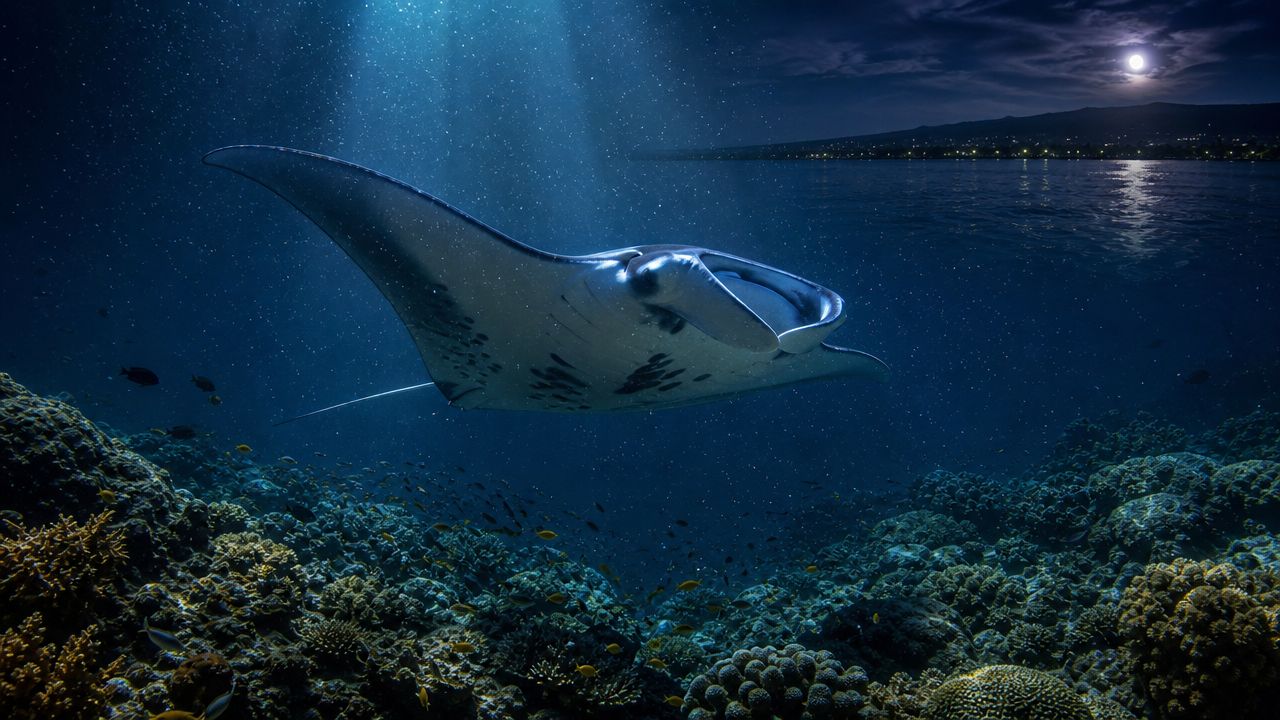
Resident mantas change everything
In many wildlife destinations, success depends on timing. In Kona, the encounter is more dependable because the animals live in the area and return to the same feeding zones. One source also cites a 76% resight rate, meaning identified mantas are seen again and again at familiar sites. That same source reports 85% to 90% sighting success on many nights and describes a standard setup where divers often rest at about 35 feet while lights attract plankton upward, drawing mantas close to observers, according to this Big Island manta night dive article.
Why site selection matters every night
The manta behavior is consistent. The ocean surface isn't.
Operators on the Kona Coast visit different sites based on conditions, and a captain's judgment affects comfort, transit time, and whether the trip can run cleanly when the ocean gets rough. That's especially important in winter, when rougher seas are more common, as described in this overview of Kona manta site selection.
That's the practical difference between a trip that feels smooth and one that feels like work. Good operators don't lock themselves into a site name first and conditions second. They read the ocean, then choose the setup that gives divers the best shot at a comfortable, controlled experience.
If you want a broader look at local conditions and site styles beyond the manta dive, this guide to diving Kona and the Big Island is useful context.
What to Expect on Your Manta Ray Night Dive
The part divers remember starts the moment the boat lights fade behind you and the ocean goes black. Then your guide drops in first, the light field comes alive, and the whole dive narrows to one simple job. Get settled, stay still, and watch the water above you.
A well-run manta night dive is structured from the start. At the harbor, the crew sets expectations clearly. You'll hear how the descent works, where to kneel or settle on the sand, how to aim your light, what your depth and bottom time will look like, and what to do if you feel overloaded by the dark or the motion. Good briefings calm people down because they replace uncertainty with a plan.
If your charter runs this as a two-tank evening, the first dive helps for a reason. It lets you check weighting, trim, and comfort before full darkness. By the time you return for the manta site, you're not wasting mental bandwidth on your mask, your buoyancy, or whether your computer strap feels loose.
Once you descend, the dive becomes surprisingly calm. Divers gather in a designated area on the bottom, usually on sand or bare substrate where fin contact won't damage coral. Lights point up into the water column to attract plankton. Your job is passive observation. That passive setup is a big reason Garden Eel Cove often feels better underwater than tighter, busier alternatives. It usually gives the group more room to settle cleanly, which means less finning, less silt, and fewer divers drifting out of position.
Then the mantas arrive.
They do not usually appear off in the distance and slowly work toward you. Quite often, they materialize out of the dark already feeding, then sweep through the beams in wide loops or barrel rolls. On a good pass, a manta can come close enough that every diver has the same reflex on the first encounter. Hold still, breathe slowly, and resist the urge to reach out. That last part matters. The quality of the encounter depends on divers staying predictable.
This is also where operator discipline shows. Strong crews keep the group compact, control light placement, and stop photographers or excited divers from breaking the formation. Kona Honu Divers runs these dives with that kind of structure, which improves both safety and the actual manta action. A scattered group creates a weaker light column and a messier experience for everyone.
Expect the sensory side of the dive to feel different from a daytime reef dive. Your vision narrows to your light cone and the illuminated water above it. Sound carries differently. Breathing feels louder. For some certified divers, that first minute on the bottom is the hardest part of the night. Then the first few manta passes settle everything down, and the dive shifts from dark-water awareness to pure observation.
The best manta dives are not interactive. They are controlled.
If you want a preview of how local crews set up these encounters from the in-water viewing side, Kona Honu's page on the manta ray night swim in Kona gives helpful context on the light-driven feeding behavior you'll be watching from below.
On ascent, the mood changes again. After twenty to forty minutes of watching mantas circle overhead, divers often come up quieter than they went in. That's normal. A good manta night dive has that effect. It feels less like checking off a marine life sighting and more like sitting in the right place while a wild, highly practiced feeding routine unfolds around you.
What to Expect on Your Manta Ray Night Dive
A well-run manta dive starts long before you back-roll into the dark. The evening usually begins at the harbor with gear setup, a briefing, and a clear explanation of where you'll be, how you'll position on the bottom, and what the mantas are likely to do once the lights are in place.
If the trip includes an earlier reef dive, that first tank helps you settle in before full darkness. By the time the sun drops out, everyone's already comfortable in the water and the pace of the trip feels more relaxed.
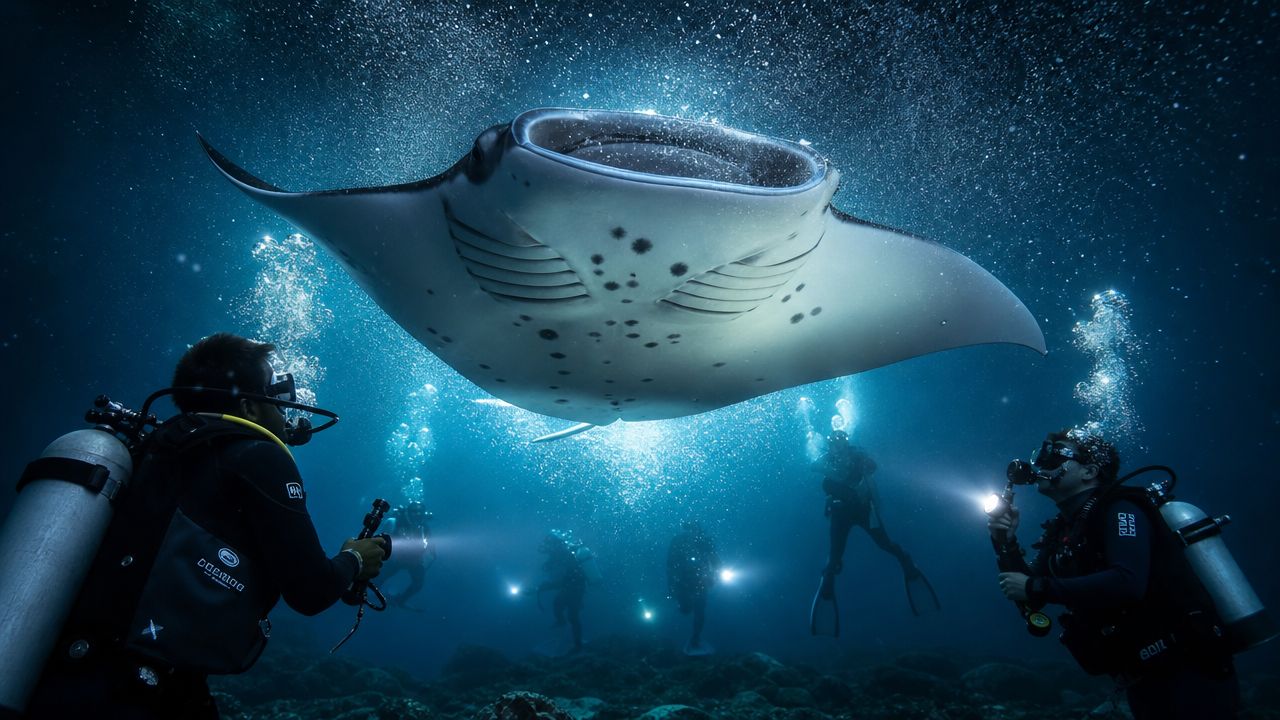
The underwater sequence
Once you descend, the structure becomes simple. Divers settle into the designated area on the bottom, usually in a shallow range that supports an easy, controlled night dive. A common setup puts divers at about 35 feet, with lights pointed upward so plankton concentrates above the group. On many nights, operators report 85% to 90% sighting success, which is one reason this encounter has become so well known, according to this Kona manta dive explanation.
As the plankton thickens, the mantas start making passes through the lit water column. They can come very close. That surprises new divers, but it usually doesn't feel threatening because the animals are focused on feeding.
What helps and what doesn't
What works:
- Relaxing into the format. This is a sit-still dive, not a searching dive.
- Listening carefully to the briefing so you know exactly where to place yourself.
- Keeping your light where the guide wants it. The group setup matters.
What doesn't:
- Fidgeting on the bottom and kicking up sand.
- Trying to improve your view by moving around.
- Treating it like an ordinary reef night dive where you roam.
If you're prone to motion sickness on the boat ride, prepare before departure. Common options include Ship-EEZ Seasickness Patch, Dramamine pills, Bonine pills, Sea Band wristbands, and ginger chews.
For readers comparing the dive with the surface version, this overview of the manta ray night swim helps clarify the difference in perspective.
Safety and Responsible Manta Ray Encounters
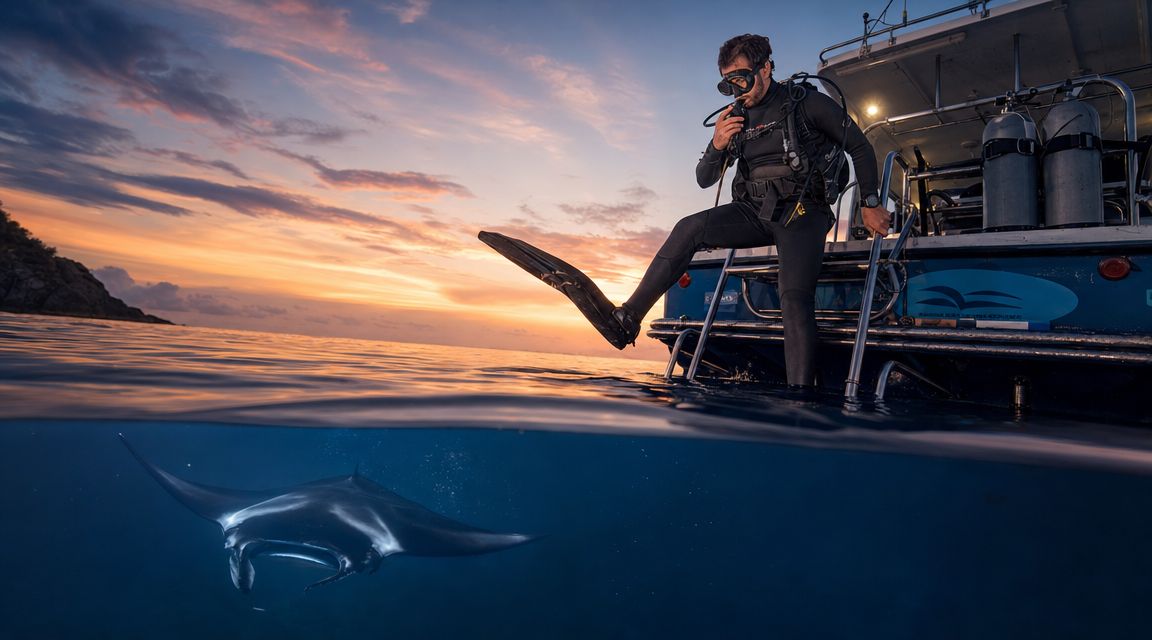
A good manta dive is controlled from the moment you hit the water. The divers who have the best experience are usually the ones who stop trying to get closer and let the mantas do the work.
Kona's night manta encounter only works because the animals keep choosing to return to the lights and feed naturally. That depends on diver behavior. If people chase, reach, crowd the water column, or kick through the feeding lane, the encounter changes from observation to disturbance.
The no-touch rule has a clear biological reason. Contact can damage the manta's protective mucus coating, which leaves the animal more exposed to infection and irritation. These are not small concerns for a population that supports one of Hawaii's most closely watched wildlife encounters. With heavy visitor pressure over time, careless habits add up fast.
The site matters too. Garden Eel Cove usually gives guides more room to organize divers into a clean, stable formation, which helps keep the water column open for feeding passes. That is one reason many experienced Kona divemasters prefer it over Manta Village for scuba. The better the setup, the less correction guides need to do underwater, and the calmer the encounter stays for both divers and mantas.
Here is what responsible divers do on the bottom:
- Hold position once placed by the guide. Drifting for a better angle usually worsens the view and can put you in the manta's path.
- Keep fins low and still. Sand in the lights reduces visibility for everyone.
- Leave the feeding lane open. Mantas will come close on their own if the water column stays clear.
- Use your light exactly as briefed. Random light movement breaks the group setup that attracts plankton.
- Watch your bubbles and body position. Exhaling straight into an approaching manta or rising off the bottom changes its line.
Discipline is what makes the spectacle feel effortless.
At Kona Honu Divers, guides brief this as a passive encounter, not an interactive one. That distinction matters. Certified divers who understand responsible and considerate diver etiquette tend to settle in faster, use less gas, and get better manta passes because they are not disrupting the pattern.
If a manta changes direction near you, do less, not more. Stay still. Keep your hands in, your fins quiet, and let the animal choose its distance. That is safer for the manta, safer for the group, and usually the moment people remember most.
Safety and Responsible Manta Ray Encounters
Manta diving only stays sustainable if divers treat it as a passive wildlife encounter. You are not there to interact. You are there to observe feeding behavior without changing it.
That means the rules aren't optional, and they aren't just for show.
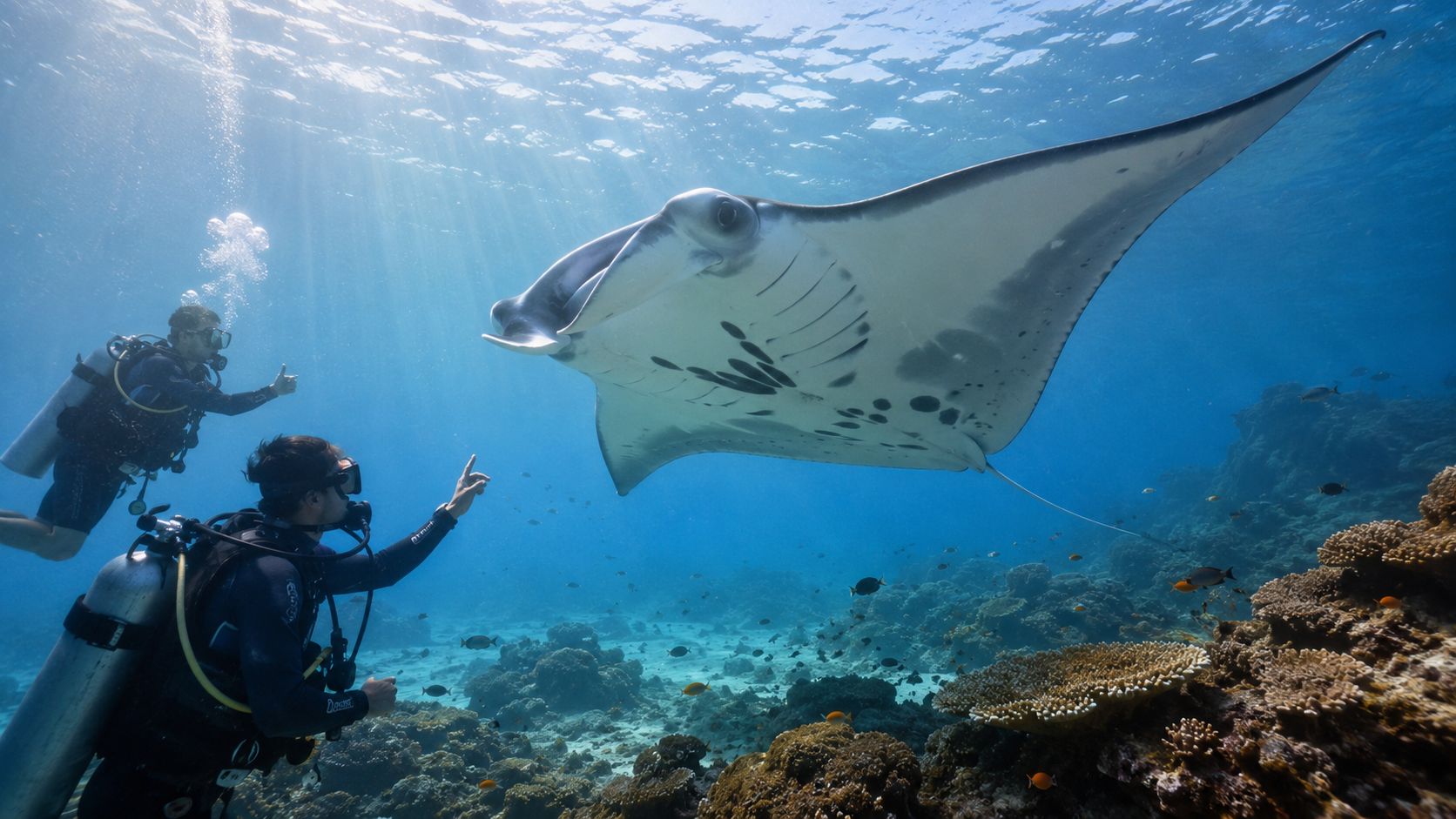
The no-touch rule has a biological reason
Touching or pursuing manta rays can remove their protective mucus layer and increase infection risk. That matters even more because the species seen in Kona carry meaningful conservation weight. The giant manta ray was classified as Endangered in December 2020, reef manta rays are listed as Vulnerable with decreasing numbers, and an estimated 80,000 people view mantas annually in Hawaiʻi, according to this manta conservation overview.
With that many people entering the water around a resident population, small mistakes scale up fast.
What responsible divers actually do
Responsible behavior is simple, but it requires discipline.
- Hold position. Let the rays choose the distance.
- Keep your fins and body out of the feeding lane. Don't rise into the water column for a better look.
- Never chase, touch, or block a manta's path.
- Follow the guide immediately if they reposition the group or stop a behavior.
Ethics are part of dive quality
A chaotic group doesn't just look bad. It creates stress for divers, complicates supervision, and increases the odds of bad wildlife behavior around the animals. The most memorable manta dives are almost always the most controlled ones.
The best compliment a guide can give a manta group is that the mantas kept feeding naturally and the divers were easy to ignore.
If you want to sharpen the habits that matter on dives like this, read through these responsible and considerate diver etiquette guidelines.
Booking Your Unforgettable Dive with Kona Honu Divers
When you book a manta dive, don't start with the price tag. Start with fit. The right trip matches your certification, your comfort in night conditions, and the kind of evening you want. Some divers want a single-feature manta charter. Others want a fuller dive night with a reef dive before the main event.
That's where trip design matters.
What to look for when booking
A strong booking decision usually comes down to a few practical questions:
- Does the operator run a structured briefing? You want clear expectations on position, lights, entry, and exit.
- Is the trip built for certified divers, snorkelers, or both? Mixed-format boats can work well when they're organized properly.
- How does the crew handle site choice? Flexibility matters when conditions change.
- Does the itinerary fit your goals? Some divers want only mantas. Others want a fuller evening in the water.
One local option for certified divers is the 2-Tank Manta Dive & Snorkel tour, which combines an earlier dive with the manta night dive and aligns with the two-stage evening many divers prefer.
If you want more than the manta dive
Some visitors come to Kona for manta ray diving in Hawaii and then realize they want a second signature night experience or a more advanced daytime charter while they're here.
Two examples:
- The Black Water Night Dive offers a very different night-diving style focused on pelagic life in open water.
- The Premium Advanced long-range dive tour is a better fit for divers looking for more demanding or farther-ranging daytime opportunities.
For a broader look at trip styles before you narrow it down, the full list of Kona diving tours is the easiest place to compare options.
Booking advice that saves frustration
If you're deciding between operators, ask direct questions:
- Which site do you prefer in changing conditions, and why?
- How do you place divers on the bottom?
- What certification and recency standards do you enforce?
- Is the manta dive part of a longer evening or a standalone trip?
Those answers tell you more than glossy descriptions ever will.
Manta Ray Diving Hawaii FAQ
Can you do the manta dive year-round
Yes. Kona's manta encounter is built around a resident population rather than a seasonal migration pattern, so divers visit throughout the year. The bigger variable is ocean condition, not whether the mantas are “in season.”
How deep is the dive
The Kona manta ray night dive is a shallow-water encounter. Main viewing sites are commonly cited at about 20 to 50 feet, with a standard scuba position around 25 to 45 feet, according to this Kona depth guide.
Is scuba required
For the scuba version, yes. You need to be a certified diver. Non-divers can still join a manta snorkel and get a very strong top-down view of the feeding activity from the surface.
Is it scary for first-time night divers
Usually not. Divers who are comfortable with their gear and buoyancy tend to find it calming because the format is structured. You're not navigating a dark reef by yourself. You're in a controlled group setup with a fixed viewing area and clear guide supervision.
What's the biggest mistake first-timers make
Trying to improve the encounter by moving around. The dive gets better when you become less active, not more active.
Should families split between scuba and snorkel
Often, yes. Mixed groups can still share the same evening if one part of the family is certified and the other isn't. That can be one of the easiest ways to make manta night work for a group without forcing everyone into the same format.
If you're planning a manta trip on the Big Island and want a closer look at schedules, trip formats, and local diving options, Kona Honu Divers is a practical place to start.