
You've picked your dates, opened a dozen tabs, and now you're trying to answer the practical question: is a manta ray night dive in Kona a reliable wildlife encounter, and which site should you book? The short answer is that Kona's mantas return to established feeding areas, but they're wild animals, not a scheduled show. For a first trip, I'd choose Garden Eel Cove: its protected layout and stronger reef structure make it the better place to settle in and watch.
Manta ray diving in Hawaii is often sold on the spectacle. The part that matters just as much is how the encounter works, what the seasons mean, and whether the crew manages people, lights, and boats responsibly. Here's the practical rundown.
Why Kona Became the Manta Ray Capital of Hawaii
As the sun drops over Honokohau Harbor, boats head out and crews set underwater lights. The lights draw plankton, which can bring feeding mantas into view. That is why the encounter can be reliable, while still depending on wild animals choosing to feed.
Kona's organized night encounters began in the late 1970s and early 1980s, when artificial lights near shore attracted plankton and manta rays started returning to illuminated areas. One of the earliest documented rays was Lefty, a female identified in 1979. Feeding aggregations became established at locations including Manta Village and Manta Heaven, creating recurring opportunities to observe the animals.
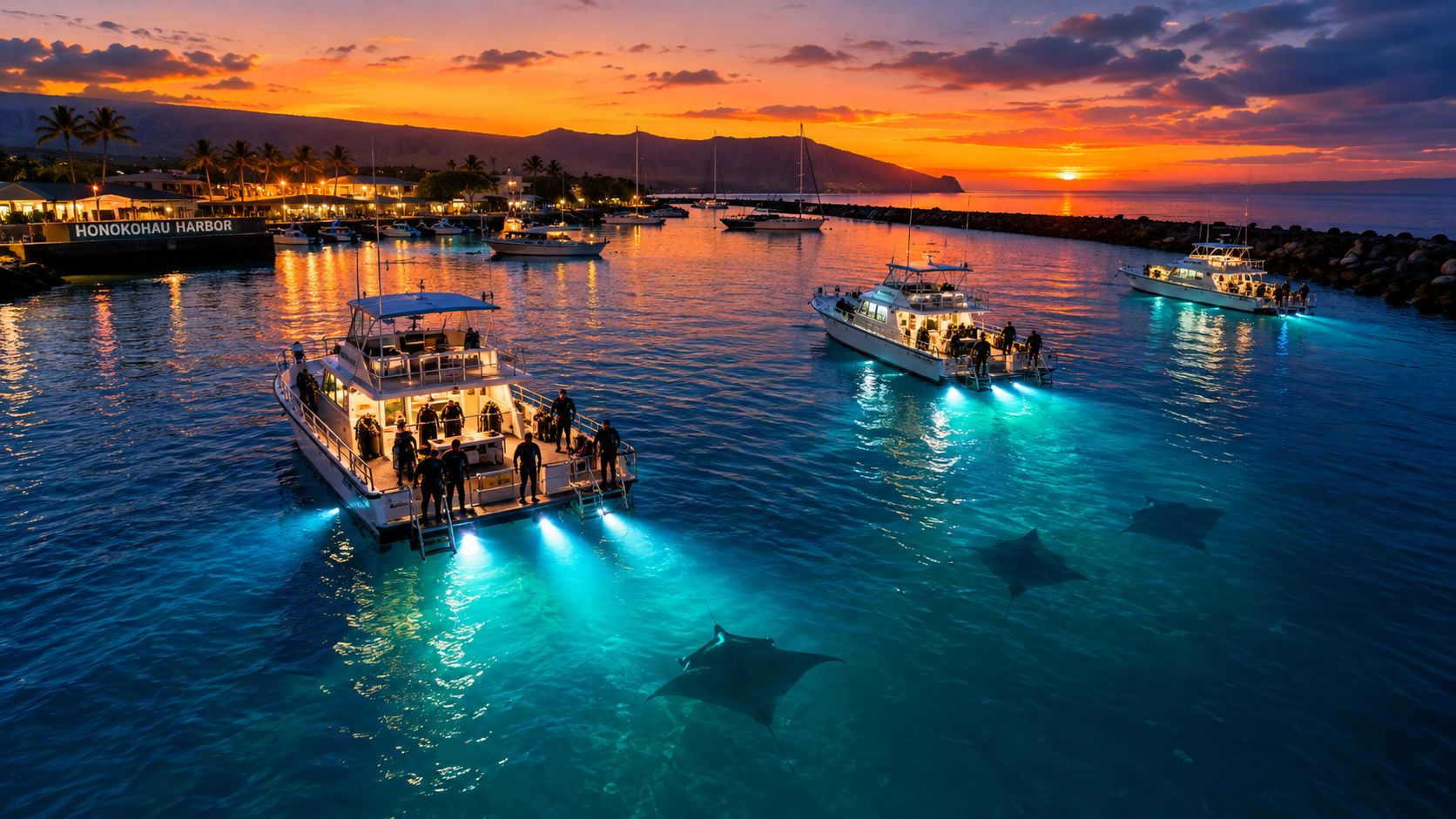
At Manta Village, sightings have been reported on more than 90% of nights, averaging at least four rays per outing. On busy nights, reports describe more than 20 boats and roughly 330 people in the water. These figures reflect observations at a popular feeding site, not a guarantee for your trip (reported site history and sightings).
A natural behavior, made visible
Kona's manta encounters depend on nighttime plankton, recurring feeding areas, and years of observation. The result is a guided wildlife experience built around natural feeding behavior. Researchers and community observers identify individual rays, making repeat sightings useful for tracking animals over time. Good operators respect that distinction: lights help people see the feeding activity, but they do not control whether mantas appear.
There is more to Kona diving than the night encounter. Learn what makes diving in Kona distinctive. For the manta trip, prioritize a site and operator that make safe, considerate viewing possible.
Garden Eel Cove vs Manta Village and Where to Dive
You're choosing between two different sites, not two names for the same dive. Garden Eel Cove, also called Manta Heaven, is near Makako Bay on the airport side of the Kona coast. Manta Village is near the Sheraton at Keauhou. The sites are roughly 20 kilometers apart, with different settings and reef layouts (site locations and reef context).
For a first visit, choose Garden Eel Cove when conditions allow. Its protected cove and reef layout make it easier for the crew to organize the viewing area and for guests to hold position while staying clear of the mantas and live coral. That practical advantage matters after dark. You need a clear view and a place to stay put.
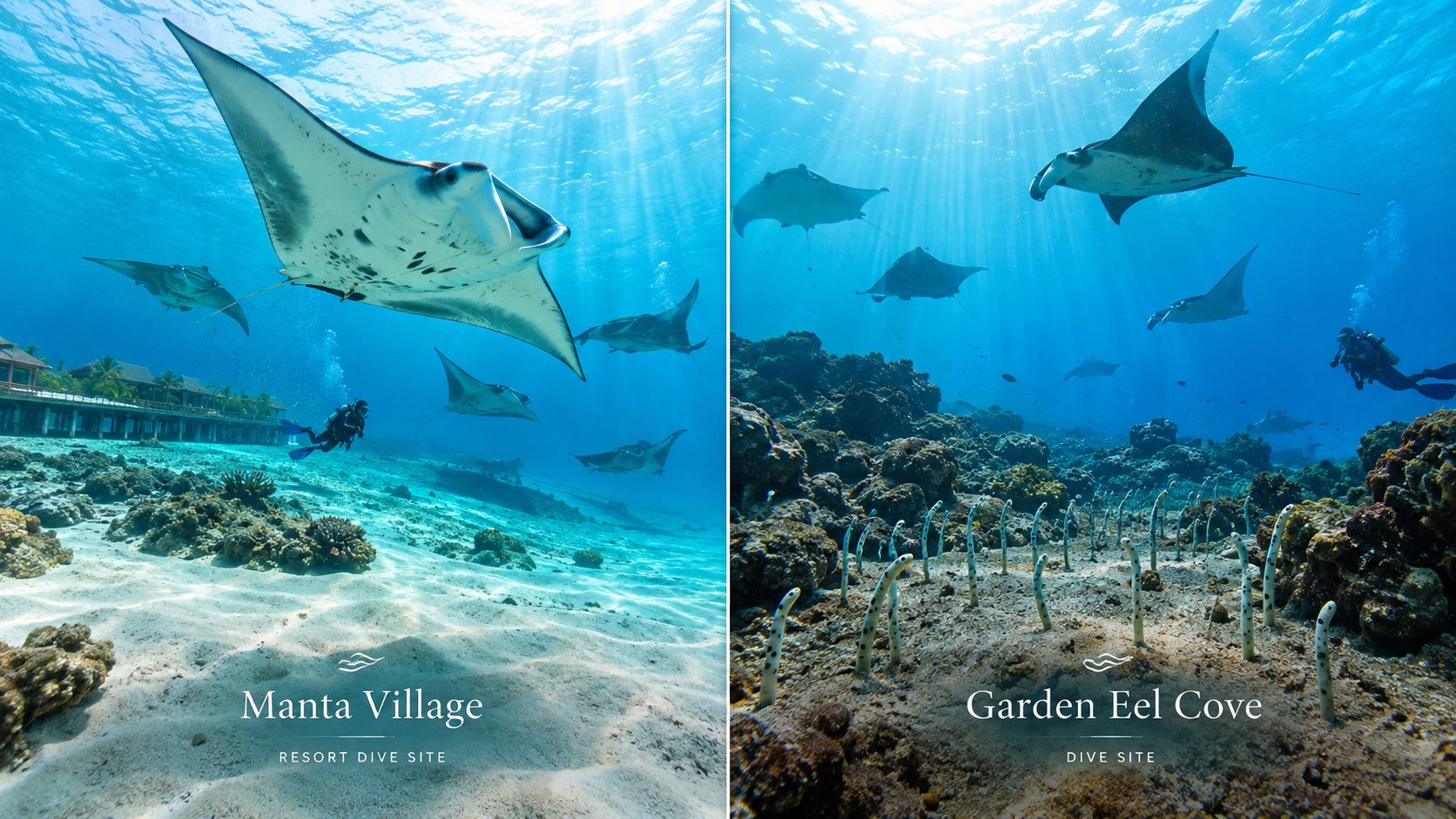
Manta Village has the longer operating history and a distinctive backdrop of hotel lights. It remains a significant Kona manta site, but is more exposed than Garden Eel Cove. Ask the operator which site is planned and whether the captain might relocate if conditions change. The boat's decision should follow conditions, not a guest's preference.
Choose the site, then choose the operator
Lights attract plankton to a viewing area; they cannot guarantee a manta encounter. Currents, water clarity, plankton, and manta movement all affect what happens on a given night. Follow the crew's instructions, hold your position, and leave the animals room to feed.
Compare Kona manta dive and snorkel tours with Garden Eel Cove as your preferred site, while accepting that the captain may choose another location for safety or conditions. For a broader look at Kona diving tours, check the itinerary details before booking.
Best Time of Year and What the Calendar Really Means
Kona's manta rays are present throughout the year, but that doesn't mean every month offers identical odds. NOAA-hosted research found that reef manta abundance was highest from April through September and lowest in January, with April and July showing the most individual detections (seasonal manta observations).
If your dates are flexible, late spring through early fall is the sensible window to favor. If you're visiting in winter, don't write off the dive. Plan a backup attempt if your itinerary allows, rather than building the whole experience around one night. Seasonal patterns help with planning, but they don't determine what happens on a specific outing.
Planning rule: Resident mantas mean you can look for them year-round. They don't mean every date has the same chance of a busy encounter.
The calendar is only part of the picture. Plankton availability, currents, turbidity, and moonlight affect where prey gathers and how long feeding activity lasts. That's why two dives in the same month can feel very different, and why a supposedly ideal date can still deliver a quiet night.
Don't book based on a promise of a guaranteed sighting. If seeing mantas is the main reason for your trip and your schedule is flexible, leave room for a second attempt. Repeating the outing gives you another opportunity under different conditions, though no operator can control what wild animals do.
What a Manta Night Dive Actually Feels Like
The trip starts with a boat ride from Honokohau Harbor and a crew briefing. Listen closely. The important details aren't complicated, but your position and light angle affect both the animals' feeding path and the people around you. A good briefing tells you where to settle, what to do with your light, and how the crew will manage the group.
Once you're in the water, divers descend to a place on sand, rubble, or boulders, not live coral. You stay low and hold your light above your head, aiming the beam upward into the water column. That light attracts plankton, which can bring mantas in to feed. Keep your fins out of the feeding corridor and avoid hovering where a manta needs to turn.
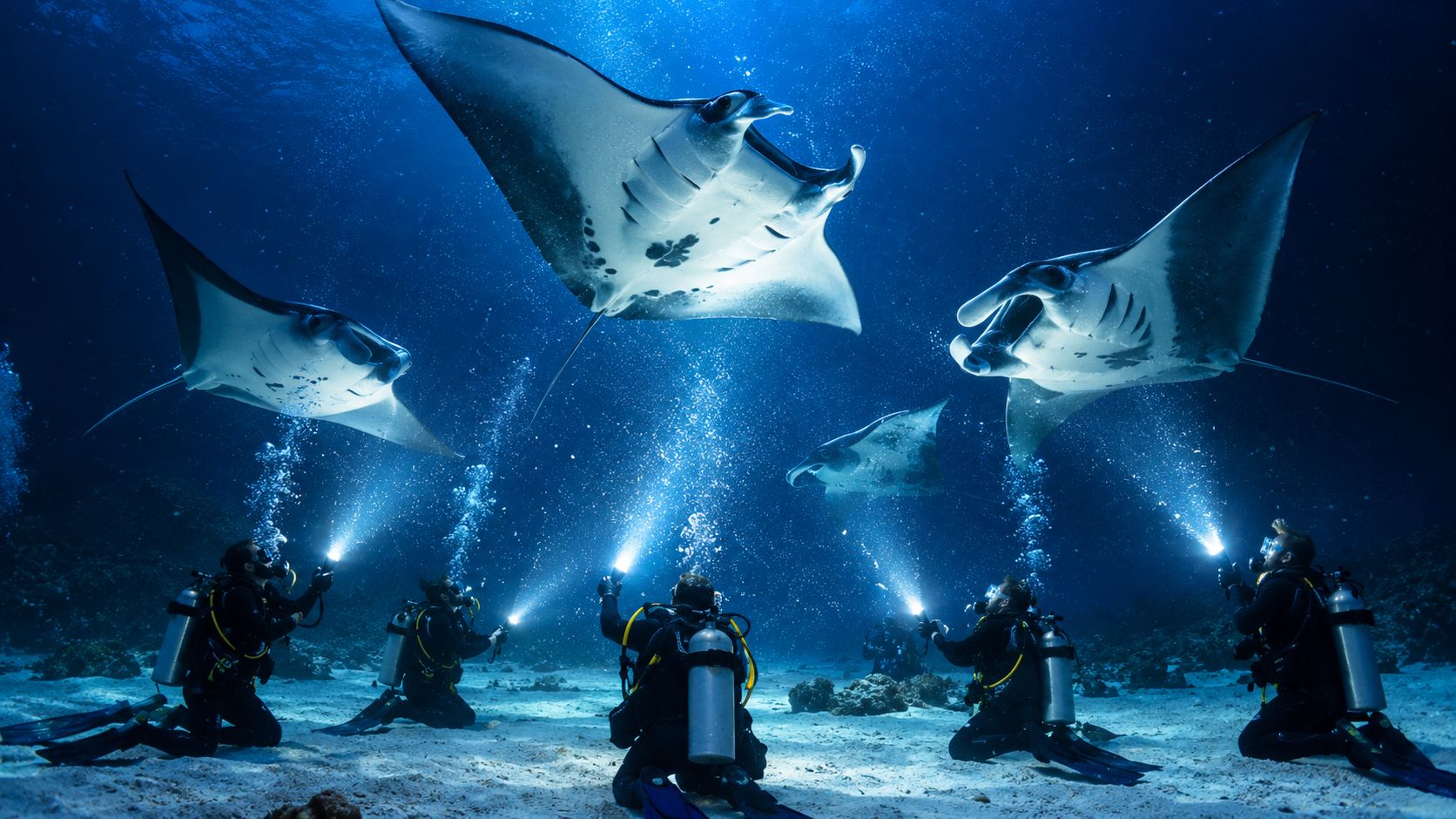
The first manta may arrive from the dark, bank through the light, and pass overhead as it feeds. Reef mantas are specialized zooplanktivores: they filter plankton-rich water, with their cephalic fins helping guide prey-bearing water into the feeding apparatus. A close pass is a feeding maneuver, not an invitation to pursue the animal (research on Kona aggregation dynamics and feeding behavior).
Stay still and let the animal choose
Stay stationary, maintain neutral buoyancy, and keep your fins clear of the manta's flight path. Don't touch, chase, block, or kick suddenly toward a ray. A manta that changes direction is choosing its route; your job is to keep the viewing area calm and leave its path open.
Snorkelers stay at the surface and point their lights down. They should not dive into the feeding column, where they could interfere with the mantas' movement. For groups of four or more snorkelers, NOAA-related guidance recommends a snorkel ring or similar flotation device to help keep everyone together above the lights (manta viewing positions and light guidance).
If it's your first night dive, review the basics of scuba diving at night before you go. The dark itself isn't the part to worry about. Stay within the lighted area, follow the crew's directions, and don't leave your position to get closer.
Safety Certification and On-Water Hazards Most People Overlook
Eco-friendly branding doesn't answer every safety question. A Hawaiʻi County assessment reported that state permits did not include activity-specific safeguards for manta viewing, such as capacity limits, location restrictions, lighting rules, propeller-guard requirements, or mandatory medical equipment (Hawaiʻi County manta-viewing safety assessment). That doesn't establish that every trip is unsafe. It does mean you should check how an individual operator handles the risks.
Ask direct questions before booking:
- Group management: What's the group size, and what's the diver-to-guide ratio?
- Briefing: Does the crew explain light placement, feeding corridors, and no-contact rules?
- Emergency readiness: What emergency equipment is aboard, and where is oxygen kept?
- Entry and exit: Does the operator use a descent line and manage ascents?
- Boat traffic: How does the crew keep track of other boats and divers at the site?
Garden Eel Cove is small, and a site guide reports that busy nights may bring up to 10 boats and roughly 80 divers and snorkelers into the area (Garden Eel Cove site and safety guidance). That's why surface discipline matters as much as underwater etiquette. Ascend only on your operator's line, never surface away from the vessel, and listen for boat engines.
Scuba participants should hold Open Water certification or an equivalent qualification; review Open Water certification expectations if you're unsure whether your training fits. If you haven't dived in 12 months, a refresher is a smart call. Snorkeling is a legitimate option for people without a dive certification, but it still requires comfort in the water and the ability to follow the crew's instructions.
Gear Cameras and What to Pack for a Manta Dive
Pack for a long, mostly stationary dive rather than a fast-moving reef tour. Your basic scuba setup includes a mask, fins, regulator, BCD, dive computer, and a wetsuit. A 5 mm wetsuit can be advisable even in warm water because waiting motionless at depth can make you feel cold. Bring a primary light and a backup light, and keep both in working order.
For photography, wide-angle coverage works better than a narrow lens when a manta passes close. A fisheye or rectilinear wide lens gives you more room to frame the animal, while a red or green focus light can help you focus without using a bright white beam that disrupts the viewing area. Set white balance manually against the dive lights, keep video lights low to reduce backscatter, and use continuous burst to catch a quick barrel roll.
Bring, rent, or keep it simple
Most operators offer rental equipment, so you don't need to fly with a full scuba kit. Confirm what's included before booking, especially lights and camera equipment. If you want a photo-focused outing, check the details of a Kona manta night dive with a photo package before deciding what to bring.
Certified scuba divers should have their certification details ready. If you're rusty, a confined-water refresher helps you get comfortable with your equipment before entering the ocean at night. Snorkelers can keep the packing list simple: mask, snorkel, fins, and a rashguard, with the operator's directions determining any additional gear.
For a family with mixed experience, the surface option lets non-divers join the outing without scuba equipment. Choose the approach that matches your comfort in the water, and don't bring a camera at the expense of keeping both hands and attention available when the crew needs them.
Conservation Etiquette and the Science Behind a Small Population
The Kona rays aren't a population that can be replenished by visitors from elsewhere. A NOAA-led genetic study found that reef manta rays around Hawaiʻi Island and Maui Nui form distinct populations with limited exchange between island groups. Researchers have recorded about 318 individuals around Hawaiʻi Island, compared with approximately 600 in Maui Nui; the estimated number of adult breeders is about 104 around Hawaiʻi Island and 129 across Maui Nui (genetic research on Hawaiʻi manta populations).
That local population biology makes everyday behavior matter. Don't touch or chase mantas, don't block their route, and keep your fins off the bottom. Stay out of the feeding corridor and use your light as directed. The less you disrupt the encounter, the more chance the animals have to feed without repeated avoidance.
Respectful observation helps the science
Photo-identification and community-sourced observations can help researchers follow individual survival, site fidelity, and population change. A calm, well-managed encounter supports that work by letting observers see and document animals without turning the feeding site into a chase.
Garden Eel Cove's protected layout gives divers a useful physical advantage: it's easier to settle into a defined viewing area than to manage your position in a more exposed setting. That doesn't replace good judgment or a clear briefing, but it can help guests keep out of the manta path. Read the practical responsible and considerate diver etiquette guidance before the trip.
On the water: Be a stationary observer. The manta controls the encounter, and your position should leave its route open.
Sample Itineraries Pricing and Booking Your Kona Manta Dive
If your Kona schedule leaves room for one evening, book a manta trip and keep the rest of the day flexible. Certified divers with more time can pair a morning two-tank reef charter with an evening manta dive. Snorkelers can plan a manta night snorkel after a daytime ocean activity they're comfortable with.
| Itinerary | Best For | Core Activity | Time Needed |
|---|---|---|---|
| Manta-only evening | Tight schedules | Night manta dive or snorkel | Evening |
| Reef and manta day | Certified divers | Morning two-tank reef charter, evening manta dive | Most of the day |
| Snorkeler's manta night | Non-divers | Daytime snorkel, then manta night snorkel | Day and evening |
Prices vary by operator and what the trip includes. Compare the details, not just the headline price. Ask whether the fee covers a guide, tanks, weights, lights, and rental gear. Check the cancellation and relocation policy before you pay, especially if your plans leave little room to reschedule.
For a Garden Eel Cove departure, choose an itinerary that explains the site plan, briefing, and boat procedures. The combined reef-and-manta option gives certified divers a morning reef charter followed by an evening manta dive, with snorkeling available for guests who aren't diving. Garden Eel Cove's protected setting and reef make it a strong choice for guests who want more than the manta encounter.
Quick answers before you book
Is manta diving suitable for non-swimmers? Scuba diving requires certification and comfort using scuba equipment. Snorkeling still means being comfortable in the water and able to follow crew directions. Ask the operator whether the trip fits your swimming ability.
Could seasickness be a concern? Yes. Boat rides can bother people prone to motion sickness. Ask your operator or a medical professional how to prepare before departure.
What if no mantas show up? Mantas are wild animals, and sightings aren't guaranteed. Ask about the no-sighting policy before booking.
Garden Eel Cove or Manta Village? Choose Garden Eel Cove for its protected setting and stronger reef structure. Manta Village has a longer history and a hotel-lights backdrop.
Choose an operator that lays out its site plan, briefing, and boat procedures clearly. Leave room in your schedule for changing ocean conditions. Kona Honu Divers offers guided Kona diving and manta experiences for certified divers and snorkelers, so check the tour details and book the option that fits your group.