
You're probably looking at a manta ray dive in Kona and wondering two things at once. Is it really as good as people say, and how do you make sure your first trip isn't just good, but unforgettable?
That's the right way to think about it. This isn't a casual add-on dive. A well-run manta ray night dive can become the dive people talk about for years, because few underwater experiences match the feeling of sitting on the sand while giant reef mantas sweep overhead in the dark.
Your Unforgettable Kona Manta Ray Night Dive
By the time the boat idles into position off the Kona coast, the sky is usually holding onto its last color and everyone on board gets a little quieter. Gear checks slow down. Masks get defogged twice. Even divers with plenty of logged dives start acting like it's their first night dive again.
Then the lights go in, the water changes, and the whole mood shifts.
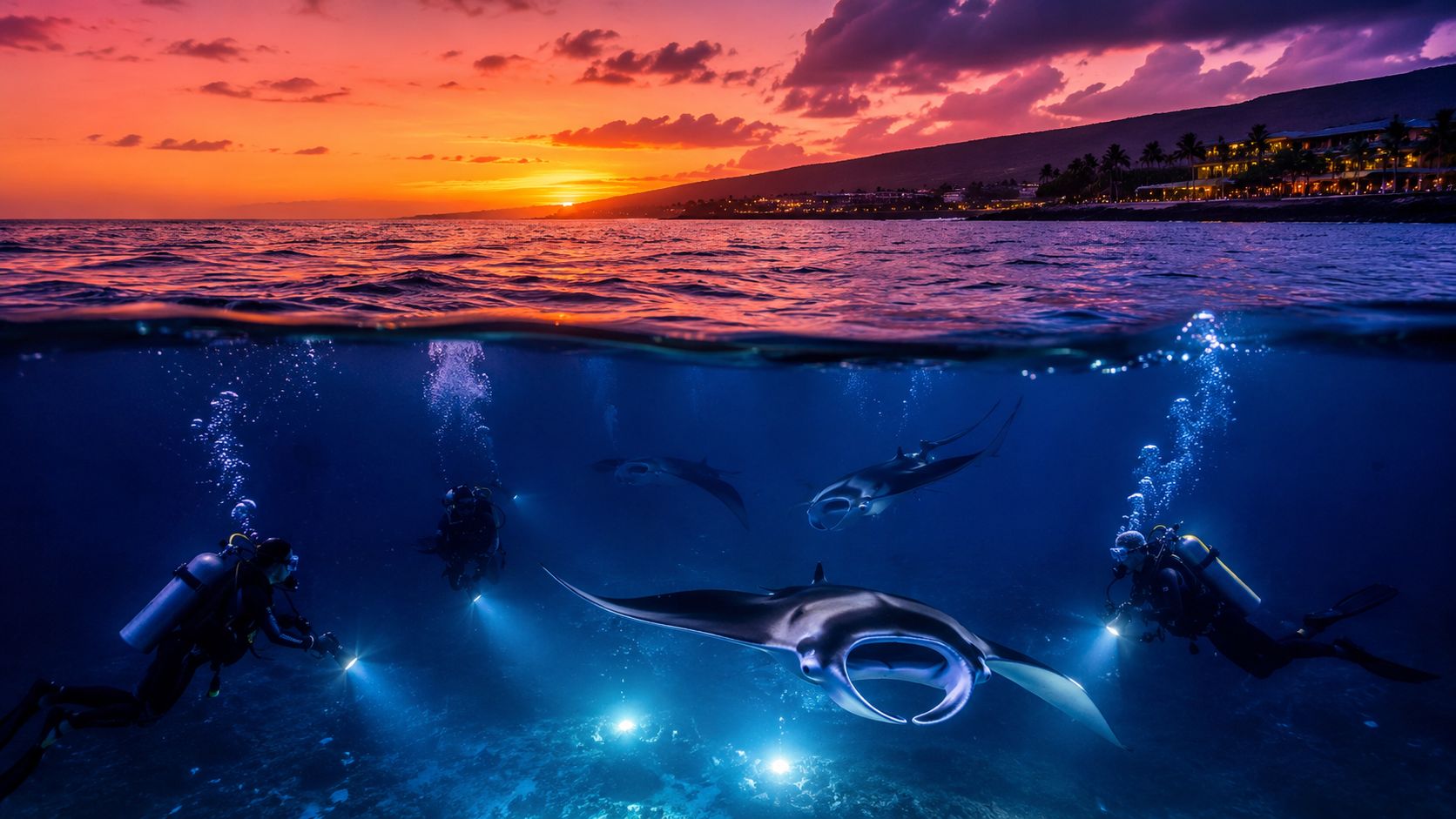
What makes the Manta Ray Dive Kona experience different is that it doesn't feel random. The Kona coast of Hawaii hosts over 450 individually identified reef manta rays, and local operators report an 80 to 90 percent sighting success rate per trip with an average of 12 mantas observed during a single dive, according to this Kona manta ray overview.
That's why this dive lands on so many bucket lists. You're not dropping into open ocean hoping for a lucky pass. You're entering a place where mantas show up reliably enough that the anticipation on the boat feels justified.
Why it feels so personal
The first close pass is the one most divers remember. A dark shape forms above the lights, then the white belly flashes, the cephalic fins roll open, and suddenly a ray with an 8 to 14 foot wingspan is feeding right over your head. The scene feels choreographed, but it isn't. You're just in the middle of a feeding pattern that Kona divers have learned to respect and not interfere with.
Practical rule: The divers who enjoy this most are the ones who settle down quickly, keep their profile low, and let the mantas control the interaction.
If you want to see what that looks like before you book, the manta ray dive photo gallery gives a realistic preview of the passes, the lighting, and the spacing underwater.
What makes the trip memorable
Three things usually determine whether your night is merely good or unforgettable:
- Your comfort in the water: Calm breathing and steady buoyancy matter more than speed or experience level.
- Your operator's briefing: A clear pre-dive explanation changes everything once the lights come on.
- Your expectations: This isn't a chase. It's a still, patient encounter that rewards divers who can slow down.
For divers who want the actual trip details, this manta ray dive and snorkel tour page lays out the format clearly.
What Makes Kona the Manta Capital of the World
Kona works because the encounter isn't built around migratory luck. It's built around a resident population and conditions that stay favorable through the year.
The Kona Coast attracts approximately 80,000 participants annually with a sighting success rate consistently between 80 percent and 90 percent. Water temperatures stay around 75 to 80°F, visibility often reaches 100 feet, and that combination allows divers to watch mantas with wingspans from 8 to 14 feet in unusually clear conditions, as described in this overview of manta diving in Kona.
The resident population changes everything
In many places, seeing large marine life depends on timing a season correctly. Kona is different because the coast supports over 450 individually identified manta rays that use these waters year-round. These aren't occasional visitors passing through. They return to known feeding areas, and that consistency is the backbone of Kona's reputation.
That reliability also changes how operators plan dives. Boat crews aren't guessing at broad offshore zones. They're working from years of site knowledge, current conditions, and how mantas typically behave around the light field.
Conditions that help divers and mantas
A manta encounter gets better when the environment removes distractions.
| Factor | Why it matters to divers |
|---|---|
| Warm water | You spend less mental energy dealing with cold and more attention on the mantas |
| Strong visibility | You can track incoming rays sooner and appreciate their full movement above the lights |
| Stable feeding areas | Operators can structure the dive around known behavior instead of roaming |
The warm, clear water is only part of the story. The other part is plankton. Lights attract plankton, and plankton draws in feeding mantas. That chain works especially well in Kona because the local environment supports it night after night.
Kona isn't famous for a one-off wildlife event. It's famous because conditions, animal behavior, and dive logistics line up in a way that's unusually repeatable.
If you want a broader look at the local sites and why they work, this guide to where to see manta rays in Hawaii is a useful next read.
How the Manta Ray Night Dive Works
Most first-timers assume the mantas are attracted directly to divers. They aren't. They're coming for food, and the dive is set up to bring that food into a concentrated viewing zone.
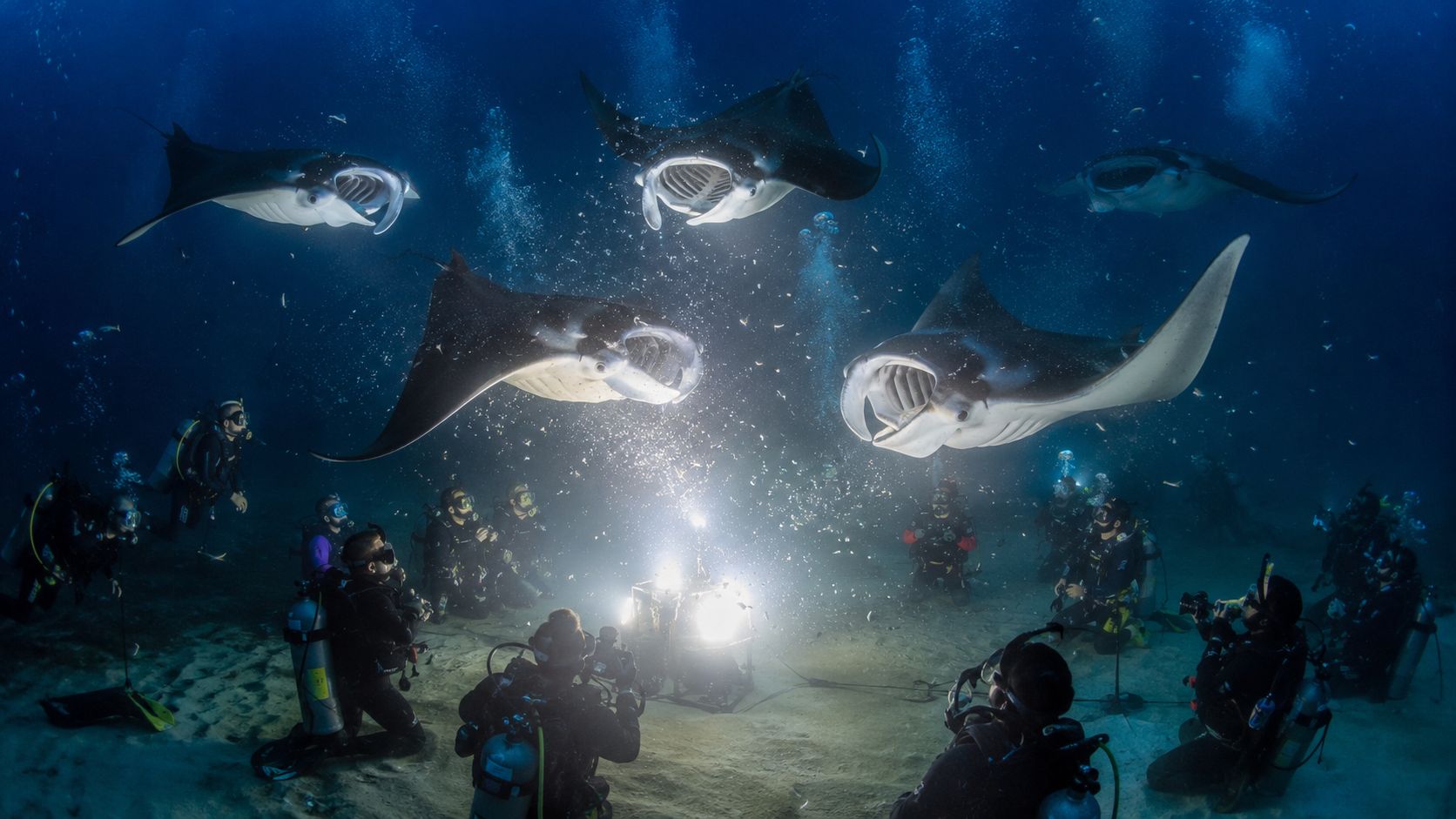
Kona manta night dives use a phototactic cause-and-effect mechanism. Artificial lights project upward, attracting plankton, which then draws mantas into the beam to feed. To reduce disruption, operators use strict observe-only rules and place divers in a semi-circle formation on the sand at 35 to 40 feet, as explained in this article on the Kona manta night dive.
The underwater campfire
Divers often call it the underwater campfire because that's what it looks like. Everyone settles in low on the bottom, lights point up, and the water column becomes the stage.
The sequence is simple:
- Lights go in first. They create a vertical beam in the water.
- Plankton gathers. That's the target.
- Mantas move into the beam. They feed where the plankton density is best.
- Divers stay put. The open water above the group gives the rays room to turn and loop.
The mistake some new divers make is treating the dive like a search dive. It's the opposite. Once you're in position, movement usually makes the experience worse, not better.
What works underwater
A good manta diver looks boring from a distance. That's exactly the goal.
- Stay low: Keep your knees or body position stable over sand, not reef.
- Keep your light where the guide wants it: Randomly sweeping a beam around breaks the visual setup.
- Watch your bubbles: Don't exhale directly into a ray's face if one is passing close.
- Protect the water column: The mantas need room above the group to feed and bank cleanly.
The best manta passes usually happen when the whole group gets quiet and stops trying to improve the moment.
What doesn't work
Some habits reliably reduce the quality of the encounter:
- Chasing the manta: You won't catch it, and you'll disrupt the group.
- Hovering too high: Your body ends up in the feeding lane.
- Touch attempts: This is not optional. Touching can remove the manta's protective mucus coating.
- Overbuilt camera rigs: If your setup sticks too far into the water column, you become an obstacle.
If you want a diver-focused breakdown of technique and positioning, this page on diving with manta rays gives a solid overview.
Choosing Your Site Why Garden Eel Cove Is Best
Not every manta site gives divers the same quality of experience. That matters more than many visitors realize.
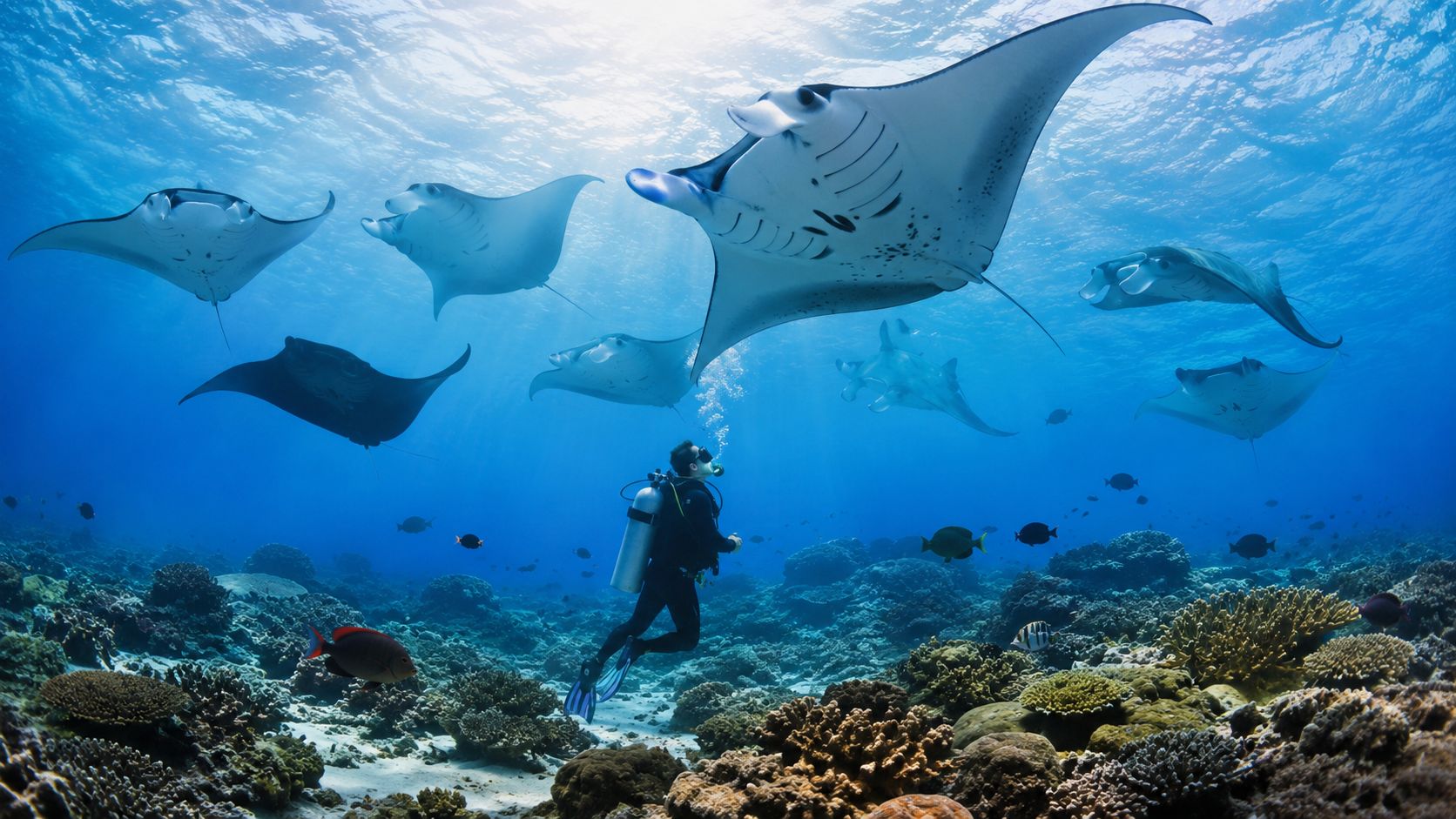
Garden Eel Cove, also called Manta Heaven, is considered the superior manta ray dive site because of its protected location, optimal depth, and better reef topography, which leads to a higher manta concentration than the alternative site, Manta Village in Keauhou Bay, according to this Garden Eel Cove overview.
Why divers tend to prefer it
Garden Eel Cove gives you a cleaner viewing setup. The sandy bottom makes it easier to settle in without damaging coral, and the topography creates a better natural theater for looking up into the light field. For photographers, that often means cleaner backgrounds and a more predictable place to hold position.
The protection of the site also matters. When the ocean is easy, divers enter calmer, descend calmer, and spend less energy getting organized.
Garden Eel Cove versus Manta Village
This isn't about saying the other site never produces. It does. The trade-off is about the quality of the overall dive experience.
| Site factor | Garden Eel Cove |
|---|---|
| Bottom composition | Sandy areas that are easier for divers to settle into responsibly |
| Viewing angle | Better upward sight lines for manta passes |
| Reef layout | More favorable topography for organized group positioning |
| Overall feel | Often more comfortable for divers who want a focused experience |
There's another practical point. A site can have manta activity and still be less enjoyable if divers are cramped, awkwardly positioned, or spending too much attention on where to kneel. Garden Eel Cove reduces that friction.
If your goal is a smoother first manta night dive, site comfort matters almost as much as manta activity.
For a broader look at standout local dives, including where this one fits in, this guide to the best dive in Kona is worth reading.
The Kona Honu Divers Advantage
Operator choice shapes this trip more than is often anticipated. The briefing quality, deck layout, timing, and how the crew manages the group all affect what the dive feels like once you're on the bottom.
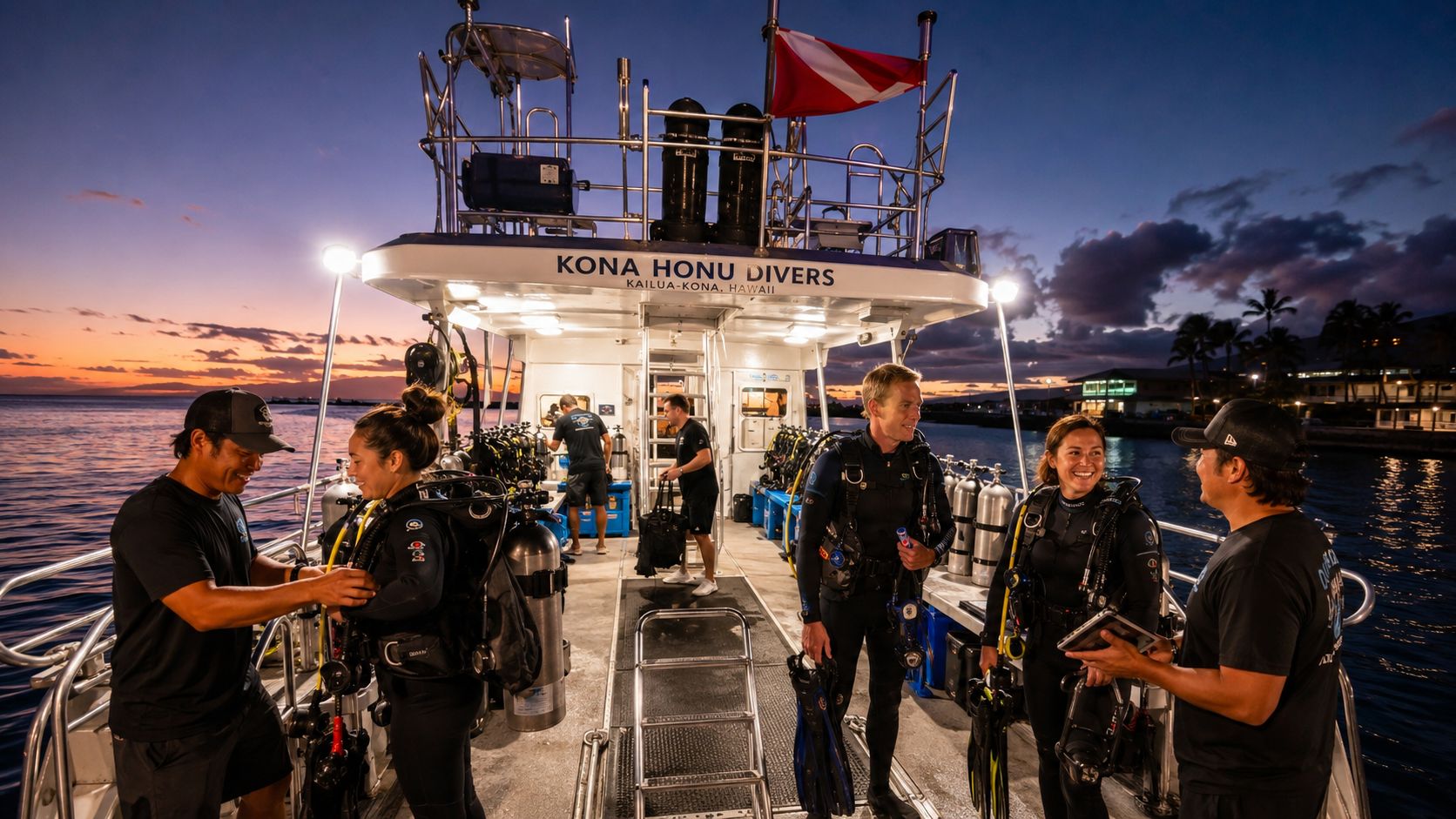
One option is Kona Honu Divers' tour lineup, which includes manta trips along with other day and night diving options. What stands out in practice is the combination of custom dive boats, experienced crew, and an operating style built around clear procedures rather than rushed entries or loose briefings.
The company describes its team as bringing over 200 years of combined industry experience. On a dive like this, that matters less as a marketing line and more as a practical benefit. Experienced crews usually spot problems before guests feel them, whether that's weighting issues, entry hesitation, mask stress, or a diver who needs a simpler explanation before the descent.
What makes a manta operator easier to dive with
A strong manta operation usually gets four things right:
- Boat flow: Divers need room to gear up without turning the deck into a traffic jam.
- Night briefings: The rules must be clear before the water gets dark.
- Site discipline: Guides should position the group quickly and keep the water column open.
- Calm communication: First-time night divers do better when instructions stay simple and steady.
That last point is underrated. Guests rarely need more information. They need the right information at the right time.
The value of a purpose-built setup
Custom boats help in practical ways. Entries are smoother, exits are cleaner, and divers aren't wasting energy wrestling with gear in a cramped layout. On a sunset departure followed by a night dive, comfort matters because people are already managing changing light, extra equipment checks, and the mental load that comes with any night dive.
Check AvailabilityHow to Prepare for Your Manta Ray Dive
Preparation for a manta dive is simple, but the details matter. Most certified Open Water divers can do this dive comfortably because the encounter is kept shallow and the goal isn't navigation or exertion. The bigger issue is whether you arrive calm, warm enough, and ready for a night entry.
A lot of first-time guests overpack camera gear and underprepare for the boat ride back. After the dive, people are wet, the wind picks up, and that warm jacket you almost left in the hotel suddenly becomes the smartest thing you brought.
What to bring and what to expect
Bring gear and clothing that make the night easier, not more complicated.
- Towel and dry layer: The ride back can feel cool after a night dive.
- Simple exposure planning: Wear what you know you're comfortable in. Don't experiment on this dive.
- Compact accessories: One backup item you'll use beats a bag full of clutter.
- Certification and basics: Have your certification details ready and don't leave your mask prep until the last second.
If seasickness is even a possibility for you, handle it before the boat leaves the harbor. Waiting to see how you feel is the wrong move on an evening trip. A useful primer is this guide on how to avoid sea sickness.
Seasickness prevention that divers actually use
If you're prone to motion sickness, these are the common options to sort out in advance:
- Patch option: Ship-EEZ Seasickness Patch
- Classic tablet: Dramamine pills
- Non-drowsy favorite for some travelers: Bonine pills
- Low-tech backup: Sea Band wristbands
- Gentle option: Ginger chews
Don't test a brand-new remedy for the first time right before a night dive unless you already know how your body reacts to it.
Underwater readiness matters more than bravado
You don't need to be an advanced diver to enjoy this. You do need to be able to descend calmly, stay off the reef, and hold position without constant finning. If your buoyancy has been shaky on recent dives, spend extra attention on weighting and breathing during the briefing.
The divers who struggle most are usually the ones who arrive thinking the dive is easy enough to wing. It's accessible, but it still rewards control.
Manta Ray Dive FAQs
Guests usually ask the same handful of questions on the ride out, and the answers can shape the whole night.
Is the manta ray dive safe
Yes, with a disciplined operation and divers who follow instructions. At Garden Eel Cove, the format is controlled. Divers settle into a designated viewing area, the crew manages entries and exits carefully, and the rules are built around two priorities: keeping guests calm and keeping mantas unbothered.
The problems I see are rarely dramatic. They are usually simple mistakes. Rushed descents, poor trim, bright lights pointed the wrong way, or divers who drift out of position because they are watching the animals instead of their depth and buddy. A good briefing fixes a lot of that. A good crew catches the rest early.
Can my family snorkel while I dive
Yes. Mixed groups do this all the time. Certified divers can stay on the bottom while family members watch from the surface on the snorkel format described on the manta ray dive and snorkel trip page.
It works especially well in Kona because the encounter is strong from both levels. Divers get the dramatic close passes over the light board. Snorkelers get a top-down view that can be just as impressive. For families, that means everyone shares the same evening instead of splitting into separate activities.
What are the best photography tips
The best manta photos usually come from restraint, not from carrying more gear.
- Use a wide-angle setup: Close passes happen fast, and narrow framing makes the dive harder than it needs to be.
- Stay planted and stable: Good buoyancy improves your shots and keeps the viewing lane clear.
- Let the manta come to you: Reaching out ruins photos and breaks the flow of the encounter.
- Shoot upward when the angle is right: Belly patterns, silhouettes, and the glow from the lights often make the strongest images.
Large camera rigs are a real trade-off on this dive. They can produce beautiful results, but they also make buoyancy, awareness, and courtesy more difficult. If the camera turns you into a busy diver, scale it back.
What if no mantas show up
No ethical operator can guarantee wildlife. Kona has an unusually reliable manta experience, but there are still nights when the animals do not settle in over the lights.
Check the missed-manta policy before you book. I also recommend scheduling the dive early in your trip if your vacation calendar allows it. That gives you room to try again if conditions or animal behavior do not line up on the first night.
I'm an experienced diver and want something more advanced
That is a fair question, because the manta dive is memorable without being technically demanding. Experienced divers often enjoy it most when they treat it as a precision dive. Hold position well, keep your profile low, and watch the whole scene develop instead of searching for constant movement.
If you want a more advanced night experience after that, the Black Water Night Dive is a very different kind of challenge. If your goal is a longer, more ambitious day with broader site variety, the advanced long-range dive tour is the better match.
Is this a good first night dive
For many certified divers, yes.
The reason is simple. You are not swimming a complicated route in low visibility or managing a demanding profile in the dark. You are settling into a known position and watching the action come to you. Garden Eel Cove is especially good for first-time night divers because the site layout and the way the dive is conducted reduce a lot of the uncertainty people feel after sunset.
That said, comfort in the water still matters. If buoyancy, mask clearing, or equalizing still takes too much attention in daylight, fix that before booking a night manta dive. You will get far more out of the experience if your basic skills feel automatic.
Check AvailabilityKona rewards divers who choose the right operation as much as the right night. Site choice matters. Crew attention matters. Boat setup matters. Kona Honu Divers runs this experience with that reality in mind, so guests get a manta dive that feels organized, safe, and close to the action instead of crowded and chaotic.