
You're looking at three different manta tours on your phone, they're all promising the same giant rays and glowing lights, and you can't tell which one puts you in the right place. That's the normal Kona problem. The site matters more than the sales copy, the plankton matters more than the lights, and your position in the water matters more than your camera. A manta ray dive in Hawaii can be the calmest, closest wildlife encounter of your trip, but only when you understand those trade-offs before you book.
What a Manta Ray Night Dive Actually Feels Like
You check in at the harbor late in the afternoon, get fitted for a wetsuit and mask, and ride out while the sun drops over the Kona Coast. The first tank on a typical two-tank trip is a regular reef dive in fading daylight. You see the reef structure, get your buoyancy sorted, and settle your breathing before dark makes everything feel unfamiliar.
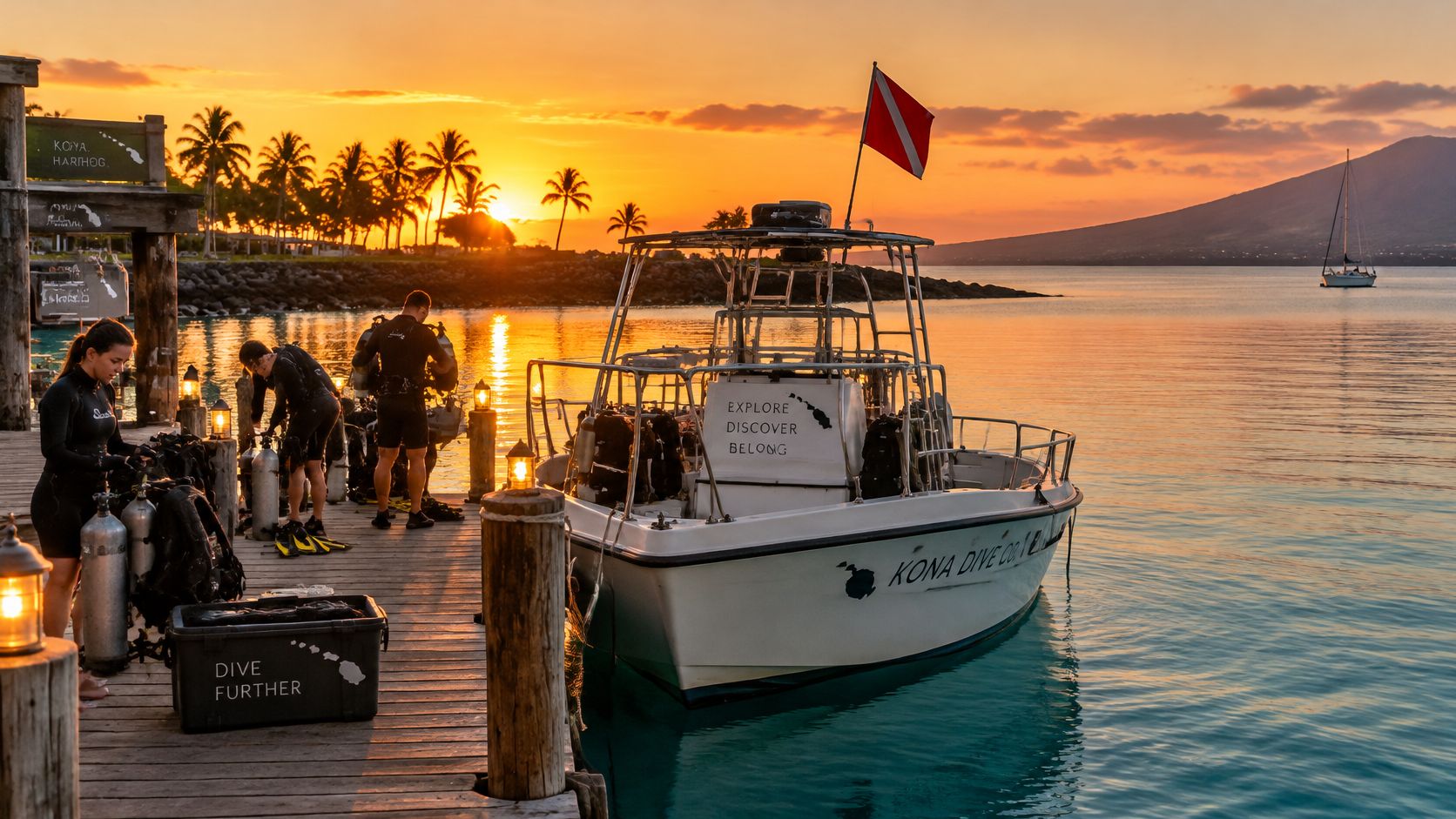
During the surface interval the crew briefs you properly. They'll cover where to kneel or hover, where the lights go, what passive interaction means, and why nobody chases, touches, or blocks an animal. Listen closely there, because once you're down you won't get a second briefing.
The Entry and the Wait
You enter in the dark and follow your guide's light down to a sandy viewing area. Divers settle near the bottom around an upward facing light, often called the campfire, while snorkelers hold a light board at the surface above. Then you wait, and that quiet minute is part of it.
- First you'll notice plankton: Tiny specks drift and sparkle in the beams, thickening as the lights hold steady.
- Then a shadow crosses: It's wider than you expected, silent, and it doesn't hurry.
- Then the roll starts: The manta loops mouth open through the densest plankton, passes over your head, and turns for another run.
If you stay still, the animal sets the distance. That's when passes get close without anyone forcing them.
I've watched first-timers grip their lights hard for five minutes, then forget they're cold, nervous, or even breathing through a regulator. The scale does that. A reef manta overhead fills your whole field of view, and the white belly pattern you'll see is unique to that individual. When the guide signals to ascend, divers are rarely ready. That's usually the sign the briefing, site, and conditions lined up the way they should.
How the Light Plankton and Manta Connection Works
This isn't baiting, and the mantas aren't coming for the light itself. It's a prey concentration event. Dive lights gather zooplankton in one patch of water, and manta feeding behavior follows that concentrated plankton rather than the beam. When the prey thins out, the mantas leave, even if every light stays on.
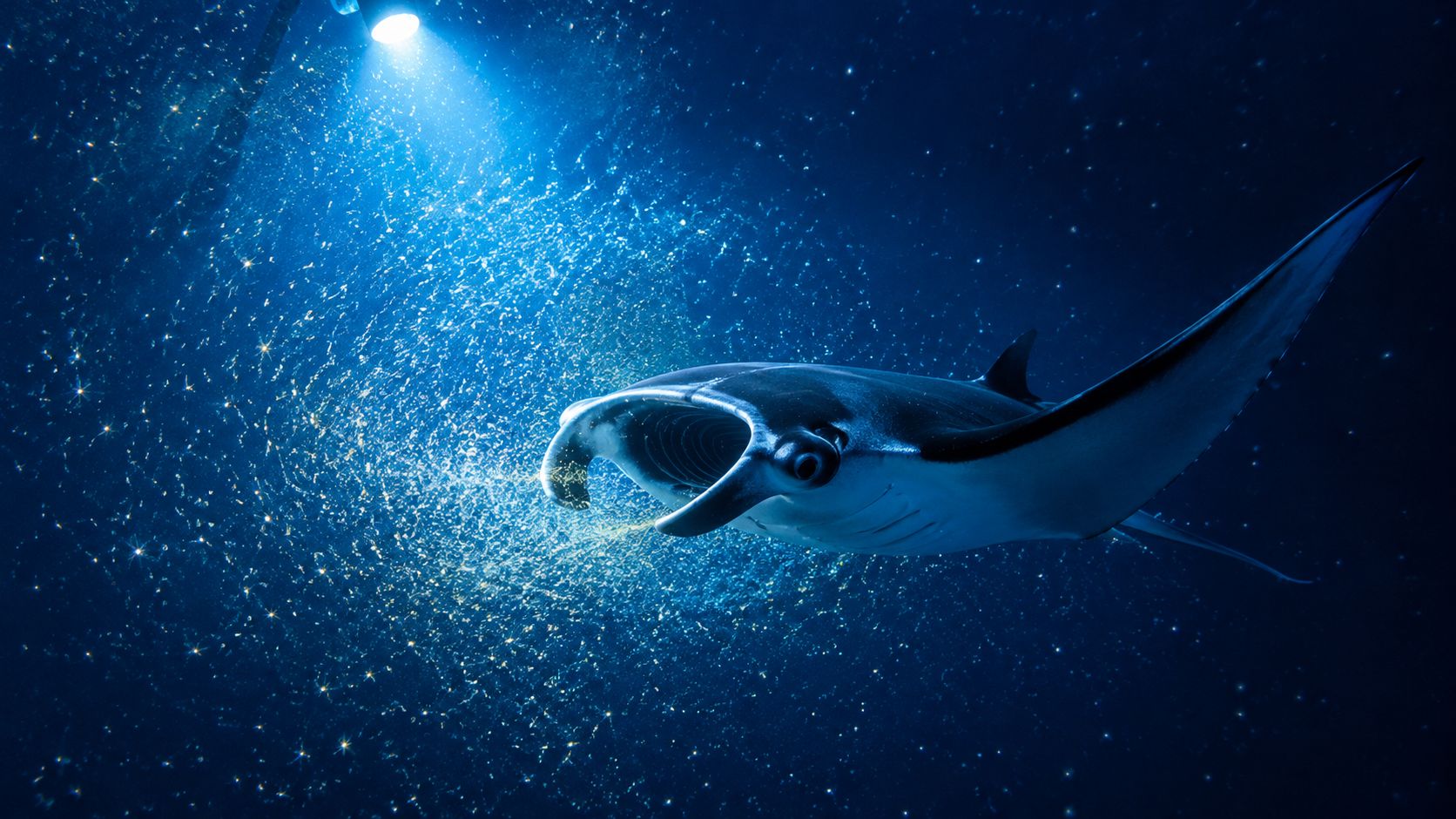
Reef mantas are filter feeding planktivores. They unfurl the cephalic fins beside their mouth to funnel plankton rich water in, their gill rakers trap the food, and filtered water exits through the gills. Think of the lights as a dinner bell that gathers the meal in one room. The guests arrive because dinner's concentrated there, not because they like the bell.
Why Your Stillness Changes the Feeding
Mantas set up a repeated feeding path through the thickest plankton. If you fin hard, wave a light around, or rise into the water column, you break that path and scatter your own view. NOAA guidance in the material above warns against descending or drifting into where mantas are feeding, because vertical intrusion can disrupt feeding and raise collision risk.
Hold a stable position at the viewing boundary instead. Keep lights pointed where your guide placed them, move slowly if you must adjust, and let the animal complete its loop. You'll get longer passes, and photographers get predictable angles without firing constant strobes into plankton thick water.
There's an honest limit here too. A recent Hawaii eDNA study found manta detections were not associated with higher nearshore plankton abundance, which suggests offshore or deeper prey also shapes where animals go. Lights create an observation opportunity. They don't guarantee a performance, and a quiet night usually tells you something real about prey, current, or animal choice that night.
The Best Manta Sites in Kona and Why Garden Eel Cove Wins
Kona has three names you'll hear constantly, and they're not interchangeable. Garden Eel Cove, also called Manta Heaven near the airport, Keauhou, also called Manta Village to the south, and the broader Manta Heaven area itself overlap in marketing more than they do in layout. Where your boat stops decides surge, space, reef quality, and how crowded your view feels.
| Site | Location | Layout | Typical Crowd | Encounter Reliability |
|---|---|---|---|---|
| Garden Eel Cove | North, near the airport | Protected cove, roomier viewing area, better reef | Busy but spread out | Strongest aggregations |
| Keauhou / Manta Village | South, off Keauhou Bay | Smaller viewing area near shore | Can feel tight | Good, smaller groups |
| Manta Heaven | North Kona offshore area | Open water viewing | Variable by boat count | Good, condition dependent |
A University of Hawaii study of community sourced observations from 2010 through 2022 recorded more than 23,000 sightings of 167 individually identified reef mantas at Garden Eel Cove and Keauhou, and Garden Eel Cove consistently supported larger aggregations. Historical testimony also reported mantas observed on approximately 80% of dives at Garden Eel Cove each year. That's a long term record, not a promise for your Tuesday night.
Why Operators Invest in Garden Eel Cove
The cove's protected geography gives you a calmer, better defined viewing area, and the reef on the first tank is worth diving in its own right. You aren't burning a tank on a featureless wait. You're diving a healthier reef, then settling into a layout where guides can position divers and snorkelers without stacking everyone into one tight circle.
Keauhou has its own value, and research shows it was visited disproportionately by females with strong site fidelity, which tells you the sites serve different ecological functions. But if your priority is maximizing the chance of multiple feeding mantas with room to watch them, Garden Eel Cove is the superior choice for the dive tour. For a deeper side by side, see this guide comparing Manta Heaven and Manta Village, and look at the two tank manta dive and snorkel tour format that pairs the reef dive with the night encounter.
Practical rule: Choose the site first, then choose the boat that commits to it. Split site marketing often means you won't know where you're going until departure.
Choosing Between a Scuba Dive and a Snorkel
Divers watch from the bottom looking up. Snorkelers watch from the surface looking down. Neither view is the consolation prize, and I've seen snorkelers get the closest face to face pass of the night while divers below watched the full barrel roll. Your certification, comfort, and group makeup should decide, not bragging rights.
Scuba requires certification and recent enough experience to hold position in the dark without kicking the reef or drifting into the feeding column. You'll kneel or settle on sand where your guide places you, control your buoyancy, and stay put. If night diving makes your breathing spike, the manta dive won't fix that, and you'll enjoy the surface more.
Who Each Format Fits
- Choose scuba if you're certified: You want the bottom up scale, the silhouettes overhead, and a reef dive first.
- Choose snorkel if you're not certified: You hold a buoyant light board, keep your body horizontal, and mantas feed below and sometimes right under you.
- Choose snorkel for mixed groups: Families and non-diving partners can share the same boat and the same animals without splitting the evening.
The two tank structure confuses people. The first tank is the afternoon reef dive, the second is the manta dive after dark, with a surface interval and briefing between them. It isn't two chances at mantas. It's a proper dive day built around waiting for darkness, which is why checking the full range of Kona diving tours helps you compare formats before committing.
If you're still torn, this breakdown of whether it's better to snorkel or dive with manta rays walks through visibility and comfort. Bring a swimsuit worn under your clothes, a towel, and something warm for the ride back. Operators supply the wetsuit, mask, fins, lights, tanks, and weights, so don't haul gear you don't need.
Safety Etiquette and What to Do in the Water
Stay horizontal, stay at your boundary, and don't touch anything with a heartbeat. Those three habits cover most of what keeps mantas feeding and people safe. Mantas have a protective mucus coating, they're protected in Hawaii waters, and Hawaii law made it illegal to kill or capture manta rays in state waters on June 5, 2009. Your job is to be boring in the water.
Keep hands tucked or holding your board or light, for example. Keep fins still or moving slowly, never bicycle kick at the surface, and never stand vertical with fins thrashing over the reef. If a manta turns toward you, freeze and let it pass. It knows exactly where you are, and it will adjust better than you will.
Your Position by Position Playbook
- On entry: Follow the guide's line, don't drop straight into the light circle.
- At the viewing area: Settle where you're placed, get negative or stable, and check your buddy once.
- During a close pass: Stay low, exhale slowly, don't reach up, don't shine a concentrated light into its eyes.
- On exit: Leave the animal a clear corridor, ascend on the guide's signal, and watch for other groups.
The operational side matters as much as your fin kicks. A Hawaii County safety assessment states that increasing numbers of vessels and participants raise the likelihood of accidents, while effective capacity controls were not in place at the time of assessment. Proposed rules have also pushed boats to tie to buoys rather than drift with engines running, because spinning propellers endanger rays and swimmers.
A successful night isn't measured by how close a manta got. It's measured by whether the site stayed controlled enough for the animal to keep feeding.
So ask before you book how many boats and people share the site, whether engines shut off, what the diver to guide ratio is, and whether the captain will delay or relocate in poor conditions. Those answers tell you more than any safety slogan. Good operators also teach this as part of broader responsible and considerate diver etiquette, not as a rushed dockside list.
NOAA hosted monitoring recorded 25,444 observations involving 118 individually identified reef mantas across Manta Village and Manta Heaven over six years. These are recognizable residents returning repeatedly, not anonymous animals passing once. Treat the site like their feeding ground, because it is, and it'll still be productive when you come back.
Who Should Book a Manta Ray Dive in Hawaii
Certified divers who are calm at night will get the most from the scuba version. Comfortable snorkelers, including first timers who can float face down and follow instructions, will get just as strong an encounter at the surface. Families with older children who've snorkeled before usually do well, especially when the whole group accepts the stay still rule.
Be honest about the edge cases. If open ocean at night frightens you, if you can't clear a mask or equalize, or if seasickness regularly wipes you out, this may not be your night. There's no shame in that call, and forcing it helps nobody in your group. Nervous ocean users often do better starting with a daytime reef snorkel, then booking mantas later in the trip once the gear feels normal.
Fit Checks Before You Pay
- Photographers: You'll love the predictable passes, but bulky rigs in a crowded viewing area are a liability. Ask about guest density first.
- New divers: Ask yourself whether you'd be comfortable on any night dive, mantas aside. If not, snorkel this one.
- Non swimmers: You won't swim freely, you'll hold flotation, but you still need basic water confidence. Tell the operator before booking, not at the dock.
Check the requirements by reading up on whether you can scuba dive in Hawaii without certification before you assume a resort course qualifies you for a night dive. It usually doesn't, and the snorkel exists precisely for that gap.
Timing is largely year round because this is a resident population. Long term research estimated 318 unique reef mantas identified around Hawaii Island since 1979, with an effective population size of 104. Small, locally connected, and worth protecting. Surface conditions, moonlight, and plankton density shift any given night far more than the calendar month does, so book early in your trip to leave room for a weather reschedule.
Booking the Tour What to Ask and What to Expect
Book the operator, not the discount. Kona Honu Divers runs a guided two tank manta trip that combines an afternoon reef dive, a surface interval with a full manta briefing, and the night dive at Garden Eel Cove, with guide, tanks, weights, and dive light included. That's the structure you want to compare against, whoever you choose.
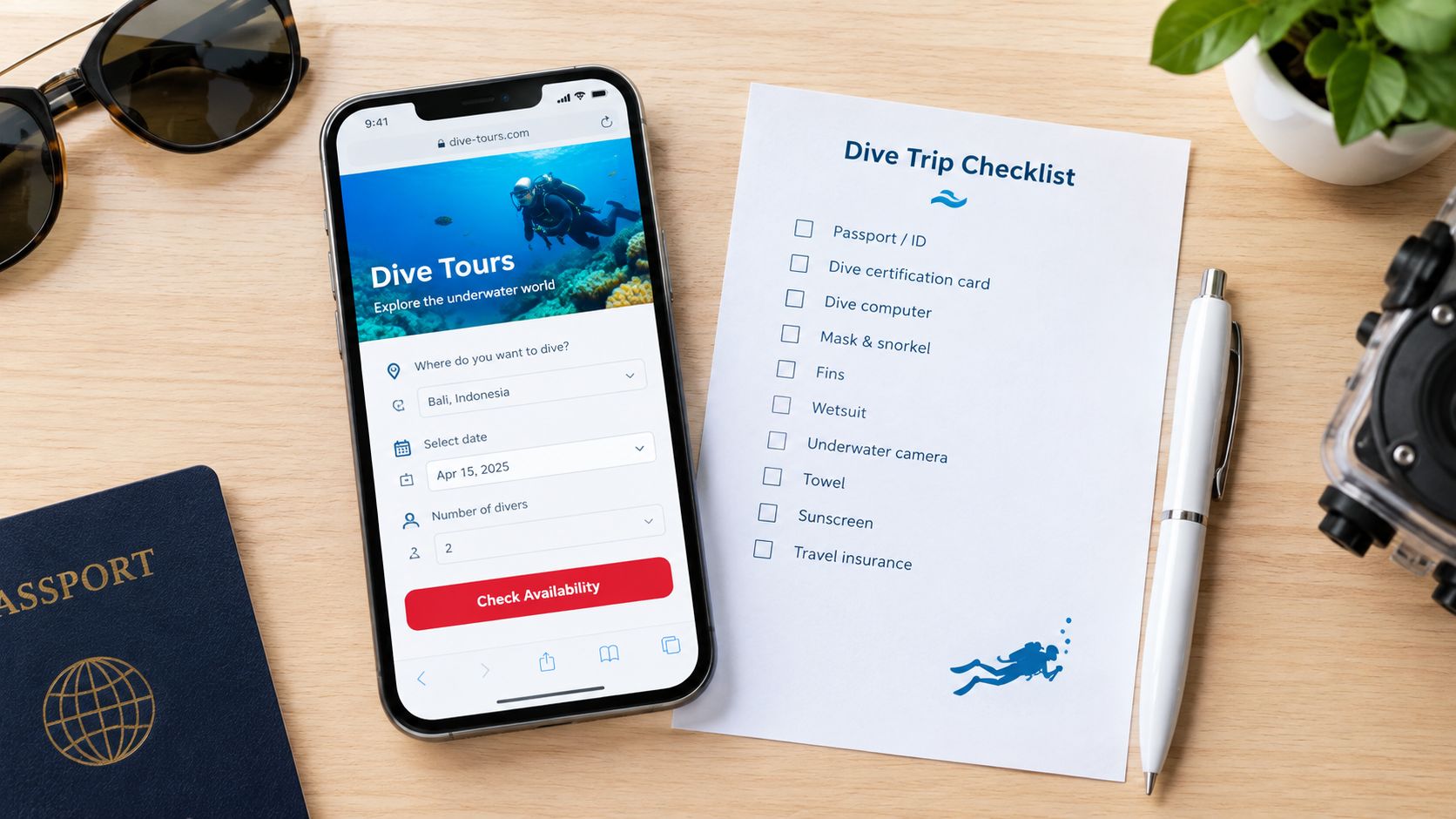
Pricing across Kona varies by boat size, group limits, gear included, and whether you're diving or snorkeling, so don't compare headline prices without comparing what's inside them. A cheaper ticket with a packed viewing area and rental fees added at the dock isn't cheaper. Ask what's included in writing before you pay.
Questions That Separate Good Operators
- Maximum guest count: How many people will be in the water with you, not just on the boat?
- Site commitment: Is Garden Eel Cove the plan, and what triggers a change?
- No manta policy: What happens on a no show night, a rebook, a credit, or nothing?
- Safety setup: Buoy based mooring, engines off, guide ratio, and emergency plan?
- Certification check: Will they verify cards and recent dive experience, and do they enforce it?
That last question protects you. An operator who waves through unqualified divers at night will cut other corners you can't see. Expect check in at the harbor, gear fitting, a sunset ride out, the reef dive, a briefing over the surface interval, then the manta dive and a dark ride home. Eat lightly beforehand, take seasickness remedies before departure if you use them, and arrive with your certification card accessible, not buried in hotel email.
Photography Tips Costs and Common Questions
Shoot what's there instead of lighting it yourself. The campfire and board lights already create strong contrast, so use available light, get low, wait for the belly to fill the frame, and skip constant strobe fire that disturbs animals and blows out plankton. Staying still gives you the predictable pass, which beats chasing with a camera every time. If you'd rather watch than shoot, consider a manta night dive with a photo package and keep your hands free.
Costs depend on dive versus snorkel, gear, and group size, so verify inclusions rather than chasing the lowest number. The best time of year is whenever your trip falls, since these mantas live here year round, but book early in your stay for reschedule flexibility. And if no mantas appear, you've still done a night reef experience in a place where plankton, not promises, decides the night.
Ready to watch reef mantas feed over Garden Eel Cove with a guide, tanks, weights, and dive light handled for you? Kona Honu Divers runs the two tank manta dive and snorkel trip out of Kona, pairing an afternoon reef dive with the night encounter described above. Visit Kona Honu Divers to check dates and reserve your spot on the boat.