
So, you’re thinking about learning to scuba dive. That’s awesome! It all starts with a certification course that blends some online theory, practice in a pool, and then the real magic: several dives out in the open ocean. The whole thing usually takes about 3-4 days, and when you’re done, you’ll have the skills and confidence to dive pretty much anywhere in the world.
Your First Breath Underwater Awaits

Picture this: you're floating, totally weightless, in a calm, blue world. The only thing you hear is the gentle rhythm of your own breathing. A green sea turtle glides by, unbothered by your presence, as schools of brilliant yellow tangs dance over the reef. This isn't just something you see on TV—it's a world you can actually be a part of.
Learning to scuba dive opens up that other 71% of our planet that most people only see from the surface. And honestly, it’s a lot more achievable than you might think. This guide is your roadmap. I’m going to walk you through the entire process, step by step, so you know exactly what to expect.
A Journey into the Blue
We'll be focusing on what it's like to get certified right here in Kona, Hawaii. It's truly a world-class spot to learn, thanks to our incredibly clear, calm waters and the amazing sea life we get to see every single day. Whether you’re feeling a little anxious or just buzzing with excitement, my goal is to give you the confidence to take that giant stride off the boat.
By the time you're done reading, you'll have a solid grasp of:
- The actual steps involved in getting certified.
- The difference between the big certification agencies (like PADI and SSI).
- What your training dives will really be like.
- How to get yourself ready for your first real underwater adventure.
Getting certified isn't just about learning a skill; it's about joining a global community of explorers. It’s a passport to adventure that never expires.
Now, if you're not quite ready to commit to a full course but are dying to know what it feels like to breathe underwater, a Discover Scuba Diving experience is the perfect fit. It's a one-day "try dive" with an instructor, giving you a safe and fun taste of the magic.
The ocean stirs the heart, inspires the imagination, and brings eternal joy to the soul. – Wyland
Your adventure begins the moment you decide to see what's down there. With the right training and a bit of curiosity, you’re about to unlock a whole new world. Let's get you ready for that first breath underwater.
Choosing Your Scuba Certification Agency
So, you've decided to take the plunge and learn to scuba dive. Awesome! One of the very first questions you'll face is which certification agency to go with. It might sound like a big deal, but honestly, it's simpler than you think.
In the world of diving, two names stand out above the rest: PADI (Professional Association of Diving Instructors) and SSI (Scuba Schools International).
Think of it like choosing between Coke and Pepsi or Ford and Chevy. Both are top-tier, globally recognized, and will get you where you want to go. A certification card from either PADI or SSI is your golden ticket to explore underwater environments anywhere on the planet. The main differences really boil down to their teaching philosophies and how their courses are structured.
PADI: The Structured Approach
PADI is known for its highly standardized and modular approach. The training is broken down into distinct parts, and you can "pay-as-you-go." For instance, you could complete all your academic work online from your couch, do your pool sessions at a local dive shop, and then fly to Hawaii to complete your final open water dives with us.
This flexibility is a huge plus for people with packed schedules or those who want to split their training between home and a vacation destination. The consistency is key—a PADI course in Kona follows the same core standards as one in Thailand.
SSI: A More Integrated Experience
SSI often fosters a more integrated learning environment, believing that the best training happens when it's all handled through one dedicated dive center. This philosophy gives instructors a bit more flexibility to adapt the training schedule to the specific needs of their students, all while meeting the same high safety and performance standards.
Many divers find this creates a fantastic sense of community and a stronger bond with their instructor and fellow students. It's common for SSI courses to bundle training, gear, and even travel into one seamless package.
In the end, you're in great hands with either agency. You’re not just getting a certification; you're joining a massive global community. In fact, more than 2.4 million people get certified to dive every year, turning a spark of curiosity into a lifelong passion.
Here at Kona Honu Divers, our world-class instructors are certified to teach both curriculums. We're focused on making you a safe, confident diver, and we'll help you pick the path that truly fits your learning style. You can see a full breakdown of the scuba classes offered in Kona on our site.
The most important thing isn't the logo on your certification card—it's the quality of your instructor. A great instructor is what turns you into a competent, safe, and confident diver for life.
So, which one sounds better for you? Let's break it down to see the practical differences side-by-side.
PADI vs SSI At a Glance for Beginners
This quick comparison highlights the main differences you'll encounter as a new diver when choosing between the world's two leading scuba certification agencies.
| Feature | PADI (Professional Association of Diving Instructors) | SSI (Scuba Schools International) |
|---|---|---|
| Learning Materials | Requires you to purchase your own set of materials for the course. | Often includes lifetime access to digital learning materials with the course fee. |
| Course Structure | Highly modular; you can complete different parts of the course at different dive shops. | More holistic and integrated with a specific dive center, offering flexibility in training sequence. |
| Certification Card | A physical card is typically mailed after certification, with a temporary card issued first. | A digital certification card is available instantly in the SSI app upon completion. |
| Global Recognition | Universally recognized and accepted at dive centers all over the world. | Also universally recognized and respected globally, with a strong presence worldwide. |
Ultimately, whether you choose PADI or SSI, the fundamental skills you'll learn are identical. You'll master buoyancy control, get comfortable with all your gear, and practice the essential safety drills until they become second nature. Our goal is to empower you to become a safe and self-reliant underwater explorer, ready for a lifetime of adventure.
The Three Phases of Your Scuba Training

Becoming a certified diver is an incredible journey, and it’s broken down into three logical, manageable phases. This isn't about just tossing you in the deep end. It’s a carefully designed process that builds your knowledge, then your skills, and finally your confidence, one step at a time. Each part builds on the last, turning you from a curious beginner into a capable underwater explorer.
At a great dive shop like Kona Honu Divers, the whole process feels supportive and fun. Our instructors are seasoned pros at guiding new divers through each stage, making sure you feel safe, comfortable, and ready for the amazing adventures waiting just below the surface.
Phase 1: Knowledge Development
Before you ever dip a fin in the water, you need a solid foundation of dive theory. Forget those old-school images of being stuck in a stuffy classroom for hours. These days, this part is almost entirely done through engaging e-learning programs from agencies like PADI or SSI.
You can knock out the coursework from home, on your own schedule. You’ll get into the fascinating physics and physiology of diving, with all the crucial concepts explained in a way that’s easy to digest.
Your online learning will cover all the essentials:
- The Undersea Environment: Learning about marine life, how to protect coral reefs, and the basics of responsible underwater interaction.
- Diving Physics: Getting your head around core concepts like pressure and buoyancy—the "why" behind the techniques you'll be using.
- Physiology and Safety: Understanding how diving affects your body and the fundamental safety rules that keep every dive fun and worry-free.
- Dive Planning and Equipment: Getting to know the gear that acts as your life support system and learning how to plan a dive from start to finish.
This self-study portion is absolutely vital. It means that when you show up for your in-water training, you’re not just ready to dive; you actually understand the principles that make it all possible and safe.
Phase 2: Confined Water Dives
Alright, this is where the real fun starts. The confined water phase is your first chance to breathe underwater, and we do it in a totally controlled and safe environment. Think of a swimming pool or a calm, pool-like section of the ocean. It’s the perfect bridge between what you learned on your computer and what you’re about to do in the big blue.
You’ll get fully geared up and, under your instructor's direct supervision, take those first magical breaths. It’s a feeling you will never, ever forget.
During these sessions, you’ll methodically practice the core skills every self-sufficient diver needs.
This hands-on practice is where the theory truly clicks into place. Skills that might sound complicated, like clearing your mask or recovering a lost regulator, quickly become second nature with patient, repetitive practice.
Your instructor will show you how each skill is done, then watch and guide you as you do it yourself until you’ve got it down cold. It’s a completely no-pressure environment designed to build muscle memory and confidence. The goal is simple: make sure you can handle common situations calmly and effectively. Here in Kona, the warm, crystal-clear water makes this part of the training an absolute pleasure.
Phase 3: Open Water Dives
This is it—the grand finale! The open water dives are what you’ve been working toward. You'll take all the knowledge from your e-learning and all the skills from the pool and apply them in the actual ocean. Here in a world-class dive destination like Kona, Hawaii, that means your final exam takes place on a vibrant coral reef teeming with life.
You’ll complete four dives, usually over two days, with your instructor right by your side. These aren't just tests; they are your very first underwater tours as a diver-in-training. On each dive, you’ll demonstrate the skills you mastered in the pool, proving you can handle yourself in a real-world setting.
But it’s so much more than just a skills review. You’ll be actively exploring the incredible underwater world of the Big Island. Imagine practicing your buoyancy while a Hawaiian green sea turtle glides by, or giving your instructor the "okay" signal as a school of bright yellow tangs swims past.
Our experienced instructors at Kona Honu Divers know these sites like the back of their hand. They’ll not only guide you through your skills but also point out all the cool marine life you might otherwise miss. Finishing these dives is the final step to earning your certification—your ticket to a lifetime of underwater adventures all over the globe.
Prerequisites and Preparing for Your Course
So, you’re ready to take the plunge! Before you make that first giant stride into the ocean, there are a few things to sort out to make sure your journey into scuba diving is safe, smooth, and incredibly fun. The great news is, you don’t need to be a super-athlete to get certified. It's more about being comfortable in the water and having a decent level of health.
Let's start with the in-water stuff. We're not looking for Olympians, just basic water confidence. To ensure everyone has a solid foundation, every new diver needs to complete two simple water skills assessments:
- 10-Minute Float/Tread: We'll have you stay afloat for 10 minutes without any help from a life vest or other floaties. This just shows you can relax and handle yourself at the surface.
- 200-Yard Swim: You’ll also need to swim 200 yards (or 300 yards with a mask, snorkel, and fins). There’s no time limit, so no need to race! The goal is simply to demonstrate you can comfortably propel yourself through the water.
Think of these not as tests, but as confidence-builders. They give you—and your instructor—the peace of mind that you have the basic skills to manage any situation that might pop up at the surface.
The All-Important Medical Questionnaire
This is probably the single most important piece of paperwork in your entire course. Every student diver must fill out the diver medical questionnaire, and it’s critical to answer every question honestly. This form screens for health conditions that might not mix well with the underwater environment.
Be totally upfront on this form. It's not a test to pass; it's a safety check designed to protect you. Your well-being is the number one priority, and honesty is the key.
If you have a history of certain conditions—like asthma, heart problems, or even severe ear issues—you might need a doctor’s sign-off before you can get in the water. Answering "yes" to a question doesn't automatically disqualify you; it just means we need a physician to confirm you're fit for diving. My advice? Get this done well before your course starts to avoid any last-minute stress.
Packing and Gear: What You Really Need
Worried about buying a bunch of expensive equipment? Don't be. One of the best things about getting certified with a shop like Kona Honu Divers is that we provide all the core scuba gear. Your BCD, regulator, gauges, tanks, and weights are all included, meticulously maintained, and ready for you.
This makes packing for your Kona dive trip incredibly easy. You just need to bring your personal items. For a more detailed breakdown, we’ve put together a handy guide on the gear you will need for your Kona diving adventure. And before any big trip, especially an international one, it's always wise to look into understanding medical evacuation insurance for extra peace of mind.
Here’s a quick list of what you should toss in your bag:
- Swimsuit (to wear under the wetsuit)
- Towel
- Reef-safe sunscreen (to protect our beautiful coral!)
- Sunglasses and a hat for the boat rides
- A reusable water bottle to stay hydrated
We've got the heavy-lifting covered. You just need to show up ready to learn, explore, and have the adventure of a lifetime.
What to Expect When You Learn in Kona Hawaii
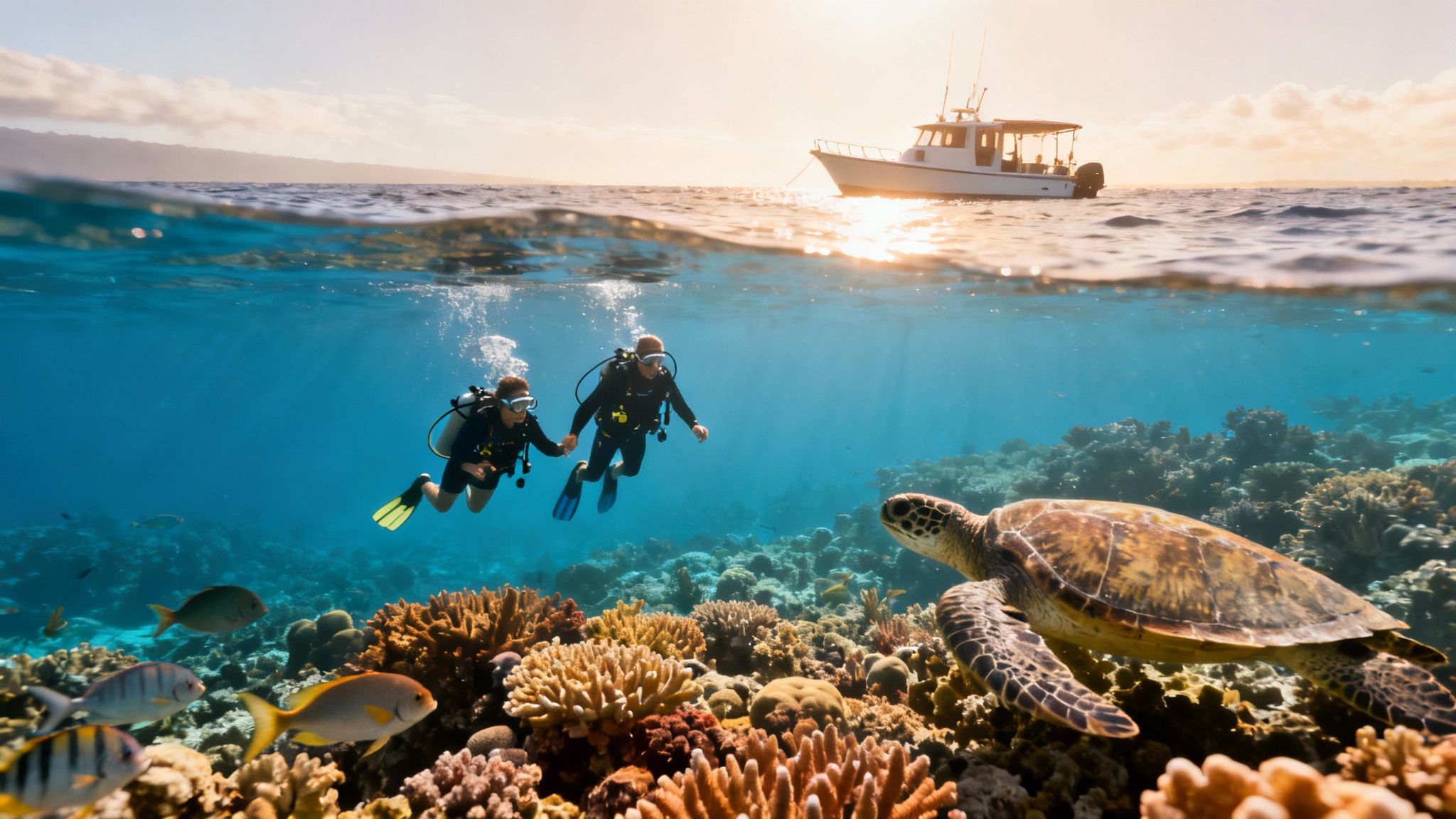
When you decide to learn how to scuba dive in Kona, you’re not just signing up for a class—you’re stepping into a completely unforgettable adventure. The Big Island's waters are legendary for good reason. They're consistently warm, beautifully calm, and the visibility often pushes past an incredible 100 feet. It’s the perfect, stress-free classroom for taking your very first breaths underwater.
That amazing clarity does more than just make it easy to practice your skills. It turns every single training dive into a real-deal underwater tour. While you’re getting the hang of your buoyancy or clearing your mask, don't be surprised if a graceful Hawaiian green sea turtle glides by to check you out. Your backdrop will be schools of colorful reef fish, and you might even hear the distant clicks and whistles of a passing pod of spinner dolphins.
The Kona Honu Divers Advantage
Here at Kona Honu Divers, we believe an environment this amazing deserves an equally incredible training experience. We’ve always kept our class sizes small on purpose. This means you get real, personalized attention from your instructor. You're not just another student in a big group; you're a future diver we're committed to helping become safe, confident, and completely comfortable in the water.
Our whole approach is built on a few core beliefs:
- Expert Instruction: You'll be learning from passionate, seasoned pros who know the PADI and SSI programs backward and forward. More importantly, they know these Kona dive sites like their own backyards.
- Superior Comfort: Forget cramped boats. You’ll train from our custom-built dive boats, designed with divers in mind. There's plenty of space, super easy water entry and exit, and a smooth ride out to the sites.
- Unwavering Safety: Your safety is, and always will be, our top priority. From our meticulously maintained gear to our thorough dive briefings, every part of your training is handled with the highest safety standards in mind.
By learning here, you’re not just gaining a new skill. You’re joining a global community and becoming part of a huge piece of the world's economy. Globally, scuba diving generates between $8.5 and $20.4 billion every year, supporting countless jobs. A fascinating study from the Scripps Institution of Oceanography really breaks down the full economic impact of diving.
Choosing the right dive shop is what turns a certification course into the start of a lifelong passion. It's about feeling supported, safe, and inspired from your very first dive to your hundredth.
We're incredibly proud of the community we’ve built and the adventures we share, but you don't have to take our word for it. See what other divers are saying about their time with our team.
Ready to start your own underwater journey? Let’s get you in the water.
And if you have certified divers in your group, don't worry, we've got plenty of adventures waiting for them, too. Make sure to check out our full lineup of amazing Kona diving tours to see what else the Big Island has in store.
Your Diving Journey After Certification
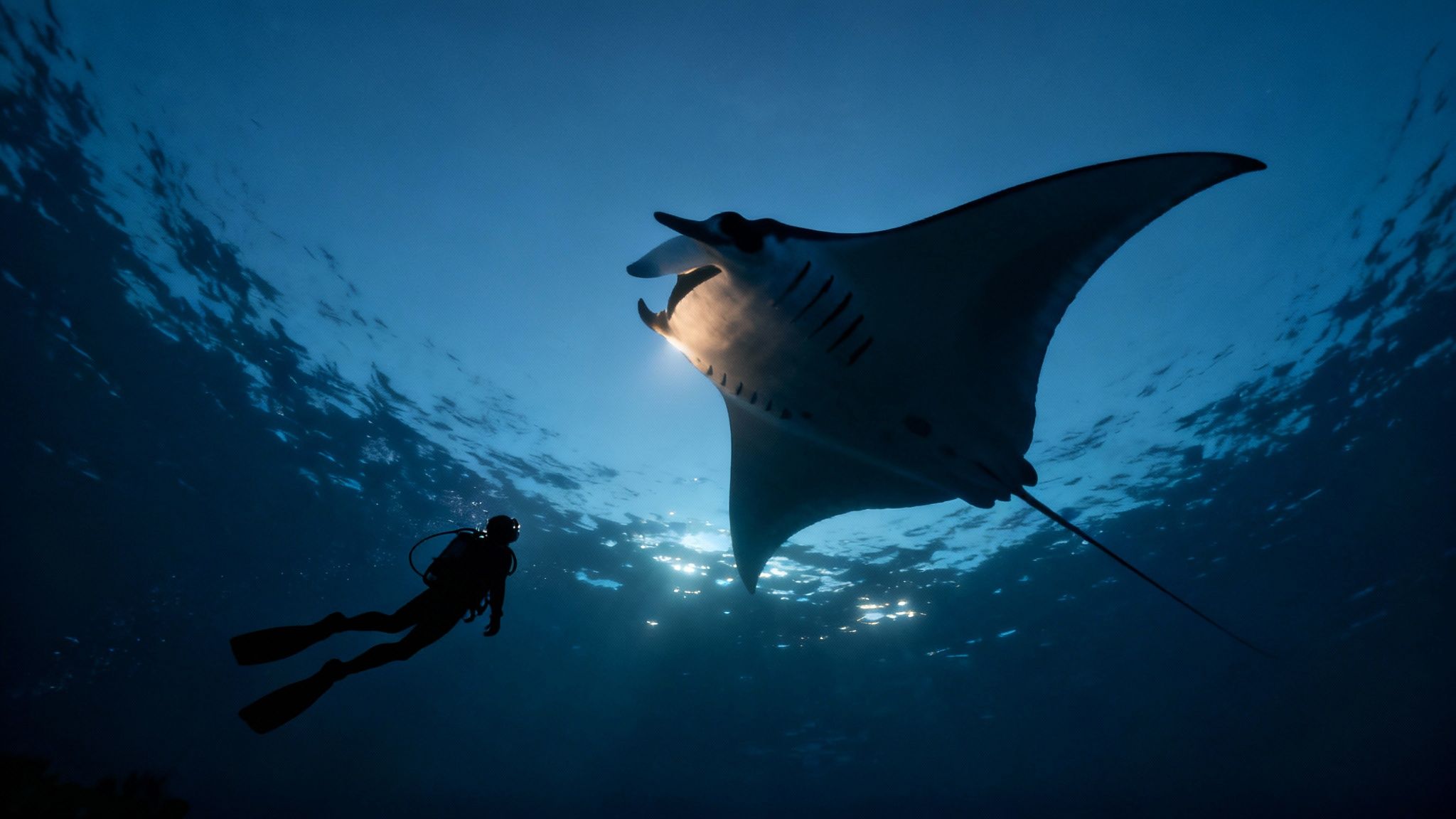
Getting that Open Water Diver card in your hand isn't the finish line—it's the starting gate. Think of it as your passport to the other 71% of our planet. This certification is the key that unlocks a lifetime of adventure, from the coral reefs of Hawaii to shipwrecks in the Caribbean.
Your journey to truly learn how to scuba dive has just begun. The best way to keep the momentum going is to continue your education. For most new divers, the logical next step is the Advanced Open Water course. It's designed to build right on top of what you just learned, expanding your skills and, more importantly, your confidence.
Expanding Your Underwater Horizons
Don't let the name intimidate you. The "Advanced" course isn't about pushing you into dangerous or technical situations. It's all about broadening your experience under the guidance of a professional. You'll complete several "adventure dives," each focused on a different skill.
Imagine trying out deep diving for the first time, nailing your underwater navigation, or descending into the ocean after sunset for a night dive. That’s what this course is about. It makes you a more capable, self-reliant diver who is comfortable in more varied conditions.
Your certification is more than just a piece of plastic; it’s a license to explore. It empowers you to continuously learn, grow, and witness wonders most people will only ever see in documentaries.
Iconic Kona Dives for Certified Divers
Once you have that foundational training, a whole universe of unique dives opens up. Here on the Big Island, you’re in the perfect place to experience some of the most spectacular underwater encounters on the planet.
For many, the absolute pinnacle of diving in Kona is the world-famous Manta Ray Night Dive. We always recommend the dive at Garden Eel Cove. Its protected location usually means calmer water, and the viewing area is fantastic, all set against a healthy reef. It’s an unforgettable experience.
Ready for something truly different? The surreal Blackwater Dive takes you into the deep open ocean at night to witness alien-like creatures migrating up from the abyss. If you're a more experienced diver looking for a challenge, our premium advanced dives will take you to deeper sites and explore more complex underwater terrain.
As you start dreaming about where your certification will take you, consider travel services that can help you plan your dive adventures, whether it's booking courses or arranging trips to far-flung destinations. Your journey with Kona Honu Divers has only just begun.
Common Questions About Learning to Scuba Dive
We talk to tons of people who are buzzing with excitement about learning to scuba dive but also have a few nagging questions holding them back. Getting those questions answered is often the final push they need to jump in. Let's clear up some of the most common ones we hear.
How Long Does Certification Take?
This is probably the number one question we get. The great news is, you can get your PADI or SSI Open Water Diver certification in as little as 3-4 days. That’s all it takes to complete the online theory, get comfortable with your gear in a pool, and then head out for your four incredible ocean dives.
Is Scuba Diving Dangerous?
Any adventure sport has some risk, but scuba diving is surprisingly safe when done correctly. The entire point of your certification is to drill safety into you until it's second nature. By learning the rules, respecting your limits, and diving with a reputable operator, you set yourself up for a lifetime of safe and amazing underwater adventures.
What if I Feel Nervous or Claustrophobic?
You're not alone—this is a super common feeling. The thought of being underwater can be intimidating. A good instructor knows this and will never rush you. We start in a calm, shallow environment, letting you get comfortable at your own pace.
We’ve seen it time and time again: once new divers experience the feeling of being weightless and see the incredible life on the reef, that initial anxiety just melts away. It’s a peaceful, quiet world down there, and most people are shocked by how relaxing it is.