
Picture this: you're weightless, suspended in brilliant blue water, sunlight filtering down from above. You drift past a massive archway formed by ancient lava, now carpeted in a rainbow of living coral. This isn't a dream—it's just another day of Kona scuba diving.
Here on the Big Island, volcanic fire meets the vibrant life of the Pacific Ocean, creating an underwater playground unlike any other. Thanks to near-constant fantastic conditions, with visibility often stretching past 100 feet, Kona has rightfully earned its reputation as a world-class diving destination. Ready to explore the best diving tours Kona has to offer?
Why Kona is a World-Class Diving Paradise
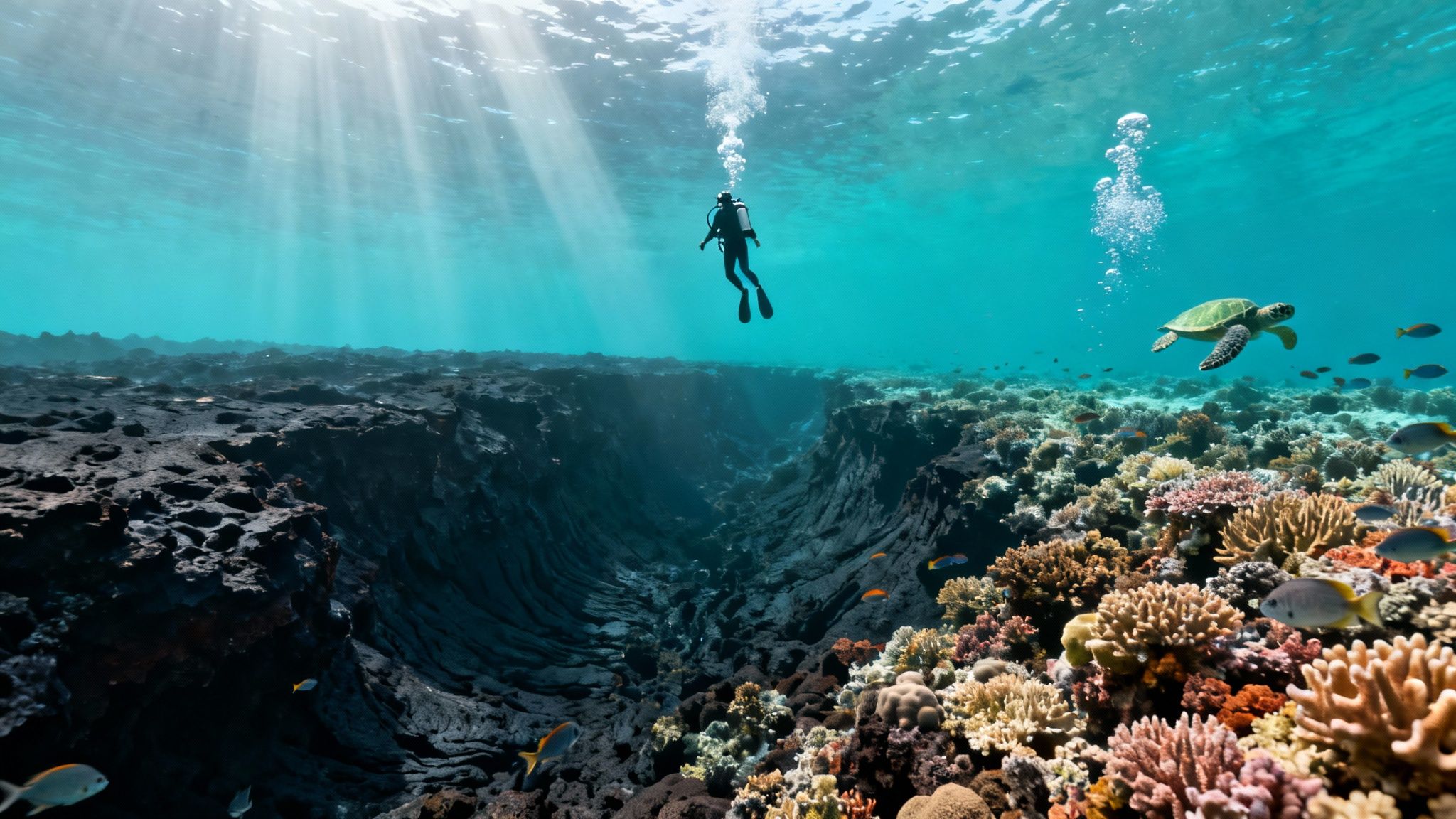
The Kona coast isn't just another pretty spot in Hawaii; it’s a geological masterpiece. The sheer size of the Mauna Loa and Hualālai volcanoes acts as a natural barrier, shielding the coastline from the gusty trade winds that batter other parts of the islands. This leeward position results in incredibly calm, clear waters, perfect for divers of all experience levels.
What’s really special is that you don't need a long boat ride to find the good stuff. The magic starts right off the coast. Over millennia, lava has flowed into the sea, creating a dramatic underwater landscape of canyons, caverns, and swim-through lava tubes that are now home to thriving coral reefs.
The Secret to Kona's Underwater Majesty
It’s this perfect marriage of geology and biology that makes Kona so unique. The volcanic rock provides an ideal foundation for coral to take hold, while the nutrient-rich waters support an incredible density and diversity of marine animals. It’s a fascinating dynamic, and you can dive deeper into the science behind it in our guide on what makes diving in Kona so unique.
This incredible combination hasn't gone unnoticed. From just a handful of pioneering dive shops in the 1970s, Kona has blossomed into a global diving hub. Today, over 50 charter boats cater to more than 150,000 dive tourists annually, who come from all over the world to log some of the roughly 100,000 certified dives that happen here each year.
What You Can Expect to See
Kona is far more than just pretty reefs; it's a stage for unforgettable marine encounters. When you head out on these Ocean Adventures, you're stepping into a world teeming with life.
Some of the regulars you're almost certain to meet include:
- Honu (Hawaiian Green Sea Turtles): It's always a treat to see these gentle giants resting on the reef or visiting a "cleaning station" to get spruced up by smaller fish.
- Endemic Species: A huge percentage of the fish you'll spot—like the vibrant yellow tang or the masked anglish—are found only in Hawaiian waters. It makes every dive feel special.
- Pelagic Visitors: The deep offshore waters bring in the big guys. It’s not uncommon for manta rays, pods of spinner dolphins, and even the occasional whale shark to make a surprise appearance.
The table below gives you a quick snapshot of what makes Kona's underwater world so captivating.
Kona Scuba Diving at a Glance
| Feature | What to Expect | Best For |
|---|---|---|
| Visibility & Conditions | Consistently clear, with 100+ foot visibility and calm seas due to the leeward coast. | Divers of all skill levels, underwater photographers. |
| Underwater Topography | Dramatic lava tubes, arches, caverns, and pristine coral reefs close to shore. | Explorers, photographers, and anyone who loves unique landscapes. |
| Marine Life Encounters | Abundant Honu (sea turtles), endemic fish, and world-famous manta ray night dives. | Wildlife lovers, night divers, and bucket-listers. |
| Dive Variety | Everything from relaxed reef dives and thrilling blackwater dives to iconic manta encounters. | Every type of diver, from the brand new to the highly experienced. |
Ultimately, exploring this underwater paradise with a top-rated crew like Kona Honu Divers makes all the difference. Their experienced guides know the reefs like the back of their hand and can point out the hidden critters and secret spots that turn a good dive into an absolutely unforgettable one.
Exploring Kona's Top Dive Sites
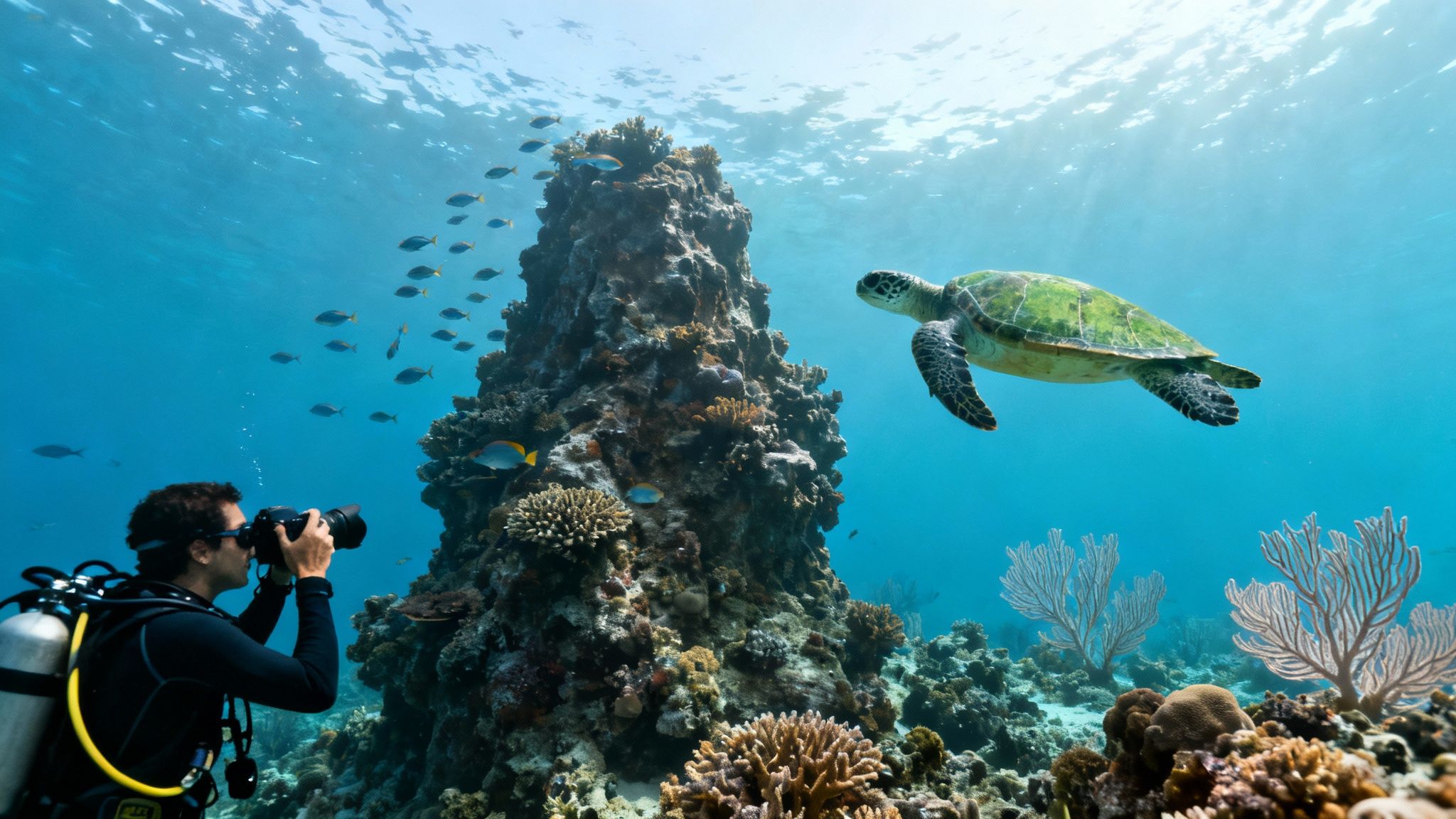
Ready to get some incredible dives in your logbook? The Kona coast is packed with world-class sites, and unlike a lot of other destinations, you don't have to spend hours on a boat to get to the good stuff. Many of the best spots are just a quick trip from the harbor, which means more time where you want to be: underwater.
Each site is a window into the Big Island’s volcanic heart. Imagine dropping into Au Au Crater, a massive submerged caldera where the walls are covered in coral and teeming with fish. Or picture yourself at Turtle Pinnacle, a legendary "cleaning station" where Hawaiian Green Sea Turtles (honu) literally line up for a spa day from the local reef fish. Every site tells a story written in lava rock and living color.
The Signature Kona Dive Experience
A great day of Kona scuba diving is more than just getting wet—it’s a curated adventure. When you dive with an experienced crew like the one at Kona Honu Divers, you’re tapping into years of local knowledge. They know exactly where to drop you to catch the day's best action, and they’re experts at spotting the ocean's masters of disguise.
You’ll find yourself exploring intricate lava tubes, swimming through dramatic archways, and just being blown away by the sheer amount of life down there.
One of the best things about diving here is the element of surprise. One minute you're watching a moray eel peek out from a crevice, and the next, you look up to see a majestic manta ray gliding silently overhead.
This is where having a great guide really pays off. They can point out a perfectly camouflaged frogfish that you’d swear was just a piece of sponge, or a shy octopus tucked away in the rocks. Honestly, these little discoveries are often just as memorable as the big animal encounters.
A Hotspot of Endemic Marine Life
What really makes Kona special is the sheer number of creatures you won't find anywhere else on Earth. The Big Island boasts one of the world's highest concentrations of endemic marine life, both fish and invertebrates. It’s a true biodiversity hotspot.
This volcanic playground is home to famous sites like Turtle Heaven, Garden Eel Cove, and Suck’em Up Lava Tube. Here, it’s common to see whitetip reef sharks resting on the sand, vibrant sponges, and those tiny frogfish our guides love to find. This incredible ecosystem thrives thanks to a combination of healthy corals, dramatic lava formations, and visibility that often reaches 80-100 feet. You can discover more insights about Kona's marine biodiversity on DAN.org.
On any given dive, you're looking at animals that are pure Hawaii. Keep an eye out for these locals:
- Hawaiian Turkeyfish: A striking cousin of the lionfish, found only in these islands.
- Potter's Angelfish: A small, brilliantly orange angelfish that adds a pop of color to the reef.
- Hawaiian Sergeant: A classic reef fish easily identified by its bold, black stripes.
Exploring this environment is a privilege. To help plan your must-see list, take a look at our guide to the most beautiful Kona diving sites.
Whether you're a brand-new diver or you’ve got thousands of dives under your belt, Kona’s underwater world is guaranteed to leave you wanting more.
The Legendary Manta Ray Night Dive
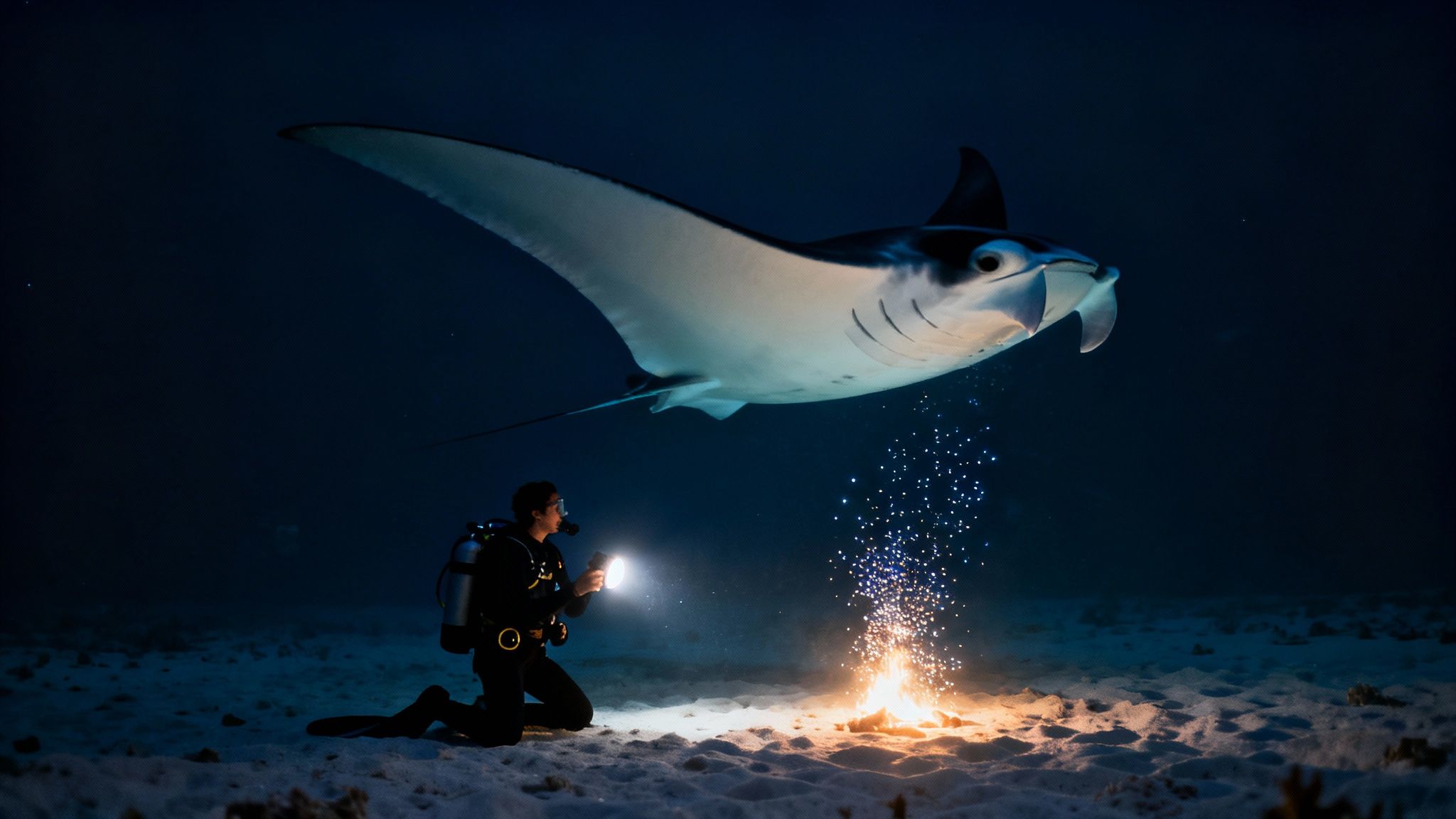
If there's one dive in Kona that rightfully earns the title "legendary," it's the manta ray night dive. Honestly, calling it just a "dive" doesn't do it justice. It's a front-row seat to one of nature's most incredible performances. You can book one of these incredible manta ray dive tours and see it for yourself.
Picture this: you descend into the warm, dark ocean and settle on a sandy bottom. You and your fellow divers arrange your lights to point straight up, creating a massive column of light that cuts through the blackness. This "underwater campfire," as we call it, is the dinner bell.
The intense beams attract a blizzard of phytoplankton, the microscopic organisms that manta rays love to eat. Soon, the stars of the show make their entrance. Massive manta rays, some with wingspans over 12 feet, glide out of the darkness and begin a silent, weightless ballet just inches above you. They perform graceful barrel rolls, their giant mouths wide open, scooping up the plankton in a breathtaking feeding dance.
Why Garden Eel Cove is the Premier Stage
While you might see mantas at a couple of spots, Garden Eel Cove is hands-down the superior choice for this experience. Why? For a few key reasons. The cove is tucked into a protected bay, which means calmer, more predictable conditions that are comfortable for divers all year round.
The underwater setup at Garden Eel Cove is also ideal. It features a better, more thoughtfully arranged viewing area that creates a sort of natural amphitheater. This allows dive groups to settle in comfortably without kicking up sand or damaging the pristine reefs that surround the site. These healthier reefs add to the beauty of the dive, making the whole experience superior even before the main event begins.
There's truly nothing like the feeling of a giant manta swooping so close you can feel the water displaced by its wings. It's a powerful, humbling connection with one of the ocean's most majestic animals, and it happens right here in Kona, night after night.
A Legacy of Awe and Conservation
This world-famous dive actually grew from humble beginnings. What started with a few boats in the early 1990s at spots like the old Kona Surf Hotel has evolved into the globe-spanning phenomenon it is today. Its incredible success rate draws divers from all over the world.
Thanks to the work of organizations like the Manta Pacific Research Foundation, we know a lot about our local population—they've identified over 270 individual manta rays here!
When you join this dive, you’re becoming part of that story. That’s why it’s so important to choose an operator who puts the safety of both divers and mantas first. At Kona Honu Divers, we've fine-tuned this experience to ensure every encounter is both awe-inspiring and completely respectful of the animals. Our guides will ensure you're in the perfect spot to witness the magic while adhering to strict conservation guidelines.
If you want to learn more about this incredible Kona specialty, check out our complete guide to manta ray tours on the Big Island.
Advanced Diving Adventures in Kona
Sure, Kona's vibrant reefs and world-famous manta ray encounters are spectacular. But for divers with the training and the nerve to go a little further, a completely different world opens up—one that takes you from the familiar shallows into the vast, mysterious deep.
This is where the real exploration begins. If you’re an experienced diver with a solid logbook, you can access a side of Kona scuba diving that most visitors will never see. We're not just talking about going deeper; we're talking about venturing into unique environments that demand skill, confidence, and a genuine curiosity for the unknown.
The Kona Blackwater Dive
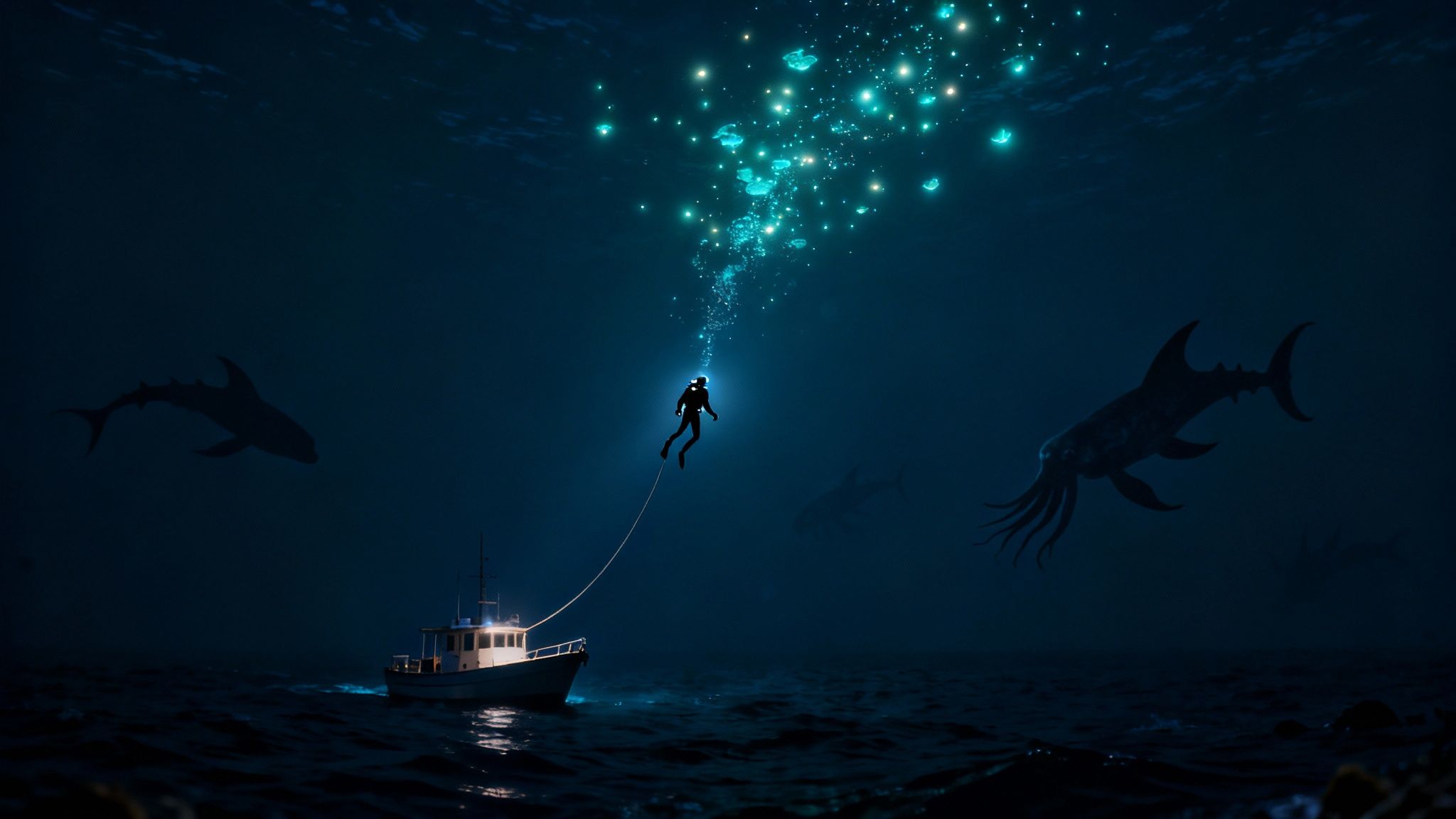
Picture this: you're floating in the profound, inky blackness of the open ocean, miles from shore, with thousands of feet of water right below you. Your only point of reference is the line tethering you to the boat above. This is the one-and-only Kona Blackwater Dive—an experience that isn’t about the reef at all, but about the bizarre life that rises from the abyss.
Every single night, the largest migration on Earth takes place as countless creatures ascend from the deep to feed near the surface. A blackwater dive puts you right in the middle of it all.
What you see down there is like something out of a science fiction movie. Bizarre, gelatinous, and often bioluminescent, these animals are perfectly adapted to a life of perpetual darkness. It’s an encounter with life in its most wonderfully alien form.
It’s a complete sensory overload, in the best way possible. You'll meet creatures you’ve likely never even heard of, from translucent larval fish and shimmering comb jellies to the elusive pelagic seahorse. It's a dive that completely rewires your brain and leaves you with an incredible story to tell.
Exploring Deeper Lava Tubes and Walls
Beyond the blackwater experience, advanced divers can explore Kona’s dramatic underwater architecture at greater depths. The same volcanic forces that shaped the island created a complex network of deep lava tubes, sheer drop-offs, and breathtaking walls that plunge straight into the blue.
These deeper sites are where you’ll find different species and more intricate formations. Getting into these environments requires excellent buoyancy control and a calm confidence, but believe me, the rewards are immense.
- Dramatic Topography: Imagine navigating through ancient lava tubes that feel like submerged cathedrals or drifting along sheer walls that simply disappear into the depths below.
- Unique Marine Life: Deeper waters often attract different shark species, larger schools of pelagic fish, and rare invertebrates that thrive in the cooler, darker environment.
- A Sense of Discovery: These sites are far less crowded, giving you a feeling of true exploration and a more personal connection with Kona’s wild, untamed side.
For divers who are ready to take on this next level, a premium advanced dive tour is the way to go. These trips are designed specifically for experienced divers, ensuring the entire group has the skills to safely handle the challenge and fully appreciate the beauty of Kona’s deeper secrets.
How to Plan Your Kona Diving Trip
Turning that dream of scuba diving in Kona into reality is a lot simpler than you might think. A little bit of smart planning goes a long way in making sure your trip is seamless, safe, and packed with the exact kind of underwater adventure you're craving. From picking the best time of year to figuring out what gear to bring, we'll walk you through everything.
Kona is a phenomenal year-round diving destination, but the seasons do have their own unique personalities. If you love warm water, the summer months (June-August) are for you, with ocean temperatures often hitting a balmy 80°F (27°C) and the seas being exceptionally calm. The winter (December-February) is a touch cooler at around 75°F (24°C), but it comes with an unforgettable soundtrack: the songs of humpback whales echoing through the water on your dives.
No matter when you decide to visit, the conditions are almost always fantastic. The massive volcanoes on the Big Island act as a natural shield, keeping the waters calm and clear. It’s not uncommon for visibility to stretch out well past 100 feet, so really, any time is a great time to jump in.
A Guide to Kona's Diving Seasons
Here’s a quick breakdown of what you can expect from the water conditions throughout the year. This should help you pinpoint the perfect time for your trip based on what you want to see and experience.
| Season | Average Water Temp | Visibility | Key Marine Life Sightings |
|---|---|---|---|
| Spring (Mar-May) | 76-78°F (24-26°C) | Excellent (100+ ft) | Manta rays, dolphins, turtle nesting season begins |
| Summer (Jun-Aug) | 79-81°F (26-27°C) | Excellent (100+ ft) | Calmest seas, pilot whales, large schools of fish |
| Fall (Sep-Nov) | 78-80°F (26-27°C) | Very Good (80-100+ ft) | Manta ray mating season, occasional whale sharks |
| Winter (Dec-Feb) | 75-77°F (24-25°C) | Excellent (100+ ft) | Humpback whale season (you can hear them!), manta rays |
Ultimately, the "best" time to dive in Kona really just depends on what you're hoping to experience. The diving is incredible 365 days a year.
What You'll Need: Certifications and Gear
One of the greatest things about diving here is how accessible it is. Most of Kona's stunning reef sites are well within the limits for an Open Water certified diver.
For some of the more specialized dives, though, you’ll need a bit more training under your belt. The world-famous Kona Blackwater Dive, for example, requires an Advanced Open Water certification because of its unique conditions—drifting in the deep open ocean at night.
As for packing, keep it simple. Your swimsuit, some reef-safe sunscreen, and a good hat are the absolute must-haves. And don't forget your certification cards and logbook! If you’re bringing the whole crew along, checking an ultimate family vacation packing list can be a lifesaver to ensure nothing important gets left behind.
A huge perk of diving with a top-notch operator like Kona Honu Divers is that you don't have to worry about schlepping your own gear. They provide everything you could possibly need—regulators, BCDs, wetsuits, computers—and it's all meticulously maintained. This saves you a ton of hassle and airline baggage fees.
Here's a pro tip: Kona Honu Divers offers free Nitrox for all certified Nitrox divers. This is a massive benefit, allowing you to safely extend your bottom time. That means more precious minutes enjoying the reef on every single dive.
Booking with the Right Team
Choosing your dive operator is one of the most important decisions you'll make, as it can truly define your entire experience. With more than 20 years in these waters, Kona Honu Divers has the local knowledge and experience that makes all the difference. They are absolutely committed to small group sizes, which means you get a much more personal and uncrowded dive.
Their guides are seasoned pros who know these dive sites like the back of their hand. They’re not just there to keep you safe; they’re passionate about sharing the magic of Kona’s underwater world with you. But you don't have to take our word for it—their reputation for excellence speaks for itself.
It's a really good idea to book your diving tours in advance. This is especially true for the super popular trips like the manta ray night dive and during peak travel seasons. Securing your spot early gives you peace of mind and lets you build the rest of your vacation plans around your dives.
Diving with Aloha and a Commitment to Conservation
Diving in Kona is a privilege, and with it comes a shared responsibility to protect what makes this place so special. The Hawaiian value of Mālama—to care for, preserve, and protect—is at the very heart of the experience here. It’s a philosophy that shifts your perspective from being just a visitor to becoming a temporary guardian of the reef.
This commitment to the ocean begins long before you even hit the water. Every diver has a role to play in keeping these vibrant ecosystems thriving for the next generation. It’s all about making conscious choices that have a real, positive impact on the fragile world beneath the waves.
Practicing Mālama on Every Dive
Adopting a conservation-first mindset doesn't have to be complicated. In fact, a few simple practices can make a world of difference for the health of Kona's reefs.
Here’s how you can dive with aloha:
- Use Reef-Safe Sunscreen: Many popular sunscreens contain chemicals like oxybenzone and octinoxate, which are known to be incredibly harmful to coral. Always opt for a mineral-based, reef-safe formula to prevent coral bleaching and protect the entire marine food chain.
- Master Your Buoyancy: This is probably the single most important skill a diver can have. Perfecting your neutral buoyancy allows you to float effortlessly over the reef, preventing accidental kicks and bumps that can break or kill corals that took decades, or even centuries, to grow.
- Observe from a Distance: Remember, you're a guest in their home. Give marine animals their space and never touch, chase, or harass them. Keeping a respectful distance not only minimizes stress on the animals but also lets you witness their natural behavior, which is a far more rewarding experience.
Safety as a Pillar of Conservation
It's simple: a safe diver is an environmentally conscious diver. When you're feeling calm and confident underwater, you have the awareness to truly pay attention to your surroundings and your impact on the reef. This is exactly why thorough safety protocols are non-negotiable.
A well-briefed dive plan and a solid grasp of safety procedures aren't just about protecting you; they're about protecting the underwater world. A calm, aware diver is one who moves gracefully and thoughtfully through the environment.
Choosing an operator that puts safety and conservation on equal footing is crucial. With over 20 years of experience, Kona Honu Divers lives this principle. Their expert guides aren’t just focused on your safety; they are passionate stewards of the ocean, dedicated to sharing its wonders in the most respectful way possible.
Answering Your Kona Scuba Diving Questions
As you start piecing together your Kona diving adventure, you’re bound to have some questions. It’s completely normal! To help you iron out the details, we've put together answers to some of the most common questions we hear from divers just like you.
Getting these logistics sorted out now means less time worrying and more time getting excited about the incredible underwater world waiting for you here.
What Certification Level Do I Need to Dive in Kona?
One of the best parts about diving in Kona is that it truly offers something for everyone. If you have your Open Water Certification, you’re good to go! A huge number of Kona's most stunning and lively reef sites are well within your depth limits, so you'll have plenty of amazing places to explore.
That said, some of our most unique dives do require a bit more training. For instance, the unforgettable Kona Blackwater Dive is reserved for divers with an Advanced Open Water certification. The same applies to some of the deeper, more intricate lava tubes and dramatic walls you can explore on an advanced dive tour.
If you're thinking about leveling up your skills while you're in town, we offer plenty of courses to get you there.
Are Manta Ray Sightings Guaranteed on the Night Dive?
Manta rays are wild creatures, so we can never promise a 100% guarantee. But I can tell you this: the success rate for seeing them on the manta ray night dive at Garden Eel Cove is incredibly high—we're talking over 90% of the time. The specific conditions at this site have created one of the most reliable manta feeding grounds on the planet.
On the very rare night the mantas are a no-show, the dive is still absolutely phenomenal. Our bright lights draw in a whole host of other nocturnal critters, and the reef completely comes alive. It's like watching a busy city wake up after sunset.
What's Included in a Dive Tour with Kona Honu Divers?
When you book a diving tour with us, our goal is to make it a seamless, all-inclusive experience. Every standard charter comes with:
- Tanks and weights
- A professional, knowledgeable guide who knows these waters inside and out
- Great snacks and drinks to keep you fueled up between dives
Don't want to haul your own gear? No problem. We have high-quality, well-maintained rental equipment available. And one of the best perks we offer certified divers is free Nitrox. It's a game-changer for extending your bottom time and helping you feel less tired, letting you get the absolute most out of your dives.
How Far in Advance Should I Book My Dives?
My best advice? Book as early as you possibly can. This is especially critical for our most popular trips like the manta ray night dive, which often sells out weeks, and sometimes even months, in advance. If you're planning to visit during a peak season like a major holiday or summer break, booking ahead is a must.
Locking in your spot early means you get the dates and times you want, giving you the peace of mind to plan the rest of your vacation around the really fun stuff. You can see our real-time availability and book your spot right now.