
You're standing at the edge of Kailua-Kona with wet hair, a snack in one hand, and three different dive options already bouncing around your head. One trip promises mantas after dark, another looks easier for the whole family, and a third sounds more serious, more technical, and frankly more interesting if you care about the diving. That's the Kona problem, there are plenty of boats, but only a few of them are the right boat for your day.
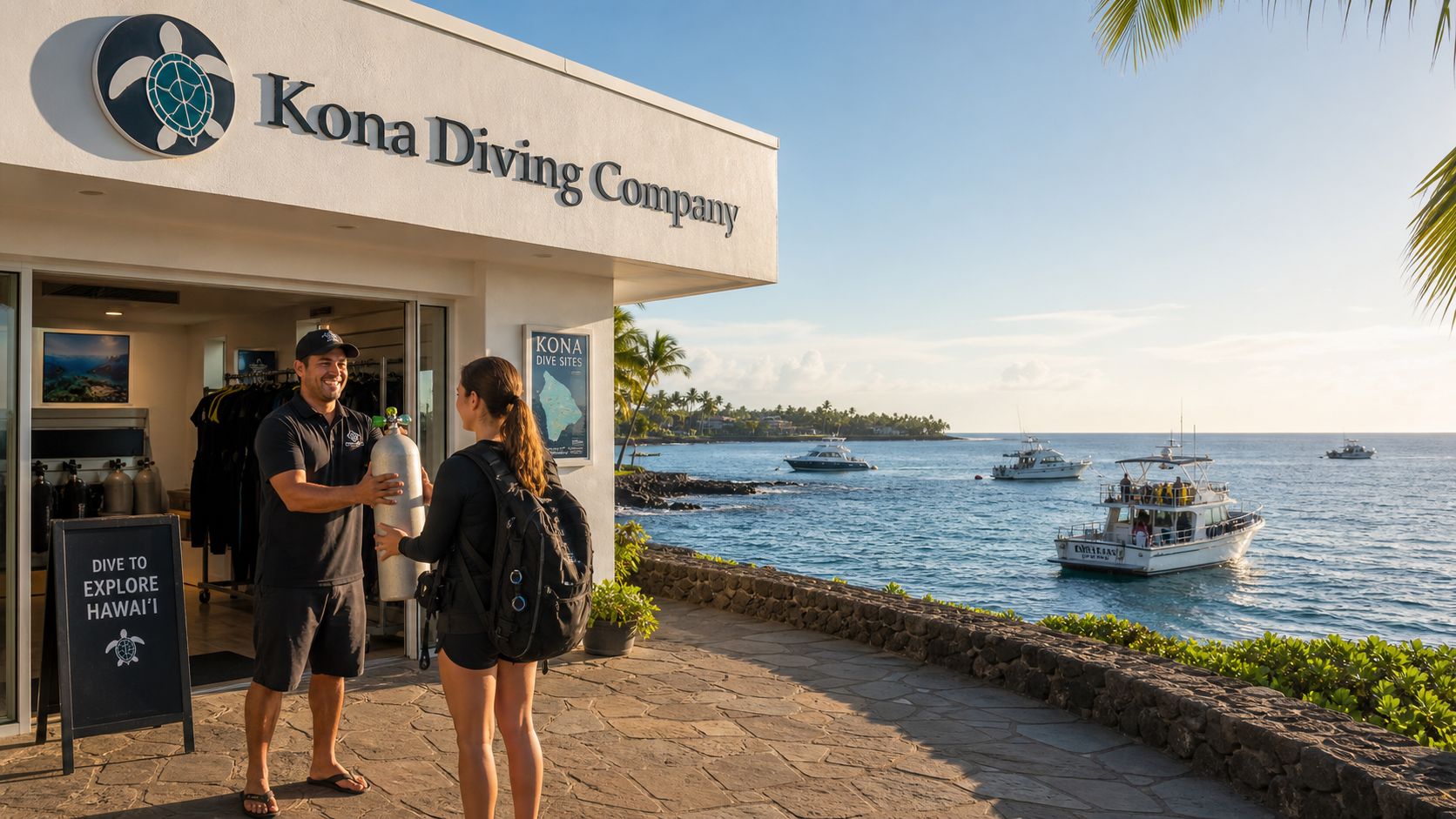
Kona Diving Company is a family-owned-and-operated full-service dive center in Kailua-Kona, and PADI lists it at 74-5615 Luhia St. E-1 with phone +1 808-331-1858 and hours of 10:00 AM to 3:00 PM every day (PADI dive center listing). That schedule tells you a lot. This is a compact retail and booking operation, not a sprawling multi-shift resort machine, and that matters when you're deciding where to spend your money and your dive time.
Kona's dive scene rewards people who choose deliberately. Some operators are built for broad retail support, some are built for niche trips, and some lean hard into advanced logistics. If you want to compare crew quality and training depth, start with the broader team overview at Kona Honu Divers' dive team page, then judge every shop the same way, by how they run the water, not by the logo on the storefront.
Meet Kona Diving Company and the Local Dive Scene
You pull into Kona, park once, and the whole conversation turns to mantas, reef dives, and whether the water looks calm enough to make the entry worth it. That is the local market in plain terms. People do not come here for a generic boat ride, they come for a dive that feels worth the airfare.
Kona Diving Company fits into that scene as a full-service dive center with a clear retail and booking footprint in Kailua-Kona. The same PADI-listed contact details appear throughout their storefront, but the operational takeaway is simple, their compact daily schedule points to a shop built around scheduled departures, gear support, and guest turnover rather than all-day walk-in traffic.
Why the local dive shop matters
A Kona dive shop is more than a place to rent fins. It is where you find out whether a trip fits your certification, your comfort in current, and your tolerance for a long boat day. That difference shows up fast, especially if you are trying to combine diving with other island plans.
Kona Honu Divers sits in the same local ecosystem, but it is structured differently. Their charter model is more specialized, with a broader range of dive profiles and private-boat flexibility that suits divers who want more control over site selection and conditions. If Kona Diving Company is the convenient shop front you can walk into, Kona Honu Divers is the operator you compare when you want to know how the water logistics are handled, and you can judge that by reviewing the team behind their dives.
Practical rule: choose the operator that matches the dive you want, not the one with the prettiest homepage.
The local scene rewards people who ask direct questions. Ask where you launch, how many divers are in the water at once, and what happens if conditions change after check-in. Shops that answer those cleanly are usually the ones worth booking.
Signature Dives and Which One Is Right for You
The biggest mistake I see in Kona is people booking the most famous trip before they've decided what kind of day they want. A manta ray night dive is not a default answer. A day reef dive is not a consolation prize. They're different tools, and the right one depends on your comfort in the water, your goals, and how much structure you want around the trip.
Manta ray night dive versus snorkel
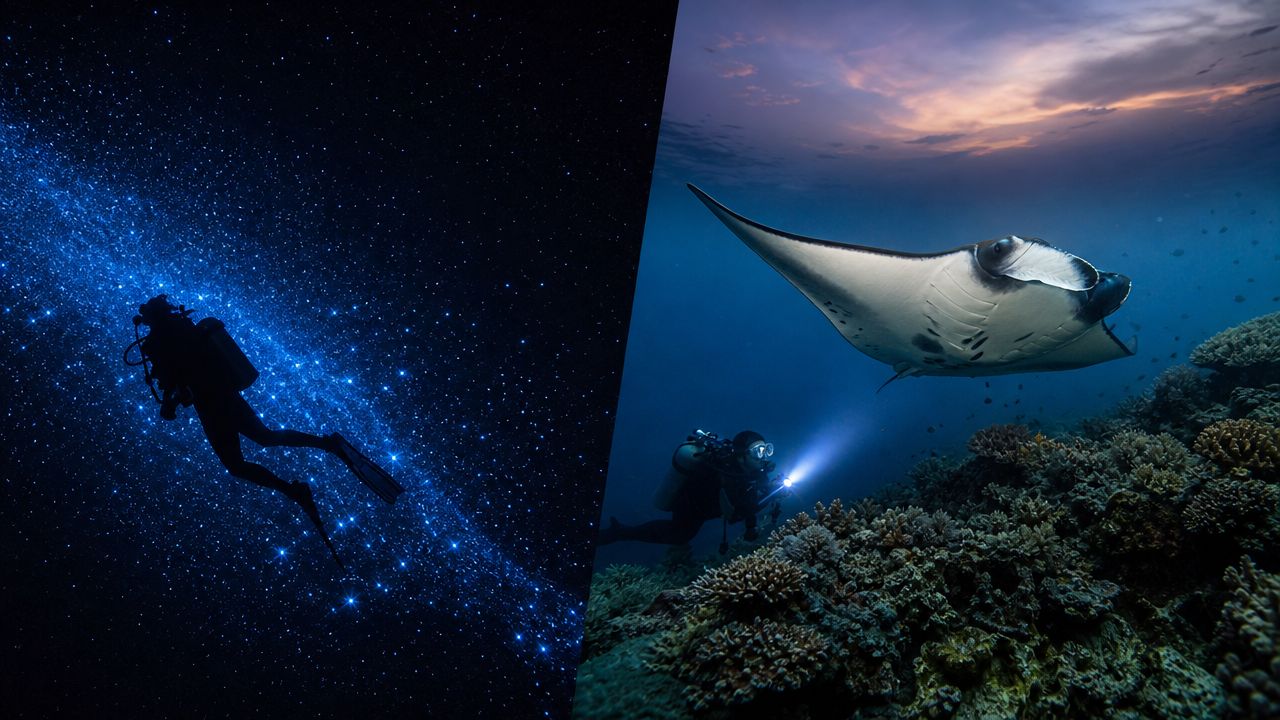
The manta dive is the headline experience because it's dramatic, but the decision should be practical. Kona Honu Divers runs the manta trip as a two-stage profile, reef first, then a sunset surface interval, then the manta segment at about 35 ft (10 m) in calm conditions, with a deeper 55 ft “campfire” setup when swell increases (manta dive details). The deeper setup changes gas use, no-decompression margin, and buoyancy load, so if you're new, cold, or rusty, that matters more than the marketing language.
Garden Eel Cove is the superior place to do it. It's more protected, it gives you a better viewing area, and the reef structure helps the whole experience feel less chaotic. If you want the cleanest manta viewing setup, book the dive there instead of chasing a vague “Kona manta” label.
Day reef dives and advanced trips
Day reef diving is the smarter choice if you want more time exploring and less time managing a special event. You'll usually handle simpler logistics, better light, and less task loading than at night. That makes day reefs the right call for newer certified divers, families with mixed confidence levels, and anyone who prefers seeing the site first instead of discovering it in the dark.
Advanced long-range trips are for divers who already know they want more than a standard reef loop. Kona Honu Divers' charter menu includes 2-tank long-range dive, 2-tank local dive, 3-tank local dive, manta night dive, night reef dive, blackwater dive, research work, and dive/snorkel combinations (private charter menu). That range matters because it tells you the operator is matching the profile to the mission, not forcing every guest into the same itinerary.
If you get seasick easily, want a quieter briefing, or just hate feeling rushed, pick the daytime reef over the night spectacle. You'll enjoy the water more and talk about the dive more honestly afterward.
Blackwater and other specialty dives
Blackwater diving is not a casual add-on. It's a night-time open-ocean experience that demands strong buoyancy, lighting discipline, and comfort with unfamiliar visuals. If you've never done a true night dive, don't pretend blackwater is the place to start. If you already know you like weird, technical, high-attention diving, then it belongs on your shortlist.
For a broader view of the Big Island's scuba options, check Kona Honu Divers' diving page. That's the cleanest way to compare profiles before you commit to a single trip.
Safety Practices and Operational Quality That Matter
A good Kona operator isn't just selling access to fish and lava. It's running a controlled environment where crew judgment, briefing quality, and how the boat handles changing ocean conditions matter more than any award badge on a webpage. The tourist version of safety is “we're licensed.” The actual version is whether the crew can keep a mixed group stable, informed, and calm when the day turns rougher than expected.
Kona Honu Divers is a useful benchmark here because the operation publicly emphasizes over 200 years of combined industry experience and custom dive boats with carefully maintained gear. Their private-charter structure is built for matching dive profiles to conditions and diver experience, which is exactly how a good operator should think. Small groups, better supervision, and fewer compromises usually produce cleaner dives than a boat packed to the rails.
What to ask before you book
Ask about the briefing before you ask about the shirt size. Ask about entry and exit procedures before you ask about snacks. Ask how they handle a site change when the swell shifts, because that's the question that separates a polished operator from a marketing-heavy one.
Use this checklist:
- Group size: Smaller groups usually mean more control and faster problem-solving in the water.
- Briefing quality: A solid briefing should cover site flow, hand signals, exits, and what happens if a diver gets uncomfortable.
- Boat loading: A full boat isn't automatically bad, but it changes how much individual attention you'll get.
- Site flexibility: Good operators change plans when conditions demand it instead of pretending the forecast is irrelevant.
- Crew experience: Years in the water matter because judgment improves with repetition, not slogans.
The scuba safety stop guidance from Kona Honu Divers' safety page is worth reading if you're the kind of diver who wants the operational details, not just the sales pitch. It reinforces the same point I'd make on any dock in Kona, planning and discipline reduce risk more than confidence does.
One more thing. Private charters aren't just a luxury label. They're a way to keep advanced profiles, mixed experience, and changing water conditions from colliding on the same boat.
Pricing, Packages, and How to Book Your Dive
Booking in Kona gets easier once you stop thinking in terms of a single ticket price and start looking at what the trip includes. Gear, nitrox, transit, briefing time, and the number of dives all change the value. A cheap seat that forces you to piece together rentals and add-ons can cost more than a cleaner package.
Kona Honu Divers offers package-oriented diving through its Hawaii scuba diving packages page, and that matters because package deals are often the simplest way to save money without giving up quality. Their published positioning also highlights free nitrox, which is a real advantage for certified divers who want a more efficient gas mix without paying extra for it. If you're nitrox-certified, ask for it every time.
How to book without making a mess of the schedule
Start with the trip type, then work backward from your calendar. The manta dive is the one people regret leaving until the end of the trip, because popular nights fill early and weather windows are limited. If you want that trip, reserve it early and keep your schedule flexible around it.
Direct booking is usually the better move when the dive matters most. Third-party platforms can help you compare options, but they are not where I'd place my best bet for timing, gear, and operator control. If you're traveling with a group, lock the dive first, then build the rest of your island plans around it.
Typical Kona Dive Tour Durations and Conditions
| Tour Type | Duration | Transit Time | Water Temp |
|---|---|---|---|
| Manta ray night dive | About 5.5 hours for the two-tank trip, about 3.5 hours for the one-tank version (travel review) | Roughly 40 minutes each way on the reviewed route | Usually 76–81°F in the same travel review |
| Standard Kona boat dive | Varies by operator and dive count | Usually built into the charter day | Not fixed, conditions vary by site |
| Advanced or long-range dive | Varies by charter profile | Longer transit by design | Not fixed, conditions vary by site |
The point is not to chase the lowest number. Book the trip that includes the parts you would otherwise pay for separately, and do not pretend you are immune to logistics just because you are on vacation.
Traveler Logistics and Preparing for Your Kona Dive Trip
The smartest dive trips in Kona start before you ever touch the boat dock. If you're prone to motion sickness, if you're flying in the day before, or if you're juggling diving with volcano visits and family plans, the difference between a good trip and a rough one is usually preparation, not luck. The ocean doesn't care that you have a full vacation calendar.
Seasickness is common enough that I treat prevention like standard gear. I'd rather a guest arrive prepared than discover halfway to the site that they're miserable. The practical options are simple, and they work differently for different people.
- Ship-EEZ Seasickness Patch for travelers who want a patch-based option before boarding, Ship-EEZ Seasickness Patch
- Dramamine pills for people who want a familiar medication option, Dramamine pills
- Bonine pills for an over-the-counter alternative, Bonine pills
- Sea Band wristbands if you want a cheaper generic style that gets better ratings, Sea Band wristbands
- Ginger chews if you prefer a non-medication option to keep in your bag, Ginger chews
Timing, flights, and dive-day discipline
Don't plan a high-altitude day right after diving. The standard safety rule is to wait 24 hours before flying or going up to places like Mauna Kea or Mauna Loa, because nitrogen doesn't clear fast enough for a quick altitude change. That rule is not optional if you value your health.
Pack like someone who expects to be on a boat. Bring sun protection, a dry layer for after the dive, and enough water to stay ahead of dehydration. If you're doing multiple dive days, keep the first one lighter, then stack the more demanding trip after you've already settled into island rhythm.
Here's the operational reality on dive day. You arrive, gear gets sorted, the crew runs the briefing, and then the day turns into boat time, water time, and debrief time. If conditions shift, a competent operator adapts the site or the sequence without making a spectacle of it.
The best travelers don't fight the weather report. They build a plan that can survive it.
That's the mindset that keeps the whole vacation from unraveling when the ocean gets honest.
Common Questions and Misconceptions About Kona Diving
The wrong question is “Is the manta dive worth it?” The right question is “Worth it for whom?” If you're certified, calm at night, and you want a distinct Kona experience, the manta dive earns its reputation. If you're a nervous traveler, cold-sensitive, or only half-interested in being on a boat after dark, snorkeling or a daytime reef dive may give you a better day.
Mixed-experience groups are another place people overcomplicate things. Put the person with the weakest comfort level first, not the loudest opinion. If one guest wants a night spectacle and another wants a simpler water experience, split the decision by comfort, not ego.
There's also a tendency to overrate reviews and awards. They matter, but only as signals. Kona Diving Company's review profile is strong, with at least 1,378 TripAdvisor reviews and the TripAdvisor Certificate of Excellence from 2014 to 2019 plus the Travelers' Choice Award from 2020 to 2023, a 10-year run that does suggest sustained guest volume and consistently strong ratings (TripAdvisor listing). But a good review record doesn't answer the question that matters most, whether the trip fits your body, your schedule, and your skill level.
If you're still unsure about certification or whether you can dive at all, read this Kona certification guide before booking. It's the cleanest way to stop guessing.
A rough day on the ocean doesn't mean the operator failed. Sometimes it means the conditions changed, and the right call was to scale back or reschedule. A good shop tells you the truth about that before you're already on the water.
Kona Honu Divers runs a full lineup of Kona scuba trips, including manta ray dives, blackwater diving, day reefs, and private charters built around how you want to dive. If you want a trip that puts safety, logistics, and real dive planning ahead of hype, visit Kona Honu Divers and book the format that fits your skill level and schedule.