
The first time you drop below Kona's surface at dusk, the light goes cobalt, the reef goes quiet, and the whole coast feels like it's holding its breath. A few minutes later, you understand why so many divers type “Kona diving company” into a search bar and then spend hours trying to figure out which operator will get the details right.
Your Ultimate Adventure with Hawaii's Top Dive Operator
The first boat ride tells you a lot. I watch divers settle in, check how they listen to the briefing, and start asking the questions that matter once the harbor drops behind us. Are you here for an easy reef day, your first manta experience, or the kind of diving that asks for sharper buoyancy, better gas awareness, and a crew that stays calm when conditions change?
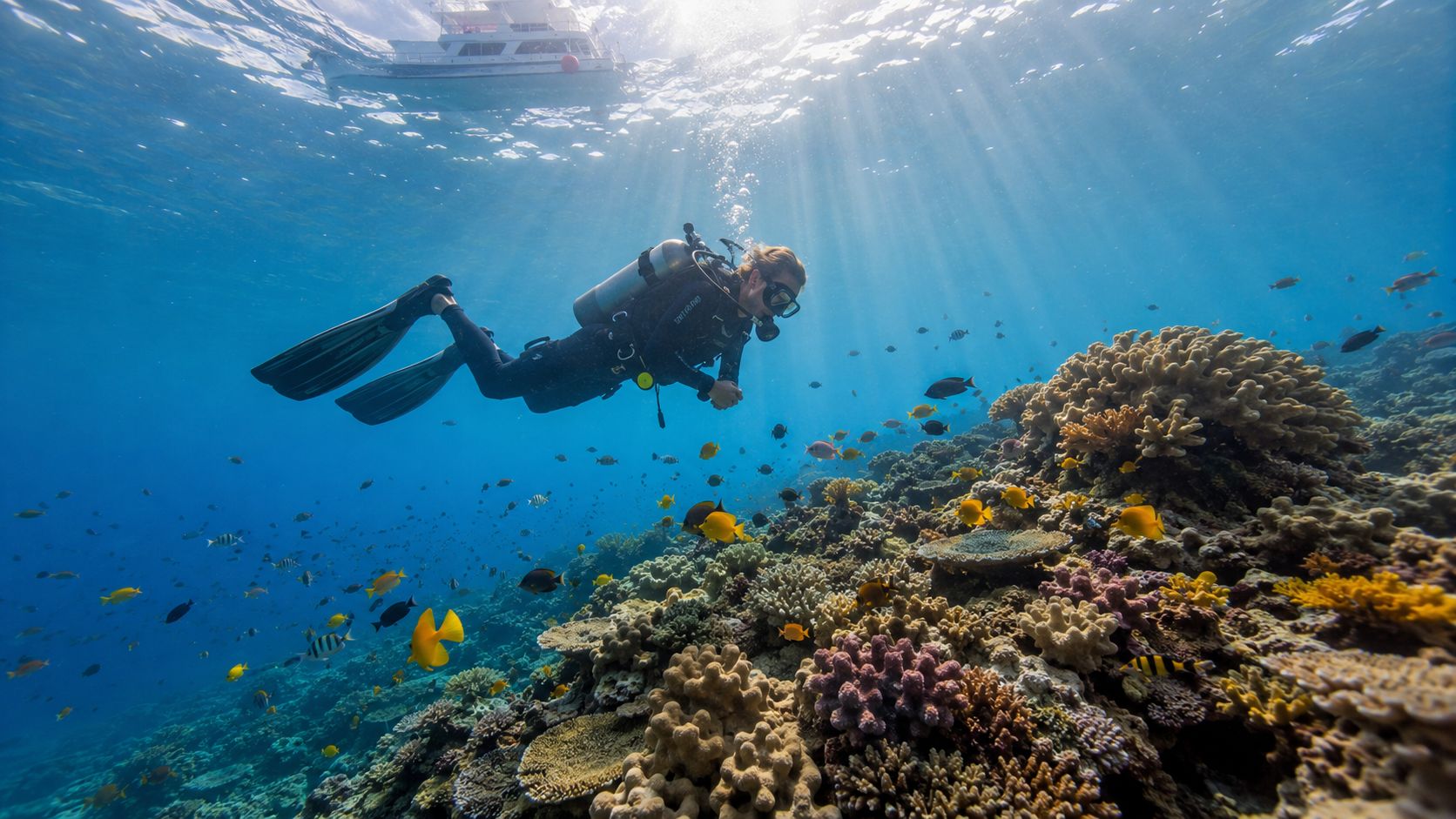
That is the optimal way to choose a Kona diving company. Some operators are built for volume. Big loads, fixed routines, broad appeal. That model can work fine for simple vacation dives. It is less impressive when the group has mixed skill levels or when the plan includes night diving, advanced profiles, or wildlife encounters where site choice and briefing quality change the whole experience.
Kona Honu Divers stands out because they run a more boutique operation with a clear safety culture. The difference shows up in practical ways. Divers get thoughtful site matching, concise but complete briefings, and crews that pay attention to who is on the boat instead of pushing everyone through the same template. For experienced divers, that means access to stronger dives run with discipline. For newer divers, it means the day stays manageable instead of intimidating.
Here is the diver's-eye view I give friends visiting Kona:
- Newer certified divers do best with an operator that keeps logistics tight, chooses forgiving sites, and gives enough briefing detail to lower task loading underwater.
- Couples, families, and mixed groups need flexibility. One person may want a relaxed reef dive while another is already asking about mantas or a manta ray night swim in Kona.
- Advanced divers should look past the boat and the sales pitch. Ask who runs the harder dives well, who cancels when conditions are wrong, and who can explain why a site is right for your experience level that day.
That last point matters in Kona.
The coastline offers easy, beautiful dives, but it also rewards skill. Return divers start with the famous highlights, then quickly realize the island has much more to offer. Lava tubes, sharp reef structure, pelagic encounters, night dives, and specialty trips all ask for better judgment from both diver and crew. A mass-market operator may sell the same dream. A safety-focused boutique crew is more likely to deliver the right version of that dream for the diver you are.
The World-Famous Manta Ray Night Dive Experience
If you only do one signature dive in Kona, this is the one people remember for years. The manta ray night dive isn't a novelty dive. It's one of the most unusual and reliable wildlife encounters in recreational scuba, and the site choice matters more than many visitors realize.
The strongest setup is at Garden Eel Cove, also called Manta Heaven. It's the superior site because it's protected by Keahole Point to the south, which blocks the typical southern swell found in summer and creates a calmer experience with a better viewing area and better reef layout, according to the Garden Eel Cove site overview.
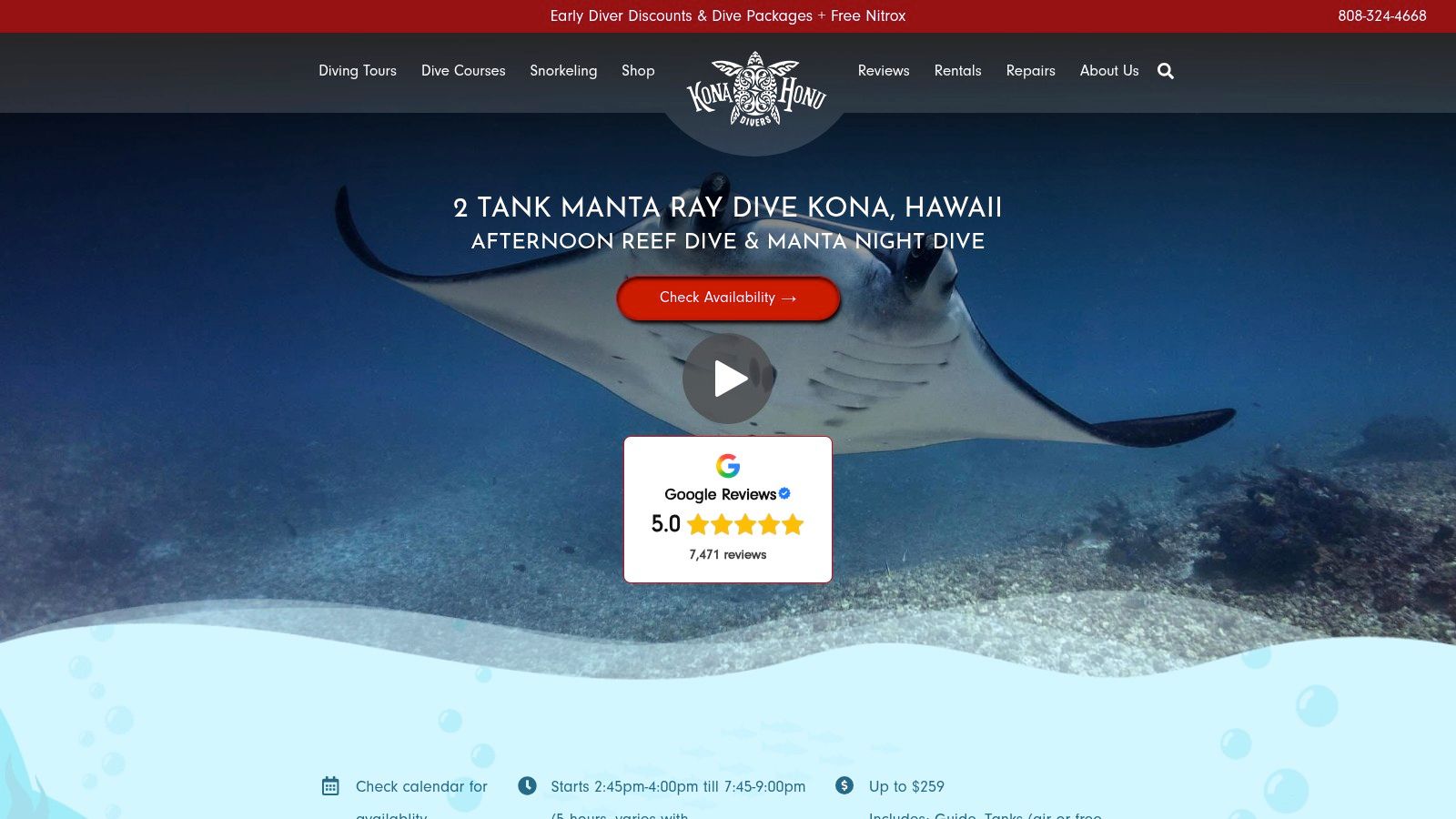
That protection changes the dive in practical ways. Entry and exit are more comfortable. The viewing area is easier to settle into. Divers can focus on staying still, keeping fins clear of the bottom, and watching the water column instead of fighting surge.
Why the site makes the dive
At Garden Eel Cove, the manta dive happens on a sandy patch at a depth of 35 to 40 feet, which keeps the profile accessible for Open Water divers while still creating a dramatic view upward into the lights and the feeding action, as described on this manta ray night dive Kona page.
That same source notes an 80 to 90 percent sighting success rate, which is exactly why Kona has the reputation it does for this encounter. Reliability matters. Wildlife is never guaranteed, but some operations and some sites consistently stack the odds in your favor better than others.
What the dive actually feels like
Divers kneel or settle on the sand while lights draw in plankton. The mantas then glide through the beam pattern to feed. Locally, people often refer to the light circle as a manta campfire. It's a simple idea and it works because it fits the animals' feeding behavior.
The experience is physical in a way video never captures. You hear your own breathing. You feel the temperature shift after sunset. Then a ray sweeps overhead and the entire group gets quiet at once. Good divers stop chasing the moment and let the moment come to them.
Stay low, keep your bubbles moving straight up, and don't reach for the animals. The best manta interactions happen when divers become part of the background.
Divers and snorkelers can both do it
One of the strengths of this experience is that it works for more than one type of traveler. Certified divers get the bottom-up view from the sand. Snorkelers stay at the surface and watch mantas rise into the lit water. If your group is mixed, that flexibility matters.
For travelers comparing options, it helps to read the dedicated manta ray dive tours page and also look at the broader explanation of the Kona manta ray night swim experience. The details about site, conditions, and format tell you more than glossy photos ever will.
How to dive it well
A few habits improve the dive for everyone:
- Arrive rested: Night dives demand attention. If you're tired, your buoyancy and awareness usually suffer first.
- Trim your gear before descent: Loose gauges, dangling octos, and sloppy clip placement become bigger problems in the dark.
- Listen to the bottom-position briefing: This isn't a dive where roaming improves the experience.
- Choose calm over camera time: If filming turns you into a finning, silting, drifting mess, leave the camera on the boat.
Exploring Kona's Other Epic Dives
Most visitors know Kona for mantas. Experienced divers know that's only the beginning. Once you've done the signature night dive, the next question is usually what else is worth your time. In Kona, two answers rise to the top fast. Blackwater, and advanced long-range diving.
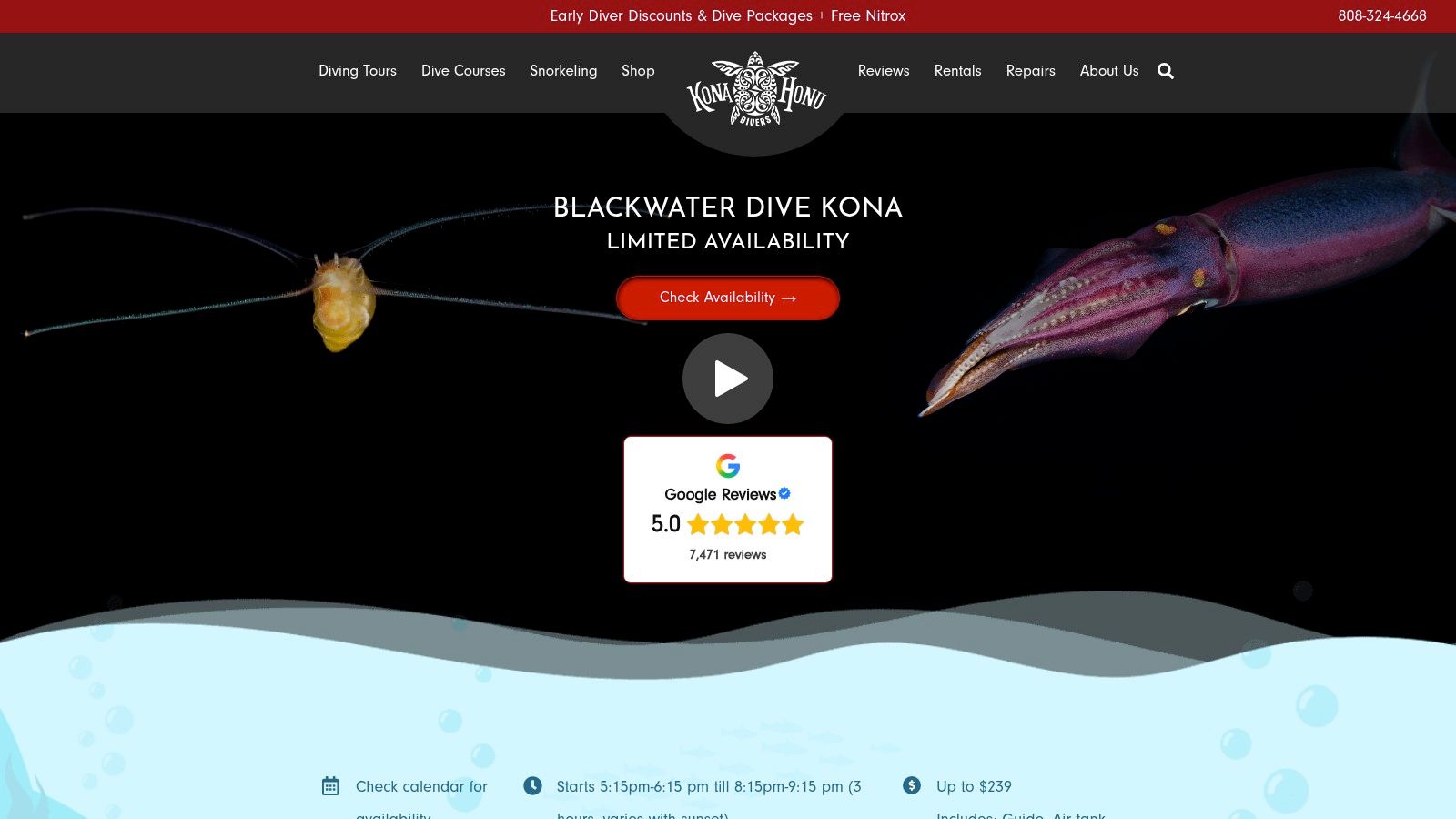
Blackwater diving is unlike reef diving
If you haven't done a blackwater dive, forget almost everything you associate with a normal shore or boat reef profile. There's no reef beneath you, no wall beside you, and no familiar visual reference except the tether system and the lights.
The Kona blackwater dive uses a 60ft tether to suspend divers over 4,000ft of open ocean, enabling observation of the planet's largest daily migration of life and drawing research teams from the Monterey Bay Aquarium, according to this Kona Honu Divers profile on Hawaii Guide.
That setup isn't a gimmick. It's the whole point. You're suspended in open water at night, watching pelagic larval life, cephalopods, and translucent drifters rise from the deep. For underwater photographers and marine life nerds, it can feel like floating inside a living microscope.
Who should do blackwater
Blackwater isn't the right second dive after getting certified. It's for divers who are already comfortable with:
- Neutral buoyancy without visual clutter
- Night diving discipline
- Staying calm in open water
- Holding position without overcorrecting
- Following a very specific briefing
The tour itself is best understood through the Blackwater Dive tour page. If that style of diving excites you, it's also worth browsing the wider Kona diving tours lineup to see where it fits among reef, night, and specialty trips.
The divers who love blackwater most are usually the ones who don't need constant scenery to stay relaxed.
Advanced and long-range trips reward strong fundamentals
Then there are the longer and more demanding charters. These are the trips for divers who already know they want more than an easy reef circuit. Maybe you're looking for deeper profiles. Maybe you want less-trafficked sites. Maybe you want a boat day built around capable divers rather than the broadest possible audience.
That's where a focused charter model starts to matter. The premium advanced 2 tank trip is the kind of option experienced guests should look for because the structure of the day is built around skill, not compromise.
For trip research, the broader diving Kona Big Island guide gives a useful sense of how these experiences fit into the local dive scene.
Matching the dive to the diver
Here's the practical breakdown:
| Dive type | Best for | What matters most |
|---|---|---|
| Reef day trips | Newer certified divers and relaxed vacation diving | Comfort, site selection, guide pacing |
| Manta night dive | Divers who want iconic Kona wildlife | Good briefing, stillness, bottom control |
| Blackwater | Advanced divers with night and buoyancy confidence | Calm mindset, precision, trust in procedure |
| Advanced long-range trips | Experienced divers seeking challenge | Air management, depth awareness, consistent skill |
A lot of visitors book too aggressively. They hear “advanced” and think it means “better.” It doesn't. The best dive is the one you can handle cleanly and enjoy.
Packages Courses and Safety Standards
A good Kona dive operator proves itself before the boat leaves the harbor. Watch the check-in. Watch how rental gear is fitted. Listen to the briefing. Pay attention to whether the crew is willing to slow an eager vacation diver down and put them in the right trip instead of the flashy one. That decision says more about an operation than any sales pitch.
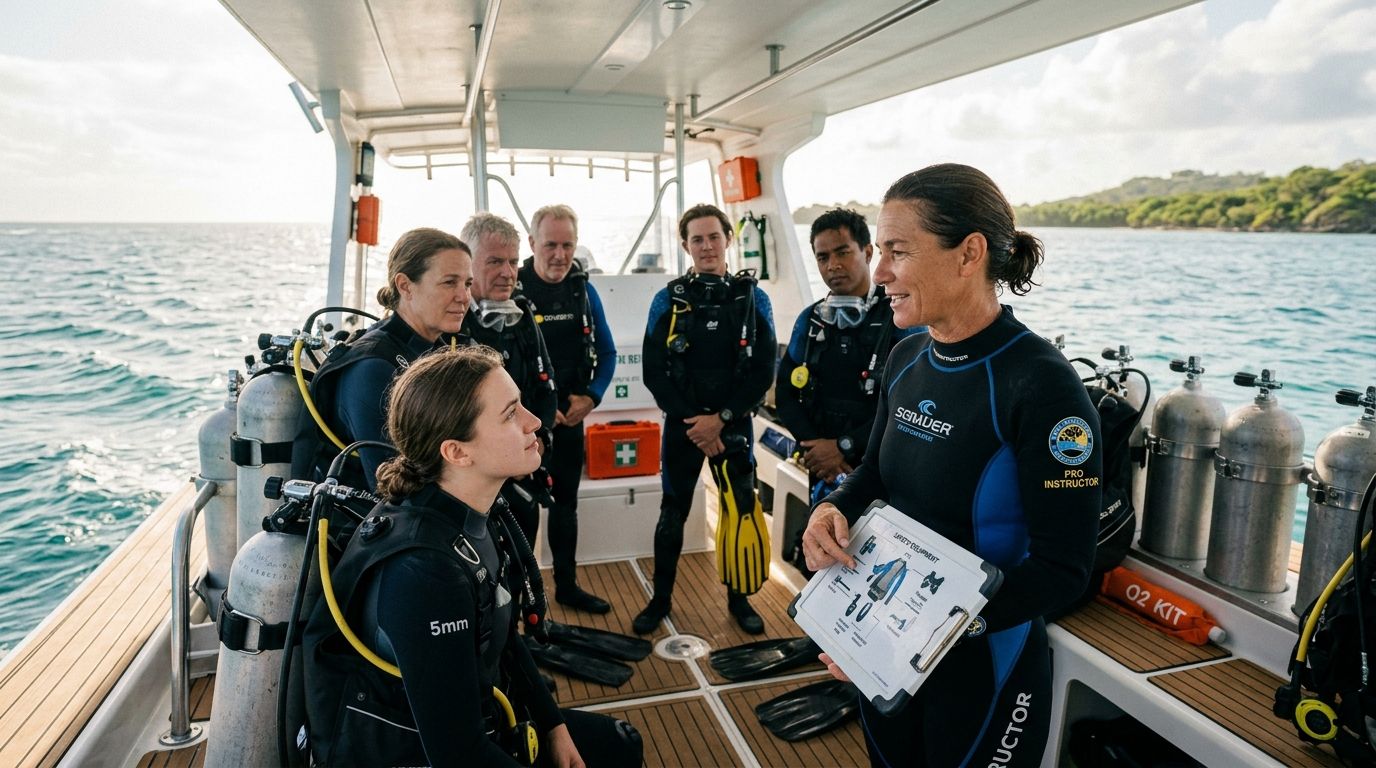
Kona Honu Divers stands out because the whole model is built around diver fit, not crowd volume. That matters if you are trying to match your skill level to the right experience. A newer certified diver may need a refresher and a forgiving reef profile. A confident diver with solid buoyancy may be ready for a night dive, a long-range day, or more technical task loading. Boutique operations handle those differences better because they are not trying to make one boat day work for everyone.
What real package value looks like
Cheap headline pricing can cost you a better trip. The better question is whether the package reduces mistakes, wasted time, and mismatched bookings.
Strong package options usually give you:
- A clear progression: refresher, easier boat dives, then more demanding charters as your comfort improves
- Practical add-ons: nitrox, rental gear, and training options that fit the dives you plan to do
- Flexible scheduling: enough room to work around weather, family plans, and no-fly timing
- Consistency: one crew or one operation tracking your ability across several dive days
The easiest place to compare those options is the Hawaii scuba diving packages for Kona visitors.
Courses matter, even for certified divers
Certified does not always mean current. I see that all the time. Divers arrive with a card, but their weighting is off, their trim is unstable, or they have not done a proper giant stride entry in years.
A well-run course or refresher fixes the problems that show up on real vacation dives:
- Weighting control so you stop kicking to stay off the bottom
- Trim and propulsion so you use less gas and move cleanly around the reef
- Task management for lights, cameras, navigation, and buddy awareness
- Calm procedures when a mask floods, a current picks up, or a diver gets behind the plan
That training pays off fast. You spend less attention on your gear and more on the dive itself.
Safety standards that matter offshore
Safety is not a slogan on a website. It is the way a crew runs the boat, briefs the site, and responds when conditions change.
Look for operators that do these things well:
- Give specific briefings: depth, route, current, entry, exit, turnaround pressure, and buddy procedures
- Keep rental gear in good shape: regulators breathe cleanly, BCDs hold air, and setups feel maintained, not recycled until failure
- Organize the deck for divers: clean gear flow, stable seating, and enough space to kit up without chaos
- Set limits clearly: if conditions are wrong for your experience level, the crew says so and offers a better fit
That last point matters most. Advanced dives in Kona are exceptional, but only when the crew protects the standard of the dive instead of lowering it to fill spots. Kona Honu Divers has earned its reputation by keeping that line clear, which is exactly why divers who want a safer, better-run, small-group experience keep coming back.
Your Complete Kona Dive Trip Planner
The easiest way to improve your Kona trip is to prepare for the boring parts before they become problems. Late paperwork, forgotten gear, poor thermal planning, and preventable seasickness ruin more dives than marine life ever does.
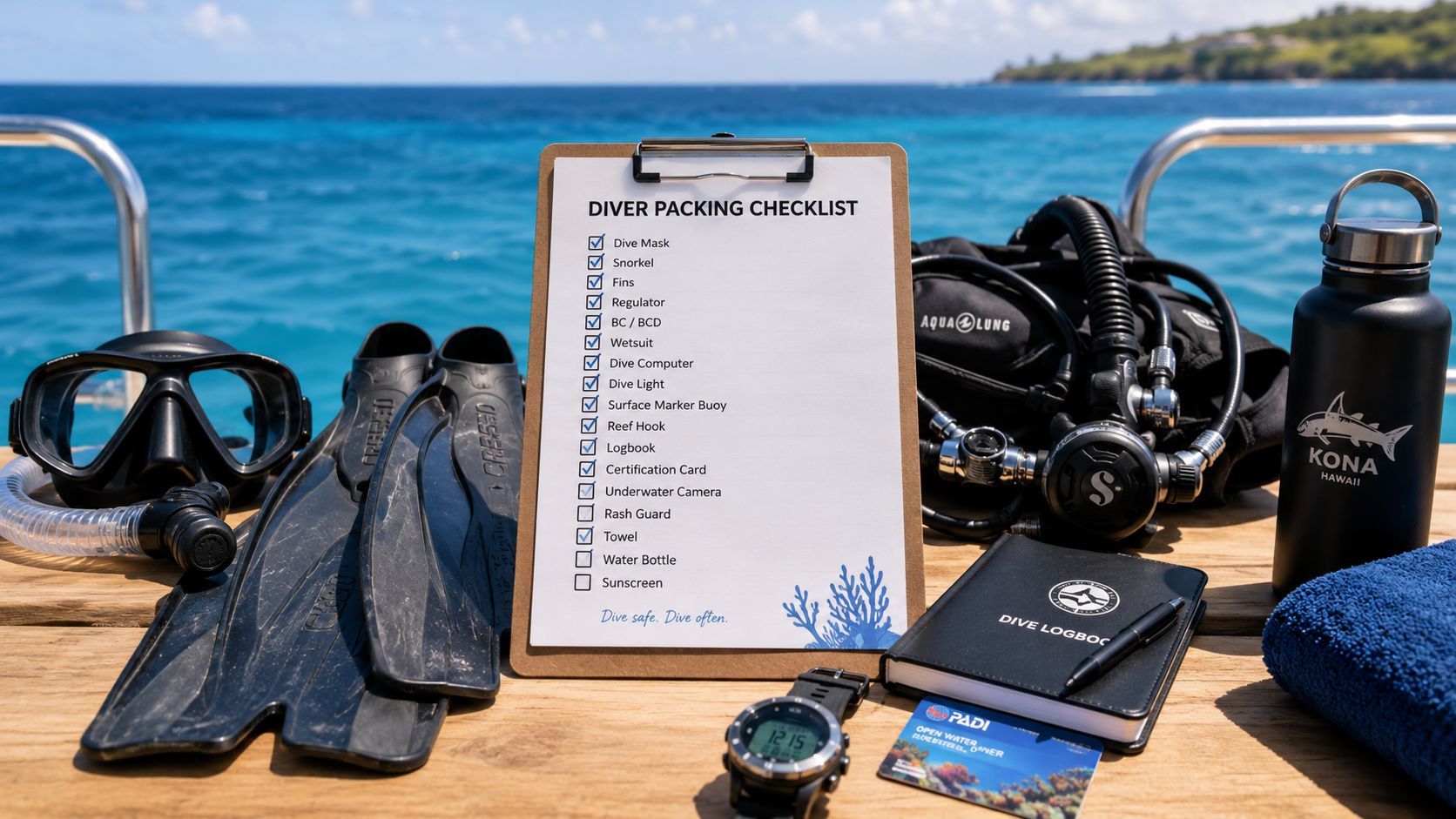
If you're still sorting lodging and logistics, this guide to the best places for divers to stay on the Big Island helps you avoid long, early-morning drives to the harbor.
What to pack for a Kona dive trip
You don't need to overpack, but you do need the essentials dialed in.
- Certification and identification: Bring your certification card, photo ID, and any relevant training records if you're doing advanced dives.
- Exposure and comfort items: A suit you know fits, plus a towel, dry shirt, and something warm for after night dives.
- Small save-the-day gear: Mask defog, spare hair tie, reef-safe sun protection, and any personal medications.
- Logistics basics: Water bottle, snack for after the trip, and a dry bag for phone, wallet, and keys.
If you're renting gear, show up early enough to make adjustments without rushing the whole boat. If you're bringing your own, inspect it before you travel, not on the dock.
Booking strategy that works
The highest-demand Kona experiences tend to fill first, especially specialty dives and signature wildlife trips. If you know the manta dive or blackwater is central to your vacation, book that first and let the rest of the itinerary fit around it.
A simple planning sequence works well:
- Book your must-do dive first
- Leave weather flexibility if possible
- Schedule harder dives before your final no-fly day
- Use easier reef trips as your recovery buffer
This is also the right mindset for cancellations. Good operators cancel for safety, not convenience. If weather or ocean conditions force a change, that's a sign the crew is doing its job.
Seasickness prevention that helps
Even divers who feel fine underwater can get miserable on the ride out. If you're at all prone to seasickness, don't try to tough it out. Treat it early.
Helpful options include Ship-EEZ Seasickness Patch, Dramamine pills, Bonine pills, Sea Band wristbands, and Ginger chews.
A few field-tested habits help too:
- Eat lightly: An empty stomach can be as bad as a heavy one.
- Stay outside when possible: Fresh air and a horizon line usually beat sitting in a cabin.
- Hydrate early: Start before the trip, not halfway through it.
- Take preventatives on time: Most meds work better before motion starts.
If you think you might get seasick, assume you will and prepare. The divers who plan for it usually enjoy the day. The ones who “wait and see” often donate breakfast to the Pacific.
Choosing a Premier Operator The Kona Honu Advantage
There's a real difference in Kona between an operation built around a boutique personal charter mindset and one built around mass-tourism volume. That distinction matters most on advanced dives, night dives, and any trip where guest skill levels vary.
Analysis of the Kona dive market shows that companies like Kona Honu Divers are associated with an intimate model that enhances safety and experience quality on advanced dives, as discussed on the Kona Diving Company comparison page. That doesn't mean every larger operation is poor. It means the operating model changes the feel of the day, and sometimes the safety margin too.
Boutique versus mass market in real diving terms
This isn't about luxury language. It's about what happens when the group hits the water.
A boutique, safety-focused model tends to do a few things better:
- More accurate diver matching: Guides can separate the shaky night diver from the calm night diver before the problems begin.
- Cleaner briefings: The crew has time to explain the why, not just bark the rules.
- Less in-water congestion: That matters on manta dives and matters even more on blackwater.
- Better adjustment mid-trip: If conditions shift, a flexible crew can pivot without turning the whole day into chaos.
A mass-tourism model can still work for simple, broad-appeal trips. It struggles when a dive requires precision, restraint, and supervision marked by genuine attention.
What manta done right means
“Manta done right” means divers don't crowd the viewing area, don't chase the animals, and don't turn the bottom into a snow globe of kicked-up sand. It also means the crew sets expectations properly before anyone enters the water.
“Blackwater done right” is even narrower. It means divers understand the tether system, respect the profile, and don't treat open-ocean night diving like a novelty ride.
That's why a premium Kona diving company often delivers more value even when the brochure looks similar. The difference is in the operational discipline.
How I'd tell a diver to choose
If someone asks me to simplify the decision, I'd put it this way:
| If you want | Best operator style |
|---|---|
| An easy intro to Kona diving | A well-run general day boat with strong briefings |
| The best chance at a calm, polished signature wildlife dive | A premium operator with strong site discipline |
| Advanced night or open-ocean experiences | Boutique model, experienced crew, tighter supervision |
| A broad family outing with mixed priorities | Flexible operator with clear diver and snorkeler separation |
For travelers comparing names in the local market, the top Kona diving companies ranked guide gives a useful overview of the options available without pretending every operator offers the same experience.
Frequently Asked Questions
I'm not a certified diver. Can I still experience the manta rays
Yes. You don't have to be scuba certified to see manta rays in Kona. The snorkel format is the usual answer for non-divers and mixed-skill families because it lets you watch the same feeding behavior from the surface. If your group includes both divers and non-divers, book carefully so everyone is on the right kind of trip.
Are Kona dive trips good for families
They can be, but the right trip depends on age, confidence, and certification status. The manta experience works well for many families because there are diver and snorkeler options. More technical offerings need stricter screening. For example, the blackwater program requires participants to be at least 18 years old with confident certified diving skills and advanced experience, as outlined in the Kona diving company 12 information page. By contrast, the manta night dive is accessible to certified divers aged 12 and older on that same source.
What water temperature and exposure suit should I plan for
Bring the exposure protection you know you'll be comfortable in, not the one you hope will be fine. Most visiting divers are happier when they plan for cooling during repetitive dives, boat rides, and night excursions. If you tend to get cold, pack accordingly and don't assume Hawaii always means warm after dark.
How far in advance should I book
For signature dives and specialty charters, earlier is better. Manta trips are popular. Advanced charters and blackwater spots are limited by the nature of the experience. If your vacation dates are fixed, locking in your priority dives ahead of time is the safest move.
What if weather turns bad
A professional operator puts safety first and adjusts the schedule when conditions demand it. That may mean changing sites, delaying departure, rebooking, or canceling. It's inconvenient, but it's exactly what you want a serious crew to do.
What if I haven't dived in a while
Be honest about it when you book. Rusty divers often have a much better trip if they start with an easier reef charter or a refresher before jumping into a night or advanced dive. That's not playing it safe for the sake of ego. It's setting yourself up to enjoy the trip instead of spending the whole first dive catching up.
If you want a Kona operator that combines polished logistics, strong safety culture, and access to the coast's best-known signature dives, start with Kona Honu Divers. Browse the trip lineup, pick the experience that matches your certification and comfort level, and book early if the manta dive or blackwater is high on your list.