
Picture this: you descend into warm, impossibly clear water, and the world above melts away. Below you, ancient lava flows have sculpted an underwater playground of arches, caves, and dramatic drop-offs. This is what it’s like to dive in Kona. It's a world where vibrant coral gardens cling to volcanic rock and sea turtles glide past you with a serene indifference.
Welcome to Kona’s Underwater Paradise
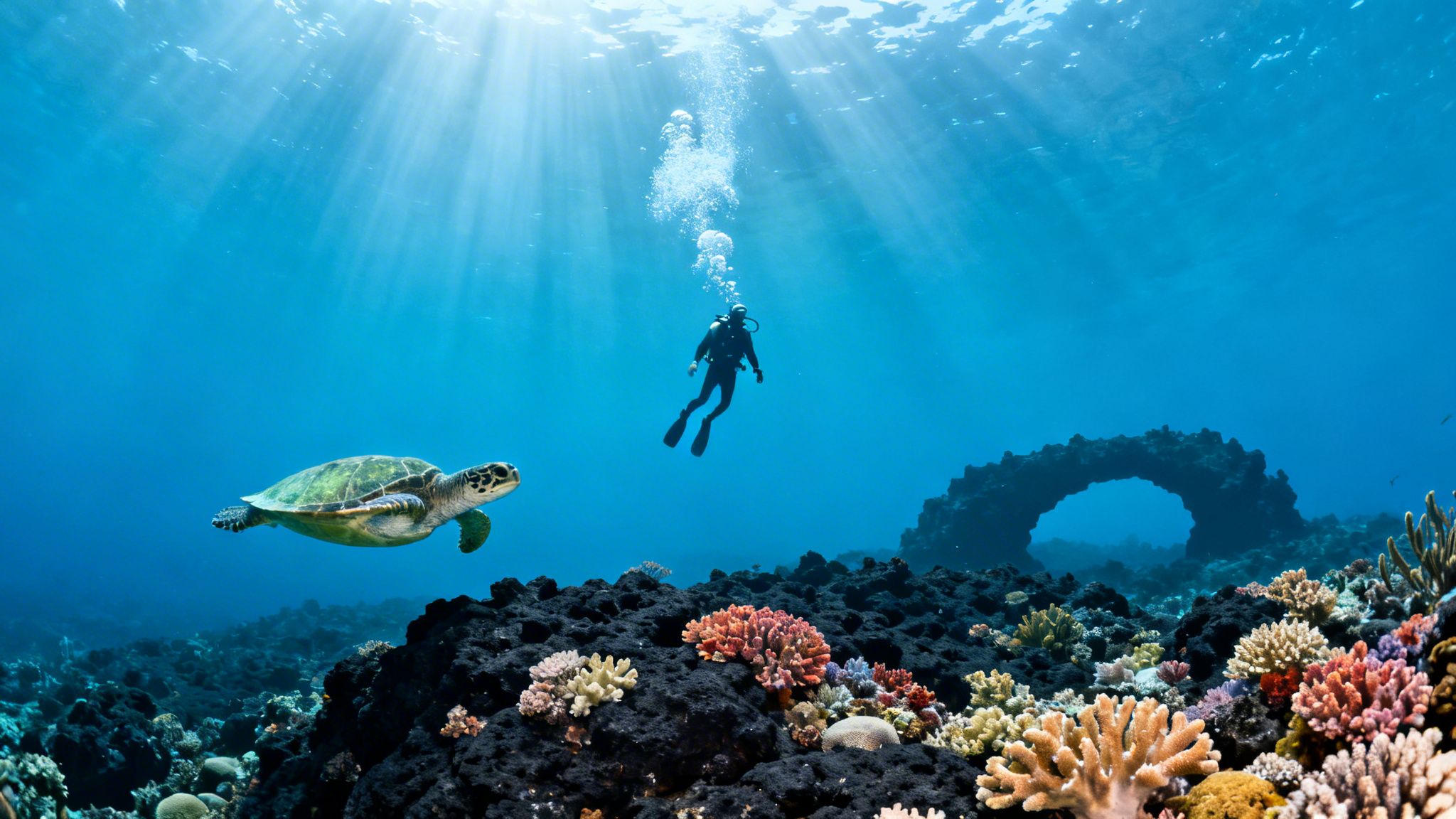
The Big Island of Hawaii is much more than a stunning vacation spot; it's a premier diving destination with an underwater world you won't find anywhere else. The real magic happens just beneath the surface, where the island’s volcanic heart has created a truly thriving and dramatic ecosystem.
Thanks to the massive volcanoes that shield the coastline from powerful trade winds, the Kona coast is blessed with incredibly calm and clear waters. These fantastic conditions are perfect for both divers and marine life, making just about every dive a spectacular experience. It's this perfect storm of geology and geography that makes Kona so special.
A World of Unique Marine Life
The waters here are a hotbed of biodiversity, home to a huge number of fish and invertebrates that exist nowhere else on Earth. The protected leeward coast covers over 4,000 square miles and offers divers an astonishing 80-100 foot visibility pretty much year-round. You get a front-row seat to explore dozens of incredible sites like Turtle Heaven and Garden Eel Cove, where whitetip reef sharks patrol and colorful sponges paint the walls of underwater caverns.
This guide is your deep dive into exploring this aquatic wonderland. Whether you’re planning your very first dive or you're a seasoned pro looking for your next big adventure, we've got you covered.
We'll walk you through the experiences that make Kona diving so unforgettable, from the rich biodiversity to the world-famous Manta Ray Night Dive. We'll also show you why the right guide makes all the difference in having a safe, fun, and memorable trip. Kona Honu Divers is a top-notch local operator focused on providing exceptional diving tours that truly showcase the best of this underwater paradise.
Check AvailabilityExploring Kona’s Most Iconic Dives
Sure, you can find something special on just about any dive along the Kona coast. But let's be honest—some experiences are in a league of their own. A few legendary dives have put Kona on the map, drawing people from all over the world for a chance to witness something truly unforgettable.
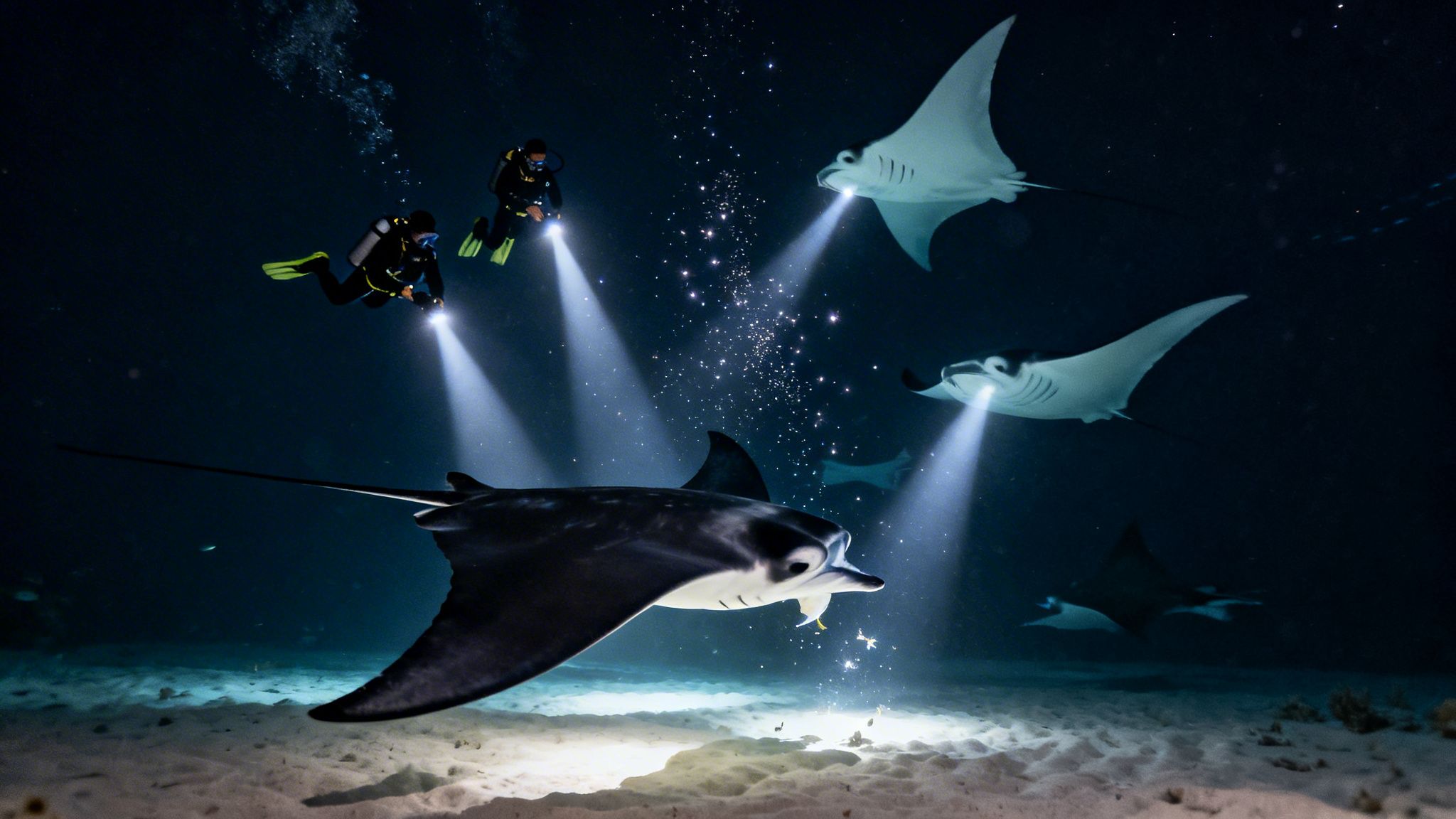
At the very top of that list is the world-famous Manta Ray Night Dive. Picture this: you descend just as the sun dips below the horizon, settle onto a sandy patch on the ocean floor, and click on your dive light. You wait. Before long, massive, graceful shadows emerge from the deep blue, swooping and barrel-rolling right over your head in a silent, hypnotic ballet.
This isn't just a chance encounter; it's a nightly feeding event. Our lights attract clouds of plankton, and these gentle giants show up for the buffet. It’s an experience that feels completely otherworldly.
Check AvailabilityThe Magic of the Manta Ray Night Dive
The Manta Ray Night Dive is, without a doubt, the crown jewel of Big Island scuba. This whole phenomenon started pretty organically back in the early 90s. Dive operators figured out that shining lights in the water attracted plankton, and that the plankton brought in dozens of reef mantas for a reliable feeding frenzy. Today, it’s one of the most dependable wildlife encounters on the planet, with an incredible 85-90% success rate for sightings. In fact, the Manta Pacific Research Foundation has identified and cataloged over 270 individual mantas right here in our Kona study area!
When you're looking at a manta ray dive tour, where you go matters. A lot. While there are a couple of sites, Garden Eel Cove (or Manta Heaven) is hands-down the superior choice.
Here's why we prefer it:
- It’s Protected: The site is tucked into a calm, sheltered cove. This means more comfortable conditions and a much lower chance of getting tossed around by rough seas.
- The Viewing is Better: The bottom is shaped like a natural amphitheater. Divers can settle into a designated sandy spot, giving the mantas plenty of room to swoop and glide safely overhead without being disturbed.
- The Reef is Healthier: The surrounding coral is vibrant and teeming with life, so the first dusk dive we do before the main event is a fantastic experience on its own.
The Blackwater Dive: A Journey Into the Void
If you're a more experienced diver with a taste for the extraordinary, the Kona Blackwater Dive is an adventure you’ll never forget. This isn’t a reef dive. It’s a drift dive in the deep, open ocean at night. Most people describe it as floating through outer space.
Here’s how it works: we head miles offshore over thousands of feet of water. You’ll be tethered to the boat as it drifts with the current. You then descend to about 50 feet and just hang there in the darkness, waiting for one of the planet's largest migrations to happen.
As tiny, bizarre, and often bioluminescent creatures rise from the depths to feed near the surface, you'll witness a world of life that few people ever see. It’s a humbling and awe-inspiring experience that redefines what a night dive can be.
This is a specialized dive that requires solid buoyancy control and being comfortable in dark, open water. For those up for the challenge, our Blackwater Dive tour is a ticket to one of Earth's last true frontiers.
Daytime Wonders: Lava Tubes and Craters
Kona’s best dives don’t all happen after dark. During the day, you get to explore the dramatic underwater landscapes carved out by volcanoes. We're talking massive archways, intricate lava tubes, and sunken craters that are now bursting with life.
A perfect example is 'Au 'Au Crater, a collapsed lava dome that formed a stunning underwater bowl. Its unique structure is a magnet for marine life, from huge schools of colorful fish to sea turtles just cruising by. Exploring these formations feels like swimming through an ancient, submerged cathedral. You can check out sites like this on our daily diving tours.
These daytime adventures are great for all skill levels and usually have incredible visibility and calm water. For those looking for a bit more of a challenge, our advanced dive tour heads to deeper sites with more complex topography.
If you’re still trying to figure out what’s right for you, check out our guide on how to pick the best dive in Kona. Whether you’re mesmerized by the nightly manta ballet, intrigued by the alien world of a blackwater dive, or excited to explore sunlit volcanic structures, Kona has an underwater journey waiting for you.
Why Kona Honu Divers Elevates Your Experience
Choosing the right dive operator can make or break your trip. It's the difference between just getting wet and having a truly unforgettable underwater adventure. Here in Kona, we know you have options, so we’ve built our entire operation around providing a premium, safe, and genuinely fun experience from the moment you step on our boat.
What really sets Kona Honu Divers apart is our crew. We’re not just a collection of employees; we're a tight-knit family of passionate divers who share over 200 years of combined experience. This isn't just a number—it's a deep well of knowledge that means you're diving with pros who know these waters like the back of their hand and put your safety and enjoyment first. Find out more about what makes our crew stand out and why we were voted the best dive operator in Kona.
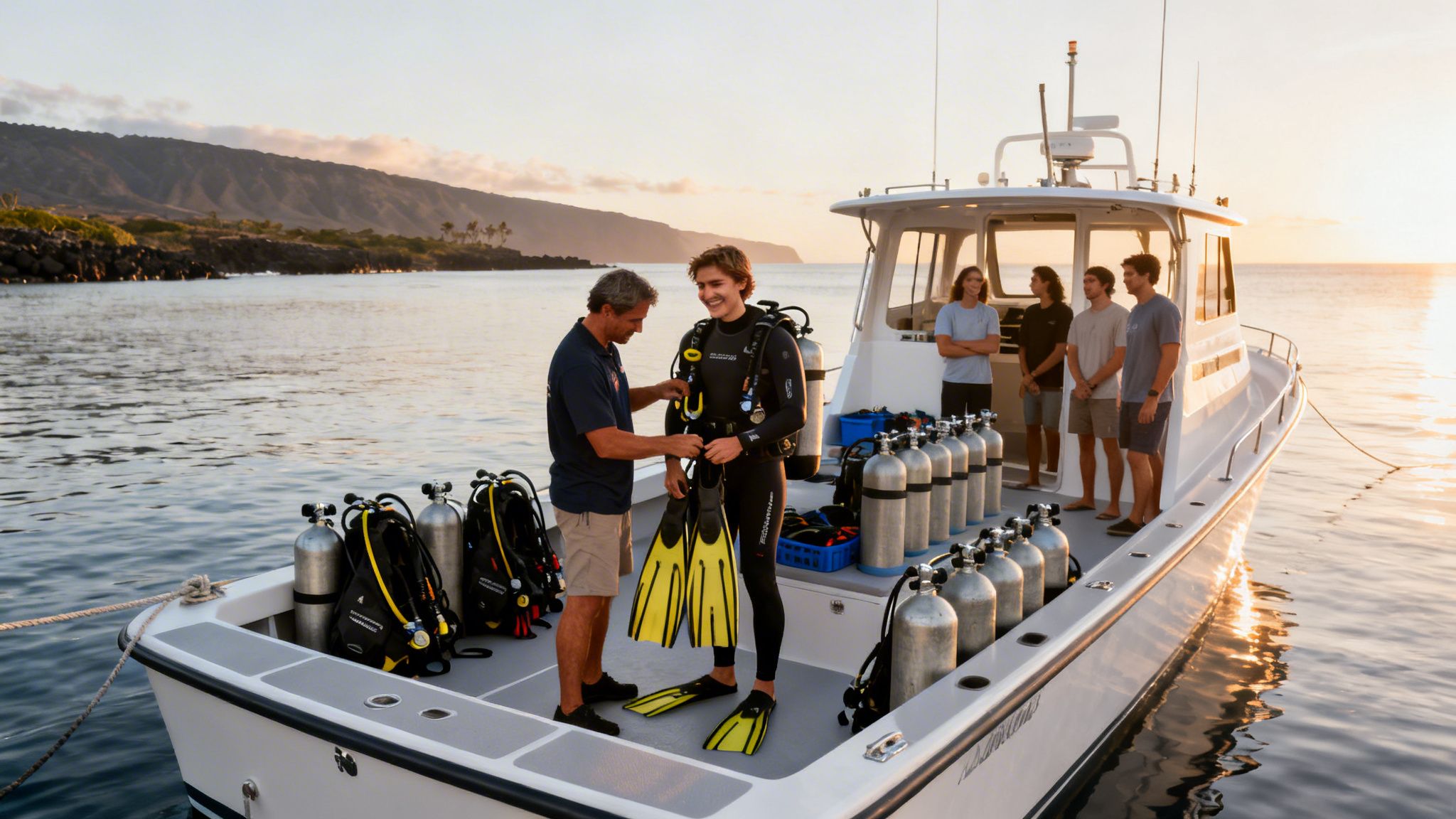
Our commitment to a better dive day extends to our fleet, too. You won't be crammed onto a generic fishing boat. Our vessels are custom-built for diving, with spacious decks, easy-to-use ladders, and smart layouts that make gearing up a breeze.
The Perks That Make a Difference
We've learned over the years that it's the little things that turn a good dive into a great one. That's why we include thoughtful perks that genuinely improve your day on the water. These aren't just marketing bullet points; they're part of our promise to every diver.
- Complimentary Nitrox: If you're certified for Enriched Air Nitrox, we provide it for free. This means you can enjoy longer bottom times and shorter surface intervals, getting the most out of your dives.
- High-Quality Rental Gear: Nothing ruins a dive faster than faulty equipment. Our rental gear is from top-tier brands and is obsessively maintained by our own technicians, so you can count on it being reliable and comfortable.
- Small Group Sizes: We deliberately keep our groups small. This ensures you get personal attention from your guide and never feel like you're lost in a crowd. It just makes for a more relaxed and personal day for everyone.
This focus on small groups and personalized service means we can tailor the dive to the experience level of the divers on board, ensuring everyone has a safe and rewarding time exploring the best of Kona diving.
Experience That Speaks for Itself
Of course, the best way to judge a dive shop is to hear from other divers. We're incredibly proud of the community we’ve built and the amazing experiences we’ve shared. The feedback from our guests says it all and is a testament to our crew's hard work and dedication.
Ultimately, our goal is simple: to share our love for Kona's underwater world with you. From our seasoned crew and custom boats to our thoughtful perks and unwavering commitment to safety, every detail is designed to give you the best possible dive adventure.
Check AvailabilityHow to Plan Your Perfect Kona Diving Trip
Alright, let's get into the fun part—planning your trip. Nailing down the details ahead of time is the secret to a smooth, incredible Kona diving adventure. We'll walk through everything you need to know to get you from daydreaming to diving.
The first question on everyone's mind is, "When should I go?" The short answer is: anytime! Thanks to the massive volcanoes that shelter the coastline from the wind, Kona has fantastic diving conditions year-round. That said, if you're looking for the absolute calmest, warmest water, the summer months from May to September are hard to beat.
Kona Diving Season At A Glance
To help you choose the perfect time for your trip, here’s a quick breakdown of what to expect throughout the year.
| Season | Average Water Temp (°F) | Typical Visibility | Key Marine Life Sightings |
|---|---|---|---|
| Summer (May-Sep) | 78-80° | Excellent (100+ ft) | Manta rays, dolphins, turtles, occasional tiger sharks |
| Fall (Oct-Nov) | 77-79° | Great (80-100 ft) | Manta rays, eagle rays, colorful reef fish |
| Winter (Dec-Feb) | 75-76° | Good (60-90 ft) | Humpback whales (singing!), manta rays, turtles |
| Spring (Mar-Apr) | 75-77° | Great (80-100 ft) | Manta rays, pilot whales, diverse macro life |
While summer often has the flattest seas, don't overlook winter—hearing humpback whales sing on your dive is an experience you will never, ever forget.
Certification and Skill Levels
Kona has something for everyone, but a few of our signature dives do have some prerequisites. Knowing where your skills fit in ensures you have a safe and genuinely enjoyable time underwater.
- Brand New to Diving? No problem. Our Discover Scuba Diving program is designed just for you. You'll go out with an instructor for a real ocean dive, no certification required.
- Certified Divers: Your Open Water card is your passport to most of Kona's dive sites. This includes our world-famous Manta Ray Night Dive.
- Experienced Divers: For the truly adventurous, our Kona Blackwater Dive is a must-do. It requires an Advanced Open Water certification and sharp buoyancy skills, as you'll be drifting in the deep, open ocean at night.
Packing for Your Dive Trip
Getting your packing right makes all the difference. Aside from the usual shorts and t-shirts, here are a few key items you’ll want to have in your bag.
Essential Dive & Travel Checklist:
- Certification Card & Logbook: Don't leave home without them! We need to see your c-card, and your logbook helps us tailor the dive to your experience.
- Dive Computer: We have high-quality rentals available, but if you have your own, bring it. You're already comfortable with it, which makes for a more relaxing dive.
- Reef-Safe Sunscreen: This is a big one. Help us protect our reefs by choosing a sunscreen that's free of oxybenzone and octinoxate.
- Swimsuit & Towel: A microfiber, quick-dry towel is a great space-saver and perfect for the boat.
- Reusable Water Bottle: Stay hydrated and help us cut down on single-use plastic.
If you're looking to spend as much time in the water as possible over several days, you might also want to look into liveaboard diving as an immersive alternative.
What to Expect on a Typical Dive Charter
So, what does a day of diving with us actually look like? We keep things simple, safe, and focused on the fun.
A typical 2-tank morning charter starts with an 8:00 AM check-in at Honokohau Harbor. You’ll get a thorough boat briefing from our crew as we head to the first dive site. After the first dive, you'll have a nice surface interval with snacks and drinks before we hop in for a second dive at a different location. We're usually back at the dock around 1:00 PM. The Manta Ray Night Dive charter is similar but timed for a sunset cruise on the way out to the dive site.
Kona’s diving has come a long way since the 1980s. Today, the Big Island hosts over 150,000 dive tourists annually, accounting for roughly 100,000 certified dives each year. People come from all over the world to see our unique lava tube formations and enjoy visibility that often tops 100 feet.
With Kona Honu Divers, our charters are all-inclusive, covering your tanks, weights, a professional guide, and refreshments. If you need gear, we offer top-notch rental equipment for a small extra fee. For a full cost breakdown, check out our guide on how expensive scuba diving in Hawaii is. We believe in transparent pricing—no hidden fees, just world-class diving.
Check AvailabilityThere’s More Than Just Mantas: Discovering Kona’s Rich Marine Wildlife
Sure, the manta ray ballet and the blackwater dives get all the press, but that’s only half the story. The real soul of Kona diving is found in its staggering biodiversity. This place is a bustling underwater city, and what makes it truly special is that so much of the life here is found nowhere else on earth. The island's volcanic past created a unique, isolated environment, and the result is a massive number of endemic species.
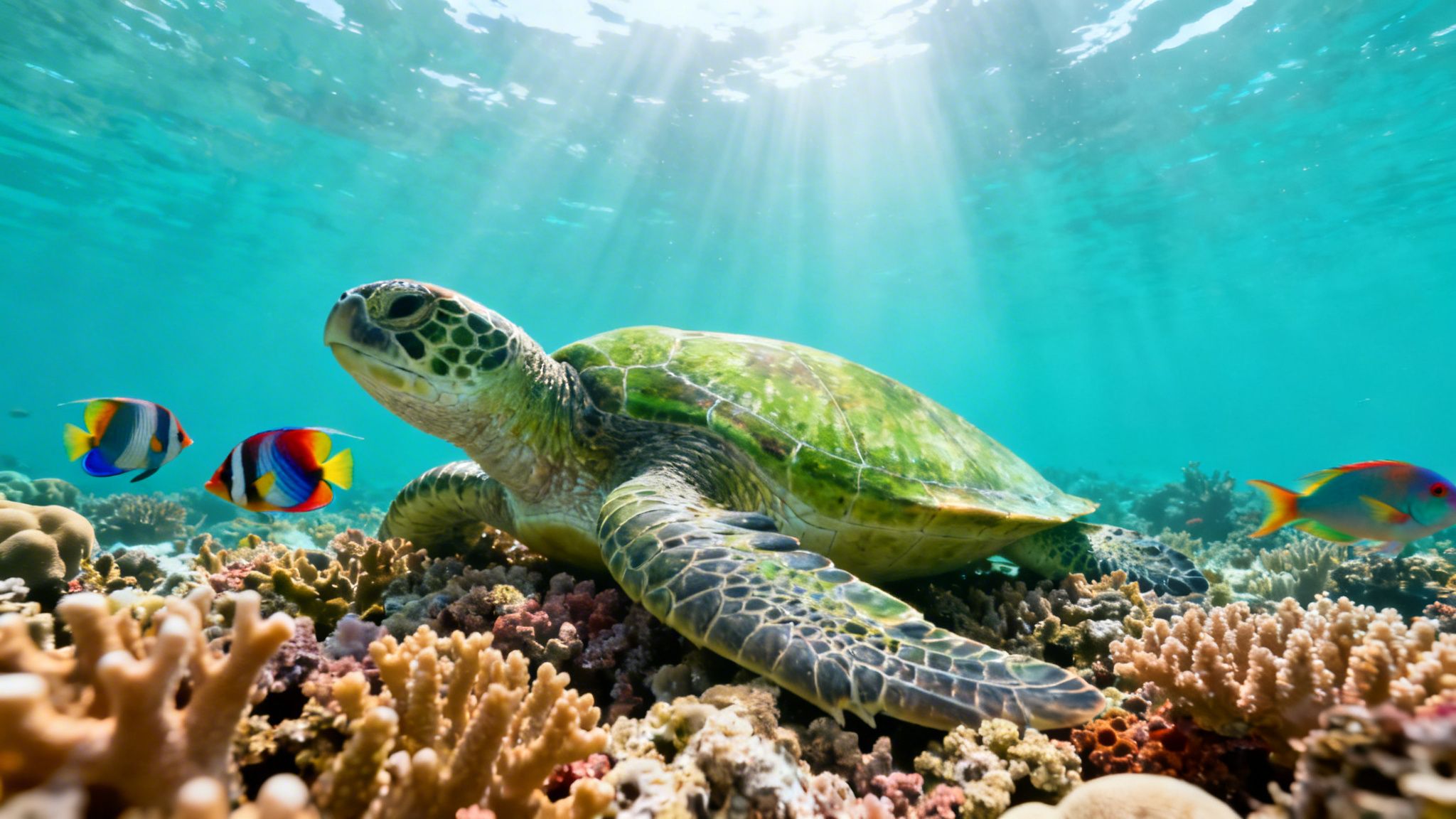
Every time you drop below the surface, you’re bound to meet some of the locals. One of the most cherished residents is the Hawaiian Green Sea Turtle, or Honu, and you’d be hard-pressed not to see one. You'll find these graceful giants gliding through the water, casually munching on algae, or chilling out at an underwater "cleaning station." It's incredible to watch tiny fish swarm over them, meticulously picking off parasites.
Watching a Honu is just a genuinely peaceful experience. Their serene presence adds a sense of ancient calm to the whole dive.
The Reef's Colorful Characters
Beyond the turtles, Kona's reefs are an explosion of color. It really is like swimming through a living kaleidoscope. You’ll see huge schools of butterflyfish fluttering around the coral, their patterns a blur of yellow and white. Potter's angelfish and fantastically patterned triggerfish only add to the spectacle.
But you have to keep your eyes peeled for the reef's more secretive inhabitants.
- Moray Eels: Take a second to peer into the cracks and crevices of the reef. You'll often be met by the curious face of a moray eel staring right back at you, from the speckled to the brilliantly colored yellow margin moray.
- Frogfish: These guys are the ultimate masters of camouflage. Spotting one of these strange, lumpy ambush predators is a real badge of honor for any diver.
- Parrotfish: You'll often hear parrotfish before you see them. Listen for a distinct crunching sound—that's them using their powerful beaks to scrape algae off the coral, a process that’s absolutely vital for the reef's health.
The sheer density and variety of life here mean no two dives are ever the same. There's always something new to see.
Unexpected and Thrilling Sightings
The magic of Kona isn't just confined to what's under the water. The boat rides out to the dive sites can be a show in themselves. It’s pretty common to get a full escort from a pod of spinner dolphins. Watching them leap and spin out of the water right next to the boat is the best possible way to get pumped for a dive.
And if you’re here in the winter months (think December to April), you’ll likely hear the eerie, beautiful songs of humpback whales echoing through the water during your dive. It's a sound that vibrates right through your chest—a truly humbling experience. While it’s not an everyday thing, you might also get lucky and spot eagle rays or even a whale shark cruising by. It’s a powerful reminder that out here, you never know what might show up.
Even the sharks are pretty laid back. We often find whitetip reef sharks just resting on the sandy bottom or tucked under a ledge during the day. They're typically shy, pose no threat, and make for incredible photo opportunities. From the tiniest, most colorful nudibranch to the biggest turtle, Kona's wildlife makes every single dive a genuine journey of discovery.
Your Guide to a Safe and Responsible Dive
Safety is the bedrock of every great dive, and here in Kona, professional dive shops live and breathe it. A truly memorable and secure experience doesn't just happen when you splash into the water; it starts on the boat with the thorough pre-dive briefings that are standard practice for any reputable crew.
Pay close attention during these briefings. They're not just a formality. Your divemaster will walk you through the dive plan, point out any unique conditions for that specific site, and cover the essential safety protocols. This is immediately followed by a full buddy check—a simple but non-negotiable step to make sure everyone's gear is working perfectly before you even think about descending.
Following Best Practices Underwater
Once you're beneath the surface, good buoyancy control is everything. It's the key to keeping yourself safe, and it's also how we protect the fragile coral reef from accidental bumps and kicks. The idea is to become a weightless observer, gliding through the underwater landscape without a trace.
This is where having an experienced divemaster leading the way really pays off. They know how to navigate Kona's unique volcanic underwater terrain and will expertly manage the group from the moment you descend to your final safety stop.
Of course, Kona diving is all about the incredible marine life, and that means we have to be respectful guests in their home.
- Observe from a Distance: Always give marine animals their space. Never chase or corner them, as this causes stress and can seriously disrupt their natural behaviors.
- Look, Don't Touch: This is the golden rule. Coral is a living creature, and a single touch can damage its delicate protective outer layer. The same goes for our beloved honu (turtles), eels, and everything else you see.
- Leave No Trace: Make sure all your gear—your octopus, your console—is tucked in and secured so nothing dangles or drags across the reef. We want to take only pictures and leave only bubbles.
Choosing a top-tier, certified operator like Kona Honu Divers means you're diving with a crew that upholds these high standards of safety and conservation on every single trip. You can dive deeper into this topic by reading our guide to responsible and considerate diver etiquette.
Safety isn't just about what you do in the water; it extends to the boat itself. A professional charter is one that meets and exceeds all regulations. It's always a good idea to be familiar with the required safety equipment on a boat. After all, a true commitment to safety covers you from the moment you step on the dock to the moment you're back on dry land.
Your Kona Diving Questions Answered
We get a lot of questions from divers gearing up for a Kona trip, so we’ve put together answers to the most common ones. Hopefully, this clears up any final details and gets you even more excited for what’s to come.
Do I Need a Special Certification for the Manta Ray Night Dive?
Nope! All you need is your Open Water Diver certification. This dive is surprisingly accessible because it's shallow and you stay in one spot for most of it. If you're certified to dive, you're ready to meet the mantas.
Is Kona Good for Beginner Divers?
Kona is an incredible place for new divers! The conditions are often calm and clear, making it a comfortable spot to get your fins wet. We run Discover Scuba Diving programs every day, which are designed for people with zero experience. You'll go out with an instructor who will be with you every step of the way.
Check AvailabilityHow Safe is the Blackwater Dive?
The Blackwater Dive is safe, but it’s definitely not for everyone. This is a true advanced dive, and we treat it with the seriousness it deserves. Your safety is our number one concern.
We require divers to have excellent buoyancy control and be completely comfortable in the pitch-black open ocean. Our crew uses a heavy-duty tether system, so every diver is securely connected to the boat as it drifts. It's an adventure, but a well-managed one.
Should I Bring My Own Scuba Gear?
You're more than welcome to bring your own rig if you love it, but you definitely don't have to. We have a full inventory of high-quality, well-maintained rental gear available.
Every diving tour already includes tanks and weights. If you need the rest, we can set you up with everything from a BCD and regulator to a wetsuit and dive computer. Just pack your swimsuit and let us handle the heavy lifting.