
Kona is, without a doubt, a world-class diving destination. It’s defined by its one-of-a-kind volcanic underwater landscapes, water that’s often stunningly clear, and bucket-list encounters with incredible marine life. The Big Island gives divers a chance to explore dramatic lava tubes, swim with majestic manta rays on their famous night dive, and witness the surreal, alien world of the open-ocean Blackwater Dive. It’s this unique combination that puts Kona on the map for divers globally. You can find a variety of diving tours to experience it all.
Why Kona Is A World-Class Diving Destination
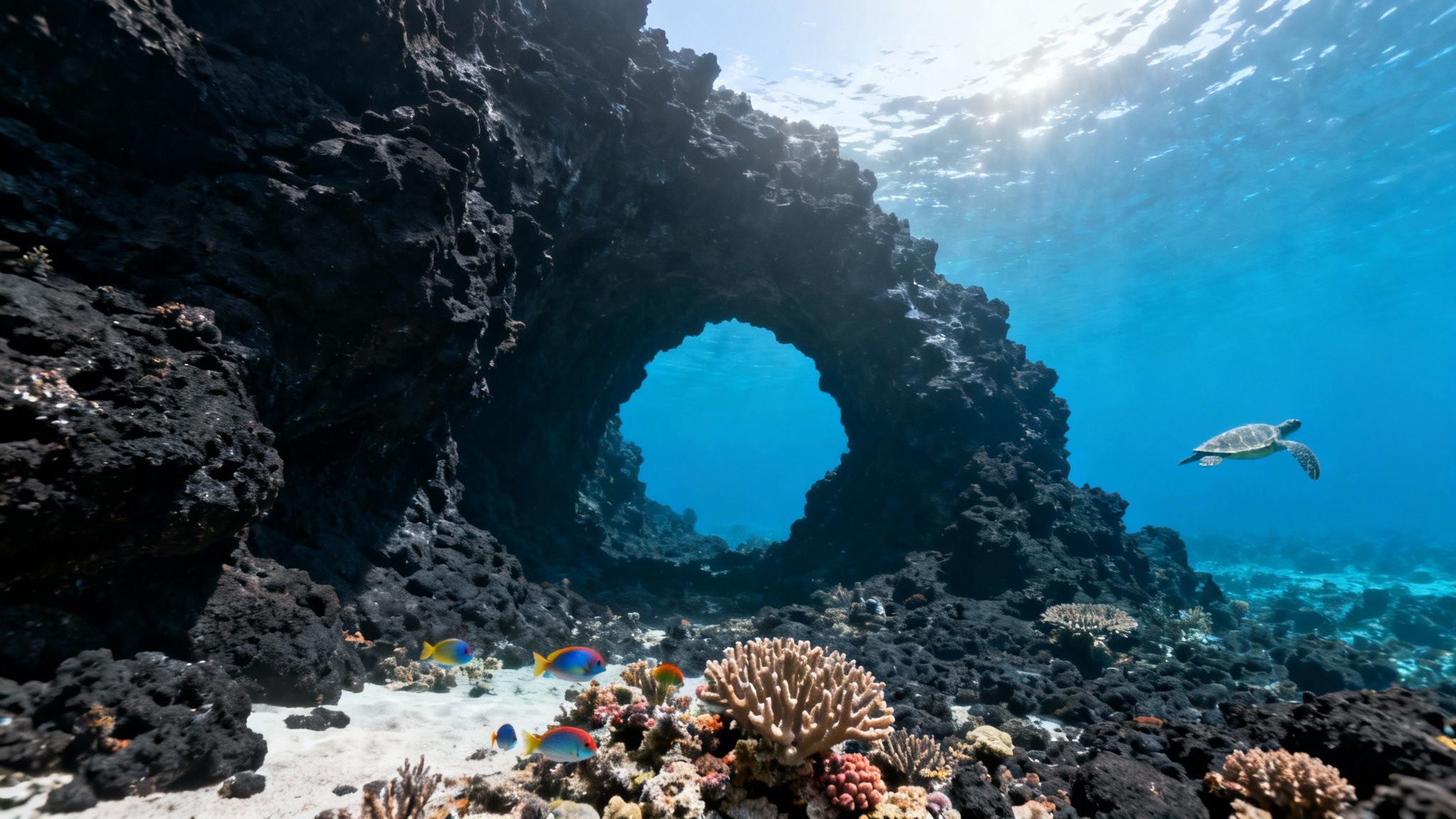
When divers start swapping stories about the best spots on the planet, Kona always comes up. What really sets this slice of the Big Island apart is the geology and how it creates a uniquely protected environment. The island’s massive volcanoes, Mauna Loa and Hualālai, act as a natural shield for the western coast, blocking the prevailing trade winds and making for calm, predictable conditions most of the year.
That natural protection is the secret to Kona's stunning water clarity. It's not uncommon for visibility to be in the 80 to 100-foot range, sometimes even more. This crystal-clear water lets you fully appreciate the dramatic underwater topography—a direct result of ancient lava flows that have sculpted incredible arches, caverns, and swim-throughs. If you want to dive deeper into what makes this place special, you can learn more about the Big Island's unique marine biodiversity and geological formations.
Kona's Unforgettable Dive Experiences
Kona isn’t just about pretty reefs; it's home to a few signature dives that are true bucket-list items for people from all over the world. These experiences are so distinct they really define Kona diving and are the reason people come back year after year.
You have the world-famous Manta Ray Night Dive, where these gentle giants perform an underwater ballet right in front of you. Then there's the completely otherworldly Blackwater Dive, which takes you out into the deep, dark ocean. The variety is just staggering. These aren't just dives; they are genuinely immersive encounters with some of the ocean's most fascinating phenomena.
To get a better sense of what's on offer, here’s a quick look at the main types of dives you can do in Kona. This should help you figure out where you want to start.
Comparing Kona's Signature Dives
A quick comparison of the most popular diving experiences offered in Kona, Hawaii, to help you choose your next underwater adventure.
| Dive Type | Ideal For | Required Experience | Defining Highlight |
|---|---|---|---|
| Reef Dives | All divers, photographers | Open Water | Lava tubes, vibrant corals, turtles |
| Manta Ray Night Dive | All experience levels | Open Water | Graceful manta rays feeding at night |
| Blackwater Night Dive | Adventurous divers | Advanced Open Water | Bizarre, bioluminescent deep-sea life |
| Advanced Dives | Experienced divers | Advanced Open Water | Deep walls, unique topography |
As you can see, each dive offers a completely different window into the marine world, showcasing the incredible biodiversity that thrives along the Kona coast. Whether you’re exploring sunlit coral gardens or drifting in the dark abyss, Kona delivers an adventure you won't soon forget.
Experiencing The Famous Manta Ray Night Dive
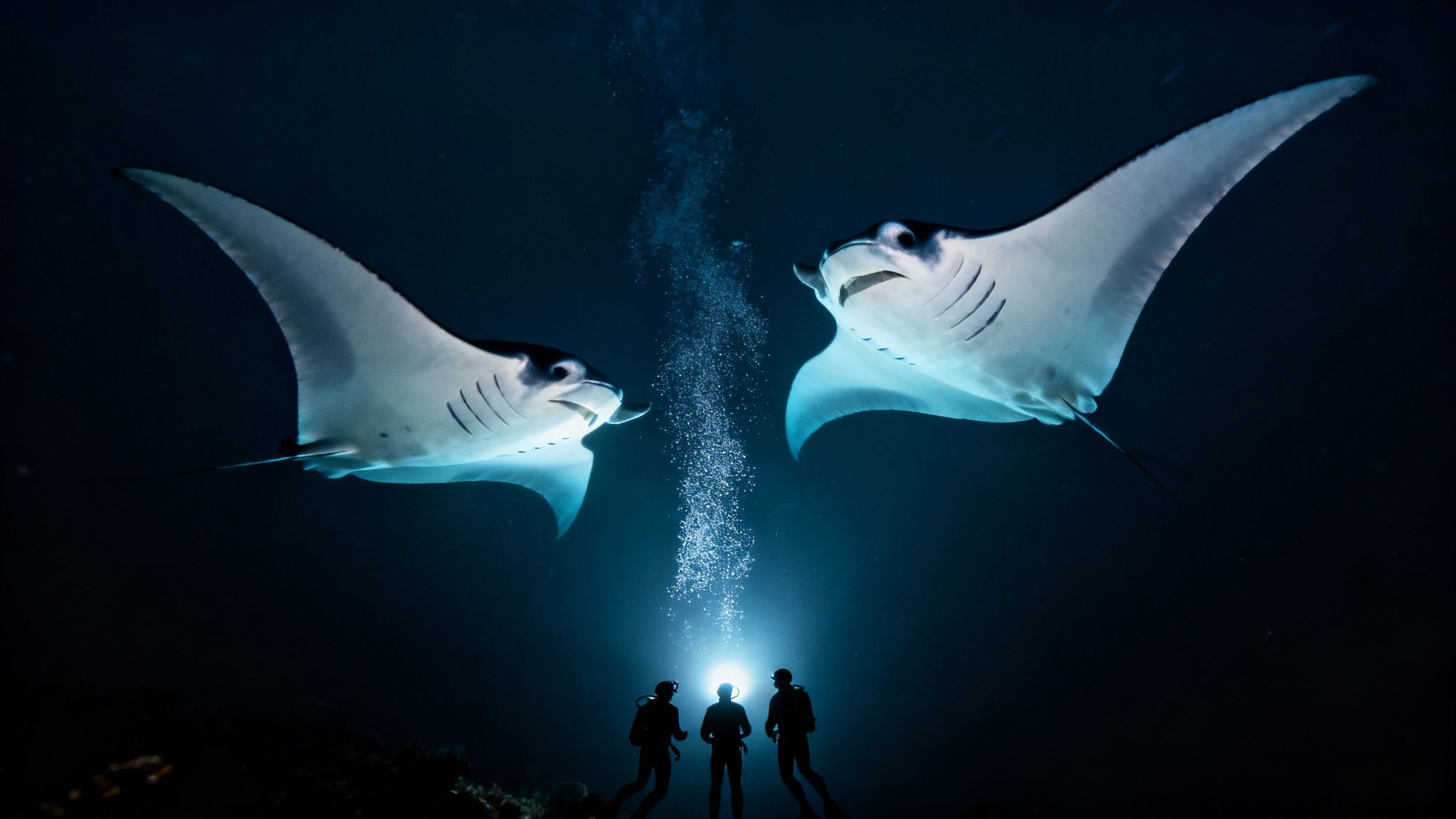
The Kona Manta Ray Night Dive is consistently voted one of the best dives on the planet, and I can tell you from experience—it absolutely lives up to the hype. Imagine an underwater ballet where gentle giants with wingspans stretching up to 18 feet glide inches from your mask, performing effortless barrel rolls through the beams of your dive light. It’s pure magic.
This incredible spectacle works because local dive operators have perfected the setup. We descend to a designated spot on the sandy bottom, sit or kneel, and shine our lights straight up. This creates a sort of "plankton campfire" that attracts a feast for the mantas, who swoop in to gracefully filter-feed right in front of us.
Why Garden Eel Cove Is The Premier Manta Dive Location
While there are a couple of spots to see the mantas, those of us who dive here daily will almost always tell you that Garden Eel Cove (aptly nicknamed Manta Heaven) is the superior choice. Its geography offers better protection from the open ocean swell, which often means calmer, more comfortable conditions for everyone. The viewing area is better designed, giving every diver an unobstructed, front-row seat to the action. As a bonus, the reefs surrounding the site are noticeably healthier and more vibrant, making for a fantastic twilight dive before the main event even begins. You can get a full rundown on what to expect on our guide to the manta ray night swim.
This unique encounter is a remarkable wildlife tourism success story. The Manta Pacific Research Foundation has identified and cataloged over 270 individual manta rays in the local population, and the success rate for sightings on tours is exceptionally high. Discover more insights about this amazing Kona phenomenon at DAN.org.
Watching these majestic animals is an experience that stays with you long after you surface. It's a powerful and humbling reminder of the ocean's wonders and a must-do for any diver visiting Kona. If you’re ready to witness this underwater spectacle for yourself, the 2-Tank Manta Dive & Snorkel trip is the perfect way to do it.
Ready for a Challenge? Unique and Advanced Kona Dives
For divers who've been around the block, Kona offers some truly next-level experiences. If you've already seen the manta ray ballet and are itching for something more, you're in the right place. Kona’s advanced diving scene is where the real magic happens.
These aren't your average reef tours. We're talking about dives that demand skill, precision, and a real sense of adventure. Think deep lava tubes, sheer vertical walls that drop into the blue, and encounters that few people on Earth will ever get to have. They require solid buoyancy and a cool head, but the payoff is absolutely immense.
The Kona Blackwater Dive: A Trip to Inner Space
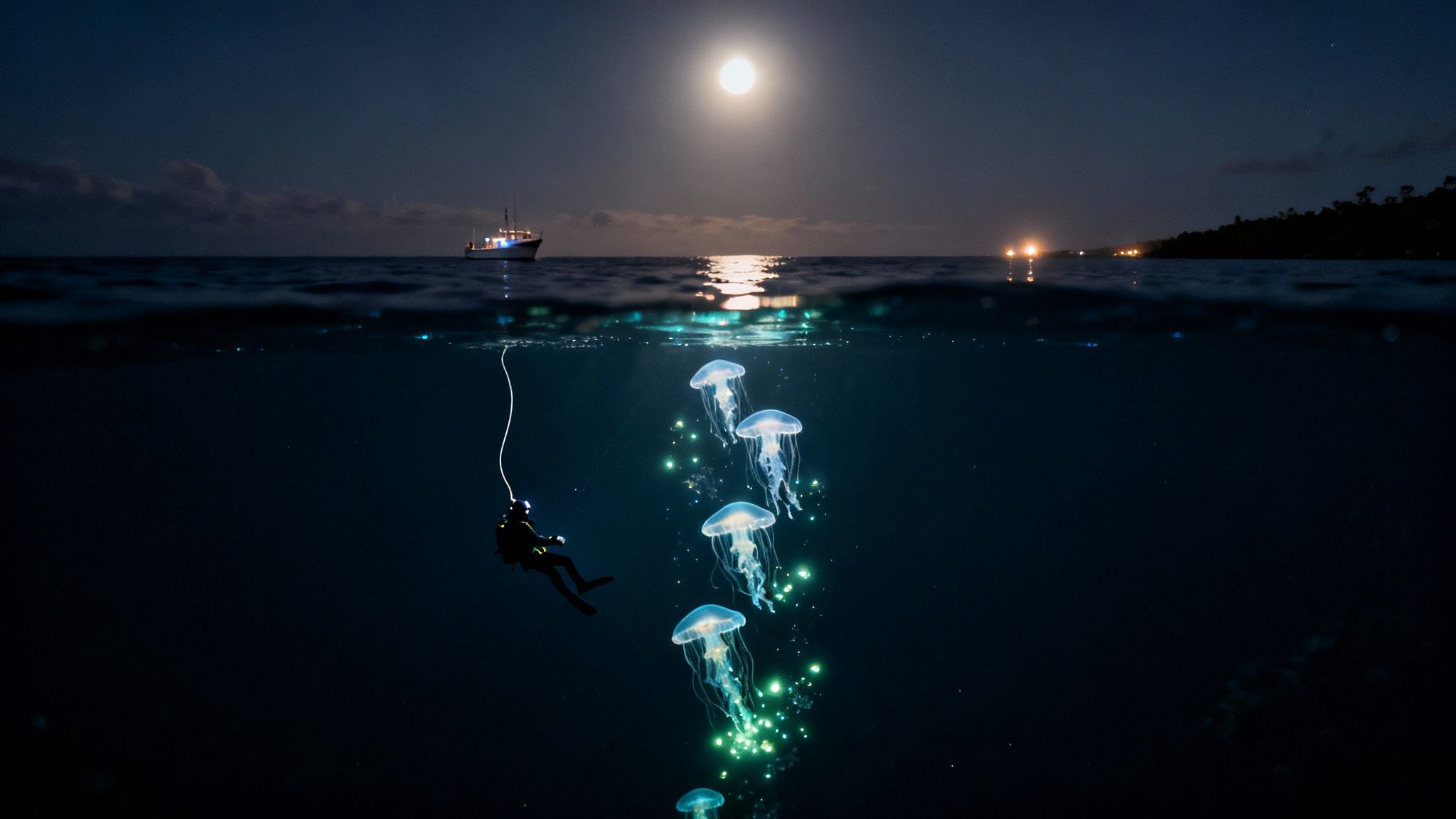
The Kona Blackwater Dive is, without a doubt, one of the most unique dives you can do anywhere in the world. Forget reefs and wrecks—this is like floating through the cosmos. It's a drift dive, at night, in the open ocean over thousands of feet of inky black water.
Tethered to the boat for safety, you'll descend to about 50 feet and just hang there, suspended in the void. Below you is the deep abyss, and all around you, life begins to emerge. You’re witnessing the largest migration on the planet, as creatures from the deep rise toward the surface to feed. The things you see are straight out of a sci-fi movie.
- Bioluminescent Jellies: Glowing and pulsing with an eerie, beautiful light.
- Translucent Squids: Almost invisible, with mesmerizing patterns shifting across their bodies.
- Larval Creatures: The bizarre-looking baby versions of reef fish, often unrecognizable.
For photographers, it’s a macro paradise. For everyone else, it’s a mind-bending look into a hidden world. You’re seeing an ecosystem that only reveals itself in the dead of night, and it's something you'll never forget. You can learn more about the specifics of the Kona Black Water Dive experience.
This dive isn't for beginners; it requires an Advanced Open Water certification and rock-solid buoyancy control. But if you’re up for it, the Black Water Night Dive tour is an adventure of a lifetime. If you prefer your challenges during the day, our Premium Advanced 2-Tank Trip will take you to Kona's incredible deep walls and dramatic lava formations.
How To Choose The Right Kona Dive Operator
With all the incredible diving Kona has to offer, the single most important decision you'll make for your trip is picking the right dive operator. The quality of your guides, the boat you're on, and the overall service can be the difference between a good dive and an absolutely unforgettable one. It's about your safety and your enjoyment, so it really pays to look beyond just the price tag.
A truly top-tier operator doesn't just get you in the water; they obsess over the details that create a smooth, comfortable, and memorable experience from the moment you step on the boat. When you start comparing your options for Kona diving, a few key things really separate the best from the rest.
What To Look For In A Premier Dive Company
The best dive companies are defined by a deep commitment to quality, and that starts with the crew. An experienced crew is non-negotiable. Not only do knowledgeable guides keep you safe, but they also know the dive sites like the back of their hand and can point out the camouflaged frogfish or shy octopus you’d almost certainly miss on your own.
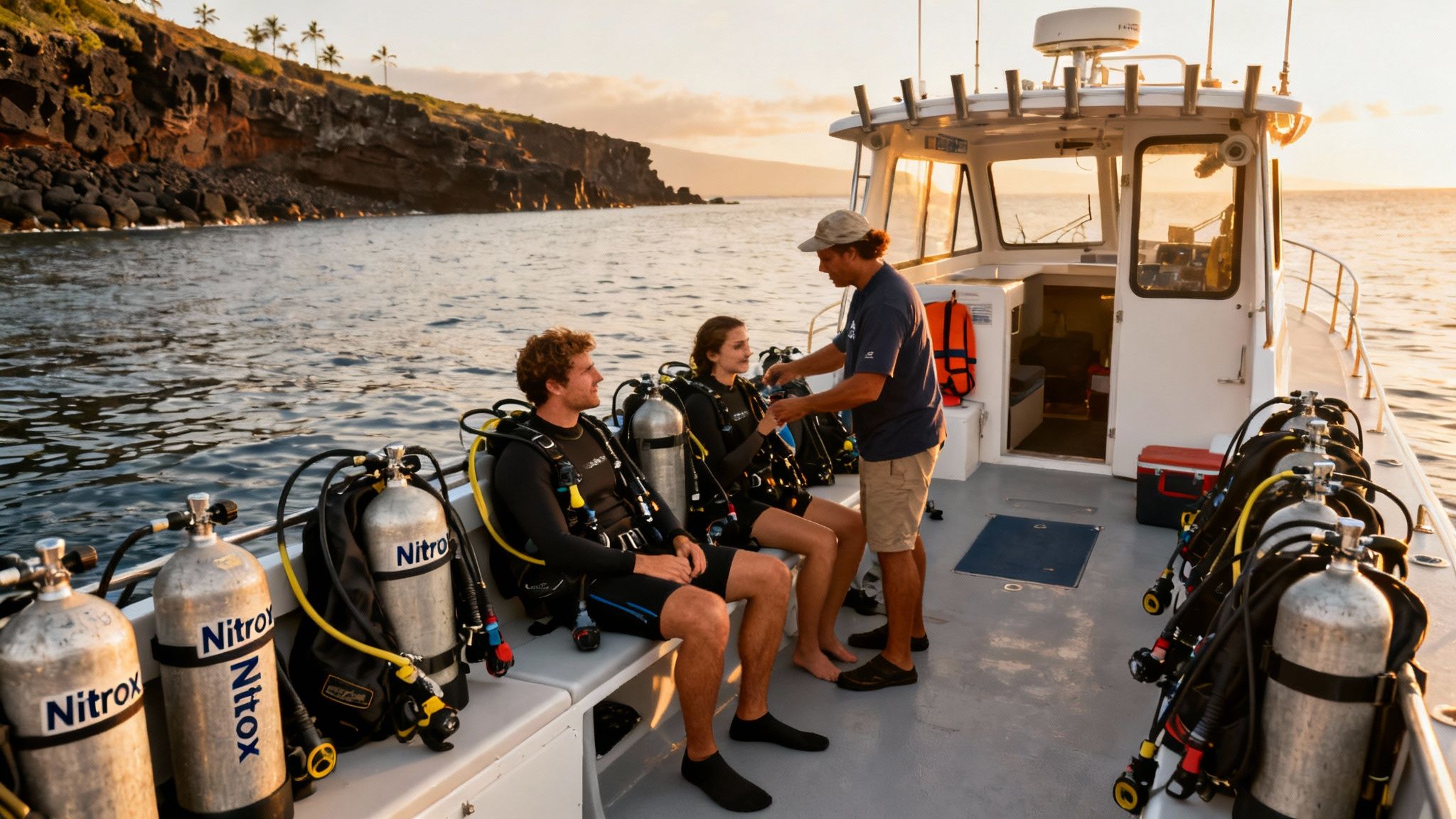
The boat itself is another huge factor. Keep an eye out for operators who use custom-built dive boats. These vessels are designed from the ground up for diver comfort and efficiency, with features like spacious decks, easy entry and exit points, and other amenities that make a world of difference. Small group sizes are another hallmark of a premium experience, guaranteeing you get personalized attention instead of feeling lost in a crowd.
When an operator invests in things that directly benefit you—like meticulously maintained gear, comfortable boats, and a highly-trained staff—it shows they're truly committed to providing a superior underwater adventure.
At Kona Honu Divers, we live by these principles. We know an amazing dive trip begins long before you hit the water. It starts with a friendly, professional crew, a boat built for divers, and a focus on small, manageable groups that make for a much more personal and enjoyable tour. To see how we stack up, you can read our comparison guide on the Kona Diving Company.
Added Value That Makes A Real Difference
Beyond the essentials, look for the operators that offer perks with real value. For instance, offering complimentary nitrox for certified divers is a massive benefit. Diving with enriched air can significantly extend your no-deco time and often helps you feel less tired after a day of diving, letting you make the absolute most of your vacation.
This seemingly small detail is actually a major differentiator. It shows a company's dedication to your satisfaction and safety. By making nitrox readily available at no extra cost, they’re investing in a better overall experience for their guests. When you're ready to explore the incredible underwater world of the Big Island, consider an operator that goes that extra mile.
Planning And Booking Your Kona Diving Adventure
So, you’re sold on diving in Kona. Good choice. Now comes the fun part: turning those daydreams of manta rays and alien-like blackwater creatures into a real plan. A little bit of smart planning goes a long way in making sure your trip is smooth, safe, and timed just right for the best possible experience underwater.
Kona is fantastic for diving any time of year, but the seasons do have their own personalities. The water is always inviting, hovering around a comfortable 75°F (24°C) in the winter and warming up to a bath-like 81°F (27°C) by late summer. While visibility is generally great year-round, you’ll find the flattest, calmest seas between April and October. For something truly unforgettable, plan your trip from December to March. That's when the humpback whales are in town, and hearing their songs echo through the water on a dive is an experience that will stay with you forever.
Packing For Your Dive Trip
The age-old question for any dive trip: bring your own gear or rent? My advice is to always bring your personal "fit" items—your mask, fins, and dive computer. There's just no substitute for gear you know and trust, especially a mask that doesn't leak. Lugging a full setup with a BCD and regs can be a pain, though.
Renting is a fantastic, hassle-free option. A good operator will have high-quality, well-maintained equipment ready for you. It frees up a ton of space in your luggage and you won't have to worry about your expensive gear getting banged up by the airlines.
Your dive bag shouldn't stop at just dive gear. Don't forget reef-safe sunscreen to protect our fragile corals, a reusable water bottle (the boat has refills!), and maybe some motion sickness medication if you're prone to it.
For a different kind of trip, some divers look into liveaboard diving adventures for more bottom time. But for day trips in Kona, a light jacket for the boat ride back is a lifesaver, especially after a night dive when the air feels chilly. It's all about being prepared for comfort both in and out of the water.
Securing Your Spot On The Boat
This is a big one: book your dives in advance. I can't stress this enough, especially if you're visiting during a busy season. The world-famous Manta Ray Night Dive and the thrilling Blackwater Dive often sell out weeks ahead of time. A dive shop with a clear, easy-to-use booking system is always a good sign.
At Kona Honu Divers, you can see all our diving tours online, from beautiful morning reef dives to our specialized advanced trips. A few clicks are all it takes to check our schedule and lock in your spot. This way, you can relax knowing your underwater adventure is set before you even pack your bags.
Your Kona Diving Questions, Answered
It's completely normal to have a few questions swirling around as you lock in your dive trip. Figuring out the details about certifications, gear, and what you’ll actually see helps you show up confident and ready to hit the water. Here’s what divers most often ask us.
What Certification Do I Need to Dive in Kona?
For the vast majority of our stunning reef dives, a standard Open Water certification is your ticket to adventure. This certification gets you access to the classic Kona experience—exploring incredible lava tubes, archways, and the vibrant coral gardens that dot the coastline.
However, some of our more unique dives do require a bit more training. The famous Kona Blackwater Dive, for instance, is a true open-ocean night dive, so you'll need at least an Advanced Open Water certification to join. For those looking to push their limits, our premium advanced dive tours are built for seasoned divers who are comfortable exploring deeper walls and more challenging sites. And if you're brand new to diving? We have introductory options to give you a safe and amazing first look at the underwater world.
Should I Dive With Nitrox? Is It Available?
Absolutely. Nitrox is readily available here, and we highly recommend it for any certified diver. The biggest benefits are longer bottom times and shorter surface intervals, which means more time exploring and less time waiting on the boat. Many divers also say they feel less tired after a day of diving on enriched air.
At Kona Honu Divers, we want you to have the best day possible. That’s why we provide complimentary Nitrox for all certified Nitrox divers on our boats. It’s a simple way we can make your dives safer, longer, and more enjoyable.
Besides Manta Rays, What Will I See?
The mantas are definitely the headliners, but Kona’s marine life is incredibly diverse. On almost any dive, you can expect to see green sea turtles (honu) cruising by, and it’s common to be greeted by a pod of playful spinner dolphins on the boat ride. The reefs are also home to tons of eels, like the big yellowmargin morays.
If you look closely, you can spot masters of disguise like octopuses and the occasional, hard-to-find frogfish. The reefs themselves are buzzing with color from countless butterflyfish, parrotfish, and wrasses. And if you’re here in the winter (December to March), you'll often hear the haunting songs of humpback whales echoing through the water—an experience that will give you chills.
Ready to see it all for yourself? Our experienced crew and custom-built dive boats are waiting to give you an unforgettable Kona adventure.