
Picture this: you're weightless, drifting through impossibly clear, blue water. Sunlight filters down, illuminating ancient lava tubes and arches formed by volcanoes centuries ago. A school of impossibly bright fish flits past. This isn't a dream; it's just another day of Kona diving on the Big Island of Hawaii.
From the world-famous Manta Ray Night Dive to the surreal Blackwater Dives, the experiences waiting for you here are the kind you talk about for years.
Why Kona is a World-Class Diving Destination
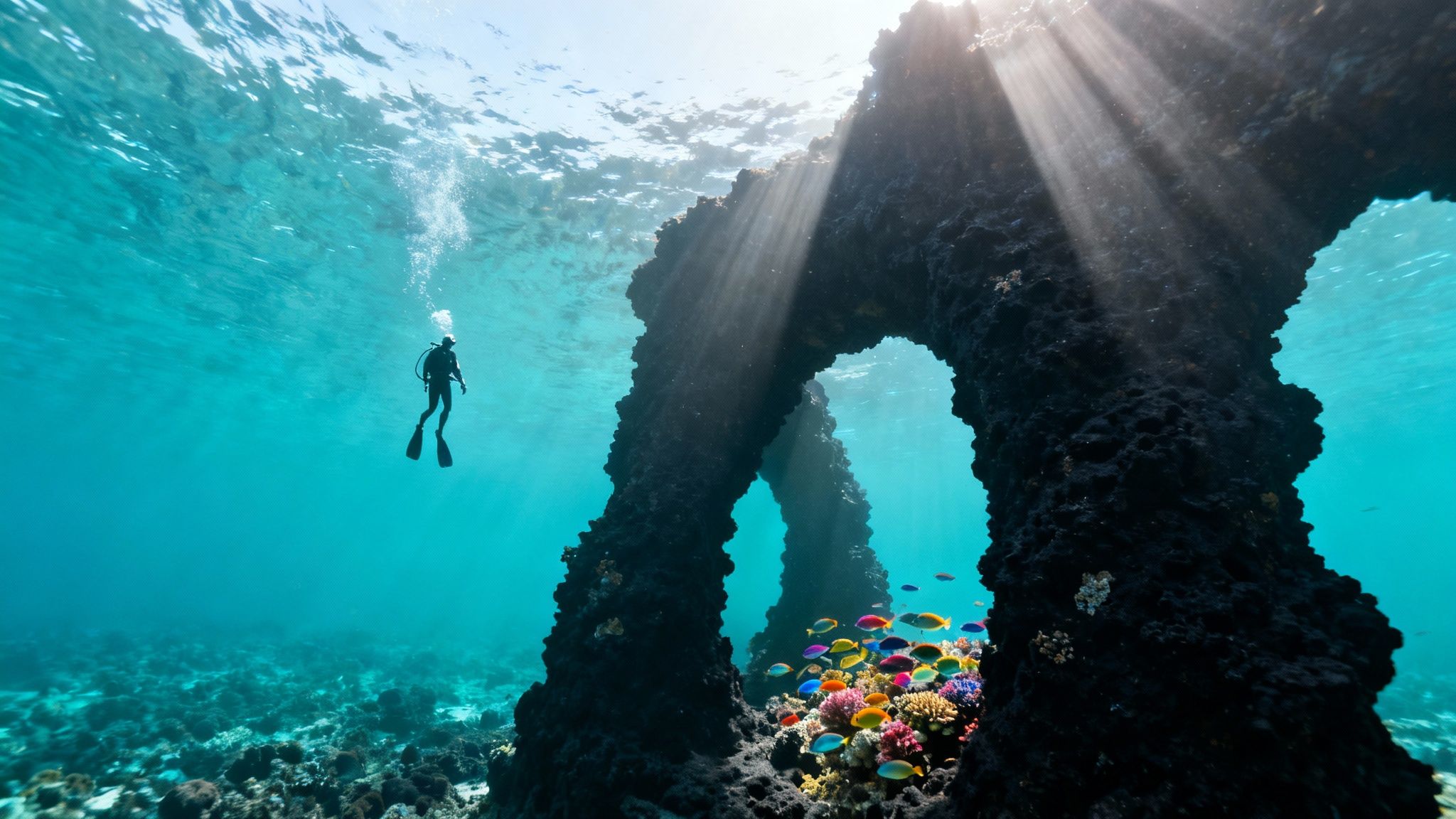
Kona isn't just another pretty spot on the map; it's a true bucket-list destination for divers worldwide. What makes it so special? It’s the perfect storm of incredible visibility, unique underwater landscapes, and a mind-blowing amount of marine life.
The Kona coast sits on the leeward side of the island, which means it's sheltered from the prevailing trade winds. This lucky bit of geography results in consistently calm, clear water, with visibility often reaching an incredible 100 feet or more. That clarity opens up a window into a dramatic world sculpted by volcanic fire, where you can explore intricate lava tubes, swim through massive archways, and glide over sprawling coral gardens.
The Heartbeat of Hawaii's Marine Life
Diving is more than just a hobby here; it’s a vital part of the local culture and economy. In 2024, Kona welcomed an amazing 1.52 million visitors, and a huge number of them came to experience its legendary waters. It’s part of a bigger picture—the U.S. diving tourism market is expected to hit USD 1,585 million by 2035, and it’s unique, eco-conscious destinations like Kona that are fueling that growth. You can dive deeper into Hawaii tourism data over at RoadGenius.com.
But what really sets Kona apart is who you’ll meet underwater. The biodiversity is simply off the charts.
- Endemic Species: A huge chunk of the marine life here is found nowhere else on the planet. Every dive is a chance to see something truly unique.
- Big Animal Encounters: Kona is famous for reliable, up-close encounters with majestic manta rays, playful spinner dolphins, gentle sea turtles (honu), and even the occasional whale shark.
- Healthy Reefs: The vibrant coral systems are teeming with life, from colorful butterflyfish and triggerfish to shy moray eels peeking out from their rocky homes.
This guide is your complete roadmap to planning the ultimate Kona diving adventure. We’ll even introduce you to a fantastic local operator, Kona Honu Divers, known for their top-notch safety, focus on sustainability, and knack for creating unforgettable dives.
Whether you have hundreds of dives under your belt or are just starting out, get ready to discover why Kona is a diver's paradise. To get a taste of what's in store, check out the full range of Kona diving tours and start dreaming up your trip.
Kona’s Unforgettable Signature Dives
Daytime diving in Kona is spectacular, with its volcanic arches and reefs teeming with life, but the real magic begins after sunset. Kona is home to two of the most unique night dives you'll find anywhere on the planet—experiences that pull divers from all over the world for a look into a rarely seen underwater world. These are the dives that take Kona from being a great destination to a truly legendary one.
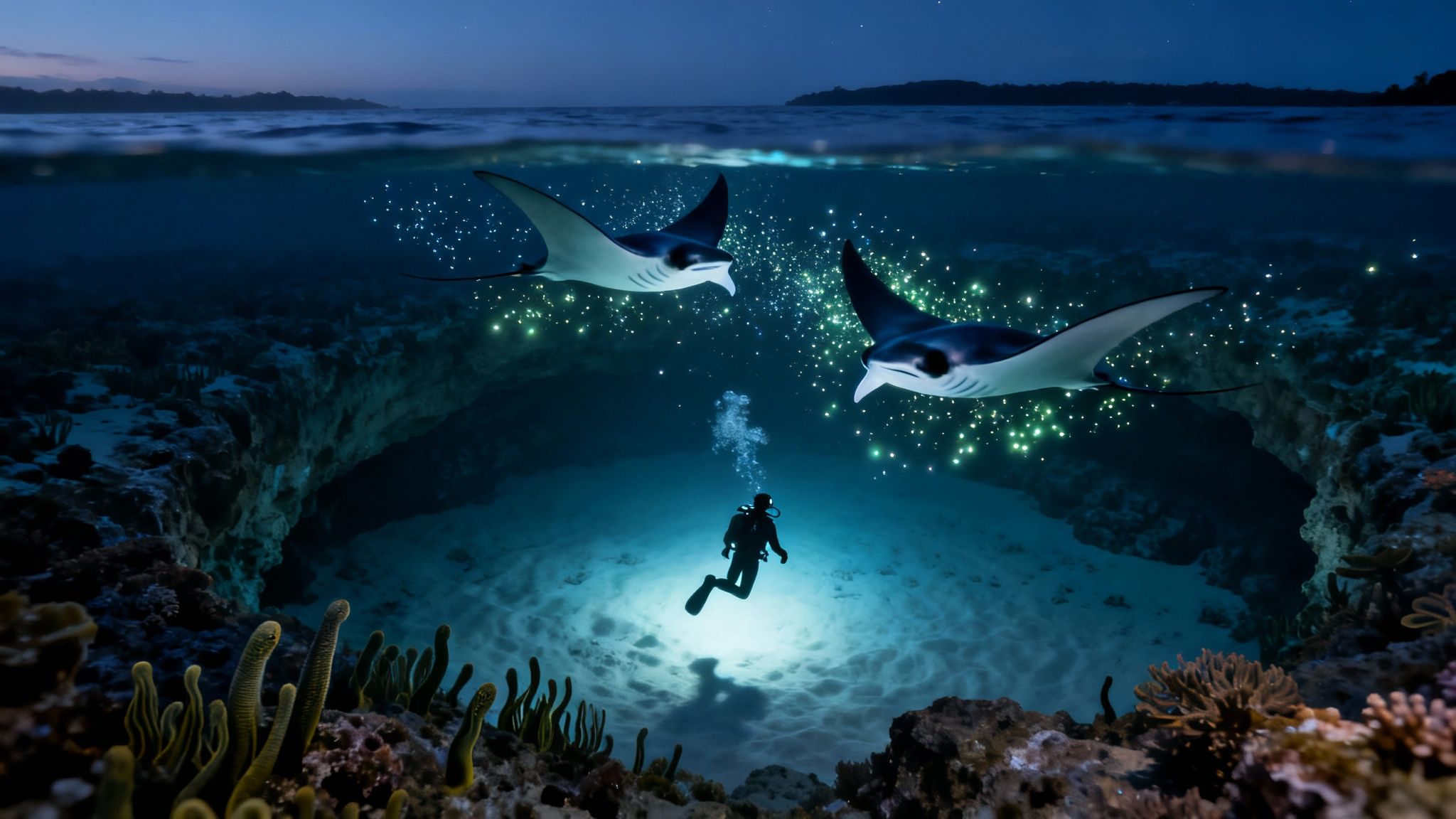
The World-Famous Manta Ray Night Dive
Picture this: you're kneeling on the sandy ocean floor in near-total darkness, with your dive light aimed straight up. Slowly, a cloud of microscopic plankton gathers in the beam, creating a glowing buffet. Then, a massive shadow emerges from the deep blue. It's a giant manta ray, with a wingspan stretching over 12 feet, gliding effortlessly toward the light to feed. This is the surreal, graceful underwater ballet known as the Kona Manta Ray Night Dive.
Both divers and snorkelers get a front-row seat to this all-you-can-eat plankton feast. The mantas put on a show, performing mesmerizing barrel rolls and swoops, sometimes passing just inches from your mask as they filter-feed. With sighting success rates regularly topping 90%, it’s one of the most reliable big animal encounters in the world.
The feeling of a massive, gentle giant gliding directly over your head is something you can't really put into words. It’s a powerful, humbling, and profoundly beautiful experience that connects you to the ocean in a way few other dives can.
Why Garden Eel Cove is the Premier Choice
While a few spots host the manta dive, Garden Eel Cove (also known as Manta Heaven) consistently delivers a better experience. Located just north of the Kona airport, its unique underwater landscape creates the perfect conditions for both the mantas and the divers watching them.
- Better Protection: The cove is naturally more sheltered from open ocean swells. This almost always means calmer, more comfortable conditions, which makes a huge difference on nights when the wind picks up.
- Optimal Viewing Arena: The dive site features a natural sandy amphitheater where we can settle in. This layout gives everyone an unobstructed, front-row seat to the action as the mantas feed right above us.
- Richer Reef Life: The dive at Garden Eel Cove is more than just mantas. The surrounding reefs are healthier and more vibrant than other sites, making the initial descent and the time before the mantas show up a fantastic dive in its own right.
Choosing an operator that goes to this location gives you the best possible chance for an incredible, comfortable, and memorable encounter. If you're still weighing your options, our guide on what is the best dive in Kona offers even more detailed insights.
The Otherworldly Blackwater Dive
For the truly adventurous and experienced divers out there, Kona offers something that feels more like floating through outer space than diving. The Blackwater Dive is a pelagic drift dive we do miles offshore, suspended over thousands of feet of water. Tethered to the boat, you descend into the inky blackness to witness one of the largest migrations on Earth.
Every single night, countless bizarre and fascinating creatures rise from the deep to feed near the surface. Many of these animals are bioluminescent, creating their own light in the dark, while others are in their larval stages and look nothing like their adult forms. You might see things like:
- Pelagic Nudibranchs: Brightly colored sea slugs that drift in the open ocean.
- Larval Eels and Fish: Strange, transparent, alien-like versions of the fish you see on the reef.
- Comb Jellies: Gelatinous animals that refract your light into shimmering, dancing rainbows.
This isn't a dive for the faint of heart. But for those with solid buoyancy skills and a thirst for the unknown, it’s a mind-blowing journey into a hidden universe.
The sheer quality and variety of these dives are why so many of us return to Kona year after year. See for yourself what fellow divers are saying about these incredible underwater adventures.
Kona’s Top Underwater Playgrounds: A Diver’s Guide
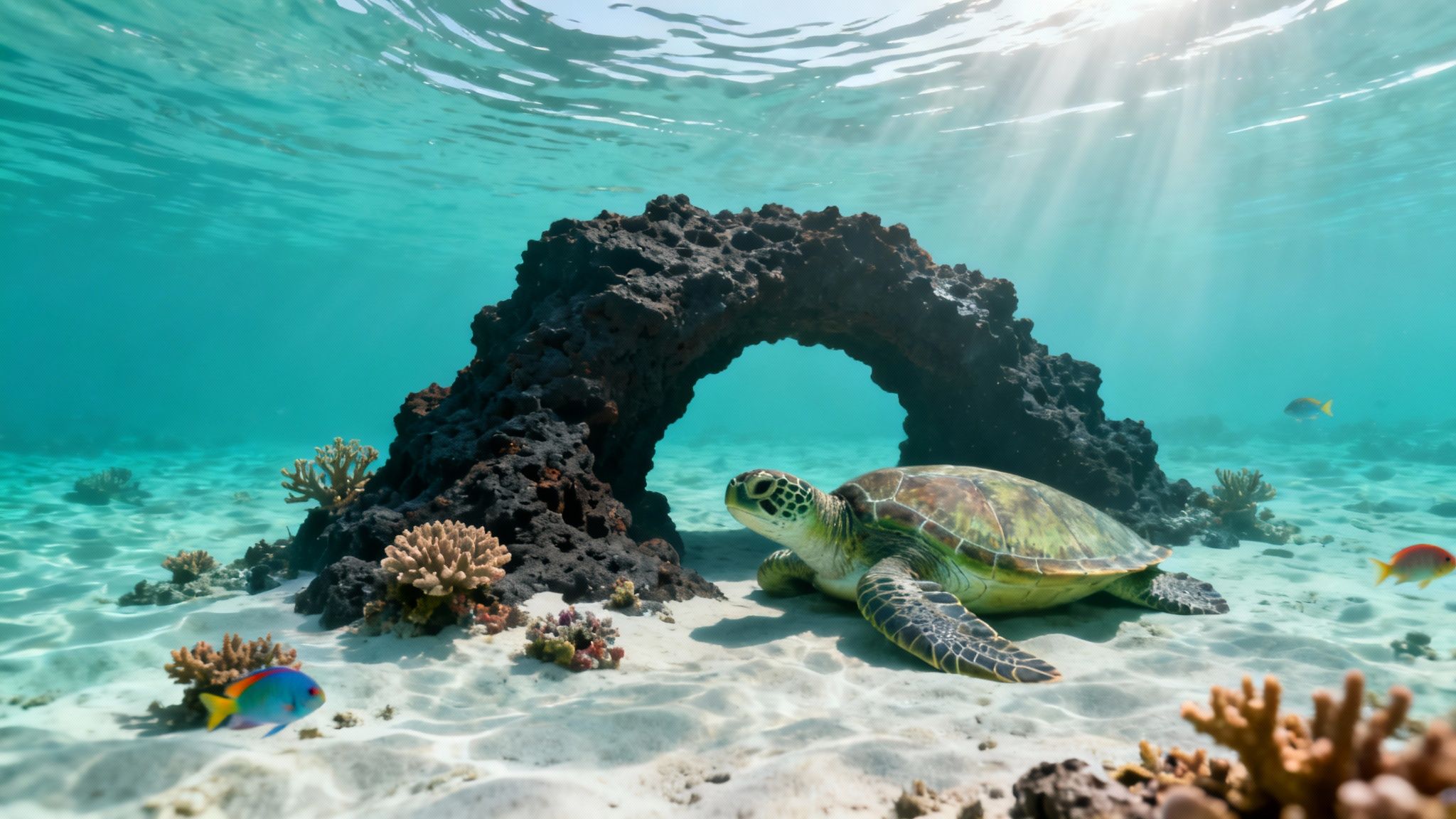
The Kona coast is basically a diver’s dream, shaped by ancient lava flows that created a spectacular collection of underwater playgrounds. Every site offers a unique glimpse into Hawaii's marine world, from dramatic lava tubes to bustling coral gardens. Whether you're blowing your first bubbles or you're a seasoned pro, there's a perfect spot here waiting for you.
Kona's dive scene is incredibly active, with local operators guiding over 25,000 dives every single year. It’s a testament to just how popular and well-run things are here. To keep the reefs pristine, dive boats coordinate to spread out across more than a thousand potential moorings, minimizing our footprint. This commitment means you get to experience a healthy, vibrant ecosystem every time you descend. For a broader look, you can explore more about diving on the Big Island.
To help you get started, here's a quick look at some of the must-see sites along the Kona coast. This table gives you a snapshot of what to expect and who each site is best for.
Top Kona Dive Sites at a Glance
| Dive Site | Experience Level | Max Depth | Highlights |
|---|---|---|---|
| Pawai Bay | Beginner | 45 ft | Calm, protected bay known as "Turtle Heaven." Great for spotting resting honu (green sea turtles). |
| Turtle Pinnacle | Beginner | 60 ft | A classic "turtle cleaning station" where turtles line up for a spa day from reef fish. |
| Golden Arches | Intermediate | 50 ft | A stunning lava archway often surrounded by huge schools of bright yellow tangs. A photographer's favorite. |
| Suck 'em Up | Intermediate | 45 ft | A fun lava tube where a gentle surge pushes you through a natural underwater passage. |
| Au Au Crater | Advanced | 100+ ft | A submerged volcanic crater with dramatic drop-offs and chances to see larger pelagics like sharks and rays. |
Of course, that's just a taste of what's out there. Let’s dive a little deeper into what you can expect based on your experience level.
First-Timers and Novice Divers
If you're new to the underwater world, Kona is one of the best places to learn. The calm, protected bays are perfect for building confidence while being surrounded by amazing sea life. These spots are typically shallow with fantastic visibility—ideal for your first few dives or getting certified.
- Pawai Bay: We often call this spot "Turtle Heaven," and for good reason. It’s a protected area with multiple dive moorings, gentle slopes, and cool lava arches where Hawaiian green sea turtles, or honu, love to hang out.
- Turtle Pinnacle: This is a fantastic first dive. A huge coral head—the "pinnacle"—rises from the sand, serving as a cleaning station for turtles. You can literally kneel on the bottom and watch as they patiently wait for reef fish to nibble algae off their shells.
Thrills for Intermediate Explorers
Once you've got your buoyancy dialed in, the real magic of Kona diving begins to unfold. Intermediate sites are where you’ll really see the island’s volcanic personality shine through with incredible swim-throughs, caverns, and complex lava formations.
There's nothing quite like navigating through a dark lava tube and emerging into the brilliant blue, suddenly surrounded by a shimmering cloud of fish. It's moments like these that capture the true essence of diving in Hawaii.
A couple of spots you absolutely can't miss:
- Golden Arches: This site is pure eye-candy. You get to swim through a massive lava archway that’s often swarming with schools of vibrant yellow tangs. It's a photographer's dream.
- Suck 'em Up: The name sounds intense, but it's a ton of fun! This site is a lava tube where a gentle surge pushes you through one end and pulls you out the other. It’s like a natural, mellow underwater rollercoaster.
The Deep End: Challenges for Advanced Divers
For experienced divers looking to go deeper and spot bigger animals, Kona delivers some truly unforgettable adventures. These sites often have stronger currents and require excellent buoyancy control, but the payoff is huge. Check out this advanced dive tour for a taste of what's available.
One of the top advanced sites is Au Au Crater. It's a massive, submerged volcanic crater that features sheer drop-offs into the deep blue. This is where you have the best chance of encountering eagle rays, sharks, and if you’re really lucky, maybe even a whale shark passing by. The deeper profile attracts marine life you just won't see on the shallower reefs.
No matter your certification level, Kona has a dive that will leave you speechless. The sheer variety here means that every single day brings a new adventure and a new discovery.
How to Plan Your Perfect Kona Diving Trip
So, you're dreaming of diving in Kona? Good news—turning that dream into reality is simpler than you might think. With a bit of smart planning, you can get everything lined up for an incredible underwater adventure on the Big Island. Let's walk through the key steps to get you from your couch to the coral reefs.
One of the absolute best things about Kona is that the diving is fantastic year-round. The water stays in that perfect sweet spot, usually hovering between a comfortable 75-80°F (24-27°C). While you honestly can't pick a bad time, there are some subtle differences between seasons. The summer months tend to bring the flattest, calmest seas. But if you visit in the winter, you get the truly unforgettable bonus of hearing humpback whales singing their songs while you're underwater. It’s pure magic.
Gearing Up for Your Kona Adventure
Packing for a dive trip is all about being prepared without overdoing it. While you can rent excellent, well-maintained gear from a top-notch operator like Kona Honu Divers, there are a few personal items you’ll be glad you brought from home.
Here’s a quick checklist of what I recommend packing:
- Dive Computer: This is a non-negotiable piece of safety gear for any certified diver. Don't leave home without it.
- Mask and Fins: Nothing beats the comfort and familiar fit of your own mask and fins. If you have a set you love, bring them.
- Reef-Safe Sunscreen: This is a big one. Standard sunscreens have chemicals that bleach and kill our beautiful reefs, so choosing a reef-safe option is critical for protecting the ecosystem.
- Reusable Water Bottle: You'll be on a boat and in the sun—staying hydrated is key. A reusable bottle helps minimize plastic waste.
- Logbook and Certification Card: You’ll need to show your c-card, so make sure it's packed and ready to go.
Courses and Certifications for Every Level
Whether you’re about to take your very first breath underwater or you're a seasoned diver looking to add a new skill to your toolbelt, Kona is the perfect place for it. The calm, clear waters are an ideal classroom.
There's a huge difference between learning in a pool and learning in the ocean. Kona’s diverse underwater landscapes provide the perfect real-world training ground. Perfecting your buoyancy over a vibrant reef or learning to navigate a lava tube makes the skills stick in a way that just can't be replicated elsewhere.
If you're brand new to diving, a program like the PADI Discover Scuba Diving experience is the perfect way to get your fins wet with an instructor by your side the entire time. For those already certified, Kona is a playground for continuing education. You could earn your Advanced Open Water certification, become a Nitrox diver to extend your bottom time, or even tackle a truly unique challenge like the Blackwater Dive.
Speaking of which, Kona's blackwater diving is a one-of-a-kind experience. It involves drifting in the deep open ocean at night, tethered to the boat, to witness the strange and wonderful deep-sea creatures that migrate toward the surface after dark. This type of pelagic exploration was commercially pioneered right here in Kona between 2013-2015, putting the Big Island on the map as a global hotspot for this incredible dive. You can dive deeper into the science behind it by exploring the research on pelagic night diving in Kona.
Smart Booking and Added Perks
Choosing the right dive operator doesn't just mean a safer and more enjoyable trip—it can also offer some great value. The best shops, like Kona Honu Divers, often include perks that make a huge difference. For instance, certified divers can take advantage of free nitrox, a gas blend that can give you longer no-deco times and leave you feeling less tired after a day of diving.
Here’s another pro tip: look for an "early diver discount." Booking the first boat of the morning often comes with a nice little price break, and you get to be on the reef when the conditions are most pristine. As you start budgeting, it helps to get a full picture of the costs involved; you can learn more about how expensive scuba diving is in Hawaii in our detailed guide.
Ready to take the plunge?
Diving with Purpose: The Kona Conservation Ethos
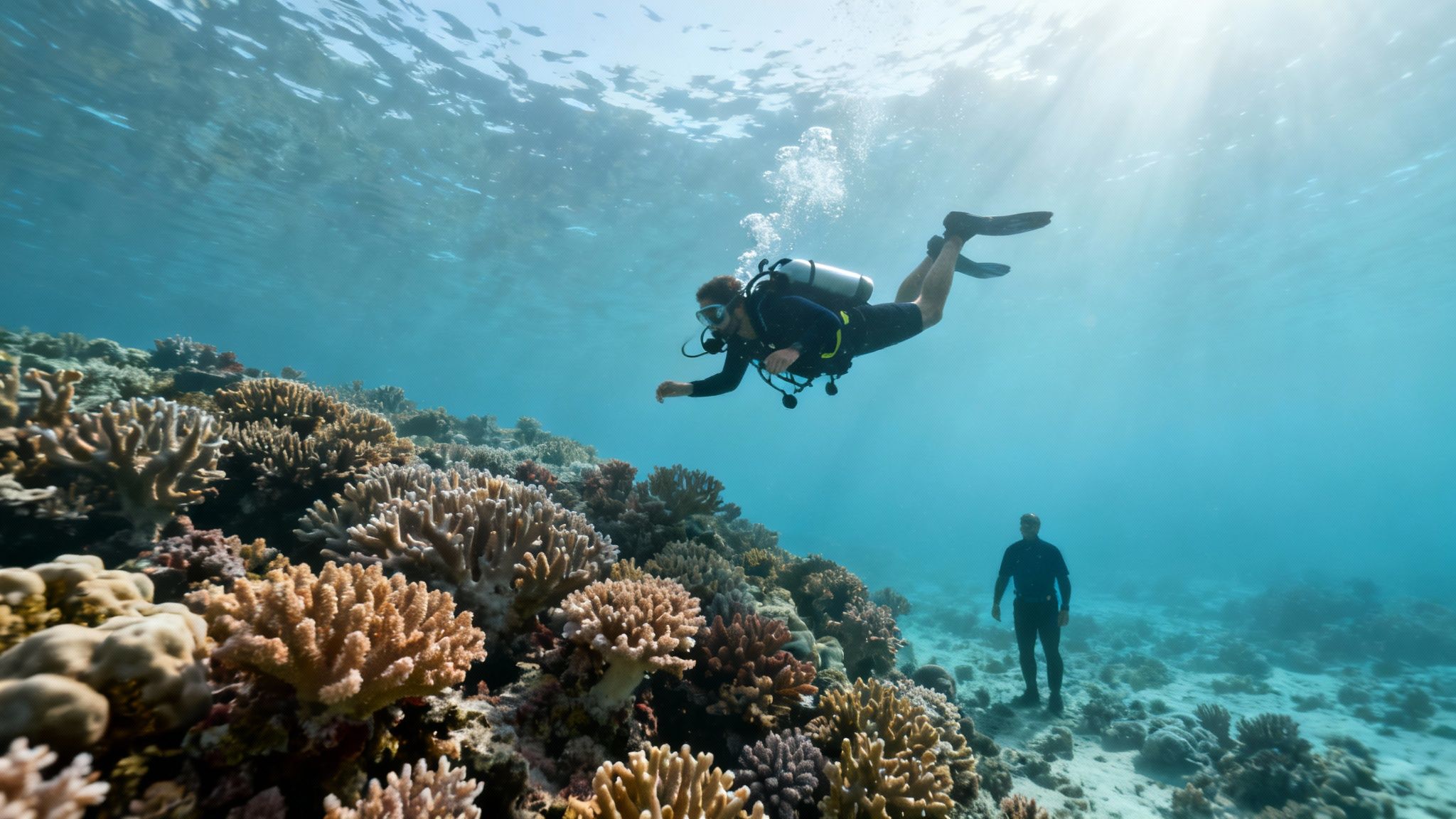
When you dive in Kona, you're doing more than just sightseeing. You're entering one of the most incredible marine ecosystems on the planet, and that comes with a shared responsibility. The local dive community takes this to heart, guided by the Hawaiian principle of 'Malama i ke kai'—to care for and protect the sea. This isn't just a saying; it's a way of life that turns every dive into an act of stewardship.
This commitment starts long before you hit the water. It begins with choosing an operator that shares this deep respect for the ocean. A top-notch company like Kona Honu Divers doesn’t just show you a reef; they bring you into a culture of safety and conservation. You’ll feel it in the thorough pre-dive briefings and the meticulous gear checks that ensure everyone is comfortable and ready for the adventure ahead.
Your Role as an Ocean Steward
The moment you slip beneath the waves, you become a guest in a fragile, living world. Everything you do has an impact, which is why practicing good diving etiquette is so critical. The goal is simple: leave the reef just as you found it.
Becoming a great ocean steward is easier than you might think. It really just boils down to a few fundamental habits that every diver, from novice to pro, can master.
- Maintain Perfect Buoyancy: This is your number one job underwater. Good buoyancy control lets you float effortlessly over delicate corals, preventing any accidental kicks or bumps that could shatter decades of growth in an instant. It’s the difference between being a spectator and being a threat.
- Never Touch Marine Life: It can be so tempting to reach out to a curious honu (turtle) or a graceful manta, but it’s crucial to resist. Touching marine animals strips away their natural protective slime coat, leaving them vulnerable to infections and disease.
- Use Only Reef-Safe Sunscreen: Many popular sunscreens contain chemicals like oxybenzone and octinoxate, which are incredibly toxic to coral. Always opt for a mineral-based, reef-safe formula to protect both your skin and the ocean.
"Think of yourself as a visitor in a beautiful, ancient museum. The rule is simple: look, but don't touch. Every piece of coral, every creature, is a priceless artifact."
How Kona Honu Divers Leads the Way
Leading by example is a cornerstone of the Kona diving philosophy. Operators like Kona Honu Divers build conservation directly into their diving tours. They intentionally keep their groups small, which not only minimizes the impact on the dive sites but also gives you more personalized attention from the divemaster.
Their guides aren't just there to point out cool fish; they're passionate educators who love sharing their knowledge of the local ecosystem. They model the kind of respectful, low-impact diving that protects these sites for the future. When you choose a company that puts conservation first, you're casting a vote for the long-term health of Kona's underwater paradise.
Ultimately, responsible diving empowers every single person to be part of the solution. It ensures that the magic you experience—the vibrant reefs, the swirling schools of fish, the gentle giants—is just as awe-inspiring for the next diver who comes along.
Your Kona Diving Questions Answered
If you're planning a dive trip to Kona, you're probably buzzing with excitement—and maybe a few questions. That’s perfectly normal! To help you get your plans locked in and feel ready to hit the water, we've put together answers to the questions we hear most often.
What Is the Best Month for Diving in Kona?
One of the greatest things about diving here is that there's truly no bad time to visit. The water is always inviting, hovering between a comfortable 75°F and 80°F (24-27°C) all year long. That said, the seasons do bring a few subtle differences that might help you pick the perfect time for your trip.
- Summer (May to October): This is when you'll find the calmest, glassiest seas. If you're hoping for smooth boat rides and super easy entries, summer is a fantastic choice.
- Winter (November to April): The water might dip a few degrees, and you can get some bigger ocean swells on the surface. But the trade-off is absolutely incredible: this is when humpback whales are migrating, and hearing their songs echo through the water on a dive is an experience you will never, ever forget.
No matter when you come, the world-famous Manta Ray Night Dive is spectacular. It really just comes down to what kind of adventure you're looking for.
Do I Need to Be Certified to Dive in Kona?
Not at all! You don't have to miss out on the magic just because you don't have a C-card. While being certified definitely opens up more of the dive sites Kona has to offer, we have amazing and safe ways for beginners to get face-to-face with our incredible marine life.
Here at Kona Honu Divers, we offer the PADI Discover Scuba Diving program, which is a one-day experience designed specifically for first-timers. You’ll learn the basics from an instructor in a safe, controlled setting before heading out for a real dive on one of our beautiful, shallow reefs. It's a fantastic way to give diving a try.
Plus, many of Kona's signature experiences are just as thrilling from the surface. Snorkelers get a front-row seat for the manta ray action at Garden Eel Cove, so everyone in your group can share the adventure, certified or not.
What Marine Life Can I Expect to See?
Kona is famous for its healthy reefs and reliable wildlife encounters, thanks to the unique underwater landscape created by ancient lava flows. It's a thriving habitat for a huge variety of life, and on just about any dive, you've got a great shot at seeing:
- Honu (Hawaiian Green Sea Turtles): These gentle giants are a common sight, often seen cruising by or just chilling out on the reef.
- Spinner Dolphins: We almost always see pods of these acrobatic dolphins from the boat between dives, and their aerial shows never get old.
- Tons of Reef Fish: The reefs are bursting with color from butterflyfish, triggerfish, and giant parrotfish. Look closely in the cracks and you'll find moray eels, octopuses, and even the elusive, camouflaged frogfish.
- Manta Rays: Of course, the stars of our night dive! Watching these giants glide effortlessly through the water as they feed is the reason people come from all over the world.
If you get lucky, you might also cross paths with eagle rays, whitetip reef sharks, or even bigger pelagic species. And for the really adventurous, the Kona Blackwater Dive offers a mind-blowing look at the weird and wonderful bioluminescent creatures that rise from the deep ocean at night.
Is the Manta Ray Night Dive Safe?
Absolutely. When you go with a professional, experienced operator like Kona Honu Divers, the Manta Ray Night Dive is exceptionally safe. We've been running this dive for years and have the process dialed in to make sure everyone is safe, comfortable, and has an amazing time.
Safety is our top priority, and it's woven into every part of the experience. From the detailed pre-dive briefing to the constant supervision by our expert divemasters in the water, the entire dive is designed to be controlled and awe-inspiring.
Before you even get wet, you'll get a thorough briefing on exactly what to expect and how to interact responsibly with the mantas. Once underwater, we position divers in a stationary group on a sandy bottom. You simply hold onto a light that attracts plankton, which brings the mantas to you. You're a spectator at a natural feeding event—no chasing or touching, just observing. The main site, Garden Eel Cove, is naturally protected from big ocean swells, and our dive pros are with you every step of the way.
Ready to see what all the fuss is about? Book your adventure with Kona Honu Divers today and find out for yourself why Kona is one of the top diving destinations on the planet.