
Picture this: you're sinking slowly into impossibly clear blue water. Sunlight dances through the openings of an ancient lava tube, illuminating the path as a graceful sea turtle glides by. This isn't a scene from a movie; it's just a typical day of Kona diving.
The Big Island offers some of the most unique and vibrant underwater ecosystems you'll find anywhere on the planet, and Kona is without a doubt its crown jewel. This guide will walk you through everything you need to know about scuba diving in Kona.
Why Kona Is a World-Class Diving Destination
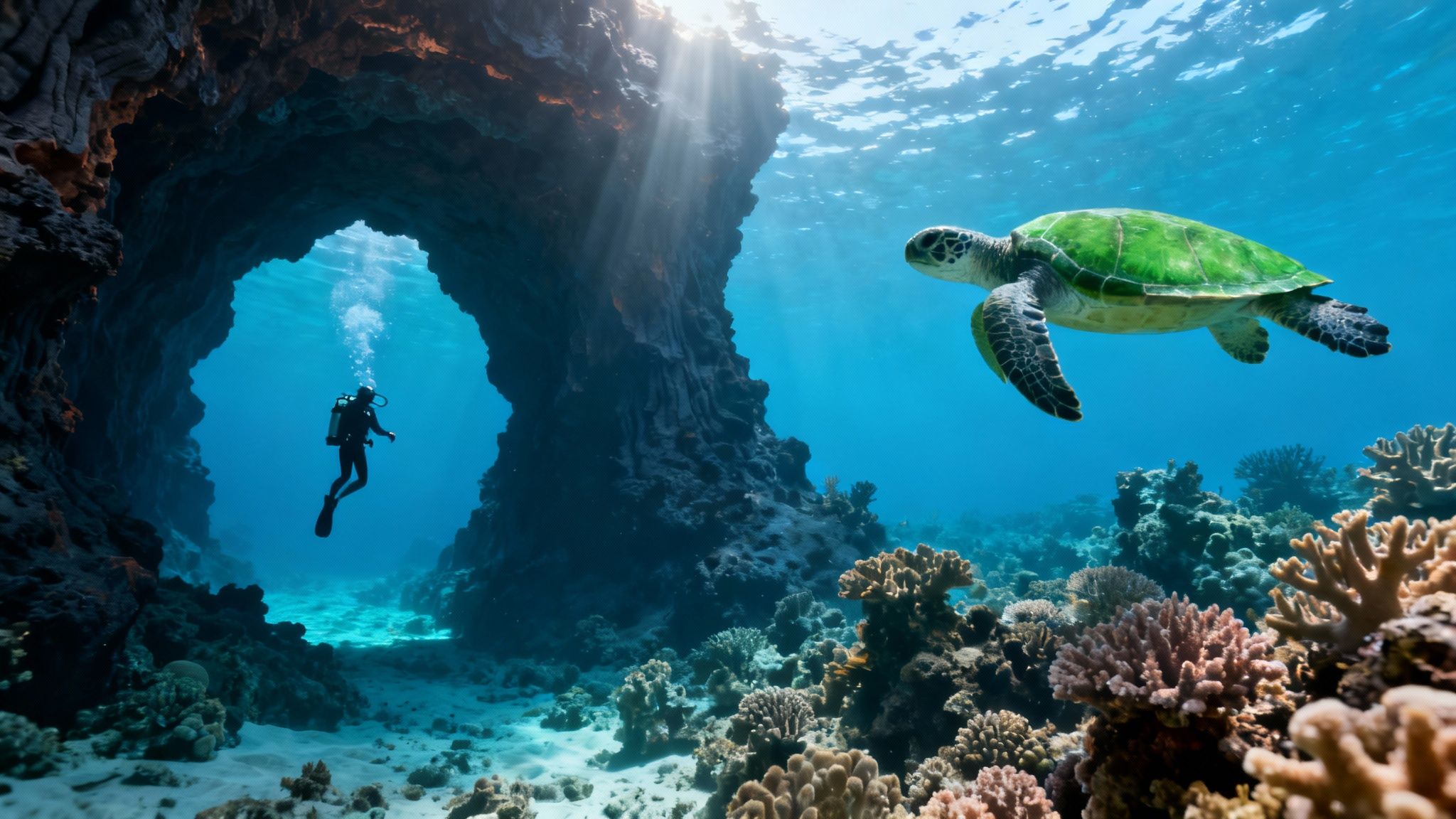
So, what’s the secret? What really makes Kona diving so special? It all starts with the island's fiery past. The underwater landscape here is a dramatic tapestry woven by volcanic activity. Think massive archways, intricate caverns, and sprawling lava tubes—a literal playground for divers that you just won't find anywhere else.
This one-of-a-kind topography created the perfect foundation for some of the healthiest coral reefs in the Pacific. Because the massive volcanoes of Mauna Loa and Hualalai shield the coast from big ocean swells, Kona's waters stay remarkably calm and clear. We're talking visibility that often pushes past 100 feet. These incredible conditions make it a fantastic spot for everyone, from beginners taking their first breaths underwater to seasoned pros looking for a challenge. You can get the full scoop on why the conditions are so great in our article exploring if Kona is good for diving.
An Unforgettable Underwater Environment
Kona’s remote location in the middle of the Pacific has turned it into a hotspot for unique marine life. A huge percentage of the fish you'll see here are endemic, which means this is the only place on Earth you can find them. Every dive feels like a treasure hunt.
But beyond the stunning reefs, Kona is home to some truly iconic, bucket-list dives that pull in people from all over the world:
- The Manta Ray Night Dive: A world-famous spectacle. You get to witness these gentle giants perform an underwater ballet as they swoop and feed on plankton drawn to the lights. It's magical.
- The Blackwater Dive: This one is a surreal experience. You drift in the open ocean at night, watching bizarre, glowing creatures rise up from the deep abyss. It's like visiting another planet.
A Legacy of Exploration
Kona’s reputation didn't happen overnight. People started scuba diving here way back in the late 1960s and early 1970s with pretty primitive gear. The scene really took off as pioneering dive shops set up, and today, the Big Island is home to over 50 dive charters, seeing around 100,000 certified scuba dives every single year.
With its mix of dramatic volcanic scenery, rare wildlife, and legendary dives, Kona offers an adventure that’s second to none. It’s time to jump in and see for yourself why this Hawaiian paradise is a true global diving hub.
Experiencing Kona’s Two Most Iconic Dives
While Kona's reefs are stunning, two dives have become legendary, drawing people from all over the world for a truly once-in-a-lifetime experience. These aren't just your average dives; they're unique underwater encounters that put Kona on the map and reveal the absolute magic of the Pacific after the sun goes down.
The manta ray night dive, in particular, has exploded into one of the most popular and important marine wildlife encounters on the planet. The perfect storm of calm water, easy boat access, and plankton-rich currents right off the coast sets the stage for this nightly spectacle—an experience that has become a pillar of the local economy.
The World-Famous Manta Ray Night Dive
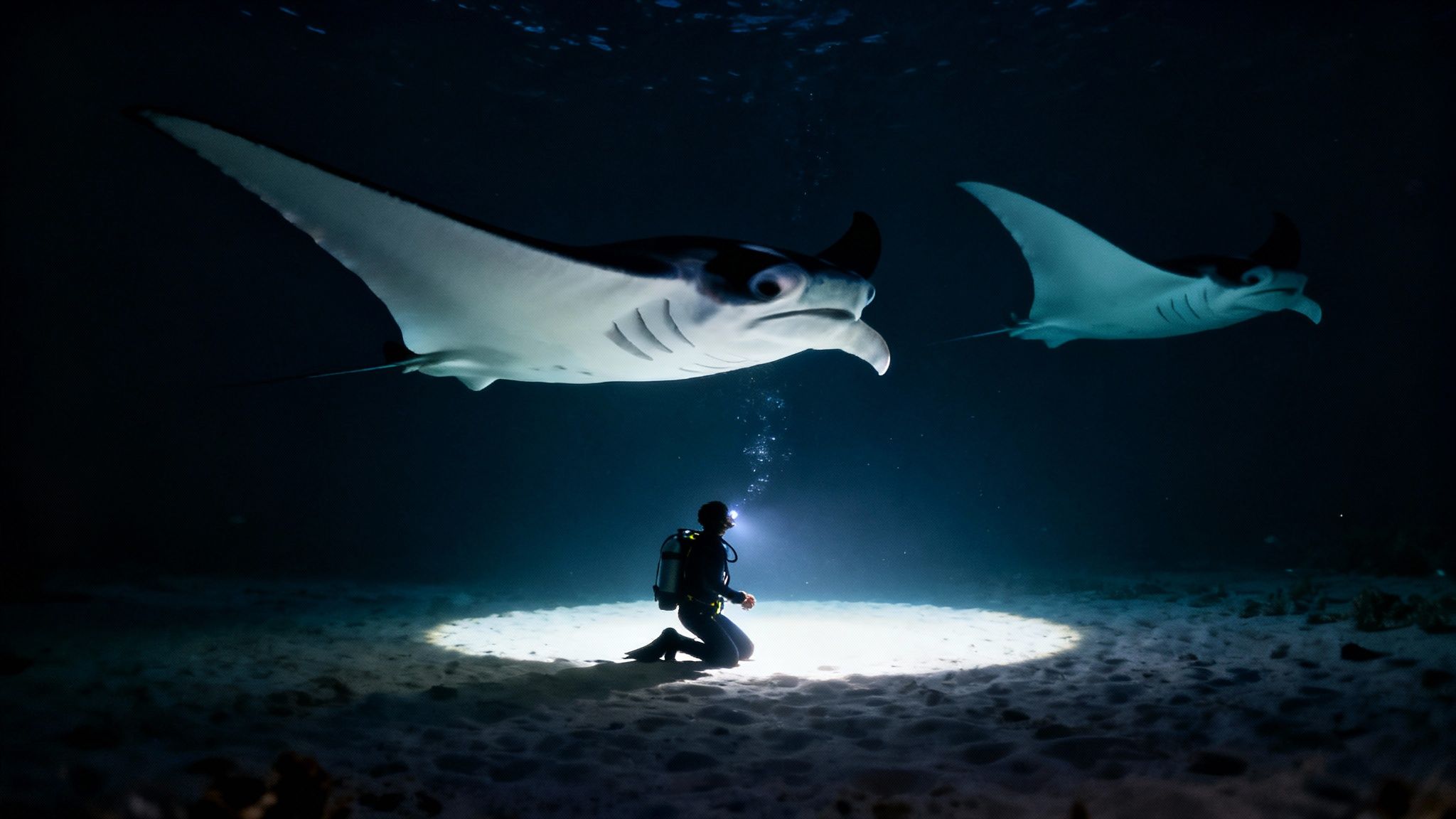
Picture this: you're kneeling on a sandy patch of ocean floor as the world around you melts into a peaceful, deep blue. Your guide flips on a powerful underwater light and aims it straight up. Think of it as an underwater campfire, and just like moths to a flame, it attracts swarms of microscopic plankton.
It doesn't take long for the main event to begin. Giant, graceful manta rays, some with wingspans over 12 feet wide, glide out of the darkness. They perform a silent, effortless ballet just inches above your head, swooping and barrel-rolling to filter-feed on the thick cloud of plankton your light has gathered. It's a completely mesmerizing and humbling experience to witness these gentle giants in their element.
The science is simple, but the effect is profound. The lights create a concentrated buffet, and the intelligent mantas have learned this nightly "dinner bell" means an easy meal. This predictable, incredible interaction is a huge part of what Kona is famous for underwater.
The whole encounter is a masterclass in responsible wildlife tourism. Strict rules are in place to protect the mantas, ensuring we can get an intimate look without disturbing their natural behavior. You can book the world-famous Manta Ray Night Dive and see this incredible show for yourself.
The Surreal Kona Blackwater Dive
If the manta dive is a beautiful ballet, the Kona Blackwater Dive is a trip to another planet. This is nothing like a reef dive. We take you miles offshore where the seafloor is thousands of feet below, and you descend into pure, inky blackness, tethered to the boat as it drifts on the current.
Out here, you're witnessing the largest migration on Earth, a vertical journey that happens every single night. Strange, alien-like, and often bioluminescent creatures rise from the abyss to feed near the surface under the cover of darkness.
You'll see things that look like they're straight out of a sci-fi movie:
- Larval Creatures: Spot the baby versions of familiar animals like eels and lobsters, which look absolutely nothing like their adult forms.
- Bioluminescent Jellies: Watch as pulsating jellies and siphonophores drift past, creating their own mesmerizing light shows in the dark.
- Strange Squids and Octopuses: Encounter rarely seen cephalopods with transparent bodies and wild, shifting color patterns.
This is an advanced adventure that requires excellent buoyancy control and a calm mind, but the payoff is an unparalleled peek into a hidden world. It's a dive that truly pushes the boundaries of exploration. For those ready for a challenge, you can experience the surreal Kona Blackwater Dive and discover what comes up from the deep.
Navigating the Best Dive Sites in Kona
Sure, the Manta Ray night dive and the surreal Blackwater dives get a lot of the spotlight, but the real heart and soul of Kona diving is found in its staggering variety of reef sites. The coastline is a diver's dream, an underwater map of unique spots sculpted by ancient lava flows. Each site has its own personality.
These aren't just pretty coral gardens; they're bustling underwater cities. Kona’s unique spot in the Pacific has created an incredible level of biodiversity. In fact, the Big Island has the highest rate of marine life endemism in the world—meaning you'll see fish and critters here that exist nowhere else on the planet.
On any given dive, you're pretty much guaranteed to see something special. It's what makes every drop into the water so exciting.
For Photographers and Explorers of All Levels
You don't need to be a grizzled, deep-diving veteran to see the best of Kona. Many of the most beloved sites are perfect for divers of all skill levels, offering jaw-dropping beauty without needing to push your depth limits. These spots are a photographer's playground and a fantastic way to just soak in the vibrant ocean life.
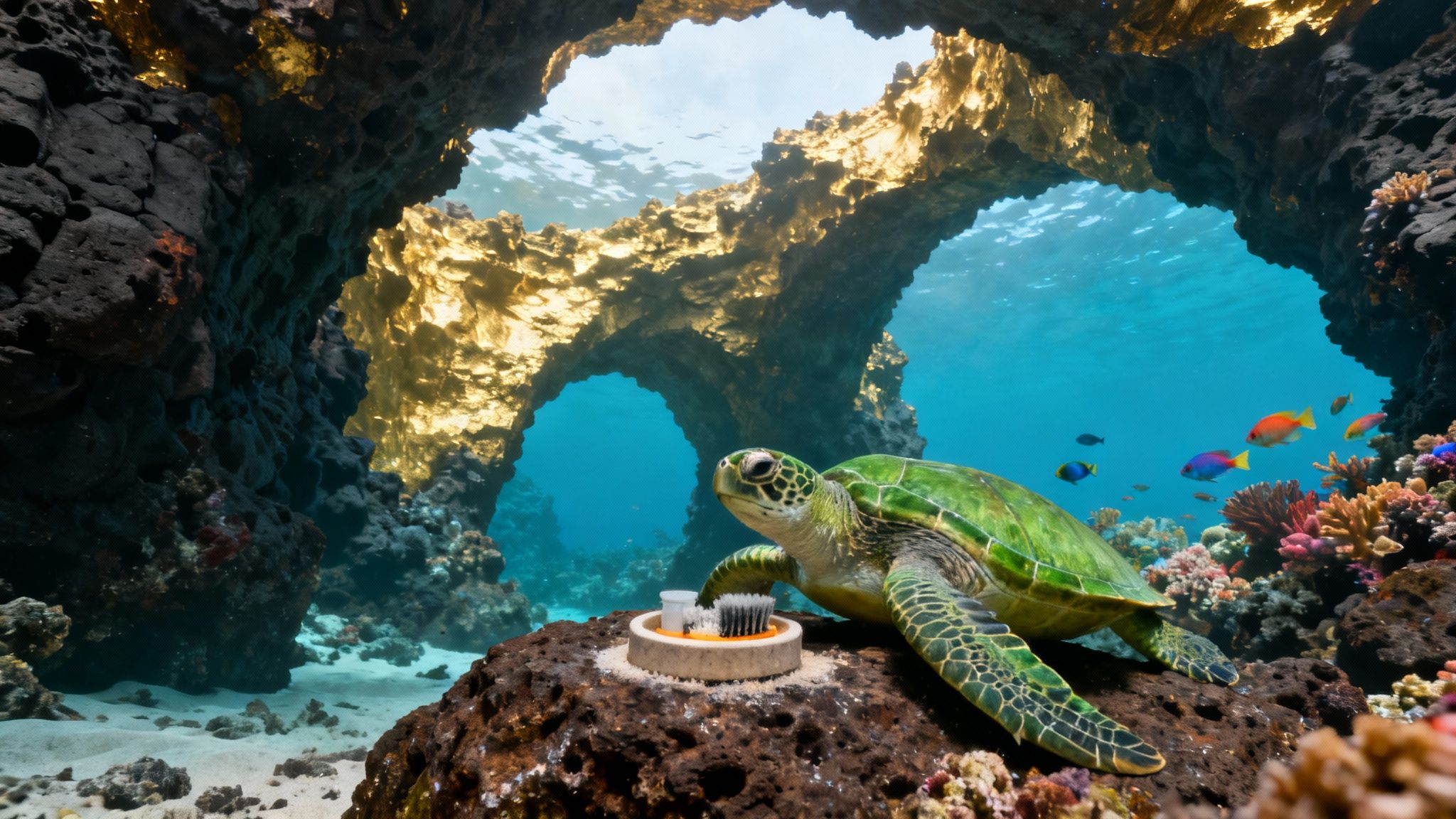
One of the most iconic has to be Golden Arches. The name says it all. The site is famous for its dramatic lava formations, especially a massive archway you can easily swim right through. When the sunlight filters through, it creates this breathtaking, almost cathedral-like effect. It's a dream for photographers and a great place to spot schools of brilliant yellow tangs or an octopus hiding in a crevice.
Another must-do is Turtle Pinnacle. This isn't just a catchy name; it's a real-deal cleaning station for our Hawaiian green sea turtles (honu). You can often find several turtles just chilling out, patiently waiting as little fish nibble away algae and parasites. It's an amazing thing to witness and a perfect photo op.
Pushing the Limits: Advanced Kona Diving
For those with a bit more experience and a taste for adventure, Kona delivers. There are plenty of thrilling sites that will test your skills and reward you with some truly unforgettable moments. These spots often have more complex terrain, stronger currents, and deeper profiles.
A true legend among local divers is Suck 'Em Up. This dive features a lava tube swim-through where the ocean surge gently pushes you in and then pulls you back out—it literally feels like the reef is breathing around you. You'll need excellent buoyancy control and a calm head to navigate it, but the experience is absolutely one-of-a-kind.
Other advanced dive sites take you to deeper pinnacles and ledges where your chances of seeing big pelagics like sharks, eagle rays, or even a whale shark go way up. These dives demand more from a diver, but the payoff is a profound sense of exploration and adventure.
To give you a better idea of what to expect, here’s a quick rundown of some of the most requested dive sites in Kona.
Quick Guide to Popular Kona Dive Sites
This table breaks down a few of our go-to spots, helping you match your dive style with the perfect underwater adventure.
| Dive Site | Key Feature | Typical Depth | Best For |
|---|---|---|---|
| Golden Arches | Lava tubes & arches | 30-60 ft | Photography, All Levels |
| Turtle Pinnacle | Turtle cleaning station | 35-70 ft | Turtle sightings |
| Suck 'Em Up | Lava tube swim-through | 40-80 ft | Advanced Divers |
| Manta Heaven | Manta ray night dive | 30-45 ft | Iconic experiences |
Of course, this is just a tiny taste of the dozens of incredible locations we explore. Each dive reveals something new about Kona's underwater world, from intricate coral gardens to awe-inspiring volcanic landscapes. To see what else is out there, check out our guide to the most beautiful Kona diving sites.
How to Choose the Right Kona Dive Operator
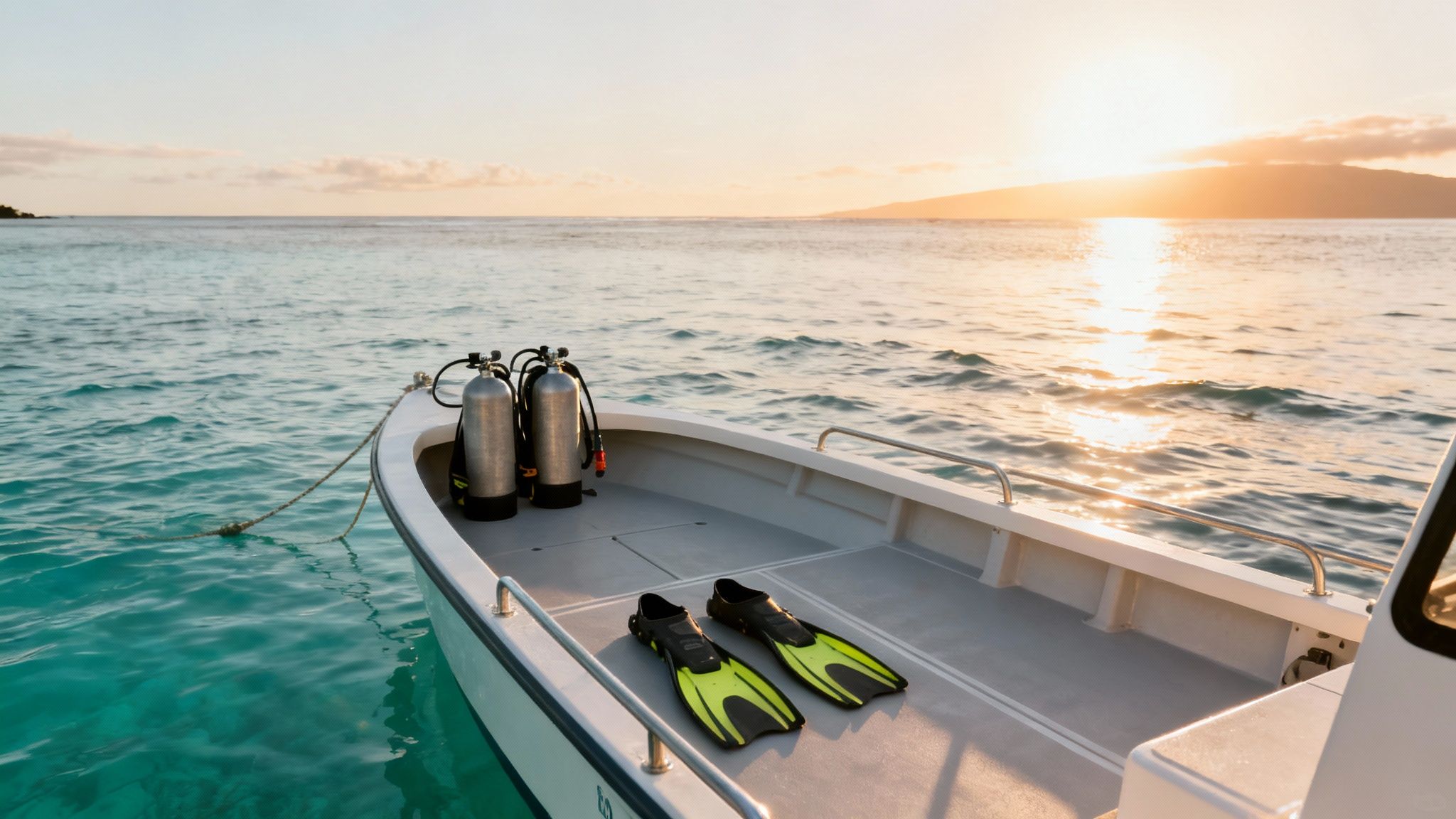
The incredible reefs and amazing marine life in Kona are a given. But the single most important decision you'll make for your entire trip? That’s picking the right dive operator.
This choice is about so much more than just finding the cheapest boat ride. It’s what separates a safe, comfortable, and truly memorable underwater experience from a stressful one. A great crew doesn't just ferry you to a dive site; they elevate the whole adventure, sharing their knowledge and deep respect for the ocean while keeping you safe.
Beyond the Price Tag: What Really Matters
It’s easy to get tunnel vision and focus only on the cost when you’re researching dive shops. But the real value comes from an operator that invests in the things that actually count when you’re out on the water.
Here’s what you should be looking for instead:
- Safety Record and Standards: This is the absolute bottom line. A top-notch operator will have a flawless safety record, meticulously maintained gear, and solid emergency plans. Their boats should be properly equipped with oxygen, first aid kits, and good communication systems. No compromises here.
- Small Group Sizes: Diving with just a few other people is a game-changer. You get more personal attention from your guide, less time waiting on a crowded boat, and a much more intimate, peaceful view of the underwater world.
- Boat Comfort and Amenities: You’ll be spending a good chunk of your day on the boat. A spacious deck with plenty of shade, a clean marine head (that’s a toilet!), and nice-to-haves like a hot freshwater shower can make a world of difference between dives.
- Eco-Conscious Practices: The best operators are guardians of the ocean. They’re serious about protecting the reefs, follow strict guidelines to avoid harming marine life, and take the time to teach their divers how to be responsible guests in this fragile environment.
Finding a Trusted Guide
With so many options out there, recent reviews from fellow divers are your best friend. Look for consistent comments about the crew’s professionalism, expertise, and friendly attitude. You want a team that makes you feel welcome and safe.
Here at Kona Honu Divers, we’ve worked hard to build a reputation for creating a fun, safe, and welcoming ‘ohana (family) vibe for everyone who comes aboard.
For a deeper dive into all the little details that matter, check out our complete guide on how to choose a Kona dive shop.
Ultimately, picking the right operator is the first real step to an amazing Kona diving trip. When you prioritize safety, comfort, and a commitment to small, personal groups, you can book with confidence. You’ll know you’re in the hands of pros who are dedicated to making your adventure one for the logbooks.
Putting Together Your Kona Dive Trip
Alright, you're sold on the incredible dives and marine life. Now for the nuts and bolts. Getting the logistics sorted out ahead of time means you can hit the ground running and focus on the good stuff—the underwater magic—instead of sweating the small stuff once you're here.
One of the first questions everyone asks is, "So, when's the best time to visit?" The amazing answer is… pretty much anytime. Thanks to the massive volcanoes shielding the Kona coast, the water stays incredibly calm and clear almost all year. That said, different seasons definitely have their own unique perks.
What to Expect Each Season
The "best" time to dive in Kona really boils down to what you're hoping to see and experience. Winter is when the humpback whales arrive, and hearing their songs echo through the water on a dive is something you'll never forget. Summer, on the other hand, brings the warmest water temps of the year—perfect for those who get chilly easily.
Pro Tip: While every month offers fantastic diving, the winter months from December to February are truly special. You get the incredible opportunity to hear humpback whale songs underwater. It’s a hauntingly beautiful experience that adds a whole other dimension to your dive.
To help you figure out what's right for you, we've put together a simple breakdown of what to expect from the diving conditions throughout the year.
Kona Diving Conditions Throughout The Year
| Season | Water Temp (Avg) | Visibility (Avg) | Seasonal Highlights |
|---|---|---|---|
| Winter (Dec-Feb) | 75-77°F | 80-100 ft | Humpback Whale Season |
| Spring (Mar-May) | 76-78°F | 100+ ft | Calm seas, excellent visibility |
| Summer (Jun-Aug) | 79-81°F | 100+ ft | Warmest water, peak season |
| Fall (Sep-Nov) | 78-80°F | 80-100 ft | Quieter season, great conditions |
No matter when you come, you're in for a treat. The conditions are consistently great, it just comes down to personal preference.
What to Pack for Your Dive Bag
Packing for a dive trip goes a little beyond swimsuits and flip-flops. While you can always rent excellent gear from any reputable shop in Kona, there's nothing like the comfort and reliability of your own equipment.
Here’s a checklist of the essentials we recommend bringing:
- Your Core Gear: If you have them, definitely pack your own mask, fins, snorkel, and dive computer. A good-fitting mask can make or break a dive, and being familiar with your own computer is a huge plus.
- Wetsuit: A 3mm wetsuit is the sweet spot for Kona's water temperatures year-round. If you tend to run cold, maybe toss in a hood or a vest for the night dives, especially during the winter months.
- C-Card and Logbook: Don't leave home without them! Every dive operator will need to see proof of your certification before you can get on the boat.
- Reef-Safe Sunscreen: This is a big one. Help us protect our incredible coral reefs by only using sunscreens made with non-nano zinc oxide or titanium dioxide.
- A Good Dry Bag: You'll be glad you have one. It's perfect for keeping your phone, wallet, keys, and a dry towel safe from splashes on the boat.
For anyone venturing into more remote or offshore diving, having a way to signal for help is just smart planning. It's worth reading this guide to emergency safety beacons like EPIRBs and PLBs to understand your options.
Getting Certified (Or Upping Your Game)
Never been diving before? No problem at all. Kona is one of the best places in the world to take your first breath underwater.
The Discover Scuba Diving (DSD) program is your ticket in. It’s a fantastic one-day experience where a pro instructor walks you through the basics and then takes you on a genuine, shallow reef dive. It's the perfect way to see if diving is for you without committing to a full certification course.
Already have your C-card? Awesome. Kona is a playground for continuing your education and honing your skills.
- Advanced Open Water Diver: This is the logical next step for most divers. It builds on what you already know and lets you try out different types of diving, like deep dives and underwater navigation, making you a more confident and capable diver.
- Specialty Courses: Eyeing that Manta Ray Night Dive or the famous Blackwater Dive? Taking a night diver specialty course beforehand will equip you with the skills to be more comfortable and get the absolute most out of these unique adventures.
Whether you're starting from scratch or you're a seasoned pro, thinking about your training goals before you get here will make your trip that much more epic. You'll be ready to take on everything Kona's underwater world has to offer.
Your Kona Diving Questions Answered
Planning a dive trip to Kona can bring up a lot of questions, especially if it’s your first time dipping your fins into Hawaii's underwater world. We get it. To help you get ready with total confidence, we’ve put together some straight-up answers to the most common things we hear from fellow divers.
Let’s clear up any uncertainties, from what a total beginner can expect to the logistics of Kona's most famous dives.
Do I Need to Be a Certified Diver to Go Scuba Diving in Kona?
Not at all! And this is fantastic news for anyone who's ever been curious about breathing underwater. Many dive shops in Kona, including us at Kona Honu Divers, offer what's called a "Discover Scuba Diving" experience.
Think of it as a test drive for scuba. These programs are built from the ground up for complete beginners. You'll get a quick, easy-to-understand lesson on safety basics and essential skills, then you'll gear up for a shallow dive with a certified instructor right by your side the entire time. It's the perfect way to see what all the fuss is about without committing to a full certification course.
Of course, if you get bit by the scuba bug and want to explore deeper sites or dive without direct supervision, getting your Open Water certification is the next step.
What Is the Best Time of Year to See Manta Rays in Kona?
Here's one of the best parts about our world-famous manta ray night dive: the manta ray population in Kona is residential. That means they are here year-round!
Seriously. You have an excellent chance of a mind-blowing encounter any month you decide to visit. That incredible consistency is exactly what makes Kona one of the most reliable places on the entire planet to see these gentle giants.
While other amazing marine life has its seasons—like the humpback whales that show up in winter—the mantas are a dependable, awe-inspiring sight every single night. If you’re ready for that magic, you can learn more about our manta ray dive tours.
Is the Kona Blackwater Dive Safe for All Divers?
The Kona Blackwater Dive is a genuinely unforgettable experience, but it’s definitely an advanced dive and is not suitable for beginners. This isn't about being exclusive; it's about very specific safety requirements.
Picture this: you're tethered to a boat, drifting in the deep, dark open ocean, miles from shore. There’s no reef below you, just blackness. To do this safely, a few skills are non-negotiable:
- Excellent buoyancy control is absolutely critical. You have to be able to hold your depth perfectly in the water column without thinking about it.
- Comfort in complete darkness is a must. You need to be able to stay calm and focused in a truly alien environment.
- Previous night diving experience helps prepare you for the unique sensory feeling of diving after the sun goes down.
Most reputable operators will require you to be at least an Advanced Open Water diver with a solid number of logged dives, including recent night dives. It’s an incredible adventure, but one reserved for experienced divers looking for something truly out of this world.
What Should I Do to Protect the Coral Reefs While Diving in Kona?
Keeping Kona’s vibrant marine ecosystem healthy is a responsibility every single diver shares. The good news is, it's easy to make a huge positive impact by following a few simple but critical practices.
The number one thing you can do is have perfect buoyancy control. This is what keeps your body and fins from accidentally kicking, bumping, or breaking the fragile coral. Never, ever stand on or hold onto the reef.
Another major way to help is by choosing the right sunscreen. Always use a reef-safe sunscreen, which is made with non-nano zinc oxide. The chemicals in regular sunscreens are incredibly toxic to coral and the entire reef ecosystem.
Finally, just be a good guest. Don't chase, touch, or harass any of the animals, whether it's a turtle or a manta ray. Listen to your divemaster—they are trained in local conservation rules and know the best way to interact with marine life respectfully. Your mindful actions make all the difference.
Here at Kona Honu Divers, we're passionate about sharing the wonder of Kona's underwater world safely and responsibly. Whether you're taking your very first breath underwater or you're an experienced diver looking for an advanced adventure, we have a trip that’s perfect for you. Explore all our diving tours and get ready for an unforgettable experience.