
Ask any seasoned diver about their bucket list, and you'll probably hear Kona mentioned. It's not just another spot on the map; it's a true global hub for scuba diving, and for some very good reasons. Picture this: you descend into water so clear it feels like flying, surrounded by an underwater world carved out by ancient volcanoes. That’s the heart of what makes Kona diving so special—a wild mix of dramatic lava tubes, sprawling coral gardens, and an incredible amount of life just waiting to be discovered.
Why Kona is a World-Class Diving Destination

The secret to Kona's magic starts with its unique geography. The towering volcanoes of Hualālai and Mauna Loa act as giant shields, blocking the coastline from the powerful trade winds that batter other parts of the islands. The result? Exceptionally calm, clear water pretty much year-round, which creates perfect conditions for divers of all stripes.
This calm environment allows some seriously delicate ecosystems to flourish. Unlike a lot of other destinations, Kona’s underwater terrain is a direct souvenir of its volcanic past. You can explore intricate lava tubes, glide through majestic arches, and navigate canyons formed by lava flows from centuries ago. It’s like exploring another planet, but without leaving Earth.
Unmatched Marine Biodiversity
Those calm, nutrient-rich waters also support a mind-boggling variety of marine life. Kona is famous for its big animal encounters—from the world-renowned manta ray night dive to daily sightings of playful spinner dolphins and ancient-looking green sea turtles (honu).
The Kona coast is home to some of the highest coral cover in the entire state of Hawaii, making it a critical habitat for hundreds of species of fish, many of which are found nowhere else in the world.
This incredible biodiversity means every single dive is a new adventure. One day you might be watching a turtle getting a spa day at a cleaning station, and the next you could be spotting a shy octopus peeking out from the reef. The underwater world here is always buzzing with activity.
Accessible Adventures for Everyone
Whether you're a brand new diver looking for a shallow, sun-drenched reef or a seasoned pro ready for a deep technical site, Kona has you covered. That accessibility and variety are huge parts of its reputation. You can easily spend one day exploring a calm, protected bay and the next drifting over a deep-water pinnacle.
This incredible range of experiences makes planning your perfect dive trip a breeze. If you're ready to see what's out there, you can check out a full list of diving tours in Kona to find an adventure that fits your style.
To give you a quick snapshot, here’s a look at what draws so many divers to this slice of Hawaiian paradise.
Kona Diving Highlights at a Glance
| Feature | Description | Best For |
|---|---|---|
| Calm Conditions | The coastline is protected from trade winds by large volcanoes, creating clear, placid waters. | All skill levels, including beginners. |
| Volcanic Topography | Divers can explore dramatic underwater lava tubes, arches, and canyons. | Divers seeking unique landscapes. |
| Rich Marine Life | Home to manta rays, sea turtles, dolphins, and endemic Hawaiian fish species. | Wildlife enthusiasts and photographers. |
| Year-Round Diving | Water temperatures remain a comfortable 75-80°F (24-27°C) all year. | Travelers visiting in any season. |
Simply put, Kona delivers an unforgettable dive experience no matter when you visit or what your skill level is. It's a combination of geology, biology, and perfect conditions that you just can't find anywhere else.
Experience the Famous Manta Ray Night Dive
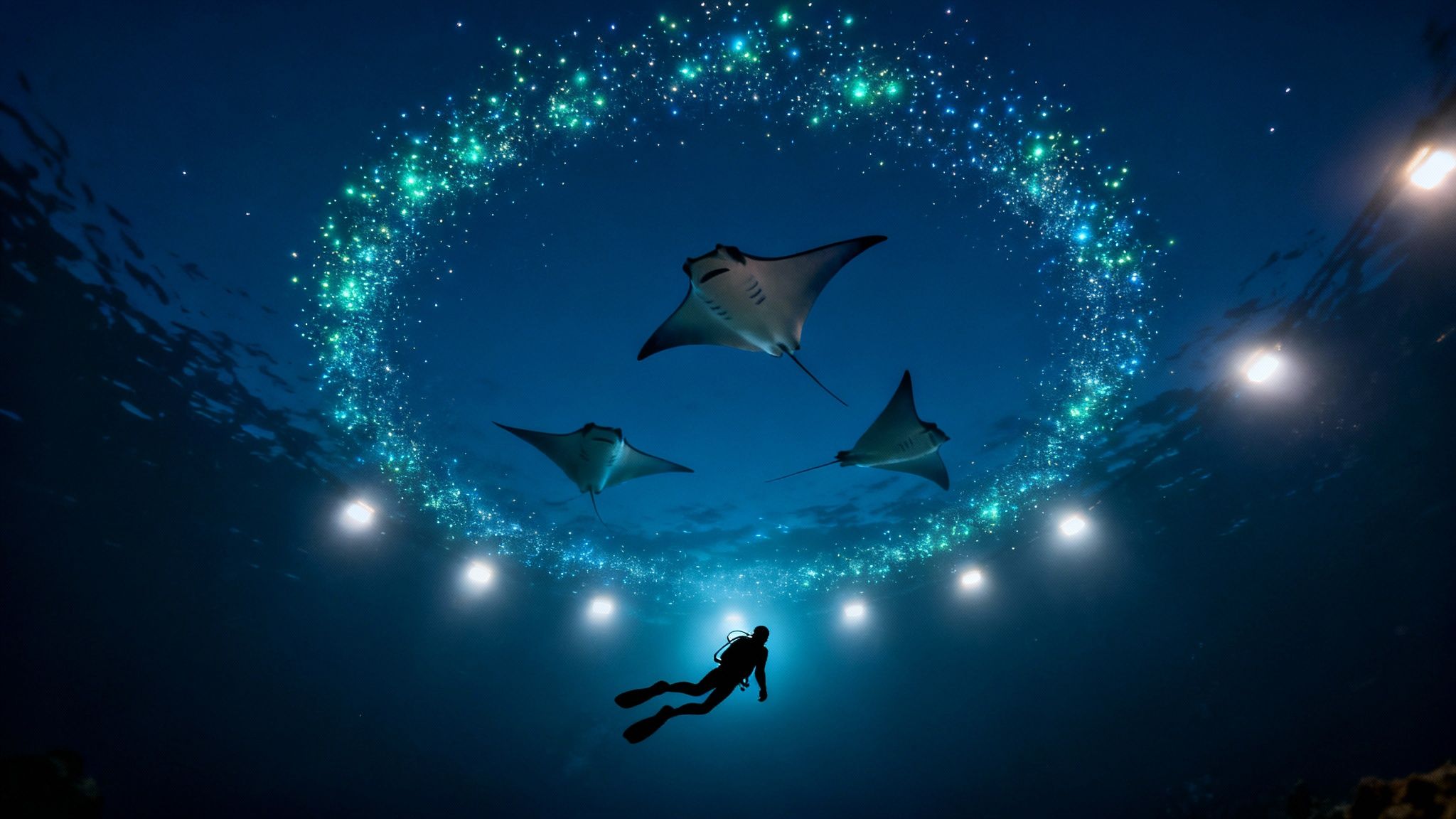
Let's be clear: the Kona Manta Ray Night Dive isn't just another dive. It’s a world-famous spectacle that tops bucket lists for divers everywhere. You're not just looking at marine life; you're getting a front-row seat to an incredible, naturally choreographed performance. It's consistently ranked as one of the best night dives on the planet for a good reason—it’s pure magic.
The science behind it is just as cool as the experience itself. It all started back in the 1990s when people noticed manta rays were drawn to hotel lights shining on the water. Today, we've refined that happy accident. Dive operators now set up powerful, stationary lights on the ocean floor, creating what everyone lovingly calls the "campfire."
These bright lights act like a magnet for clouds of plankton, which just so happens to be a manta ray’s favorite meal. As the plankton swarms in the beams of light, it rings the dinner bell for the gentle giants of the Kona coast. It's an all-you-can-eat buffet, and soon, the guests of honor arrive.
The Underwater Ballet Begins
Imagine this: you descend into the dark ocean, find a spot on a sandy patch about 30-40 feet down, and wait. Before long, massive shadows begin to materialize out of the blackness. These are Kona’s resident manta rays, some with incredible wingspans of up to 16 feet. They glide right into the light, performing these mesmerizing barrel rolls and graceful loops as they filter-feed on the plankton.
This breathtaking ballet happens just inches above your head. You become a silent observer as these magnificent creatures swoop and soar through the light beams. It’s a humbling, awe-inspiring experience that puts you face-to-face with the raw beauty of the ocean. No two nights are the same, but that feeling of pure wonder is always there. To get a better feel for it, you can read more about the Kona manta ray night dive.
To truly appreciate the scale, picture a creature the size of a small car gliding weightlessly through the water. The only sounds are your own breathing and the quiet hum of the ocean as these animals put on a show that feels both ancient and immediate.
Why Kona Is the Global Manta Capital
There’s a reason Kona has become one of the world's absolute best spots for manta ray diving. This reputation draws around 80,000 visitors every single year who come just for manta snorkel and dive tours. It’s a perfect storm of natural factors: consistent ocean currents bring in a steady supply of plankton, and the unique coastline provides sheltered bays where the mantas can safely gather and feed.
Of course, choosing a reputable operator is crucial for a safe and ethical trip. At Kona Honu Divers, we’re committed to giving you that unforgettable encounter while always putting the well-being of the mantas first.
What to Expect on a Manta Tour
Your adventure will start with a solid pre-dive briefing from our guides. They'll go over everything from safety procedures to proper manta etiquette—we want to make sure both you and the animals are protected. Once you’re in the water and settled around the light source, your only job is to relax and watch the show.
- For Divers: You’ll descend with your guide to a designated spot on the sandy bottom, giving you a perfect, comfortable vantage point to watch the mantas feed right above you.
- For Snorkelers: You'll float on the surface, holding onto a custom-made light board that also attracts plankton, offering a spectacular bird's-eye view of the action.
Ready to see the magic for yourself? A manta ray dive is a must-do for any Kona diving trip. You're in for an adventure you’ll be talking about for years to come.
Exploring Kona’s Most Popular Dive Sites
Sure, the Manta Ray Night Dive gets a ton of attention, but the real heart of Kona diving reveals itself during the day. This coastline is an absolute treasure map of underwater worlds, each spot uniquely sculpted by ancient lava flows. One day you're drifting through serene coral gardens, the next you're exploring dramatic underwater architecture. There’s an adventure here for every kind of diver.
When you drop beneath the waves in Kona, you're not just swimming over reefs; you're navigating through geologic history. This incredible variety is why we never get tired of diving here—and why you won't, either. Let's take a look at a few of the must-see sites that make this place so special.
Turtle Pinnacle: An Iconic Cleaning Station
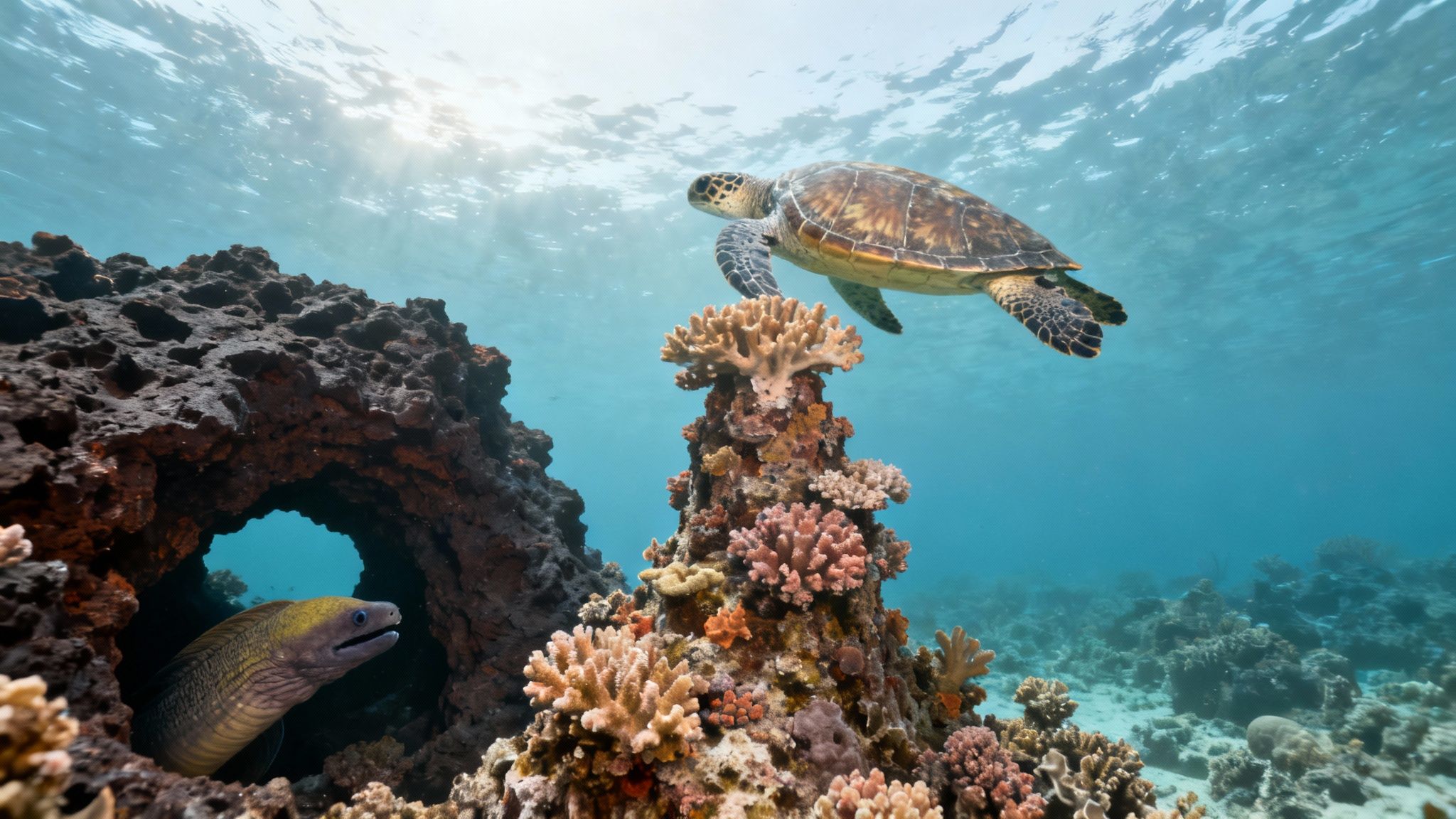
Picture a bustling underwater spa where Hawaiian green sea turtles, or honu, are lining up for their turn to be pampered. That's Turtle Pinnacle in a nutshell. This site is famous for being a "cleaning station," a spot where turtles hover patiently while tiny, endemic Hawaiian cleaner wrasses and other reef fish meticulously pick algae and parasites off their shells.
The whole operation centers around a large coral pinnacle that rises from the seafloor. It’s an unbelievable sight and an absolute dream for any underwater photographer.
- Skill Level: Perfect for all divers, from newly certified Open Water to seasoned pros. The site is pretty shallow, usually sitting between 30-60 feet.
- Marine Life: The honu are the stars of the show, obviously. But you'll also see big schools of bright yellow tangs, moray eels peeking out from crevices, and all sorts of butterflyfish.
Golden Arches: A Photographer's Dream
Living up to its name, Golden Arches features a massive, stunning lava rock archway that practically begs you to take its picture. When the sunlight streams through the top, it lights up the whole area, creating a perfect frame for the schools of fish that hang out nearby. Swimming through it really feels like you're passing through a gateway to another world.
But it’s not just about the arch. The reef surrounding it is healthy and teeming with life, with lots of cool overhangs and small caverns to check out. This spot is a prime example of Kona’s one-of-a-kind volcanic topography.
Golden Arches perfectly showcases how Kona’s volcanic past created a playground for divers. The dramatic formations are not just beautiful; they provide complex habitats that support an incredible diversity of marine species.
This site makes for a fantastic second dive of the day, usually offering calm conditions and more than enough cool features to hold your interest.
Eel Cove: A Macro Hunter's Paradise
If you're the kind of diver who gets a thrill out of finding the small, hidden critters, then Eel Cove needs to be on your list. This spot is a macro photographer's heaven, with a series of ledges and rocky outcrops that are perfect hiding places for a huge variety of eels. It's common to spot whitemouth, undulated, and zebra morays poking their heads out to see who's visiting.
But don't just look for eels! Keep your eyes peeled for other tiny treasures.
- Frogfish: These guys are masters of camouflage. You could be looking right at one and not even know it, as they blend in perfectly with the sponges.
- Octopuses: They're shy but curious. Check in the cracks and crevices and you might just find one looking back at you.
- Nudibranchs: These colorful little sea slugs add a splash of psychedelic color to the reef.
Eel Cove is a site that rewards you for slowing down and really looking closely. The patient diver always finds something amazing here.
Suck 'em Up: A Thrilling Lava Tube Adventure
Looking for a truly unique Kona diving experience with a bit of a kick? Suck 'em Up always delivers. The site gets its name from a big lava tube that, thanks to the ocean swell, creates a gentle surge effect. On a calm day, certified divers can safely swim through this "suck 'em up" tube and pop out the other side into a beautiful, open-ended cavern.
This dive is all about the thrill of interacting with a dynamic environment. You'll need solid buoyancy control and be comfortable in an overhead environment, so it's best suited for more experienced divers. The feeling of being gently pushed and pulled by the ocean through an ancient lava formation is something you'll never forget. As you plan your trip, you might wonder where the best diving is on the Big Island, and unique spots like this are a huge part of the answer.
These sites are just the beginning of what Kona has to offer. With dozens of named locations along the coast, the opportunities for exploration are practically endless.
Advanced Diving and Unique Kona Experiences
So you're a certified diver, and your logbook is starting to fill up with beautiful coral reefs and fun daytime adventures. What’s next? If you're ready to see something truly different, Kona offers a portal to the next frontier of underwater exploration.
Beyond the sunlit lava tubes and colorful reefs lies a world of unique challenges and encounters that feel like they're from another planet. These dives are for seasoned divers looking to push their boundaries and see things most people will never get the chance to. While plenty of places offer "advanced" dives, Kona diving is in a class of its own, giving you a shot at exploring the deep open ocean in the middle of the night.
The Kona Blackwater Dive: An Otherworldly Experience
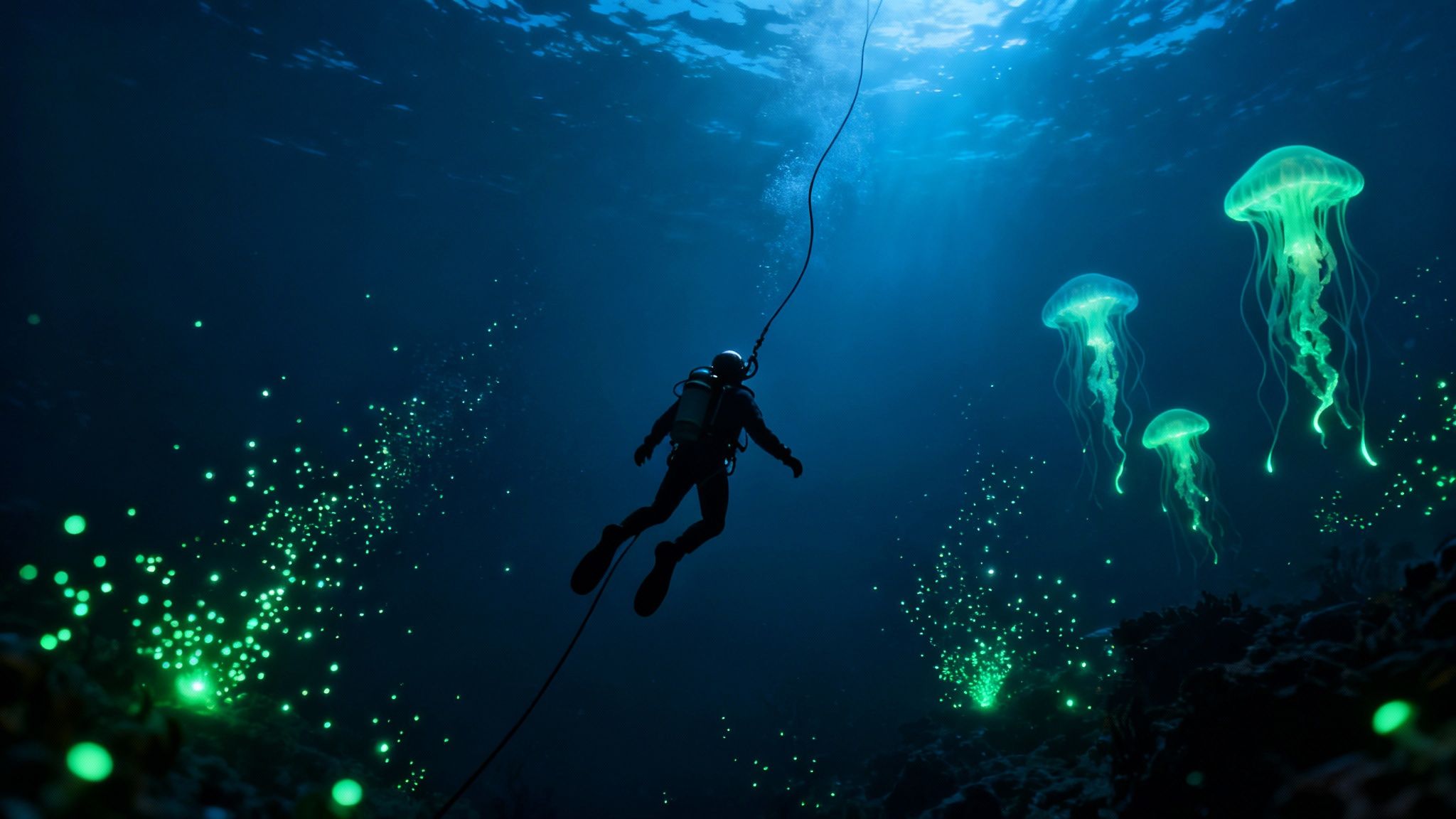
Picture this: you're drifting in the immense, inky blackness of the open ocean. You're miles from shore, suspended over thousands of feet of water, with only a circle of light from the boat keeping the infinite dark at bay. This is the Kona Blackwater Dive—an experience we affectionately call "Pelagic Magic"—and it’s hands-down one of the most unique dives on the planet.
This dive isn't about the seafloor. In fact, you'll never see it. Instead, you're a silent observer of one of the largest migrations on Earth. Every single night, countless bizarre and often bioluminescent creatures rise from the abyss to feed near the surface. You’re not just watching from the sidelines; you're floating right in the middle of their world.
A blackwater dive is the closest you'll get to floating through deep space. The creatures you meet look like they belong on another planet—gelatinous, see-through, and glowing with their own light. It’s a humbling, mesmerizing experience that will completely redefine what a night dive can be.
The life you'll see here is nothing like what you find on a reef. We’re talking about larval fish that look nothing like their adult selves, translucent squid, and pulsating, chain-like siphonophores. Every second brings something new and utterly fascinating into your light beam. Because this is such a specialized dive in the deep open ocean at night, it's strictly for experienced divers with rock-solid buoyancy control.
If you think you're ready for this once-in-a-lifetime adventure, you can find out more about the Kona Blackwater Dive tour and see if it’s the right fit for you.
Premium Charters to Remote and Deeper Sites
Beyond the blackwater experience, Kona’s advanced diving scene includes premium charters that head to deeper, more remote, and technically demanding sites. These trips are for divers who are comfortable with more dynamic conditions and want to explore parts of the Kona coast that most tours just don't go to. It's a different kind of thrill, one that's all about pristine, untouched underwater wilderness.
So, what makes these advanced trips special?
- Deeper Profiles: We explore submerged pinnacles, ledges, and canyons that often start at depths of 80 feet or more, where you'll find different marine life and more dramatic topography.
- Dynamic Conditions: Some of the most exciting sites can have stronger currents. That's a good thing, as it often brings in larger pelagic species like sharks, massive jacks, and eagle rays.
- Remote Locations: These charters travel further along the coast to sites that aren't on the daily rotation, which means the reefs are in absolutely pristine condition.
- Challenging Topography: You'll get to navigate more complex lava formations, including intricate swim-throughs and sheer vertical walls that drop off into the deep blue.
These advanced charters are perfect for divers who hold an Advanced Open Water certification (or higher) and have a good number of dives under their belt. It’s a chance to really sharpen your skills while being rewarded with some of the most spectacular and secluded scenery Hawaii has to offer. For any serious diver visiting the Big Island, exploring these advanced dive tour options is a fantastic next step.
How to Plan Your Kona Diving Trip
So, you're ready to turn that dream Kona diving adventure into a reality. Good news—it's easier than you might think. A little bit of smart planning goes a long way in making sure your trip is smooth, unforgettable, and timed just right for what you want to see. Let's walk through the essentials, from picking the perfect season to knowing what cert card to have in your wallet.
Getting these details sorted out beforehand means you can spend less time stressing and more time focusing on the incredible underwater world that’s waiting for you.
Choosing the Best Time to Visit
One of the best things about diving in Kona is that there’s really no bad time to visit. It’s a fantastic year-round destination. That said, the seasons do offer slightly different vibes, so the "best" time really depends on what you're looking for.
- Summer (May to October): Most people consider this the prime time for diving. The ocean is typically at its calmest and flattest, which makes for some seriously smooth boat rides. The water is also at its warmest, usually hovering around a balmy 80°F (27°C). Visibility during these months can be absolutely spectacular.
- Winter (November to April): The water does cool down a bit, closer to 75°F (24°C), and you can expect bigger ocean swells. But here’s the trade-off: it’s humpback whale season. While you're not guaranteed to see one on a dive, hearing their haunting songs echoing through the water is a powerful, once-in-a-lifetime experience.
If you want to get into the nitty-gritty of water temperatures, we’ve got a whole guide on whether the water is warm in Kona.
Understanding Certification Requirements
Kona is wonderfully welcoming to divers of all experience levels, from fresh-faced beginners to seasoned pros. But it's good to know what your current certification card gets you, especially since some of our most unique dives require a bit more training.
The vast majority of Kona’s most famous dive sites are well within the limits for Open Water certified divers. You don’t need to be a technical guru to see our vibrant reefs and legendary turtle cleaning stations.
However, if you've got your eye on some of the more specialized adventures, you'll need an Advanced Open Water certification. This is your ticket to mind-blowing experiences like the surreal Blackwater Dive or charters that explore deeper, more remote pinnacles. If you're not there yet, getting your advanced cert right here in Kona is an awesome way to level up your skills.
Packing for Your Dive Trip
Figuring out what to pack can make your travel life a whole lot easier. While you can always rent top-notch gear from us, most divers find that bringing a few personal items makes a world of difference in comfort and fit.
Here’s a quick breakdown of what to think about:
- Bring This: Your mask, dive computer, and any personal exposure gear you love (like a favorite rash guard or a perfectly fitting wetsuit). These items are all about personal fit, and getting them right is key to a happy dive.
- Rent This: Save yourself the headache and luggage fees. Heavier gear like BCDs, regulators, and tanks are much easier to just rent when you get here.
- Don't Forget: Please, please pack reef-safe sunscreen. It protects both your skin and Hawaii's incredibly delicate coral ecosystems. A reusable water bottle is also a must for staying hydrated in the tropical sun.
Commercial Kona diving has a rich history stretching back over 40 years to the early 1980s. Pioneers like Jack and Tina Clothier kicked things off in 1981, and the introduction of the first real dive boat in 1983 opened up the amazing sites we still explore today, including the world-famous manta ray night dive. With a little planning, you're all set to become a part of that incredible legacy.
Choosing the Best Dive Operator in Kona
Let's be real: the right dive shop can make or break your entire Kona trip. It’s the difference between a few good dives and an unforgettable adventure you’ll be talking about for years. With so many operators lining the coast, it pays to know what separates the truly great ones from the rest.
A top-notch operator doesn't just ferry you to a dive site; they curate the entire experience. When you're looking, try to see past the price tag. The most important things—your safety and the quality of your dive—are tied to other factors.
What to Look For in a Kona Dive Shop
First, look for shops that run small groups. This isn’t just about feeling crowded; it's a huge safety factor. Smaller groups mean the divemaster can give everyone proper attention, both on the boat and, more importantly, 60 feet down. It makes for a much more relaxed and personal dive.
Next, check out their setup. What does the boat look like? A well-maintained, spacious boat with amenities like a hot shower or a dedicated rinse bin for your camera is a great sign. It shows they care about the details. And don't be shy about asking about their rental gear. High-quality, regularly serviced equipment is a non-negotiable. It tells you they take safety seriously.
Finally, a real commitment to the ocean is a must. The best operators in Kona aren't just running a business; they're stewards of the very reefs they show you every day.
Choosing a dive operator is about more than just a boat ride. It's about entrusting your safety and your precious vacation time to a team that is professional, experienced, and genuinely passionate about Hawaii's marine environment.
For a head-to-head look at the local outfits, our guide on the top 10 Kona diving companies ranked breaks it all down to help you choose.
Trusted Operators and Their Commitment to Conservation
Operators like Kona Honu Divers and Jack's Diving Locker have earned their reputations over decades. They consistently deliver amazing dives while being deeply involved in local conservation. It's not just talk—their long-term presence is woven into the fabric of Kona's marine protection efforts, like the manta ray monitoring programs.
Dive pros at famous sites like "Manta Heaven" and "Manta Village" have been instrumental in collecting data on local manta populations, especially during the famous night dives. This work helps maintain detailed catalogs of individual rays, which is critical for research. You can even learn more about these manta ray findings and see the science they support.
To see what other divers are saying about these long-standing local operators, check out their reviews below.
Frequently Asked Questions About Kona Diving
Got a few last-minute questions before you book? We get it. Here are the answers to the things we get asked most often about Kona diving. We want you to feel totally confident and ready to hit the water as soon as you arrive.
What Is the Best Time of Year for Diving in Kona?
Honestly, any time is a good time for diving in Kona! The diving here is fantastic year-round.
If you’re looking for the absolute calmest, flattest ocean conditions, the summer months (May to October) are your best bet. That’s when you’ll typically find glassy seas and incredible visibility.
But winter (November to April) has its own magic—it's humpback whale season. While you probably won't see one on a dive, hearing their haunting songs echo through the water is something you'll never forget. The water is always comfortable, hovering between a pleasant 75-80°F (24-27°C) no matter when you visit.
Do I Need an Advanced Certification to Dive in Kona?
Not at all! Kona is one of the best places to dive whether you have 10 dives or 1,000. We have countless protected bays and vibrant, shallow reef sites that are perfect for beginners and Open Water certified divers.
Some specialty dives, like the incredible Kona Blackwater Dive, do require an Advanced Open Water certification due to the unique environment. But the vast majority of Kona's amazing reefs and marine life are well within the limits of an Open Water diver.
Is the Manta Ray Night Dive Guaranteed?
Manta rays are wild animals, so a 100% guarantee is never possible. That said, Kona has one of the most reliable manta ray populations on the entire planet. The way the night dive works—using bright lights to attract the plankton they feed on—creates an extremely high chance of an up-close encounter.
Most reputable operators, including us at Kona Honu Divers, offer a "manta guarantee." It's simple: if the mantas don't show up for your tour, you can come back and try again on another night for free on a standby basis.
What Other Marine Life Can I Expect to See?
Get ready for a busy dive log! Besides our world-famous manta rays, you’ll almost certainly run into Hawaiian green sea turtles (honu), massive schools of spinner dolphins (often on the boat ride!), and whitetip reef sharks resting on the seafloor.
Kona’s reefs are also packed with endemic fish you won't see anywhere else—keep an eye out for bright yellow tangs, milletseed butterflyfish, and colorful parrotfish. And if you're lucky, you might even spot eagle rays, whale sharks, or a rare Hawaiian monk seal. Every single dive here is a new adventure.
Ready to see for yourself what makes Kona diving a world-class experience? Kona Honu Divers runs a full lineup of scuba diving tours for every diver, from chill reef explorations to the legendary manta ray night dive.