
So, is scuba diving in Hawaii actually worth it? For most people, the answer is a huge yes.
The islands offer an underwater adventure that's genuinely different. You’re not just diving in another tropical spot; you're exploring a world shaped by volcanic fire, filled with marine life you literally can't find anywhere else on the planet.
Why Hawaii is a World-Class Diving Destination
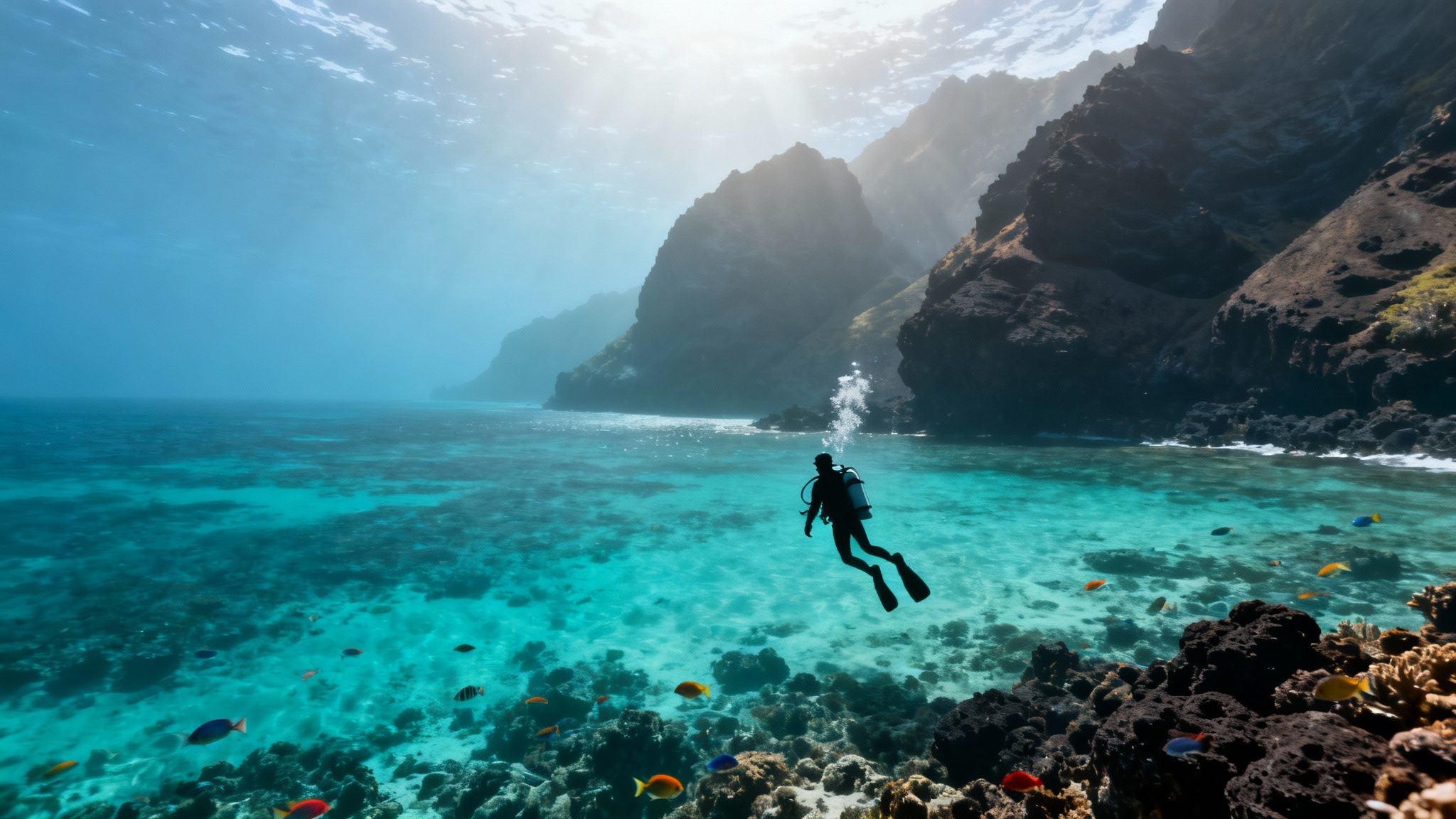
The real magic of diving here lies in the dramatic scenery. Imagine swimming through ancient lava tubes, exploring massive submerged craters, and seeing vibrant coral gardens that have taken root on old volcanic rock. It’s this unique topography that sets the stage for some truly unforgettable dives.
But what really seals the deal is the wildlife. A staggering 25% of the reef fish in Hawaii are endemic. That means they've evolved in isolation here and exist nowhere else on Earth.
To help you get a quick feel for whether a Hawaiian dive trip is right for you, I've put together a simple comparison table. It breaks down the main pros and cons at a glance.
And if you're curious about the water temperatures, they’re pretty fantastic year-round. We've got a whole guide explaining just how warm the water is in Kona.
Hawaii Scuba Diving At a Glance
This table should give you a quick snapshot of what to expect.
| Factor | Pros (Why It's Worth It) | Cons (Potential Drawbacks) |
|---|---|---|
| Marine Life | High concentration of unique endemic species, frequent turtle and manta ray sightings. | Fewer large, vibrant soft coral gardens compared to other Pacific regions. |
| Environment | Volcanic seascapes with lava tubes and arches, excellent visibility, and warm water. | Can be more expensive than diving in Mexico or the Caribbean. |
| Accessibility | Excellent for both beginners and advanced divers with a wide variety of dive sites. | Some premier dive spots require boat access, limiting shore-only divers. |
Ultimately, weighing these points against your personal dive style and budget will tell you if Hawaii is your next great underwater adventure.
What Makes Hawaiian Diving So Unique?
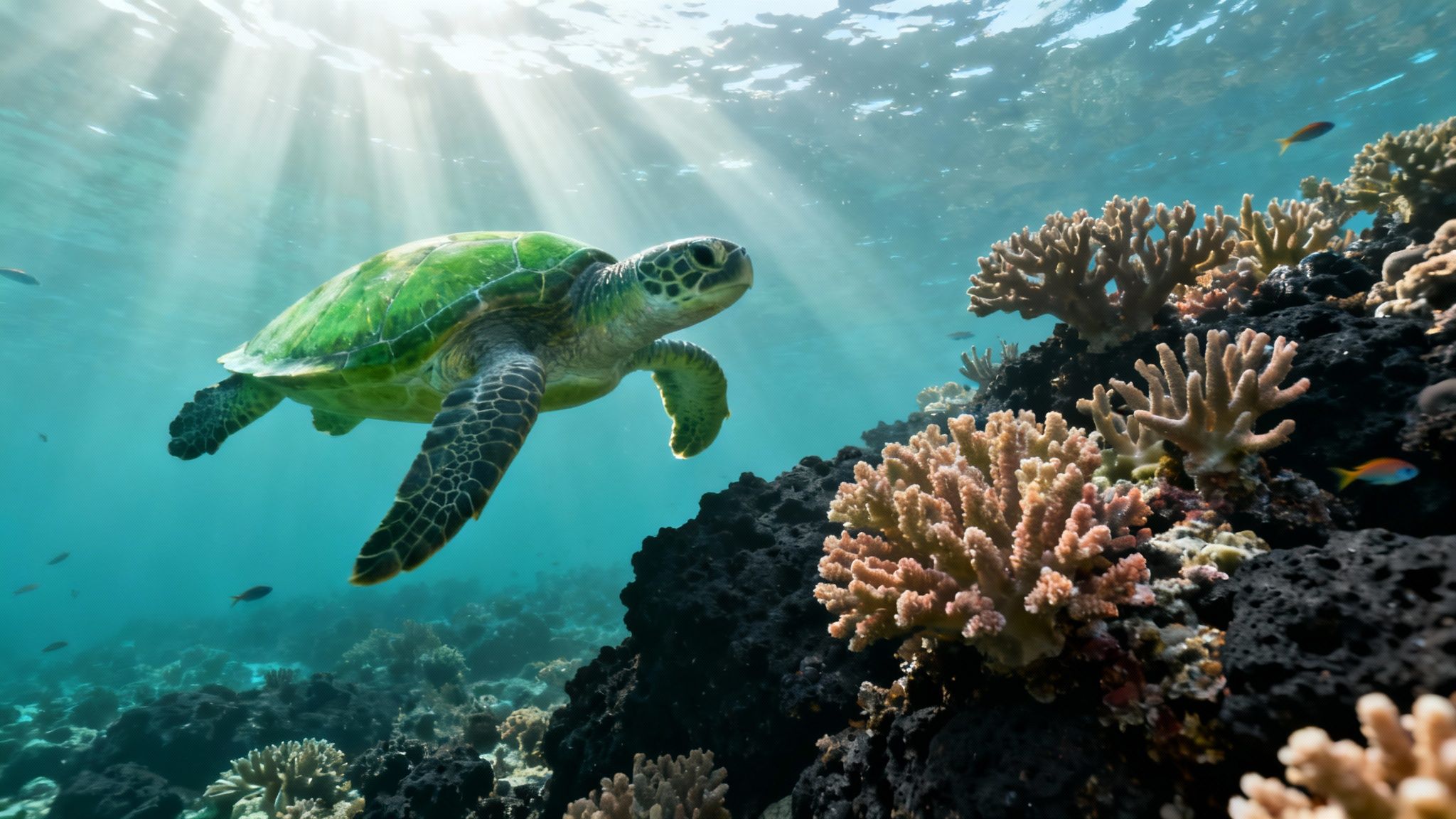
Sure, Hawaii has postcard-perfect beaches, but the real show is happening just below the waves. This isn't your typical sandy-bottom diving. The islands were born from volcanic fire, and that same raw, creative force shaped an underwater world you won't find anywhere else.
Imagine swimming through ancient lava tubes, exploring submerged craters, and drifting over vibrant coral gardens that have taken root on old lava flows. It’s a dramatic, almost otherworldly landscape that makes every dive feel like a true exploration. This unique geology is a playground for divers, and word has definitely gotten out.
There are over 1.5 million scuba dives logged here every single year. That number alone tells you something special is going on. It’s a testament to the incredible experiences and the solid network of dive shops ready to show you the best spots.
A Realm of Endemic Species
The dramatic underwater terrain is only half the story. The real magic of diving in Hawaii is the cast of characters you'll meet. Because the islands are so isolated in the middle of the Pacific, marine life here evolved in its own little world.
A huge portion of Hawaii's reef fish—roughly 25%—are endemic. That means you literally cannot find them anywhere else on the planet. This isolation created a one-of-a-kind ecosystem, making every single dive a chance to see something truly rare.
You’re not just seeing fish; you're seeing Hawaiian fish. Keep your eyes peeled for some of these local celebrities:
- Humuhumunukunukuāpuaʻa: The official state fish. It's a type of triggerfish, and yes, it's as fun to spot as it is to (try to) say.
- Green Sea Turtles (Honu): These gentle giants are a fixture on Hawaiian reefs. Seeing them glide effortlessly through the water is an experience you won't forget.
- Hawaiian Monk Seals: Spotting one of these is a real treat. They are one of the most endangered seal species on earth, so a sighting is an incredibly special moment.
Throw in consistently warm, crystal-clear water that offers amazing visibility all year long, and you have a winning combination. So, is scuba diving worth it in Hawaii? The unique landscapes and one-of-a-kind wildlife make the answer a resounding "yes."
To get a better feel for the underwater world, see our guide on what Kona is famous for underwater.
Exploring Hawaii’s Most Iconic Dive Sites
While you can find great diving around every Hawaiian island, the Kona coast of the Big Island is in a league of its own. It's become a true global hotspot for divers, and for good reason. It’s home to some of the most unique and sought-after dives on the entire planet.
When people ask if scuba diving in Hawaii is really worth the trip, these are the experiences that make the answer an immediate, resounding "yes."
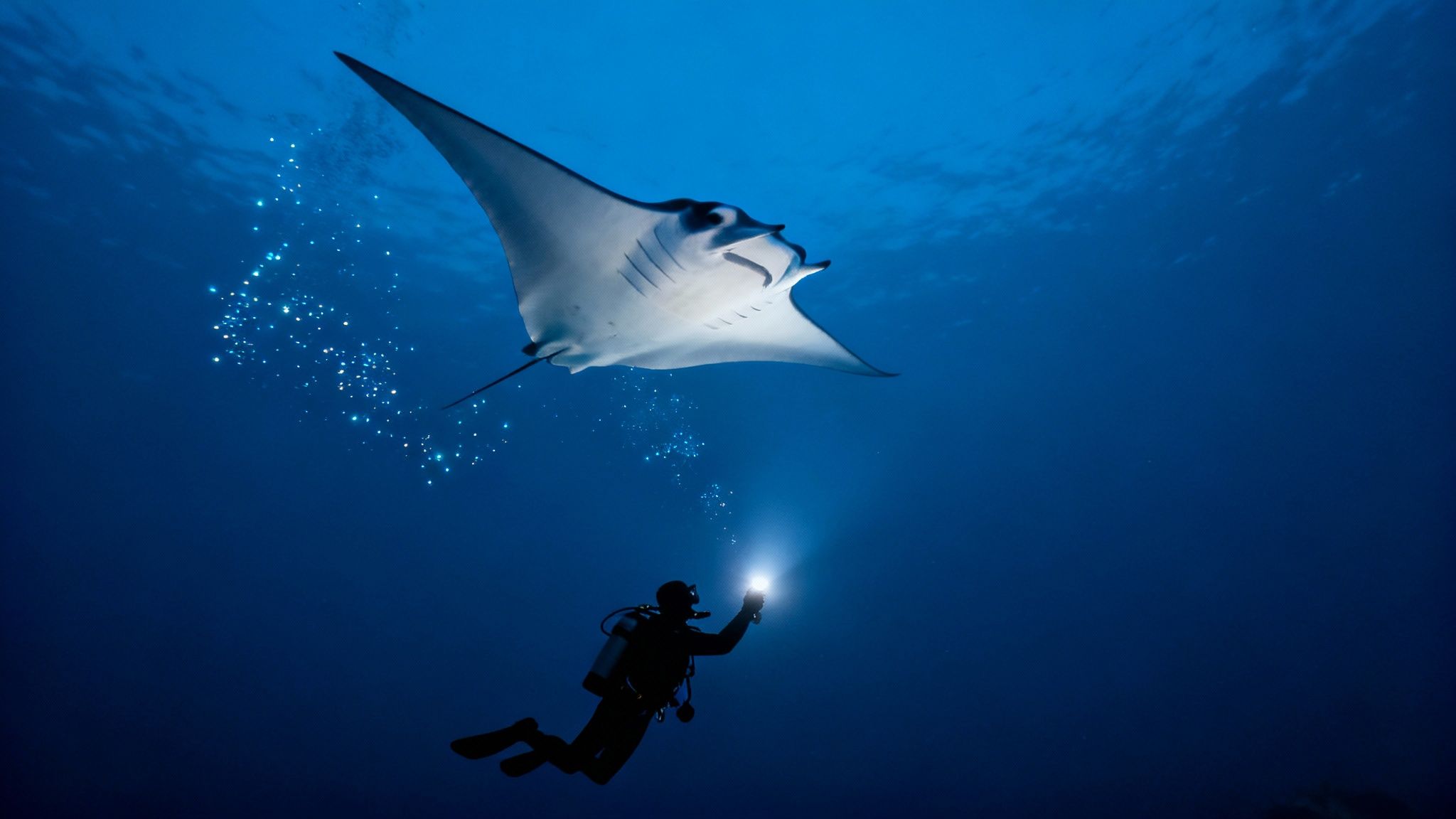
Right at the top of pretty much everyone's bucket list is the world-famous Kona Manta Ray Night Dive. It’s often described as a "once-in-a-lifetime" experience, but honestly, that doesn't quite do it justice. This isn't just another dive; it's a full-on spectacle. After the sun goes down, you descend to a designated "campfire" of lights set up on the ocean floor. These powerful lights attract swarms of plankton, which is basically a dinner bell for the area's majestic manta rays.
Picture this: you're kneeling on the sandy bottom as these gentle giants, some with wingspans stretching up to 16 feet, glide, loop, and somersault just inches over your head. It’s a silent, awe-inspiring ballet that feels completely surreal.
Beyond the Mantas
For divers craving a totally different kind of thrill, Kona offers an adventure that pushes the very boundaries of night diving. The Kona Blackwater Dive is definitely not for the faint of heart, but the payoff is absolutely incredible.
On this dive, the boat takes you miles offshore into the deep, open ocean. You're then tethered to the boat and drift in the pitch-black water. Using high-powered lights, you get to witness some of the most bizarre and rarely-seen creatures on Earth as they migrate from the abyss toward the surface to feed. It’s like being an astronaut exploring another planet.
Of course, the Kona coast isn't just about what happens after dark. The underwater volcanic topography has created a spectacular playground for daytime exploration. For more seasoned divers, advanced charters can take you to deeper sites featuring dramatic pinnacles and ancient lava arches. These spots often bring you face-to-face with larger marine life, including various species of sharks and rays.
From the graceful dance of the mantas to the alien world of the blackwater, the sheer variety of world-class dives here is staggering. To get a better feel for all the options, you can explore our full guide to diving in Kona.
How Much Does it Cost to Dive in Hawaii?
Let’s talk numbers. A world-class diving experience like Hawaii definitely comes with a price tag, but it helps to think of it as an investment. You’re not just paying for a boat ride; you’re investing in top-notch safety, experienced local guides, and memories that are truly priceless.
It's also worth remembering that your dive dollars go a long way in supporting the local communities and the very conservation efforts that keep these reefs so vibrant. While the money spent directly on diving is significant, the ripple effect on local hotels, restaurants, and other services is massive, with some studies suggesting an economic impact reaching into the billions globally. Your trip really does make a difference.
A Realistic Price Breakdown
So, what should you actually budget for your underwater adventures? Prices will shift a bit depending on the island and the specific dive operator you choose, but here’s a solid ballpark to get your planning started.
- Certified Diver Two-Tank Boat Trip: You can expect this to run somewhere between $175 and $225. This price typically gets you tanks, weights, and a professional guide who knows the sites like the back of their hand.
- Discover Scuba Diving Experience: If you're new to diving, this is your ticket. It'll cost between $190 and $250 and includes all your gear, basic instruction, and a closely supervised dive in shallow water.
- Full Gear Rental: Traveling light? Renting a full set of gear (that's your BCD, regulator, wetsuit, and dive computer) will usually set you back $50 to $75 for the day.
- PADI Open Water Certification: There’s no better place to get certified than paradise! A full certification course here generally costs between $700 and $900.
Sure, Hawaii isn't the cheapest place in the world to blow bubbles. But the cost reflects the incredibly high safety standards, the professionalism of the crews, and the guaranteed access to some of the most spectacular underwater scenes on the planet. Trust me, it’s an investment you won't regret.
Is Hawaii a Good Place for Beginner Divers?
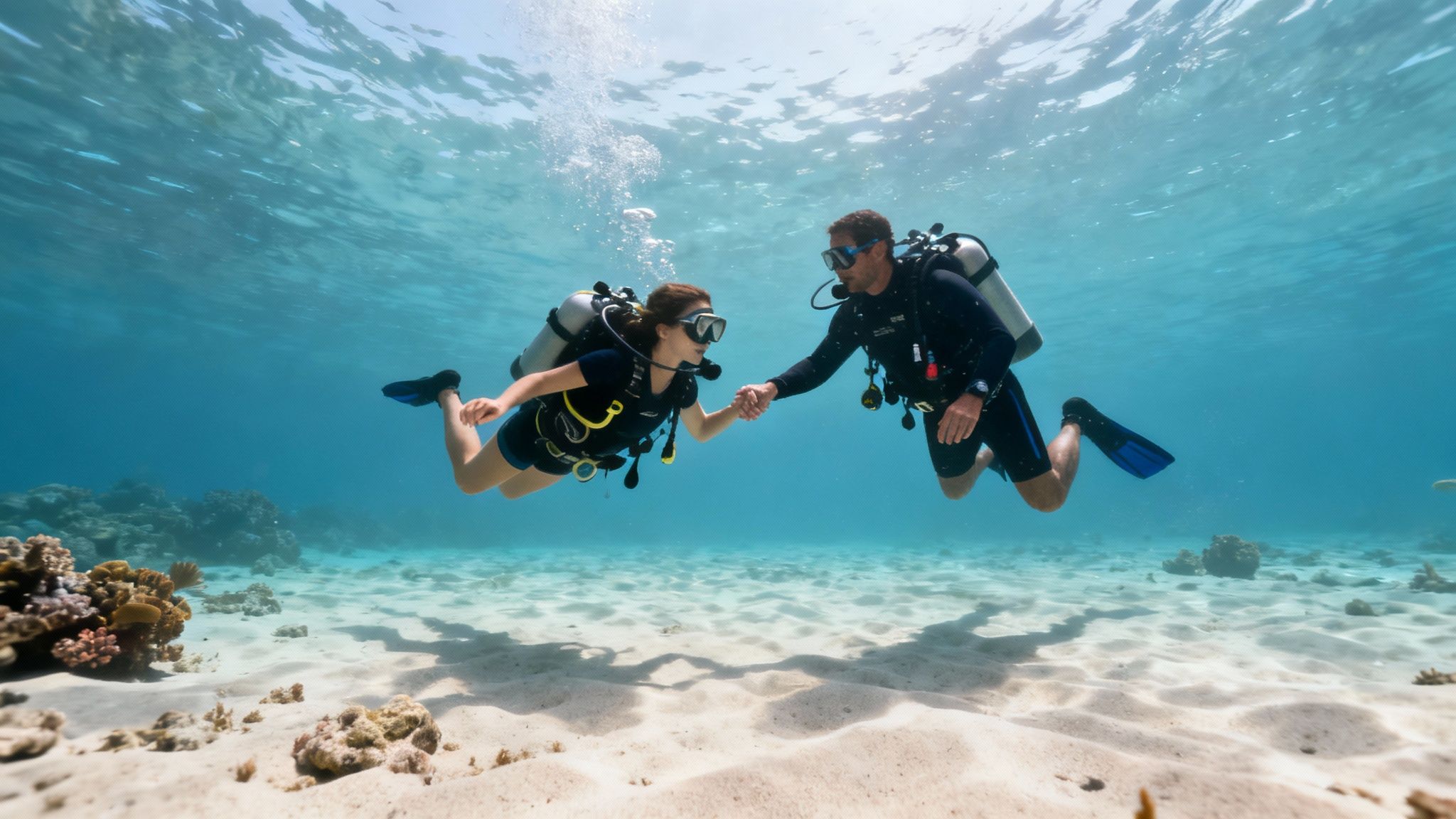
Absolutely. The idea of jumping into the massive Pacific Ocean might sound a little intimidating if you're new to diving, but let me put your mind at ease: Hawaii is one of the best and safest places on the planet to start your underwater adventure.
Specifically, the calm, protected waters along the Kona coast act as the perfect natural classroom for first-timers.
Unlike other spots known for strong currents or tricky conditions, Kona's leeward side offers gentle, predictable dive sites. This sheltered environment means you can focus on your breathing and getting comfortable with your gear instead of fighting against the elements. It makes for a much more relaxed and fun first experience.
Your First Breaths Underwater
If you're curious about diving but not ready to commit to a full certification course, the Discover Scuba Dive is exactly what you’re looking for. Think of it not as a course, but as a guided introduction to the underwater world, designed from the ground up for complete beginners.
Here's a quick look at how it unfolds:
- A thorough safety briefing on land where you'll get familiar with the gear and learn essential hand signals.
- Shallow water practice to get the hang of breathing from a regulator and clearing your mask. It's all about building confidence.
- A closely supervised dive with a professional instructor who is never more than an arm's length away.
This step-by-step approach ensures you feel safe and in control as you take those first amazing breaths underwater. You can get a better sense of the experience by learning more about what the Discover Scuba Dive in Kona involves.
And for those who are ready to take the plunge and get certified? Getting your PADI certification in Hawaii means your training dives happen in a vibrant ocean teeming with sea turtles and colorful fish—not in some cold, sterile swimming pool. Learning here turns a standard certification into an unforgettable piece of your vacation.
So, is scuba diving worth it in Hawaii for a beginner? Unquestionably. The mix of world-class instruction and a stunning marine environment makes it an incredible place to fall in love with diving.
The Final Verdict: Should You Book the Dive Trip?
Alright, we've looked at the incredible marine life, the one-of-a-kind volcanic underwater landscapes, and the costs involved. So, we've come to the million-dollar question: is a Hawaiian scuba trip really worth it?
Well, the honest answer is… it depends entirely on what you're looking for.
If you're pinching pennies and trying to make every dollar stretch, the price tag might make you think twice. I get it. But for seasoned divers looking for their next big adventure, or for families wanting to create a memory that will be talked about for years, the value is absolutely there.
It's not just a feeling, either. The global scuba market is set to grow to over USD 624 million by 2032, and that boom is driven by people seeking out exactly the kind of jaw-dropping experiences Hawaii offers. It's a huge testament to the pull of places like this. You can dive deeper into the numbers in the full market report.
Making the Call
Let's break it down:
-
For the adventure-seeking veteran, where else can you do a blackwater dive in Kona or weave through ancient, submerged lava tubes? These are the kinds of dives that add a serious notch to your logbook.
-
For a family, imagine the look on your kids' faces as a green sea turtle glides by, close enough to see the ancient patterns on its shell. Or the shared silence and awe of watching manta rays dance in the lights at night. Those are the moments that truly matter, long after the credit card bill is paid.
Look, diving in Hawaii is an investment, there's no doubt about it. But what you get back is pure wonder. From swimming with gentle giants to exploring the raw power of the islands' volcanic heart, these are the experiences that turn a good vacation into an unforgettable one.
If you're someone who chases genuine awe, then yes—a Hawaiian scuba trip is absolutely worth booking.
Your Hawaii Scuba Diving Questions, Answered
Got questions about planning your dive trip to the Hawaiian Islands? You’re not alone. Here are some of the most common things divers want to know.
What’s the Best Time of Year to Dive in Hawaii?
Honestly, you can dive here year-round, which makes planning a trip so much easier. That said, if you’re looking for the calmest seas and clearest water, the summer months from May to September are usually your best bet. This is especially true along the protected Kona coast of the Big Island.
Winter brings bigger swells, which can sometimes affect dive conditions, but it's also prime time for spotting migrating humpback whales from the boat—an incredible trade-off!
Do I Need to Be Certified to Scuba Dive?
Nope, not at all! Just about every quality dive shop on the islands offers a "Discover Scuba Diving" program. It's the perfect way for beginners to get their feet wet.
You’ll be paired with a professional instructor in a shallow, controlled spot where you can safely experience breathing underwater for the first time without needing a full certification.
What Kind of Marine Life Will I Actually See?
This is where Hawaii really shines. The islands are famous for the sheer number of species you won't find anywhere else on the planet. On almost any given dive, you have a great chance of seeing green sea turtles (we call them honu), moray eels, and octopuses.
Depending on where and when you dive, you could also run into majestic manta rays, eagle rays, spinner dolphins, and several types of reef sharks. At the end of the day, deciding to book a dive trip comes down to what you value, much like evaluating the overall worth of a travel experience.
Is the Water Warm Enough to Dive Comfortably?
Absolutely. The water temperature in Hawaii is pretty dreamy, usually hovering between 75-80°F (24-27°C).
For most people, a standard 3mm or 5mm wetsuit is more than enough to stay perfectly comfortable for the whole dive. You can just relax and enjoy the underwater show.
At Kona Honu Divers, we're ready to show you firsthand why Hawaii is a world-class diving destination. Check out all of our diving tours on the Big Island and let's get you in the water.