
Is Kona good for scuba diving? Let me put it this way: it’s not just good, it's a world-class destination that seasoned divers dream about. People fly in from all corners of the globe for Kona's signature clear, calm water, dramatic volcanic seascapes, and encounters with marine life you simply won't find anywhere else.
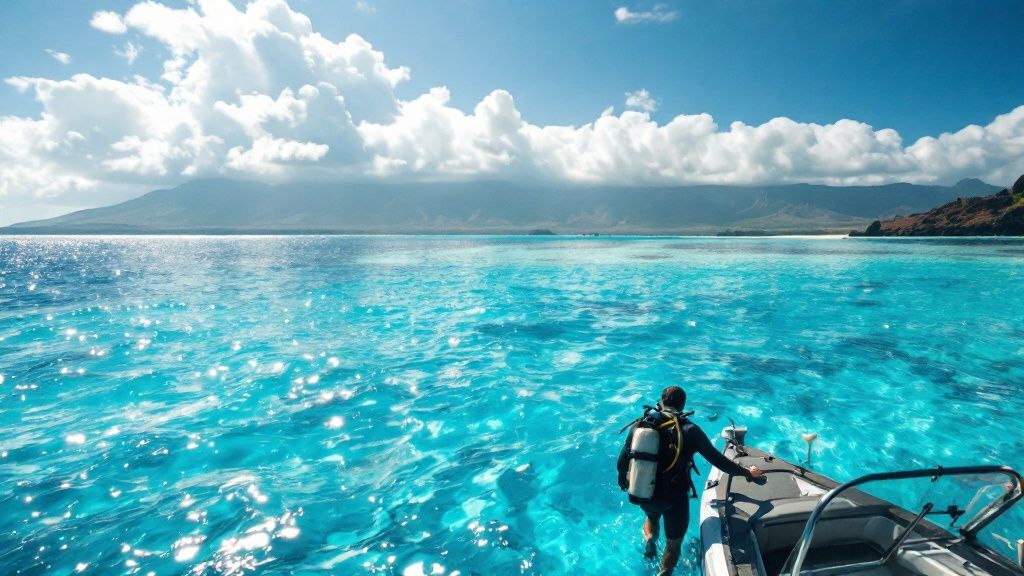
To really understand what makes Kona so special, we have to look at its unique geography. The Big Island's massive volcanoes act as a natural shield, protecting the western coast from the strong trade winds that can churn up the waters elsewhere in Hawaii. This lucky positioning creates an almost perfect underwater environment.
What does that mean for you as a diver? It means consistently calm seas and visibility that is often off the charts, frequently exceeding 100 feet (30 meters). It’s this incredible clarity and serenity that puts Kona on the map.
But the real magic happens beneath the surface. The island's volcanic past has left behind an incredible underwater playground. Imagine gliding through ancient lava tubes, navigating massive archways carved by ancient flows, and exploring vibrant coral gardens—all shaped by the same raw power that built the island itself. It's a surreal and breathtaking experience.
Here’s a quick overview of what makes scuba diving the Big Island so memorable.
Kona Scuba Diving at a Glance
| Attribute | Details |
|---|---|
| Visibility | Regularly exceeds 100 feet (30 meters), offering crystal-clear views. |
| Water Conditions | Exceptionally calm seas year-round due to natural wind protection. |
| Topography | Dramatic volcanic formations like lava tubes, arches, and underwater craters. |
| Marine Life | Famous for manta rays, sea turtles (honu), and a high concentration of endemic species. |
| Water Temperature | A comfortable 75°F to 80°F (24°C to 27°C), perfect for diving all year. |
In short, Kona delivers an unforgettable combination of ideal conditions and stunning underwater scenery.
What to Expect From a Kona Dive
When you put it all together—the perfect water conditions and jaw-dropping topography—you get a dive destination that truly caters to everyone, from fresh-faced beginners to salty veterans.
Here’s what you can look forward to:
- Glassy, Clear Water: The Kona coast’s natural shelter provides some of the most dependable and comfortable diving you'll find anywhere in the Pacific. It's just consistently great.
- Volcanic Vistas: Forget typical reefs. Here, you'll explore lava tubes, massive arches, and submerged craters that create a dramatic backdrop for every dive.
- A Parade of Wildlife: Kona is legendary for its big animal encounters. You have a great chance of seeing majestic manta rays, green sea turtles (honu), playful spinner dolphins, and dozens of fish species found only in Hawaiian waters.
Diving here is an experience you won't soon forget. Getting familiar with the basics of diving on the Big Island is a great first step. No matter your experience level, Kona’s diverse sites and incredible marine life easily confirm its reputation as one of the best dive spots on the planet.
What Makes Kona’s Underwater World So Unique?
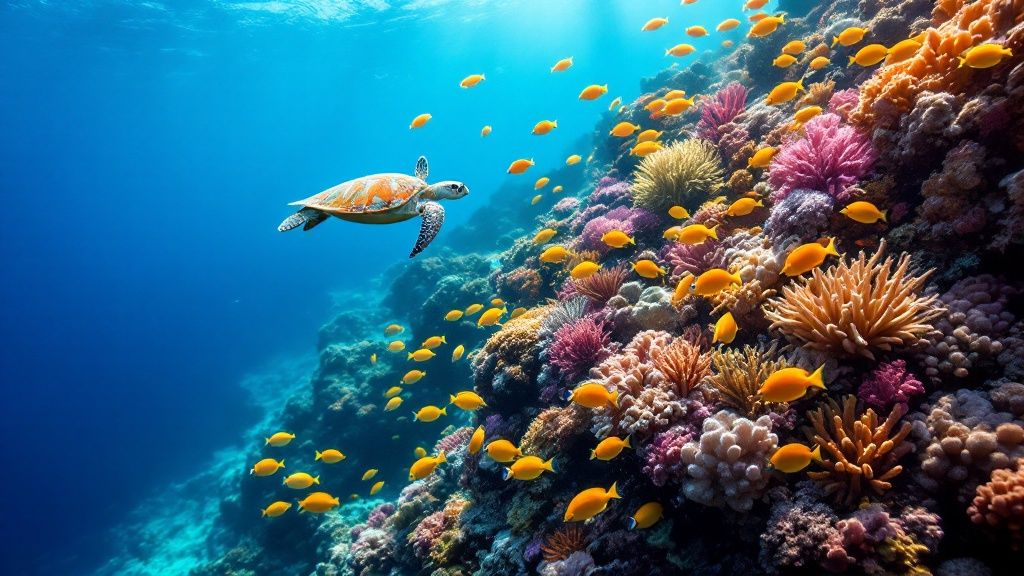
When people ask, "Is Kona good for scuba diving?" I can tell you the answer becomes obvious the second you understand what shaped this place. The Big Island is a geological marvel, and its volcanic heart is the real secret behind the incredible seascapes that pull divers back year after year. Ancient lava flows have carved out an underwater playground of caverns, swim-through arches, and massive craters.
These aren't just bare rock formations. They’re the very foundation of a vibrant, thriving ecosystem. Picture yourself descending into a huge, submerged lava tube, watching as sunlight streams through cracks in the ceiling and lights up schools of shimmering fish. This isn't just a dive; it's a front-row seat to the raw, creative power of nature.
The Power of Endemic Species
Beyond the dramatic geology, Kona's marine life is what makes it a bucket-list destination. The Hawaiian Islands are the most isolated island chain on the entire planet, and that isolation created something incredible: endemism. Simply put, a lot of the creatures that evolved here can't be found anywhere else on Earth.
This means a huge percentage of the critters you’ll meet are unique to these waters. It’s like diving through a living, breathing museum of evolution.
Over 25% of the reef fish you'll see while diving in Kona are endemic to Hawaii. That high concentration of unique species means every single dive offers a chance to see something genuinely rare.
So while you'll see some familiar tropical fish, you'll also meet plenty that are completely new to you. From the tiny, electric-blue Hawaiian cleaner wrasse to the striking bandit angelfish, you are swimming through a one-of-a-kind aquatic world. This amazing rate of endemism is a huge part of why Kona scuba diving is so unforgettable.
Why Conditions Are Almost Always Perfect
Kona has another ace up its sleeve: its geography. The colossal volcanoes of Mauna Loa and Hualalai act as a natural shield, blocking the powerful trade winds that batter other parts of the islands. This "wind shadow" effect leaves the Kona coast with incredibly calm and clear water almost all year long.
For divers, this protection is a game-changer.
- Minimal Surface Chop: Those calm seas mean smooth boat rides and super easy entries and exits from the water.
- Exceptional Visibility: With less wind stirring up the bottom, visibility often pushes past 100 feet. You can see the whole underwater landscape laid out in stunning detail.
- Accessible Dive Sites: The gentle conditions open up a massive variety of dive sites, making them great for everyone from first-timers to seasoned pros.
It’s this perfect storm of volcanic topography, rare endemic species, and consistently fantastic conditions that makes Kona’s underwater world so special. It’s the ideal setting to explore what’s beneath the waves on one of the many available Kona diving tours.
The Unforgettable Marine Life Encounters in Kona
Sure, the volcanic landscapes are breathtaking, but let's be honest—the real heart and soul of Kona diving is its incredible marine life. When divers share stories of their most unforgettable moments, Kona comes up time and time again. There’s a very good reason for that.
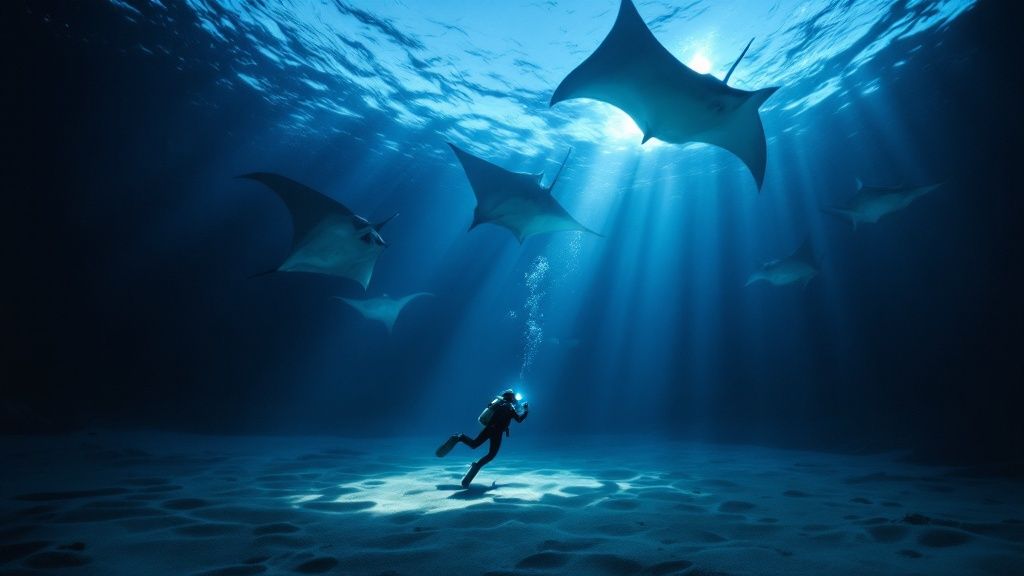
The experience that puts Kona on the global map is, without a doubt, the world-famous Manta Ray Night Dive. Picture this: you’re kneeling on the sand after sunset, pointing your dive light up into the dark water. Tiny plankton flock to the beams, creating a glowing buffet.
Suddenly, graceful giants emerge from the blackness. Enormous manta rays, some with 12-foot wingspans, glide in to feed, performing a mesmerizing underwater ballet. They swoop and barrel-roll just inches above your head. It’s a surreal, humbling, and utterly magical experience that you will never, ever forget. You can see the manta ray dive tours available to book this incredible adventure.
Beyond the Famous Manta Rays
As incredible as the mantas are, they're just the beginning. The biodiversity here is staggering, and you truly never know what you'll see on any given dive. One of the most common and beloved residents is the Hawaiian green sea turtle, or honu. These gentle, ancient creatures are everywhere, often seen resting on the reef or gliding through the water, completely unfazed by respectful divers.
But the list of potential encounters keeps going:
- Spinner Dolphins: It's a common sight to have pods of these acrobatic dolphins greet the dive boat, and if you’re lucky, they might even swim by to check you out underwater.
- Humpback Whales: Dive here in the winter months (December to March), and you'll often be treated to an incredible live soundtrack of humpback whale songs echoing through the water.
- Reef Dwellers: The reefs themselves are buzzing with activity. You'll find everything from schools of colorful butterflyfish and camouflaged frogfish to curious moray eels poking their heads out of crevices.
This incredible variety is a huge part of what keeps divers coming back year after year. To really get a sense of this nightly spectacle, you can read more about the Kona Manta Ray experience.
The Thrill of Pelagic Encounters
Because Kona's coastline drops off into deep water so quickly, it also attracts larger, more elusive open-ocean species. These "pelagic" encounters add a serious thrill to any dive. While nothing is ever guaranteed in the wild, the chance of spotting one of these animals is what creates those truly once-in-a-lifetime memories.
The Kona coast has an exceptionally high rate of endemism, which means many of the fish and invertebrates you see here are found nowhere else on Earth. On top of that, whale shark sightings have been remarkably consistent, averaging around three per month over the past two years.
Divers have shared incredible stories of bumping into pilot whales, oceanic whitetip sharks, and other majestic creatures cruising through the deep blue. It's this unique mix of reliable reef life and the genuine possibility of a big-animal surprise that makes Kona a world-class diving destination.
Kona’s Must-Do Dives for Every Skill Level
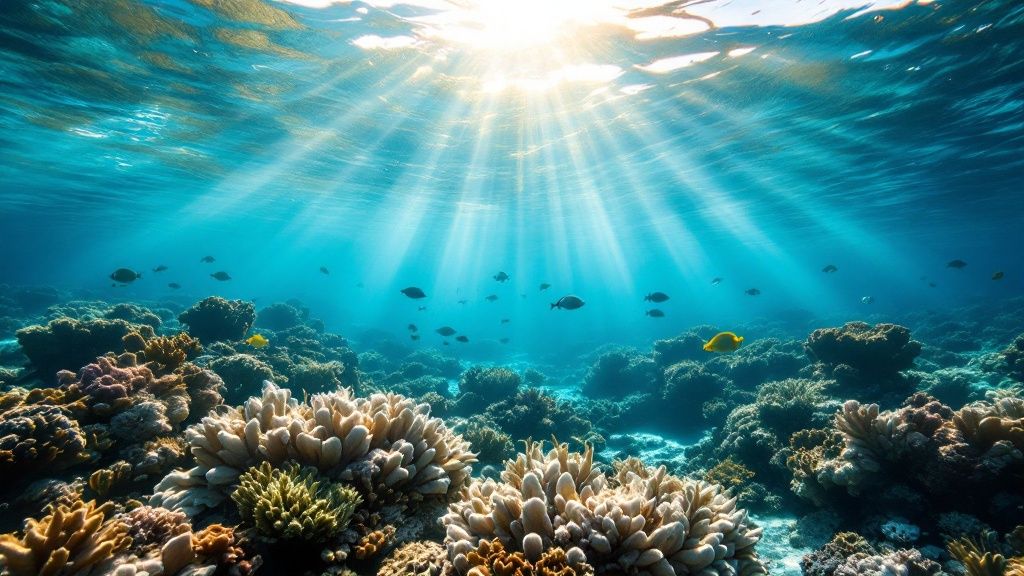
So, is Kona good for scuba diving? One of the best ways to answer that is to look at the incredible variety of dive sites packed along this one stretch of coastline. It doesn't matter if you're about to take your first breath underwater or if you've got thousands of dives in your logbook—Kona has something spectacular waiting for you.
The island’s geology gives us everything from calm, protected bays perfect for learning, to deep, dramatic drop-offs that will thrill even the most seasoned diver. You can spend one day exploring a shallow, sun-drenched coral garden and the next navigating a network of ancient lava tubes. This sheer range is exactly why divers come back year after year.
Dives for Beginners
If you're new to the sport, Kona is one of the best classrooms you could ask for. The conditions are famously forgiving, and a ton of sites offer calm, shallow environments where you can build skills and confidence without battling currents or surge.
A perfect example is Kealakekua Bay. As a protected marine life conservation district, it’s shielded from the open ocean, creating swimming pool-like conditions with incredible visibility. Here, you can float through vibrant coral gardens in less than 40 feet of water, surrounded by huge schools of yellow tang and our beloved honu (green sea turtles). You might even be greeted by a pod of spinner dolphins.
Intermediate and Advanced Adventures
Once you're comfortable in the water, a whole new dimension of Kona diving opens up. This is where you get to explore the island's signature volcanic topography.
Intermediate divers will love sites like Golden Arches or Pawai Bay, which are famous for their amazing lava tubes, swim-through caverns, and massive archways. It's like an underwater playground designed by Mother Nature.
For those with the training and experience to go deeper, Kona really delivers. The advanced dive opportunities along the coast offer a front-row seat to the open ocean. Picture yourself drifting along a deep ledge, watching for eagle rays, oceanic whitetip sharks, and other pelagic visitors that cruise in from the blue.
These advanced dives often mean exploring depths beyond 60 feet and navigating more complex terrain. To enjoy these incredible sites safely, you'll need the right certification and experience under your belt. You can find challenging trips on our advanced dive tour page.
Kona's World-Famous Night Dives
You can't talk about diving in Kona without getting excited about its legendary night dives. These aren't just dives; they're bucket-list experiences that pull people from all over the globe.
-
The Manta Ray Night Dive: The most famous of them all, and for good reason. After the sun sets, you'll head to a designated "campfire" site, settle on the sandy bottom, and point your dive light toward the surface. The light attracts a thick cloud of plankton, which in turn brings in the graceful giants for an acrobatic feeding ballet just inches above your head. It's a truly unforgettable sight. You can book the Manta Ray Night Dive for yourself.
-
The Kona Blackwater Dive: For the truly adventurous, this is the final frontier. You'll head miles offshore, tether to the boat, and drift through the deep, dark open ocean. As you float in the abyss, you'll witness a nightly migration of bizarre and beautiful bioluminescent creatures rising from the depths—things you will never, ever see during the day. This is one of the most unique dives on the planet, and you can experience the Kona Blackwater Dive right here.
From easy reef explorations to heart-pumping deep-water drifts, you can find your perfect adventure by exploring the full range of diving tours available in Kona.
How to Choose the Right Kona Dive Operator
The answer to "Is Kona good for scuba diving?" often comes down to the crew you're with. A truly great dive operator can take a pretty good day on the water and make it absolutely unforgettable. They're the difference-maker.
It’s about way more than just finding the cheapest trip. Your focus should be on operators who prioritize small group sizes. Think about it: a packed boat means a crowded reef, which can feel more like a traffic jam than a serene underwater adventure. A smaller, more intimate group means you get the guide's full attention and a much more personal look at Kona's incredible marine world.
What to Look for in a Dive Shop
Experience and genuine passion are everything. A good dive guide isn't just someone who points the boat in the right direction; they're your underwater naturalist. The best ones are visibly excited about the local ecosystem, eager to share fascinating details about the critters you encounter, and operate with a deep-seated respect for the ocean.
Here are the non-negotiables to consider:
- Safety First: Does the shop have a squeaky-clean safety record? Is their boat well-maintained? How does their rental gear look?
- Experienced Guides: Are the divemasters and instructors certified pros who actually know and love Kona's dive sites?
- Small Groups: Do they keep the diver-to-guide ratio low? This is crucial for both safety and your personal enjoyment.
One operator that really embodies these principles is Kona Honu Divers. Their whole philosophy is built around safety, small groups, and making every dive an adventure to remember, which is why they've become a go-to for so many divers visiting the Big Island. But hey, don't just take our word for it—see what fellow divers have to say.
Questions to Ask Before You Book
Before you hand over your credit card, it’s smart to ask a few pointed questions. Consider it a quick interview to protect your time, money, and well-being. To make it easy, we've put together a full guide on how to choose a Kona dive shop that includes a handy checklist.
Taking a few minutes to do your homework pays off. It lets you book with confidence, so you can stop worrying about the details and start getting excited about the amazing underwater world waiting for you in Kona.
Planning Your Kona Scuba Diving Adventure
Alright, you’ve seen the pictures, you've heard the stories, and now you’re ready to dive in. Let's talk about turning that dream trip to Kona into a reality. A little bit of smart planning goes a long way in making sure your underwater adventure is everything you hoped for.
The best part about diving in Kona? It’s fantastic any time of year. But depending on when you visit, you'll get a slightly different flavor of magic. Come in the summer, and you’ll be rewarded with the calmest seas and exceptionally clear, warm water—perfect for smooth boat rides. If you visit in the winter, you get a bucket-list bonus: the chance to hear the haunting songs of migrating humpback whales echoing through the reef. It's an experience you'll never forget.
When to Go and What to Wear
Kona’s water temperatures are pretty much perfect, hovering between a comfortable 75°F and 80°F (24°C to 27°C) all year long. For most divers, a standard 3mm or 5mm wetsuit is all you'll need to stay comfortable. I'd lean towards a 5mm, especially for deeper dives or the famous manta night dive, just to make sure you stay toasty warm and can fully enjoy the show.
The summer months, from about June to September, are considered peak season. This is when the dive sites are buzzing and the boats are busiest. This is also when Kona's top-notch dive shops are running at full steam, offering things like Nitrox fills (usually EAN32–36) from tanks filled to around 3,200 psi to maximize your bottom time safely. For a deeper look into the seasons, check out this guide on the best times to dive in Kona.
Booking Your Dives in Advance
If I can give you one single piece of advice, it’s this: book your most important dives well in advance. I’m not kidding. World-famous experiences like the Manta Ray Night Dive and the surreal Kona Blackwater Dive can sell out weeks, or even months, ahead of time, especially during the high season. Booking early is the only way to guarantee your spot.
Most shops, including ours, run a standard two-tank trip every morning, which is the perfect way to see the reefs when marine life is most active. Afternoon charters and specialty night dives fill out the rest of the schedule, giving you plenty of options to pack your day with adventure.
Pro Tip: Don't make the mistake of waiting until you land in Kona to book your must-do dives. Get them locked in before you even pack your bags. That way, all you have to do when you get here is relax and get excited for the adventure ahead.
Whether you need to rent a full gear package or just a few tanks, the local shops have everything you need. With just a bit of forethought, you can set yourself up for an absolutely unforgettable dive trip.
At Kona Honu Divers, our entire focus is on providing safe, fun, and truly memorable dives. Our experienced crew and commitment to keeping our groups small mean you get the best possible experience in Kona's incredible underwater world. Take a look at our full range of Kona diving tours and let's start planning.