
Thinking about diving with manta rays on the Big Island? Let me put it this way: it’s not just possible—it’s practically a guarantee. The Kona coast isn't a place where you simply might spot a manta; it’s one of the most reliable places on the entire planet for this breathtaking encounter.
Yes, You Can Dive With Manta Rays. Here’s How.
Kona’s world-famous manta ray night dive is the stuff of legend, drawing people from all corners of the globe. This isn't some random, lucky sighting. It’s a well-orchestrated, consistent, and utterly magical event.
Picture this: you descend into the dark ocean and settle on the sandy bottom. Your group shines powerful lights upward, which attracts a dense cloud of plankton. Soon after, the show begins.
Giant mantas, some with wingspans stretching over 16 feet, emerge from the darkness. They glide and swoop in, performing graceful barrel rolls just inches above you to feast on the plankton. It's less like a dive and more like having a front-row seat to one of nature's most spectacular ballets.
Let's walk through everything you need to know to make this incredible experience a reality.
An Encounter You Can Count On
So, just how likely is a sighting? The numbers speak for themselves. At the primary dive site, affectionately known as Manta Village, the success rate is astonishing.
A long-term study found that a whopping 96% of all tours there had successful manta encounters. The average dive doesn't just see one—it sees around four. You can learn more about diving the Big Island and what makes its sites so unique.
This is exactly why the Kona manta ray dive is a true "bucket-list" experience. The question isn't if you'll see them, but how many you'll be lucky enough to meet.
To give you a quick overview, here's a snapshot of what makes this dive so special.
Big Island Manta Ray Dive At a Glance
Here's a quick summary of what makes the Big Island a premier manta ray diving destination, highlighting key factors for a successful trip.
| Factor | Details |
|---|---|
| Location | Kona Coast, Big Island, Hawaii |
| Sighting Rate | Approximately 96% success rate at Manta Village |
| Best Time to Go | Year-round, with calm conditions most of the year |
| Dive Type | Night dive (or snorkel) |
| Key Attraction | Plankton attracted by dive lights, drawing in feeding mantas |
| Manta Population | A resident population of over 240 identified individuals |
| Average Sighting | About 4 manta rays per tour |
This incredible reliability, combined with the sheer beauty of the encounter, is what puts Kona on the map for divers worldwide.
The Science Behind the Kona Manta Spectacle
The nightly manta ray ballet in Kona isn't just a lucky break for divers; it’s a fascinating story of a unique partnership between humans and nature that has unfolded over decades. It all started by accident when a hotel's bright lights spilled into the ocean, attracting clouds of plankton. The local manta rays, being clever opportunists, quickly figured out this was an all-you-can-eat buffet.
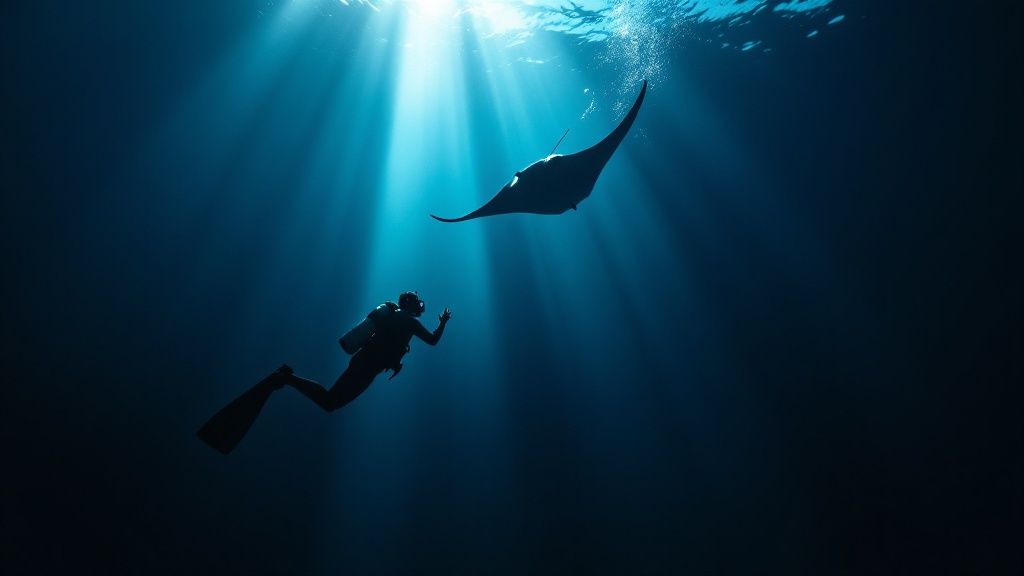
It didn't take long for local dive operators to connect the dots. They realized they could create this effect on demand. By bringing their own powerful, submerged lights to specific dive sites, they basically rang a dinner bell for the mantas, turning a rare sighting into a reliable, awe-inspiring nightly show.
A Thriving Local Community
This setup has done more than just create a tourist attraction; it's helped support a stable and healthy resident population of reef mantas (Mobula alfredi). These aren't just visitors passing through. The mantas you see here live their entire lives in the waters around Hawaii, which makes research and identification so incredibly effective.
Just how reliable are these encounters? Pretty darn reliable. Long-term studies conducted between 2009 and 2014 at popular sites like Manta Village and Manta Heaven confirmed sightings on most nights of the week. This research also shows that over 120 individual manta rays are identified in the area each year, a strong sign of a vibrant community. You can dig deeper into these manta ray statistics and findings to see the data for yourself.
Believe it or not, every manta ray has a unique pattern of spots on its belly, just like a human fingerprint. This is how researchers and dive guides can tell them apart, giving them names and tracking their lives over the years.
Understanding this backstory completely changes the experience. You aren't just watching majestic creatures feed. You're observing a well-known community of animals in a unique, light-enhanced ecosystem. This is what makes a manta ray dive tour more than just a dive—it's a genuine connection with the wild.
Manta Village vs. Manta Heaven: Which Dive Site is Right for You?
When you start planning a manta ray dive on the Big Island, you’ll quickly hear two names pop up again and again: Manta Village and Manta Heaven. Both are world-class sites that deliver mind-blowing encounters, but they offer slightly different experiences. The real question is, are you looking for a near-guarantee, or are you willing to take a small gamble for an even bigger spectacle?
Manta Village, nestled in Keauhou Bay just south of Kailua-Kona, is the OG, the original. It built its legendary reputation on one thing: consistency. We're talking a documented success rate of about 96%. In the world of wild animal encounters, that's as close to a sure thing as it gets.
Because it's so close to town, the boat ride is shorter, which is a major bonus if you're not a fan of choppy water or just want to get to the action faster. This incredible reliability makes Manta Village the go-to recommendation for first-timers who absolutely want to see these amazing creatures.
So, What’s the Deal with Manta Heaven?
Your other top-tier choice is Manta Heaven, which you’ll also hear called Garden Eel Cove. This site is located north of Kona, out past the airport, and it has a different kind of appeal. The success rate here is just a tick lower, hovering around **90%**, but the potential payoff is huge.
What do you get for that slight drop in certainty? The chance to see a lot more mantas. Data from back in 2013 showed Manta Heaven averaging 11 mantas per night, while Manta Village averaged four. Trust me, watching a dozen of these giants perform their graceful, looping ballet in the dive lights is something you’ll never, ever forget. If you want to dive deeper, you can explore more about why Manta Heaven is a diver's dream.
The Bottom Line: Go with Manta Village for a virtually guaranteed sighting. Choose Manta Heaven if you're feeling lucky and want the chance to witness an even bigger manta party.
Here’s a quick breakdown to make the decision easier:
| Feature | Manta Village (Keauhou Bay) | Manta Heaven (Garden Eel Cove) |
|---|---|---|
| Sighting Reliability | ~96% Success Rate | ~90% Success Rate |
| Average Mantas Seen | ~4 per night | ~11 per night |
| Location | South of Kona | North of Kona (near airport) |
| Best For | First-timers, guaranteed sightings, shorter boat rides | Divers hoping for a larger group of mantas |
Honestly, you can't make a bad decision here. Whether you pick the tried-and-true reliability of Manta Village or the epic potential of Manta Heaven, you're signing up for one of the most memorable night dives of your life.
Planning Your Manta Ray Dive on the Big Island
So, you’re ready to witness the famous underwater ballet for yourself. Awesome. Planning your Kona manta dive is pretty straightforward, but the single most important decision you'll make is choosing the right dive operator.
Your top priority should be finding a crew that puts the manta rays' well-being first. Look for companies like Kona Honu Divers that are known for following the established guidelines for respectful and sustainable wildlife encounters. This isn't just about getting a good show; it's about protecting these incredible animals. A responsible operator will ensure no one is touching or chasing the mantas, maintaining a proper distance so they can go about their feeding completely undisturbed. When you book with a crew that cares, you're helping make sure this magical experience is around for a long, long time.
What to Expect on a Manta Dive Tour
Most reputable manta ray dive tours are set up as all-inclusive packages, so you don't have to sweat the small stuff. While every company is a little different, you can generally count on getting:
- A Solid Pre-Dive Briefing: The guides will walk you through everything—manta ray behavior, safety procedures, and exactly how the dive will play out once you're in the water. Pay attention here; it’s important.
- All the Right Gear: Tanks, weights, a wetsuit, and dive lights are almost always included.
- An Expert In-Water Guide: This is your underwater leader. They'll keep the group safe, organized, and positioned for the absolute best views of the action.
- Post-Dive Snacks: It’s pretty standard for boats to have some snacks and drinks waiting for you when you get out of the water.
Your job is easy: just show up with a towel, something warm to wear for the boat ride home, and your certification card.
The great news is that manta encounters are incredible any time of year. But if you want to dig into the minor seasonal differences, you can learn more in our guide on the best time to see the manta rays in Kona. And if you're curious about what else is out there, feel free to explore all of our Kona scuba diving tours.
With a little bit of planning and a top-notch crew, you're in for a night you'll never forget.
What to Expect During Your Manta Ray Night Dive
Imagine dropping into the warm, dark Pacific just as the last hints of sunset vanish. You and your group will descend to a sandy bottom, usually about 30-40 feet deep. Here, your guide will direct you to find a spot around a powerful underwater light—we affectionately call it the 'campfire.'
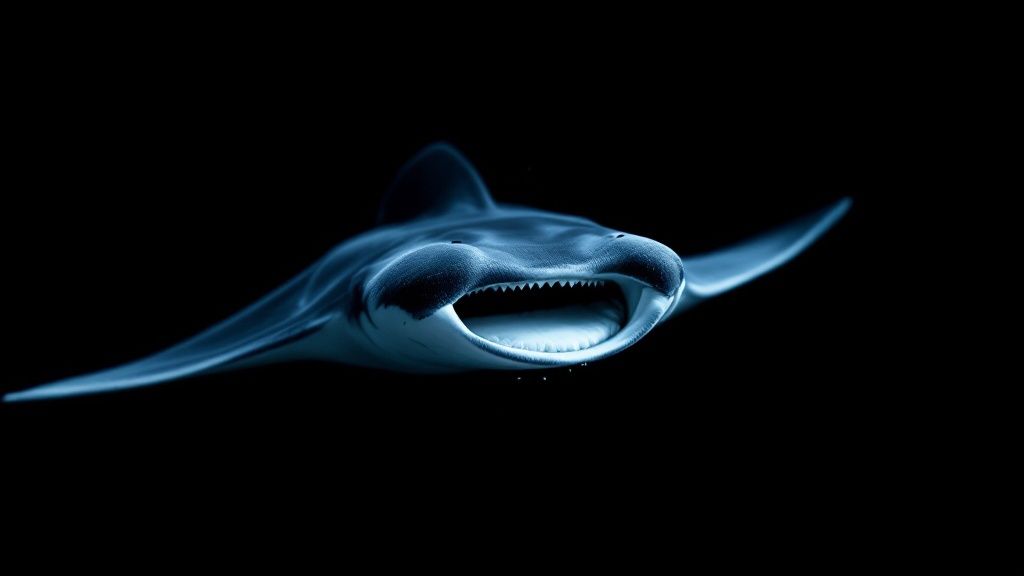
This is where the magic begins. Out of the darkness, a massive, graceful shadow emerges, gliding effortlessly into the light. Then another appears, and another. These are Kona's famous resident reef mantas, some with incredible wingspans reaching up to 16 feet, and they're here for one reason: the plankton that have been drawn to your light.
The Underwater Ballet
What happens next is genuinely breathtaking. The mantas swoop, glide, and perform elegant barrel rolls just inches over your head, scooping up mouthfuls of their microscopic meal. It’s an incredible, up-close performance.
Your only job? Stay put, stay calm, and enjoy the show. This is called passive observation, and it’s the golden rule of the Kona manta dive. You must never reach out to touch the mantas, chase them, or block their path. They call the shots, and when you remain still, they feel comfortable enough to put on that unforgettable display.
It's a completely surreal feeling—like having a front-row seat to one of nature’s greatest performances. You’ll be so mesmerized that your 45-minute bottom time will feel like it’s over in a flash.
While the mantas are definitely the main attraction, don't forget to look around the edges of the light. You might just spot other nocturnal critters like moray eels or crabs venturing out for a look. It all adds to the incredible atmosphere of this dive.
Ready to see it for yourself? You can book a manta ray dive tour and witness this underwater ballet firsthand.
Your Top Manta Ray Diving Questions, Answered
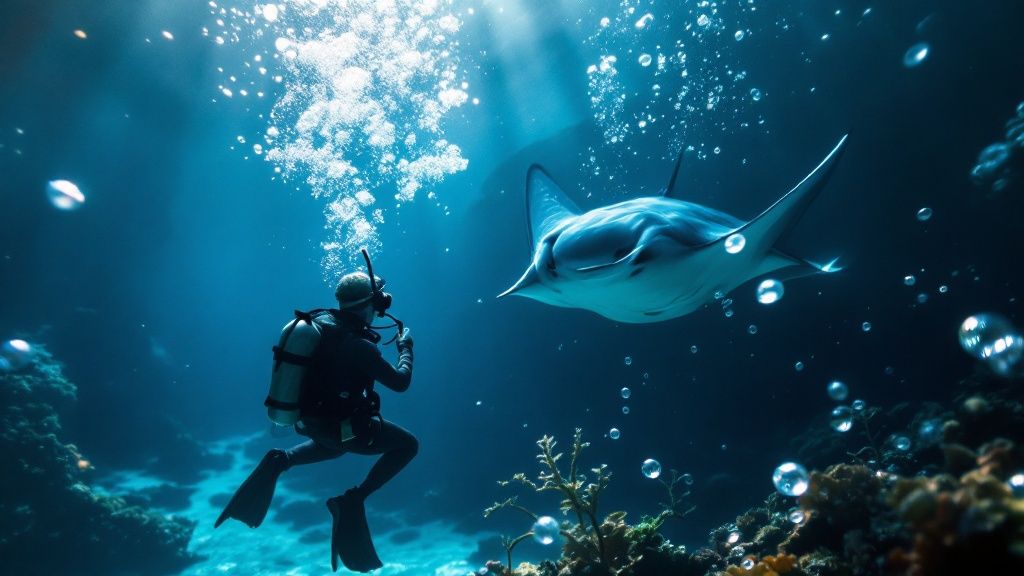
It’s completely normal to have questions before booking an adventure like this. I’ve heard just about all of them over the years, so I've put together answers to the most common ones I hear from first-timers.
Do I Need to Be Scuba Certified?
Nope, you don't! While certification is a must for the scuba version, you can have just as incredible an experience as a snorkeler.
Most operators run a combined trip. Snorkelers float on the surface, holding onto a custom light board that attracts the plankton. The mantas come right up to feed, giving you a breathtaking, up-close view from above. It truly is an experience for almost everyone.
How Safe is the Manta Ray Night Dive?
It's one of the safest night dives you can do. The whole operation is designed to be a controlled, predictable experience. You’ll be in a relatively shallow spot, typically just 30-40 feet deep, with experienced guides watching over everything.
And what about the mantas? They're gentle giants. As filter feeders, they have no teeth, stingers, or barbs. They are completely harmless to people.
What if the Mantas Don't Show Up?
It's rare, but it can happen—they are wild animals, after all. The good news is that most reputable companies have a "manta guarantee."
For example, an outfit like Kona Honu Divers will typically let you come back on another night for free on a standby basis if you don't see any mantas. It's always a good idea to ask about the specific policy before you book your manta ray dive tour.
Can I Bring My Own Camera?
Absolutely! You’ll definitely want to capture this. Just remember that you’re a guest in their world, so you have to follow your guide’s instructions to the letter.
The one big rule is about lighting. Tour operators set up a powerful central light source—the "campfire"—to attract the mantas. To keep from distracting them and ruining the view for others, personal, hand-held video lights are usually not allowed. Your camera will do just fine with the main lights provided.