
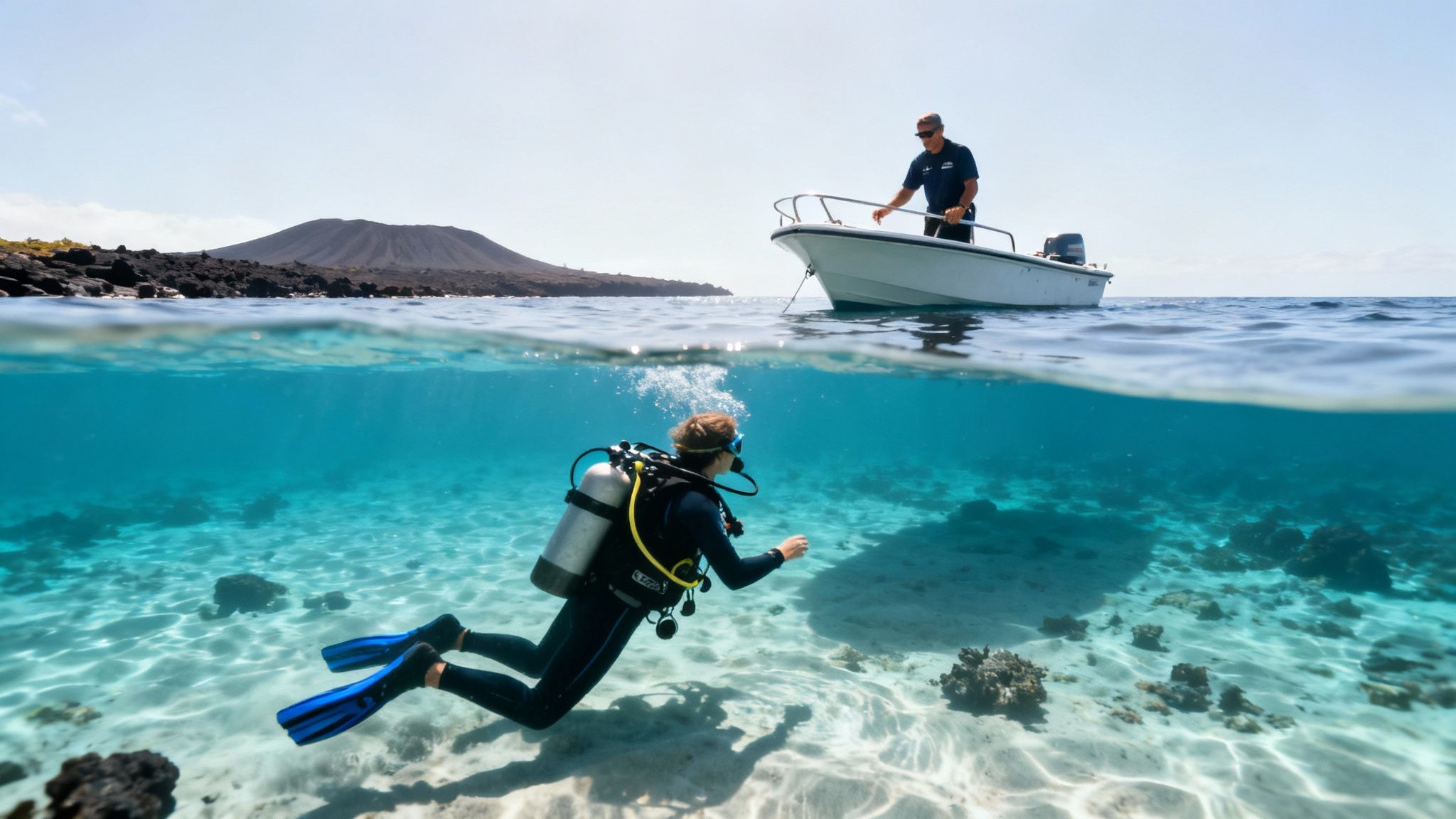
So, can you scuba dive on the Big Island without being certified? The short answer is a resounding yes, but with a few caveats. It's a lot like hiking a mountain – there are beautiful, easy-to-access trails for beginners and more challenging, technical climbs for experienced adventurers. The underwater world of Kona is just as varied.
A World for Every Diver
The Big Island’s coastline is packed with dive sites catering to all abilities, from the complete beginner to the seasoned pro. You absolutely do not need any experience to take your first breath underwater here.
Guided programs are specifically designed to introduce novices to the magic of scuba in a safe, controlled setting. These introductory dives let you explore Kona’s incredible reefs without needing a full certification. If you're curious and ready to take the plunge, you can explore what a Discover Scuba Diving experience is all about.
For divers who are already certified, the Big Island is a true underwater playground. The sites you can access simply depend on your certification level and how many dives you have logged in your book.
Big Island Dive Requirements at a Glance
To give you a clearer picture, here’s a quick breakdown of what you'll typically need to explore some of the Big Island's most famous underwater attractions.
| Dive Type | Typical Minimum Certification | Recommended Experience |
|---|---|---|
| Introductory Dives | None Required | Absolutely no prior experience is needed. |
| Reef Dives | Open Water Diver | Comfort with basic scuba skills and good buoyancy. |
| Manta Ray Night Dive | Advanced Open Water Diver | Solid night diving and buoyancy control experience. |
| Blackwater Dive | Advanced Open Water Diver | Excellent buoyancy control and comfort in open, dark water. |
Think of this chart as a guide. Your comfort in the water and recent dive history are just as important as the card in your wallet. Always chat with your dive operator about your experience to find the perfect adventure.
Why Experience Matters in Kona’s Volcanic Underwater World
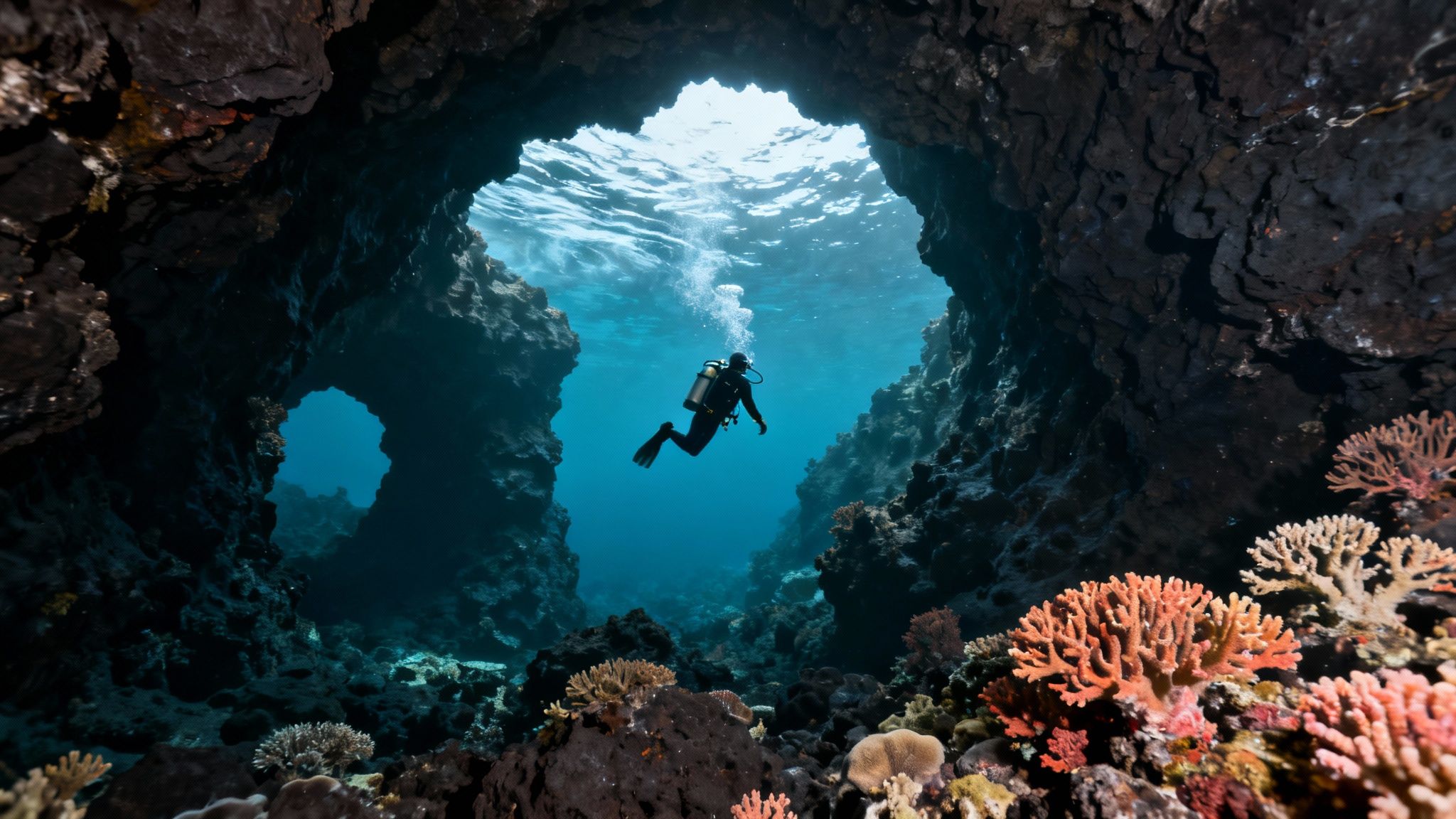
The magic of diving in Kona is all about its wild, volcanic terrain. Forget gentle, sandy slopes; here, the underwater world is a dramatic landscape of ancient lava tubes, incredible archways, and challenging shore entries over lava rock. It’s breathtaking.
These one-of-a-kind features, sometimes coupled with strong currents and surge, make for an unforgettable dive. But they also demand a healthy dose of respect and a solid set of skills. This is exactly why a bit of experience under your belt goes such a long way for Big Island dives.
Every year, the Big Island sees roughly 100,000 certified dives, and a good chunk of those divers are at an intermediate or advanced level, drawn by these dynamic conditions. The payoff is huge—crystal-clear water with visibility often pushing past 80 feet and a truly unique environment. You can get a better sense of the unique conditions of Big Island scuba diving on konahonudivers.com.
Why Buoyancy and Awareness Are Your Best Friends
Mastering your buoyancy isn't just about looking cool—it’s absolutely critical for protecting yourself and the reef. Kona's volcanic structures are draped in delicate corals that have spent centuries growing.
One misplaced fin kick or an accidental bump from your tank can shatter decades of growth in an instant. Good buoyancy means you can float effortlessly, navigate tight swim-throughs, and get up close to the ecosystem without leaving a trace.
Situational awareness is just as important. You need to read the water, understand how a current will wrap around an underwater arch, and anticipate the push and pull of the surge. It’s what keeps you safe and turns a challenging dive into a relaxing one.
Unlocking a Deeper Adventure
Think about it: when you're not constantly fiddling with your gear or fighting to stay level, you can actually soak in the world around you. This is when the real adventure begins.
A confident, comfortable diver has the freedom to truly appreciate the incredible scenery. You’ll be the one spotting the perfectly camouflaged frogfish on a rock or feeling the sheer awe of gliding through a massive, ancient lava tube. The more at ease you are in the water, the more you'll see, and the better your memories will be. Many of the top Kona diving tours are built for divers who have these fundamentals dialed in, opening up a whole new level of exploration.
Your Pathway from Beginner to Certified Big Island Diver
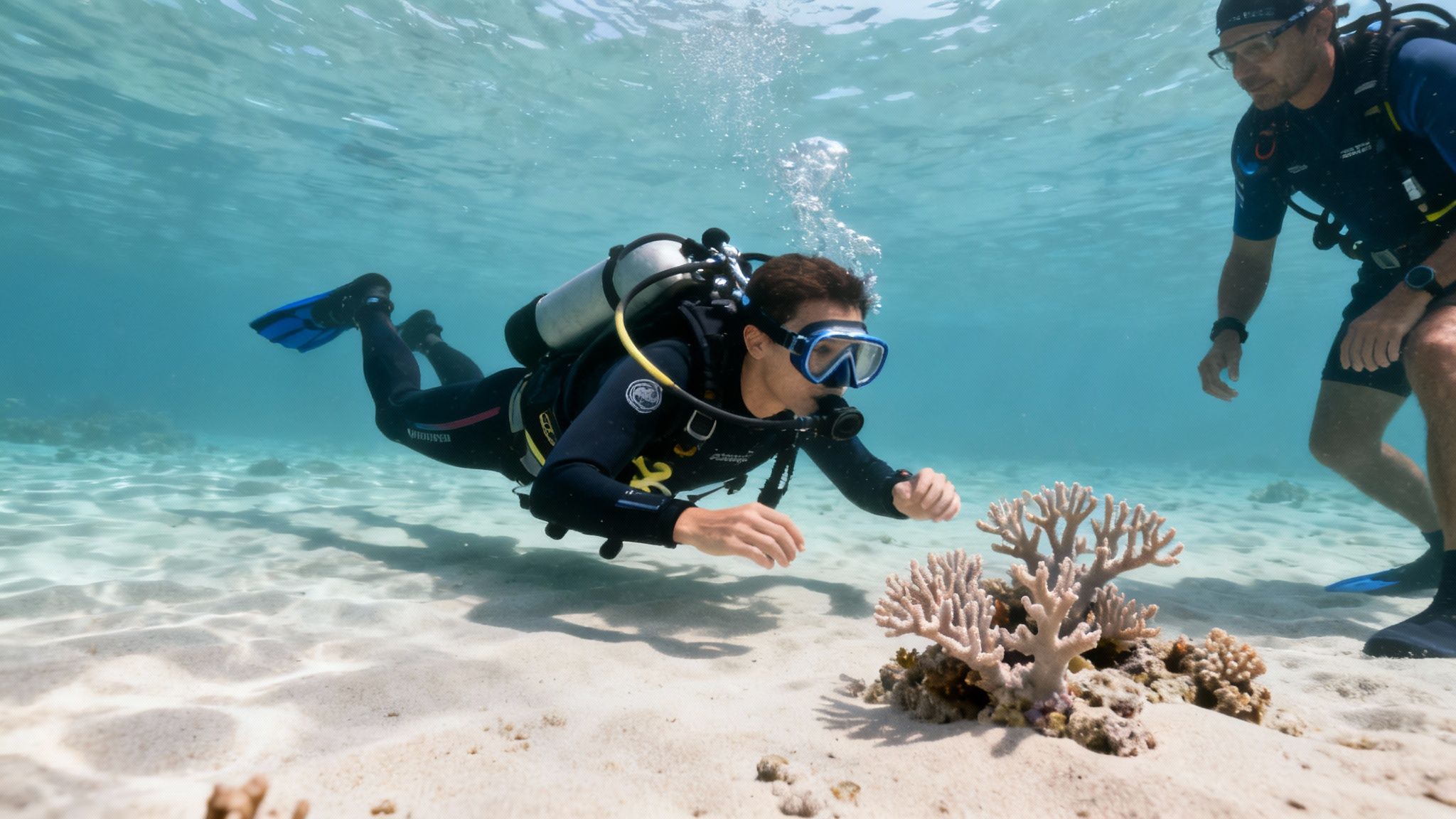
So, you're dreaming of exploring Kona’s famous underwater world but don't have a C-card? No problem at all. The path from being a total beginner to a confident diver is surprisingly straightforward, and honestly, the Big Island is one of the best classrooms on Earth.
Your journey can kick off with a Discover Scuba Diving experience. Think of it as a test drive for scuba. It's a completely guided, shallow-water dive with an instructor right by your side, and it requires zero previous experience. You'll learn the absolute basics and take your first breaths underwater in a safe, controlled setting. It’s the perfect way to dip your toes in and see if you love it without committing to a full course.
Becoming a Certified Diver
Once you get that first taste of weightlessness and realize what you've been missing, you'll be hooked. The very next step is getting your Open Water certification. This is your passport to the underwater world. It qualifies you to dive with a buddy down to 60 feet (18 meters) pretty much anywhere you can find water.
The course itself is a mix of learning the theory, practicing essential skills in calm water, and then putting it all together on several real open-water dives. It’s a fantastic experience.
Reputable local shops like Kona Honu Divers make the whole process feel less like school and more like an adventure. Their instructors are pros at building your skills and confidence at a comfortable pace. You can get all the details on earning your Open Water certification in Kona on konahonudivers.com.
Once you have that certification card in hand, the question is no longer "Do I need experience to dive here?" but "Which incredible dive site am I exploring first?". The path is laid out for you, and the adventure is waiting. You can find the perfect starting point by exploring the available Kona diving tours.
Experience Required for Kona’s Most Iconic Dives
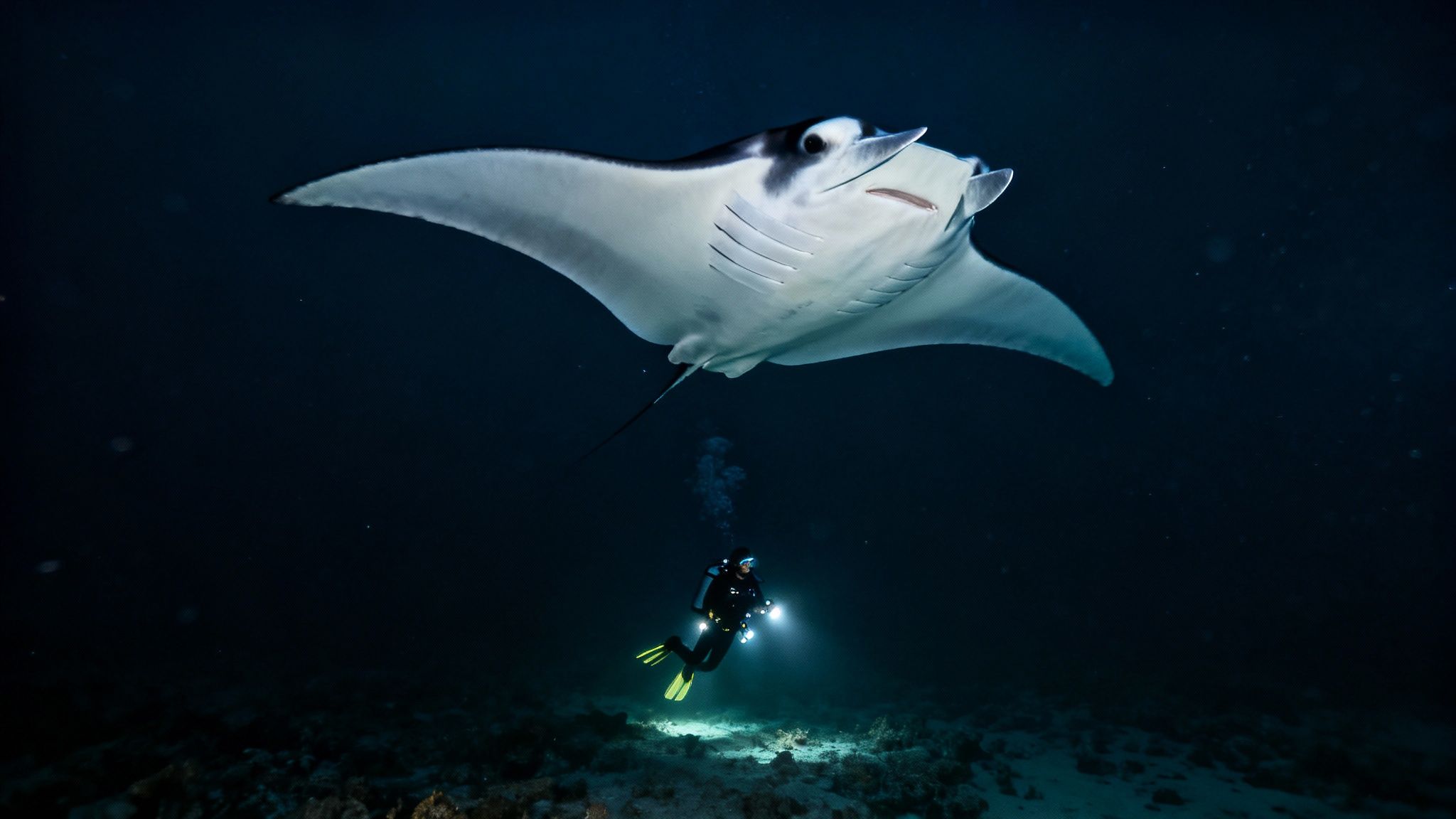
While the Big Island has incredible diving for every skill level, some experiences are simply legendary. Think of them as the underwater world's main events. To get a front-row seat for these, your dive logbook becomes your ticket—it's proof you've got the skills to handle the conditions.
The world-famous Manta Ray Night Dive is a perfect example. Imagine kneeling on the sandy ocean floor as massive, graceful manta rays swoop and glide just inches above your head. It's a surreal, silent ballet that has put Kona on every serious diver's bucket list.
Why Advanced Skills Are a Must
So, what's the big deal? Why do you often need an Advanced Open Water certification for a dive that's actually quite shallow? It’s not about depth; it’s about control.
Mastering your skills is crucial because you'll be navigating in the dark, surrounded by other divers, all while maintaining perfect buoyancy. A single diver kicking up sand can ruin the visibility for everyone and disturb the mantas' natural feeding behavior.
This is why a solid history of diving is non-negotiable for such a delicate and popular dive. Operators need to see you can stay calm, controlled, and respectful of the marine life and your fellow divers. For many of these technically demanding Big Island dives, shops will often look for an Advanced Open Water certification and a minimum of 50 logged dives to make sure you have the comfort and skills needed. You can learn more about the prerequisites for technically demanding Big Island dives at konahonudivers.com.
Beyond the Mantas: Adventures for Seasoned Divers
The Manta Ray Night Dive is just the start. If you've got the experience and a taste for the extraordinary, Kona delivers. The Kona Blackwater Dive is a mind-bending drift dive over thousands of feet of dark, open ocean. Here, you’ll encounter bizarre and beautiful creatures that rise from the abyss only under the cover of night.
Beyond that, seasoned divers can explore deep lava tubes and intricate volcanic structures that demand excellent buoyancy, sharp navigation, and a cool head. These aren't your average reef tours. They're incredible opportunities usually reserved for specialized advanced dive tours and designed for divers who have truly mastered their craft.
Choosing the Right Dive Operator for Your Skill Level
Picking the right dive shop in Kona is every bit as important as picking the right dive site. Think of a great operator as your guide and safety net, making sure your time underwater is perfectly suited to your actual abilities. It's the key to making sure your dive is memorable for all the right reasons.
When you call to book a trip, don't be shy about asking some pointed questions. How do they group divers on the boat? What's their policy for someone who's been out of the water for a while? Any top-notch operator will ask for your certification level, how many dives you have logged, and the date of your last dive. They aren't just being nosy—this information is essential for building safe, well-matched dive groups.
Vetting for Safety and Experience
The Big Island’s volcanic underwater terrain and famous specialty dives mean safety standards are, and should be, high. You can't just jump in on an epic experience like the manta ray night dive without having your skills dialed in—excellent buoyancy and knowing your emergency procedures are non-negotiable.
Because of this, many shops now require an Advanced Open Water certification and a recent logbook entry to join certain charters. Supervision ratios are also strictly enforced. You can read the official guidelines for yourself right here: manta ray viewing safety on dlnr.hawaii.gov.
A reputable dive shop will never pressure you into a dive that’s beyond your training. Their first priority is your safety and enjoyment, and that means being honest about what is—and isn't—a good fit for you.
Ultimately, putting in a little extra time to check out your options pays off big time. When you choose an operator that puts safety first and properly vets its divers, it ensures everyone on the boat has a fantastic, comfortable, and incredible adventure. For a deeper look, check out our guide on how to choose a Kona dive shop.
Frequently Asked Questions About Big Island Diving
Planning a dive trip to the Big Island can bring up a lot of questions. Here are some straight-talking answers to the things we get asked most often, coming directly from our years of experience on these waters.
Can I Do the Manta Ray Night Dive If I'm Only Open Water Certified?
This is probably the number one question we hear, and the short answer is usually no. Reputable operators, including us, require an Advanced Open Water certification for the Manta Ray Night Dive.
It’s not about being exclusive; it’s about safety and ensuring everyone has a great time. That dive requires really solid buoyancy control in the dark, often with lots of other divers nearby. If you're Open Water certified, you absolutely can (and should!) join as a snorkeler. Seeing those gentle giants from the surface is still a mind-blowing experience.
What if I Am Certified but Haven't Dived in a Few Years?
If it's been a while since you've been underwater, you'll almost certainly need a quick refresher course. Think of it like a tune-up. If you haven't logged a dive in over a year, this is standard practice pretty much everywhere in the dive world.
A refresher just means you'll spend a little time with an instructor in a calm spot, brushing up on the essential skills. It’s a small investment that pays off big time in comfort and confidence, letting you fully enjoy your Big Island dives without any stress.
Is Shore Diving a Good Option for Beginners on the Big Island?
The Big Island has some truly epic shore diving, but honestly, it’s not the best place for a beginner to start. Many of the entry and exit points are across rugged, sharp volcanic rock. Add some ocean surge to the mix, and it can get tricky fast.
For new divers, a boat dive is the way to go. It’s safer, easier, and just plain more fun. We take you right to the sweet spot of the reef and give you a stable, easy way to get in and out of the water with our crew right there to help.
What Dive Is Best for Someone With Absolutely No Experience?
If you've never dived before but want to try, the "Discover Scuba Dive" is exactly what you're looking for. It's a program designed from the ground up for people with zero certification.
You'll be paired up with an instructor who will go over everything you need to know. Then, they'll personally guide you on a real dive in a shallow, calm, and beautiful spot. It's the perfect way to see if diving is for you while being looked after every step of the way.
Ready to explore Kona's incredible underwater world, no matter your experience level? The expert crew at Kona Honu Divers is here to guide you. Check out our wide range of Kona diving tours to find the perfect adventure for you.